Showing posts with label scouting. Show all posts

Friday, August 24, 2012

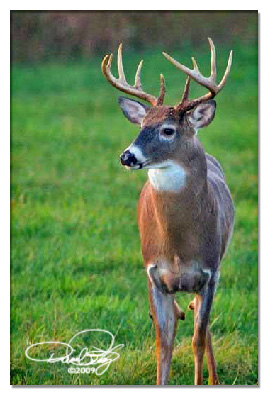
Start deer scouting soon

DRO_deer scouting success
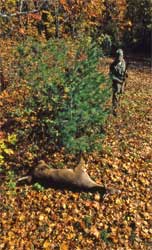
The author with a nice buck he scouted after the season opened
photo courtesy Dave Richey Outdoors ©2012
There is nothing better than putting down boot leather when it comes to learning a new hunting area, and that is what most people do. A few take this "learning-the-land" proposition two steps further.

The use of topographical maps is one key element of learning new land, and aerial photographs is still another. Combine these strategies, and a hunter will have a recipe for possible success.

To properly scout an area, it's vitally important to prevent your scent from drifting downwind to a whitetail bedding area. Play the wind like a fine violin, stay downwind of bedding areas, move through the area while checking ground sign for trails, food areas and bedding spots.


There is just a bit more than a month to scout before the opener


Nothing is 100 percent when it comes to hunting whitetail deer, but having a firm grip on the terrain is very important. There is a quarter-mile field that runs mostly north and south on my land, and through this open field are a series of small rolling hills and dips in the land. Deer have learned to use those tiny valleys and tiny hills to sneak through the open terrain.

Walking such an area is one way to learn how deer travel, and doing it with some snow on the ground is even better. There are places where bucks can enter the field on the west side, and by moving left and right, they can stay down in the dips and out of sight of most hunters.

What I've done is build hunting coops and they are strategically placed so that most of these travel routes can be covered. Deer often move east in the evening and west in the morning, and hunters can place themselves in key positions to waylay the animals as they pass.

However, when hunting strange land that you've never hunted before, topo maps and aerial photographs, when combined with walking the terrain will enable hunters to determine good spots to hunt.


Use time wisely to learn where deer travel; Do it now


Funnels are an absolute deadly spot to hunt. A funnel is created by a narrowing of heavy cover. It can be a brushy fence-row that connects a wood lot and swamp, two wood lots, a wood lot and a pine plantation, and other such thick and narrow places like creek beds where deer movements are funneled through a narrow area. They are natural travel corridors that deer use.

The bases of hills are another hotspot. Often the thicker cover is at the lower elevations, and if there are three hills, only one will be vitally important to hunters. Deer often choose the one that offers the easiest access and exit routes to heavy cover, and they will ignore other nearby hills.

Field corners that border on swampy or wooded areas are great, Again, only one field corner is most likely to produce deer, and again, it is usually the thickest corner that still provides animals with a good view of a distant field.

Saddles or breaks in flat or low-lying areas or ridges that allow easy access to feeding fields are good spots. Such locations may have one good trail that leads from higher ground, down through the saddle, and through swampy or wooded areas that border the crop lands.

Dry or wet creek or river bottoms are especially good because there is a good deal of cover, the possibility of mast crops such as acorns and beech nuts, most bottom land areas are thick with berry bushes and other cover.


Don't ignore aerial maps or topographical maps; They can help


Walking this land is fine, but putting aerial photos and topo maps together enable hunters to obtain a birds-eye view, and the topo maps will show contour changes. Most topo maps have contour lines and special colors or symbols that indicate hills, wooded areas, swamps, creek or river beds and much more.

Spot the funnels, saddles and other topographical features, find their relationship to the aerial maps, and plot the best method of moving into these areas to hunt. Find such key locations, determine the bedding and feeding areas, and then begin scouting for active deer sign.

Locate the food source, and then find the bedding area, and the trails deer use will be relatively easy to find. Determine the prevailing wind direction, and start looking for good trees for a stand.

Finding hotspots in new areas isn't terribly difficult but it requires some scouting time. Most of all, carry a compass or GPS, and know how to use them. Finding such out-of-the-way areas, where other people seldom hunt, and you'll have your own little gold mine for deer.

Friday, September 02, 2011

Make your own deer hunting luck


Locating trophy whitetail bucks requires several things: a spotting scope, good binoculars, a high vantage point, the ability to stay downwind of the animals, and perhaps a tiny bit of luck.

You'll notice I said nothing about a bow or firearm. Those may be needed when hunting in the near future, but locating a good buck means spending a good bit of time in the field with the above mentioned items.

One of my buddies, Rich Johnson of Isppeming,  locates Upper Peninsula bucks by sitting high on a rocky outcropping overlooking a crop field with close proximity to some heavy cedar swamps. He sits quietly, often 500 yards or more from where the deer are seen feeding in an open potato field, and studies them with binoculars or a spotting scope.

Another friend uses a tall free near a busy highway. John Davey of rural Petoskey knows the deer won't be crossing the road during daylight hours, so he has constructed a safe and sturdy stand that sits 30 feet off the ground and just off the road right-of-way on his land. He crawls into it, fastens his full-body safety harness, and studies the deer and how they approach the field in the early evening.

"Sometimes I crawl into the same tree while it is still dark, wait for the dawn, and check out how deer exit the feeding area," Davey said. "After several early morning or late afternoon visits, I know where the deer are coming from and where they are going ... and which trails I should be hunting on different winds."

The savvy sportsman does this in several locations, and long before the bow season opens he knows where the deer travel. And best of all, he knows how he will set up on them once the season opens.

Knowing where deer bed down, where they feed and their exact travel routes, can be pin-pointed during the late summer months. These areas will not change unless humans move into the area when deer are normally moving.

I used to have an elevated coop in the middle of an open field. I could see 250 yards to one end of the field, 350 yards to the other end, and the field was about 400 yards wide. Walking in to this elevated coop was a snap, and I'd do it long before the deer would start moving.

The coop had stood in place for 15 years, and deer had come to accept it as a permanent fixture. It had plexiglass windows on all four sides, and a flat floor that allowed the use of a tripod and my Bushnell spotting scope.

I dressed in camo clothing, and had two stools in the stand for use during the firearm and muzzleloader seasons. In mere seconds, a deer that was spotted was instantly brought into sharp focus. It was easy to tell where the buck had come from, and backtracking that animals trail wasn't important. I knew the swamp he bedded in, and the trails he used to enter the field to feed.

The value of my spotting scope was it allowed me the opportunity to zero in on the buck's rack, and determine his size. On many occasions, if I had a friend who really wanted to shoot a decent buck, I knew which stand would be the most productive, where the buck would come from, and when he would show up.

This pre-season scouting, and timing of when bucks arrived, became so skilled that I could predict within two or three minutes when the buck would walk in front of a particular stand. It paid off for many hunters, and if I told them the buck would arrive at 7:23 p.m., they came to realize that I had these bucks pegged. It led to a good number of hunters shooting their first buck.

Johnson told me that that he had been able to do with pre-season scouting, "isn't difficult but, it can be time consuming.” What works for me can work for you, but getting out into the field, laying down some foot prints, and studying deer from afar requires a large investment in time.

"My success comes from a large measure of sweat equity in covering large areas, climbing trees or rocky ledges, and being there when deer move, I no longer trust my memory, but for the past 10 or more years, I write down exactly where and when I spot a nice buck. I watch him until I know all his travel routes."

Some hunters are willing to invest that time, and give themselves a better chance at scoring on a nice buck, and some are not. It's hot, dirty, dusty work, and the bugs can be bad. The results can be commensurate with the effort and work spent gaining in-depth knowledge of a deer and their travel routes.

Many hunters rely on luck to put them in the right spot at the right time, and other sportsmen make their own luck by knowing when to be at the right place at the right time. The big difference is, skill will normally out-produce luck almost every time.

Me, like many of my friends, prefer to make our own luck. It's much more fun that way.

Sunday, March 27, 2011

Take a spring deer scouting hike

This buck bedded in tall grass during hunting season. Find these spots now.

The weather for the past three days has left something to be desired. Normally, by now, it's quite easy to get around in the woods, but in my area of the northwest Lower Peninsula, we've had 18 inches of new snow in the past 72 hours.

So give the snow a few more days to melt, and then go for a walk in new deer areas. You may just find this fall's new whitetail deer habitat on federal or state-owned land.

A two-hour hike can be great fun. Especially when this little jaunt enables hunters to check on where deer are traveling.

Now is when to find hidden bedding areas, seldom used trails & other hotspots.

Actually, hunters can get some good winter exercise while scouting for old and new deer sign. The third fringe benefit of this early-spring hike is to look around near feeding areas or bedding areas for shed antlers.

To me, the walk gives me some exercise while allowing me to check out various nearny areas. There are always spots that are seldom or never hunted hard, and I like to use this opportunity to check out different locations before the snow is completely gone..

Deer are amazing animals because they can -- and will -- hide out in some of the strangest areas. Some of these spots are used year 'round, and very few sportsmen take the time and make the effort to go there to study the terrain for good deer sign.

This buck bedded in cedars and pines but traveled through this pinch-point.

Let's face it: some deer have more ambition than some hunters. But deer, also are a lot like hunters: they choose the easy spots. It's the big bucks that sometimes settle into a pattern of laying up in places where humans never go.

It's up to you to find these locations. They often are in very heavy cover that can barely be penetrated in an upright position, but imagine how happy you will be if you find such an area this spring and follow a buck's tracks out of there. These areas can be an ace in the hole next fall.

Get out and look before all the snow disappears.

I've seen countless whitetails laying up in cattails around a swamp. Some head for the densest part of a cedar swamp, and other deer will hole up wherever they can get out of the coldest winter weather. Deer in this area favor thermal cover that offers good bedding habitat.

Creek bottoms are good spots to check, and I still have some food plots that will begin growing once it warms up. Deer lay up back in heavy cover, and it provides them with available food and cover throughout the winter months when deep snow piles up.

There is a narrow funnel in one of my hunting areas that has a deer trail running through it that looks like a cattle path. That spot has thick cover at both ends of the funnel, and I check it often during the winter to look for big tracks moving through the area. I know that many of the largest bucks in the area bed down at opposite ends of the funnel, and I have good stands at both ends of the cover.

There are some deep tangles in some low-lying areas. The cover  is thick and tangled, but even the largest bucks seem to ease their way through such spots without making a sound. If you or I were to move through it, we'd make a great deal of racket. The bucks, they ease through without making a sound.

Walking and looking, stopping and checking out tracks along major and minor trails, is perhaps the best cure I know for cabin fever. We all suffer this problem to some degree during the winter months. This offers a temporary cure for a winter-weary hunter.

Check those areas you really wouldn't want to walk through,

Pick a nice day, dress comfortably for the weather, and go for a stroll. Stop often, look around, and study the area for some "eye candy." This is one term used for a big buck, and I've walked up on such animals on many occasions.

One never knows what they may find during an early spring walk in the woods. If nothing else, it is great exercise and provides us with some fresh air.

It's something we can't find while sitting on the home sofa.

Posted via email from Dave Richey Outdoors

Friday, March 25, 2011

Take a spring deer scouting hike

This buck bedded in tall grass during hunting season. Find these spots now.

The weather for the past three days has left something to be desired. Normally, by now, it's quite easy to get around in the woods, but in my area of the northwest Lower Peninsula, we've had 18 inches of new snow in the past 72 hours.

So give the snow a few more days to melt, and then go for a walk in new deer areas. You may just find this fall's new whitetail deer habitat on federal or state-owned land.

A two-hour hike can be great fun. Especially when this little jaunt enables hunters to check on where deer are traveling.

Now is when to find hidden bedding areas, seldom used trails & other hotspots.

Actually, hunters can get some good winter exercise while scouting for old and new deer sign. The third fringe benefit of this early-spring hike is to look around near feeding areas or bedding areas for shed antlers.

To me, the walk gives me some exercise while allowing me to check out various nearny areas. There are always spots that are seldom or never hunted hard, and I like to use this opportunity to check out different locations before the snow is completely gone..

Deer are amazing animals because they can -- and will -- hide out in some of the strangest areas. Some of these spots are used year 'round, and very few sportsmen take the time and make the effort to go there to study the terrain for good deer sign.

This buck bedded in cedars and pines but traveled through this pinch-point.

Let's face it: some deer have more ambition than some hunters. But deer, also are a lot like hunters: they choose the easy spots. It's the big bucks that sometimes settle into a pattern of laying up in places where humans never go.

It's up to you to find these locations. They often are in very heavy cover that can barely be penetrated in an upright position, but imagine how happy you will be if you find such an area this spring and follow a buck's tracks out of there. These areas can be an ace in the hole next fall.

Get out and look before all the snow disappears.

I've seen countless whitetails laying up in cattails around a swamp. Some head for the densest part of a cedar swamp, and other deer will hole up wherever they can get out of the coldest winter weather. Deer in this area favor thermal cover that offers good bedding habitat.

Creek bottoms are good spots to check, and I still have some food plots that will begin growing once it warms up. Deer lay up back in heavy cover, and it provides them with available food and cover throughout the winter months when deep snow piles up.

There is a narrow funnel in one of my hunting areas that has a deer trail running through it that looks like a cattle path. That spot has thick cover at both ends of the funnel, and I check it often during the winter to look for big tracks moving through the area. I know that many of the largest bucks in the area bed down at opposite ends of the funnel, and I have good stands at both ends of the cover.

There are some deep tangles in some low-lying areas. The cover  is thick and tangled, but even the largest bucks seem to ease their way through such spots without making a sound. If you or I were to move through it, we'd make a great deal of racket. The bucks, they ease through without making a sound.

Walking and looking, stopping and checking out tracks along major and minor trails, is perhaps the best cure I know for cabin fever. We all suffer this problem to some degree during the winter months. This offers a temporary cure for a winter-weary hunter.

Check those areas you really wouldn't want to walk through,

Pick a nice day, dress comfortably for the weather, and go for a stroll. Stop often, look around, and study the area for some "eye candy." This is one term used for a big buck, and I've walked up on such animals on many occasions.

One never knows what they may find during an early spring walk in the woods. If nothing else, it is great exercise and provides us with some fresh air.

It's something we can't find while sitting on the home sofa.

Posted via email from Dave Richey Outdoors

Sunday, March 06, 2011

Which is best: Guessing or knowing?


Pick the right spot and you may shoot a nice buck like the author.


It's a common problem for deer hunters. They find themselves in unfamiliar territory, and are trying to puzzle out where the best place is to hunt.
Many hunters take a wild flying guess based on minimal input from gazing at trails, and pick a spot. Often, it may look good but in many cases it is a hurry-up and poor guess that won't pay off.

Having said that, we can answer the question that serves as the title of this daily blog.

Guessing at good hunting spots is never a great idea.


Knowing where to hunt is always better than guessing. Knowing comes from a constant familiarity with the area being hunted. Let's put it another way: We travel to Alabama in mid-January when the rut is in full swing, hoping for a good buck, and we hunt on private club land.

Someone acts as a paid or unpaid guide, drives us to a stand where deer are known to pass, and with some luck, we shoot a buck. If we don't shoot a buck, it means that none were seen, none were of the size we wanted or a buck did show up but didn't offer a chance for an accurate shot.

We hunt again in the evening, and are placed in a key location where we should see deer. No one can always make deer move, and no one can guarantee that a hunter can and will sit still.

If we should hunt this way, with others telling us where to hunt, it's a wise move to pay close attention to the terrain in which we hunt. There are always some things that can offer subtle hints about each location. Try to figure them out as you move deeper into cover.

More deer are shot in thick cover than out in the open.


Deer often are found in fringe cover, that area between thick heavy cover and open land. Of course, a ground blind or tree stand may be located anywhere in-between, and it's up to the hunter to learn why one particular spot is better than another.

One of my favorite spots is on a low hillside with thick heavy cover on three sides with open land on the west side. The prevailing westerly wind blows down through the open cover, and the stand is cross-wind.

The only way a deer can pick up a hunter's scent here is if he climbs into or out of the stand. The stand should be high enough on this small hill to blow scent over the surrounding thick cover.

One thing hunters must do is look at terrain the way a deer look at it.
  • Where is the food supply?
  • Where are the key bedding areas?
  • Which trails connect those two key locations?
  • How can deer, especially larger bucks, travel back and forth without being on trails?
Other key factors include:
  • How does the wind blow in each location, and does it swirl backwards when hitting a woodline?
  • How can a hunter get into and out of the area without bumping into moving deer?
  • Does the hunting area have two or three way to enter and exit to avoid traveling the same route time after time?

Choose a stand site that is easy to access without bumping deer.

  • Which type of stand is best suited to that area?
  • Which would work best: a ground blind, pit blind, tree stand or elevated coop?
  • How high is high enough for elevated stands?

I've found that a tree stand elevation of 15 to 18 feet is usually high enough under most circumstances. I've got one stand that is close to 30 feet in the air, and it is a consistent producer but steep-angle shots are not a good bet when a hunter must make a decision in a hurry, and then take a quick well-aimed shot.

Many of my stands are at 14-15 feet. That places a standing bow hunter at roughly 20 feet in the air. A stand at 18 feet puts the same hunter at roughly 24 feet. Each stand has special requirements, and hunters must solve these problems long before the season opens. Match stand height to the best natural features of a tree. Don’t place stands directly on a trail but just far enough away that a deer moving toward you won’t be looking directly at you.

Hunters will have far better hunting success if they know why a hunting location is best. Guessing implies that one is trusting to luck or fate. With a guess, the hunter will have a 50-50 chance of guessing right. If you error, make certain you error on the side of common sense when choosing a stand site.

Of course, this also means a 50-50 chance of guessing wrong. There is nothing worse than a stand that requires hours of effort and time to prepare only to learn it is not in the right spot.

This year, don't guess. Know where the hotspots are long before the season opens. Doing so beats guessing every time, and you can take that to the bank.

Wednesday, February 09, 2011

Big bucks don't come easy

This is what hunters see when they make big-buck mistakes.

Shooting a big whitetail buck with a bow isn't easy. If it was, everyone would be doing it.

First of all, unless a person hunts on a trophy deer ranch like many of them around the state, it's difficult to shoot trophy bucks with any consistency on private property or state land. People who are purported to shoot huge bucks in the open range, year after year, are subject to some scrutiny.

There are a few really good deer hunters who hunt land where no one else can gain access, and such spots can produce big bucks. Hunters who have such areas, and hunt them often for trophy bucks, have one thing in common.

Big bucks don't come easy but require great skill.

They have a particular mindset that allows them to focus only on a trophy buck. They never make a movement unless they know what the consequences of those actions will be.

Almost every one of them know their bow better than they know the neighborhood they live in. They also know the country they hunt every bit as well as the bucks they pursue.

They know the early season can be a great time to waylay a big buck. They are long on preseason scouting, and are careful not to bump or spook does or big bucks. They approach their scouting with the same degree of caution  and skill as when they are actually hunting.

They know where big bucks travel, and often have them pinpointed so well they know exactly what time the deer will move in specific areas. This mindset has no time for studying habits of small basket-rack bucks. They ignore the small bucks.

Hunt alone, scout thoroughly and pass on small bucks.

A big-buck hunter is almost always a loner. He is as silent as a ghost in the field, is never heard talking, and his mind is always thinking about a big buck. He doesn't allow himself to think about little bucks, does or fawns.

It's not that he ignores other deer but uses them and their actions to alert him to the presence of a large buck. He knows that big bucks often do most of their chasing of does, and most of their breeding, in cover so thick that is where they often hunt.

Early in the rut these sportsmen may hunt field edges because bucks are moving through such areas, eternally on the lookout for an estrus doe. He goes where the bucks will eventually come: to wherever the largest number of adult does are found. And that is usually near food sources.

Bypass those areas that harbor small deer before the rut.

The big-buck hunter eliminates those areas where mostly smaller bucks are found. These hunters are always looking for an edge, something that will tip the odds slightly in their favor.

They hunt with their eyes and ears, and often hear a big buck coming before it gets within bow range. They listen intently for a soft twig snap or any sound that could possibly be made by a trophy buck. Rather than looking at the cover, they try to look through it to spot a big rack.

They don't burden themselves with unnecessary equipment or gear, and know where a buck will travel. They don't cut huge shooting lanes in several directions; instead they set up with one primary place to shoot, and they study the area for anything that could deflect an arrow.

They know they may, if very lucky, have only one shot at a trophy buck. They know that in order to succeed, they must be vigilant and ready for a shot at any time. Hanging a bow on a limb has saved many bucks lives.

They have trained themselves to control their emotions. They don't get rattled when a trophy buck shows up; they come to full draw, aim carefully and shoot accurately. There are no excuses with big bucks; you shoot and kill them cleanly or grieve in silence.

Most big-buck hunters hunt alone. They don't need a crowd nearby, and they try to keep their hotspot hidden from others. They may walk a mile out of their way to enter the woods downwind of deer, and they travel noiselessly. They can erect a stand in absolute silence, and if that area doesn't feel right, they give up a night of hunting to keep from spooking a buck.

They are like secret lovers. They don't discuss the deer they shoot, never reveal their hunting locations, and are on red alert whenever they prepare for a hunt. Some watch for cars that may follow them, and will deliberately lead them astray.

Many big-buck hunters are very secretive about their hunting areas.

There are few deer hunters with the necessary time available to invest in hunting one specific big buck. Those that do are close-mouthed about their hunting prowess, and that enables them to move among other hunters, listen to the gossip, and locate big bucks that other people have overlooked.

Hunting trophy bucks isn't easy. One must learn to pass up a nice buck, knowing it will be even bigger next year. They also know that to shoot a trophy whitetail buck is an accomplishment, and it's what makes them skilled at what they do.

They also know they may go a year or two or three between good bucks, but that is OK with them. The skill required and the chance to arrow a trophy buck doesn't come often, but when it does, they are ready and up to the task.

Posted via email from Dave Richey Outdoors

Scout wild turkeys now

Scout from a car or truck and stay inside to glass. Look for big gobblers like this one.

Hunters have plenty of time to think about the upcoming spring turkey season. That time can be well spent looking around right now.

Turkeys are gathered together in large flocks, and some flocks number 60 to 100 birds. Occasionally a big gobbler will be with them, or will be found nearby, but many of these huge flocks are hens and last year's poults.

It's somewhat easy to do a bit of really early preseason scouting. We don't really try to single out an exceptional gobbler, but if one is seen, it pays to remember where it was found. Each time we go for a drive, and look for birds, keep a mental or physical written note on where birds are found, the time of day, and approximate size of the flock.

A short drive allowed us to find a large number of birds. Keep track of them.

My wife and I was driving home a week ago when a dozen gobblers scooted across the road and flew. When we were 100 yards away, we saw a large number of hens and poults cross the road and they studied us as we drove by.There were two or three really large Toms in the original group, and the group of hens and poults had some little jakes with their perky two-inch beards. They were casually noticed, and the location remembered. I know a guy that owns that land, and it's likely I can get permission to hunt it if the birds stick around that long.

Obviously, no one knows whether they will draw a first- or second-season tag this spring, but those that applied for the guaranteed last season will get a permit.

Another thing that we don't know is whether those big gobblers we saw will be within five miles of where they were seen last week. Winter birds hang pretty tight to areas where they are being fed, or where food is found, but they seldom stick around much after April Fool's Day. They may continue to be very close if there is a large number of hens, but if the hens split for another area, it's a sure bet the gobblers will follow.

This mid-winter scouting for turkeys is no more than an excuse to spend some time looking for birds. Most hunters know the birds will be scattered before the season opens, but it gives us a chance to pursue our sport without harming the birds.

Mid-winter scouting is easy but keep good notes on where gobblers are seen.

It's always a wise idea not to crowd the birds. I have a window-mount for my Bushnell spotting scope and also carry a good pair of Bushnell (1) binoculars. I drive the back roads, and if birds are spotted, out comes the binoculars and spotting scope, and the turkeys are studied from a distance.

There is no need to get out of the car, and it's wise to keep conversations low. Turn off the car, sit still, don't talk with the window down, and study the birds. Draw a map of five or 10 square miles, and mark where birds are seen.

Note the number of gobblers seen and approximate beard length. Count the number of jakes seen, and note the locations and time of day. Turkeys often develop a pattern of feeding, moving, displaying, dusting and all the other things they do.

In due time, these maps showing date, time of day, number of gobblers seen, travel route etc. will form the basis of a pattern for these birds. As turkey hunting season gets closer, study maps and times to pin down where the birds are found at specific times of day.

If they are seen flying up to roost, note with specific detail where these roost trees are located. If it appears the birds will still be there when your hunting season opens, check with landowners for permission if the birds are roosting on private land.

Turkey scouts become quite adept at hiding their whereabouts. I know a guy that leaves one man in the car, and another outside (away from the birds sight) who appears to be getting ready to change a tire. Hunters who sit motionless, with two pair of binoculars trained on an open field or woodlot, will attract attention from passing motorists.

Do your best to avoid being seen glassing for gobblers. It doesn’t pay to advertise.

I've watched other turkey scouts lay down in the seat to avoid being seen by people in cars passing by. They don't want people to see them studying distant birds.

Looking for birds is a fun way to pass the day, and doing some of it now and again just before the season opens, can be of great help when the season does open. Just make sure to do it often enough so you know where the birds will be on opening day.

And ... don't trespass without permission. Stay in your car, watch, make notes but leave your turkey calls at home. People who sit in a car with the window down, and call to visible birds simply educate them, and there is no sense in doing that because it will just hurt your hunting success.

Posted via email from Dave Richey Outdoors

Monday, August 09, 2010

Greeting the dawn


It’s not a big buck but this hunter did his scounting homework.

Anyone who greets the dawn in the field is getting a good jump on the day, and will most likely find game animals and birds moving. Do it just right, and it can be a kick-off to your preseason deer scouting.

I visited one of my hunting spots two days ago, and there was a comfortable breeze in the air, not too cool but certainly not warm. It felt good to be a bit chilly, and I walked in to a high hill where I could watch for whitetails without being spotted or winded.

The sun was still blushing the eastern horizon when a doe with two fawns wandered by, stopping here and there to nibble on alfalfa. They walked along the edge of a nearby green field, and sniffed at some new green growth, apparently to see if it was tender enough to eat.

Two bucks, both fuzzy-antlered with velvet, cut the corner of a fallow field, dipped down into a gully, came out the other end and disappeared into the woods. They were quickly followed by a spikehorn that had got sidetracked, and was now playing catch-up with his buddies.

Greeting the dawn to scout deer is one of the best times to be afield now.

The sun was rising above the horizon when I spotted a veritable gold-mine of turkey gobblers. Twelve gobblers were moving like a combat platoon, and they came across the top of the hill and crossed within 20 yards of me. I was sitting on the ground, knees up and Swarovski binoculars to my eyes. I had to lower the binoculars to better see the gobblers.

One bird had an honest 12-inch beard, and two had 10-inch beards, two had 7 1/2 to 8-inch beards, and the others were jakes. The sunlight glistened off their dark feathers, turning the colors from russet to gold to black and back again. They didn't know I was there, and they passed by and headed down into an open field where they would be out of sight of a nearby road.

I caught a glimpse of some animal moving through the timber, and never could see it well, but it appeared to be a coyote heading for a place to lay up for the day.

I didn't spend much  over an hour sitting, and it become apparent the critters were done moving. I walked the edge of an alfalfa field where mud remained from an earlier rain, and checked for tracks.

One big splay-hoofed deer track was visible, and it looked two-thirds larger than any other deer track I saw. Buck or doe? Hooves splay out in mud, and that could account for some of the size, but it could have been a deer of either sex. I knew of one very large doe in that area last year, and had heard reports of a good buck as well. It's always easier to think of it being a buck than a large doe, but thinking that doesn’t necessily make it so..

Watch field edges, the edges of swamps and woods, and watch where deer come from and go.

I used to hunt with a man who claimed he could tell the difference between a buck and doe track with 100 percent certainty, and under certain circumstances, I believe I can too. But, tracks in mud never seem to offer quite enough clues to its sex, and I need something more to go on than a widened track in soft mud.

Was today a scouting day? Absolutely. I could determine where the bucks entered the woodlot in the morning, and with a westerly breeze, even picked out a perfect tree. I'll have to watch in the morning more often, and then get serious about a stand once I know the bucks are using the same trail every morning.

I learned years ago, when hunting bucks in southern counties, that farmland deer will travel one of two or three trails in a given area. We sometimes had to flip a coin to determine which of two trails to choose from, and often the coin would lie to us. So much for gambling.

Preseason scouting doesn't need to be a major investment in time nor does it have to be done every day, but hunters should spend time scouting three or four times a week whenever possible.

An hour a day now can make a big difference once hunting season begins.

It's not only an important part of deer hunting, but it can be fun. My wife used to sit in a stand before the bow season opener, watch the deer and videotape them. By early September, she would have the buck of her choice on tape, and she would later lay claim to it with a well-placed arrow.

She always shot the buck she videotaped, and that proves that preseason scouting, from the spring on,  does work. And, it's fun.

Posted via email from Dave Richey Outdoors