Showing posts with label scope. Show all posts

Friday, September 02, 2011

Make your own deer hunting luck


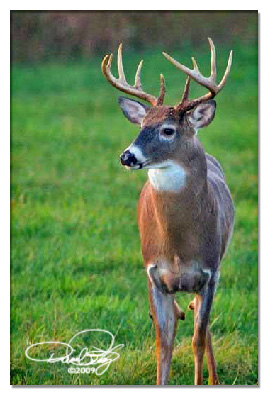
Locating trophy whitetail bucks requires several things: a spotting scope, good binoculars, a high vantage point, the ability to stay downwind of the animals, and perhaps a tiny bit of luck.

You'll notice I said nothing about a bow or firearm. Those may be needed when hunting in the near future, but locating a good buck means spending a good bit of time in the field with the above mentioned items.

One of my buddies, Rich Johnson of Isppeming,  locates Upper Peninsula bucks by sitting high on a rocky outcropping overlooking a crop field with close proximity to some heavy cedar swamps. He sits quietly, often 500 yards or more from where the deer are seen feeding in an open potato field, and studies them with binoculars or a spotting scope.

Another friend uses a tall free near a busy highway. John Davey of rural Petoskey knows the deer won't be crossing the road during daylight hours, so he has constructed a safe and sturdy stand that sits 30 feet off the ground and just off the road right-of-way on his land. He crawls into it, fastens his full-body safety harness, and studies the deer and how they approach the field in the early evening.

"Sometimes I crawl into the same tree while it is still dark, wait for the dawn, and check out how deer exit the feeding area," Davey said. "After several early morning or late afternoon visits, I know where the deer are coming from and where they are going ... and which trails I should be hunting on different winds."

The savvy sportsman does this in several locations, and long before the bow season opens he knows where the deer travel. And best of all, he knows how he will set up on them once the season opens.

Knowing where deer bed down, where they feed and their exact travel routes, can be pin-pointed during the late summer months. These areas will not change unless humans move into the area when deer are normally moving.

I used to have an elevated coop in the middle of an open field. I could see 250 yards to one end of the field, 350 yards to the other end, and the field was about 400 yards wide. Walking in to this elevated coop was a snap, and I'd do it long before the deer would start moving.

The coop had stood in place for 15 years, and deer had come to accept it as a permanent fixture. It had plexiglass windows on all four sides, and a flat floor that allowed the use of a tripod and my Bushnell spotting scope.

I dressed in camo clothing, and had two stools in the stand for use during the firearm and muzzleloader seasons. In mere seconds, a deer that was spotted was instantly brought into sharp focus. It was easy to tell where the buck had come from, and backtracking that animals trail wasn't important. I knew the swamp he bedded in, and the trails he used to enter the field to feed.

The value of my spotting scope was it allowed me the opportunity to zero in on the buck's rack, and determine his size. On many occasions, if I had a friend who really wanted to shoot a decent buck, I knew which stand would be the most productive, where the buck would come from, and when he would show up.

This pre-season scouting, and timing of when bucks arrived, became so skilled that I could predict within two or three minutes when the buck would walk in front of a particular stand. It paid off for many hunters, and if I told them the buck would arrive at 7:23 p.m., they came to realize that I had these bucks pegged. It led to a good number of hunters shooting their first buck.

Johnson told me that that he had been able to do with pre-season scouting, "isn't difficult but, it can be time consuming.” What works for me can work for you, but getting out into the field, laying down some foot prints, and studying deer from afar requires a large investment in time.

"My success comes from a large measure of sweat equity in covering large areas, climbing trees or rocky ledges, and being there when deer move, I no longer trust my memory, but for the past 10 or more years, I write down exactly where and when I spot a nice buck. I watch him until I know all his travel routes."

Some hunters are willing to invest that time, and give themselves a better chance at scoring on a nice buck, and some are not. It's hot, dirty, dusty work, and the bugs can be bad. The results can be commensurate with the effort and work spent gaining in-depth knowledge of a deer and their travel routes.

Many hunters rely on luck to put them in the right spot at the right time, and other sportsmen make their own luck by knowing when to be at the right place at the right time. The big difference is, skill will normally out-produce luck almost every time.

Me, like many of my friends, prefer to make our own luck. It's much more fun that way.

Wednesday, February 09, 2011

Scout wild turkeys now

Scout from a car or truck and stay inside to glass. Look for big gobblers like this one.

Hunters have plenty of time to think about the upcoming spring turkey season. That time can be well spent looking around right now.

Turkeys are gathered together in large flocks, and some flocks number 60 to 100 birds. Occasionally a big gobbler will be with them, or will be found nearby, but many of these huge flocks are hens and last year's poults.

It's somewhat easy to do a bit of really early preseason scouting. We don't really try to single out an exceptional gobbler, but if one is seen, it pays to remember where it was found. Each time we go for a drive, and look for birds, keep a mental or physical written note on where birds are found, the time of day, and approximate size of the flock.

A short drive allowed us to find a large number of birds. Keep track of them.

My wife and I was driving home a week ago when a dozen gobblers scooted across the road and flew. When we were 100 yards away, we saw a large number of hens and poults cross the road and they studied us as we drove by.There were two or three really large Toms in the original group, and the group of hens and poults had some little jakes with their perky two-inch beards. They were casually noticed, and the location remembered. I know a guy that owns that land, and it's likely I can get permission to hunt it if the birds stick around that long.

Obviously, no one knows whether they will draw a first- or second-season tag this spring, but those that applied for the guaranteed last season will get a permit.

Another thing that we don't know is whether those big gobblers we saw will be within five miles of where they were seen last week. Winter birds hang pretty tight to areas where they are being fed, or where food is found, but they seldom stick around much after April Fool's Day. They may continue to be very close if there is a large number of hens, but if the hens split for another area, it's a sure bet the gobblers will follow.

This mid-winter scouting for turkeys is no more than an excuse to spend some time looking for birds. Most hunters know the birds will be scattered before the season opens, but it gives us a chance to pursue our sport without harming the birds.

Mid-winter scouting is easy but keep good notes on where gobblers are seen.

It's always a wise idea not to crowd the birds. I have a window-mount for my Bushnell spotting scope and also carry a good pair of Bushnell (1) binoculars. I drive the back roads, and if birds are spotted, out comes the binoculars and spotting scope, and the turkeys are studied from a distance.

There is no need to get out of the car, and it's wise to keep conversations low. Turn off the car, sit still, don't talk with the window down, and study the birds. Draw a map of five or 10 square miles, and mark where birds are seen.

Note the number of gobblers seen and approximate beard length. Count the number of jakes seen, and note the locations and time of day. Turkeys often develop a pattern of feeding, moving, displaying, dusting and all the other things they do.

In due time, these maps showing date, time of day, number of gobblers seen, travel route etc. will form the basis of a pattern for these birds. As turkey hunting season gets closer, study maps and times to pin down where the birds are found at specific times of day.

If they are seen flying up to roost, note with specific detail where these roost trees are located. If it appears the birds will still be there when your hunting season opens, check with landowners for permission if the birds are roosting on private land.

Turkey scouts become quite adept at hiding their whereabouts. I know a guy that leaves one man in the car, and another outside (away from the birds sight) who appears to be getting ready to change a tire. Hunters who sit motionless, with two pair of binoculars trained on an open field or woodlot, will attract attention from passing motorists.

Do your best to avoid being seen glassing for gobblers. It doesn’t pay to advertise.

I've watched other turkey scouts lay down in the seat to avoid being seen by people in cars passing by. They don't want people to see them studying distant birds.

Looking for birds is a fun way to pass the day, and doing some of it now and again just before the season opens, can be of great help when the season does open. Just make sure to do it often enough so you know where the birds will be on opening day.

And ... don't trespass without permission. Stay in your car, watch, make notes but leave your turkey calls at home. People who sit in a car with the window down, and call to visible birds simply educate them, and there is no sense in doing that because it will just hurt your hunting success.

Posted via email from Dave Richey Outdoors