Showing posts with label keep. Show all posts

Monday, February 21, 2011

Over-thinking the hunt

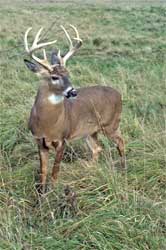
Think too hard about shooting this  buck and it might disappear.

I’m convinced of one thing. It’s my deeply-felt opinion that hunters can over-think a situation and spook deer from their hunting area.

Don’t agree? That’s OK by me. Each of us in this free country are entitled to think what we will, and at times like this, state our opinion. No one needs to agree although I’ve discussed the issue with many hunters, and they agree.

It’s my theory that deer can and will pick up on thought waves. Don’t believe it, then consider this. I was a twin, and my twin before his death could start a sentence on any topic, stop in the middle of a sentemce, and I could complete his thought. Over many years, I've known many sets of twins -- fraternal and identical -- that could do the same thing.

My twin brother and I were inseperable for 63 years before he died of cancer.

We could, within certain parameters, read each others’ minds. I often knew, as a kid, when my brother was getting his butt kicked in a childhood fight. I could perceive his location, and could run to the spot in time to land one on the ear or nose of the bully picking on him. Don’t ask me how it worked but over the 63 years brother George and I shared this world, it worked that way.

Now, after explaining the twin thing, I’ve studied whitetail deer for more than a half-century, I am more than just convinced that the mental attitude of a hunter can create success or render some hunting methods inconsistent or foil them completely.

You don’t need to believe what I am writing but ask that you keep an open mind about what follows. There are many things that we don’t know about the human mind.

Explain to me how an African native can track animals over rocky ground, and when they reach the end of the trail, they find the animal. Explain to me how I can sense a black bear coming to a bait site when I haven’t seen or heard anything that would make me believe that. Explain how when I say “Just one more cast before we leave”, often produces the fish of the day.

I believe that animals can sense potential danger from certain people. Some of my best friends are or were world renowned outdoor photographers. Some can approach quietly within photo range of big bears, wild sheep, goats and deer, and the animals will allow photos to be taken. If that same person is carrying a bow or firearm, the conditions change immediately.

Keep your mind free of any thoughts of hunting, killing, bow or firearm.

Over many years I’ve operated on the theory that predatory instincts carry a special danger signal to wild game. It’s why I never think about shooting a buck or doe. I keep my mind clear, concentrate on thoughts about work or play, or about anything other than killing an animal.

Years ago, when I was learning to deer hunt, I hit on this idea. I test it almost every year by letting a buck get close enough, and if it’s one I wouldn’t shoot anyway, I’ll start thinking about where to place the arrow so the animal, in my mind, died.

Often, within a few seconds, the deer has spooked and run off. Someties it runs out of sight or just out of bow range before stopping, but most of the time the animal puts distance between it and whatever may have scared it. I’m convinced it was my thoughts that chased it away.

Imagine yourself in a strange bar-restaurant, and you feel someone looking at you. A careful search of the room will usually expose the person staring at you. Does it feel hostile? Do you sense danger? It’s the same thing as a buck spooking from thoughts that may lead to its death.

Deer react to stimuli, and may react to your thoughts of shooting them.

Deer don’t think like humans but react to stimuli. How many times have you had the wind in your favor, haven’t moved or made a sound, only to have a buck approach a short distance and then run in the opposite direction? Could you have been thinking about shootinng that deer?

I’ve had some folks say I’m crazy, but in most cases I shoot more bucks than they do. I can’t explain this any better. However, it’s my conclusion after playing with these thoughts for about 40 years, that I’m on to something significant.

So, I think about the Detroit Red Wings or Tigers, wonder who will win the next game, or think about a calm day on a lake. I keep my mind clear of thoughts about killing a buck, never think about my bow or arrows, and often the deer will approach very close. Even as I draw, aim and shoot, I am thinking calm thoughts.

It’s something that works for me. It may your ace in the hole.

Posted via email from Dave Richey Outdoors

Wednesday, February 09, 2011

Scout wild turkeys now

Scout from a car or truck and stay inside to glass. Look for big gobblers like this one.

Hunters have plenty of time to think about the upcoming spring turkey season. That time can be well spent looking around right now.

Turkeys are gathered together in large flocks, and some flocks number 60 to 100 birds. Occasionally a big gobbler will be with them, or will be found nearby, but many of these huge flocks are hens and last year's poults.

It's somewhat easy to do a bit of really early preseason scouting. We don't really try to single out an exceptional gobbler, but if one is seen, it pays to remember where it was found. Each time we go for a drive, and look for birds, keep a mental or physical written note on where birds are found, the time of day, and approximate size of the flock.

A short drive allowed us to find a large number of birds. Keep track of them.

My wife and I was driving home a week ago when a dozen gobblers scooted across the road and flew. When we were 100 yards away, we saw a large number of hens and poults cross the road and they studied us as we drove by.There were two or three really large Toms in the original group, and the group of hens and poults had some little jakes with their perky two-inch beards. They were casually noticed, and the location remembered. I know a guy that owns that land, and it's likely I can get permission to hunt it if the birds stick around that long.

Obviously, no one knows whether they will draw a first- or second-season tag this spring, but those that applied for the guaranteed last season will get a permit.

Another thing that we don't know is whether those big gobblers we saw will be within five miles of where they were seen last week. Winter birds hang pretty tight to areas where they are being fed, or where food is found, but they seldom stick around much after April Fool's Day. They may continue to be very close if there is a large number of hens, but if the hens split for another area, it's a sure bet the gobblers will follow.

This mid-winter scouting for turkeys is no more than an excuse to spend some time looking for birds. Most hunters know the birds will be scattered before the season opens, but it gives us a chance to pursue our sport without harming the birds.

Mid-winter scouting is easy but keep good notes on where gobblers are seen.

It's always a wise idea not to crowd the birds. I have a window-mount for my Bushnell spotting scope and also carry a good pair of Bushnell (1) binoculars. I drive the back roads, and if birds are spotted, out comes the binoculars and spotting scope, and the turkeys are studied from a distance.

There is no need to get out of the car, and it's wise to keep conversations low. Turn off the car, sit still, don't talk with the window down, and study the birds. Draw a map of five or 10 square miles, and mark where birds are seen.

Note the number of gobblers seen and approximate beard length. Count the number of jakes seen, and note the locations and time of day. Turkeys often develop a pattern of feeding, moving, displaying, dusting and all the other things they do.

In due time, these maps showing date, time of day, number of gobblers seen, travel route etc. will form the basis of a pattern for these birds. As turkey hunting season gets closer, study maps and times to pin down where the birds are found at specific times of day.

If they are seen flying up to roost, note with specific detail where these roost trees are located. If it appears the birds will still be there when your hunting season opens, check with landowners for permission if the birds are roosting on private land.

Turkey scouts become quite adept at hiding their whereabouts. I know a guy that leaves one man in the car, and another outside (away from the birds sight) who appears to be getting ready to change a tire. Hunters who sit motionless, with two pair of binoculars trained on an open field or woodlot, will attract attention from passing motorists.

Do your best to avoid being seen glassing for gobblers. It doesn’t pay to advertise.

I've watched other turkey scouts lay down in the seat to avoid being seen by people in cars passing by. They don't want people to see them studying distant birds.

Looking for birds is a fun way to pass the day, and doing some of it now and again just before the season opens, can be of great help when the season does open. Just make sure to do it often enough so you know where the birds will be on opening day.

And ... don't trespass without permission. Stay in your car, watch, make notes but leave your turkey calls at home. People who sit in a car with the window down, and call to visible birds simply educate them, and there is no sense in doing that because it will just hurt your hunting success.

Posted via email from Dave Richey Outdoors

Friday, December 10, 2010

Bowhunting tips to remember


Hunters seldom see good racks like this but wait for him to turn.


Bow hunters are always looking for a shortcut to personal success. What can I do to make each trip better?

First of all, don't expect every trip to be successful in terms of killing a deer. It won't be, and besides, if it was possible, deer hunting would soon become rather boring and tedious.

I've come tonight with a list of things hunters can do to increase their success rate, but I'll probably forget a few and that will make for another blog on another day.

Deer hunting tips to live by.


*Practice shooting every day if possible. Learn your bow, what it will do, and practice often with it. Everything else in these tips will fall apart unless you can hit what you are shooting at.

*Hunting isn't just from October through November. It should be a year 'round activity. Of course, you can only shoot in season, but scouting is often overlooked by lazy hunters. Spend time in the field every week, and especially from mid-August through the end of September.

I went out earlier today for a look-see. Snow in copious amounts is schedule for tonight and tomorrow. Deer often move ahead of a winter storm, but there was very little deer traffic tonight, which makes me think the storm may not arrive until late tonight or early tomorrow.

*Pick ground blind areas and tree stand sites with care. Know why deer move to those spots, know where they come from and where they are going. The more a person knows about how deer travel through an area is vitally important to success.

*Don't go above 15 feet in a tree stand. The downward angles are acute, and missing or wounding a deer become more likely for many people. Those deer shot at nose-bleed elevations on the television could have been shot from 15 feet just as effectively.

It’s not needed to hunt high. Be downwind and don’t move.


*Learn how to be scent-free. Above all else, hunt downwind of where deer travel. If the wind switches so you are not downwind of the deer, move before they get your scent. Wear clean, tall rubber boots to hunt in, and stay away from gasoline or cooking odors. If money permits, invest in a Scent-Lok suit. It can be a wonderful investment.

*Sitting still is so crucial, and yet many hunters fidget and move around, making noise and spooking deer. Learn how to focus your mind and body into absolute silence with no movement. Make a movement only when deer are feeding or looking away, and move in slow motion. Hurry-up movements are easily spotted by nearby deer and such moves tend to create more noise.

*Learn to see deer. Forget about seeing a calendar pose of a majestic whitetail buck. Often, bucks are first seen by a flicking tail, moving ear, sunlight shining off antlers, but often the first sighting is just a piece of the horizontal body outline in a vertical surrounding. Look as deep into cover as possible, and anything that moves in-between will be seen. Learn how to pick apart the cover in search of deer.

*Learn how to get to and from a stand without scaring deer. Each stand should have at least two entrance and exit routes, and mix them up. Go in one way and out another, and try not to use the same stand two days in a row. You must pattern deer; don't let the animalss pattern you.

*Study deer at every opportunity, from springtime though the winter months. Watch and study their actions and body language, and get accustomed to seeing deer at close or long range. Buck fever is a fear of failing, and the best way to get rid of that bigaboo is to find a place where deer can be studied at close range. The more you watch deer, the less often buck fever will set in.

*Pick a spot. Good deer hunters never shoot for the center of mass; instead, they pick an exact and precise place where they wish to hit. The obvious organs to aim for and hit are the heart and lungs.

Know your bow, pick a spot, and make a smooth release.


*Always take high-percentage shots. This means taking only broadside or quartering-away shots. Wait for the deer to give you the shot opportunity you want. Don't take the first shot a buck offers. Allow them to move and turn, and present you with the optimum shot opportunity. Be patient and wait for the perfect shot.

*Always know what other deer in the area are doing. Don't get so intent on one animal that you forget that other deer may be looking around for danger. Keep track of all the deer, and  wait until your deer has its head down and feeding or looking at another deer and double-check the other nearby deer. If the animal is in the proper position, aim, pick the exact spot, and don't lift your head until the arrow hits and the Game Tracker string flutters out. Always use a Game Tracker because it can offer a helping hand in recovering a wounded deer.

*Listen to your gut instincts. If you have bad feelings about taking a shot, or worry about missing, don't shoot. Your gut instincts are always right, and if you ignore them, a wounded deer may be the result.

*Use your senses of hearing, seeing, and smelling. Those three senses are what a deer will be using to try to stay alive once hunting season begins.

*Believe in yourself, your bow, and your shooting ability. Confidence is an important part of hunting, and if you feel confident, you will be. If you dither over choosing a spot to hunt, forget it.

There are many other tips, but these are enough to start with. Master these, and we'll consider a graduate course sometime in the future.

Posted via email from Dave Richey Outdoors