Showing posts with label mind. Show all posts

Tuesday, September 25, 2012

Do human thought waves spook deer

DRO - Buck and Human Vibes
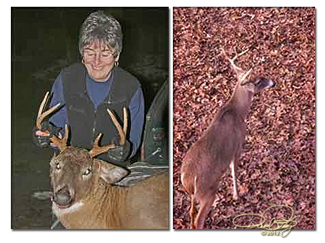
My wife Kay knows how to shoot bucks. A quartering-away shot
photo c. Dave Richey Outdoors ©2012

You may have read this before because I've posted it a few times over nine years. If so, revisit it, determine for yourself how it may apply to your hunting techniques.

Ever see a buck coming through the woods and suddenly it flees for no apparent reason?  Have you ever had a doe stop upwind of your stand, snort, blow, stomp her foot and run off even though the wind was right and you hadn't moved.

Sure you have. It happens to everyone on occasion. What follows may disturb some hunters, could cause other sportsmen to wonder if this topic is true, and if so, how does it happen?

New hunters arrive on the scene every year, and probably haven't read this before or missed it when it was published years ago. It needs to be revisited every so often.

Trust me on this: This topic will be a quantum leap for some deer hunters when they read it. I've stated my opinions at deer-hunting seminars I've given over many years, and some folks sit in total disbelief. They look as if they've been sucker-punched.

Don't stop reading just yet. These thoughts, if you accept and think logically about the topic, may make you a better deer hunter. We'll be talking about your mental rather than physical actions.

My many years of testing this theory

It's not important that hunters believe as I do, but over 40-plus years I've tested this theory on countless occasions in many scattered locations. Each time it is tested, the result is the same. I strongly believe what follows to be true, and all I expect of readers is to study and decide if they believe and trust it.

Know this before we go any further. There is much that modern science doesn't know about the brain, brain waves, and how it affects people and many of the wild animals we hunt.

My thoughts on spooking deer

Here goes: I believe, being a very capable and deep thinking predator, that deer -- especially does -- can sense the presence of danger without the benefit of movement, noise, scent or other stimuli. I once hunted mountain lions in northern Arizona, and my guide told me the reason he feels cougars kill mostly mule deer bucks is because those deer are so full of themselves they act and feel immune to danger.

They are not alert or attuned to the presence of danger. Does, on the other hand, are constantly alert to the possibility of nearby predators as they try to protect their fawns from predation.

My thoughts are pretty straightforward. I believe that thinking hard about killing an incoming buck or doe can transfer some type of danger signal to the animals. Are human thoughts carried by brain waves? Do these vibes, for lack of a better description, throw out a silent alarm that does can pick it up much easier than bucks?

Clear your mind of all predatory thoughts

I never think, after spotting an incoming buck or doe that I am going to shoot that animal. My brain stays in neutral, idling without conscious thought. I purposely avoid thinking about shooting and killing the animal. I may and often do spend that time thinking about my next article to be written.

My belief is to never stare at a buck or doe. Looking into a deer's eyes seems to allow that animal to feel or sense human presence. My thoughts remain neutral, and when I draw, aim and shoot, I'm concentrating on my aiming point but am not thinking about killing the animal.

Testing this theory over many years has proven informative. My normal hunting method is to allow my eyes to sweep over the deer without lingering on any part of its head or body. It's easy to establish the animal is a buck if antlers are visible, and that data is stored in my mind. I know it is a buck but no longer think about it, and I never dwell on such thoughts, which I feel are counterproductive.

Instead, I think about going hunting the next night, which stand may be productive under the current wind direction, or I'll recall something that has nothing whatever to do with hunting. I could just as easily think about painting the basement walls, which is a horrid thought, even when trying to fool a nice buck.

My main train of nonviolent thoughts

However, my mind knows why I'm out there, and that is to possibly shoot a buck or doe. However, my mind focuses on another thought or topic, or on nothing at all, and when it tells me it's time to shoot, the bow is drawn, the red-dot settles behind the front shoulder and the arrow is gone before my mind tells my finger to shoot.

The deer never senses a threat or any unease. It doesn't feel my predatory instincts coming its way, and the deer remains relaxed. Calm and cool thoughts or even not thinking at all is far preferable than telling yourself that the shot will go through its lungs and heart. That may happen, but if you don't think hard on it, I'm convinced the deer will not bolt unless you move or make a sound at the wrong time.

On the other hand, I've often thought about killing the buck as a specific test. I'll think: Here comes a buck, and look at those antlers. My eyes scan the bone on the buck's head, and then I look at its eyes, and then strongly focus my attention on the heart-lung area.

The buck, suddenly alert, turns his head to look around. My eyes lock on his, a predator against a nice buck. His head turns slowly away, and I come to full draw, think about driving the arrow into the chest cavity, and at about that time, the animal suddenly bolts off in panicked flight.

There has been no noise or sudden movements on my part, and no way the deer could smell me. But my thoughts were keenly focused on shooting that animal, and perhaps this comes from my many years of hunting experience and shooting many deer. Perhaps my vibes are stronger than those of others who have largely been unsuccessful.

A human example to illustrate my point

Think of it this way. I no longer drink, but back in the day, my entering a bar was always an experience. If I were a stranger, I'd immediately sense the vibes of other people looking at me, and then would come a strong feeling that someone was staring intently in my direction. With practiced determination, my eyes would scan the room until the person staring at me was located.

It was then I'd size up the situation. Is this a friendly person or one who wants to put knuckle bumps on my noggin? If I sensed agitation or aggressive hostility, I'd turn and walk out while it was possible. It's the same thing with deer. Flight is always preferable to fight.

An example of street smarts

In some areas they often say a person has "street smarts." Why. Pray tell, don't deer have "woods smarts?" They do, and their instincts are more finely honed toward survival than yours or mine.

If deer sense danger, however it is transmitted to them, it becomes an instinctive reaction. It's like an adrenaline rush: it triggers the fight or flight response. Deer don't grow large antlers by ignoring these little niggling feelings. I draw the line at granting deer human-like qualities, but am convinced these animals can pick up hostile vibes from someone trying to shoot it with a bow, which are invariably close shots.

Deer can do the same thing, as humans although how they process this invisible information is an unknown factor. Years ago, while shooting some of the deer photos needed for stories, the deer would hear the shutter click, look around, and nothing happened. Minutes later another photo or two would be taken, and the deer would become used to the noise. Nothing happens, and they would soon relax.

It's strange but deer seem to sense when a hunter or photographer means no harm, and while an old doe may go charging off, if they are not unduly alarmed, they often return within minutes.

Deer that may sense a hunter intent on shooting them can get as freaky as a mule deer doe when she suspects the presence of a nearby cougar. She doesn't want her or her fawns to be dinner, and will take whatever evasive actions are needed to avoid the predator

Bucks, on the other hand, seem unaware of danger unless it picks up some predatory vibes, catches a whiff of human odor or sees some movement. Often, if a doe spooks and runs off, a nearby buck may do the same thing without feeling any sense of danger.

This is where it becomes extremely important to remain in a non-predatory mind-set. Think about killing, and things can quickly change and game can vanish without a shot being taken.

A quick recap

Never look deer in the eye, never think about shooting them, scan past the animal, never put a lingering stare on the deer, and if I'm about to shoot, my mind is emptied of all predatory thoughts. Ninety-five percent (or more) of the deer that have fallen to my arrows were dead before they knew their lives were in danger.

I repeat: it's not necessary you believe this, and hunters can continue to hunt as they choose. However, when I hunt, my purpose is to get close to deer, never get them excited, and if the right buck comes by, I'll take the shot. Cougars hunt the same way and they are far more deadly predators than most humans.

It's quite likely this may be the most radical bit of deer hunting lore you'll read this year. I'm not trying to change your hunting style or your mind-set, but ask you to consider an alternative line of thinking when deer approach. Many of the key hunters in North America, if pinned to the floor with a hammerlock, will agree with these thoughts. All I'm taking is your time (the line from an old song) and my hopes are you'll give this the mental consideration it deserves.

Feel free to share your thoughts. Do you agree or disagree? Your comments, please. Contact me at dave@daverichey.com. Thanks for your time spent reading this. Give it some thought, and you may or may not disagree.

Posted via email from Dave Richey Outdoors

Friday, March 30, 2012

Sitting Still is an art. Learn now.

Calm your mind before starting to hunt; Don’t think!

sitstill
Sitting still is an art. Sit like you're asleep, but don't. Watch closely and learn.
photo Dave Richey ©2012
There is an art to sitting still. Not only motionless but doing so without making a sound.

It may sound easy but it is a very difficult thing to do. Everyone fidgets at times, moving around, easing that tree stub that pokes you in the back, and swatting at mosquitoes.

Trust me, sitting still is an art. Not everyone can do it, and I can set like a statue but nothing like I could 20 years ago. Age brings with it knowledge and more aches and pains.

Learn some of the sitting-still methods before bow season

The knowledge is what allows me to tune out the sore back, hips, legs and other body parts. Knowledge is the key to becoming a successful deer hunter.
Anyone who ever studies deer should have learned two things very quickly. Stay downwind of the deer, and  learn how to sit still.

It is not easy to sit still. Those who think they are being motionless and silent are, in many cases, moving far too much and making some noise in the process.

How do you sit still? The best way to learn is to go where deer are plentiful, and sit in a tree or a ground blind. See how long it takes before the hunter spooks deer.

Many feel that only spooked deer snort. Lots of deer simply melt back into cover, and leave the area silently. They are spooked but do not snort.

Watch deer, and see how often they stop and look around for danger. I've watched large numbers of deer over the years stand motionless for 30 minutes to an hour after detecting the presence of a hunter. Not a muscle, ear, eye or anything will move it they've  been alerted to nearby human  presence.

One of my hunting friends used to hunt a funnel leading out of a cedar swamp to open hardwoods. The swamp was full of water, and it was easy to tell where the deer were coming from. Deer that were wet clear up to their belly were coming through the swamp. Those deer could be heard coming for 15 minutes as the water sloshed around as they moved slowly.

Develop your own method for clearing your mind

Once he spotted a buck moving slowly, and then it stopped. It was 200 yards away but there was an open spot he could see through with binoculars, and he knew there was a hunter upwind of the deer. That animal stood  in cold November water for over an hour without moving. Dusk came and went, and the buck still stood in the water, as motionless as a statue.

How do you sit still? Part of it comes through practice but much of it comes from a total state of mental relaxation. Put your mind at ease, forget about aches and pains and that stiff little stub poking into your rump.

Tune it out. The more you think about it the more it will bother you. The same is true of mosquitoes early in the bow season; forget about them, and the less you move the less they will bother you.

Think good thoughts about good friends. Leave business problems at the office, and dismiss them from your mind. Mentally think about something calm and pleasing. Put your mind in a relaxed state. Forget missed phone calls or upcoming doctor appointments. Clear your mind of anything and everything, relax and don't think.

Purge your mind of all thoughts and picture yourself somewhere lovely, a spot where you feel a gentle sense of peace, and where nothing can affect you. A friend imagines himself on a calm pond where no wind is felt, no sound is heard, and in his mind he lays back against a boat cushion, stares up at the clouds and his breathing slows down. He keeps seeing that gentle pond in his mind's eye, and he sits quietly and without motion.

Time seems to pass slowly, and almost as if from a haze, out steps a buck. The animal is upwind, sniffing and looking for danger. Sensing none, he steps forward two or three more paces, and stops.

Don’t fall asleep but act like you are; Pay attention to deer

Relaxed, the deer looks around and watches his back trail. As the deer looks away, the hunter slowly and quietly comes to full draw, aims and kills that deer.

It was easy because the hunter was relaxed. A relaxed sportsman, at peace with body and soul, doesn't move and doesn't make a sound.

It takes practice but then so do many other thing in life. Sit in the woods during the summer months, and practice the art of sitting motionless and silent, but realize you needs practice. Do it now, and you'll be ready for the hunting season when it arrives.

Wednesday, January 18, 2012

Common sense and intuition work if you pay attention

Really solid ice is needed to support angler and shanty

kay-pike-iceshanty
When it comes to the old cliche like "treading water," it means much the same as "spinning your wheels." And frankly, that's about where I'm at while waiting for lake ice to form a solid mantle on area lakes.

It's been a long and frustrating wait. But now, a few reports are coming in. One came from a good friend of mine who travels widely across the state, and he is telling me that many smaller lakes in northern counties now have two to five inches of ice.

Is the ice safe? He tells me that it is marginal, even on lakes with five inches. Strong winds have broken up some ice a couple of days ago, and it has frozen again. Broken ice that re-freezes isn't nearly as safe as a solid layer.

Don't fish alone on ice, and pay attention to instincts

And then there are the springs to watch out for. Springs can weaken ice directly above where the water bubbles out of the lake bottom, and it can cause wide variations in ice thicknesses in the area.

Inlets and outlets of lakes can cause serious ice problems as well. The moving water tends to eat away at the bottom of the ice, weakening it occasionally faster than cold weather can freeze it.

There are other problems. Wooden docks, old wood pilings and posts, and other woody debris sticking through the ice surface can seriously weaken the nearby ice.

A serious problem with late-forming ice is that if the ice has been broken apart, and then freezes again, it freezes at an uneven rate. One spot can have the strength of regular ice, and 10 yards away is a spot that has very brittle and poor ice.

Weak spots may appear safe, especially if they have a certain amount of snow on top. Too much snow insulates the ice, and it doesn't freeze evenly or properly. A skiff of snow can hide weakened ice, and a misstep by an angler can send him crashing through.

Ice doesn't freeze evenly and can be treacherous.

I'm seriously wanting to go ice fishing. However, I am antsy about going out on early ice. I want safe ice under my feet, and I've been known to pass up ice fishing all winter if the ice is unstable. Years ago, I would accept such risks.

Now days, there may be a tinge of yellow running up my back. If any part of me gets that certain feeling, a hunch, an intuition, a queasy feeling in my guts, that things may not be right, I stay off the ice. I met a friend who told me the ice was safe, and I had a strong gut feeling about the ice conditions. My instincts told me to stay on shore.

I told him that perhaps I would join him later. He got 10 feet from shore, and went through into chest-deep water. No danger of drowning, but he was spitting and sputtering from the cold water as he broke ice back to shore.

He wanted to know why I didn't follow him

He was soaked through, and was heading for his car. He paused while unlocking his car door and asked a pointed question.

"Why didn't you walk out onto the ice with me?" he asked. "Why did you stand up on shore?"

I told him that my instincts, gut feelings, whatever one wants to call them, have taken care of me over the years, and I've learned to rely on them. They told me to stay on shore, which I did, and I told him that is why you are cold and wet and I am not.

Gut instincts. Many people have never cultivated or listened to their inner feelings. It's why some people become victims. Me, I don't care to become a winter statistic as a result of stupidity. It also answers the question of why I don't ride snowmobiles.

Monday, February 21, 2011

Over-thinking the hunt

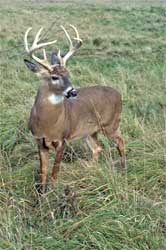
Think too hard about shooting this  buck and it might disappear.

I’m convinced of one thing. It’s my deeply-felt opinion that hunters can over-think a situation and spook deer from their hunting area.

Don’t agree? That’s OK by me. Each of us in this free country are entitled to think what we will, and at times like this, state our opinion. No one needs to agree although I’ve discussed the issue with many hunters, and they agree.

It’s my theory that deer can and will pick up on thought waves. Don’t believe it, then consider this. I was a twin, and my twin before his death could start a sentence on any topic, stop in the middle of a sentemce, and I could complete his thought. Over many years, I've known many sets of twins -- fraternal and identical -- that could do the same thing.

My twin brother and I were inseperable for 63 years before he died of cancer.

We could, within certain parameters, read each others’ minds. I often knew, as a kid, when my brother was getting his butt kicked in a childhood fight. I could perceive his location, and could run to the spot in time to land one on the ear or nose of the bully picking on him. Don’t ask me how it worked but over the 63 years brother George and I shared this world, it worked that way.

Now, after explaining the twin thing, I’ve studied whitetail deer for more than a half-century, I am more than just convinced that the mental attitude of a hunter can create success or render some hunting methods inconsistent or foil them completely.

You don’t need to believe what I am writing but ask that you keep an open mind about what follows. There are many things that we don’t know about the human mind.

Explain to me how an African native can track animals over rocky ground, and when they reach the end of the trail, they find the animal. Explain to me how I can sense a black bear coming to a bait site when I haven’t seen or heard anything that would make me believe that. Explain how when I say “Just one more cast before we leave”, often produces the fish of the day.

I believe that animals can sense potential danger from certain people. Some of my best friends are or were world renowned outdoor photographers. Some can approach quietly within photo range of big bears, wild sheep, goats and deer, and the animals will allow photos to be taken. If that same person is carrying a bow or firearm, the conditions change immediately.

Keep your mind free of any thoughts of hunting, killing, bow or firearm.

Over many years I’ve operated on the theory that predatory instincts carry a special danger signal to wild game. It’s why I never think about shooting a buck or doe. I keep my mind clear, concentrate on thoughts about work or play, or about anything other than killing an animal.

Years ago, when I was learning to deer hunt, I hit on this idea. I test it almost every year by letting a buck get close enough, and if it’s one I wouldn’t shoot anyway, I’ll start thinking about where to place the arrow so the animal, in my mind, died.

Often, within a few seconds, the deer has spooked and run off. Someties it runs out of sight or just out of bow range before stopping, but most of the time the animal puts distance between it and whatever may have scared it. I’m convinced it was my thoughts that chased it away.

Imagine yourself in a strange bar-restaurant, and you feel someone looking at you. A careful search of the room will usually expose the person staring at you. Does it feel hostile? Do you sense danger? It’s the same thing as a buck spooking from thoughts that may lead to its death.

Deer react to stimuli, and may react to your thoughts of shooting them.

Deer don’t think like humans but react to stimuli. How many times have you had the wind in your favor, haven’t moved or made a sound, only to have a buck approach a short distance and then run in the opposite direction? Could you have been thinking about shootinng that deer?

I’ve had some folks say I’m crazy, but in most cases I shoot more bucks than they do. I can’t explain this any better. However, it’s my conclusion after playing with these thoughts for about 40 years, that I’m on to something significant.

So, I think about the Detroit Red Wings or Tigers, wonder who will win the next game, or think about a calm day on a lake. I keep my mind clear of thoughts about killing a buck, never think about my bow or arrows, and often the deer will approach very close. Even as I draw, aim and shoot, I am thinking calm thoughts.

It’s something that works for me. It may your ace in the hole.

Posted via email from Dave Richey Outdoors

Saturday, February 19, 2011

Sitting still is an art


The author shot this bear from the ground at a range of six feet.

Anyone who has bow hunted more than a few days should know the importance of sitting still. Knowing that, and doing it right, are two entirely different things.

Sitting still means at least two different things. It means being motionless and quiet. One without the other makes little sense, and it will spook game.

I seldom hunt with another person, but in the past when my kids and grandkids were young, they would go out with me. Most adults can't sit still, and even fewer children can do so.


Solitary hunters often do better at bow hunting than will two or three buddies.

One of my grandchildren was fidgeting when I whispered to him to sit still. He whispered back that he was sitting still.

I told him his idea and my idea of being motionless and quiet were not the same.It's taken years to master the art of silent sitting. I've taken more black bears than I have fingers and toes, and have learned some of the tricks to sitting as still as a stone for long periods of time.

"The first bear I shot," another savvy hunter told me, "was on Sept. 10, opening day of Upper Peninsula bear season. This was well over 30 years ago, and tree stand hunting wasn't legal. I sat alongside but downwind of an active bear trail with my back against a big cedar root-wad on a warm autumn day. The trail was only six feet away.

"Sometime later, I awoke from my dozing and cracked one eye lid to see a black bear walking past. I made a smooth draw and an clean bow shot that took the bruin behind the front shoulder. It ran only 25 yards into tall marsh gras and dropped."

The hunter said he was absolutely motionless when the bear walked by because he was sound asleep. He admits it was an accident, but he's since learned to sit without movement or sound for long periods of time.

Over many years of hunting bears and deer, I've discovered the trick to being still is to be comfortable, and a hunter must learn how to relax and be at ease with himself and his surroundings if he hopes to be motionless and quiet. The first step is to remove anything that can cause discomfort while sitting

My primary problem is it's necessary to remove my billfold from my back pocket. If it is left in, my sitting time is 30 minutes or less before my hip begins to hurt from an old injury. No one can sit still if their butt is painfully sore.


Find a place where the human body can be comfortable and then relax.

Sit on the ground, and a root an inch under the dirt will put a crease in your butt, and you'll start moving to get comfortable. I make certain if I'm in a tree stand that no branch stub is digging into my hip, ribs or spine. A stone in the dirt under you hind end will feel like a boulder after 30 minutes.

Check out each spot wherever you hunt. Remove offending branches or broken branch stubs. Many tree stands have uncomfortable seats because the seat is too low, and your knees are up under your chin and that makes for an uncomfortable seat. Just as bad or worse is a seat that is too high, and you have to sit on the edge of the seat to keep your feet steady on the platform. This cuts off blood flow to your legs, and your toes and feet go to sleep, which leads to more movement.

Learn to get physically comfortable first, and then learn to relax your body and mind. A man told me once that he meditates while in a stand, and although his eyes may be closed and his heartbeat and respiratory system slows down, he can hear the rustle of bear hair against bracken ferns or the faint twig snap of a wandering buck.

This isn't recommended for someone unaccustomed to meditation. What works for most of us is to free our brain of all thought, to feel comfortable and relaxed, and to will yourself to being motionless. I've had bucks approach to within several feet of me without seeing any movement, and that is part of the secret. Keep your mind uncluttered by unnecessary details, and it's much easier to remain still.

One trick of mine is to fix your attention on a distant object, and stare at it. It will blur, come back into focus, and blur again. Stick with it, and don't think of deer or work or anything else, and try to become one with your surroundings. Get comfortable and don't feel like an intruder in the woods.

That works for me and some other people I know, but it may not work for you without a great deal of concentrated practice. The first and foremost thing is to be comfortable. Once the human body is comfortable, start working on the mind.

Soon, with continuous practice, it will be possible to sit motionless for 30 minutes. Then start working on being motionless for an hour. If you can get up to two or three hours, many of your hunting problems will be solved.


Expect sudden noises like flushing grouse, snorting deer or chattering squirrels.

Learn to expect sudden noises, such as a red squirrel chattering. Don't be startled when a bear or deer steps through dry leaves. Be alert but motionless and still. Sooner or later whatever made the noise will step into view. Never turn to look behind you.

The old Negro League pitcher 59 years ago  -- Satchell Paige -- had it right when he once said: "Don't look back. Something might be gaining on you." That thought should be considered by hunters who wish to remain motionless.

If you are not moving, you won't be making noise (unless you snore). Without movement or noise, the only thing you must worry about is being winded. Stay downwind of where bear or deer travel, and you will have removed most of the key things that can spook animals.

Turkey season opens in a couple of month, and movement or  sound (except a turkey call) will spook birds. Their vision is like you or me looking through 10-power binoculars. I wear a camo face mask that covers  my face, ears and glasses, and wear brown gloves on my hand. The trick to shooting a gobble-bird is to be ready for a shot when he steps within range. Sit with the shotgun across your knees, and try to raise it and aim at a bird, abd all you'll see will be tailfeathers going away.

Practice now, long before turkey or bow season opens, to sit still and motionless in a non-hunting environment. If you can pull that off for two hours, and you follow the other common-sense hunting rules, there won't be a bear, deer or gobbler that will be safe around you.

Sitting still and not moving any part of your body except your eyes is simply a case of mind over matter. Humans do have a brain, and once they condition it to silent inactivity, their hunting skills will go up.

Friday, December 10, 2010

Bowhunting tips to remember


Hunters seldom see good racks like this but wait for him to turn.


Bow hunters are always looking for a shortcut to personal success. What can I do to make each trip better?

First of all, don't expect every trip to be successful in terms of killing a deer. It won't be, and besides, if it was possible, deer hunting would soon become rather boring and tedious.

I've come tonight with a list of things hunters can do to increase their success rate, but I'll probably forget a few and that will make for another blog on another day.

Deer hunting tips to live by.


*Practice shooting every day if possible. Learn your bow, what it will do, and practice often with it. Everything else in these tips will fall apart unless you can hit what you are shooting at.

*Hunting isn't just from October through November. It should be a year 'round activity. Of course, you can only shoot in season, but scouting is often overlooked by lazy hunters. Spend time in the field every week, and especially from mid-August through the end of September.

I went out earlier today for a look-see. Snow in copious amounts is schedule for tonight and tomorrow. Deer often move ahead of a winter storm, but there was very little deer traffic tonight, which makes me think the storm may not arrive until late tonight or early tomorrow.

*Pick ground blind areas and tree stand sites with care. Know why deer move to those spots, know where they come from and where they are going. The more a person knows about how deer travel through an area is vitally important to success.

*Don't go above 15 feet in a tree stand. The downward angles are acute, and missing or wounding a deer become more likely for many people. Those deer shot at nose-bleed elevations on the television could have been shot from 15 feet just as effectively.

It’s not needed to hunt high. Be downwind and don’t move.


*Learn how to be scent-free. Above all else, hunt downwind of where deer travel. If the wind switches so you are not downwind of the deer, move before they get your scent. Wear clean, tall rubber boots to hunt in, and stay away from gasoline or cooking odors. If money permits, invest in a Scent-Lok suit. It can be a wonderful investment.

*Sitting still is so crucial, and yet many hunters fidget and move around, making noise and spooking deer. Learn how to focus your mind and body into absolute silence with no movement. Make a movement only when deer are feeding or looking away, and move in slow motion. Hurry-up movements are easily spotted by nearby deer and such moves tend to create more noise.

*Learn to see deer. Forget about seeing a calendar pose of a majestic whitetail buck. Often, bucks are first seen by a flicking tail, moving ear, sunlight shining off antlers, but often the first sighting is just a piece of the horizontal body outline in a vertical surrounding. Look as deep into cover as possible, and anything that moves in-between will be seen. Learn how to pick apart the cover in search of deer.

*Learn how to get to and from a stand without scaring deer. Each stand should have at least two entrance and exit routes, and mix them up. Go in one way and out another, and try not to use the same stand two days in a row. You must pattern deer; don't let the animalss pattern you.

*Study deer at every opportunity, from springtime though the winter months. Watch and study their actions and body language, and get accustomed to seeing deer at close or long range. Buck fever is a fear of failing, and the best way to get rid of that bigaboo is to find a place where deer can be studied at close range. The more you watch deer, the less often buck fever will set in.

*Pick a spot. Good deer hunters never shoot for the center of mass; instead, they pick an exact and precise place where they wish to hit. The obvious organs to aim for and hit are the heart and lungs.

Know your bow, pick a spot, and make a smooth release.


*Always take high-percentage shots. This means taking only broadside or quartering-away shots. Wait for the deer to give you the shot opportunity you want. Don't take the first shot a buck offers. Allow them to move and turn, and present you with the optimum shot opportunity. Be patient and wait for the perfect shot.

*Always know what other deer in the area are doing. Don't get so intent on one animal that you forget that other deer may be looking around for danger. Keep track of all the deer, and  wait until your deer has its head down and feeding or looking at another deer and double-check the other nearby deer. If the animal is in the proper position, aim, pick the exact spot, and don't lift your head until the arrow hits and the Game Tracker string flutters out. Always use a Game Tracker because it can offer a helping hand in recovering a wounded deer.

*Listen to your gut instincts. If you have bad feelings about taking a shot, or worry about missing, don't shoot. Your gut instincts are always right, and if you ignore them, a wounded deer may be the result.

*Use your senses of hearing, seeing, and smelling. Those three senses are what a deer will be using to try to stay alive once hunting season begins.

*Believe in yourself, your bow, and your shooting ability. Confidence is an important part of hunting, and if you feel confident, you will be. If you dither over choosing a spot to hunt, forget it.

There are many other tips, but these are enough to start with. Master these, and we'll consider a graduate course sometime in the future.

Posted via email from Dave Richey Outdoors

Wednesday, November 24, 2010

It’s all in your head


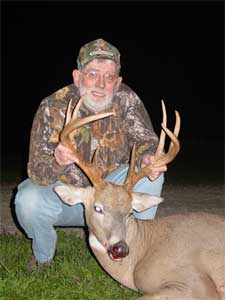
The author shot this nice buck by practicing what he preaches.


There is an art to sitting still. It means much more than being  motionless; it means being still without making a sound.

This may sound easy but it is a very difficult thing to accomplish for more than 10 minutes. Everyone who bow hunts for deer will fidget, move around, or easing that tree stub that sticks you in the back.

Think about this: we watch a musical and our foot taps to the music. We think, and our fingers and head moves. The trick to sitting still still without noise.

To acquire such needed skills it’s important to practice.


Sitting still is an acquired talent. Not everyone can do it, and I can still set as motionless as a statue at the age of 71, but it’s nothing like I could do 20 years ago. Age brings with it knowledge for those willing to learn. It also brings more aches and pains that can affect our ability to remain still.

The knowledge of how to do it is what allows me to tune out the sore back, hips, legs and other aches and pains where many injuries occurred years ago. Knowledge is a key to becoming a successful deer hunter, and sitting still is just one part of it.

Many years ago my back was broken, and a  full-body cast was attached. Any movement took time to do, and the movements were like waving a flag.  It did make me learn to sit still because I couldn’t move my body easily. Accepting that was the first step to my success, and once I got out of it, I continued to practice sitting still.

Don’t think that my sitting-still philosophy means going out and breaking your back. That’s no fun. If you can follow this anecdote and understand why I couldn’t move, it may  help.

Anyone who has ever studied deer should have learned two things quickly. Stay downwind of the deer, and  learn how to sit still.

Sitting still is a matter of mind over matter.


Sitting still is not easy. Those who think they are being motionless and silent often are moving too much and making some noise. Camouflage clothing is not a cure-all for your hunting ills.  Deer spot movement regardless of whether you wear camo or blaze orange.

Don’t move? A person’s nose itches so they scratch it. A tree stub pokes them in the butt or legs, and they try to ease the discomfort. A leafy branch blocks their view so they move their head to see more clearly. A rustle in dry leaves sets their head in motion to see what created the sound. Boredom sets in, and people become twitchy.

Many hunters feel they are motionless, but in fact, all parts are in motion. Any movement will catch a deer’s attention, and if that happens, it will stand in cover until they identify what spooked them. If they determine it was caused by a human, that hunting spot will be blown for the immediate future.

How do you sit still while hunting? Sit in a tree or a ground blind. See how long it takes before a deer is spooked by hunter movement. Pay attention to what triggers fear in deer.

Many sportsmen seem to feel that only spooked deer will blow and snort. Many antsy deer simply disappear, and slowly leave the area. They are spooked but will not snort.

Study deer during summer months and learn to relax around them.

Watch deer, and see how often they stop to the terrain. I've watched many deer stand motionless for 30 minutes to an hour after detecting the presence of a hunter in a tree stand. They do not move a muscle, ear, eye tail or anything will move it they've  been alerted to possible danger.

A hunting buddy used to hunt a funnel leading out of a cedar swamp and into open woods. This swamp was a thick waterhole, and it was easy to tell where deer came from. Those that were wet up to their belly were coming through the swamp. Those deer could be heard coming for 15 minutes as the water sloshed around as they moved. Those deer attracted the attention of any nearby hunter.

Once he spotted a buck moving slowly, and then it stopped. It was 200 yards away but there was an open spot he could see through with binoculars, and he knew there was a hunter upwind of the deer. That animal stood  in cold November water for over an hour without moving. Dusk came and went, and the buck still stood in the water, as motionless as a statue.

This begs the obvious question: how do you sit still? Part of it comes through practice but much comes from a total state of mental relaxation. Put your mind at ease, forget about aches and pains, and that stub in the rump. Relax your brain and body.

Tune everything out of your mind. The more you think about an ache or pain, the more it bothers you. The same is true of bugs early in the bow season, and motionless hunters are seldom bothered by insects.

Mentally put all of your thought into something calming and pleasant. Put your mind in a relaxed state. Forget about missed phone calls or upcoming doctor appointments. Clear your mind of anything and everything, relax and simply do not think.

Purge your mind of extraneous thoughts, and picture yourself at peace. A spot where you feel a gentle sense of security, and where nothing bothers you.

Time seems to pass slowly, and almost as if from a haze, out steps a calm buck. The animal is upwind, sniffing and looking for danger. Sensing none, he steps forward two or three more paces, and stops to check his surroundings once again.

Relaxed, the deer turns around and watches his back trail. As the deer looks away, the hunter slowly and quietly comes to full draw, aims and kills that animal. It really can be that easy.

The hunter was totally relaxed. A laid-back and relaxed sportsman doesn't move and never makes a sound while on stand.

It takes practice but so do many other things. Sit in the woods during the summer, and practice the art of sitting motionless and silent. You’ll soon learn the secret to sitting still is all in your head.

Posted via email from Dave Richey Outdoors

Friday, October 22, 2010

Being still as a statue


There is an art to sitting still. It means much more than being  motionless; it means being still without making a sound.

This may sound easy but it is a very difficult thing to accomplish for more than 10 minutes. Everyone who bow hunts for deer will fidget at times, moving around, easing that tree stub that pokes you in the back, and swatting at pesky, whining mosquitoes.

Think about this: we watch a musical and our foot taps to the music. We think, and our fingers and head moves. The trick to sitting still this fall during deer seasons means learning how to remain motionless without noise.

To acquire such needed skills it’s important to start practice them.

Trust me, sitting still is an acquired and learned art. Not everyone can do it, and I can still set as motionless as a statue at the age of 71, but it’s nothing like I could do 20 years ago. Age brings with it knowledge for those willing to learn. It also brings more aches and pains that can affect our ability to remain still … if we let them.

The knowledge of how to do it is what allows me to tune out the sore back, hips, legs and other aches and pains in body parts that were injured years ago. Knowledge is the key to becoming a successful deer hunter, and sitting still is just one part of learning.

Many years ago my back was broken, and a  full-body cast was placed on me. Any body movement took time to accomplish, and the exaggeration movements were like waving a red flag at a bull.  It did make me learn to sit still because I couldn’t move my body easily. Accepting that part of this philosophy was the first step to my success, and once I got out of it, I continued to practice sitting still.

Don’t think that my sitting-still philosophy means going out and breaking your back. That’s no fun. If you can follow this anecdote and understand why I couldn’t move, it may  help.

Anyone who has ever studied deer should have learned at least two things very quickly. Stay downwind of the animals, and  learn how to sit still.

Sitting still is not easy. Those who think they are being motionless and silent are, in most cases, moving far too much and making some noise in the process. Camouflage clothing is not a cure-all for your hunting ills.  Deer spot movement regardless of whether you are wearing camo or blaze orange.

Learn how to relax mind and body.

Don’t move, eh? A person’s nose itches so they scratch it. A tree stub pokes them in the back, butt or legs, and they move to ease that discomfort. A leafy branch blocks their view so they move their head to see more clearly. A rustle in dry leaves sets their head in motion to see what created the sound. Boredom sets in, and bored people become twitchy. Their movements increase.

Many hunters think they are motionless, but in fact, all parts of their body is in motion. The slightest movement can catch the eye of a deer, and if that happens, the deer will stand in cover until they positively identify what they saw. If they determine it was caused by a human, that hunting spot may be blown for the rest of the hunting season.

How do you sit still while bow hunting? The best way to learn is to go where deer live and are plentiful, and sit in a tree or a ground blind. See how long it takes before a deer is spooked by hunter movement. Pay attention to what triggers fear in deer.

Many sportsmen seem to feel that only spooked deer snort. Lots of antsy deer simply disappear into heavy cover, and slowly leave the area silently. They are spooked but do not snort.

Study deer and see just how still one can be.

Watch deer, and see how often they stop and look around for possible danger. I've watched large numbers of deer over the years stand motionless for 30 minutes to an hour after detecting the presence of a hunter in a tree stand. Not a muscle, ear, eye tail or anything on that animal will move it they've  been alerted to a nearby human  presence.

One of my hunting friends used to hunt a funnel leading out of a cedar swamp and into open hardwoods. The swamp was full of water, and it was easy to tell where the deer were coming from. Those animals that were wet up to their belly were coming through the swamp. Those deer could be heard coming for 15 minutes as the water sloshed around as they moved. Those deer attracted the attention of any nearby hunter.

Once he spotted a buck moving slowly, and then it stopped. It was 200 yards away but there was an open spot he could see through with binoculars, and he knew there was a hunter upwind of the deer. That animal stood  in cold November water for over an hour without moving a muscle. Dusk came and went, and the buck still stood in the water, as motionless as an anchored statue.

This begs the obvious question: how do you sit still? Part of it comes through continual practice but much of it comes from a total state of mental relaxation. Put your mind at ease, forget about aches and pains, and that stiff little stub that continues to poke into your rump.

Relax your brain and your body will follow suit.

Tune everything out of your mind. The more you think about an ache or pain, the more it will bother you. Forget it! The same is true of mosquitoes early in the bow season; forget about them, and the less you move the less they will pester you.

Think good thoughts about good friends and loved ones. Remember past hunting friends who have traveled around their last turn in the trail. Leave business problems at the office, and dismiss them from your mind while hunting. The same goes for home or other business problems. If they could be solved, you’d have handled the problem earlier.

Mentally put all of your thought into something calming and pleasant. Put your mind in a relaxed state. Forget about missed phone calls or upcoming doctor appointments. Clear your mind of anything and everything, relax and simply do not think.

Purge your mind of all thoughts, and picture yourself somewhere lovely. A spot where you feel a gentle sense of peace and security, and where nothing can bother you.

One of my friends imagines himself on a calm pond where no wind is felt, no sound is heard, and he mentally lays his back against a boat seat, stares up at the drifting clouds overhead, and his breathing slows down. He keeps seeing that gentle pond in his mind's eye, and he sits quietly and without movement.

Time seems to pass slowly, and almost as if from a haze, out steps a calm buck. The animal is upwind, sniffing and looking for danger. Sensing none, he steps forward two or three more paces, and stops to check his surroundings once again.

Relaxed, the deer turns around and watches his back trail. As the deer looks away, the hunter slowly and quietly comes to full draw, aims and kills that animal. It really can be that simple.

It was easy because the hunter was totally relaxed. A laid-back sportsman, at peace with body and soul, doesn't move and never makes a sound while on stand.

It takes a great deal of practice but so do many other things in our lives. Sit in the woods during the summer months, and practice the art of sitting motionless and silent, but realize you do need practice.

Sitting still is all in your head.

And just remember: sitting still while not making a sound is all in your mind. Think it, practice it, and you’ll conquer the involuntary sense of being startled when a doe snorts  or when a buck starts slamming into a nearby small tree with his antlers.

Mind control is an amazing thing if you practice it. Use your mind, learn how to slowly ease your eyes toward an oncoming buck, and practice coming to full draw without making that herky-jerky movement that is bound to attract a deer’s attention.

Trust me, it works for me and for many people who have adopted these mind-over-matter things. It can be productive for anyone but it requires constant practice.

Just remember this: an object that doesn’t move, makes no noise and is positioned so he cannot be winded, poses no threat to a deer… at least not until it is too late for the animal to react.

Posted via email from Dave Richey Outdoors

Thursday, October 22, 2009

Do Thought Waves Spook Deer?

Ever see a buck coming through the woods and suddenly it turns and runs off for no apparent reason?  Have you ever had a doe upwind of your stand stop, snort, blow, stomp her foot and run off even though the wind was right and you hadn't moved?

Sure you have. The  topic of discussion that follows may disturb some hunters, could cause other sportsmen to wonder if this topic is true, and if so, how does it happen?

Trust me on this: This topic will be a quantum leap for some deer hunters when they read it. I've stated these opinions at deer-hunting seminars over many years, and some folks sit with their mouth agape in total disbelief.They look as if they've been sucker-punched.

Don't bail out on me just yet. These thoughts, if you choose to accept and think logically about them, may make you a much better deer hunter. We'll be talking more about your mental thoughts rather than physical actions.

My many years of testing this theory

It's not important that hunters believe as I do, but over 30-plus years I've tested this theory on countless occasions. Each time it's tested, the result is the same. I strongly believe what follows is true, and all I expect of readers is to study it and decide if they believe and trust these findings.

Know this before we go any further. There is much that modern science doesn't know about the brain, brain waves, and how it affects people and many of the wild animals that we hunt.

My thoughts on spooking deer

Here goes: I believe, being a supremely capable and knowledgable predator, that deer -- especially does -- can sense the presence of danger without the benefit of movement, noise or scent or other stimuli. I once hunted mountain lions in northern Arizona, and my guide told me the reason he feels cougars kill mostly mule deer bucks is because those deer are so full of themselves they act and feel immune to any possible danger.

They are not alert or attuned to the presence of danger. Does, on the other hand, are constantly alert to the possibility of nearby predators.

My thoughts are pretty straight-forward. I believe that thinking hard about killing an incoming buck or doe can transfer some type of danger signal to the animals. Are human thoughts carried by brain waves? Do these vibes, for lack of a better description, throw out a silent alarm that does can pick it up much easier than bucks?

Clear your mind of all predatory thoughts

I never think, after spotting an incoming buck or doe, that I am going to shoot that animal. My brain stays in neutral, idling along without conscious thought. I purposely avoid thinking about shooting and killing the animal. I may and often do spend that time thinking about my next article to be written.

My belief is to never stare at a buck or doe. Looking into a deer's eyes seems to allow that animal to feel nearby human presence. My thoughts remain neutral, and when I draw, aim and shoot, I'm concentrating on my aiming point but am not thinking about killing the animal.

Testing this theory over many years has proven informative. My normal hunting method is to allow my eyes to sweep over the deer without lingering on any part of its head or body. It's easy to establish the animal is a buck if antlers are visible, and that data is stored in my mind. I know it is a buck but no longer think about it, and I never dwell on such thoughts, which I feel are counterproductive to my hunting success.

Instead, I think about going hunting the next night, which stand may be productive under the current wind direction, or I'll recall something that has absolutely nothing to do with hunting. I could just as easily be thinking about painting the basement walls, which is a horrid thought, even when trying to fool a nice buck.

My means of nonviolent thoughts

However, my mind knows why I'm out there, and that is to possibly shoot a buck or doe. However, my mind focuses on another thought or topic, or on nothing at all, and when it tells me it's time to shoot, the bow is drawn, the red-dot settles behind the front shoulder and the arrow is gone before my mind tells my finger to shoot.

The deer never senses a threat or any unease. It doesn't feel my predatory instincts coming its way, and the deer remains relaxed. Calm and cool thoughts or even not thinking at all is far preferable than telling yourself that the shot will go through its lungs and heart. That may happen, but if you don't think hard on it, I'm convinced the deer will not bolt unless you move or make a sound at the wrong time.

On the other hand, I've often thought about killing the buck as a specific test. I'll think: Here comes a buck, and look at those antlers. My eyes scan the bone on the buck's head, and then I strongly focus my attention on the heart-lung area.

The buck, suddenly alert, turns his head to look around. My eyes lock on his, a predator against a nice buck. His head turns slowly away, and I come to full draw, think about driving the arrow into the chest cavity, and at about that time, the animal suddenly bolts off in panicked flight.

There has been no noise or sudden movements on my part, and no way the deer could smell me. But my thoughts were keenly focused on shooting that animal, and perhaps these strong thoughts come because of my many years of hunting experience shooting many deer. Perhaps my vibes are stronger than those of others who have largely been unsuccessful at deer hunting.

A human example to illustrate my point

Think of it this way. I no longer drink, but back in the day, my entering a bar was always an experience. If I was a stranger, I'd immediately sense the vibes of many other people looking at me, and then would come a strong feeling that someone was staring intently in my direction. With practiced determination, my eyes would scan the room until the person staring at me was located.

It was then I'd size up the situation. Is this a friendly person or one who wants to put knuckle bumps on my noggin? If I sense agitation or aggressive hostility, I'd turn and walk out while it's possible. It's the same thing with deer. Flight is always preferable to a fight.

An example of street smarts

In some areas they often say a person has "street smarts." Why, pray tell, don't deer have "woods smarts?" They do, and their instincts are more finely honed toward survival than yours or mine.

If deer sense danger, however it is transmitted to them, it becomes an instinctive reaction. It's like an adrenalin rush: it triggers the fight or flight response. Deer don't grow large antlers by ignoring these little niggling feelings. I draw the line at granting deer human-like qualities, but am convinced these animals can pick up hostile vibes from someone trying to shoot it with a bow.

Deer can do the same thing as humans although how they process this invisible information is an unknown factor. Years ago, while shooting some of the deer photos needed for magazine and newspaper stories, the deer would hear the shutter click, look around, and nothing happened. Minutes later another photo or two would be taken, and the deer would become used to the noise. Nothing happens, and they would soon relax.

It's strange but deer seem to sense when a hunter or photographer means no harm, and while an old doe may go charging off, if they are not unduly alarmed, they often return within minutes.

Deer that sense a hunter intent on shooting them can get as freaky as a mule deer doe when she suspects a nearby cougar. She doesn't want to be dinner, and takes whatever evasive actions are necessary to avoid the predator. Bucks, on the other hand, seem unaware of danger unless it picks up some predatory vibes, catches a whiff of human odor or sees some movement.

This is where it becomes extremely important to remain in a non-predatory mind set. Think about killing, and things can quickly change and game can vanish.

A quick recap

Never look deer in the eye, never think about shooting them, scan past the animal, never put a lingering stare on the deer or its antlers, and if I'm about to shoot, my mind is emptied of all predatory thoughts. Ninety-five percent (or more) of the deer that have fallen to my arrows were dead before they knew their lives were in danger.

I repeat: it's not necessary that you or anyone believe this, and hunters can continue to hunt as they choose. However, when I hunt, my purpose is to get close to deer, never get them excited, and if the right buck comes by, I'll take the shot. Cougars hunt the same way and they are far more deadly predators than most humans.

It's quite likely this may be the most radical bit of deer hunting material you'll read this year. I'm not trying to change your hunting style or your mind-set, but ask you to consider an alternative line of thinking when deer approach. Many of the key hunters in North America, if pinned to the floor with a painful hammerlock, will agree with these thoughts. All I'm taking is your time (the line from an old song), and my hopes are you'll give this the mental consideration it deserves.

Feel free to share your thoughts. Do you agree or disagree? Your comments, please. E-mail me your thoughts at < dave@daverichey.com >. Thank you for your time.

Posted via email from Dave Richey Outdoors