Showing posts with label Art. Show all posts

Friday, March 30, 2012

Sitting Still is an art. Learn now.

Calm your mind before starting to hunt; Don’t think!

sitstill
Sitting still is an art. Sit like you're asleep, but don't. Watch closely and learn.
photo Dave Richey ©2012
There is an art to sitting still. Not only motionless but doing so without making a sound.

It may sound easy but it is a very difficult thing to do. Everyone fidgets at times, moving around, easing that tree stub that pokes you in the back, and swatting at mosquitoes.

Trust me, sitting still is an art. Not everyone can do it, and I can set like a statue but nothing like I could 20 years ago. Age brings with it knowledge and more aches and pains.

Learn some of the sitting-still methods before bow season

The knowledge is what allows me to tune out the sore back, hips, legs and other body parts. Knowledge is the key to becoming a successful deer hunter.
Anyone who ever studies deer should have learned two things very quickly. Stay downwind of the deer, and  learn how to sit still.

It is not easy to sit still. Those who think they are being motionless and silent are, in many cases, moving far too much and making some noise in the process.

How do you sit still? The best way to learn is to go where deer are plentiful, and sit in a tree or a ground blind. See how long it takes before the hunter spooks deer.

Many feel that only spooked deer snort. Lots of deer simply melt back into cover, and leave the area silently. They are spooked but do not snort.

Watch deer, and see how often they stop and look around for danger. I've watched large numbers of deer over the years stand motionless for 30 minutes to an hour after detecting the presence of a hunter. Not a muscle, ear, eye or anything will move it they've  been alerted to nearby human  presence.

One of my hunting friends used to hunt a funnel leading out of a cedar swamp to open hardwoods. The swamp was full of water, and it was easy to tell where the deer were coming from. Deer that were wet clear up to their belly were coming through the swamp. Those deer could be heard coming for 15 minutes as the water sloshed around as they moved slowly.

Develop your own method for clearing your mind

Once he spotted a buck moving slowly, and then it stopped. It was 200 yards away but there was an open spot he could see through with binoculars, and he knew there was a hunter upwind of the deer. That animal stood  in cold November water for over an hour without moving. Dusk came and went, and the buck still stood in the water, as motionless as a statue.

How do you sit still? Part of it comes through practice but much of it comes from a total state of mental relaxation. Put your mind at ease, forget about aches and pains and that stiff little stub poking into your rump.

Tune it out. The more you think about it the more it will bother you. The same is true of mosquitoes early in the bow season; forget about them, and the less you move the less they will bother you.

Think good thoughts about good friends. Leave business problems at the office, and dismiss them from your mind. Mentally think about something calm and pleasing. Put your mind in a relaxed state. Forget missed phone calls or upcoming doctor appointments. Clear your mind of anything and everything, relax and don't think.

Purge your mind of all thoughts and picture yourself somewhere lovely, a spot where you feel a gentle sense of peace, and where nothing can affect you. A friend imagines himself on a calm pond where no wind is felt, no sound is heard, and in his mind he lays back against a boat cushion, stares up at the clouds and his breathing slows down. He keeps seeing that gentle pond in his mind's eye, and he sits quietly and without motion.

Time seems to pass slowly, and almost as if from a haze, out steps a buck. The animal is upwind, sniffing and looking for danger. Sensing none, he steps forward two or three more paces, and stops.

Don’t fall asleep but act like you are; Pay attention to deer

Relaxed, the deer looks around and watches his back trail. As the deer looks away, the hunter slowly and quietly comes to full draw, aims and kills that deer.

It was easy because the hunter was relaxed. A relaxed sportsman, at peace with body and soul, doesn't move and doesn't make a sound.

It takes practice but then so do many other thing in life. Sit in the woods during the summer months, and practice the art of sitting motionless and silent, but realize you needs practice. Do it now, and you'll be ready for the hunting season when it arrives.

Monday, August 22, 2011

Old outdoor magazines bring fishing and hunting to life

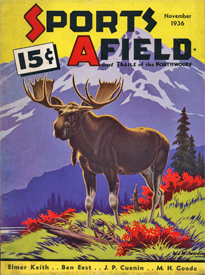
Magazines with great art covers are wonderful mementos from the past.

Reliving some old outdoor passions is easy. Simply dip back in time with an old outdoor magazine and have your brain gently nudged again by something great from the past.

Kick back, dig into my old blogs, and choose those articles that are most appealing. Heaven knows, there are plenty of choices of fishing-hunting things to read about.

Do you really think reading is a dying art? If so, I'd suggest you think again. If that were so, there wouldn't be the number of people reading my daily weblog as there are. Many people who have read me for 23+ years at The Detroit News followed me after I retired from the paper, and are now reading my daily weblog in seven different venues including FaceBook and Twitter.

There are too many magazines to list and photograph. Email me and query.


Reading a blog is like reading my column every day; it's primarily for the Michigan fishermen and hunter, although people from all over the world read it.

Anyone want to read old outdoor magazines? The answer is quite simple: Many people do. It's cheap and super entertainment, especially when some of my magazines date back to the early 1920s. Some are worth good money.

Many years ago I inherited Ben East's records, memoirs, files, letters and outdoor magazines after his death 20 years ago. I've kept his magazine collection intact even thought he told me I could use any of the files, including his magazines, in any way I chose.

I've wrestled with the prospect of selling this huge stash of old outdoor magazines. After having stored them for 20 years, walked around the many plastic tubs filled to the gunwales, I've decided to share at a reasonable price, these treasured magazines. Most have articles by master outdoor writer Ben East, and most of them contain stories that are about fishing or hunting in Michigan.

There's an old saying I'm fond of. It state's that it's impossible to know where you are going if you don't know where you've been. I've been at this writing business for 45 years, and Ben East was at it for more than 60 years. There are many things of his that I won't sell, but 1,000 magazines take up a great deal of room.

These magazines, ranging from 1922 to the early 1950s, covered the hey-day of outdoor writing and outdoor magazine art. All of these magazines, with the exception of perhaps only a few, are illustrated with an artist's painting or sketch. Those drawings and paintings that appeared on the front covers were great pieces of period art.

They do what today's magazine covers can't do – they capture the moment, a short but defining period in time when something great, sad, death defying or just the marvel of a bird dog pointing a grouse, pheasant, snipe or woodcock, occurred. The artist captures the emotions of the hunter and of the dog as it stands quivering, tail as stiff as a fireplace poker, and waits for his master to walk in to flush the bird.

Art covers capture moods far better than photos.


Magazine covers were drawn by hand, and the artist captures the magic of that precise moment when blue-wing teal zip low and fast over the decoys or when pintails whiffle down out of the sky. Or as a bunch of Canada geese approach the decoys, their feet grabbing for land or water, their heads arched down as they scan ahead for danger while their wings cup the air as they descend to a landing or fall as the nearby hunters shoot.

There are covers, lots of them, that deal with trout fishing. These magazines are sorted by categories such as...
  • Atlantic Salmon
  • Bass
  • Bear
  • Brook Trout
  • Comic or Mood Scenes
  • Deer Hunting
  • Ducks & Geese
  • Elk Hunting
  • Esquire
  • Exotic Wild Game
  • Game Birds
  • Hunting Dogs
  • Lake Fishing
  • Misc. Outdoor Action
  • Moose Hunting
  • Muskellunge
  • People
  • Rabbit Hunting
  • River Fishing
  • Saltwater Fishing
  • Various Wildlife
  • World War II-related fishing and hunting topics
The covers of these magazine which are, for the most part, in fine to mint condition bring out the raw emotions of a day on the water or afield with or without a dog. They elicit feelings that a mere photograph cannot capture. People soon grow tired of seeing a photo of a big buck on the cover. Scoop's Books, offers not only fishing and hunting books but old outdoor magazines as well.

Please remember: some of these magazines are 60 to 80 years old, and many look as if they were printed yesterday. They are not $5 each as some people seem to think they should be. An average price of $25-30 is about right, and magazines with superb cover art by the masters artists of that era, can range up to $125 or more. Most of these magazines, although not all, have a Ben East story inside.

One thing is very important, and I stress it here. Most of these items are one-of-a-kind. Email me to determine if a specific item still exists. Do not send money without checking with me first. People do it all the time, and I have to email them back, and ask specifically what they are buying. Check ahead avoids disappointment when an item sold just before your order arrived.

I take bank money orders, cashiers checks, company or personal checks, and PayPal. I do not take credit or debit cards. Business and personal check must clear my bank before any magazines are sent.

Postage, as we all know, has gone up. My postage rates may seem high at $5 each, but I usually ship in boxes, and each book is well padded. I ship with insurance in most cases, and purchase delivery confirmation. You don't have to be home to get the package but the delivery confirmation notes that the package has been delivered. There can be no squabble over whether or not books or magazines were delivered. I will know precisely what time delivery took place.

If possible, send all available information for what you'd like to buy.


Some folks may think that some of these magazines are unfairly priced. Prices hinge on many things:
  • overall condition of the magazine
  • quality of the cover artwork
  • author's reputation
  • whether the cover artist did any drawings or sketches inside the magazine
  • names of the various writers
  • whether magazines are collectible because of those names
Some artists are very collectible because of their quality work. People such as...
  • William Harnden Foster
  • W. H. Hinton
  • Lynn Bogue Hunt
  • Edwin Megargee
and a wide assortment of others can push the cost of an old magazine ever higher. Some magazines sold becomes more expensive because of their content, and as is true with most antiques, provenance is important. Each magazine will come with a letter from me attesting to the fact these magazines once belonged to the Ben East estate. That provenance, if provided with the magazine if it is ever sold, will keep the proof of these magazines belonging to Ben East clear. Note that East obtained some magazines from other people, as proven by an address label.
These magazines, and many other things such as signed Ben East letters, and letters sent to Ben East, are further proof. I still own one of Ben's old four-drawer file cabinets and it still houses some of his extensive files.

People collect old outdoor magazines for many reasons. They like to read about what went before, and they come to love the old artwork that can and will capture the soul of true sportsmen. Many people horde these magazines as a link to their outdoor past.

I'd be remiss if I didn't mention this basic truth. Some people, whether I like it or not, have no love for the magazines but collect the old ones for their covers or as a hedge against inflation. Many who own fishing or hunting camps clip the cover off a magazine and put up a moose or trout cover and use the rest of the magazine to start a wood fire.

We need to communicate to make this work.


My job isn't to be the fire marshal or the magazine police to watch over people to see how they treat these treasured magazines. If a person wants to clip a cover or cut out an article, slit out fishing or hunting ads, that's up to them. I'd hate to think it would happen but I'm not so naïve to believe it won't.

I welcome e-mails asking for specific issues or requests for particular authors or artists or artwork. I will try to accommodate. Feel free to write and ask the price ahead of time. Don't be scared off by the high price because there aren't many of those magazines left.

Here's a chance to travel down memory lane with an imaginary rod and reel or firearm over your shoulder. It can be a thrilling adventure to read some of the magazines from your youth or your father's youth. Or, it can be a major thrill to take a tour of yesteryear, and learn what it was really like back in the Good Old Days.

Saturday, April 30, 2011

Hunting gobblers will teach a hunter how to sit still


A decoy can help divert some attention away from a caller.


My preaching about sitting still without making noise has become a mantra. Some people might think I keep repeating myself, but this is a most important thing for hunters to keep in mind.

Perhaps I do natter on a bit about it but there is a very good reason for my tedious repetition. If some folks aren't reminded, they tend to forget this very important part of hunting.

Move at the wrong time, and a deer has you pegged. If you are very lucky the deer will run off without blowing and snorting or spooking every deer within hearing.

Sitting still is second nature to me but not to many deer and turkey hunters.


The same thing holds true with making any noise. Click an arrow against the bow, or have brass cartridges rattling around in your pocket, and it's enough to send whitetails bolting for cover a half-mile away. It's just their nature to be jumpy.

Some people believe that because they are in an elevated stand or inside a ground coop that they are well concealed. That's not true. They may be somewhat concealed but movement or sounds are seen or heard.

Anyone who really wants to get an education on sitting without making a movement or noise should practice on wild turkeys. These birds seem to have X-ray vision, and their ability to hear sounds is second to none.

Some friends hunt turkeys with a bow. They are accustomed to sitting still in a deer blind, and it is second nature for them to sit still while turkey hunting.

I've often watched other people hunt birds, and almost all of them wind up spooking the gobbler long before Ol' Longbeard strolls within 100 yards. Think of it this way: all wild animals have the ability to tell almost precisely where a call they hear is coming from. It's almost uncanny how they determine a sense of place where a call originated.

Even a bull moose can pinpoint the position of a call.


Use a deer call on a whitetail passing 100 yards away, and if that buck comes, he will come to within 10 feet of where the call came from. If deer can do that, if moose or elk can do that, so can a turkey.

That bird may come fast or slow, but he will be coming directly to the hunter's location if possible. Some may try to circle a bit but they head straight for the call. So what happens when the bird is 100 yards away, and you decide to reposition yourself for a shot at the wrong time?

The gobbler will have you spotted in a heartbeat. There is an old adage about hunting gobblers that goes: If you can see the gobbler, the gobbler can see you. If a move is necessary, do so when his head is behind a big tree. Don't get caught when he is out in the open.

Cheating on a gobbler involves waiting until the bird goes behind a thick bush or a big tree. If a move must be made, make if fast, smooth and without noise ... and when the bird cannot see you. Never attempt any type of move if a bird is within 35 yards.

Eliminate all movement by being properly positioned for a shot at all times.


OK, if the bird is coming directly to your call, all you need to do is line up on the bird's head. You do have the shotgun stock to your shoulder and the fore-end braced on the palm of your hand and resting on your knees, don't you? It's like having the bow in your hand, the other hand on the release, and being back at full draw and waiting for the shot.

Success at turkey hunting means being prepared, doing everything right, and sitting still. A moving hunter or one that makes a noise other than that made by a hen turkey will probably scare off the bird. Once a turkey is spooked, he's not coming back for a visit any time soon.

That same analogy applies equally well to deer hunting. The sportsman that can't set still for an incoming turkey won't be able to sit still when the buck of a lifetime approaches his stand.

It's great training for those hunters who drew a spring turkey permit. If you didn't draw one, don't practice your sitting still exercises when other people may be in the woods. There is little sense in ruining someone else's hunt.

If you want a top-end experience of learning what and what not to do when game approaches. hunt gobblers. Make one mistake, and you'll have learned your first lesson, which should never be repeated.

Friday, March 04, 2011

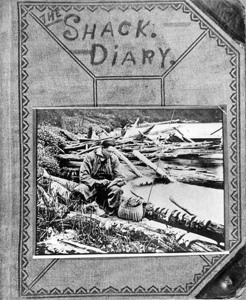
Searching for the Shack Diary

The Shack building and some of the members of the Traverse City Fly Club.

An important piece of local angling history has gone missing, and it disappeared several years ago. Where it is or who has the original book called “The Shack Diary” remains a complete mystery.

The Diary was more like a ledger than a real diary. Several Xerox copies exist, in whole or in part, but the original last owned by Jeanne Winnie Ball of Traverse City appears to have done a runner or someone put the five-finger discount on it.

This piece of legendary lore was kept by the late Art Winnie, a Traverse City barber and famous fly tier. Winnie’s daughter, Jeanne, found the Diary among some of his scrapbooks years ago.

It was a gentleman’s fishing-hunting club near Traverse City on the Boardman River.

The Shack, located on the Boardman River near Keystone and about five miles from Traverse City, seems to have sprung up from the logged-over land in the early spring of 1913. There were 10 founding members:

  • Charles Alley
  • John Corcoran
  • David Core
  • Carl Erickson
  • Ed Gilbert
  • Pat Hastings
  • Charles Longnecker
  • Charles Quick
  • Bert Ward
  • Art Winnie

The purpose of the Traverse City Fly Club, who owned the Shack, was to provide a place where the men could go to fish, and during the fall months, do some duck hunting, especially for mergansers that threatened to eat the river trout.

Bert Winnier (above) with a nice catch. Second fish from right was a grayling.

The Shack, as one observed noted, was “held together with chewing gum and cardboard.” Actually, based on photos I have, the Shack looked rather substantial although its location lacks any degree of beauty or aesthetics. Pine stumps, slashings and woody debris on land and in the water made foot travel a bit risky.

It seemed that fishing in those days was quite similar to what we experience today. Fishing can be wonderful today and rotten tomorrow, as the Diary so eloquently stated on many handwritten pages.

It seemed the Shack founders enjoyed their company, and a lengthy roster of guests were noted amid jotted observations that so-and-so left dirty dishes and others didn’t clean up after themselves. In that respect, some things never change … some people work and others do not.

Winnie cleans fish in the Boardman River in this photo of the Shack Diary. It has disappeared and an Important link to the past is gone.

It’s certain that most of the lengthy list of guests hailed from Traverse City but some came from many points around the country, including one visitor from Washington, DC. Guests include:

R. Anderson
Toots Armstrong
Mr. and Mrs. J. Bechtel
Harold Brown
Dr. A.W. Bruley
Walter Chase
David Core
Mark Craw; legendary conservation officer
John Farwell
Bill Foot
Walter Hanson
Remington Kellogg
Ray Lather
Dick Lawson
Charles Luick
D.J. McMeechan
Art Moore
J.B Moore
Theron Morgan
Donald Roxbury
Gus Ruff
Clayt Sardie
Jay Smith
Walt Thirlby
Harold Titus
George Winnie

If any names are misspelled, let’s blame it on faded handwriting and poor Xerox pages.

The record keeping was rather shoddy, and it seems that many dates were ignored or no one wanted to keep records that year. Some pages stated that fishing was bad while others boasted of large catches.

Members and guests of The Traverse City Fly Club also spent some of their time planting trout at various points near The Shack, and other nearby creeks as well as the Boardman River. Getting to The Shack was apparently an adventure in itself.

Getting to the Shack was an adventure. Most of the trees along the river had been cut during the timbering era.

The trail in was a corduroy trail of small tree trunks laid across the muck. One step off the trail, and it was a cold, stinky, wet walk into camp.

The Shack Diary continued, in fits and starts, until 1933 when the Traverse City Fly Club dismantled The Shack and relocated it to Rugg Pond in Kalkaska County. The photo on the cover of The Shack Diary was an original photo of  Art Winnie as he cleaned some fish.

The story doesn’t end there. A number of people borrowed The Shack Diary from his grand-daughter Judy Weber [ (231) 275-5654 ],  and all of them returned it except for one. My twin brother George had the Diary for a short time, and I saw, handled and read it, and then it was returned by him.

The late outdoor writer for The Record Eagle -- Gordie Charles – graciously turned over his notes about this and hundreds of other local stories that he wrote  for the newspaper and various magazines to me upon his death. By giving me these files, he asked me to appeal to my readers concerning the whereabouts of The Shack Diary.

If anyone knows anything about the whereabouts of the original Shack Diary, kindly contact me at:

Dave Richey
PO Box 192
Grawn, MI 49637
eMail me dave@daverichey.com

Or call Judy Weber at (231) 275-5654.

The Shack Diary needs to come home to rest.


Posted via email from Dave Richey Outdoors