Showing posts with label off. Show all posts

Tuesday, August 16, 2011

Bow Quivers ... On Or Off

Bow quiver on when shot is taken. Replace quiver after the shot.


Life is about making personal choices and decisions. None of us must do everything as others do. We can dare to be different if we choose.

This blog post applies to bow hunters. Every stick and string hunter worthy of the name has his or her way of doing things, and often they turn out right. We all learn from our best teacher, experience.

Bow quivers are a case in point. Should hunters leave the quiver on the bow while sitting in a stand and shooting or should they take the quiver off to minimize weight and to remove one unnecessary item that could easily tangle in tree limbs and mess up a shot?

Hunters swing both ways on bow quivers but not me.


I'll go first, and throw my hat in the ring and voice my opinion. I climb into a tree stand after attaching my full-body safety harness to the tree and my body, I sit down, and use the haul rope to raise my bow from ground level. The bow quiver is then removed and placed elsewhere on the tree after an arrow is removed and then nocked. I often hang the quiver on a nearby limb where it will help break up my silhouette but be out of my way.

Once the quiver in hung, I unscrew the broadhead and attach my Game Tracer string behind the 100-grain FirstCut broadhead, and screw it into my Maxima carbon arrow shaft.

I attach the release to the bow string, stuff the lower limb of my C.P. Oneida Black Eagle bow into my left boot, and relax. I hunt and shoot sitting down, and my stands are positioned so bucks usually come from behind me and on my left side.

I shoot sitting down, and stow my bottom limb in my rubber boot.

If the buck follows his normal pattern, he will approach from behind and on my left side. I'm right-handed, so when the buck comes within bow range, and looks the other way, I start my draw and as I reach full draw, the lower limb clears my boot and is clear of my leg, the stand or any tree branches.

This allows for a minimum of movement, is very quiet, and oh so effective once a hunter becomes used to it. This method of drawing a bow wouldn't be possible if my bow quiver was still attached.

The arrow shafts, vanes or even the quiver could get caught up in clothing, limbs or branches. But there is another reason why my quiver comes off my bow when I begin hunting.

It reduces the overall bow weight. Not much, mind you, but when hunting in a variety of locations, sooner or later a bow quiver is going to hang up on something. I remove all possibilities of that happening by taking it off and hanging it some place where it is out of my way.

I want my bow in my hands at all times with my release on the string.


Whenever I watch a television show, or hunt with someone who always leaves his or her quiver on their bow, it makes me wonder how many lost opportunities have occurred because of that quiver.

A bow is a one-shot piece of archery equipment. It's not like hunting with a bolt, pump or semi-automatic firearm. Unless the wind is very strong and noisy, second shots at a buck are so rare as to almost be nonexistent.

A bow quiver on a bow, doesn't speed up getting off a second shot at a deer. It is somewhat awkward to reach to the quiver, pull out another arrow, reach across the bow to nock the arrow and prepare to shoot. Chances are, any self-respecting buck with heavy headgear will be long gone if you miss the first shot.

I often use my bow to help camouflage my upper body and head. I wear a face mask while hunting, and can still turn the bow inside my left boot so the handle and upper limb breaks up my silhouette. If a deer offers a shot, a simple and slow half-turn of the wrist will point the bow toward the animal as the hunter comes to full draw.

A full draw should make your bow and arrow unencumbered by anything.


Such a movement may or may not be necessary, and that is a debatable point, but it would be impossible to do with a bow quiver attached. For me, that is a strong reason for removing the quiver.

Whenever I watch outdoor TV shows, each person is checked to determine if their quiver is on or off. It seems quite evenly divided as to their preference. Those who stand all the time usually have the quiver on while those who sit to shoot take the quiver off.

Many hunters, including some of the television hunters, hang their bow. A deer approaches, and they risk being caught by a sharp-eyed deer. Me, my preference is to hold my bow where there wasted movements that could spook the animal. Holding a bow with quiver attached becomes just too awkward to hold during the hunt.

The slight added weight of a bow quiver (even a three-arrow quiver like I use) can allow a hunter to unknowingly cant the bow to that side. Is it enough, under the pressure of a nearby buck, to throw the arrow off its intended course?

I don't know and don't care to test the theory. My preference is to shoot a bow unencumbered by a quiver. It's my thought that it simplifies things, reduces weight, eliminates canting, drops a few ounces of weight and besides ... it works for me.

Anyone willing to plead their case for keeping a bow quiver on a bow while hunting is encouraged to contact me. You won't change your mind, I won't change mine, but I'd love to hear your philosophy.

Saturday, March 05, 2011

Quiver: On or off the bow?


This hunter has removed his quiver from the bow. For him, it’s a good habit.


It’s a real easy question to answer. Do you shoot your hunting bow when the quiver is attached or off?

Now me. I always take the quiver off my bow. It’s how I learn to shoot, and who am I to go against my original training. I was taught that in 99 percent of the case, a bow hunter seldom will get a second shot if he misses the first shot.

Life often is about making such personal choices. None of us must follow other hunters like a flock of sheep, and do as they do. We can and should think for ourselves.

This applies as well to bow hunting as anything else. Every bow hunter worthy of the name has his or her own personal way of doing things, and often they turn out right. We all learn from the best teacher -- experience.

A quiverless bow in a tree stand is the ticket for me.


Bow quivers are a case in point. A fact I face whenever I hunt with my bow. We were checking out a TV hunting show, and a woman was trying to draw and shoot at a buck with the bow quiver on. She was having trouble, and it begged the question.

Should hunters leave the quiver on their bow while sitting in a stand and shooting at a buck? Or, should they take the quiver off to minimize weight and to eliminate an unnecessary item that could easily become tangled in tree limbs and mess up a shot?

IIt’s my daily blog so I'll go first, and throw my hat in the ring and voice my heartfelt opinion. I climb into a tree stand, and after attaching my full-body safety harness to the tree and my body, I sit down, and use the haul rope to raise my bow from ground level. The bow quiver is immediately removed and placed elsewhere on the tree after one arrow is removed. I often hang the quiver on a nearby limb where it will help break up my silhouette, and where it is out of my way.

Once the quiver in hung, I unscrew the broadhead and attach my Game Tracer string behind the FirstCut broadhead, and screw it into my Maxima carbon arrow shaft. It trails out easily behind the arrow, and at normal ranges of 20-25 yards, it doesn’t affect arrow accuracy.

I attach the release to the string, stuff the lower limb of my C.P. Oneida Black Eagle bow into my left boot, and relax. I hunt and shoot sitting down, and my stands are positioned so bucks usually come from behind me and on my left side.

I prefer sitting to shoot because there is less movement involved.


If the deer follows his normal pattern, he will approach from behind and on my left side. I'm right-handed, so when the buck comes within shooting range, and looks the other way, I start my draw and as I reach full draw, the lower limb clears the top of my boot and is clear of my leg, the stand or any tree branches.

This allows for a minimum of movement, is very quiet, and oh so effective once a hunter becomes used to it. This method of drawing a bow wouldn't be possible if my bow quiver was still attached.

The arrow shafts, vanes or even the quiver could get caught up in clothing, limbs or branches. But there is another reason why my quiver comes off my bow when I begin hunting.

It reduces the overall bow weight. Not much, mind you, but when hunting in a variety of locations, sooner or later a bow quiver is going to hang up on something. I remove all possibilities of that happening by removing it and hanging it some place where it is out of my way.

Whenever I watch a television show, or hunt with someone who always leaves his or her quiver on the bow, it makes me wonder how many lost opportunities have occurred because of that quiver.

Bow hunting offers but one shot 99.9 percent of the time. Why keep a quiver on?


A bow is a one-shot piece of archery equipment. It's not like hunting with a bolt, pump or semi-automatic firearm. Unless the wind is very strong and noisey, second shots at a buck are so rare as to almost be nonexistent. The quiver is just one more thing to mess up a shot.

A bow quiver on a bow, doesn't speed up getting off a second shot at a deer. It is somewhat awkward to reach to the quiver, pull out another arrow, reach across the bow to nock it, and prepare to shoot again. Chances are, any self-respecting buck with heavy headgear will be long gone if you miss that first shot and he may not come near that stand again.

I often use my bow to help camouflage my upper body and head. I wear a face mask while hunting, and can still turn the bow inside my left boot so the handle and upper limb breaks up my silhouette. If a deer offers a shot, a simple and slow half-turn of the wrist will point the bow toward the animal as the hunter comes to full draw.

Such a movement may or may not be necessary, and that is a debatable point, but it would be impossible to do with a bow quiver attached. For me, that is a strong enough reason for removing the quiver.

The slight added weight of a bow quiver (even a three-arrow quiver like mine) can allow a hunter to unknowingly cant the bow to that side. Is it enough, under the pressure of a nearby buck, to throw the arrow off its intended course?

I don't know and don't care to test the theory. My preference is to shoot a bow unencumbered by a quiver. It's my thought that it just simplifies everything, reduces weight, eliminates canting, and besides ... it works for me.

Anyone willing to plead their case for keeping a bow quiver on a bow while hunting is encouraged to contact me. You won't change your mind, I won't change yours, but I'd love to hear your philosophy.

Debate can be healthy if everyone approaches it with fairness in their heart. Talk to me about this quiver issue.

Wednesday, November 24, 2010

It’s all in your head


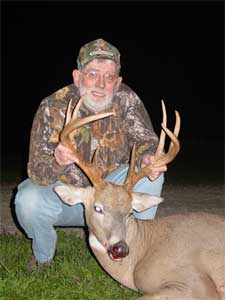
The author shot this nice buck by practicing what he preaches.


There is an art to sitting still. It means much more than being  motionless; it means being still without making a sound.

This may sound easy but it is a very difficult thing to accomplish for more than 10 minutes. Everyone who bow hunts for deer will fidget, move around, or easing that tree stub that sticks you in the back.

Think about this: we watch a musical and our foot taps to the music. We think, and our fingers and head moves. The trick to sitting still still without noise.

To acquire such needed skills it’s important to practice.


Sitting still is an acquired talent. Not everyone can do it, and I can still set as motionless as a statue at the age of 71, but it’s nothing like I could do 20 years ago. Age brings with it knowledge for those willing to learn. It also brings more aches and pains that can affect our ability to remain still.

The knowledge of how to do it is what allows me to tune out the sore back, hips, legs and other aches and pains where many injuries occurred years ago. Knowledge is a key to becoming a successful deer hunter, and sitting still is just one part of it.

Many years ago my back was broken, and a  full-body cast was attached. Any movement took time to do, and the movements were like waving a flag.  It did make me learn to sit still because I couldn’t move my body easily. Accepting that was the first step to my success, and once I got out of it, I continued to practice sitting still.

Don’t think that my sitting-still philosophy means going out and breaking your back. That’s no fun. If you can follow this anecdote and understand why I couldn’t move, it may  help.

Anyone who has ever studied deer should have learned two things quickly. Stay downwind of the deer, and  learn how to sit still.

Sitting still is a matter of mind over matter.


Sitting still is not easy. Those who think they are being motionless and silent often are moving too much and making some noise. Camouflage clothing is not a cure-all for your hunting ills.  Deer spot movement regardless of whether you wear camo or blaze orange.

Don’t move? A person’s nose itches so they scratch it. A tree stub pokes them in the butt or legs, and they try to ease the discomfort. A leafy branch blocks their view so they move their head to see more clearly. A rustle in dry leaves sets their head in motion to see what created the sound. Boredom sets in, and people become twitchy.

Many hunters feel they are motionless, but in fact, all parts are in motion. Any movement will catch a deer’s attention, and if that happens, it will stand in cover until they identify what spooked them. If they determine it was caused by a human, that hunting spot will be blown for the immediate future.

How do you sit still while hunting? Sit in a tree or a ground blind. See how long it takes before a deer is spooked by hunter movement. Pay attention to what triggers fear in deer.

Many sportsmen seem to feel that only spooked deer will blow and snort. Many antsy deer simply disappear, and slowly leave the area. They are spooked but will not snort.

Study deer during summer months and learn to relax around them.

Watch deer, and see how often they stop to the terrain. I've watched many deer stand motionless for 30 minutes to an hour after detecting the presence of a hunter in a tree stand. They do not move a muscle, ear, eye tail or anything will move it they've  been alerted to possible danger.

A hunting buddy used to hunt a funnel leading out of a cedar swamp and into open woods. This swamp was a thick waterhole, and it was easy to tell where deer came from. Those that were wet up to their belly were coming through the swamp. Those deer could be heard coming for 15 minutes as the water sloshed around as they moved. Those deer attracted the attention of any nearby hunter.

Once he spotted a buck moving slowly, and then it stopped. It was 200 yards away but there was an open spot he could see through with binoculars, and he knew there was a hunter upwind of the deer. That animal stood  in cold November water for over an hour without moving. Dusk came and went, and the buck still stood in the water, as motionless as a statue.

This begs the obvious question: how do you sit still? Part of it comes through practice but much comes from a total state of mental relaxation. Put your mind at ease, forget about aches and pains, and that stub in the rump. Relax your brain and body.

Tune everything out of your mind. The more you think about an ache or pain, the more it bothers you. The same is true of bugs early in the bow season, and motionless hunters are seldom bothered by insects.

Mentally put all of your thought into something calming and pleasant. Put your mind in a relaxed state. Forget about missed phone calls or upcoming doctor appointments. Clear your mind of anything and everything, relax and simply do not think.

Purge your mind of extraneous thoughts, and picture yourself at peace. A spot where you feel a gentle sense of security, and where nothing bothers you.

Time seems to pass slowly, and almost as if from a haze, out steps a calm buck. The animal is upwind, sniffing and looking for danger. Sensing none, he steps forward two or three more paces, and stops to check his surroundings once again.

Relaxed, the deer turns around and watches his back trail. As the deer looks away, the hunter slowly and quietly comes to full draw, aims and kills that animal. It really can be that easy.

The hunter was totally relaxed. A laid-back and relaxed sportsman doesn't move and never makes a sound while on stand.

It takes practice but so do many other things. Sit in the woods during the summer, and practice the art of sitting motionless and silent. You’ll soon learn the secret to sitting still is all in your head.

Posted via email from Dave Richey Outdoors

Friday, October 22, 2010

Being still as a statue


There is an art to sitting still. It means much more than being  motionless; it means being still without making a sound.

This may sound easy but it is a very difficult thing to accomplish for more than 10 minutes. Everyone who bow hunts for deer will fidget at times, moving around, easing that tree stub that pokes you in the back, and swatting at pesky, whining mosquitoes.

Think about this: we watch a musical and our foot taps to the music. We think, and our fingers and head moves. The trick to sitting still this fall during deer seasons means learning how to remain motionless without noise.

To acquire such needed skills it’s important to start practice them.

Trust me, sitting still is an acquired and learned art. Not everyone can do it, and I can still set as motionless as a statue at the age of 71, but it’s nothing like I could do 20 years ago. Age brings with it knowledge for those willing to learn. It also brings more aches and pains that can affect our ability to remain still … if we let them.

The knowledge of how to do it is what allows me to tune out the sore back, hips, legs and other aches and pains in body parts that were injured years ago. Knowledge is the key to becoming a successful deer hunter, and sitting still is just one part of learning.

Many years ago my back was broken, and a  full-body cast was placed on me. Any body movement took time to accomplish, and the exaggeration movements were like waving a red flag at a bull.  It did make me learn to sit still because I couldn’t move my body easily. Accepting that part of this philosophy was the first step to my success, and once I got out of it, I continued to practice sitting still.

Don’t think that my sitting-still philosophy means going out and breaking your back. That’s no fun. If you can follow this anecdote and understand why I couldn’t move, it may  help.

Anyone who has ever studied deer should have learned at least two things very quickly. Stay downwind of the animals, and  learn how to sit still.

Sitting still is not easy. Those who think they are being motionless and silent are, in most cases, moving far too much and making some noise in the process. Camouflage clothing is not a cure-all for your hunting ills.  Deer spot movement regardless of whether you are wearing camo or blaze orange.

Learn how to relax mind and body.

Don’t move, eh? A person’s nose itches so they scratch it. A tree stub pokes them in the back, butt or legs, and they move to ease that discomfort. A leafy branch blocks their view so they move their head to see more clearly. A rustle in dry leaves sets their head in motion to see what created the sound. Boredom sets in, and bored people become twitchy. Their movements increase.

Many hunters think they are motionless, but in fact, all parts of their body is in motion. The slightest movement can catch the eye of a deer, and if that happens, the deer will stand in cover until they positively identify what they saw. If they determine it was caused by a human, that hunting spot may be blown for the rest of the hunting season.

How do you sit still while bow hunting? The best way to learn is to go where deer live and are plentiful, and sit in a tree or a ground blind. See how long it takes before a deer is spooked by hunter movement. Pay attention to what triggers fear in deer.

Many sportsmen seem to feel that only spooked deer snort. Lots of antsy deer simply disappear into heavy cover, and slowly leave the area silently. They are spooked but do not snort.

Study deer and see just how still one can be.

Watch deer, and see how often they stop and look around for possible danger. I've watched large numbers of deer over the years stand motionless for 30 minutes to an hour after detecting the presence of a hunter in a tree stand. Not a muscle, ear, eye tail or anything on that animal will move it they've  been alerted to a nearby human  presence.

One of my hunting friends used to hunt a funnel leading out of a cedar swamp and into open hardwoods. The swamp was full of water, and it was easy to tell where the deer were coming from. Those animals that were wet up to their belly were coming through the swamp. Those deer could be heard coming for 15 minutes as the water sloshed around as they moved. Those deer attracted the attention of any nearby hunter.

Once he spotted a buck moving slowly, and then it stopped. It was 200 yards away but there was an open spot he could see through with binoculars, and he knew there was a hunter upwind of the deer. That animal stood  in cold November water for over an hour without moving a muscle. Dusk came and went, and the buck still stood in the water, as motionless as an anchored statue.

This begs the obvious question: how do you sit still? Part of it comes through continual practice but much of it comes from a total state of mental relaxation. Put your mind at ease, forget about aches and pains, and that stiff little stub that continues to poke into your rump.

Relax your brain and your body will follow suit.

Tune everything out of your mind. The more you think about an ache or pain, the more it will bother you. Forget it! The same is true of mosquitoes early in the bow season; forget about them, and the less you move the less they will pester you.

Think good thoughts about good friends and loved ones. Remember past hunting friends who have traveled around their last turn in the trail. Leave business problems at the office, and dismiss them from your mind while hunting. The same goes for home or other business problems. If they could be solved, you’d have handled the problem earlier.

Mentally put all of your thought into something calming and pleasant. Put your mind in a relaxed state. Forget about missed phone calls or upcoming doctor appointments. Clear your mind of anything and everything, relax and simply do not think.

Purge your mind of all thoughts, and picture yourself somewhere lovely. A spot where you feel a gentle sense of peace and security, and where nothing can bother you.

One of my friends imagines himself on a calm pond where no wind is felt, no sound is heard, and he mentally lays his back against a boat seat, stares up at the drifting clouds overhead, and his breathing slows down. He keeps seeing that gentle pond in his mind's eye, and he sits quietly and without movement.

Time seems to pass slowly, and almost as if from a haze, out steps a calm buck. The animal is upwind, sniffing and looking for danger. Sensing none, he steps forward two or three more paces, and stops to check his surroundings once again.

Relaxed, the deer turns around and watches his back trail. As the deer looks away, the hunter slowly and quietly comes to full draw, aims and kills that animal. It really can be that simple.

It was easy because the hunter was totally relaxed. A laid-back sportsman, at peace with body and soul, doesn't move and never makes a sound while on stand.

It takes a great deal of practice but so do many other things in our lives. Sit in the woods during the summer months, and practice the art of sitting motionless and silent, but realize you do need practice.

Sitting still is all in your head.

And just remember: sitting still while not making a sound is all in your mind. Think it, practice it, and you’ll conquer the involuntary sense of being startled when a doe snorts  or when a buck starts slamming into a nearby small tree with his antlers.

Mind control is an amazing thing if you practice it. Use your mind, learn how to slowly ease your eyes toward an oncoming buck, and practice coming to full draw without making that herky-jerky movement that is bound to attract a deer’s attention.

Trust me, it works for me and for many people who have adopted these mind-over-matter things. It can be productive for anyone but it requires constant practice.

Just remember this: an object that doesn’t move, makes no noise and is positioned so he cannot be winded, poses no threat to a deer… at least not until it is too late for the animal to react.

Posted via email from Dave Richey Outdoors