Showing posts with label don’t. Show all posts

Wednesday, January 05, 2011

Doggin’ the fox


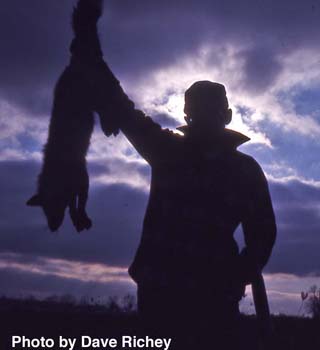
Brother George with a nice red fox he shot while doggin’ the tracks.


Many years ago there were far more red foxes than coyotes, and one of the things almost every winter day was to cut a fresh red fox track, and take off cross-country on foot along the straight-as-a-string trail.

Once I was driving to brother George's house, and spotted a fresh track that crossed the road a quarter-mile from his place. I stopped, got out of the car, and studied it. The track was smoking hot.

George and I put our heads together, and he felt the fox would probably skirt behind the barn, head off across the open field, hunt those fields for mice, and then settle down for a nap atop a clump of uprooted trees a half-mile from his house.

Two people working together is always a good plan.


We took turns dogging the tracks, and it was his turn. I'd lag behind, check ahead through binoculars, and try to make certain we didn't accidentally bump the critter. We headed out on the hot track, and the fox did cut behind the barn, moved down a hill, and crossed the field.

I glassed the track from cover, and lost them near a patch of sumac this side of a fence row 300 yards away, and on the other side of the fence was the tree-tops that would provide a sunny hiding place for a napping fox.

We eased through the field, spotted several areas where the fox had tried for a mouse, but the tracks stay straight until it came to a small knoll, and we bellied up to the edge of the knoll. More fox stalks are blown when people rush to see what is on the other side, and blunder into the fox. Once spooked, the animal will run for a long distance.

My head just eased over the top, and I glassed everything within view. The fox was nowhere to be seen, but its tracks cut through the field, into a cluster of sumac bushes near the hill-top, and we couldn't see the tracks past there.

We huddled, and whispered back and forth, and felt if the fox wasn't in the sumac, which we didn't believe possible, we'd have a reasonably clear look at the tree-tops. Perhaps the fox was already sunning himself.

I studied the sumac until my eyes were watering, and couldn't see tracks coming out. We had to keep going while we were fairly close to the animal. Stalling now could ruin the hunt.

We crossed the open field and approached the sumacs with caution. We could then see the fox tracks heading toward the fence line and the nasty mass of tree-tops scattered about like jackstraws.

Be ready to move but make sure the fox isn’t in sight before moving.


"I can see his tracks down to the fence," George whispered. "Check the tree-tops, and see if you can spot him. We'll stick out like two sore thumbs while crossing the field to the fence row."

Long minutes were spent glassing the tree-tops before I spotted the reddish-russet color of the bedded fox. He was facing away, directly into the wind, and we formulated plans. I would give George hand signals, and a palm raised upright meant for him to stop.

He watched a minute or two longer, saw the fox raise his head and check his back trail. We waited until he checked his back trail the second time, and we had five minutes. As soon as his head went down, George stayed low and ran for the fence only 40 yards from the fox.

He eased into place just as the fox's head came up to look around, and when it went down, I moved out. We met at the fence, and George pointed to a hole in the fence that would put him only 25 yards from the fox but he couldn't make a sound getting into position.

The fox looked around again, and when his head went down, George crawled to the hole, and snaked through. He had to depend on me now to tell him when the fox raised his head again.

Don’t shoot until the animal presents a clear shot.


Two minutes later the fox raised his head, and I made one small hand movement to George. He raised his 12 gauge 3-inch magnum, started to aim and the fox stood up when it caught the movement, and with one shot this fox hunt was over.

Stalking fox is no different than stalking bedded coyotes. Work into the wind, check closely before making a move, and when the stalk leads to a close shot, make it count. It's an exciting way to spend part of a mid-winter day, especially this time of year when foxes and coyotes are in the mating season, but not with each other.

The two species are deadly enemies, and a coyote will kill every fox they can catch. One rule hunters can count on: if fox are abundant, there aren't many coyotes around. However, if coyotes are thick, very few fox exist in the area.

Are you reading for the challenge of dogging a fox track to the animal's resting place. There's little margin for error.

Drove around square-mile sections until you find a coyote or fox track. Check the other roads to make certain the animal didn't cross out, and if it is still within the section, take up the track if you have permission to hunt someone else's land.

Move slowly with all possible haste, check ahead for the animal, don't move until the coast is clear, and always stay downwind if possible. It a great way to spend a snowy winter afternoon.

Posted via email from Dave Richey Outdoors

Wednesday, December 08, 2010

Clean up television shows & videos


Tony Knight with a bear shot on Vancouver Island with TV host Jim Shockey.


I'm not a big television fan, and would rather read a book than watch dumb television shows. Many people apparently agree with this philosophy.

OK, folks, want an example. Most television hunting shows focus on turkeys or whitetails. Most of the show hosts are from down south. Now, I mean no disrespect to any one, but I'm tired of hearing deer antlers being called "horns." Call ‘em what they are, not what they aren’t.

Deer do not have  horns. They have antlers. Bison, goats, muskoxen and sheep around the world have horns. Horns on big-game animals continue to grow while antlers are shed every year. I even hear a few people from Michigan call a deer's rack "horns." Guess again, fella, and try to get the show terminology correct. It will give you and your television show a lot more credibility, at least North of the Mason-Dixon Line.

This is just one of the things that trouble me.


On occasion, and I mean that both figuratively and literally, I'll watch a television hunting show. I shy away from some because I have a major problem viewing many bloody, brain-dead, poorly-thought-out shows. I hate watching shows with the host walking around in his underwear. Not only is it stupid, but it’s rude to the viewing audience, regardless of age or gender.

Many hunts are filmed on a game ranch. I don't care if the deer they shoot are raised behind a fence as long as the host informs the viewing audience. Too many people view these shows, and consider the host a superb one-of-a-kind hunter. How many hunters do you personally know who kill a big buck every week and everywhere they go?

Some of these folks probably are excellent hunters, and great shots, and some may not be but the viewer is left out of touch with what is real and what is not. Most people think if they see it on television, this is reality. Guess again.

I won't name names, and I'm not out to bad-mouth anyone. But I see things on some shows that fly in the face of what I consider good form and good hunting ethics. Some set poor examples for their viewers. Some hunting shows are good, show vivid detail, and they are watching masters of the hunting art in action. Jim Shockey, who I’ve hunted with, falls in this category. He is the real deal.

Here is an example. A guy was sitting 25-30 feet up a tree, and along comes a buck walking directly at him. The bow comes back to full draw, the deer catches the movement and stops to look up, and our hero shoots the animal in front of the front shoulder near the brisket.

The deer was shot in full daylight, and suddenly it has turned extremely dark, and they find the deer pm;u 75 yards away after a perfect shot, or so they say. Does this mean that taking whatever shot the deer offers will make the viewer a better hunter? Not hardly, because they may assume that this was a good shot when in fact it was a horrible shot placement.

There are two high-percentage shots that hunters should take: broadside and quartering-away, and the latter is the best. The showing of this deer being shot in front of the front shoulder, coupled with the fact that it had apparently taken hours and perhaps more than one day to find the animal, is never explained. Again, a poor example is set for novice hunters. Sportsmen who know better won't watch these shows more than once because they have a great deal of respect for the game they hunt and shoot.

The hunt for most longtime sportsmen is much more important than the kill.


Another show I recently watched saw an arrow hit a deer in the front shoulder blade. There was hardly any penetration, and the animal ran off with the arrow dangling down. They later found a deer, and it shows the animal with a round hole behind the front shoulder. It appeared to be a different deer, one that may have been shot with a rifle to provide a dead animal for the show. Folks, you were suckered on that one.

Right, wrong, I'm not the hunting-show police. It's not up to me to act as an unpaid overseer of how they produce their shows. I made a vow to my readers many years ago that I wouldn't fib, lie, prevaricate or tell something which was not true. For 44 years I've kept that promise, and I’m very proud of the fact.

I write books, magazine articles, newspaper articles and columns, and now write for my personal daily website. I write a daily blog, and one must have countless experiences to continue to write a story every day, but what I write is what I've done. There's no need for exaggeration. I've hunted on a professional level for most of my life, and I want my professsional image to be squeaky clean.

Granted, this is just a personal observation about some television hunting shows. Each person has his or her own sense of personal ethics, but when I see someone shoot a buck in the shoulder, and when they "recover" the deer and it looks different, I have a problem accepting such things. It's just flat wrong! I just saw one show where a bear was shot in the water. That's not legal in the any of the places I hunt.

Image is all-important for television hosts or writers. Project a good one.


Many years ago, a hunter who had numerous whitetail bucks in the  record books (before they were disqualified) got into making videos. I bumped into him on a hunt, and he wanted me to watch his latest video.

I almost walked out before the video ended. He was proud of the live "kill" and "pass-through" shots. In one scene he shot a buck, it ran off, stumbled and fell in a tiny stream. The camera zeroed in on the downed buck, blood spurting into the air and turning the creek water red, and he asked what I thought of his latest masterpiece.

"That is the most disgusting video I've ever seen!" I said. "It makes me want to puke. How many "pass-through" shots are needed? I believe your sales will fall if you leave the buck-in-the-creek and spurting blood in that video. We all know an arrow-shot deer bleeds and dies, but is it necessary to video such a scene? It would be like videotaping one of your children or a parent dying. Some women will ask their husband not to view it when the children are around. Some women will just make the video disappear."

He left in the spurting blood portion of the buck kicking and thrashing in the creek, and the video didn't sell well. Then, other video producers started an attempt to clean up some of the gorier hunting videos.

He didn't speak to me again for several years, but later admitted that he and the video producer made an error in judgement. I am not the guy to say such things mustn't be shown. I'm just a guy who feels that some things don't deserve to be shown in all their blood-and-guts glory.

Some things are better left alone. The outdoor magazines long ago avoided bloody abdomens, blood around the nose and mouth, tongues sticking out and most outdoor writers take time to clean up the animal and stick its tongue back in before shooting photos. A live deer is majestic to look at but a dead deer just looks dead, even if it has been cleaned up. You can put lipstick on a pig to make it look better, but in the end, it is still a pig that has been tramped up a bit.

Sorry to natter on so long on such tasteless topics. I just saw one of the shows a few days ago, and felt I had to write about it. Journalists should report only that which is honest and true, and if it doesn't cause other people to get wild-eyed with horror when they see it.

Frankly, I'm tired of the fist pumps, the knuckle bumps, the thumb-grip handshakes, and the phoniness of some of these shows. The laughing and giggling when something dies leaves a very bad taste in my mouth.

Class will carry a television hunting show. A few television shows have class and many do not. It's my choice to choose which few outdoor shows I watch, and we never linger on the bad ones.

Posted via email from Dave Richey Outdoors

Wednesday, November 24, 2010

It’s all in your head


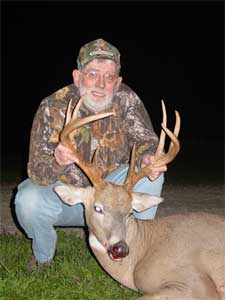
The author shot this nice buck by practicing what he preaches.


There is an art to sitting still. It means much more than being  motionless; it means being still without making a sound.

This may sound easy but it is a very difficult thing to accomplish for more than 10 minutes. Everyone who bow hunts for deer will fidget, move around, or easing that tree stub that sticks you in the back.

Think about this: we watch a musical and our foot taps to the music. We think, and our fingers and head moves. The trick to sitting still still without noise.

To acquire such needed skills it’s important to practice.


Sitting still is an acquired talent. Not everyone can do it, and I can still set as motionless as a statue at the age of 71, but it’s nothing like I could do 20 years ago. Age brings with it knowledge for those willing to learn. It also brings more aches and pains that can affect our ability to remain still.

The knowledge of how to do it is what allows me to tune out the sore back, hips, legs and other aches and pains where many injuries occurred years ago. Knowledge is a key to becoming a successful deer hunter, and sitting still is just one part of it.

Many years ago my back was broken, and a  full-body cast was attached. Any movement took time to do, and the movements were like waving a flag.  It did make me learn to sit still because I couldn’t move my body easily. Accepting that was the first step to my success, and once I got out of it, I continued to practice sitting still.

Don’t think that my sitting-still philosophy means going out and breaking your back. That’s no fun. If you can follow this anecdote and understand why I couldn’t move, it may  help.

Anyone who has ever studied deer should have learned two things quickly. Stay downwind of the deer, and  learn how to sit still.

Sitting still is a matter of mind over matter.


Sitting still is not easy. Those who think they are being motionless and silent often are moving too much and making some noise. Camouflage clothing is not a cure-all for your hunting ills.  Deer spot movement regardless of whether you wear camo or blaze orange.

Don’t move? A person’s nose itches so they scratch it. A tree stub pokes them in the butt or legs, and they try to ease the discomfort. A leafy branch blocks their view so they move their head to see more clearly. A rustle in dry leaves sets their head in motion to see what created the sound. Boredom sets in, and people become twitchy.

Many hunters feel they are motionless, but in fact, all parts are in motion. Any movement will catch a deer’s attention, and if that happens, it will stand in cover until they identify what spooked them. If they determine it was caused by a human, that hunting spot will be blown for the immediate future.

How do you sit still while hunting? Sit in a tree or a ground blind. See how long it takes before a deer is spooked by hunter movement. Pay attention to what triggers fear in deer.

Many sportsmen seem to feel that only spooked deer will blow and snort. Many antsy deer simply disappear, and slowly leave the area. They are spooked but will not snort.

Study deer during summer months and learn to relax around them.

Watch deer, and see how often they stop to the terrain. I've watched many deer stand motionless for 30 minutes to an hour after detecting the presence of a hunter in a tree stand. They do not move a muscle, ear, eye tail or anything will move it they've  been alerted to possible danger.

A hunting buddy used to hunt a funnel leading out of a cedar swamp and into open woods. This swamp was a thick waterhole, and it was easy to tell where deer came from. Those that were wet up to their belly were coming through the swamp. Those deer could be heard coming for 15 minutes as the water sloshed around as they moved. Those deer attracted the attention of any nearby hunter.

Once he spotted a buck moving slowly, and then it stopped. It was 200 yards away but there was an open spot he could see through with binoculars, and he knew there was a hunter upwind of the deer. That animal stood  in cold November water for over an hour without moving. Dusk came and went, and the buck still stood in the water, as motionless as a statue.

This begs the obvious question: how do you sit still? Part of it comes through practice but much comes from a total state of mental relaxation. Put your mind at ease, forget about aches and pains, and that stub in the rump. Relax your brain and body.

Tune everything out of your mind. The more you think about an ache or pain, the more it bothers you. The same is true of bugs early in the bow season, and motionless hunters are seldom bothered by insects.

Mentally put all of your thought into something calming and pleasant. Put your mind in a relaxed state. Forget about missed phone calls or upcoming doctor appointments. Clear your mind of anything and everything, relax and simply do not think.

Purge your mind of extraneous thoughts, and picture yourself at peace. A spot where you feel a gentle sense of security, and where nothing bothers you.

Time seems to pass slowly, and almost as if from a haze, out steps a calm buck. The animal is upwind, sniffing and looking for danger. Sensing none, he steps forward two or three more paces, and stops to check his surroundings once again.

Relaxed, the deer turns around and watches his back trail. As the deer looks away, the hunter slowly and quietly comes to full draw, aims and kills that animal. It really can be that easy.

The hunter was totally relaxed. A laid-back and relaxed sportsman doesn't move and never makes a sound while on stand.

It takes practice but so do many other things. Sit in the woods during the summer, and practice the art of sitting motionless and silent. You’ll soon learn the secret to sitting still is all in your head.

Posted via email from Dave Richey Outdoors

Wednesday, November 10, 2010

Consider changing your firearm hunting plans


Be careful with this shot. The fawn is very close to the buck.


Firearm deer-season openers vary from one year to the next, but some things never change. Firearm hunters do things just before the season opener that can cost them a shot at a nice buck on the opener or during the 16-day season.

By Friday, the roads will start filling up with small trailers, truck campers, tent dwellers, and other people heading north to their favorite hunting area to set up deer camp. These camps are spread throughout most of the Upper Peninsula and northern Lower Peninsula.

Mistake No. 1 for most hunters is they are traveling in the wrong direction. Most sportsmen should turn aroundm and head south to the southern Lower Peninsula counties. That where most of the deer, and most of the larger bucks live.

Michigan’s southern counties are best for big bucks and lots of deer.


Mistake No. 2 of this deer-camp routine means sighting-in rifles. Where do these hunters go to make certain Ol' Betsy is still shooting straight? You've got it: they sight in their rifles where they plan to hunt. Duh! That’s not a smart move.

Deer are not capable of thought like a human being. They rely on finely honed instincts to stay alive. The woods have been relatively quiet with bow hunters closing out the early archery season, and only a few small-game hunters are around to make any noise.

All of a sudden, here comes an influx of sportsmen. They rattle and clatter around at their chosen campsite, and there are car doors slamming, loud talking, and people start to settle into their camp.

Deer sense changes in the fields, swamps and woods near deer camp.


They then walk through the woods through dry leaves or snow to determine where to sit on opening day. They lay down plenty of stinky boot leather, holler back and forth to each other, and leave the woods filled with human noise and scent.

Next, they set up a target 100 yards away, and blim-blam at it for several hours. They shoot fast, over-heat their rifle barrel, and never truly get a good reading of what their firearm is doing. They should know that any first shot they take at a deer on Monday will be the most accurate because it is being shot through a cold barrel. That is, if it is dead-on.

Shooting a clip filled with cartridges in rapid-fire fashion doesn't give the best results at sighting in a firearm or hitting a deer. As the barrel heats up, the bullets start hitting farther and farther apart. Hunters should always allow at least five minutes between shots when sighting in a rifle. Ten minutes is even better.

Be quiet, don’t slam car  doors, and realize that deer can hear, smell and see well.


There is loud conversation as the hunters compare notes, and advice is freely handed out. The steady sounds of shots being fired, and the loud talking, and people roaming aimlessly through the woods, isn't lost on the local deer population. It doesn't take much IQ to know that something new has been added to the mix, and anything new means possible danger.

It seems everyone now sits inside a portable tent or a small coop to hunt, and many people still use bait, even though it's illegal. Deer are always suspicious of bait that is suddenly found in the woods. It takes deer at least a week to become fully adjusted to a nearby bait site.

The problem of hunting from a fixed location is that no one is moving except before dawn, from 11 a.m. to 2 p.m., and then again after shooting time ends. Most hunters don't go out and work the swamps and other heavy cover because they don't want to push the deer to someone else. So if everyone sits, and the deer hold tight in their bedding cover or other thickets, there won't be many shots taken.

If the deer don't move, the hunters complain about a shortage of deer. They say the DNR has lied to them again. Sadly, most of the blame for very little deer movement can be laid at the feet of those hunters themselves. If everyone sits, and no one moves, the deer won't move until after dark.

Make just a few changes, and it can help hunters bag more deer.


Is there anything hunters can do? Not really, the damage has already been done for this year but sportsmen can sight in their rifles during the summer months at a gun club near home. They can make forays north during summer or early fall months, and make certain their blind is OK.

They can tone down the loud conversations, and realize that deer are not accustomed to continuous loud man-made noises. They can work together so that everyone walks around for an hour each day, and develop specific areas for hunters to walk through to move deer around.

I'd rather see four guys, who hunt together, sit until 9 a.m., and then one person should walk through a designated piece of cover for an hour before sitting down again. At 11 a.m. many people walk out to eat. At noon one of  the hunters could cover another parcel of thick cover, and most hunters come back out at 1 or 2 p.m. Another hunter could move at three, and a different one at 4 p.m., and that would put someone out walking around and moving deer most of the day. Everyone would see more deer and probably shoot more animals.

If every hunter stays in their blind all day no one will be moving animals. Hunters can work this or a variation of this movement pattern, and it is bound to help sportsmen see more animals.

Even more important, it isn't going to ruin anyone's hunt if just one person gets up and moves around for an hour. In fact, it could lead to better deer hunting for everyone. It's certainly worth a try.

Posted via email from Dave Richey Outdoors

Friday, October 22, 2010

Being still as a statue


There is an art to sitting still. It means much more than being  motionless; it means being still without making a sound.

This may sound easy but it is a very difficult thing to accomplish for more than 10 minutes. Everyone who bow hunts for deer will fidget at times, moving around, easing that tree stub that pokes you in the back, and swatting at pesky, whining mosquitoes.

Think about this: we watch a musical and our foot taps to the music. We think, and our fingers and head moves. The trick to sitting still this fall during deer seasons means learning how to remain motionless without noise.

To acquire such needed skills it’s important to start practice them.

Trust me, sitting still is an acquired and learned art. Not everyone can do it, and I can still set as motionless as a statue at the age of 71, but it’s nothing like I could do 20 years ago. Age brings with it knowledge for those willing to learn. It also brings more aches and pains that can affect our ability to remain still … if we let them.

The knowledge of how to do it is what allows me to tune out the sore back, hips, legs and other aches and pains in body parts that were injured years ago. Knowledge is the key to becoming a successful deer hunter, and sitting still is just one part of learning.

Many years ago my back was broken, and a  full-body cast was placed on me. Any body movement took time to accomplish, and the exaggeration movements were like waving a red flag at a bull.  It did make me learn to sit still because I couldn’t move my body easily. Accepting that part of this philosophy was the first step to my success, and once I got out of it, I continued to practice sitting still.

Don’t think that my sitting-still philosophy means going out and breaking your back. That’s no fun. If you can follow this anecdote and understand why I couldn’t move, it may  help.

Anyone who has ever studied deer should have learned at least two things very quickly. Stay downwind of the animals, and  learn how to sit still.

Sitting still is not easy. Those who think they are being motionless and silent are, in most cases, moving far too much and making some noise in the process. Camouflage clothing is not a cure-all for your hunting ills.  Deer spot movement regardless of whether you are wearing camo or blaze orange.

Learn how to relax mind and body.

Don’t move, eh? A person’s nose itches so they scratch it. A tree stub pokes them in the back, butt or legs, and they move to ease that discomfort. A leafy branch blocks their view so they move their head to see more clearly. A rustle in dry leaves sets their head in motion to see what created the sound. Boredom sets in, and bored people become twitchy. Their movements increase.

Many hunters think they are motionless, but in fact, all parts of their body is in motion. The slightest movement can catch the eye of a deer, and if that happens, the deer will stand in cover until they positively identify what they saw. If they determine it was caused by a human, that hunting spot may be blown for the rest of the hunting season.

How do you sit still while bow hunting? The best way to learn is to go where deer live and are plentiful, and sit in a tree or a ground blind. See how long it takes before a deer is spooked by hunter movement. Pay attention to what triggers fear in deer.

Many sportsmen seem to feel that only spooked deer snort. Lots of antsy deer simply disappear into heavy cover, and slowly leave the area silently. They are spooked but do not snort.

Study deer and see just how still one can be.

Watch deer, and see how often they stop and look around for possible danger. I've watched large numbers of deer over the years stand motionless for 30 minutes to an hour after detecting the presence of a hunter in a tree stand. Not a muscle, ear, eye tail or anything on that animal will move it they've  been alerted to a nearby human  presence.

One of my hunting friends used to hunt a funnel leading out of a cedar swamp and into open hardwoods. The swamp was full of water, and it was easy to tell where the deer were coming from. Those animals that were wet up to their belly were coming through the swamp. Those deer could be heard coming for 15 minutes as the water sloshed around as they moved. Those deer attracted the attention of any nearby hunter.

Once he spotted a buck moving slowly, and then it stopped. It was 200 yards away but there was an open spot he could see through with binoculars, and he knew there was a hunter upwind of the deer. That animal stood  in cold November water for over an hour without moving a muscle. Dusk came and went, and the buck still stood in the water, as motionless as an anchored statue.

This begs the obvious question: how do you sit still? Part of it comes through continual practice but much of it comes from a total state of mental relaxation. Put your mind at ease, forget about aches and pains, and that stiff little stub that continues to poke into your rump.

Relax your brain and your body will follow suit.

Tune everything out of your mind. The more you think about an ache or pain, the more it will bother you. Forget it! The same is true of mosquitoes early in the bow season; forget about them, and the less you move the less they will pester you.

Think good thoughts about good friends and loved ones. Remember past hunting friends who have traveled around their last turn in the trail. Leave business problems at the office, and dismiss them from your mind while hunting. The same goes for home or other business problems. If they could be solved, you’d have handled the problem earlier.

Mentally put all of your thought into something calming and pleasant. Put your mind in a relaxed state. Forget about missed phone calls or upcoming doctor appointments. Clear your mind of anything and everything, relax and simply do not think.

Purge your mind of all thoughts, and picture yourself somewhere lovely. A spot where you feel a gentle sense of peace and security, and where nothing can bother you.

One of my friends imagines himself on a calm pond where no wind is felt, no sound is heard, and he mentally lays his back against a boat seat, stares up at the drifting clouds overhead, and his breathing slows down. He keeps seeing that gentle pond in his mind's eye, and he sits quietly and without movement.

Time seems to pass slowly, and almost as if from a haze, out steps a calm buck. The animal is upwind, sniffing and looking for danger. Sensing none, he steps forward two or three more paces, and stops to check his surroundings once again.

Relaxed, the deer turns around and watches his back trail. As the deer looks away, the hunter slowly and quietly comes to full draw, aims and kills that animal. It really can be that simple.

It was easy because the hunter was totally relaxed. A laid-back sportsman, at peace with body and soul, doesn't move and never makes a sound while on stand.

It takes a great deal of practice but so do many other things in our lives. Sit in the woods during the summer months, and practice the art of sitting motionless and silent, but realize you do need practice.

Sitting still is all in your head.

And just remember: sitting still while not making a sound is all in your mind. Think it, practice it, and you’ll conquer the involuntary sense of being startled when a doe snorts  or when a buck starts slamming into a nearby small tree with his antlers.

Mind control is an amazing thing if you practice it. Use your mind, learn how to slowly ease your eyes toward an oncoming buck, and practice coming to full draw without making that herky-jerky movement that is bound to attract a deer’s attention.

Trust me, it works for me and for many people who have adopted these mind-over-matter things. It can be productive for anyone but it requires constant practice.

Just remember this: an object that doesn’t move, makes no noise and is positioned so he cannot be winded, poses no threat to a deer… at least not until it is too late for the animal to react.

Posted via email from Dave Richey Outdoors