Showing posts with label turkey. Show all posts

Friday, April 27, 2012

Buying old turkey hunting books

Scoop's Books sells antique, rare and hard-to-find sporting literature
Unique, Rare and Hard-to-Find books are what Scoop’s Books deals in: looking for and For Sale. Contact us today to Buy or Sell.
photos by Dave Richey
I spent just enough time outdoors today to go to the doctor, say hello to my neighbor and bask in the warming breezes. I’m trying to work some nasty knots out of my back, and it’s not working very well.

At 45 degrees, the weather seems almost balmy. I spent some time arranging and rearranging books that will be for sale on my Scoop’s Books website. Some titles are once-in-a-lifetime acquisitions for any sportsmen and some are moderately priced. I may have a new address for my new book website soon. I hope to have 1,000 or more fishing and hunting books up very soon.

These fishing and hunting books are meant to provide two specific things for book buyers: education and information.

I also am placing some books on eBay for auction purposes. Feel free to check them out.

I want to buy your old turkey hunting & duck decoy books

It's obvious that not all sportsmen like to read books, and that is OK. They just don't know what they are missing. There are so many fine fishing and hunting books available and listed on Scoop's Books. Find a book cover that interests you, and email me at the above email address to see if the book is still available.

A hunter might ask: why buy a book on deer hunting? I already know how to deer hunt. Good question but a poor answer. Anyone who doesn't study deer regularly will know something about hunting these animals, but won't know enough about how to hunt them when the going gets tough.

It's the same with turkey hunting books. I buy as money as I can afford for my collection, and still need some others. If you have any turkey titles, and might consider selling them, send me a list of the book titles and the author's name, and I'll get with you soon.

Lots of people can cast a fly, but there are countless books available that can help with casting more accurately but also can teach us how to read the river, determine which insect is hatching, and which patterns will help fool the fish. Nothing is ever guaranteed except paying taxes until you die, but reading can broaden your horizons and help people learn new skills.

I'm constantly looking for fishing or hunting books to buy. I need to buy books in order to sell books, and I'm picky about condition but pay fair prices. So just what am I looking for and hope to buy from you?

I'm primarily interested in turkey hunting titles now. The scarcer they are, the better. Common turkey hunting books I don't need.
The easiest answer is for you to tell me the author's name, the title of the book, and whether it is a paperback or hard-bound book with a dust jacket. From that tiny bit of information, I can usually determine whether I may be or am not interested in buying that title.

Contrary to popular belief, all fishing and hunting books are not scarce. Most also are not worth big money. Many books I turn down are not worth $5, and I have no need for them. But for you, the potential seller, I will pay within reason what it takes to buy books in good shape that I want for resale.

Books with damaged covers, childish scribbles, underlined passages, highlighted sentences, damp-stained covers or those with other faults are not worth offering. I never buy musty, mildewed or ex-library books because they usually aren't worth owning.

Anything noted immediately above is what I don't want

So, c'mon Richey, what exactly are you interested in? I seldom buy new titles. I never buy Readers Digest or condensed books. I prefer books that state 1st edition or 1st printing on the copyright page. I absolutely will not buy print-on-demand books.

Topics of interest to me include Atlantic salmon, muskie, brook trout, tarpon, fly tying, bamboo rod building and other types of fishing books work for me. I crave good books on hunting ruffed grouse, deer, ducks, geese, upland game, wild turkey, woodcock and other hunting books. I have a mild interest in African hunting books but am picky about what I buy. I do pick up books on duck decoys.

Some hunting authors that I'm collecting. Please save this list. There are certain authors I collect.

Robert Austin Fred Bear Havilah Babcock Larry Benoit Wayne Bledsoe
Stewart Bristol Bob Brunner Nash Buckingham Doug Camp Thomas C. Chubback Burns
Peter Hathaway Capstick
(first editions only)
Russell Chatham Wally Chodak Thomas C. Chubb Malcomb Commer
Wingbone Cryer Eugene Connett Ralf Coykendall Paul Dalke Henry Davis
Jack Dudley John Duff George Bird Evans J. Wayne Fears Bill Harper
William Harnden Foster Percy Haver Marv Heeler Vic Jansen John Knapp
Dana Lamb Homer LeBlanc J. Stockley Ligon Doyle Loadholtz John Lowther
Thomas McGuane John Minor Art Moraski Richard Nissley Jack O'Connor
Hoffman Phiilip W. H. Purser John Pusztay Larry Ramsell George Richey
Robert Ruark Ernest Schwiebert Louie Spray Bob Swineheart Robert Traver
Jack L. Turner Ted Vogel Alfred Weed

and many more.

I'm always interested in any books written by Michigan turkey hunters like Denny Geurink. State published turkey hunting, management, ecology, roosting habits, food habits, etc. are needed.

People have nothing invested in offering me books for possible purchase. If I can't or won't buy your books, I'll be happy to explain why. If I do buy, know that I will give you the highest possible price, and hope then to be able to resell the books for a modest profit but that doesn't always happen.

I've never cheated anyone, and don't plan on starting now. My reputation is excellent, and I sell books off my website and some by mail order sales. It's in my best interest to pay the highest possible price, and still realize a potential profit.

I grade books fairly, charge a fair price and pay a fair price when I buy. I've been buying and selling books for 43 years, and one doesn't stay in this kind of business for long by cheating people.

Give me a try. The nasty winter weather is behind us, but late spring rains may stall your outdoor activities.  Take a bit of that time to dig through that pile of fishing and hunting books stashed in the attic, barn, basement, cellar, closet, garage or wherever, write down the author's name, the book title, and whether paperback or hardcover with dust jacket. If you can read this, you can certainly email me and tell me what you have for sale.

It's that easy. And who knows? The book you sell could be valuable or not, but the payment may allow you to purchase some fishing or hunting equipment. Try me and let's see what happens.

Saturday, April 14, 2012

Listening TO Only A Few Spring Gobblers

Jakes – shoot or let them walk by

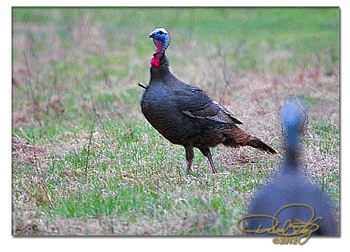
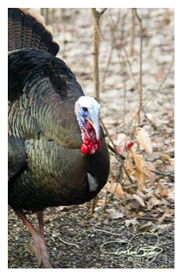
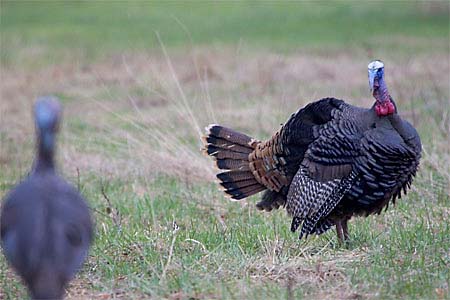
Wild turkey gobblers; listen to only a FEW spring gobblers.
Pick up on a FEW Spring Turkeys and listen closely
photo Dave Richey ©2012
It was a beautiful morning to be alive. I slipped out the door about 6:45 a.m. into 42-degree temperatures, and it felt wonderful.

The sun wasn't up yet but sharp spears of golden light shot upward from the eastern horizon, and my thoughts were on how beautiful the morning was. I stood there, a moment frozen in time, and waited for the sun to start bulging the horizon of the eastern sky.

It seems to start slow, and then the top surface of the ball of fire broke through, and up came the sun, growing more orange and red as it rose. It's a magic that I never tire of watching, and if there is a reason for rising before sun-up, it's to witness the rare beauty of dawn.

Watching a golden sunrise on opening day

I stood, transfixed by its beauty, and asked myself how anything could be any better. And then I learned how.

Off in the distance, so far away it could hardly be heard, came the very soft tree yelp of a hen turkey. She cutt once, just checking on the whereabouts of the other birds, and then a full-throated gobbler chimed in and the sound was loud even from a long distance away.

It's always amazing how loud a gobbler is when he roars as the sun comes up. The volume of sound is impossible to believe unless it is seen and heard up close.

He nailed that gobble with lusty exuberance for the day, and she gave another soft yelp. Big Daddy, still sitting in his roost tree, gobbled and then hit a double-gobble just to show everyone in the nearby trees who the Boss Gobbler in these parts happened to be.

Another Tom gobbled once, and again 10 seconds later, and then the Big Boss Man tuned up the woods again. The hen yelped a little bit more, just enough to keep the gobblers fired up, and then the Toms began gobbling back and forth at each other.

A gobble or double-gobble is pure Michigan excitement

Four individual gobblers were heard, and the fury of this sound was awesome. One or two small jakes tried to gobble but couldn't quite pull it off. Like adolescent boys, their voices were changing but they simply couldn't hit that low bass note and keep it going.

It was one of those days when I wished I could be sitting on the ground in my camo, a shotgun over my knees, and start lighting a real fire in their bellies. I love to listen to that low-pitched humming sound that gobblers make when they are close to a hen.

Many people have heard it, didn't know what it was, but if you are hunting and hear it, don't move because a gobbler is close. The sound doesn't carry far, and two or three years ago I was calling a gobbler for a buddy when I heard it.

"Don't move a muscle," I whispered. "There's a big gobbler behind us and he is very close. Don't move anything. We'll wait him out."

If you hear a gobbler spitting and drumming, sit still and don't move

That bird was within 15 feet of us, and I could hear him pacing back and forth in dry leaves, but he wouldn't circle around. We later learned that he had two big hens with him, and he was trying to lure my two hen decoys to follow along with him.

Unfortunately, I was too far away to hear this sound but I have no doubt that once the hens and gobblers flew down, that it would have been audible if the birds were close.

These birds on this delightful day serenaded the morning for 20 minutes while I stood and listened. And then, as if the switch had been thrown, they shut up and started moving.

I pulled the newspaper from the tube, walked back to the house, and stood on the back deck for another 10 minutes. The birds were indeed on the move, and I heard one gobbler rattle out his love song to the hens as they walked off in the opposite direction.

The turkeys, just like me, appeared happy to see the snow gone off the hillsides. All of winter's snow back in the hollows is gone, but I'll greet the dawn with the birds many times before the hunting season begins.

There's not much need for preseason scouting because I know the pattern of these birds and where they roost. I'll stay far away from them, hope they are not spooked out of the area, and each day they greet my distant presence with a gobble, is another memorable moment in my life.

Calling gobblers is more fun than shooting one

Somehow, I hope that's the way it may turn out but I have some doubts. It's been spring for five weeks, and I doubt many birds will be in the mood this spring. Some hen  birds have been seen on nests, and we're seeing very little gobbler activity if compared to past years.

But when my season open April 30, I'll be out there as usual, to greet the dawn with optimism. And I hope for just one lusty gobbler to call to me and my buddy. One chance may be it for this spring season, and we'll try to make the most of it.

Sunday, April 08, 2012

Control turkey hunting nerves

A jake; See gun barrel; Inch the barrel left and shoot for the head-neck

tom-in-site
A jake and a gun barrel ready for alignment and tagging.
Watch those television hunting shows about chasing gobblers, and many of those good old southern boys can control their nerves although some hyperventilate a bit as a nice gobbler gets closer. They may get excited but they almost always appear cool and rock-steady.

They shoot gobblers with what appears to be calmness. I know some hunters who hunt a dozen states every spring, and they have plenty of time and experience to hone their skills to avoid moving at the wrong time or to make some of the other mistakes made when gobblers close the gap between out-of-range and time-to-shoot.

Folks, in about two weeks, Michigan's first turkey season will open to hunters with the necessary permit. Two weeks doesn't leave too much time to begin thinking about  calling in and shooting a nice gobbler. It may be time to tighten up your nerves before the opener.

Unless you're a well-seasoned pro, most hunters lose their cool

I've had gobblers almost trip over my feet, brush against my elbow, and stand within three feet of my shotgun barrel and gobble in my face.

Are my nerves better than yours? I can't answer that question, but when I hear a bird approach, stop to spit and drum, I know any movement or noise on my part would end this hunt fast. Once a bird came very close to me along a fence, and was near enough for me to grab had I been dumb enough to try.

Most people who grab supposedly dead long-spur gobblers off the ground by the feet when the bird is still flopping usually only make that mistake once. A bird with good spurs will rake deep cuts in your hand, and most require a visit to the hospital.

I was ready for that sneaky bird, and once he put a couple of trees between us, and stopped to fan out and display, I knew this hunt would end with a big and dead gobbler over my shoulder.

He gobbled once near the decoy, and when the decoy didn't respond, he lifted his head to look around, and I shot him. Is this coolness under pressure or just a matter of experience?

Perhaps a measurable bit of both

To my humble way of thinking, it is more experience than ice water in my veins. So far this season I haven't had the chance to test my mettle against a wise or gobbler because my season starts April 30.

There have been many times when a bird may circle. Your eyes can only track a bird just so far to the right or left and you lose sight of him. Just because you can't see the bird doesn't mean he or one of his chums can't see you. Grit your teeth and hang tight.

These are times when so-called "nerves of steel" come in mighty handy. My hearing helps make up for my poor vision, and I can hear turkeys walking behind me and that helps me know their exact location. The trick then is to remain absolutely motionless, and wait for the bird to circle around in front of the shotgun. Sometimes they do and other times they don't. It's a part of the hunt we can't control.

Think of yourself as a statue: immobile, rigid and incapable of  movement or sound. Trust me, it's tough to do when a gobbler gets right behind you and rocks your head and hat with a tremendous gobble. Expect that to happen, and be prepared for it. If a gobble doesn't come, that's great, but it's smart to be ready to avoid jumping.

I guided a young lady one time, and saw some birds cross into our woods behind us. I told her the birds may walk down the edge of the field near her, and to be prepared.

They did and she didn't. The birds were 10 yards away when she went "Eek! There are some turkeys," in her loudest voice. It took them about 10 seconds to put 200 yards between us, and she never got a shot.

She blew her only chance by screaming

Imagine a gobbler in search of a hen. Your shotgun should be up to your shoulder and balanced across your knees long before the gobbler gets close enough for a shot. The stock should be against your cheek, you eye lined up over the front bead, red-dot sight or scope. Once the bird is in the right spot, pinch off a push-button safety between thumb and forefinger, ease the finger up to the trigger, aim and shoot.

It's sometimes amazing how motionless and quiet you can make yourself if you concentrate hard enough on it. Just take the occasional deep breath, ease it out softy, try not to hyperventilate, and enjoy the experience for what it is: an exceptional opportunity to achieve absolute calmness before the shot.

Then, if you shoot straight and a big longbeard lays on the ground 25 yards away, feel free to let loose with a silent scream of wonder and joy. An audible scream will probably spook other nearby birds out of the county and ruin any chance for someone else to score.

Turkeys often will stand and look when a shot goes off or they may run 20 yards, stop and turn around to look at their fallen friend. Occasionally they will take off and fly far out of sight before landing.

A loud scream will send them wildly on their way. So learn to conquer your nerves, and it's surprising how easy turkey hunting can be ... once in a while.

Saturday, February 04, 2012

Buying old turkey hunting books

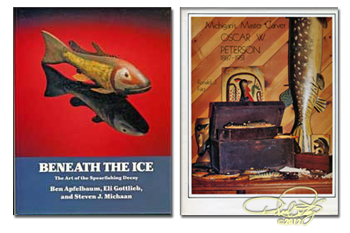
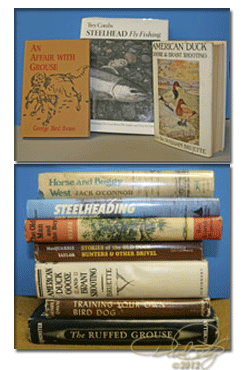
Two examples of nice ice spearing decoy books I sell

I spent just enough time outdoors today to shovel off the deck, say hello to my neighbor and bask in the warming breezes.

At 40 degrees, the snow is mostly off the roof. I spent some time arranging and rearranging books that are for sale on my website at Scoop’s Books. Some titles are once-in-a-lifetime acquisitions for any sportsmen and some are moderately priced.

I also am placing some books on eBay for auction purposes. Feel free to check them out.

I want to buy your old turkey hunting and duck decoy books

It's obvious that not all sportsmen like to read books, and that is OK. They just don't know what they are missing. There are so many fine fishing and hunting books available and listed on Scoop's Books. Find a book cover that interests you, and email me to see if the book is still available.

A hunter might ask: why buy a book on deer hunting? I already know how to deer hunt. Good question but a poor answer. Anyone who doesn't study deer regularly will know something about hunting these animals, but won't know enough about how to hunt them when the going gets tough.

Lots of people can cast a fly, but there are countless books available that can help with casting more accurately but also can teach us how to read the river, determine which insect is hatching, and which patterns will help fool the fish. Nothing is ever guaranteed except paying taxes until you die, but reading can broaden your horizons and help people learn new skills.

I'm constantly looking for fishing or hunting books to buy. I need to buy books in order to sell books, and I'm picky about condition but pay fair prices. So just what am I looking for and hope to buy from you?

I'm primarily interested in turkey hunting titles now. The scarcer they are, the better. Common turkey hunting book I don't need.

The easiest answer is for you to tell me is
  • the author's name
  • the title of the book
  • paperback or
  • hard-bound book with a dust jacket
From that tiny bit of information, I can usually determine whether I may be or am not interested in buying that title.

Contrary to popular belief, all fishing and hunting books are not scarce. Most also are not worth big money. Many books I turn down are not worth $5, and I have no need for them. But for you, the potential seller, I will pay within reason what it takes to buy books in good shape that I want for resale.

Books with damaged covers, childish scribbles, underlined passages, highlighted sentences, damp-stained covers or those with other faults are not worth offering. I never buy musty, mildewed or ex-library books because they usually aren't worth owning.

Anything noted immediately above is what I don't want

So, c'mon Richey, what exactly are you interested in? I seldom buy new titles. I never buy Readers Digest or condensed books. I prefer books that state 1st edition or 1st printing on the copyright page.

Topics of interest to me include
  • Atlantic salmon
  • muskie
  • brook trout
  • tarpon
  • fly tying
  • bamboo rod building
and other types of fishing books work for me.

I crave good books on
  • hunting ruffed grouse
  • deer
  • ducks
  • geese
  • upland game
  • wild turkey
  • woodcock and
  • other hunting books.
I have a mild interest in African hunting books but am picky about what I buy. I do pick up books on duck decoys.

Some hunting authors that I'm collecting; Please save list

There are certain authors I collect.


Robert Austin Fred Bear Havilah Babcock Larry Benoit Wayne Bledsoe
Stewart Bristol Bob Brunner Nash Buckingham Doug Camp Thomas C. Chubback Burns
Peter Hathaway Capstick
(first editions only)
Russell Chatham Wally Chodak Thomas C. Chubb Malcomb Commer
Wingbone Cryer Eugene Connett Ralf Coykendall Paul Dalke Henry Davis
Jack Dudley John Duff George Bird Evans J. Wayne Fears Bill Harper
William Harnden Foster Percy Haver Marv Heeler Vic Jansen John Knapp
Dana Lamb Homer LeBlanc J. Stockley Ligon Doyle Loadholtz John Lowther
Thomas McGuane John Minor Art Moraski Richard Nissley Jack O'Connor
Hoffman Phiilip W. H. Purser John Pusztay Larry Ramsell George Richey
Robert Ruark Ernest Schwiebert Louie Spray Bob Swineheart Robert Traver
Jack L. Turner Ted Vogel Alfred Weed
... and countless others.

I'm always interested in any books written by Michigan turkey hunters like Denny Geurink. State published turkey hunting, management, ecology, roosting habits, food habits, etc. are needed.

People have nothing invested in offering me books for possible purchase. If I can't or won't buy your books, I'll be happy to explain why. If I do buy, know that I will give you the highest possible price, and hope then to be able to resell the books for a modest profit, but that doesn't always happen.

I've never cheated anyone, and don't plan on starting now. My reputation is excellent, and I sell books off my website and some by mail order sales. It's in my best interest to pay the highest possible price, and still realize a potential profit.

I grade books fairly, charge a fair price and pay a fair price when I buy. I've been buying and selling books for 42 years, and one doesn't stay in this kind of business for long by cheating people.

Give me a try. Nasty winter weather will be around for another six to eight weeks. Dig through that pile of fishing and hunting books stashed in the attic, barn, basement, cellar, closet, garage or wherever, write down the author's name, the book title, and whether paperback or hardcover with dust jacket.

If you can read this, you can certainly email me and tell me what you have for sale.

It's that easy. And who knows? The book you sell could be valuable or not, but the payment may allow you to purchase some fishing or hunting equipment. Try me and let's see what happens.
Thursday, January 26, 2012

Dreaming turkey hunting thoughts

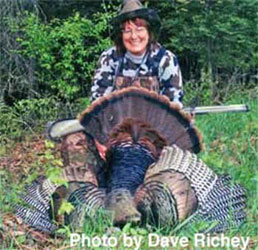
A big boss gobbler fell to a well-placed shot during the spring hunt

kayturkey
It starts every year in late January. I submit my spring turkey application, and sit back and dream turkey thoughts. My turkey hunting vest hangs in the corner of my office. The pockets bulge with box calls wrapped in soft brown wash cloths, and secured with stout rubber bands to prevent an accidental sound at the wrong time.

The back of my vest has a couple of decoys and stakes, and there is a turkey wing I slap against tree trunks and brush to imitate a hen flying down to the ground at dawn.

Other pockets contain slate and glass calls, another pocket has a bunch of diaphragm calls, and scattered here and there is a crow call and an owl call although I rarely use them. There is a gobbler call that I have used perhaps twice in 35 years.

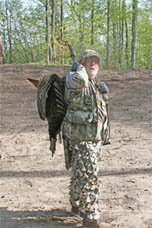
My vest contains everything I'll need for a turkey hunt

Most of my joy about turkey hunting comes from calling them. The idea of a big gobbler strutting his way to the call is a magnificent feeling. It is a wonderful sight, watching that bird react to soft clucks and purrs, and to watch a long-beard sneak through the woods, stop and go into a full strut and a booming gobble, is something I've experienced often.

Now me, I am not a good caller. Guys like Greg Abbas, Bob Garner, Bruce Grant, Arnie Minka, Phil Petz, Al Stewart and many others are good callers. Not me. I think I was tone deaf as a youngster, and never could sing a lick. I couldn't carry a tune in a picnic basket.
Countless records have been listened to, and there's no way the sounds that come from my calls sound anything like those on a record or tape.

The tapes have true sound quality, and the notes are crisp and sharp.

Mine tend to run together. There are calls I can't make, and I never try, but no matter how bad they sound to me, it matters little. It doesn't seem to bother the gobbler. Not one tiny bit!

Maybe the turkeys are as tone deaf as me. No one, write that down for posterity, no one is perfect all the time.

I've heard even expert callers blow a clinker once in a while

One of the secrets of turkey calling that I learned many years ago was that gobblers and hens, like men and women, have different voices. They don't sound the same, and humans are not meant to sound the same either. So if my turkey tunes are a little off, it doesn't bother me if it doesn't bother the birds.

I've argued back and forth with hens, and on more than one occasion, my squabbling with a hen brings him to me. Where she goes, the gobbler follows, and more than a couple gobblers have met their fate by following a snarly old hen to my call.

I've read books on turkey calling, and the author advises leaving the diaphragm home if a hunter can't use it right. I always let the turkeys determine whether it is right or wrong, and even when it sounds wrong to me, the birds seem to accept it.

Turkey calling is the epitome of turkey hunting

Turkey calling, to my way of thinking, is not so much about what you say with a call as how and when you say it. There is a certain rhythm to turkey calling, and if a hunter has the sense to know the string of sounds and put them together in the right order, the birds may come.

There is much good to be said about never calling too much. A hen that stays in one spot, doesn't move and squawks at the gobbler may not call a long-beard in. But, then again, maybe it will.

Try a running call a little bit, perhaps answer one gobble to let him know where you are, and that may be all it takes to lure a big Tom to the gun.

However, having said that, I've long experimented with using two calls at once. If a gobbler sounds hot on the roost, and is gobbling and double gobbling, but won't move in your direction, try using a box call and a diaphragm at the same time. It sounds something like two hens, and sometimes it will cause the gobbler to come running to investigate.

Nothing ever works 100 percent of the time, and I've seen world champion turkey callers mess up. Too much calling at the wrong time is a dangerous practice, and hunters must have the experience needed to know when and how much to call.

Shooting the gobbler isn't why I hunt them. I chase this long-spurred bird because I thrill at seeing a snowball-white head bobbing through the woods as it comes to my call. I've been known to let the bird come in, look for the hen and wander off, just so I can catch the buzz of having a gobbler up close.

It's a thrill I hope never to lose, and I'll be practicing my calling for the next three months. Perhaps the practice will help but it's nothing to worry about. I know that with time I can call in almost every gobbler that wants to come.

The problem is that sometimes gobblers just don't want to come. Go figure.

Monday, November 21, 2011

Choose quality optics and spend more glassing for game

My vision is only fair at best but when snow covers the tag alders, and a deer stands motionless back in this heavy cover, they are tough for me to see.

Quality optics means everything to a deer hunter. The difference between good and bad optics is like the difference between a good apple and a worm-filled one.
I've always believed in good optics, and also believe that a person gets what they are willing to pay for.

I have a pair of Swarovski binoculars, and I'd rather leave home without my bow release (I do bow hunt during the firearm season at times) than without my binoculars. I know that I can still shoot with my fingers and make a killing shot, but I don't have the same confidence in my vision without quality glass around my neck.

Hunting skills are only as good as your quality optics.


A friend of mine returned to Michigan many years ago from a hunt in southern Alabama. He and his wife were hunting with some Louisiana Cajun shrimpers from the Mississippi River delta country, and they all carried big, heavy binoculars and scopes."What's up with the big binoculars," he asked the Cajun hunters. He was quickly given a demonstration of the difference between his and theirs. That difference was simply amazing.

"Our binoculars and rifle scopes give us another 15 minutes of quality hunting time once your binoculars no longer work," he said, once shooting time had ended. "Look yonder. Can you see that deer standing 10 yards inside the cover by that lightning-blasted pine stump?"

My buddy couldn't see the animal and could just barely make out the fuzzy image of the stump. The Cajun offered his Swarovski binoculars, and he quickly spotted the buck. That short demonstration offered him more light-gathering qualities, greater magnification and a much greater ability to see deeper into the thick brush. Had it still been legal to shoot, it would have been and easy shot on that buck.

Alabama is wrapped up in deer, but once they get into thick cover along the edge of the green fields, they are virtually invisible without great optics.

My ability to see deer enables me to better plan on how to hunt them. In some cases, it means allowing the bucks to come to you; in other situations, it may allow the hunter to make tactical changes in how he hunts that particular animal.

It goes without saying that seeing deer before they see you is of paramount importance. Quality optics can help make that happen. For instance, a few years ago I saw some snow fall off a tag alder.

I wondered why that happened. I studied the area from my stand, and it took several minutes but then the beam of one antler came into focus. I kept studying the spot, and the buck was bedded down inside the alders where he thought he was invisible.

He wasn't, and he came my way and offered an easy shot. I didn't shoot because I was waiting for a bigger buck. He didn't show up, and I proved to myself again why I shelled out a big chunk of money for those high-quality binoculars, rifle scopes and spotting scopes.

Quality binoculars are important. Without them, there is much you won't be able to see. Binoculars aren't only for deer hunting. I always carry a good pair of binocs when wild turkey hunting. If I catch a glimpse of a gobbler heading into the woods, my binoculars come up and I can keep and eye on the longbeard's travel direction. It's amazing just how easy it can be to pick a hole through the brush as the bird approaches the call.

Glassing for game is more of the same. My optics come in handy on elk and mule deer hunts, and I've separated a Boone and Crockett bull from grey-colored rocks in northern Quebec and elk from the alpine ridges of Arizona, Colorado, Idaho and New Mexico.

Spot the animals, and your hunt can be made much easier. It's possible to cover and help point the way to move to intercept a big bull without being winded in the prospect.

I do much of my spring turkey scouting from my car while driving back roads. Stop often, and glass open woodlots and pasture land. Often, about 10 a.m., gobblers head for their strut zones to impress the hens.

Find the birds, keep them in sight, and move carefully into position to call. Hunters will soon learn that quality optics can make hunting a little easier, and believe me, there are times when you'll need all the help you can find to be successful.

Friday, April 29, 2011

Hunt late afternoon gobblers


This jake isn't huge but he's a legal bird


Many people think the only time to hunt gobblers is at the crack of dawn. Nancy and Roger Kerby of Honor know better.

Both of them have day jobs, and Roger can occasionally sneak away from his welding job for a bit of hunting. Nancy, a nurse at an Empire doctor's office, did the same thing several years ago during the first turkey season in Area K.

They got home about 4:30 p.m., jumped into their camouflage clothing, and Nancy grabbed the shotgun. Roger always goes for the last season simply because it offers him more hunting time while Nancy likes the earlier hunts.

Kerby knows his hunting area intimately


Roger hunts deer in the fall in Leelanau County, coyotes in the winter and gobblers in the spring. He knows what is state land, private land and what belongs to the Federal government as part of the Sleeping Bear National Lakeshore property along Lake Michigan.

Knowing the terrain is a key to successful turkey hunting, and he had been preseason scouting for gobblers before the late-seasom opener. Nancy couldn't get away on Monday so they headed out Tuesday afternoon.

They cruised down some of the same roads, scoping out the state and federal lands they hunt during the fall, and it took 30 minutes to spot a big gobbler out in an open field. Much of this land offers long-range spotting conditions, but the hardest part is moving in close enough to call to a gobbler.

It was that in-between time when the gobblers are off on a stroll and before they meet up with the hens at fly-up time. This bird was by himself, on the move, and they watched for several minutes to determine his direction of travel.

Knowing travel routes tell them where to set up to intercept birds


"We got him figured out, turned around, and drove around the mile-square section," Nancy said. "We knew where we could get into the timber, get fairly close to him, and with luck, call him right in."

They parked the vehicle, uncased her shotgun, and she loaded up, checked the safety, and they headed off at a fast walk. Five minutes later they spotted the gobbler at a distance. He was still heading in their general direction, but had stopped to watch traffic out on the road.

Roger gave a soft yelp and the gobbler greeted them like he'd been waiting for a long-distance phone call. The bird went into a strut, danced around in a circle, and gobbled again. He didn't seem ready to head their way so they decided to duck into a nearby gully and move closer. This bird acted like he expected the hen to come dancing his way.

They ducked down into the gully, and ran down it for 100 yards while remaining out of sight of the gobbler. They finally ran out of cover, and stopped. The bird was still 150 yards away, and he was still at full strut, wingtips dragging in the dirt, but wasn't coming any closer.

Nancy got set up for a possible shot, and Roger climbed a hill just behind his wife, and they sat motionless watching the bird display. Finally, the bird decided perhaps the hen he had heard wasn't coming, so he gobbled again. Roger stayed silent, let the old boy get himself worked up a bit.

The longbeard gobbled, and still Roger remained silent. The bird strutted, his tail spread in a broad fan, and gobbled again. He then double-gobbled, and his head was flashing red, white and blue.

Roger decided the bird might be ready for a little persuasion. He stroked out a soft yelp, and it was immediately answered by another double-gobble. He stayed silent,and the bird gobbled again, and one more soft yelp got the bird lined up and headed their way.

He strutted, gobbled, and came 20 yards closer. Roger stayed silent, and the bird gobbled two more times, and took a few tentative steps in their direction. He gobbled yet again, and Kerby whined and clucked, and that did the trick.

Watching gobblers and figuring out where they'll go is the secret.


The bird had his running shoes on, and came charging right up to within 25 yards of Nancy as she sat with her knees up and the shotgun to her shoulder. The bird stopped 25 yards away, his head tucked into his shoulders, went into a strut, and as his tail fan started down, Roger whispered "Get ready" and clucked softly.

The gobbler's head shot into the air as he tried to spot the hen, and with one shot Nancy downed her gobbler. The bird had a 10 1/2-inch beard and weighed over 20 pounds.

"The neat thing about turkey hunting," Roger said, "is working the bird. They don't always come to the call this well, but when everything comes together, it is a wonderful afternoon in the woods. And best of all, hunters have very little competition for birds."

Thursday, April 28, 2011

Me and Mr. Murphy and the turkeys


Watching jakes is fun but watching adult gobblers is something special.


Remember Murphy's Law? I wrote about it a week or so ago.

This quirky rule states that when hunting wild turkeys, if anything can go wrong, it will. Yesterday's hunt could serve as a great example.

It had rained a bit during the night, the skies were overcast, it was darker than the inside of a black cat, and I was walking across an open field on my way to a wooded ridge line. I woke up at 4:45 a.m., and not wanting to wake my wife, I fumbled in the closet for some pants and a shirt. I grabbed some jeans, pulled on a shirt and some sox, went out and got the newspaper, came back inside and dressed for the hunt.

Oops! Something was wrong.


I was midway across the field when it became obvious that I'd pulled on some jeans that were really too loose. I seldom wear a belt, but with every step, it was becoming more of an issue about my britches. I was 100 yards from my destination when I finally had to stop.

My trousers, underneath my rain gear, were down around my knees, and I was walking like a waddling duck. It may have been more meaningful if I hadn't been wearing rain pants, and if it hadn't been dark. I laid down the decoys and my Remington 870 pump shotgun, unhitched my rain gear, dropped those pants, pulled up my jeans, got an owl hoot (perhaps by an all-seeing owl), and continued on to my hunting spot.

The shame of it all. My unintentional strip tease in the misty rain seemed to set the stage for things yet to come. A quarter-mile away, in the black stillness of night, I heard a turkey crash down off his roosting limb, and it was followed by strong wing beats fading away into the night. Apparently one unseen bird was frightened from his roost by a half-naked stranger.

That thought put a weird smile on my face.

Moving in where I'd roosted birds the night before.


I reached my naturally camouflaged blind, put my shotgun flat on the ground where I wouldn't knock it down while wiggling in among some tree trunks, and then returned to the field to set up the decoys. I'd killed gobblers here before, and knew where the birds would come from, and placed the decoys with the jake-fake 35 yards out in front of me and the hen decoys about 45 yards out. This should make any live gobbler walk out in front of me and produce a good shot.

I put down my butt pad, wiggled around like an old lady pulling on her girtle, balanced the shotgun across my knees, and dug out a slate and box call, and laid them on a brown wash cloth next to my left leg. I leaned back, comfortable, and remembered pulling up my drawers in the middle of the field. I guess you had to have been there to appreciate it.

Thirty minutes passed before the tweetie birds began talking, and the first crow of the day flew over, cawing like a mad man, when a gobbler sounded off with a distant gobble. Another bird, much closer and behind me, joined in with a deep rumbling gobble, that shook the early-morning stillness.

I sat still, my calls and shotgun at the ready, and waited. I didn't want to join this party just yet. I wanted to see how many birds were nearby. Within 15 minutes, I'd located five gobblers, and they were mixed in with several muttering hens.

I held off calling until all five gobblers were dialed in.


I rasped out a soft little yelp, one that seemed nearly impossible to hear, but the keen-eared gobblers caught the faint sound and all five tuned in. I wouldn't answer, and waited five more minutes until one love-sick gobbler couldn't take it anymore. He gobbled lustily, and I called softly again, and he cut me off with a roar. I returned the favor with another soft yelp, and suddenly all five gobblers were cranked up.

Each Tom called to me, and I teased each one in turn, and finally only two birds -- obviously both without a hen -- remained. All of this had taken up more than an hour, but the two birds were still interested in coming to visit. They came in behind and downhill from me, and were close enough to hear their spitting and drumming. I did a tiny J-stroke on the slate just as the skies opened up and the rain poured down. The monsoons had arrived.

That didn't deter them. If anything, it seemed to re-ignite their fire, and both birds shook the ground with their gobbles. My shotgun was to my shoulder and steady across my knees when I heard the snap of a semi-dry twig. I was expecting it, didn't move, and then the landowner came over the nearby ridge with his tractor and manure spreader, tossing turds out onto the ground.

A tracker and manure spreader spooked them and I didn't get a shot.


It was too much for the skittish gobblers. They apparently whirled around and hauled tail feathers for someplace else. Just that quick, what had been an entertaining day was wrecked by Mr. Murphy and his weird sense of humor. I never saw the birds nor did I hear any other gobbles after that.

I was soaked to the skin by the time I got home. No turkeys, no shots, but one interesting and rather funny day afield. I thought perhaps you might be interested in how Mr. Murphy messed up my hunt but he didn't ruin my day. There's more to turkey hunting than shooting one, and my experience yesterday is proof of that.

Tuesday, April 26, 2011

Gobbler hunting with a bow


Kay Richey with a jake gobbler she shot with bow and arrow.


There are any number of ways to hunt these sharp-eyed birds, but one thing is a constant. Hunters must have some way of concealing the movements necessary when drawing a bow on a strutting gobbler.

Trust me, it's not easy. Turkeys see well, hear well, and there often is enough of them around a gobbler that coming to full draw isn't easy.

One way of doing it, and the most effective way, is to use a pop-up ground blind of camouflage material. These blinds take hardly any time to set up, and a bit of natural grasses or broken tree branches can allow a hunter and his blind to blend right in.

One way to do it is to locate a gobbler or two the night before, watch them fly up to roost, and return the next morning well before dawn. Set up the blind in the dark as quietly as possible, climb inside, sit down and stay quiet.

Sometimes gobblers will gobble first, but often small birds will be chirping and then the crows start to fly. The cawing of crows often triggers a spirited gobble.


Don't get impatient and hurry a bow shot before it's time.


I prefer to let the birds gobble two or three times before making a soft and short yelp. That's it, just one very soft call. Gobblers aren't deaf, and if they hear it and haven't been spooked, they will answer.

Just sit tight. It's not necessary to answer every gobble. In fact, let them gobble one or two more times, and make one more soft tree yelp. Listen for the birds to gobble from the roost, and then beat old turkey wing feathers against tree branches like a hen flying to the ground.

The gobblers will hear that, and often gobble again, and one more soft yelp is usually all it takes. If you are using decoys, there are different schools of thought on decoy placement.

I like to use two hen decoys and one jake decoy. I like the jake decoy facing the blind and the hens five or six yards farther out. When the gobblers come to the decoys, it's best to place the jake about 18 to 20 yards away and facing the pop-up blind. This will normally put the live gobbler between the jake decoy and you.

Gobblers almost always will head for the jake decoy, and I've watched adult gobblers jump up on the jake decoy, knock it over, and start putting the spurs to the decoy.

Shooting the gobbler is pretty easy with a shotgun, but it is much more difficult with a bow. Gobblers can stand still for long minutes, but when they come to the call and decoys, they are moving around.

Two certain shots are possible. A shot taken at a gobbler facing directly at the hunter is fairly easy but I know many people who wind up killing the bird but slicing off the beard in the process.

Wait for the bird to drop his wing-tips, spread his tail feathers, and prance around. Once the bird stops, aim for a spot just below where the beard comes out of the chest, lower the sight three or four inches, and try to hit just to one side or other of the beard. Done properly, this will kill the bird quickly.

The other way is to wait for the bird to start strutting, and let the gobbler turn all the way around to face the jake decoy. Aim for the center where all the tail-feather quills go into the back end of the turkey, and take a well-aimed shot.

Place the jake decoy in front of you and shoot when the gobbler goes to it.


A mortally wounded turkey will almost always shoot 10 to 12 feet straight up into the air, and fall back dead. I strongly suggest using a Game Tracker unit, because if the bird is not mortally wounded, it will fly or run off. The bird may not travel too far, but if it goes out of sight, they can become nearly impossible to find. A  string tracker can be a big help in recovering the bird.

Do not take side shots at a gobbler. The wing bones and feathers are heavy, and it's difficult to place an arrow through the wing feathers. I've talked to a few turkey hunters who say they shoot their bird at the juncture of the head and neck with an arrow, but it would be a difficult shot because a gobbler's head is always moving.

Of utmost importance is to position the blind so a shot can be taken sitting down. If the tent has horizontal and vertical windows, position a vertical window in front of you. Sit back, with full camouflage on, and wait for the bird to get into the proper position for a shot.

My wife has shot two gobblers with a bow.


My wife has shot two nice gobblers with her bow, and everything must into place in order to be successful. It is even more of a heart-pounder if a longbeard is taken with stick and string.

Turkey hunting with a bow is a major challenge. It's not easy with a bow, but when it works, it offers a surge of adrenaline that will be hard to forget.


Monday, April 18, 2011

Turkeys can make fools of hunters


Is a gobbler like this one in your future. Hunt hard and smart?


It was quiet today. Too quiet for the first day of the first hunt of our Michigan's spring turkey season.

After two days of very strong winds, it dawned fairly windy this morning which would keep the birds roosted longer. I was outdoors a good bit today, and heard nary a gobble or a shot. I made a few phone calls to some turkey-hunting friends around the state, and based on what was seen and heard, the opening day got off to a slow and quiet start.

I've avoided the issue for a variety of reasons, but most importantly, it would never be my intention to play the gas-price hole card to cause people to stay home. But with gas prices that seem determined by supply and demand or price gouging to hit a new high every day, many people are foregoing some of their former outdoor pleasures to save money.

A bad first day of the turkey season doesn't make a hunt.


Trust me, I feel your pain because we've pulled in our horns due to high gas prices. A couple of people I've discussed the issue with feel as I do: people aren't traveling very much. The steelhead runs showed fewer anglers; fishing guides report fewer spring trips; and I suspect when all the votes are counted, many sportsmen may give up their chance to turkey hunt unless they can do it close to home.

The cost of losing one day's wages by taking time off work doesn't appeal to any of us. No one can really afford to go as often as we did a few years ago. The inflated price of gasoline will hurt some of the tourist business in many locations.

But then, is that really the cause of a poor showing today? Who knows? It could be the fault of the weatherman telling us that tomorrow or Wednesday we may see another 10 inches of snow, which certainly wouldn't help turkey hunters.

Can we ignore the possible warnings? I think not, based on the screwy weather we've had since New Year's Day. It's certainly not been like most Michigan winters. We get quite a bit of snow in our area near Traverse City, and I've kept track since the first significan snow-fall last November, and I've tallied 176 inches so far.

Some snow won't bother the gobblers but if the white stuff is accompanied by very much wind, it will keep the limb-hangers in place longer than usual. An old-fashioned blizzard would wreck at least two days of hunting effort.

Hunters must be prepared for any weather eventuality.


We've heard the wind blow before in this section of the north country, and often such storms blow through to the north or south of where we live. It makes little difference: it will have an major effect on hunting success wherever it hits.

In past years of driving back roads while scouting for birds, I've come to accept one fact: the fewer vehicles spotted while scouting usually means fewer hunters in the woods, which can mean a reduced turkey harvest.

Of course, wild turkeys are every bit as unpredictable in their actions as the spring weather. I've hunted lots of years in many areas of the country. And one very important thing I've learned is that predicting the actions of a big old Boss Gobbler is much like predicting your mother-in-law's attitude in advance of her visit. I'd like to talk to someone who has figured out gobblers and moms-in-law, and maybe they could teach me something I should know.

So, is there a moral to this story? You bet, and let's hope it works for you this week and me next week. The short and sweet part of this moral is simple: we can't change the weather, and even if we could, wild turkeys have a strange sense of timing. They always seem capable of throwing a big monkey wrench into any potential turkey hunt, and often do so without provocation.

Lay the best plans in the world, exercise the utmost caution, possess the stillness of a hunting owl, and yet, wild turkey can and will out-wit human hunters. Call like a champion, choose your hunting areas with great care, enter on quiet feet long before dark, sit with the patience of Job, and turkeys may spot the slightest movement, and charge off to parts unknown.

The best of plans often go awry when it comes to gobbler hunting.


The balance of your hunting time may be spent trying to find one gobbler who was in the back of the classroom when hunter savvy was handed out, and he may still find a way to humiliate a grown sportsman. He may zig when you feel he'll zag, and the shot pattern will poke tiny holes in the dirt but not in the bird.

It's nothing personal, you know. Turkeys don't think like we do, and I've seen them come 300 yards as straight as a string, and when they are within five yards of providing a shot, they will stop, strut a bit, turn around and walk back to their original spot. Who knows why?

It's been said many times that there's more to turkey hunting than pulling the trigger. Sometimes us mere mortals just don't stand a chance in the turkey woods. It's just part of the turkey mystique we must accept, even if we never do understand it.

Monday, April 11, 2011

Turkeys in the fog

It was several years ago when I experienced what personally felt like a perfect turkey hunting day to me. I awoke with plenty of time to hike to my hunting spot, and stepped outside to see what the weather like.

I should have turned on the yard light first. Everything was a blur as thick tendrils of fog hovered like white gauze from ground level up to the tree-tops. It was impossible to see but I decided to leave early to walk to my hunting location. I’d need more time on this day to find my hotspot.

Turkeys often stay roosted until the fog clears off but these birds had been put to bed the night before. I knew where they were, and didn’t need any landmarks to find this spot. Just get on the north-south dirt road, and walk along the edge of it until i reached a narrow finger of woods that came down to the road. The almost one mile walk would take longer on this day, so I forsake a breakfast and hot coffee in favor of the early start.

A one-mile walk in the fog to reach the turkeys.


The fog was so thick it was literally impossible to see your hand in front of your face. My tiny penlight was shone on the road edge where weeds met the dirt, and I actually walked past the finger of woods in the dark and fog, and had to backtrack.

I eased off the road and into the trees, and knew I was within 200 yards of the roosted birds. There were three adult gobblers with long beards, two jakes and two hens ready for breeding. I had no clue what the day would provide but knew the birds would stay roosted even longer in the fog.

A narrow spot of farm land was separated by two woodlines. There seemed to be no need for a turkey decoy because the birds couldn’t see the ground. All I had to do was sit still near the clearing, wait with infinite patience for a roosted gobbler to call, and then try to sweet-talk him to within 35 yards while hoping all the birds didn’t approach at once.

A long hour passed, and there seemed to be a lightening of the fog but it was still impossible to see the trees on the other side of the clearing. The birds were roosted 100 yards deeper in the woods, and a small water puddle lay at the base of the roost trees.

Fog so thick I couldn’t see my hand in front of my face.


The second hour passed without hearing a bird. The fog seemed thick enough to cut, and it was lighter but the ground fog hung heavy over everything within sight. Eventually a lone crow flew over, cawed once, and a moment later a gobbler returned the greeting. Nothing happened for a few moments, and the bird gobbled again, and was joined by the others.

I sat there, knowing the birds probably wouldn’t fly down until it got a bit lighter so they could check for danger. I kept my silence, and so did they, and by nearly 9 a.m., the fog was thinning slightly but it still a long ways to go before I’d be able to see well enough to shoot.

Time seemed to drag by for another 30 minutes before the sound of flappint wings was heard. They hadn’t flown down but were getting restless on the roost. I coaxed out the faintest purr from my old Ben Lee box call, and the birds lit up. They double- and triple-gobbled, and the hens were making noise, and the tree-top-talking went on for another five minutes before they pitched down into the open spot in front of me.

The unseen gobblers called


All the gobblers, including the jakes, began ripping the air apart with their gobbles. Another faint yelp started another round of gobbling as the birds circled the clearing looking for the hen. On several occasions, the gobblers were right in front of me and their footsteps in the leaves could be heard, and they kept circling in a clockwise manner. The sounds still seemed a bit muffled by the fog but all the birds were within 25 yards of my shotgun, but the dense moisture-laden air was still too thick so see a thing.

Those birds circled around me, time after time, until about 10 a.m. when the fog began to clear. I called softly one more time, and the birds stopped moving. The biggest longbeard was 50 yards away, and I tried to appear to his male urges. One of the hens began calling to him, and I began a duel with the hen, and we verbally fought for 10 minutes before all the birds shut up and they moved off through the woods.

It had been a long morning of sitting with just a bit of calling, but the suspense of those birds circling in the fog right in front of me, has left an indelible imprint on my memory. I didn’t shoot that day, and it didn’t matter, because the symphony of turkey talk coming at me through the fog was enough to satisfy my hunting desire for one day.

Sunday, April 10, 2011

Stay calm when turkey hunting


When everything comes together, and the bird cooperates, this is the result.


Watch some television hunting shows about chasing gobblers, and many of those good old boys can control their nerves although some hyperventilate a bit as a nice gobbler gets closer. They may get excited but they almost always appear cool and rock-steady.

They shoot gobblers with what appears to be calmness. I know some hunters who hunt a dozen states every spring, and they have plenty of time and experience to hone their skills to avoid moving at the wrong time or to make some of the other costly mistakes made when gobblers close the gap between out-of-range and time-to-shoot.

I've had gobblers almost trip over my feet, brush against my elbow as I sit with my back to a tree, and stand within three feet of my shotgun barrel and gobble in my face.

Be prepared for a gobbler and don't flinch when it comes.


Are my nerves better than yours? I can't answer that question, but when I hear a bird approach, stop to spit and drum, I know any movement or noise on my part would end this hunt fast. Once a bird came very close to me along a fence, and was near enough for me to grab had I been dumb enough to try.

Most people who grab supposely dead long-spur gobblers off the ground by the legs when the bird is still flopping usually only make that mistake one time. A bird with good spurs will rake deep cuts in your hand, and most require a visit to the hospital.

I was ready for that sneaky bird, and once he put a couple of trees between us, and stopped to fan out and display, I knew this hunt would end with a big and dead gobbler over my shoulder.

He gobbled once near the decoy, and when the deke didn't respond, he lifted his head to look around, and I shot him. Is this coolness under fire or just a matter of experience?

Look sharp for circling strutters but don't move your head.


To my humble way of thinking, it is more experience than ice water in my veins. There has been some times when I haven't had a chance to test my mettle against a wise or gobbler because my season started with high winds and snowy weather, and birds didn't work well.

There have been many times when a bird may circle. Your eyes can only track a bird just so far to the right or left and you lose sight of him. Just because you can't see the bird doesn't mean he or one of his chums can't see you. Grit your teeth and hang tight.

These are times when so-called "nerves of steel" come in mighty handy. My hearing helps make up for my poor vision, and I can hear turkeys walking behind me and that helps me know their exact location. The trick then is to remain absolutely motionless, and wait for the bird to circle around in front of the shotgun. Sometimes they do and other times they don't. It's a part of the hunt we can't control.

Think of yourself as a statue: immobile, rigid and incapable of making a movement or sound. Trust me, it's tough to do when a gobbler gets right behind you and rocks your head and hat with a tremendous gobble. Expect that to happen, and be prepared for it. If a gobble doesn't come, that's great, but it's smart to be ready to avoid jumping.

Talk yourself into a state of immobility until the shot.


Imagine the bird is searching for a hen. Your shotgun should be to your shoulder and balanced across your knees long before the gobbler gets close enough for a shot. The stock should be against your cheek, you eye lined up over the front bead, red-dot sight or scope. Once the bird is in the right spot, pinch off the safety between a thumb and forefinger, ease the finger up to the trigger, aim and shoot.

It's sometimes amazing how motionless and quiet you can make yourself if you concentrate on it. Just take the occasional deep breath, ease it out softy, try not to hyperventilate, and enjoy the experience for what it is, an exceptional opportunity to experience absolute calmness before the shot.

Then, if you shoot straight and a big longbeard lays on the ground 30 yards away, feel free to let loose with a silent scream of wonder and joy. An audible scream will probably spook other nearby birds out of the county and ruin any chance for someone else to score.

Turkeys often will stand and look when a shot goes off or they may run 20 yards, stop and turn around to look at their fallen friend.

Occasionally they will take off and fly far out of sight before landing.

A loud scream will send birds wildly on their way. So learn to conquer your nerves, and it's surprising how easy turkey hunting can be ...at least once in a while.

Saturday, April 09, 2011

Murphy’s Law and Turkey Hunting


A turkey decoy (left) and a jake gobbler we passed up on that day.


It was the nicest day of my second turkey season in Area K several years ago. It was clear and cool when we got into a good spot to listen at dawn. My buddy Arnie Minka was giving me a break: no turkey talking for me today. He would do the calling on the last day of my season.

There was no wind, which was a blessing after all of the wind of the past two weeks, and we sat quietly waiting to see if any gobblers sounded off at daybreak. Dawn was a pink blemish on the eastern horizon when the first bird gobbled nearly a mile away.

Five minute later another bird gobbled, hit a double-lick, and then single-gobbled to punctuate his earlier comment. Two minutes later the bird, perhaps 250 yards away, gobbled again and then another bird gobbled a half-mile to the west.

Wild gobblers calling at dawn


We sat patiently, waiting for another gobble, and weren't disappointed. The only thing is this bird was off in the woods several hundred yards away, and the hens were talking up a storm. Arnie let him gobble again, and then stroked out a soft yelp on a box call.

Two birds gobbled hard, took a breath and gobbled again. I'm thinking this is a little bit of alright. Arnie was grinning under his face mask.
He switched, just to see if it would work, to a slate call. The peg rasped out a soft purr and whine, and both birds lit up again. He didn't want to rush the calling too much. He wanted to let it get a bit brighter so it would be easier for me to see an approaching bird.

He picked up the slate call again, drew the peg in a soft J-stroke and the soft yelp turned on one of the birds. He rasped out a throaty gobble, roaring hard, and that forced the bird 250 yards away into a similar respon

Here we were on this wooded hilltop, approximately halfway between two lusty gobblers. The bird farthest away gobbled once, and it sounded as if he was closing the gap. Arnie gave another soft yelp on the slate call, and both birds answered. This was getting pretty exciting.

The neat thing was we were working two birds, and their male ego or whatever turkeys possess wouldn't let either bird give in. Box call or slate, it made no difference to them. Both birds were coming, and he softly teased them with another soft yelp and purr.

Suddenly, both gobblers shut up. Murphy’s Law had struck again.


They gobbled, each bird now within 200 yards, and the furthest bird double-gobbled and I thought I could see him approaching the tempting hen decoy. The other bird gobbled, rattling the woods, and Arnie whined softly on the box call, and that lit him up like a July 4th fireworks display.

All of a sudden, there was no noise. Not a turkey gobble, not a crow cawed, and Arnie hit another soft lick on the box call and slate. Nothing. The birds had gone mysteriously silent.

Why, I wondered, he hadn't hit any bad notes with his calls. Something had to have frightened the birds.

Two people were tending to farm chores. It wasn't hunter harassment, but more like Murphy's Law crimping our style.

We quickly moved our base of operations 100 yards, and tried again. There was no gobbles, no nothing. It was as if the ground had opened up, and swallowed both birds.

There was a vantage point another 100 yards away where we could see where the other bird had been, and we made our way to it. I laid my shotgun aside, and we spent 20 minutes glassing woodlots and open fields on both sides of the road.

We sat back, thought about it, and began glassing an area across the road. A gobbler stood out in the field at least 500 yards away, and was watching the road. He was a half-mile away from us, and there was only one way that might put us within shotgun range.

It would be a mile hike, and we dropped off our hill top vantage point, studied the terrain where the other bird had been, and saw nothing. We moved through the woods, across plowed fields, crossed the road and entered the woods.

We moved slowly and silently through the wet woodlot, and eventually got to within 200 yards of where the bird had been. That joker had disappeared. We walked through a woodlot, and never saw him again.

Several other spots were tried, and we took a long scouting ride, but there were no more turkeys.  We saw one jake with a two-inch beard, and he never received any consideration from me. I'd let him grow into something bigger for next year.

My season ended early that spring when four hens and two jakes were spotted crossing a field and heading for their roosting area. They offered us a brief thrill but we both realized that Mr. Murphy had ridden our backs all day. He proved, once again, that if anything can go wrong on a turkey hunt, it will.

The good thing was our hunt was fun while it lasted.

Wednesday, April 06, 2011

Don’t make the mistake: take the jake


One must wait when a bunch of turkeys are present to avoid shooting two birds.

This is one of those unenforced rules that turkey hunters should always consider. The wild turkey is a very beautiful bird, and it's North America's largest game bird, and many hunters get caught up in all the beauty that is turkey hunting.

Everyone wants to hunt and shoot a great huge trophy. They want a bird with a beard as thick as a paintbrush and one that drags the ground, and preferably with hooks 1 ½-inch around the curve and a bird that tops 20 pounds.

Such birds are out there although spurs that long are often found only on the oldest gobblers. But it's all these things that attract gobbler hunters, and not every one will shoot a great big bird. In fact, very few of us will shoot a big gobbler when the season begins.


The decision isn't easily made until it presents itself, and you must move fast.


So the time-honored catch phrase “don't make the mistake: take the jake” can be excellent advice. Oh, yeah, I know: it's fine to hold out for Big Bird to show up, but as a general rule, those old Ground Shakers seldom show up when you want them to.

So, that makes the old catch phrase more meaningful. As often happens, especially when using calls and decoys, the first birds on the scene are the younger jakes with their itty-bitty two-inch beards. The big limb-walkers hold back, and watch the youngsters with all their eagerness, dash in to sweet-talk the hen decoys and then get shot.

It's one way to ensure that a gobbler grows up, grows a big beard, and develops some hook to his spurs. They let the little guys run in, while they strut and posture, and it just takes strutters longer to get moving sometimes. Capturing a bunch of hens from another gobbler's harem is always the idea, there's just no rush to it.


Try to think this problem through before it happens, and try to reach a decision.


Often, hunters can tell if the strutters are interested. They strut and dance, stick their heads out to call, turn around in little circles while displaying their strutting skills, and they move in slow. I like to wait and see what the longbeards plan to do.

Often, the strutters hang back with the hens they've already corralled, and they look for danger. Then the hens that run with gobblers are like doe deer; they are suspicious about anything that looks out of place. Suddenly, if a jake and two hens are in one spot, and not moving, it makes old hens skittish. Once the jakes get into the decoys, it piques the interest of the old gobblers.

Slowly, the older gobblers will finish their inspection, and move toward the jake decoy. This, obviously, is what many hunters want to see. Well, folks, sometimes it happens that way and other times it doesn't.

My advice if the big longbeard hangs back, the hunter can do one of two things: wait to see if the big boys move closer, but there is no way to tell if they will. Usually, if a longbeard plans to jump a hen decoy, it usually does it while the jakes are thinking about doing it. However, if the longbeard holds back, he's suspicious. If he walks away, and no longer answers the call, he's on his way out of Dodge City.

Now is the time when you make the final decision. No one can make it for you. Do you shoot the jake, and end your season by tying your tag to one of the legs, or do you pass up an easy shot in hopes of calling in another heavy gobbler? Only you can solve that problem.

Longtime hunters can tell when adult gobblers are about ready to skate out of there. The staked-out hen decoys aren't moving as a live bird would, and the big gobblers are holding back. The only target of opportunity is a jake.


Just don't move when turkeys are within shotgun range. Shoot or wait.


Mind you, there are no stigmas attached to shooting a jake. Only personal thoughts keep this from happening. The question that turkey hunters all over North American must ask themselves is this: I can kill that jake or I can wait and try for a larger birds. It can be a tough decision to make.
Only you can answer the question. I've shot lots of gobblers over the years, so it's my decision to shoot or wait, and I always wait. For first-time hunters or those who haven't shot many birds, my advice is simple. Don't make the mistake: take the jake.

Sunday, April 03, 2011

Solitary turkey hunting


More than one hunter with birds this close is one too many.


Make no mistake about it. By nature, I am a solitary hunter. Sure, I call turkeys for my wife, and some friends, but I enjoy being alone when turkey hunting.

Once, several years ago, a gobbler was 75 yards away and moving my way fast through the spring woods. He was fixated on Henrietta, my whupped-up-on hen decoy, and seemed committed to a quick romantic dalliance with her.

The longbeard was almost within shooting range when a morel mushroom picker walked up behind me, and bellowed: "What are you doing out here in the woods? What are you up to. I think I'll call the law."

The gobbler heard the human voice, hit the skids, jumped to the left, ducked behind a tree, and quickly disappeared from sight. He was as lost as last year's Easter egg from that time on. I was never able to locate that bird again.

Gobblers or a longbeard with hens are very spooky.

Other people chatter and talk. Some, like the above anecdote stated, are mushroom pickers. Many have no clue about turkey hunters, and it's just one more reason why one must be careful in the turkey woods.

Hunting these big longbeards is considered a one-man game. On occasion I'll take one or two people hunting, but dislike taking more than one. And frankly, I'd much rather hunt alone than with someone other than my wife.

The sad fact is that turkey hunting, which begins in a couple of weeks, is not a community event. It's not meant to be a social affair, a gathering of friends with similar hopes and desires. This gobbler business means absolute silence, no moving, and it also means a keen knowledge of how to set up on a bird and how to call it in.

Seldom will two hunters score during the same hunt. A guide and one hunter can work but one guide and two hunters soon becomes a lesson in frustration.

It's difficult for two people to shoot at two different birds.


There is much to be said for turkey hunting alone. You choose your hunting spot, and if the birds head the opposite direction, the hunter gets up, starts running while hoping to get ahead of them without being seen. It occasionally works, but most of the time it doesn't.

It's not easy, but it's much easier for one person than for two or three. Me and two others tend to get in each other's way, and often someone will move when they should be sitting still. A fidgety hunter will spook every turkey long before they walk within shotgun range.

Some hunters want to idle away slow time by chatting. I don't want people talking to me because I must listen, and don't need to hear stories of their earlier hunts, what he expects from this hunt, or to answer hunting questions when we should be motionless and silent.

My spare time on a hunt is spent trying to get someone into a bird. Sometimes it just doesn't work, and other times, the gobbler comes to the call like I have a rope tied to his neck. Now may be the time to state that I am not a for-hire guide. I only take family and good friends hunting, that is, if I have already taken my gobbler.

I prefer hunting alone although I often take my wife and she shoots.


Hunting alone has much going for it, and frankly, it pleases me immensely. It allows me to go where I want, make decisions whenever they become necessary, and there's no need to worry about someone else and their feelings, whether real or imagined.

One might say it's selfish, but who cares? It's my hunt, it's my time, and if I choose solitary hunting, so be it. It's not a case of being antisocial; it's a matter of knowing that one turkey hunter is far more effective than two or more people hunting together.

The odds improve greatly for solitary hunters. The only reason I take another person out for wild turkeys is that I enjoy watching them shoot their first gobbler. Both hunting alone and calling a bird for another hunter are selfish actions. I do them reasonably well on calm birds and with people who pay attention and don't move or talk.

People know I have bad vision, and they are counted on to help me spot incoming or circling birds. No words need to be spoken. An elbow nudge gets my attention, and the movement of a relaxed finger gives me the direction. The birds often are spotted first, but it doesn't always happen in a wooded area with heavy vegetation.

My instructions are simple, and should be easily understood. Sit still, don't move, sit with your back to a shoulder-wide tree, pull your knees up, rest the shotgun against your shoulder and across your knees, and listen to what is whispered to me.

I tell them that as the birds approaches us or my decoys that they cannot move, even if they have the mother of all back pains. Be still, don't make a sound and wait for the gobbler to move directly in front of the shotgun at 20 to 35 yards.

A sharp but barely audible putt is made when the gobbler is in the right position for a killing shot. The sound makes the bird stop, and its head goes up to look for danger. Be ready, and shoot the gobbler where the head and neck join. Hunters are warned to keep their cheek down on the shotgun stock, and don't lift their head when they pull the trigger or the shot will go high.

There will be plenty of time to palaver and talk once we leave the hunting area. Often other turkeys will have been with the dead gobbler, including other gobblers. Shoot the bird, sit still and don't move, and let the other birds wander off on their own.

Doing it this way doesn't alert them to humans in their midst. A shot could be confused with thunder, which turkeys hear all the time. It's the motion and noise of a moving hunter that jumps out from in front of a tree that sends birds heading for the next township.

Hunting a strutter can be hard. It's harder with another person.


Hunting alone removes all of these potential problems. It's one man, going one-up with a gobbler, and without any consideration for anyone else. It's making personal decisions, and living with them, whether they are right or wrong.

The case has been made for hunting alone, and although I take two to four hunters out every spring, I haven't figured out how to hunt error-free yet. Maybe I should hire me a guide and learn something new. But I won't because I enjoy the quiet solitude. It's what keeps me focused and willing to put up with too little sleep during the short spring season.

Wednesday, March 16, 2011

Ethics and turkey hunting


Shooting a gobbler friom a car window is illegal


Shooting a gobbler before legal shooting time starts is a serious breach of ethics and laws. Dumping a gobbler after shooting time ends is equally wrong. Killing one with a rifle is illegal in this state although legal in others.

The advent of 3 1/2-inch 12 gauge shotguns and the heavy 10 gauge magnums with ultra-full choke tubes have made longer shots possible. I watched a gent unload one shot at a gobbler that would have kept coming had he not shot at 80 yards, and the bird flew away with the guy chasing it with two wild shots.

Only a fool would shoot at a bird that far away


Here was the dude who ignored my warning that the bird was too far away to shoot. He took an unbelieveably long chance and missed the shot
"I think I rocked him," he told me, somewhat proud that he may have buried some pellets in a bird that got away. I had told him to wait until the bird was 35 yards out, but he shot at over 80 yards and tried to convince me the bird was within range. Was it an ethical shot, or a Hail Mary shot? The latter is my thought.

There's no excuse for ultra-long shots. Allow the bird to approach within range, take your time, and when his head comes up, shoot. If the bird approaches, his head and neck tucked down, don't shoot. Birds often will go out of strut, straighten up, and lift their head after gobbling. The chance of wounding a bird is high until the head is straight up.

It's unethical to call to a bird if you know another hunter has been working it. Common sense, which plays a major role in hunting ethics, dictates that the newcomer should hunt elsewhere for a different bird.

I watched a big gobbler approach a highway, cross and head toward my hen and jake decoys. My set-up was 350 yards off the road, and the bird came off the road shoulder and out into the field. It then began to strut, gobble, and started my way again.

Most hunters, if they knew someone was watching, would never shoot a treed gobbler. It's just not an honest way to hunt. So, if we always believe that someone may be watching our actions, we follow the rules.

Ethics are legal and moral standards by which other people judge hunters. Shooting a gobbler from a car window is not ethical nor is it legal. Shooting one from someone's front yard, running out, grabbing the bird and racing back to the car for a fast getaway is not only unethical but illegal.

Turkeys are sure-nuff noble birds & ethics are needed


I had a chance several years ago to cheat. A huge gobbler was working my way, slowly but surely, and the minute hand was ticking slowly down to the end of shooting time. A soft little whining yelp teased the bird and he paused to gobble, do a little dance step and all it did was slow him down.

Ethical turkey hunters wouldn’d shoot this road-crossing gobbler


Ethical turkey hunting means hunting legal. For instance: we can't pot a gobbler from a roost tree, before or after dawn. Granted, some people might get away with it but it is unethical and illegal activity.

The gobbler had a beard that tickled the ground but was 55 yards out. Three minutes of legal shooting time was left, and I hoped he would get moving and take several fast steps closer. He could then dawdle along for another five yards, and be in range before shooting time ended.

He took two or three more steps, stopped again, went into a semi-serious strut, folded up his wings, and stood at 45 yards. It was now down to seconds: 10... 9 ... 8... and finally my watch said shooting time was over. Five seconds later the bird quickly walked to within 25 yards of me, stopped, and stood broadside with his head up for a full minute.

Watch gobblers and wait for the right moment to shoot.

Could I have shot? Absolutely. Did I shoot? The answer is no. Who would have known if I had cheated by less than a minute?

That answer is simple. I would have known, and every forkful of breast meat would have stuck in my throat. I couldn't have eaten that bird if I had violated ethical and legal codes of hunting conduct.

There are certain things ethical hunters will not do. A car came down the road, stopped when it saw the gobbler and pulled onto the shoulder. The driver leaned on the horn and startled the bird. It started coming again, and this time one nut-case yelled out the window while the other honked the horn. The gobbler lit out on a dead run, crossed a big field, and disappeared from sight.

Hunter ethics wasn't the issue here but instead, it was a clear case of hunter harassment.

You know, I know, and poachers know that conservation officers are spread too thin and it's hard for them to enforce all the laws. So, if anyone will help police our ranks, it must be you and me. Ethics must stand for something, and if ethical behavior goes out the window, where are we then?

Civilization must stand on a strong foundation of common sense and ethical behavior. If we lose one, the other will surely follow. If they both go, the world of hunting as we know it will falter and fail.


Sunday, March 13, 2011

Memorable turkey blunders

Cathy Beutler with a dandy gobbler she shot while hunting with me.

"Keep your powder dry" was the motto in the 1700 and 1800s when muzzleloading hunters and frontiersmen roamed parts of North America. Those who failed to follow that sage advice often went hungry or had their hair lifted and cut off below the roots.

My list of hunting mistakes with game, especially turkeys, is endless. Years ago, while hunting in a heavy rain with a muzzleloader, I forgot to cover the muzzle. I set my front-loader against a tree with the powder and shot charge in the barrel but the shotgun wasn't primed.

I set out my decoy, retreated to my chosen spot, and primed the muzzleloading shotgun. A large number of gobblers and hens came, and milled around in a tight circle near the decoy, and I couldn't shoot. They eventually left, and I called again.

Good thing a desperado wasn’t trying to take my money.

A lone gobbler a half-mile away answered, and I sweet talked him with a soft yelp and some hen jabber with a push-pull call. He came running up. I saw him first at 30 yards, and then he dropped into a little dip in the ground, and popped up again at 20 yards and stopped. The shotgun was up, and when I pulled the trigger, the primer went off with a pop. The powder did not.

I'd forgotten to put a balloon or anything else over the muzzle to keep the powder dry. The Pyrodex was a black semi-liquid. It was a lesson well learned and never forgotten.

I took a guy out one day, late in the season, and spotted a jake 150 yards away. This guy wanted to shoot a gobbler, and beard length didn't matter. It took 30 minutes to bring the jake within 80 yards, and the guy was aiming at the bird.

"He's too far away," I whispered. "Don't shoot yet. Let him get to within 35 yards." He said the bird was only 35 yards away, aimed and shot.

The young gobbler hauled tail feathers into the woods. The man maintained the bird was only 35 yards away until I asked him to give me a prominent landmark where the bird had been standing. He said the bird was right near that little bush that stood three feet high.

That bush was much farther away than he thought. He shouldn’t have shot.

He was urged to pace it off in approximately 36-inch steps as I walked beside him counting the paces. I got 80 steps and he got 77 steps, and then he realized the mistake he had made. It was the last gobbler we saw that day.

This didn't happen to me but to a friend. He knew, within 50 yards of where a gobbler had roosted the night before. He snuck in the next morning, and stopped well short of the roosting area to wait for the first gobbles of the morning. The sun came up and all was silent.

He gave a very soft tree yelp or two but nothing responded. He stuck with it, and finally with a great deal of impatience, he uncorked a loud yelp on his box call and something happened. A big gobbler bailed out of the tree he was sitting under, and it flew 75 yards, hit the ground a'runnin', and that was it. He had set up directly under the gobbler and missed his big chance.

The author carries a nice longbeard out od the woods to his car.

Two friends, on their first gobbler hunt, went looking before dusk and spotted several dark birds on the ground. Just before dark they flew up into a tree. These guys knew about roosting birds and were happy.

They returned the next morning well before dawn, set up about 100 yards away, and waited for the day to wake up. Tweety birds tweeted, crows cawed, and they yelped on box calls. They could see several dark forms in the trees, and called again and again.

A big surprise was in store for those two turkey hunters.

Eventually the birds flew down, and went to where the hunters had seen them the previous night. No amount of calling seemed to work, so one of them slowly eased his binoculars from his backpack, and with infinite slowness, eased them up to his face and studied the birds.

The birds they had roosted the night before were not real turkeys. They were turkey vultures, and they were feeding on carrion on the ground. They admitted it, and took their share of ribbing.

There is only one sure thing when turkey hunting. Murphy's Law always applies, and simply stated: If anything can go wrong, it will. Keep Mr. Murphy in mind, try to outguess him, and sometimes the gobblers react as you plan and the hunt is a success.

Of course, when we mess up, it's still good for a laugh even when we don't feel much like laughing at our silly mistakes. Trust me on this: if you hunt wild turkeys long enough, you too will make a blunder or two.

Posted via email from Dave Richey Outdoors