Showing posts with label travel. Show all posts

Monday, April 09, 2012

Fool a gobbler on his turf

Choose your spot wisely and you’ll shoot a nice gobbler
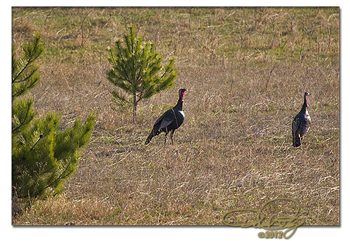
Wild turkey's on home turf
Make the right assumptions and you will fool that gobbler on his home turf and enjoy a successful hunt.
There are a great number of assumptions in today's blog. I am assuming that you'll roost a big gobbler the night before your turkey hunt opens.

We further assume you know which tree he will roost in, and which little wooded opening he will try into. For good measure, we'll also assume the direction he and his harem of hens will take to the closest strutting zone after fly-down.

I told you there were many assumptions. And, if you think about it very long and hard, you will note such basic assumptions exist on almost every spring turkey hunt.

Now, the trick is to get into place within 100 yards (give or take 25 yards) of the roosted limb-hanger. The question of the day is simple: Does the gobbler fly down into the field or into a wooded opening?

If the open field is close, it can affect where you choose a stand. If the bird lands in the woods, the hunter can set up in the woods, along the path they normally travel to get to the field or near the field edge.

If you don't assume correctly, you are counting on luck

There are hazards to setting up near the wooded opening. It is easy to bump a bird if you mistakenly get too close to the roosted gobbler and he or his hens hear or see you moving into position.

Another problem with setting up in the dark is it is lighter from above, and the bird can see down into the woods better than you can see while sitting down in the woods. The fly-down may come so early (minutes before actual sunrise), and it can fly down and the beard may not be clearly visible. The gobbler may walk past a hunter gobbling like crazy, and it's easy to assume this is a gobbler (which it probably is) but it may have lost its beard. It wouldn't be legal to shoot a beardless bird.

I prefer to set up fairly close to the open field, and call once or twice to get the attention of the gobbler, and sit back to see what happens. Just remember now to face the west when you set up or you may be looking directly into a fiery sunrise and not be able to see the gobbler as he moves past.

Pop the bearded bird if it flies right to you at fly-down

The trick here is to move 10 to 15 yards into the woods, sit down and be ready for a shot. The gobbler may twist off two or three lusty gobbles from the roost, fly down, gobble once again, and then move out without gobbling again.

If preseason scouting indicates where the bird roost, and it is a short distance (within 100 yards) of the field, I'd set up near the field edge. This provides perhaps the easiest and quietest place to sit up, and you can avoid spooking birds.

There is  no need to be breaking branches at the last moment. If you've watched the birds walk out of the woods to the strutting area, once they move off across the field or back through the woods, find a key location, locate where you will sit, remove those broken stubs that stick your back or butt, clean away all dry leaves underfoot, and determine where you will put the decoys (if you use them).

Prepare such a spot a day or two before the season opens but make certain the birds are gone before you do anything. Take care of your set-up area, and move quickly away. Try to avoid being pinpointed by other hunters.

Get in place early and quietly arranges calls, and then relax and wait

Come opening day, I try to be in place at least an hour before daybreak. Sit back and relax, and don't start second-guessing your spot. If it looked good by light of day, it should look good on opening morning.

Make certain you know how to get into the area without stumbling around. Turkeys are accustomed to hearing deer, raccoons and other ground-dwelling critters move around in the dark. A tiny bit of noise is acceptable but no talking.

Muffle box calls and push-button calls so they don't squawk if you bump against a sapling or tree limb or trunk in the dark. I lay out all the calls I plan to use on a green or brown towel next to my left leg within easy reach.

Enjoy watching the woods come alive, and be prepared for that first gobble of the day. Shooting a gobbler is anticlimactic to hearing the first few gobbles and watching a snowball-white head come bobbing through the woods as the bird comes to the call.

Pulling the trigger is the least of my concerns. For me, calling and fooling a gobbler on his turf is what the hunt is all about.

Friday, February 17, 2012

Weather tips for hunting deer and gobblers

Let’s settle the playing field first

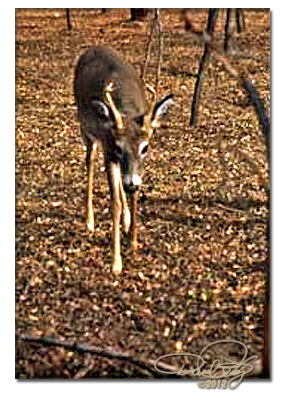
woodlanddeer
It's impossible for hockey players to play a game unless they are on the ice, and it's impossible for hunters to shoot a buck or doe if they are sitting indoors watching television.

That's settled, so what do we do when faced with inclement weather? You know: like some of what we've had so far this month?

East winds, northeast and southeast winds, and rain. Some snow flurries today. Copious amount of rain two or three times. Strong blustery winds. Weather that even deer dislike.

If we were to set out every evening during hunting season when inclement weather rears its ugly head, we may have been able to hunt only a few nights so far this season. The abundance of combined weather conditions has been noticeable to most hunters.

The spring turkey hunting season begins shortly, and if nature stays its course, there may be some days when the big birds hunker down and do nothing. Few birds like to move when the wind is strong.

So, what can we do about it? The answer is to go hunting anyway. Some of the animals and birds we hunt in season will move even in bad weather although they may not move very much or very far.

It’s bad weather, attitude and grit will get you a chance

It only makes sense that if critters move for only 15 or 20 minutes, the closer one hunts to the bedding area should provide them with greater opportunity to be nearby when they get up to feed.

Mild rain doesn't bother turkeys or whitetails at all. They are out in it on a daily basis, and can't come inside out of the weather. If it is a soft rain, they often move well. They move less in a hard down pouring rain. I hunted turkeys once in a heavy snow storm and the birds moved well. Predicting movement is not a precise art.

Deer will move on an east wind, but most hunters have few locations set up where an east wind offers them an advantage. A strong wind is much worse than a soft breeze.

Heavy winds put everything into motion. Trees, weeds, cattails and tall grasses move. Leaves (those still on fall trees) shake violently on the trees, go blowing off branches, and leaves are constantly in the wind at ground level and above. Deer and turkeys detest such windy conditions because it removes their ability to see motion because everything within sight is moving. Strong winds make noise, both deer and gobblers depend on their hearing to keep them safe.

Stands located closest to heavy cover offer hunters the best opportunity to see deer on such miserable days. The important thing is to get into a stand without being seen, smelled or heard.

Crow hunters say that these black birds can't count. I contend that deer can't count either, and that opens up one possibility to get into a stand even if the deer bedding area or turkey food or roost sites are downwind of the stand. A friend can drive you in by truck, park with the motor running while the hunter crawls into the stand, and then drive off. That doesn’t work well for turkey hunters because of vehicle lights at night near a roost site drive many birds crazy.

A friend of mine and his wife leased land for many years, and each of them hunted a different parcel. My buddy would drive his wife 3/4 miles back off the road to her stand, walk with her to her ground blind while the four-wheeler idled nearby, and once she was in her blind, he would jump back on the machine and drive away. Again, this technique doesn’t work for gobblers unless they are hunting in mid-day, and guess approximately when and where the birds will travel.

She often saw deer while the sounds of the four-wheeler were still audible in the distance. The noise of the four-wheeler didn't bother the deer during daylight hours, and if anything, it gave them advance warning that people were coming. Two people get off, two walk to the blind, one walks back and drives away. Deer can't count, and this method works well.

Up your chances for success with a few simple field rules

The one thing to bear in mind is that deer and turkeys are used to seeing cars and trucks, tractors and other farm equipment in most areas during daylight hours. Deer will run from all motorized equipment heading in their direction, but they don't run far unless the humans talk to each another. Human voices add another annoying dimension to this equation.

Talking while dropping someone off at a blind or when picking them up should not be done. Deer also are accustomed to hearing people talk, but whether talking near a hunting stand is a good idea, I think it's best to drive up, drop off the hunter, and drive away without speaking. Why ruin a good thing?

One thing about weather: Any time there is a storm moving in, deer and turkeys will usually move just ahead of the storm during daylight hours. If the weather forecasts a storm arriving about 4 o’clock, try to be in a good spot by 2 p.m. It can be a super time to be hunting.

Weather plays an important role in deer and gobbler movements and travel. Rather than sitting indoors and not hunting, try to incorporate some other tactics into your hunting bag of tricks, and hunters may be pleasantly surprised at how well some of these will work.

Tuesday, November 22, 2011

Weather tips for hunting deer and gobblers

A deer hunter sits in a Texas tower. A truck pulls up & the hunter climbs in


It's impossible for hockey players to play a game unless they are on the ice, and it's impossible for hunters to shoot a buck or doe if they are sitting indoors watching television.

That's settled, so what do we do when faced with inclement weather? You know: like some of what we've had so far this month?

East winds, northeast and southeast winds, and rain. Some snow flurries today. Copious amount of rain two or three times. Strong blustery winds. Weather that even deer dislike.

The trick is to get into a blind without being seen by a deer or gobbler.

If we were to set out every evening during hunting season when inclement weather rears its ugly head, we may have been able to hunt only a few nights so far this season. The abundance of combined weather conditions has been noticeable to most hunters.

The spring turkey hunting season begins shortly, and if nature stays its course, there may be some days when the big birds hunker down and do nothing. Few birds like to move when the wind is strong.

So, what can we do about it? The answer is to go hunting anyway. Some of the animals and birds we hunt in season will move even in bad weather although they may not move very much or very far.

It only makes sense that if critters move for only 15 or 20 minutes, the closer one hunts to the bedding area should provide them with greater opportunity to be nearby when they get up to feed.

Mild rain doesn't bother turkeys or whitetails at all. They are out in it on a daily basis, and can't come inside out of the weather. If it is a soft rain, they often move well. They move less in a hard down-pouring rain. I hunted turkeys once in a heavy snow storm and the birds moved well. Predicting movement is not a precise art.

Deer will move on an east wind, but most hunters have few locations set up where an east wind offers them an advantage. A strong wind is much worse than a soft breeze.

Heavy winds put everything into motion. Trees, weeds, cattails and tall grasses move. Leaves (those still on fall trees) shake violently on the trees, go blowing off branches, and leaves are constantly in the wind at ground level and above. Deer and turkeys detest such windy conditions because it removes their ability to see motion because everything within sight is moving. Strong winds make noise, both deer and gobblers depend on their hearing to keep them safe.

Stands located closest to heavy cover offer hunters the best opportunity to see deer on such miserable days. The important thing is to get into a stand without being seen, smelled or heard.

Crow hunters say that these black birds can't count. I contend that deer can't count either, and that opens up one possibility to get into a stand even if the deer bedding area or turkey food or roost sites are downwind of the stand. A friend can drive you in by truck, park with the motor running while the hunter crawls into the stand, and then drive off. That doesn’t work well for turkey hunters because of vehicle lights at night near a roost site drive many birds crazy.

If possible, drop hunters off at the stand. Let the vehicle scare them away


A friend of mine and his wife leased land for many years, and each of them hunted a different parcel. My buddy would drive his wife 3/4 miles back off the road to her stand, walk with her to her ground blind while the four-wheeler idled nearby, and once she was in her blind, he would jump back on the machine and drive away. Again, this technique doesn’t work for gobblers unless they are hunting in mid-day, and guess approximately when and where the birds will travel.

She often saw deer while the sounds of the four-wheeler were still audible in the distance. The noise of the four-wheeler didn't bother the deer during daylight hours, and if anything, it gave them advance warning that people were coming. Two people get off, two walk to the blind, one walks back and drives away. Deer can't count, and this method works well.

The one thing to bear in mind is that deer and turkeys are used to seeing cars and trucks, tractors and other farm equipment in most areas during daylight hours. Deer will run from all motorized equipment heading in their direction, but they don't run far unless the humans talk to each another. Human voices add another annoying dimension to this equation.

Never talk when getting out of a vehicle, and never slam the truck door.


Talking while dropping someone off at a blind or when picking them up should not be done. Deer also are accustomed to hearing people talk, but whether talking near a hunting stand is a good idea, I think it's best to drive up, drop off the hunter, and drive away without speaking. Why ruin a good thing?

One thing about weather: Any time there is a storm moving in, deer and turkeys will usually move just ahead of the storm during daylight hours. If the weather forecasts a storm arriving about 4 o’clock, try to be in a good spot by 2 p.m. It can be a super time to be hunting.

Weather plays an important role in deer and gobbler movements and travel. Rather than sitting indoors and not hunting, try to incorporate some other tactics into your hunting bag of tricks, and hunters may be pleasantly surprised at how well some of these will work.

Thursday, August 25, 2011

Scout now for an October’buck

Start Preseason Scouting Soon


Anyone who greets the dawn in the field is getting a big jump on the day, and will most likely find game animals and birds moving about. Do it just right, and it can be a kick-off to your preseason deer scouting.

I visited one of my hunting spots two days ago, and it was fairly cool. It felt good to be a bit chilly, and I walked in to a high hill where I could watch for whitetails without being spotted or winded.

The sun was still blushing the eastern horizon when a doe with two fawns wandered by, stopping here and there to nibble on alfalfa. They walked along the edge of a nearby winter wheat field, and sniffed at some new green growth, apparently to see if it was ripe enough to eat.

Scouting means finding bedding areas, food, sanctuary and water.


Two bucks, both fuzzy-antlered with velvet, cut the corner of a fallow field, dipped down into a gully, came out the other end and disappeared into the woods. They were quickly followed by a spike-horn that had got sidetracked along the line, and was now playing catch-up with his buddies.

The sun was above the horizon when I spotted a veritable gold-mine of turkey gobblers. Six gobblers were moving like a combat platoon as they came across the top of the hill and crossed within 20 yards of me. I was sitting on the ground, knees up and Swarovski binoculars to my eyes. I had to lower the binoculars to better see the gobblers.

Look for deer crossing fields & through bottlenecks.


One bird had an honest 12-inch beard, and two had 10-inch beards, two had 7 1/2 to 8-inch beards, and the other was a jake. The sunlight glistened off their feathers, turning the colors from russet to gold to black and back again. They didn't know I was there, and they passed within 20 yards and headed down into an open field where they were out of sight of a nearby road.

I saw a glimpse of some animal, and never could see it well, but it appeared to be a coyote heading for a place to lay up.

I didn't spend much over an hour sitting, and it become apparent the critters were done moving. I walked the edge of an alfalfa field where drying mud remained from an earlier rain, and checked it for tracks.

One big splay-hoofed deer track was visible, and it looked two-thirds larger than any other deer track seen. Buck or doe? Hooves splay out in mud, and that could account for some of the size, but it could have been a deer of either sex. I knew of a very large doe in that area last year, and had heard reports of a good buck as well.

I used to hunt with a man who claimed he could tell the difference between a buck and doe track, and under certain circumstances, I believe I can too. But, tracks in mud never seem to offer quite enough clues to its sex, and I need something more to go on than a widened track in soft mud.

Scouting is fun, instructional and can lead to a successful hunt.


Was today a scouting day? Absolutely. I could determine where the bucks entered the woodlot in the morning, and with a westerly breeze, even picked out a perfect tree. I'll have to watch in the morning more often, and then get serious about a stand once I know the bucks are using the same trail every morning.

I learned years ago, when hunting bucks in southern counties, that farmland deer will travel one of two or three trails in a given area. We sometimes had to flip a coin to determine which of two trails to choose from, and often the coin would lie to us.

Preseason scouting doesn't need to be a major investment in time nor does it have to be done every day, but hunters should spend time scouting three or four times a week whenever possible. Keep track of directional travel changes when the wind moves to a different quarter. Being downwind of deer is one of the first steps to a successful hunt.


Scouting is not only an important part of deer hunting, but it can be fun. My wife used to sit in a stand, watch the deer and videotape them during the summer. By early September, she would have the buck of her choice on tape, and she would later lay claim to it with a well-placed arrow.

She always shot the buck she videotaped, and that proves that preseason scouting, from the spring on, does work. The more effort one puts into it, the more successful one may be.

Friday, March 04, 2011

Looking for shed antlers

The author found two shed antlers the other day. It’s a fun winter thing to do.

We've been picking up shed antlers lately, and most of them are being found near food sites. We've found shed antlers up until this past heavy snowfall. but as the snow starts to settle more with slightly warming temperatures, we’ll be going again soon.

Areas where tree limbs fall along the edge of our food plots are good places to look. Last fall and early winter the bucks would stick their heads in under overhanging branches or under limbs laying on the ground to get at the forage. Depending on how advanced the stage is of antler separation from the skull, any quick move or a brushing of a loose antler against a branch can knock it off.

Antlers often fall off, but it's somewhat like a kid with a loose baby tooth, the buck can tell how loose it is. Often they will intentionally hook a branch or hit it against a tree trunk, and off it comes.

Shed hunting is a fun way to spend a late-winter weekend.

It doesn't always happen but seldom will both antlers be found near each other. Often they are some distance apart, and in some cases, the two antlers may be a quarter- or half-mile from each other. It makes it difficult to tell if the two sheds came from the same animal unless you have some great trail camera photos.

Hunting sheds is great fun but if the weather is moderate like it was a week ago, and most of the snow is gone, wandering porcupines are quick to find antlers and begin gnawing on them for the calcium and other trace minerals they contain. Mice also nibble on antlers, and it's one reason why many hunters start looking for sheds during the so-called January thaw. In this case, a February or early March thaw with little snow is an excellent time to look.

The two hotspots to check are bedding areas and feeding areas. Some sheds can and will be found along trails that connect the two sites, but we find many sheds in those two primary locations. Field edges are another good bet as well as thick cedar swamps.

The trick is to walk slowly through these areas, and look for a light-colored object that looks out of place. Shed hunters very seldom will see the entire antler: often just one tine or even the base will be found sticking up out of the forest or grassy duff.

It if is light-colored, check it out. It may be a tiny patch of lingering snow or it could be a large antler shed. I've found many in the spring, but these midwinter thaws allow hunters to spot antlers much easier.

I've found a few sheds near old rubs on a tree, but not very often. Look  in heavy cover, look near old food plots, check out areas near the tops of cut or fallen trees, bedding areas and along heavily traveled trails. Don't rush the process, but take your time looking.

Shed hunting is somewhat similar to hunting morel mushrooms. Travel and look in just one direction, and you'll miss many sheds.

Don’t look for a whole antler. Instead, look for a piece sticking up out of the snow.

Instead, walk 20 feet, stop, look around, and then do a 180-degree turn, and look back and to both sides. Often a shed antler that cannot be seen from one direction, can be spotted when viewed from a different direction.

Shed antlers are indicative of the quality of animals found in your area. Often, the small sheds are quite easily found if your area produces predominantly small bucks. However, if an occasional big buck is seen frequenting croplands or woodland bait sites, that deer may live in the nearby area and may drop his antlers where they can be found.

Most bucks have shed their antlers already although there always are a few bucks around the state still wearing their headgear now. Shed hunting is fun, and if a hunter does it at the right time and in the right place, they may find a buck's antlers of an animal they didn't know existed.

Give it a try. It's much more fun that cleaning the basement or garage on weekends.

Posted via email from Dave Richey Outdoors

Thursday, March 03, 2011

Looking for shed antlers


The author found two shed antlers the other day. It’s a fun winter thing to do.


We've been picking up shed antlers lately, and most of them are being found near food sites. We've found shed antlers up until this past heavy snowfall. but as the snow starts to settle more with slightly warming temperatures, we’ll be going again soon.

Areas where tree limbs fall along the edge of our food plots are good places to look. Last fall and early winter the bucks would stick their heads in under overhanging branches pr under limbs laying on the ground to get at the forage. Depending on how advanced the stage is of antler separation from the skull, any quick move or a brushing of a loose antler against a branch can knock it off.

Antlers often fall off, but it's somewhat like a kid with a loose baby tooth, the buck can tell how loose it is. Often they will intentionally hook a branch or hit it against a tree trunk, and off it comes.

Shed hunting is a fun way to spend a late-winter weekend.


It doesn't always happen but seldom will both antlers be found near each other. Often they are some distance apart, and in some cases, the two antlers may be a quarter- or half-mile from each other. It makes it difficult to tell if the two sheds came from the same animal unless you have some great trail camera photos.

Hunting sheds is great fun but if the weather is moderate like it was a week ago, and most of the snow is gone, wandering porcupines are quick to find antlers and begin gnawing on them for the calcium and other trace minerals they contain. Mice also nibble on antlers, and it's one reason why many hunters start looking for sheds during the so-called January thaw. In this case, a February or early March thaw with little snow is an excellent time to look.

The two hotspots to check are bedding areas and feeding areas. Some sheds can and will be found along trails that connect the two sites, but we find many sheds in those two primary locations. Field edges are another good bet as well as thick cedar swamps.

The trick is to walk slowly through these areas, and look for a light-colored object that looks out of place. Shed hunters very seldom will see the entire antler: often just one tine or even the base will be found sticking up out of the forest or grassy duff.

It if is light-colored, check it out. It may be a tiny patch of lingering snow or it could be a large antler shed. I've found many in the spring, but these midwinter thaws allow hunters to spot antlers much easier.

I've found a few sheds near old rubs on a tree, but not very often. Look  in heavy cover, look near old food plots, check out areas near the tops of cut or fallen trees, bedding areas and along heavily traveled trails. Don't rush the process, but take your time looking.

Shed hunting is somewhat similar to hunting morel mushrooms. Travel and look in just one direction, and you'll miss many sheds.

Don’t look for a whole antler. Instead, look for a piece sticking up out of the snow.


Instead, walk 20 feet, stop, look around, and then do a 180-degree turn, and look back and to both sides. Often a shed antler that cannot be seen from one direction, can be spotted when viewed from a different direction.

Shed antlers are indicative of the quality of animals found in your area. Often, the small sheds are quite easily found if your area produces predominantly small bucks. However, if an occasional big buck is seen frequenting croplands or woodland bait sites, that deer may live in the nearby area and may drop his antlers where they can be found.

Most bucks have shed their antlers already although there always are a few bucks around the state still wearing their headgear now. Shed hunting is fun, and if a hunter does it at the right time and in the right place, they may find a buck's antlers of an animal they didn't know existed.

Give it a try. It's much more fun that cleaning the basement or garage on weekends.

Posted via email from Dave Richey Outdoors

Wednesday, January 19, 2011

Checking winter’s impact on critters


A nice long-bearded gobbler moves easily over deep winter snow.


I spent some time outdoors today, as I do most days when or after it snows, and found myself wondering what to do. The weather was the pits, sharp northwest wind, and bone-chilling cold. The good news was it wasn't snowing at the time.

One of the best things to come from this spate of nasty,  anowy weather that has bombarded us for the past week was there weren't any  drifts in the driveway.  However, walking around outside means fighting through deep snow in a vain search for deer that are looking for something to eat. Most of the animals are holed up where enough thermal cover exists so they won't freeze to death.

The snow everywhere in my neighborhood is almost hip-deep with a thin crusts below the snow, and although deer seldom stray too far from thick cover, there is little food available to them. Most of the deer movement comes after dark but a few grouse are feeding on catkins.

Deep snow everywhere in the northern counties.


This weather isn't a blessing for deer although turkeys can easily walk on top without breaking through. Small deer often starve to death during the winter because they are too small to move through deep snow. They become easy pickings for coyotes.

With the weather in the low-20s during the day, the weather and lack of nutritious food doesn't offer bucks a chance to regain lost weight and stamina. Pregnant does are hoping to find food to build up their fat reserves if the winter continues to be ugly, and fawns born last spring will soon be starving to death if the weather doesn't improve.

There are very few standing corn fields this year. The fall weather allowed farmers to complete their harvest, and most of the grain left behind is gone.

Hunting pressure, for the most part, was minimal or nonexistent  through December. Some bow hunters like me hunted the last couple of days of the season, but we were treated to an almost daily diet of heavy snow for 10 days. Most deer didn't move until long after dark.

There doesn't seem to be many turkeys around, and they are widely scattered with the deep winter snow. I've seen a few in recent days, and they always seem to be on the move. Gobblers, hens and poults are trying to feed as they travel in an endless pattern trying to find food, and watching them cross a field is a lesson in watching heads bob up and down. There is a lot of pecking but little food to eat.

Song birds are coming to the feeders at the house, and there is a constant parade of various birds. What I'm not seeing this winter, which is fine by me, are the large groups of mourning doves that waste more bird seed than they eat.

Turkeys moving easily on top of the deep snow.


These birds often use the back part of my deck as a place to roost for the night, and they poop constantly. Cleaning the deck is difficult during most winters, and this year, they aren't here. Perhaps they only roost on my deck when the weather turns nice.

Fishing pressure on area rivers has about dried up, and although there still are some steelhead in some of the rivers, there doesn't seem to be much interest. Everyone is ice fishing, but catches seem to be down on many lakes.

Lakes like Big Glen, Crystal, Higgins, Houghton and others are slow to freeze. Deep snow still covers many lakes, and it acts like an insulating blanket.

ice fishing has been spotty with frequent storms.


Live bait dealers are hurting a bit because ofinconsistent conditions, but the skiing and snowmobiling industries are happy with the snow conditions. The high price of gasoline does seem to be having an impact on snowmobilers.

One thing about it, I've been riding my snowblower too much so far this winter. I'm not sure this kind of weather really appeals to me.

It makes for a long winter once the snow gets too deep for predator and rabbit hunting. But one thing always holds true with Michigan weather: if you don't like it, wait until tomorrow, it will probably change.

Posted via email from Dave Richey Outdoors

Tuesday, November 02, 2010

All puzzle pieces must mesh properly


Don’t shoot just yet! Wait for a quartering-away shot.


After hunting whitetail deer for more than 50 years, this time in the field has given me many thoughts about hunting these critters. Those experiences can be confidence builders.

Whenever I encounter a specific wind or weather situation, my mind slips back through the years to when a similar situation occurred. The next step is to analyze that experience, and if it worked once, we try it again.

Fortunately, we tend to remember those times when things work and forget those times when they didn't. Usually that allows us to make the proper decision based on important  previous experiences.

Wise decision are needed when choosing where to hunt.


I always have, and probably always will, play hunches. A person's gut instincts are normally correct, and over many years of studying deer and why they do the things they do, it gives me an insight on choosing the proper stands to hunt on a particular day.

Deer move around a good bit, and sometimes move more than many hunters believe. This is especially true now, during the rut. Deer also move from one food source to another. We all grow tired of eating corn, sugar beets or whatever.

There are few oaks on my land but there are many food sources. Over the years I've planted Imperial Whitetail Clover, countless other types of clover, alfalfa, brassica, purple-top turnips and many other truck crops. Some of these food sources are planted near ground blinds and tree stands.

Corn and soy beans are wonderful truck crops, and everything I plant is left for the deer, turkeys and other birds and animals. That means that I know when deer switch from one food source to another. Turnips often produce well once we've gone through one or two hard frosts, and they become more sugary.

Know all natural and planted food sources, and how deer travel to them.


Choosing which stand to sit in is a matter of knowing where the deer happen to be traveling, and which food source is present in that area. Obviously, wind direction plays one of the most important roles in choosing a hunting stand.

I haven't counted the number of stands on my land, but there is probably at leas would guess there is probably at least a dozen although some are seldom used anymore. Certain stands remain good year after year while other locations go flat, and I'm inclined to think that hunting pressure is the main reason why deer change their travel patterns.

Each year I look at my stands, whether they are tree stands, elevated coops,, pit blinds, tent blinds or whatever, and determine their relattionship to the closest food sources. I seldom place stands extremely close to food plots but prefer them to be near trails that lead from one food plot to another or from my land to a neighbor’s food plot.

Know why some deer stands suddenly go dead.


Study and learn why deer come to one area, and why that location suddently goes dead. In most cases, it is hunted too often and deer may spot the hunting moving to or from the stand. Once a deer patterns a hunter, they seldom return to that spot except long after dark

Food plots, bedding areas and travel trails are an important part of the whitetail equation. Each part of the puzzle must fall into place. If it doesn’t, whitetail wind up going somewhere else and your hunting spots dry up.

Posted via email from Dave Richey Outdoors

Sunday, October 24, 2010

The solitary sportsman


Fishing or hunting alone isn’t popular these days. Let’s face it: most sportsmen are gregarious by nature, not by necessity. They like other people around them. It’s like having friendly neighbors at home.

Most sportsmen love the camaraderie of being with other like-minded people, the sharing of nearby campsites or putting a canoe sneak on a bunch of bedded bluegills. Two or more sportsmen enjoy planning their next deer hunt, bear hunt or trout fishing trip … together.

There is nothing wrong with this. In fact, it is the preferred fishing or hunting method for most sportsmen. Many would feel lost if their friend or friends were not there to share in the excitement of a grand outdoor adventure.

Many would feel lonely by themselves but not me.


They enjoy sitting at a table, mapping out strategies, discussing who’ll do what and when it will occur, and everyone involved in the planning has a voice in how it will happen. It’s democracy at its finest.

Or perhaps, at its worst, depending on one’s  point of view. There are some bold sportsmen who feel joint fishing or hunting breeds outdoor mediocrity, which may be true. Who can’t argue the fact that the more voices raised in discussion or disagreement over who will fish which trout-stream hole can do nothing except create even more indecision?

I’ve spent 44 years writing outdoor copy for books, magazines and newspapers, and have hop-scotched across North America alone. Often  I’d be the only English-speaking bear, caribou or moose hunter in some remote Canadian hunting camp.

Years were spent driving or flying here or there to fish or hunt. There might be other sportsmen at the end of the trail, but when it came time to fish or hunt, I’d go it alone or go with a guide whenonet was necessary.

Going it alone can be a wonderful experience.

Camp people often asked if I wanted someone to come along, and the answer was always a polite refusal. Going alone was a habit and also something to look forward to. Being alone never bothered me, and being self-reliant was great fun. I knew I could count on myself.

The long hours on the road allowed me to write stories in my head. Stories would later be fleshed out on paper, but people often asked how I could write so many stories.

“I write while driving,” I’d say. “I also write things in my mind while glassing distant alpine meadows for elk or rocky tundra for caribou. If a good fish is caught, its memory is captured by my mental camera, and recorded on paper later for a magazine or newspaper article.”

What benefits exist for solitary anglers and hunters? The benefits far outweigh the disadvantages of spending time with another person. Mind you, cutting up and packing out a moose isn’t any fun alone.

The benefits of going it along can outweigh the disadvantages.


The advantages of being alone are many. Solitary sportsmen never must consider another’s opinion when making vital decisions. They just act on a whim. If they err, it’s their fault. It wasn’t a two-person mistake.

If we fish Michigan’s AuSable River, one of us goes upstream and fishes down while the other fishes downstream and walks back up. I’m not selfish, but what happens if both people want to fish down or upstream?

A decision must be made. One person may be miffed. Of course, both anglers could fish together but to what purpose? Doing so makes no sense.

One person moves quieter, picks his spots with greater patience and wisdom, and never must argue or defer to the wishes of others. Two people means both must make a decision, and that requires time and discussion. Three people confuse the issue even more. Joint decisions create headaches for everyone involved.

The solitary sportsman doesn’t have this foolishness to contend with. He reaches a fork in the trail, and doesn’t have to discuss whether to go left or right. Taking the high or low road is a solitary decision, and one easily made. It becomes mentally easier to travel the path least traveled.

Making decisions is easy when you are alone.


I have great difficulty sleeping when someone nearby snores loudly. I’m tired daily from too little sleep. If it costs extra for a private room, I’ll hit the hip to avoid this problem. I’ve tried wearing ear plugs but they are uncomfortable and disturb my sleep.

How long one man hunts or fishes is a matter of  personal desire or stamina. There’s no reason another person should cut a trip short just so the other person can go home early. Is this petty or selfish? Not really. It’s being honest about personal desires and being realistic about our expectations and how we choose to spend our leisure time afield.

Modern sportsmen have only so much free time. If it is shared with others, and another person places constraints on our mutual time, it becomes necessary to decide the issue. Is it easier to give in to a buddy’s needs or go about our outdoor activities alone? I prefer the latter.

I suspect the solitary sportsman concept will become more common in future years. Many who truly love the outdoors will decide whether to fish or hunt with someone or not. Conversely, if one fishes or hunts with others, and cuts a day short for personal reasons, how will friends feel about giving up some of their valuable leisure time? Not well, I suspect.

I hate riding with others because if they decide to quit early, you are stuck.


A common thing with me now is to always drive my own car. If the other person thinks they must leave early, it’s so long, have a good day. If you ride together in his vehicle, your personal trip is ruined.

My early travels were always alone. I could barely afford the travel myself, let alone take someone along. It became easy to spend nights in camp, after dinner, writing notes about the day. I would always take a mystery or spy novel along, and pass idle hours reading. Rather than watching television, my choice is to entertain my brain with a book.

There are too many decisions to be made on fishing or hunting trips, and discussing which end of the lake to fish first is an example of wasted time. Two anglers spend 30 minutes arguing the merits of fishing the north or south ends. It’s senseless. A solitary angler goes where he wants, and thereby has more productive time on the water.

Two hunters share a blind during goose season, and one talks a big honker out of the sky with pleading tones. Who takes the shot? Will the caller be a nice guy and toll in the bird for his buddy to shoot or does he believe he did the work and deserves the initial shot?

A brown trout rises with the regularity of a big fish. Every 30 seconds he tips up, rises, drifts downstream under the natural, and once his suspicions disappear, he sips the spinner off the surface with a head-to-tail rise that shows golden-brown flanks with big black spots.

Who gets the first cast to this beautiful trout? Do we flip a coin or will one or the other of the two anglers push the brim of his cap back, look fondly at his buddy, and says “Go get him.”

Sometimes it plays out that way but more often it doesn’t. All too often one angler or hunter has a wealth of natural angling or hunting skills while the other does not. This calls for some diplomacy, generosity and good will. The solitary sportsman is never faced with such vexing problems to solve. He heads off alone.

Note that this is not written about taking children along. This is about two or more adults. I strongly believe adults should always take children fishing or hunting. The loner role does not apply to kids.

I played the solitary sportsman for many years, without ever feeling selfish, and enjoyed myself. In recent years, as glaucoma robs me of ever more vision, I find pleasure in being Mr. Nice Guy, and have a friend along.

One reason is that 10 years of guiding salmon and trout fishermen plus deer and bear hunters meant I’d done it all many times before. Once a person shoots several black bears, it’s much more fun to be generous and help a first-time hunter bag a nice bruin. Or a big buck or trout.

It’s fun putting an angler into his first steelhead, a 20-pound Chinook or a nice 10-pound brown trout. There is something fulfilling about the light flickering in their eyes, the smile on their face, a warm handshake that makes fishing or hunting together a memorable event.

Solitary anglers or hunters can have a fine time alone.


My wife and I hunt deer together. She goes to her spot and I go to mine, but I go to pick her up. It’s a hoot for me to take some of the things I’ve been good at, and put them to work for someone else. It’s part of why Kay shoots a nice buck every year.

The solitary sportsman is still a big part of my mental make-up, and even though in recent years more time is spent with others, there are days when being alone and experiencing things anew provides me with the same visceral thrills I first experienced many decades ago.

Posted via email from Dave Richey Outdoors

Thursday, July 22, 2010

Happy Birthday to me


It's difficult to believe I've been drifting through this outdoor life for so long. My life has truly been blessed with not much money but the opportunity to choose my life style, and live life (within reason) on my own terms.

This photo of George & a whitetail buck taken in Texas & a ghostly image of him.

There has been heartbreak, deaths (including my father, mother and twin brother plus both sets of grandparents), and the death of one son at childbirth, and through it all, an overwhelming love for fishing and hunting has helped rule my life. I've fought long and hard for our natural resources, and that hasn't always been an easy task although it has been, for the most part, a thankless one.

My writing career began 43 years ago with a sale to Sports Afield magazine on my first try, and my first six free-lance sales were easy. Then it became much more difficult because I'd used up my best story ideas.

It took time, but learning to recognize good stories, knowing how to edit my copy, and how to out-work other writers became my stock in trade. I worked solo from 1967 to 1976, and when my wife Kay and I married in 1977, my income doubled the first year because of her help.

We traveled six months a year (May through October), and wrote magazine copy and outdoor books the other six. The output of magazine copy was prodigious, and unparalleled by most outdoor writers. I once wrote nearly 400 full-length magazine articles and three full-length books each year for two years in a row. I could see potential magazine articles that other writers couldn't see, and capitalized on it.

For years, a near-photographic memory allowed me to remember what had been published each month in several different magazines over a five-year period. I knew when a certain type of article was needed by a magazine, and I'd propose the article a year in advance.

Many magazines considered me a "hole-filler," a person who could write a feature-length article, based on my experiences, on demand. If Joe Blow wrote a poor story, or didn't meet the deadline, they came to me and I filled their hole. Besides, such stories always paid more money.

More than 7,300 published articles ran in more than 300 different magazines.

Our travels crisscrossed North America. We'd be in Quebec one week, and on the Kentucky-Tennessee border the next week. Get home, shower and wash clothes, and then we'd be off on another adventure. I've been from Mexico to Baffin and Victoria islands in Canada's Northwest Territories, and from Hawaii east to North and South Carolina and northeast to Maine, New Hampshire, Vermont  and Pennsylvania.

We've suffered through miserable trips where the fishing or hunting didn't pay off, been lied to by guides, left up on an Idaho mountain by an idiot guide, had guides who were trustworthy and keen at their job, and guides who stole some of our gear.

One yoyo stole a whitetail buck I'd killed at gunpoint, and I've faced down black and grizzly bears at spitting distance. I fell off a fire escape while taking photos and broke my back, and have been attacked by a pack of wild dogs. I stupidly jumped into quicksand once, and have tripped and floated, upside down and backwards, through many river holes. I've been in countless storms in a small boat, and managed to make my way to shore without becoming a statistic although one trip down Quebec's George River in a storm left me with a broken rib and busted nose.

There have been some of the nicest people in the world who have worked with me, and a few who seemed certifiably crazy and didn't warrant a second chance. I've never been on a trip where I wasn't welcome to return sometime in the future, and second invites often are difficult to attain in this business.

I've filled camps and lodges for a year with some of my stories, and other stories just never seemed to click with readers. There is no predicting what readers will like or dislike, and this weblog is a good example. Some will find it interesting, some will consider me a braggart, and others might wish I'd written about a fishing hotspot they wanted to learn more about. Others chewed my tail for writing about what they consider their private hot spot.

A 43-year career spent doing what I wanted to do is  an idyllic way to spend my life.

We lost my twin brother George almost seven years ago, and my life hasn't been the same since. I think of him daily, recount our thousands of fishing and hunting days together, and wish they hadn't ended when they did. He had multiple forms of cancer, and when he died, I was happy for him because his battle is over. It's been tough on me since.

Now, I fish and hunt whenever I wish, and look to buy books on fishing and hunting from my readers. I enjoy short emails from readers, and answer as many as time permits, but an average of nearly 100 emails cross my desk daily. Many I won't answer because nothing about them apply to me or my website.

My father passed away almost four years ago, and his life was very difficult toward the end. Kay and I now look forward to future fishing and hunting trips together, going places where we've never been, and loving life, the outdoors and each other.

So, if you'll excuse me now, what remains of the Richey Clan, are going to  welcome this cantankerous old codger into his 71st year. So, with a hearty thank-you to those who have passed on birthday wishes, and to those who could care less, I bid you a fond adios for another day.

Stay well, and take care of each other.

Posted via email from Dave Richey Outdoors