Showing posts with label behavior. Show all posts

Friday, February 17, 2012

Weather tips for hunting deer and gobblers

Let’s settle the playing field first
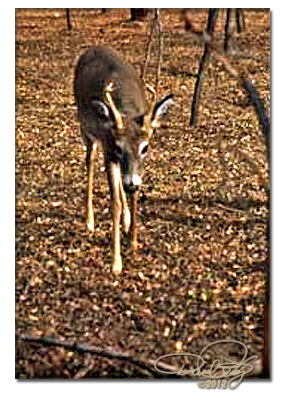
woodlanddeer
It's impossible for hockey players to play a game unless they are on the ice, and it's impossible for hunters to shoot a buck or doe if they are sitting indoors watching television.

That's settled, so what do we do when faced with inclement weather? You know: like some of what we've had so far this month?

East winds, northeast and southeast winds, and rain. Some snow flurries today. Copious amount of rain two or three times. Strong blustery winds. Weather that even deer dislike.

If we were to set out every evening during hunting season when inclement weather rears its ugly head, we may have been able to hunt only a few nights so far this season. The abundance of combined weather conditions has been noticeable to most hunters.

The spring turkey hunting season begins shortly, and if nature stays its course, there may be some days when the big birds hunker down and do nothing. Few birds like to move when the wind is strong.

So, what can we do about it? The answer is to go hunting anyway. Some of the animals and birds we hunt in season will move even in bad weather although they may not move very much or very far.

It’s bad weather, attitude and grit will get you a chance

It only makes sense that if critters move for only 15 or 20 minutes, the closer one hunts to the bedding area should provide them with greater opportunity to be nearby when they get up to feed.

Mild rain doesn't bother turkeys or whitetails at all. They are out in it on a daily basis, and can't come inside out of the weather. If it is a soft rain, they often move well. They move less in a hard down pouring rain. I hunted turkeys once in a heavy snow storm and the birds moved well. Predicting movement is not a precise art.

Deer will move on an east wind, but most hunters have few locations set up where an east wind offers them an advantage. A strong wind is much worse than a soft breeze.

Heavy winds put everything into motion. Trees, weeds, cattails and tall grasses move. Leaves (those still on fall trees) shake violently on the trees, go blowing off branches, and leaves are constantly in the wind at ground level and above. Deer and turkeys detest such windy conditions because it removes their ability to see motion because everything within sight is moving. Strong winds make noise, both deer and gobblers depend on their hearing to keep them safe.

Stands located closest to heavy cover offer hunters the best opportunity to see deer on such miserable days. The important thing is to get into a stand without being seen, smelled or heard.

Crow hunters say that these black birds can't count. I contend that deer can't count either, and that opens up one possibility to get into a stand even if the deer bedding area or turkey food or roost sites are downwind of the stand. A friend can drive you in by truck, park with the motor running while the hunter crawls into the stand, and then drive off. That doesn’t work well for turkey hunters because of vehicle lights at night near a roost site drive many birds crazy.

A friend of mine and his wife leased land for many years, and each of them hunted a different parcel. My buddy would drive his wife 3/4 miles back off the road to her stand, walk with her to her ground blind while the four-wheeler idled nearby, and once she was in her blind, he would jump back on the machine and drive away. Again, this technique doesn’t work for gobblers unless they are hunting in mid-day, and guess approximately when and where the birds will travel.

She often saw deer while the sounds of the four-wheeler were still audible in the distance. The noise of the four-wheeler didn't bother the deer during daylight hours, and if anything, it gave them advance warning that people were coming. Two people get off, two walk to the blind, one walks back and drives away. Deer can't count, and this method works well.

Up your chances for success with a few simple field rules

The one thing to bear in mind is that deer and turkeys are used to seeing cars and trucks, tractors and other farm equipment in most areas during daylight hours. Deer will run from all motorized equipment heading in their direction, but they don't run far unless the humans talk to each another. Human voices add another annoying dimension to this equation.

Talking while dropping someone off at a blind or when picking them up should not be done. Deer also are accustomed to hearing people talk, but whether talking near a hunting stand is a good idea, I think it's best to drive up, drop off the hunter, and drive away without speaking. Why ruin a good thing?

One thing about weather: Any time there is a storm moving in, deer and turkeys will usually move just ahead of the storm during daylight hours. If the weather forecasts a storm arriving about 4 o’clock, try to be in a good spot by 2 p.m. It can be a super time to be hunting.

Weather plays an important role in deer and gobbler movements and travel. Rather than sitting indoors and not hunting, try to incorporate some other tactics into your hunting bag of tricks, and hunters may be pleasantly surprised at how well some of these will work.

Tuesday, November 22, 2011

Weather tips for hunting deer and gobblers

A deer hunter sits in a Texas tower. A truck pulls up & the hunter climbs in


It's impossible for hockey players to play a game unless they are on the ice, and it's impossible for hunters to shoot a buck or doe if they are sitting indoors watching television.

That's settled, so what do we do when faced with inclement weather? You know: like some of what we've had so far this month?

East winds, northeast and southeast winds, and rain. Some snow flurries today. Copious amount of rain two or three times. Strong blustery winds. Weather that even deer dislike.

The trick is to get into a blind without being seen by a deer or gobbler.

If we were to set out every evening during hunting season when inclement weather rears its ugly head, we may have been able to hunt only a few nights so far this season. The abundance of combined weather conditions has been noticeable to most hunters.

The spring turkey hunting season begins shortly, and if nature stays its course, there may be some days when the big birds hunker down and do nothing. Few birds like to move when the wind is strong.

So, what can we do about it? The answer is to go hunting anyway. Some of the animals and birds we hunt in season will move even in bad weather although they may not move very much or very far.

It only makes sense that if critters move for only 15 or 20 minutes, the closer one hunts to the bedding area should provide them with greater opportunity to be nearby when they get up to feed.

Mild rain doesn't bother turkeys or whitetails at all. They are out in it on a daily basis, and can't come inside out of the weather. If it is a soft rain, they often move well. They move less in a hard down-pouring rain. I hunted turkeys once in a heavy snow storm and the birds moved well. Predicting movement is not a precise art.

Deer will move on an east wind, but most hunters have few locations set up where an east wind offers them an advantage. A strong wind is much worse than a soft breeze.

Heavy winds put everything into motion. Trees, weeds, cattails and tall grasses move. Leaves (those still on fall trees) shake violently on the trees, go blowing off branches, and leaves are constantly in the wind at ground level and above. Deer and turkeys detest such windy conditions because it removes their ability to see motion because everything within sight is moving. Strong winds make noise, both deer and gobblers depend on their hearing to keep them safe.

Stands located closest to heavy cover offer hunters the best opportunity to see deer on such miserable days. The important thing is to get into a stand without being seen, smelled or heard.

Crow hunters say that these black birds can't count. I contend that deer can't count either, and that opens up one possibility to get into a stand even if the deer bedding area or turkey food or roost sites are downwind of the stand. A friend can drive you in by truck, park with the motor running while the hunter crawls into the stand, and then drive off. That doesn’t work well for turkey hunters because of vehicle lights at night near a roost site drive many birds crazy.

If possible, drop hunters off at the stand. Let the vehicle scare them away


A friend of mine and his wife leased land for many years, and each of them hunted a different parcel. My buddy would drive his wife 3/4 miles back off the road to her stand, walk with her to her ground blind while the four-wheeler idled nearby, and once she was in her blind, he would jump back on the machine and drive away. Again, this technique doesn’t work for gobblers unless they are hunting in mid-day, and guess approximately when and where the birds will travel.

She often saw deer while the sounds of the four-wheeler were still audible in the distance. The noise of the four-wheeler didn't bother the deer during daylight hours, and if anything, it gave them advance warning that people were coming. Two people get off, two walk to the blind, one walks back and drives away. Deer can't count, and this method works well.

The one thing to bear in mind is that deer and turkeys are used to seeing cars and trucks, tractors and other farm equipment in most areas during daylight hours. Deer will run from all motorized equipment heading in their direction, but they don't run far unless the humans talk to each another. Human voices add another annoying dimension to this equation.

Never talk when getting out of a vehicle, and never slam the truck door.


Talking while dropping someone off at a blind or when picking them up should not be done. Deer also are accustomed to hearing people talk, but whether talking near a hunting stand is a good idea, I think it's best to drive up, drop off the hunter, and drive away without speaking. Why ruin a good thing?

One thing about weather: Any time there is a storm moving in, deer and turkeys will usually move just ahead of the storm during daylight hours. If the weather forecasts a storm arriving about 4 o’clock, try to be in a good spot by 2 p.m. It can be a super time to be hunting.

Weather plays an important role in deer and gobbler movements and travel. Rather than sitting indoors and not hunting, try to incorporate some other tactics into your hunting bag of tricks, and hunters may be pleasantly surprised at how well some of these will work.

Wednesday, November 04, 2009

Anticipate Rutting Buck Behavior

Trying to anticipate what a rutting buck will do is much like listening to a politician's promise. Both can be a risky venture.

Frankly, the only predictable thing about a rutting buck is his unpredictability. They do things that make absolutely no sense to the bow hunter, but apparently, their actions make complete sense to them.

Bucks can act completely addled, and once they begin chasing does, some bucks dart across roads only to get themselves killed in a deer-vehicle collision. I've watched bucks run head-long into a fence post even though the doe jumped the fence.

Rutting bucks never lose their fear of humans

The oddities of rutting bucks have been well documented. What is seldom stressed is how their mood swings influence their actions, but seldom will a buck become totally clueless. They do not lose their inherent fear of humans, and a buck that hears, sees or smells a hunter, will waste little time getting out of Dodge.

This means that hunters can take no liberties with being downwind of known travel routes. We also must sit still, don't move and take only high-percentage shots. Another thing to note is that bucks are seldom still during the rut, and hunters must be prepared for a quick and accurate shot on a moment's notice. Keep your bow in your hands at all times. Reaching for a bow hanging from a nearby branch often is a waste of time.

The most predictable thing about a rutting buck is he is never far from his latest squeeze. Of course, as soon as he's had his way with her, he is off on a continuing search for other estrus does to breed. For the larger and older bucks, breeding does is a never-ending process in which a mature buck will lose 25-30 percent of his body weight.

Find the does and you'll find the bucks

Remember, a buck will always be near the does. He may hang back in heavy cover near a food source, but once she moves, the buck cuts her trail again. It's one reason why hunters often set up a stand in the heaviest cover near a food source and near a field corner.

A buck will cruise back and forth as the doe feeds, and will check other nearby does to determine how close they are to estrus, but he keeps a close watch on his latest lady friend.

Bucks will often be seen crossing open fields as they course a doe. He will go where she goes, and if she is almost in estrus, he will be even closer. If she goes left or right, he will cut her off, and if she head-fakes him into going one way while she goes the other, he will soon catch up with the wayward doe.

Hunting these animals can be great fun, and almost every hunter will say; "So close and yet so far away" at one time or another. The bucks and does often move just out of bow range, and it's not a deliberate thing on their part. The hunter has simply made a mistake by setting up just out of effective bow range.

Hunt near field corners with thick cover

It's difficult to go wrong by hunting fairly close to fields where does will feed. Choose one of the corners, and especially the field-edge corner with the heaviest nearby cover. That is where bucks will hang out to watch the does, and they often pace back and forth like an expectant father. Their reason for pacing is the driving need to breed when she enters estrus.

None of this means the buck won't enter a feeding field, and often by luck or design, a doe will lead an amorous buck past a ground blind or tree stand, but it's not something to bet the homestead on.

Tending bucks often are vocal bucks, and one about to breed a doe will be grunting with almost every step it takes. This tending grunt is low and guttural, and sometimes can be heard for 100 yards while at other times the buck may only be 20 yards away when the sound is heard. In some cases the sound is much like a ventriloquist "throwing" his voice; it's almost impossible to tell where the sound comes from during a heavy fog or a misty rain.

Bucks will sometimes still check ground scrapes, but once the rut really kicks offs, they stop opening up and freshening scrapes. They have used those scrapes over the past two or three weeks to locate estrus and soon-to-be-ready does, and every buck in the area knows which does will soon be bred. The earliest does to breed often are among the oldest does in the area.

This also is when young bucks try to mount the does while the big buck is busy elsewhere, but most does will not stand for a younger deer unless big boy gets killed. Few 1 1/2-year-old bucks do any breeding. Their day will come in two or three years unless they get shot by a hunter.

Hunting the rut is entirely different than hunting bucks at other times. Hunters must start thinking like a buck, and once they figure out where the does are, and where the thickest cover is (where much of the breeding will take place), it becomes a bit easier... but not by much.

It's easy to make an obvious error in judgment in retrospect, and hunters who know the land they hunt like the back of their hand will usually know from past experience where the bucks and does head during the rut. They can arrange to be there at the right time.

Two tips to remember about hunting rutting bucks

Two last tips on rutting deer is this:
  • Bucks often rest up a bit after daybreak but begin cruising in search of estrus bucks between 10 a.m. and 2 p.m. This four-hour period during mid-day can be a hot time to be on stand. Few hunters are out at that time of day but the bucks are often moving.
  • The same holds true with hunting just before a bad weather front moves through. Check the weather, and hunt just before bad weather hits your area, especially if it features a substantial drop in temperature and either rain or snow.

Rut hunting is never easy, but hunting it properly and knowing a few of these tricks will stimulate your brain and make hunters think each daily situation out thoroughly. And that usually is a good thing to do at this time of year.

Posted via email from Dave Richey Outdoors

Anticipate Rutting Buck Behavior

Trying to anticipate what a rutting buck will do is much like listening to a politician's promise. Both can be a risky venture.

Frankly, the only predictable thing about a rutting buck is his unpredictability. They do things that make absolutely no sense to the bow hunter, but apparently, their actions make complete sense to them.

Bucks can act completely addled, and once they begin chasing does, some bucks dart across roads only to get themselves killed in a deer-vehicle collision. I've watched bucks run head-long into a fence post even though the doe jumped the fence.

Rutting bucks never lose their fear of humans.The oddities of rutting bucks have been well documented. What is seldom stressed is how their mood swings influence their actions, but seldom will a buck become totally clueless. They do not lose their inherent fear of humans, and a buck that hears, sees or smells a hunter, will waste little time getting out of Dodge.

This means that hunters can take no liberties with being downwind of known travel routes. We also must sit still, don't move and take only high-percentage shots. Another thing to note is that bucks are seldom still during the rut, and hunters must be prepared for a quick and accurate shot on a moment's notice. Keep your bow in your hands at all times. Reaching for a bow hanging from a nearby branch often is a waste of time.

The most predictable thing about a rutting buck is he is never far from his latest squeeze. Of course, as soon as he's had his way with her, he is off on a continuing search for other estrus does to breed. For the larger and older bucks, breeding does is a never-ending process in which a mature buck will lose 25-30 percent of his body weight.

Find the does and you'll find the bucks. Remember, a buck will always be near the does. He may hang back in heavy cover near a food source, but once she moves, the buck cuts her trail again. It's one reason why hunters often set up a stand in the heaviest cover near a food source and near a field corner.

A buck will cruise back and forth as the doe feeds, and will check other nearby does to determine how close they are to estrus, but he keeps a close watch on his latest lady friend.

Bucks will often be seen crossing open fields as they course a doe. He will go where she goes, and if she is almost in estrus, he will be even closer. If she goes left or right, he will cut her off, and if she head-fakes him into going one way while she goes the other, he will soon catch up with the wayward doe.

Hunting these animals can be great fun, and almost every hunter will say; "So close and yet so far away" at one time or another. The bucks and does often move just out of bow range, and it's not a deliberate thing on their part. The hunter has simply made a mistake by setting up just out of effective bow range.

Hunt near field corners with thick cover.It's difficult to go wrong by hunting fairly close to fields where does will feed. Choose one of the corners, and especially the field-edge corner with the heaviest nearby cover. That is where bucks will hang out to watch the does, and they often pace back and forth like an expectant father. Their reason for pacing is the driving need to breed when she enters estrus.

None of this means the buck won't enter a feeding field, and often by luck or design, a doe will lead an amorous buck past a ground blind or tree stand, but it's not something to bet the homestead on.

Tending bucks often are vocal bucks, and one about to breed a doe will be grunting with almost every step it takes. This tending grunt is low and guttural, and sometimes can be heard for 100 yards while at other times the buck may only be 20 yards away when the sound is heard. In some cases the sound is much like a ventriloquist "throwing" his voice; it's almost impossible to tell where the sound comes from during a heavy fog or a misty rain.

Bucks will sometimes still check ground scrapes, but once the rut really kicks offs, they stop opening up and freshening scrapes. They have used those scrapes over the past two or three weeks to locate estrus and soon-to-be-ready does, and every buck in the area knows which does will soon be bred. The earliest does to breed often are among the oldest does in the area.

This also is when young bucks try to mount the does while the big buck is busy elsewhere, but most does will not stand for a younger deer unless big boy gets killed. Few 1 1/2-year-old bucks do any breeding. Their day will come in two or three years unless they get shot by a hunter.

Hunting the rut is entirely different than hunting bucks at other times. Hunters must start thinking like a buck, and once they figure out where the does are, and where the thickest cover is (where much of the breeding will take place), it becomes a bit easier... but not by much.

It's easy to make an obvious error in judgment in retrospect, and hunters who know the land they hunt like the back of their hand will usually know from past experience where the bucks and does head during the rut. They can arrange to be there at the right time.

Two tips to remember about hunting rutting bucks.Two last tips on rutting deer is this: Bucks often rest up a bit after daybreak but begin cruising in search of estrus bucks between 10 a.m. and 2 p.m. This four-hour period during mid-day can be a hot time to be on stand. Few hunters are out at that time of day but the bucks are often moving. The same holds true with hunting just before a bad weather front moves through. Check the weather, and hunt just before bad weather hits your area, especially if it features a substantial drop in temperature and either rain or snow.

Rut hunting is never easy, but hunting it properly and knowing a few of these tricks will stimulate your brain and make hunters think each daily situation out thoroughly. And that usually is a good thing to do at this time of year.

Anticipate Rutting Buck Behavior ((tag: Dave Richey, Michigan, outdoors, rut, buck, anticipate, behavior, estrus, doe, deer, hunt))

Posted via email from Dave Richey Outdoors