Showing posts with label rut. Show all posts

Sunday, July 22, 2012

Unraveling some bow-hunting myths

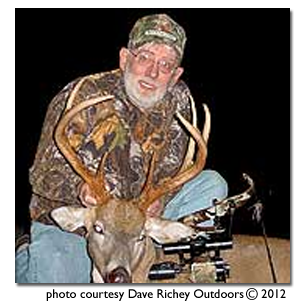
The author with a nice buck
photo courtesy Dave Richey Outdoors ©2012
You know what a myth is? It's something that is commonly accepted as fact, but it really isn't. You know what I mean: pick up a toad, and you'll get warts and other stuff like that.

There are many myths about bow hunting. Some have been steeped in public acceptance for so long it's difficult to dislodge the thought. Here are a few that bow hunters seem to accept as fact.

*Rutting bucks are stupid. This one has been around so long that it should have long gray whiskers. It's simply not true.

Some myths are repeated so often that many consider them true


Bucks do run during the day and chase does, and occasionally they will do something that humans might think stupid, but they probably make perfect sense to the deer. Don't look for them to run up to a human, and stand idly by while someone shoots at them.

If bucks make any mistake it is chasing does during the mid-day hours. A bow hunter can turn that knowledge to good use by hunting from 10 a.m. to 2 p.m.

*Deer always travel into the wind. That too has been proven wrong so many times each year one would think it would fall out of fashion. Gran'pappy tells his son that two or three dozen times when the kid is young and impressionable, and he believes it. So he tells it to his son, and these old wives' tales get passed down from one generation to the next.

The truth is deer often travel downwind, cross-wind, and quartering into or away from the wind. Deer have always headed west in the morning and east in the evening, and it makes no difference which way the wind is blowing. They will travel upwind, downwind, or quartering into or with the wind.

One thing is certain. Move or make a faint noise, and a curious deer may turn around and come upwind to determine what and where you are. The trick is to give deer no reason to circle into the wind.

*The deer jumped the string. This means a bow hunter comes to full draw, releases an arrow and the deer jumps up or goes down to "duck" the arrow. What nonsense is this? That gives deer human-like intelligence that tells them an arrow is coming.


This can be a problem if deer have been alerted to human presence


Deer will move up, down or sideways if they have been alerted. Deer that travel head-up are alert, cautious and a walking bundle of raw nerve endings. Give them a reason to be alert by being caught moving, making some small noise or being winded, and an alert deer may move to avoid danger.

However, if an arrow is traveling 180 feet per second, and a deer is within 20 yards of the hunter, the arrow will impact the animal before the buck or doe can react to the bowstring launching an arrow. Most arrows are traveling from 220 to 280 feet per second, and sometimes more than 300 fps. This precludes a relaxed deer from "jumping the string." Some muscle-bound people who can pull 100 pounds and shoot an arrow in excess of 300 feet per second will have little trouble hitting a relaxed deer.

*The higher the treestand the less chance there is a deer winding you. OK, I've hunted a few times at 30 to 35 feet and dislike it intensely. I know of people who hunt 40 feet in the air, and a friend swears he saw some fool stand on what looked like a tree stand the size of a postage stamp at 50 feet in the air.

What being that high does, if the wind is blowing down toward the ground, is transfer your scent farther from your hunting area. If a deer gets downwind of you at 200 yards, he may still smell you. Knowing which way the wind is blowing, and using milkweed seeds to see where the scent travels, makes far more sense.


I prefer more tree cover than being too high in the air


My tree stand preference is 15-16 feet. I depend on my being downwind of the deer, being able to sit still, not make any noise, and being able to shoot accurately from an elevated position. It works exceptionally well for me.

The higher a tree stand the more acute the angle when shooting down at a deer. That angle becomes even more acute the closer the deer is to the stand. Lose your anchor point while aiming, or be a fraction of an inch off at higher elevations, the greater the chance is of missing or wounding a deer.

There are many other bow hunting myths kicking around, and one day soon, we look at some other ones.

Saturday, November 06, 2010

Where are the bucks?


It’s not a big buck but seeing it today would have made me feel good.


The only sound I heard in my tree stand today was that of the northwest wind soughing through the branches. The temperature plummeted to a chilly 27 degrees, early this morning and even though the wind was a bit more than I'd prefer, it didn't stop some of the deer from moving.

A couple of does and fawns eased out of the tag alders 250 yards away, walked up a low hill, and stood there like sentries checking out the battlefield below. The deer fed up high, eased on down through the field, fed some more, crossed a woods road, and entered a low-lying tag alder run near my stand.

I sat quietly, dressed warmly in my Scent-Lok suit, and waited for the deer to arrive. It was my hope they would pick up a buck along the way, and bring him in close to me. The logic was sound on my part, but something got lost in the translation for the deer.

Uncooperative whitetail bucks. A day when few deer of either sex moved.


They got into the tag alders, jumped the creek, and headed east into another big field. Perhaps a trolling buck found one of the does to his liking but I suspect those antlerless deer old enough to be bred, had been.

There was no deer grunts near me. The bucks were apparently bedded down or up and moving elsewhere ... but not in my neighborhood.

The does and fawns didn't come my way. They didn't go to another hunter a quarter-mile away, and they apparently failed to rouse the interest of any nearby bucks ... if any existed.

It was one of those morning and evenings when nothing much moved until well after dark. Driving out the woods road revealed a buck here, one a mile farther down the trail, and a sprinkling of does and fawns. There didn't seem to be many deer moving, and no pattern to their movement.

The rut sometimes happens this way. The first round of does get bred early in the rut, and then several days may pass, and another spurt of rutting activity seems to kick in about Nov. 8-10. and it will be good again until the Nov. 15 firearm opener.

The mid-day hours are really my favorite rutting time to hunt, and I find far fewer hunters afield. It's easy to make your way to a tree stand or ground blind, and seldom will we bump into a deer, and then from 10 a.m. to 2 p.m., the chances of seeing bucks on the move seem to increase.

A few deer moved on the drive home but not many.


It doesn't always work out this way. Nothing about deer hunting is cast in stone. There are some days when rutting activity seems to slow down. Blame it on the weather, too much hunter traffic in the woods, nasty weather ... whatever. There are days when mid-day bucks are on the move, and days when they are not. Go figure.

Right now it's tough for me to hunt anytime except from 4 p.m. to the end of legal shooting time. Admittedly, it may not be the best time to hunt, but we get away when we can. We work with what we have, and next year things will be different.

I've hunted many years during the rut, and this one has been one of the strangest seasons I've seen. But deer hunting means going through days of little or no deer movement, and days when the deer are constantly on the move.

We just have to live with what we have, and try again the next day in hopes that things shift around. You see, for me, deer hunting is far more important than deer killing.

Still, it's nice to see deer up close and within bow range.

Posted via email from Dave Richey Outdoors

Friday, November 05, 2010

Hunt the rut’s mid-day hours


Not much of a bow shot here. Wait him out & hope for a better angle.


I've written about it lately, and yet many people are missing out on some of the best mid-day deer hunting action of all.

The mid-day hours during the rut can generate some very exciting action. And, the best thing about it is you'll have little competition.

The early daylight hours from 30 minutes before sunrise can be a good hunting time, as can be the 30 minutes after sundown, but those hours between  10 a.m. and 2 p.m. are often overlooked by hunters. Bucks often are on their feet and moving during this period, and other than some snow showers today, visibility is usually good at that time.

Hunt the mid-day hours during the rut.


Most people are not hunting during mid-day. Many are working, but those who aren't working are seldom sitting in a ground blind or tree stand to take advantage of this great time for deer movement..

I learned about this particular phenomenon many years ago while hunting ruffed grouse. I boosted the same buck out of the same covert at about the same time two days in a row.. I went back to hunt that area for the buck, and was fortunate enough to set up on him and to get a very good shot at 20 yards.

Hunters, even on state land, should try hunting the mid-day hours if possible. The hours between 10 a.m. and 2 p.m. are ideal. Few hunters are afield then, the swamps and woods are silent, and many of the bucks are up and moving around. We hunted tonight, and of the five people who hunted, two saw bucks and three didn't see a thing.

The odds are not dramatically different, but using the above example where two hunters saw a buck while three did notm that means hunters could have a 40 percent chance of seeing a deer, and those odds are greater that a hunter will see a buck. And sometimes, with those bucks that are mostly nocturnal, it can be an exceptional time to see a really good buck. Deer just aren't accustomed to seeing hunters in the woods at that time of day. Often, this is when a hunter will see a buck he’s never seen before because it has suddenly followed a doe into a new location.

I saw a young buck and let him pass, and one of the other hunters had a buck walk quickly past his ground blind at 10 feet. It was a husky 10-pointer, but it was by him before he had a chance to grab his bow, draw, aim and shoot.

Be alert, and ready to shoot. Rutting bucks seldom offer second chances.


Another hunter in another area miles away sat in a ground blind as well, and saw two 8-pointers. One had a rack with seven-inch G2s and a 22-inch spread. The other buck was a smaller animal, and the big guy chased the smaller buck around an open field for 15 minutes without offering a shot. He also saw a few does and fawns,400 yards away right at the end of shooting time.

Make no mistake about it. The same rules apply at this time of day as applies at dawn and dusk. Be ready for a shot at any time, and people who hang their bow from a nearby tree limb, often do not have time to grab it and shoot before the buck is gone. These bucks are sniffing the ground, and if they happen on a hot doe trail, they can be gone within a second or two/

It's difficult for hunters to get out at mid-day during the work week, but I've known some guys to hunt their one-hour lunch period and score on a buck. It's certainly worth a try, and it's can be a time period when some of the largest bucks are on the prowl.

Hunting the mid-day hours during the rut is one of deer hunting's best-kept secrets.

Posted via email from Dave Richey Outdoors

Sunday, October 31, 2010

Estimating the rut’s end


Someone asked me today how much longer the rut would last. It's a good question, and the breeding period is moving from the chasing into the rutting phase.

Many deer researchers feel the main or primary rut will last 10-14 more days, and that seems about right. Much depends on weather, hunting pressure, available food supplies and other factors beyond the control of anyone.

Hunting pressure isn't heavy in my area, and there is an abundance of high-protein food. The weather is the major unknown factor that we must deal with from year to year. The three-day blow didn’t help anything although some bucks moved during the wind.

Hard wind storms or warm weather slow the rut.


Wind is the one major thing that can affect deer movements. A strong wind is troubling for deer under the best of circumstances, and during the rut it can limit their movement and breeding activity. The deer really began  chasing and breeding does about Oct. 23, and if researchers are correct, we may have until just before the firearm opener, although some carry-over rutting will be seen..

Unseasonably warm weather can slow the rut, and a combination of warm temperatures and strong winds are not a good omen. Cool temperature make deer move.

Two weeks ago we checked a scrape along one of our little trails, and a buck had pawed the dirt and kicked it around. It was the first time I'd seen that scrape, and it was freshly opened up each of the next three or four days, and then the buck stopped using it. Here’s why that happened.

Once bucks abandon an active scrape, it usually means the rut in full swing. Sure, a small buck may visit the scrape in hopes of lining up an unbred doe, but Big Boy knows where the estrus does are at all times.

Hunters who spend time in the woods have seen chasing-rutting bucks for about 10 days. I saw some big bucks in the distance tonight, and they were moving hard to keep up with the dwindling supply of unbred does.

The rut is better understood now than when I first began hunting, and I've studied bucks for many years. My land is about as wild as it can get, and we're starting to see a bit less activity each night. Many bucks (and does) are still holing up in standing corn fields, and why not. It provides good cover and great food. If there is a low spot with water, deer won’t leave the area.

Many corn fields remain uncut which accounts for a lack of buck signtings.


A buddy said last night he figures much of the breeding portion of the rut will wind done within 10-14 days. He is out in the field every day, and can accurately gauge rutting activity based on what he sees.

Of course, in 28 to 30 days, some of the younger does will come into estrus for the first time and will be bred. This second rut is a mere shadow of the first rut, but I've seen bucks breeding does in January and have had large bucks hold their antlers into March.

Nature has its way of regulating the rut, and the main purpose is to have most of the does bred in late October and early November so they will have their fawns once the spring's lush new growth appears. The newborn fawns will need plenty of food to eat.

On the flip side, does that are bred late in December or January have their fawns much later in the spring, and those little deer often don't get enough food  and may starve to death during their first winter.

Hunt hard the next two weeks were does and food is plentiful.


Hunters who hunt every night as I do will know when the primary rut is over. It's a widely speculated event, but it's over when it is over and there is no need for the fat lady to sing.

Until then, I'll be hunting every night for that one chance at a big buck. He's out there, and I've seen him, but hunting a trophy buck -- even during the rut -- is never easy. Success is a chancy thing.

Posted via email from Dave Richey Outdoors

Tuesday, October 26, 2010

Hunt during mid-day now


My wife Kay shot this 12-point in Alabama during the January rut with these tactics.


The buck was banging its antlers against a tree, and I listened to him working a scrape for 30 minutes late last October. The buck was within 20 yards of me but was screened by thick brush and invisible.

I sat in my tree stand and listened. He was close enough to hear the urine hitting the scrape, and he was upwind and the pungent ammonia odor was strong. He worked that tree over, yanked at the overhead licking branch, and for all the noise and commotion he made, the buck was impossible to see.

I checked the spot the next day. He'd been working two scrapes, and one was eight inches deep and as big around as two large turkey platters. The buck had pulled the old licking branch down, and I replaced it. It suited him just fine because the scrape had antler tine marks and a hoof print in it, and the new licking branch looked pretty ragged. The second scrape was opened up, and the licking branch was chewed to a frazzle.

That buck had chewed the licking branch to a frazzle & punished the scrape.


What was even more interesting was that the buck had opened up a third scrape. Huge clots of wet earth was piled at the north end of the scrape, and he had made it the night before. How do I know?

Buck scrapes have dirt and debris piled at one end or another, and if the dirt is piled at the end closest to thick cover, it generally means the deer is tending that scrape in the evening as he leaves the bedding area for a night of chasing cute little does.

This told me several things: One is the rut had not started but the chasing phase had set in. This chasing phase lasts several days before the full rut starts. As long as fresh activity is seen at the scrape, and it is being tended one or more times daily, the rut has not begun. Once the scrapes show no sign of activity, that means the rut is underway.

One thing few hunters realize is that the mid-day hours just before and during the rut can produce a fine buck. A person just needs to be there at the right time/

This buck may have had other nearby scrapes it had been working, but once a buck is shot and is taken out of the woods, another buck will usually take its place. Nature abhors a vacuum, and when a big brown trout or a big whitetail buck is removed, another moves in and takes over.

Hunting from 10 a.m. to 2 p.m. works well during the chasing stage and the rut. If possible, be in your stand by 9 a.m., and sit patiently. The bucks will move during the mid-day hours.

I first learned of this phenomenon many years ago while hunting ruffed grouse. Two days in a row a buck was seen darting away from me in the same area. I checked the area, found his scrapes, and went back and set up a stand 30 yards downwind of it. The buck came by that first day at about noon, wind-checked the scrape from downwind, and offered me a 12-yard shot.

Hunting the pre-rut and the rut during mid-day hours can pay off. Sure, many can't take time off work to hunt those hours, but keep it in mind for weekends. Hunt near natural funnels between bedding and feeding areas, and once the rut kicks in, start hunting the heavier cover.

Hunt the heaviest cover near feeding areas.


My only real problem with hunting the mid-day hours is a personal one. I'm good for three hours maximum in a tree before everything gets sore. I'll stick it out until about 2:30 p.m., grab a bite to eat, and then hunt from 4 p.m. until legal shooting time ends. It means spending long hours in a tree, but it can pay big dividends with a husky whitetail buck.

This method has worked for me, and can work for you regardless of where you hunt. Try it this fall and see if it doesn't produce action at a time when no one is hunting. It's rut hunting's biggest secret, and now only you, me and several hundred thousand other people also will know it.

Posted via email from Dave Richey Outdoors

Wednesday, November 04, 2009

Anticipate Rutting Buck Behavior

Trying to anticipate what a rutting buck will do is much like listening to a politician's promise. Both can be a risky venture.

Frankly, the only predictable thing about a rutting buck is his unpredictability. They do things that make absolutely no sense to the bow hunter, but apparently, their actions make complete sense to them.

Bucks can act completely addled, and once they begin chasing does, some bucks dart across roads only to get themselves killed in a deer-vehicle collision. I've watched bucks run head-long into a fence post even though the doe jumped the fence.

Rutting bucks never lose their fear of humans

The oddities of rutting bucks have been well documented. What is seldom stressed is how their mood swings influence their actions, but seldom will a buck become totally clueless. They do not lose their inherent fear of humans, and a buck that hears, sees or smells a hunter, will waste little time getting out of Dodge.

This means that hunters can take no liberties with being downwind of known travel routes. We also must sit still, don't move and take only high-percentage shots. Another thing to note is that bucks are seldom still during the rut, and hunters must be prepared for a quick and accurate shot on a moment's notice. Keep your bow in your hands at all times. Reaching for a bow hanging from a nearby branch often is a waste of time.

The most predictable thing about a rutting buck is he is never far from his latest squeeze. Of course, as soon as he's had his way with her, he is off on a continuing search for other estrus does to breed. For the larger and older bucks, breeding does is a never-ending process in which a mature buck will lose 25-30 percent of his body weight.

Find the does and you'll find the bucks

Remember, a buck will always be near the does. He may hang back in heavy cover near a food source, but once she moves, the buck cuts her trail again. It's one reason why hunters often set up a stand in the heaviest cover near a food source and near a field corner.

A buck will cruise back and forth as the doe feeds, and will check other nearby does to determine how close they are to estrus, but he keeps a close watch on his latest lady friend.

Bucks will often be seen crossing open fields as they course a doe. He will go where she goes, and if she is almost in estrus, he will be even closer. If she goes left or right, he will cut her off, and if she head-fakes him into going one way while she goes the other, he will soon catch up with the wayward doe.

Hunting these animals can be great fun, and almost every hunter will say; "So close and yet so far away" at one time or another. The bucks and does often move just out of bow range, and it's not a deliberate thing on their part. The hunter has simply made a mistake by setting up just out of effective bow range.

Hunt near field corners with thick cover

It's difficult to go wrong by hunting fairly close to fields where does will feed. Choose one of the corners, and especially the field-edge corner with the heaviest nearby cover. That is where bucks will hang out to watch the does, and they often pace back and forth like an expectant father. Their reason for pacing is the driving need to breed when she enters estrus.

None of this means the buck won't enter a feeding field, and often by luck or design, a doe will lead an amorous buck past a ground blind or tree stand, but it's not something to bet the homestead on.

Tending bucks often are vocal bucks, and one about to breed a doe will be grunting with almost every step it takes. This tending grunt is low and guttural, and sometimes can be heard for 100 yards while at other times the buck may only be 20 yards away when the sound is heard. In some cases the sound is much like a ventriloquist "throwing" his voice; it's almost impossible to tell where the sound comes from during a heavy fog or a misty rain.

Bucks will sometimes still check ground scrapes, but once the rut really kicks offs, they stop opening up and freshening scrapes. They have used those scrapes over the past two or three weeks to locate estrus and soon-to-be-ready does, and every buck in the area knows which does will soon be bred. The earliest does to breed often are among the oldest does in the area.

This also is when young bucks try to mount the does while the big buck is busy elsewhere, but most does will not stand for a younger deer unless big boy gets killed. Few 1 1/2-year-old bucks do any breeding. Their day will come in two or three years unless they get shot by a hunter.

Hunting the rut is entirely different than hunting bucks at other times. Hunters must start thinking like a buck, and once they figure out where the does are, and where the thickest cover is (where much of the breeding will take place), it becomes a bit easier... but not by much.

It's easy to make an obvious error in judgment in retrospect, and hunters who know the land they hunt like the back of their hand will usually know from past experience where the bucks and does head during the rut. They can arrange to be there at the right time.

Two tips to remember about hunting rutting bucks

Two last tips on rutting deer is this:
  • Bucks often rest up a bit after daybreak but begin cruising in search of estrus bucks between 10 a.m. and 2 p.m. This four-hour period during mid-day can be a hot time to be on stand. Few hunters are out at that time of day but the bucks are often moving.
  • The same holds true with hunting just before a bad weather front moves through. Check the weather, and hunt just before bad weather hits your area, especially if it features a substantial drop in temperature and either rain or snow.

Rut hunting is never easy, but hunting it properly and knowing a few of these tricks will stimulate your brain and make hunters think each daily situation out thoroughly. And that usually is a good thing to do at this time of year.

Posted via email from Dave Richey Outdoors

Anticipate Rutting Buck Behavior

Trying to anticipate what a rutting buck will do is much like listening to a politician's promise. Both can be a risky venture.

Frankly, the only predictable thing about a rutting buck is his unpredictability. They do things that make absolutely no sense to the bow hunter, but apparently, their actions make complete sense to them.

Bucks can act completely addled, and once they begin chasing does, some bucks dart across roads only to get themselves killed in a deer-vehicle collision. I've watched bucks run head-long into a fence post even though the doe jumped the fence.

Rutting bucks never lose their fear of humans.The oddities of rutting bucks have been well documented. What is seldom stressed is how their mood swings influence their actions, but seldom will a buck become totally clueless. They do not lose their inherent fear of humans, and a buck that hears, sees or smells a hunter, will waste little time getting out of Dodge.

This means that hunters can take no liberties with being downwind of known travel routes. We also must sit still, don't move and take only high-percentage shots. Another thing to note is that bucks are seldom still during the rut, and hunters must be prepared for a quick and accurate shot on a moment's notice. Keep your bow in your hands at all times. Reaching for a bow hanging from a nearby branch often is a waste of time.

The most predictable thing about a rutting buck is he is never far from his latest squeeze. Of course, as soon as he's had his way with her, he is off on a continuing search for other estrus does to breed. For the larger and older bucks, breeding does is a never-ending process in which a mature buck will lose 25-30 percent of his body weight.

Find the does and you'll find the bucks. Remember, a buck will always be near the does. He may hang back in heavy cover near a food source, but once she moves, the buck cuts her trail again. It's one reason why hunters often set up a stand in the heaviest cover near a food source and near a field corner.

A buck will cruise back and forth as the doe feeds, and will check other nearby does to determine how close they are to estrus, but he keeps a close watch on his latest lady friend.

Bucks will often be seen crossing open fields as they course a doe. He will go where she goes, and if she is almost in estrus, he will be even closer. If she goes left or right, he will cut her off, and if she head-fakes him into going one way while she goes the other, he will soon catch up with the wayward doe.

Hunting these animals can be great fun, and almost every hunter will say; "So close and yet so far away" at one time or another. The bucks and does often move just out of bow range, and it's not a deliberate thing on their part. The hunter has simply made a mistake by setting up just out of effective bow range.

Hunt near field corners with thick cover.It's difficult to go wrong by hunting fairly close to fields where does will feed. Choose one of the corners, and especially the field-edge corner with the heaviest nearby cover. That is where bucks will hang out to watch the does, and they often pace back and forth like an expectant father. Their reason for pacing is the driving need to breed when she enters estrus.

None of this means the buck won't enter a feeding field, and often by luck or design, a doe will lead an amorous buck past a ground blind or tree stand, but it's not something to bet the homestead on.

Tending bucks often are vocal bucks, and one about to breed a doe will be grunting with almost every step it takes. This tending grunt is low and guttural, and sometimes can be heard for 100 yards while at other times the buck may only be 20 yards away when the sound is heard. In some cases the sound is much like a ventriloquist "throwing" his voice; it's almost impossible to tell where the sound comes from during a heavy fog or a misty rain.

Bucks will sometimes still check ground scrapes, but once the rut really kicks offs, they stop opening up and freshening scrapes. They have used those scrapes over the past two or three weeks to locate estrus and soon-to-be-ready does, and every buck in the area knows which does will soon be bred. The earliest does to breed often are among the oldest does in the area.

This also is when young bucks try to mount the does while the big buck is busy elsewhere, but most does will not stand for a younger deer unless big boy gets killed. Few 1 1/2-year-old bucks do any breeding. Their day will come in two or three years unless they get shot by a hunter.

Hunting the rut is entirely different than hunting bucks at other times. Hunters must start thinking like a buck, and once they figure out where the does are, and where the thickest cover is (where much of the breeding will take place), it becomes a bit easier... but not by much.

It's easy to make an obvious error in judgment in retrospect, and hunters who know the land they hunt like the back of their hand will usually know from past experience where the bucks and does head during the rut. They can arrange to be there at the right time.

Two tips to remember about hunting rutting bucks.Two last tips on rutting deer is this: Bucks often rest up a bit after daybreak but begin cruising in search of estrus bucks between 10 a.m. and 2 p.m. This four-hour period during mid-day can be a hot time to be on stand. Few hunters are out at that time of day but the bucks are often moving. The same holds true with hunting just before a bad weather front moves through. Check the weather, and hunt just before bad weather hits your area, especially if it features a substantial drop in temperature and either rain or snow.

Rut hunting is never easy, but hunting it properly and knowing a few of these tricks will stimulate your brain and make hunters think each daily situation out thoroughly. And that usually is a good thing to do at this time of year.

Anticipate Rutting Buck Behavior ((tag: Dave Richey, Michigan, outdoors, rut, buck, anticipate, behavior, estrus, doe, deer, hunt))

Posted via email from Dave Richey Outdoors