Showing posts with label mid-day. Show all posts

Saturday, September 01, 2012

REMINDER: Read 'Hunt Pre-Rut Bucks'

buckingrass

Bone-white antlers of a resting buck show above weeds during the pre-rut
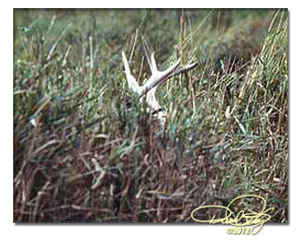


This method has worked for me, and can work for you regardless of where you hunt.

Try it this fall and see if it doesn't produce action at a time when no one is hunting. It's rut hunting's biggest secret, and now only you, me and several hundred thousand other people will know.

Mark this blog and go back and read it again in mid-October, and maybe it will produce a nice buck for you next fall.

OK. Here's your reminder.  Re-Read, "Hunt Pre-Rut Bucks' and go get your mid-day buck.

Tuesday, January 31, 2012

Hunting pre-rut bucks

Bone-white antlers of a resting buck show above weeds during the pre-rut

buckingrass
The buck was banging its antlers against a tree, and I listened to him working a scrape for 30 minutes late last October. The buck was within 20 yards of me but he was screened by thick brush and was invisible.

I sat in my tree stand and listened. He was close enough to hear the urine hitting the scrape, and he was upwind and the pungent ammonia odor was strong. He worked that tree over, yanked at the overhead licking branch, and for all the noise and commotion he made, the buck was impossible to see.

I checked the spot the next day. He'd been working two scrapes, and one was eight inches deep and as big around as two large platters. The buck had pulled the old licking branch down, and I replaced it. It suited him because the scrape had tine marks and a hoof print in it, and the new licking branch looked pretty ragged. The second scrape was opened up, and the licking branch was chewed to a frazzle.

A spot with two or more active scrape should produce  if you don’t spook it

What was even more interesting was that the buck had opened up a third scrape. Huge clots of wet earth was piled at the north end of the scrape, and he had made it the night before. How do I know?

Buck scrapes have dirt and debris piled at one end or another, and if the dirt is piled at the end closest to thick cover, it generally means the deer is tending that scrape in the evening as he leaves the bedding area for a night of chasing cute little does.

This told me several things: One is the rut had not started but the chasing phase had set in. This chasing phase lasts several days before the full rut starts. As long as fresh activity is seen at the scrape, and it is being tended one or more times daily, the rut has not begun. Once the scrapes show no sign of activity, that means the rut is underway.

One thing few hunters realize is that the mid-day hours just before and during the rut can produce a fine buck.

This buck may have other nearby scrapes that it had been working, but once a buck is shot and is taken out of the woods, another will take its place. Nature abhors a vacuum, and when a big brown trout or a big whitetail buck is removed, another moves in and takes over.

Hunting from 10 a.m. to 2 p.m. works well during the chasing stage and the rut. If possible, be in your stand by 9 a.m., and sit patiently. The bucks will move during the mid-day hours.

Hunt the mid-day hours during the pre-rut

I first learned of this phenomenon many years ago while hunting ruffed grouse. Two days in a row a buck was seen darting away from me in the same area. I checked the area, found his scrapes, and went back and set up a stand 30 yards downwind of it. The buck came by that first day at about noon, wind-checked the scrape from downwind, and offered me a 12-yard shot.

Hunting the pre-rut and the rut during mid-day hours can pay off. Sure, many hunters can't take time off work to hunt those hours, but keep it in mind for weekends. Hunt near natural funnels between bedding and feeding areas, and once the rut kicks in, start hunting the heavier cover.

My only real problem with hunting the mid-day hours is a personal one. I'm good for three hours maximum in a tree before everything gets sore. I'll stick it out until about 2:30 p.m., grab a bite to eat, and then hunt from 4 p.m. until legal shooting time ends. It means spending long hours in a tree, but it can pay big dividends with a husky buck and the hunting is more fun than writing about it.

This method has worked for me, and can work for you regardless of where you hunt. Try it this fall and see if it doesn't produce action at a time when no one is hunting. It's rut hunting's biggest secret, and now only you, me and several hundred thousand other people will know. Mark this blog and go back and read it again in mid-October, and maybe it will produce a nice buck for you next fall.

Saturday, November 06, 2010

Where are the bucks?


It’s not a big buck but seeing it today would have made me feel good.


The only sound I heard in my tree stand today was that of the northwest wind soughing through the branches. The temperature plummeted to a chilly 27 degrees, early this morning and even though the wind was a bit more than I'd prefer, it didn't stop some of the deer from moving.

A couple of does and fawns eased out of the tag alders 250 yards away, walked up a low hill, and stood there like sentries checking out the battlefield below. The deer fed up high, eased on down through the field, fed some more, crossed a woods road, and entered a low-lying tag alder run near my stand.

I sat quietly, dressed warmly in my Scent-Lok suit, and waited for the deer to arrive. It was my hope they would pick up a buck along the way, and bring him in close to me. The logic was sound on my part, but something got lost in the translation for the deer.

Uncooperative whitetail bucks. A day when few deer of either sex moved.


They got into the tag alders, jumped the creek, and headed east into another big field. Perhaps a trolling buck found one of the does to his liking but I suspect those antlerless deer old enough to be bred, had been.

There was no deer grunts near me. The bucks were apparently bedded down or up and moving elsewhere ... but not in my neighborhood.

The does and fawns didn't come my way. They didn't go to another hunter a quarter-mile away, and they apparently failed to rouse the interest of any nearby bucks ... if any existed.

It was one of those morning and evenings when nothing much moved until well after dark. Driving out the woods road revealed a buck here, one a mile farther down the trail, and a sprinkling of does and fawns. There didn't seem to be many deer moving, and no pattern to their movement.

The rut sometimes happens this way. The first round of does get bred early in the rut, and then several days may pass, and another spurt of rutting activity seems to kick in about Nov. 8-10. and it will be good again until the Nov. 15 firearm opener.

The mid-day hours are really my favorite rutting time to hunt, and I find far fewer hunters afield. It's easy to make your way to a tree stand or ground blind, and seldom will we bump into a deer, and then from 10 a.m. to 2 p.m., the chances of seeing bucks on the move seem to increase.

A few deer moved on the drive home but not many.


It doesn't always work out this way. Nothing about deer hunting is cast in stone. There are some days when rutting activity seems to slow down. Blame it on the weather, too much hunter traffic in the woods, nasty weather ... whatever. There are days when mid-day bucks are on the move, and days when they are not. Go figure.

Right now it's tough for me to hunt anytime except from 4 p.m. to the end of legal shooting time. Admittedly, it may not be the best time to hunt, but we get away when we can. We work with what we have, and next year things will be different.

I've hunted many years during the rut, and this one has been one of the strangest seasons I've seen. But deer hunting means going through days of little or no deer movement, and days when the deer are constantly on the move.

We just have to live with what we have, and try again the next day in hopes that things shift around. You see, for me, deer hunting is far more important than deer killing.

Still, it's nice to see deer up close and within bow range.

Posted via email from Dave Richey Outdoors

Friday, November 05, 2010

Hunt the rut’s mid-day hours


Not much of a bow shot here. Wait him out & hope for a better angle.


I've written about it lately, and yet many people are missing out on some of the best mid-day deer hunting action of all.

The mid-day hours during the rut can generate some very exciting action. And, the best thing about it is you'll have little competition.

The early daylight hours from 30 minutes before sunrise can be a good hunting time, as can be the 30 minutes after sundown, but those hours between  10 a.m. and 2 p.m. are often overlooked by hunters. Bucks often are on their feet and moving during this period, and other than some snow showers today, visibility is usually good at that time.

Hunt the mid-day hours during the rut.


Most people are not hunting during mid-day. Many are working, but those who aren't working are seldom sitting in a ground blind or tree stand to take advantage of this great time for deer movement..

I learned about this particular phenomenon many years ago while hunting ruffed grouse. I boosted the same buck out of the same covert at about the same time two days in a row.. I went back to hunt that area for the buck, and was fortunate enough to set up on him and to get a very good shot at 20 yards.

Hunters, even on state land, should try hunting the mid-day hours if possible. The hours between 10 a.m. and 2 p.m. are ideal. Few hunters are afield then, the swamps and woods are silent, and many of the bucks are up and moving around. We hunted tonight, and of the five people who hunted, two saw bucks and three didn't see a thing.

The odds are not dramatically different, but using the above example where two hunters saw a buck while three did notm that means hunters could have a 40 percent chance of seeing a deer, and those odds are greater that a hunter will see a buck. And sometimes, with those bucks that are mostly nocturnal, it can be an exceptional time to see a really good buck. Deer just aren't accustomed to seeing hunters in the woods at that time of day. Often, this is when a hunter will see a buck he’s never seen before because it has suddenly followed a doe into a new location.

I saw a young buck and let him pass, and one of the other hunters had a buck walk quickly past his ground blind at 10 feet. It was a husky 10-pointer, but it was by him before he had a chance to grab his bow, draw, aim and shoot.

Be alert, and ready to shoot. Rutting bucks seldom offer second chances.


Another hunter in another area miles away sat in a ground blind as well, and saw two 8-pointers. One had a rack with seven-inch G2s and a 22-inch spread. The other buck was a smaller animal, and the big guy chased the smaller buck around an open field for 15 minutes without offering a shot. He also saw a few does and fawns,400 yards away right at the end of shooting time.

Make no mistake about it. The same rules apply at this time of day as applies at dawn and dusk. Be ready for a shot at any time, and people who hang their bow from a nearby tree limb, often do not have time to grab it and shoot before the buck is gone. These bucks are sniffing the ground, and if they happen on a hot doe trail, they can be gone within a second or two/

It's difficult for hunters to get out at mid-day during the work week, but I've known some guys to hunt their one-hour lunch period and score on a buck. It's certainly worth a try, and it's can be a time period when some of the largest bucks are on the prowl.

Hunting the mid-day hours during the rut is one of deer hunting's best-kept secrets.

Posted via email from Dave Richey Outdoors

Saturday, October 30, 2010

Hunt rutting bucks


Trying to anticipate what a buck will do during the rut is like listening to a politician's promise. Both are risky ventures.

Frankly, the only predictable thing about a rutting buck is his unpredictability. They do things that make absolutely no sense to the bow hunter, but apparently, their actions make sense to them.  

The oddities of rutting bucks have been well documented. What is seldom stressed is how their mood swings influence their actions, but seldom will they be totally clueless. They do not lose their inherent fear of humans, and a buck that hears, sees or smells a hunter, will waste little time getting out of there.

Rut hunting is no time to be careless about human scent.

This means that hunters can take no liberties with being downwind of known travel routes. We also must sit still, don't move and take only high-percentage shots. Another thing to note is that bucks are seldom still, and hunters must be prepared for a quick and accurate shot.

The most predictable thing about a rutting buck is he will never be far from his latest squeeze. Of course, as soon as he's had his way with her, he is off on a continuing search for other estrus does to breed.

Remember the buck will always be near the does. He may hang back in heavy cover near a food source, but once she moves, the buck is on her trail again. It's one reason why hunters often set up a stand in the heavy cover near a food source.

A buck will cruise back and forth as the doe feeds, and will check other does to determine how close they are to estrus, but he'll be keeping a close watch on his current lady friend.

Bucks will often be seen crossing open fields as they course a doe. He will go where she goes, and if she is almost in estrus, he will be everncloser. If she goes left or right, he will cut her off, and if she head-fakes him into going one way while she goes the other, he will soon catch up with the wayward doe.

Hunting rutting bucks can be easy or difficult, depending on the animal.


Hunting these animals can be great fun, and almost every hunter will say; "So close and yet so far away" at one time or another. The bucks and does often travel just out of bow range, and it's not a deliberate thing. The hunter makes a mistake by setting up just out of effective bow range.

It's difficult to go wrong by hunting fairly close to fields where does will feed. Choose one of the corners, and especially the field-edge corner with the heaviest nearby cover. That is where bucks will hang out to watch the does, and it’s here they often pace back and forth.

That doesn't mean the buck won't enter a feeding field, and often by luck or design, a doe will lead an amorous buck past a ground blind or tree stand, but it's not something to bet the homestead on.

Tending bucks are vocal bucks, and a buck about to breed a doe will be grunting with almost every step it takes. This tending grunt is low and guttural, and sometimes it can be heard for 100 yards and at other times the buck may only be 20 yards away when the sound is heard. In some cases the sound is like a ventriloquist "throwing" his voice; it's almost impossible to tell where the sound comes from in heavy fog.

Bucks will sometimes still check ground scrapes, but once the rut really kicks offs, they stop opening up and freshening scrapes. They have used those scrapes over the past 10-14 days to locate estrus and soon to be ready does, and every buck in the area knows which does will soon be bred.

Learn about rutting bucks by hunting them, and learn from your mistakes.


This is when young bucks try to mount the does, but most does will not stand for a lesser deer unless the big buck has been killed. Few 1 1/2-year-old bucks do any breeding. Their day will come in two or three years unless they get shot by a hunter.

Hunting the rut is entirely different than hunting bucks at other times. Hunters must start thinking like a buck, and once they figure out where the does are, and where the thickest cover is (where much of the breeding takes place), it becomes a bit easier... but not much easier.

Rut hunting is never easy, but it stimulates your brain and makes hunters think. And that is always a good thing at this time of year.

Posted via email from Dave Richey Outdoors

Tuesday, October 26, 2010

Hunt during mid-day now


My wife Kay shot this 12-point in Alabama during the January rut with these tactics.


The buck was banging its antlers against a tree, and I listened to him working a scrape for 30 minutes late last October. The buck was within 20 yards of me but was screened by thick brush and invisible.

I sat in my tree stand and listened. He was close enough to hear the urine hitting the scrape, and he was upwind and the pungent ammonia odor was strong. He worked that tree over, yanked at the overhead licking branch, and for all the noise and commotion he made, the buck was impossible to see.

I checked the spot the next day. He'd been working two scrapes, and one was eight inches deep and as big around as two large turkey platters. The buck had pulled the old licking branch down, and I replaced it. It suited him just fine because the scrape had antler tine marks and a hoof print in it, and the new licking branch looked pretty ragged. The second scrape was opened up, and the licking branch was chewed to a frazzle.

That buck had chewed the licking branch to a frazzle & punished the scrape.


What was even more interesting was that the buck had opened up a third scrape. Huge clots of wet earth was piled at the north end of the scrape, and he had made it the night before. How do I know?

Buck scrapes have dirt and debris piled at one end or another, and if the dirt is piled at the end closest to thick cover, it generally means the deer is tending that scrape in the evening as he leaves the bedding area for a night of chasing cute little does.

This told me several things: One is the rut had not started but the chasing phase had set in. This chasing phase lasts several days before the full rut starts. As long as fresh activity is seen at the scrape, and it is being tended one or more times daily, the rut has not begun. Once the scrapes show no sign of activity, that means the rut is underway.

One thing few hunters realize is that the mid-day hours just before and during the rut can produce a fine buck. A person just needs to be there at the right time/

This buck may have had other nearby scrapes it had been working, but once a buck is shot and is taken out of the woods, another buck will usually take its place. Nature abhors a vacuum, and when a big brown trout or a big whitetail buck is removed, another moves in and takes over.

Hunting from 10 a.m. to 2 p.m. works well during the chasing stage and the rut. If possible, be in your stand by 9 a.m., and sit patiently. The bucks will move during the mid-day hours.

I first learned of this phenomenon many years ago while hunting ruffed grouse. Two days in a row a buck was seen darting away from me in the same area. I checked the area, found his scrapes, and went back and set up a stand 30 yards downwind of it. The buck came by that first day at about noon, wind-checked the scrape from downwind, and offered me a 12-yard shot.

Hunting the pre-rut and the rut during mid-day hours can pay off. Sure, many can't take time off work to hunt those hours, but keep it in mind for weekends. Hunt near natural funnels between bedding and feeding areas, and once the rut kicks in, start hunting the heavier cover.

Hunt the heaviest cover near feeding areas.


My only real problem with hunting the mid-day hours is a personal one. I'm good for three hours maximum in a tree before everything gets sore. I'll stick it out until about 2:30 p.m., grab a bite to eat, and then hunt from 4 p.m. until legal shooting time ends. It means spending long hours in a tree, but it can pay big dividends with a husky whitetail buck.

This method has worked for me, and can work for you regardless of where you hunt. Try it this fall and see if it doesn't produce action at a time when no one is hunting. It's rut hunting's biggest secret, and now only you, me and several hundred thousand other people also will know it.

Posted via email from Dave Richey Outdoors