
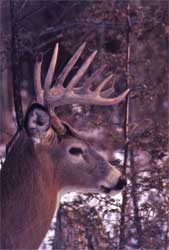
Don’t be surprised by the possibility of some snow on Monday.
Finding a firearm opening-day hotspot can be easy if you follow some of these hard-earned instructions. Good places to hunt go begging because no one wants to move, so instead of hoping deer show up while you set on your butt, try this.
There's no secret about it. Firearm deer hunters often sit in a nice warm coop, and wait for the deer to pay them a visit. If the deer don't move, because no one is out moving around to cause the animals to move as they try to hide, both hunters and deer can take a snooze.
It's easy to find some of the key areas to hunt. Get in to such spots early in the morning, long before the other hunters come stumbling in at dawn. Move early, get in place, pay attention to the wind, and sit tight. Dress for the weather, and don't forget to wear as much hunter orange clothing as possible. Give some of these spots a try on Monday, the only day of the year when you can hear the sunrise.
These several hunting locations can officer very good firearm hunting.
*Creek or river bottoms -- Such spot often have thick cover, and deer follow these ground depressions when moving from one spot to another, usually through heavy cover. Check the surrounding countryside, and locate some trails that lead into the bottom land. Find a spot downwind of where active deer trails meet that will offer a good view, and sit tight and don't wiggle around.
Hunt downwind of used trails.
*Funnels -- Funnels can be large or small. If one is too big to cover adequately with one man, bring your buddy along. A funnel that connects a bedding spot with a feeding area or that connects two patches of thick cover is what you want. Sit downwind of the funnel in natural cover, and wait for other hunters to push deer out of one spot. They will use the funnel, and you'll be waiting there for them.
*Drainage ditches aren't as common in the north as in southern counties, but these ditches through farm fields act somewhat like a funnel. Deer will run the bottom of the ditches, which allow them to stay low and out of sight. Again, play the wind and be careful. The breeze may blow one direction above ground but often will be blowing a different way down in the ditch. Hunt near heavy cover areas or woodlots, and any nearby marsh will often hold deer. Find the key spot to sit, and stay down in the ditch to avoid being sky-lighted.
*Swamps -- These spots come in all shapes and sizes. Some are dry while others are wet. Some have a creek flowing through them, and some are connected by a funnel to other thick cover. Learn now where deer travel when the opening-day guns go bang, and figure out how to get back into the swamp well before daylight.
A good way is to wear waders or hip-boots to move into the swamp, and find a nice high and dry area. Deer don't mind getting wet but they prefer to lay up in a dry spot. A cattail marsh is another good bet, and bucks often hole up by stretching out on a muskrat house. Few people look for deer in such locations, and thereby overlook some except hunting areas.
Arrive well before sunrise, hunt all day, and stay alert.
*Dry lake beds -- These areas often grow up to tall grass, and a deer can sneak through the grass without ever being seen. Their fall coat is about the same color as the tall grass, and the best spot to set up an ambush is downwind of where they enter or leave the heavy cover. An elevated coop or tree stand nearby can be an asset because the height allows a hunter to look into the grass from a higher angle. It makes deer somewhat easier to see.
*Abandoned orchards -- Such areas are overgrown with brambles and briars, and the are tough locations for a human to get through. Deer have little trouble sneaking through it, and most of these places are right behind a house or barn. People tend to overlook such spots because they are too close to human settlement, but they can be a true hotspot. The problem is how to hunt them, and the best way is to watch it to see which way a buck goes. Learn his travel route before the firearm season opens, and set up downwind from it. It's the easiest way because getting inside it without spooking the deer is most difficult.
*Hilly country -- Any area with hills will have corresponding valleys. The steeper the hill-sides, the more rugged it will be and the more that big bucks will use such areas. Look for heavy hill-side cover, thick brush in the low spots, and if the country has some craggy outcroppings, bucks will often climb into such areas where they can check their back-trail and pick up scent. The best way to hunt such areas is to be above the deer, and often you'll hear them climbing into position to bed down.
The trick will be to find a hole to look through, and to spot and shoot the deer.
*Islands in lakes or streams -- Whitetail aren't afraid to swim if necessary, and if a lake or stream has an island, it is a good spot to find bucks on or after opening day. Make certain the island isn't privately owned, and if it is, get permission before hunting it. The island doesn't have to be any larger than a high and dry spot surrounded by water for a deer to bed down in thick cover. Islands often are overlooked by many hunters, and they can provide some great sport.
Find a good spot, and try not to be seen checking it out.
Spend some time over the next couple of days, and see if it’s possible to find a nice well-used traveled trail going through it. Get there early, be prepared to hunt all day, and stay alert. Your firearm of choice should be well suited to the habitat being hunted.
Find a few of these hotspots between now and Nov. 15, and chances are good you'll have the spot all to yourself. Well ... you and perhaps a few nice deer.


