Showing posts with label of. Show all posts

Wednesday, January 25, 2012

My love of great outdoor writing

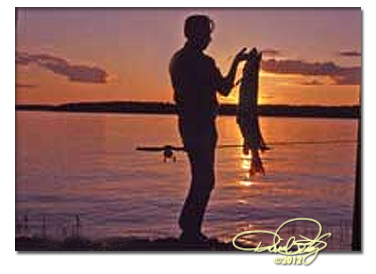
It doesn’t get any better than a big northern pike at sundown
outdoors-love

I've been in this outdoor writing business for 44 years, and over that period I've met most of the greatest outdoor writers of our time.
Men like ...
John Amber Erwin Bauer Havilah Babcock
Nash Buckingham Chuck Cadieux John Cartier
Gordie Charles Ben East Charlie Elliott
Corey Ford Ben Hur Lampman Nick Lyons
Gordon MacQuarrie John Madson Jack O'Conner
Edmund Ware Smith Norm Strung Robert Traver
Ted Trueblood Lamar Underwood Charley Waterman

and many others.

All had one thing in common: they loved the outdoors.

It wasn't so much they loved to kill fish or game, but they enjoyed being out there and matching wits with fish or game. Things were a good bit different in those bygone days. Outdoor writers wrote stories that people loved to read. The how-to or where-to stories weren't in vogue a half-century ago.

No knock on current outdoor writers but many of those in the 1950s were great

They called that earlier brand of writing "Me & Joe stories." If a reader read close he could spot some how-to and where-to stuff, but what gave these stories legs was the writers could pull the reader into the story and make them read it.

We felt as if we were hunting sheep with Jack O'Connor, catching big trout with Joe Brooks, shooting ducks or geese with Lynn Bogue Hunt or Van Campen Heilner. We hung on the words of Robert Ruark as he sat at the Old Man's knee and absorbed some of the wisdom that old-timers handed down to the young 'uns.

Corey Ford was another favorite back in the 1950s and 1960s, and his Tales of The Lower Forty were funny but also shared some fishing or hunting wisdom.

Ben East, who lived near Holly, Michigan, was a friend and I spent hours watching him work his red pencil magic over a manuscript, cutting and splicing, turning words of some wisdom into pearls of wisdom. I thoroughly enjoyed my many conversations with John Madson, and believed that few outdoor writers could match up.

He did a great deal of work for Winchester and the Olin Corporation, and he could make the ingredients of breakfast cereal read well. He was a master of turning phrases, of setting scenes, and of working his brand of literary magic on a story. When he finished, the piece was a gem.

Ben East and John Madson were two or the best wordsmiths

Madson was arguably the finest true outdoor writer of the mid-1900s, and we spent many hours together before his death. I have a healthy-sized stack of his letters, and a common letter from one buddy to another became a piece of art when Madson put his hand to it.

There seems to be something that has gone missing when an article just tells the reader how to catch fish or shoot deer, or even worse, where to do it. The old-time outdoor writers did all of that but they also told readers why they should do it.

They wrote from the heart. They invoked our five senses and said why they should be important to sportsmen, and they knew how to drag the reader into the story and leave them at the end wanting more. That's the sign of a truly good writer.

Outdoor magazines no longer have strong editors. I sold my first "Me and Joe" story to Outdoor Life magazine in 1970, and back then, editor Bill Rae was an editor. Editors below his lofty position could offer their opinion, but Rae was a one-man editorial staff. If he wanted a story, he got the story, and suffered no nonsense from junior editors.

I sold a number of stories to Bill Rae, and he happily bought them because I could give him what he wanted and what he knew his readers wanted to read. Now, it's different; there is such a thing as "editing by committee," which doesn't bode well for the writer because many editors don't know what they want. Many want two or three rewrites from a professional outdoor writer. Things have changed and not for the better.

I sell many fishing and hunting books, and some old outdoor magazines on my website Scoop's Books, and I figure if a book is a good read for me, it will probably appeal to many of my readers. I enjoy going back to some of the earlier writers, and although some of their copy was stilted at times, they knew how to grab the reader's attention.

My personal method writing outdoor copy is simple: inform and entertain

It's always been my intention to write from the heart: to drag readers into the story; to offer them something that is nearly impossible to find today in the how-to, where-to world of outdoor writing, and I'm not ashamed to admit to a mistake. I tweak my readers five senses, and they seem to enjoy it.

What comes through in my writing is a deep and abiding love of the outdoors and of fishing and hunting. I know our natural resources needs some restraints, and I know that being afield is part of why we go fishing or hunting.

We share the outdoors with other user groups, and those of us who love these outdoor pastimes, are perhaps the last of our breed. And just think: all of this rhetoric is about our respect for the fish and game we catch and kill, and a deep love for being outdoors.

And it has all come to pass because of another love. A love of reading is what makes the long wait between fishing and hunting trips bearable, and that is why so many people visit this site every day.

I may be the luckiest person of all because I have a deep urge to write what people want to read. And for that, I'm genuinely thankful for my many readers. Keep reading and I'll keep writing, and tell your friends, neighbors and relatives about my website.

I thank you, in advance, for that consideration.

Sunday, January 02, 2011

Missing bow shots


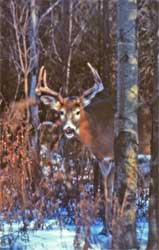
Shoot the left buck while aiming for the off-side shoulder, and wait for this one to turn.  If shooting from the other side, the twig in snow could deflect an arrow.


It happens to everyone at one time or another. We miss an easy dog shot at a whitetail buck, and it runs off – alarmed and spooked – but unhurt. Many hunters can dredge up a dandy excuse for the miss.

Instead of trying to come up with a believable excuse for a missed shot, it makes more sense to go through the entire  sequence in your mind. Don’t let the fudge factor kick in, but analyze it from the viewpoint of learning from your mistakes.

If the scene is mentally replayed and you study the missed shot from all angles, you’ll probably find that something happened that could have been a contributing factor to missing the animal.

It happens to everyone. Learn from your mistakes.


Some hunters cut wide shooting lanes in all directions from their stands, and the coop or stand looks like the hub of a bicycle tire with spokes leading off in all directions.

Deer often are frightened by such cleared areas. Hunting in thick cover is much more difficult, and many of the stands in my hunting areas are in thick cover or very close to it. A few stands may be out in the open, but over many years I’ve learned that thick-cover locations can be very productive.

Hunting thick cover can lead to some missed shots. Often, in many tree stands, there will be only one decent shooting location. Often, that is all we need. But, know this: deer that move through thick areas can travel on any trail or make one of their own. Knowing where a shot can be taken is very important to success.

Always check for that one good natural shooting lane, and then start looking for other possibilities. Bigger bucks often are found in heavy cover, and learning how to pick a hole through the cover for a bow shot can be a lesson in frustration. Do it right, though, and don’t forget about leafy branches, twigs sticking out or that often unseen branch half the size of your little finger that can deflect a shot.

Study that area where a shot was missed, and do so from the ground and a tree, and there’s a good chance you’ll learn why you missed. Taking a shot in heavy cover means picking a hole where the arrow must pass.

If necessary, use binoculars from different anglers, to spot twigs.


My eyes are bad, and binoculars are a must for me to find these holes and any offending twigs or weeds in them. It also pays to examine such areas from different locations. Sunlight glinting off a twig may not be seen from one angle but will be visible from another. Look for them.

This means careful attention to detail. Don’t forget that it takes only a twig – a tiny twig – to deflect an arrow and cause it to fly harmlessly off course. Miss one of these shots, and it becomes increasingly important to study where the shot was taken and why it missed.

The most common reason for a miss is the arrow clipped an unseen twig or a branch that suddenly jumped out in front of the arrow. We know that one blade of grass or a tall weed, hit right, can deflect the arrow in mid-flight. These things  can and do happen. Learn to pick a hole where the arrow will pass through without nicking anything.

Know exactly where you can or cannot shoot & stick with the best spots.


Those little holes become increasingly difficult to see once the sun does down. The heavy cover is darker, and tiny twigs are virtually impossible to find. You must know exactly where they are located, and there’s no need to worry. If the hole is missed, the arrow will miss, and hunters will know what happened. Pinpointing the holes, and memorizing their location, is a big part of the game plan.

Blaming the wind, a piece of blowing dirt in the eye, shooting into the rising or setting sun, and a whole raft of other excuses are a waste of time. Learn to study the situation, replay the shot, and determine where the wheels fell off on that shot.

Studying missed shots can be a brutal piece of masochism as you beat yourself about the head and body, but knowing what went wrong makes it far easier to correct or avoid a similar problem in the future. Making a mistake is human nature, but brushing it away with some lame excuse simply enables the hunter to commit the same mistake over and over again.

And the cycle of missed shots will continue.

Posted via email from Dave Richey Outdoors

Wednesday, December 22, 2010

My Christmas wish for you


My daughter caught this big brown trout while fishing with me.


It's that time of year when folks make wishes. At the age of 71, it's been more than 60 years since I made a Christmas wish for some goodies I hoped Santa would dump under our tree.

Brother George and I both had bikes fairly early in our life. They were mostly rejects that other people were getting rid of when they bought their kids new ones. We clamored loud and long for a new bike, and Dad being a barber in a small town with too many barbers, told us if we'd work at it we could buy our own bike.


Such things seldom happen these days. The kids whine and their parents buy them what they want. We knew better than to whine, knowing it would do no good, and it might earn us a swat on the rump.

Don’t give kids everything they want. Make ‘em work for it.


Dad told us to grab out little red wagon, and go door-to-door and pick up old newspapers and magazines. We busted our backside knocking on doors right just after World War II, and once we collected the papers and old magazines, we'd bundle them up with baling twine and once a week Dad would take us to Flint to sell the paper for real money.

It wasn't much money, even in those days, but it we had a lot of newspapers and a bunch of slick papered magazines, we might make six or eight dollars each.

Week after week we worked hard, made money toward our bike while working at other jobs for spending money, and we finally bought a pair of new Schwinn bicycles with side-view mirrors, a horn, mud-flaps, fender feelers and go-fasters. Each bike was  top of the line, and back in the late 1940s, they cost over $100 each.

That taught us a valuable lesson. If you want something bad enough, work and earn the money to buy it. This story takes me slightly off the path of this blog, but it relates... trust me.

What I want now isn't something that money can buy. I can't work hard enough to make the things on my wish list come true. You see, what I want isn't what very many sportsmen are willing to give. I need people give their children time fishing and hunting,

My wish is that each of you daily readers must give of yourselves.


My goal for the last 30 years has been a matter of preaching to the choir, but in some cases, the choir isn't listening. I'm trying to help restore our beloved pastimes of fishing and hunting to the point where everyone cares about our natural resources and our children.

My Christmas wish would be for every one of the thousands of monthly hits which means at least one person has read my drivel, would take it upon himself (or herself) to teach a child about fishing and hunting. Children aren't learning these outdoor skills in school, and in some cases, some teachers are against hunting. They spend their time trying to influence our kids about their preconceived negative notions concerning hunting.

Children can learn from anyone, but parents who think they can start teaching their kids at the age of 16, are dreaming. Unless children get some positive reinforcement by the age of 10 years or age, or younger, chances are excellent they will never hunt and probably will not fish.

It's impossible to lay blame on all teachers because it's not fair and it's not true. Many teachers fish and hunt, and many work some positive thoughts into what they teach. However, I well remember a story I wrote after shooting a mountain lion in northern Wyoming with a bow.

This was a tragic wrong the teacher did to her young students.


This woman, who taught at a school in southern Michigan, made every one of her 40-some students write a personal letter to me. There were several themes, but every child wrote one of her prepared letters about why hunting was bad. I called the school, spoke with the principal, demanded an apology from the teacher or I wanted her fired.

My complaint was she wasn't being paid to push her anti-hunting beliefs off on students who were in the fourth grade. The principal agreed, and she reluctantly agreed to apologize in order to save her job. She told me she hated hunting, and I asked why she was sharing her personal hatred with the children instead of properly doing her job.

She had no answer. Sadly, there are many such teachers who are using some of their work time telling children that hunting is wrong. It's not wrong at all, and legal hunting is the best way to manage our abundant natural resources.

So ... my wish is for each of you who have children under 10 years of age to take them fishing or hunting. Spend time with them now in the outdoors, give of personal time to help educate them properly about fishing and hunting. Never make it difficult to learn, but it certainly pays to practice what you preach.

Folks, if all of you don't start doing your part soon, within 20 years you won't have to worry about it. The pastimes of fishing and hunting, as we know it today, will be nothing but a distant unpleasant memories of where we've been and why we've lost our way. It’s called apathy.

No one will do it for you. It's time for each of you to step up to the plate and take your swings. You'll know it was done right if the kids go out with youl but if the kids  are more content with their cell phone and computers, you'll know you didn't try hard enough.

Just don't blame others if this happens. I can lead you along this righteous path, but I can't make you or your children spend time fishing and hunting. That's your job.

Posted via email from Dave Richey Outdoors

My Christmas wish for you


My daughter caught this big brown trout while fishing with me.


It's that time of year when folks make wishes. At the age of 71, it's been more than 60 years since I made a Christmas wish for some goodies I hoped Santa would dump under our tree.

Brother George and I both had bikes fairly early in our life. They were mostly rejects that other people were getting rid of when they bought their kids new ones. We clamored loud and long for a new bike, and Dad being a barber in a small town with too many barbers, told us if we'd work at it we could buy our own bike.


Such things seldom happen these days. The kids whine and their parents buy them what they want. We knew better than to whine, knowing it would do no good, and it might earn us a swat on the rump.

Don’t give kids everything they want. Make ‘em work for it.


Dad told us to grab out little red wagon, and go door-to-door and pick up old newspapers and magazines. We busted our backside knocking on doors right just after World War II, and once we collected the papers and old magazines, we'd bundle them up with baling twine and once a week Dad would take us to Flint to sell the paper for real money.

It wasn't much money, even in those days, but it we had a lot of newspapers and a bunch of slick papered magazines, we might make six or eight dollars each.

Week after week we worked hard, made money toward our bike while working at other jobs for spending money, and we finally bought a pair of new Schwinn bicycles with side-view mirrors, a horn, mud-flaps, fender feelers and go-fasters. Each bike was  top of the line, and back in the late 1940s, they cost over $100 each.

That taught us a valuable lesson. If you want something bad enough, work and earn the money to buy it. This story takes me slightly off the path of this blog, but it relates... trust me.

What I want now isn't something that money can buy. I can't work hard enough to make the things on my wish list come true. You see, what I want isn't what very many sportsmen are willing to give. I need people give their children time fishing and hunting,

My wish is that each of you daily readers must give of yourselves.


My goal for the last 30 years has been a matter of preaching to the choir, but in some cases, the choir isn't listening. I'm trying to help restore our beloved pastimes of fishing and hunting to the point where everyone cares about our natural resources and our children.

My Christmas wish would be for every one of the thousands of monthly hits which means at least one person has read my drivel, would take it upon himself (or herself) to teach a child about fishing and hunting. Children aren't learning these outdoor skills in school, and in some cases, some teachers are against hunting. They spend their time trying to influence our kids about their preconceived negative notions concerning hunting.

Children can learn from anyone, but parents who think they can start teaching their kids at the age of 16, are dreaming. Unless children get some positive reinforcement by the age of 10 years or age, or younger, chances are excellent they will never hunt and probably will not fish.

It's impossible to lay blame on all teachers because it's not fair and it's not true. Many teachers fish and hunt, and many work some positive thoughts into what they teach. However, I well remember a story I wrote after shooting a mountain lion in northern Wyoming with a bow.

This was a tragic wrong the teacher did to her young students.


This woman, who taught at a school in southern Michigan, made every one of her 40-some students write a personal letter to me. There were several themes, but every child wrote one of her prepared letters about why hunting was bad. I called the school, spoke with the principal, demanded an apology from the teacher or I wanted her fired.

My complaint was she wasn't being paid to push her anti-hunting beliefs off on students who were in the fourth grade. The principal agreed, and she reluctantly agreed to apologize in order to save her job. She told me she hated hunting, and I asked why she was sharing her personal hatred with the children instead of properly doing her job.

She had no answer. Sadly, there are many such teachers who are using some of their work time telling children that hunting is wrong. It's not wrong at all, and legal hunting is the best way to manage our abundant natural resources.

So ... my wish is for each of you who have children under 10 years of age to take them fishing or hunting. Spend time with them now in the outdoors, give of personal time to help educate them properly about fishing and hunting. Never make it difficult to learn, but it certainly pays to practice what you preach.

Folks, if all of you don't start doing your part soon, within 20 years you won't have to worry about it. The pastimes of fishing and hunting, as we know it today, will be nothing but a distant unpleasant memories of where we've been and why we've lost our way. It’s called apathy.

No one will do it for you. It's time for each of you to step up to the plate and take your swings. You'll know it was done right if the kids go out with you but if the kids  are more content with their cell phone and computers, you'll know you didn't try hard enough.

Just don't blame others if this happens. I can lead you along this righteous path, but I can't make you or your children spend time fishing and hunting. That's your job.

Posted via email from Dave Richey Outdoors

Sunday, October 31, 2010

Estimating the rut’s end


Someone asked me today how much longer the rut would last. It's a good question, and the breeding period is moving from the chasing into the rutting phase.

Many deer researchers feel the main or primary rut will last 10-14 more days, and that seems about right. Much depends on weather, hunting pressure, available food supplies and other factors beyond the control of anyone.

Hunting pressure isn't heavy in my area, and there is an abundance of high-protein food. The weather is the major unknown factor that we must deal with from year to year. The three-day blow didn’t help anything although some bucks moved during the wind.

Hard wind storms or warm weather slow the rut.


Wind is the one major thing that can affect deer movements. A strong wind is troubling for deer under the best of circumstances, and during the rut it can limit their movement and breeding activity. The deer really began  chasing and breeding does about Oct. 23, and if researchers are correct, we may have until just before the firearm opener, although some carry-over rutting will be seen..

Unseasonably warm weather can slow the rut, and a combination of warm temperatures and strong winds are not a good omen. Cool temperature make deer move.

Two weeks ago we checked a scrape along one of our little trails, and a buck had pawed the dirt and kicked it around. It was the first time I'd seen that scrape, and it was freshly opened up each of the next three or four days, and then the buck stopped using it. Here’s why that happened.

Once bucks abandon an active scrape, it usually means the rut in full swing. Sure, a small buck may visit the scrape in hopes of lining up an unbred doe, but Big Boy knows where the estrus does are at all times.

Hunters who spend time in the woods have seen chasing-rutting bucks for about 10 days. I saw some big bucks in the distance tonight, and they were moving hard to keep up with the dwindling supply of unbred does.

The rut is better understood now than when I first began hunting, and I've studied bucks for many years. My land is about as wild as it can get, and we're starting to see a bit less activity each night. Many bucks (and does) are still holing up in standing corn fields, and why not. It provides good cover and great food. If there is a low spot with water, deer won’t leave the area.

Many corn fields remain uncut which accounts for a lack of buck signtings.


A buddy said last night he figures much of the breeding portion of the rut will wind done within 10-14 days. He is out in the field every day, and can accurately gauge rutting activity based on what he sees.

Of course, in 28 to 30 days, some of the younger does will come into estrus for the first time and will be bred. This second rut is a mere shadow of the first rut, but I've seen bucks breeding does in January and have had large bucks hold their antlers into March.

Nature has its way of regulating the rut, and the main purpose is to have most of the does bred in late October and early November so they will have their fawns once the spring's lush new growth appears. The newborn fawns will need plenty of food to eat.

On the flip side, does that are bred late in December or January have their fawns much later in the spring, and those little deer often don't get enough food  and may starve to death during their first winter.

Hunt hard the next two weeks were does and food is plentiful.


Hunters who hunt every night as I do will know when the primary rut is over. It's a widely speculated event, but it's over when it is over and there is no need for the fat lady to sing.

Until then, I'll be hunting every night for that one chance at a big buck. He's out there, and I've seen him, but hunting a trophy buck -- even during the rut -- is never easy. Success is a chancy thing.

Posted via email from Dave Richey Outdoors

Wednesday, October 27, 2010

What is an archery deer hunter?


The above title is a question that has been asked of me many times, and it's always a very difficult  one to answer. A true bow hunter is a combination of many things, all of which are upstanding and good.

*A bow hunter is ...

*A person who revels in nature, loves the outdoors, seeks a difficult challenge,  equals the odds between hunted and hunter as much as possible, and who is finely tuned to the ways of the game we seek.

We know why we hunt and never have to justify it.


*One who seeks his or her game on a one-on-one basis, and who strives to get close enough to deliver a quick and certain death from a well-placed arrow.

*A person who masters accurate arrow placement, and one who spends long hours testing personal mettle against a whitetail buck that is more attuned to its surroundings than we are. This person shrugs off rain, forgets about windy weather, and laughs at a snowstorm. Deer hunters hunt deer, and weather conditions are meaningless. We become one with the weather, and use it whenever possible, to our advantage.

*A hunter who thrills at the small things, and takes brief moments each day to savor the wildness of the animal being hunted and the land where such game lives. We don't live for the kill; we live to have had the opportunity in this free society to hunt in a well regulated manner.

*Someone who knows that getting close to game means knowing and playing the wind, studying the habits of deer, knowing how and when to move, and being one with his bow and the land. He or she finds more love in the act of hunting than in the act of killing although the two are ever-entwined and a respect for the game we hunt is most important.

*One who enjoys the fine feel of a smooth bow, the effortless drawing of the string, the smooth feel of a carbon arrow shaft, and the "whisst" of an arrow leaving the bow. It's the silent but straight flight of a well-tuned arrow, and seeing the broadhead hit where we aim.

We practice shooting hard and hunt even harder.


*Having the knowledge of deer habits that allow us to defeat the most important senses that deer possess: the sense of a deer hearing the faint whisper of clothing against rough bark; a flicker of movement as a hunter comes to full draw prior to a shot; or the deer's sense of smell that allow them to pinpoint a careless human presence.

*More than just someone who takes but gives nothing back to nature. A bow hunter is more than a person dressed in camo clothing with a hunting license in his pocket. We are caring, giving folks, who pursue deer with a passion. We are superb hunters because we must be to get close shots at 15 to 20 yards. We are the supreme two-legged hunting predator, and we take pride in our accomplishments without having to brag or gloat.

Part of bow hunting is passing along the tradition to our children.


*It is teaching our children, and our grandchildren, this ancient art of hunting. What we do is a time-honored tradition, and it is a way of life for us and for others who will follow the bow hunter's creed.

We, as avid bow hunters, are above-average in our hunting skills. We rely less on luck, and work hard to elevate those hunting skills that allow us to succeed. We hunt, not because our friends do, but because we must. We need to hunt and we must hunt in order to achieve these skills, and it is through long hours of practice that we become proficient.

We are bow hunters, and we are very proud of it.

Posted via email from Dave Richey Outdoors

Wednesday, October 20, 2010

Fritz, my best bird dog


Today marked the opener of the 2010 pheasant season, but it was one I missed. Many reasons kept me closer to home: one-eyed vision, no dog, far fewer birds now than back in the 1960’s, and a lack of enthusiasm for what once was my favorite field sport.

Now, although there are still some roosters, their numbers are far fewer than back in the 1950s and 1960s. In those halcyon days, pheasant numbers had peaked, and a short one-day hunt would feature more flying roosters in a day than a hunter could see now in a season of hunting.

For me, it was never about shooting a two-bird limit. It was about hunting the fallow and weed fields with a fine dog.  Here’s a few things about my old pointer and my hunts back in those good old days.

Fritz, the wonder dog


Know this: There is really something very special that happens to your heart when a solid-as-Sears pointer slams to a stop, lifts a front foot and his stubby tail goes rigid.

It has happened to me many times. I’d walk in behind a great point, shotgun at port arms, and look in front of and over the dog and 10 yards away.  Too many people study the ground  immediately in front of the dog, and a pointer may be on a bird that is 10-20 yards ahead or to either side. Fine field work is what endears good dogs to their owner.

The pleasures of owning a dog died with my German shorthair, Fritz, who came with some truly great bloodlines and who died many years ago at 13 years. There were many reasons why no others have entered my life, and losing my old friend was the major one.

Fritz, like many shorthairs, was bullheaded and stubborn to a fault. He could get into more trouble than a fox in a hen-house, and in his early years he always seemed to think he was hunting for himself. He didn’t realize that he was supposed to hunt with me in return for his daily meals and in respect to the man who brought him to the dance.

He was a terror, and his idea of hunting was to be a half-mile and three fallow fields ahead of me. I’d work him on a long leash, and he’d sit, heel and was steady to wing and shot as long as the rope snugged him in at about 25 yards. Take the lead off, and he attempted to set a new speed record for crossing three open fields and blindly busting one pheasant after another along the way.

Finally, in dark desperation after finally catching him after a long sprint, I loosened his collar a bit, stuck one of this dark front paws through the collar, and turned him loose. He made one step and fell over whining. I got him back up on three legs, and he tried to run off again. He was scolded and told to hunt close.

Training Fritz to hunt close was a humbling experience


An hour later, feeling sorry for the dog, I pulled his foot out and off he went like he had a booster rocket under his tail. Another long-winded sprint, and my feelings of regret changed to one of quickly solving this problem. The next two days he hunted on three legs, and wasn’t happy about it but he stayed within 25 yards of me.

He worked the cover slow and cast from side to side, and we put up hens and roosters over his rather lop-sided points, and I’d praise him in person and to anyone who would listen, and after two days of punishment, we went out the third day.

We had a heart-to-heart chat about his past behavior, and more recent ways of staying close, and he seemed to pay attention. It was a gamble worth taking, and I slipped his foot from his collar. He looked at me, and I patted his head and said “Hunt close,” and he began hunting into the wind. He cast back and forth, and never exceeded the 25-yard maximum. A soft “Whoa” was all I needed to steady him.

He locked onto point, and I whispered Whoa to him, lifted his tail, and he looked like a granite carving. I stepped in front, saying “Steady now,” and he was rock solid. The ringneck pheasant lifted into the air with a raucous cackle, his long-barred tail streaming out behind, and I swung with the bird and down he came.

Fritz, after his introduction to a lead rope and the foot through the collar, never gave me another problem. He hunted grouse, pheasant and woodcock, and his expertise was superb. He would hunt with the neighbor kids, and there were only two rules for the kids who hunted him: hunt safely and don’t shoot at low-flying birds.

Nothing a vet could do would cure mt beloved friend


The last year of his life was a painful ordeal. His hips were shot from arthritis, and he always begged me to take him. We’d hunt near home, and he would gimp through the fields. His hips were bad but it didn’t affect his hearing or nose.

He’d zero in on cackling roosters at dawn, and we’d move on them when shooting time opened. With luck we’d take two quick roosters, and then it was a slow and painful walk home for a dog in great pain. I’d pat his head, tell him I loved him, and he’d wag his bobbed tail enthusiastically.

Our last hunt came a few days later. A magazine deadline was met, I grabbed my shotgun, got Fritz up and headed out. He slowly worked two different birds, both were roosters, and my shooting was better than what I deserved. Fritz pointed, and I shot both birds, and then he sat down. I kneeled beside my old friend as he whined and shivered with pain, and I picked him up and carried him home, knowing that he’d  run has last bird through thick pheasant cover.

Two days later, in late-October as cold winds blew down from the north, Fritz left me and went to that area where  all good bird dogs go when they die. He was buried along a fencerow that often produced ringnecks, and on occasion I still think I hear him snuffling the scent of a big rooster 10 feet in front of his nose.

It isn’t, of course, but there is the memory of a bird dog that never knew the meaning of the word quit. He could out-hunt me in his prime, and it’s the biggest reason  I’ve never owned another hunting dog. A new bird dog could never measure up to Fritz, and it would be unfair to expect him to.

So I live with my many fond memories of Fritz. He was the finest bird  dog I’ve owned, and I’ll never see the likes of him again. There’s a place tucked back in the corner of my mind where lost friends and bird dogs go, and whenever the memory machine registers a hit on man or dog, I reach up, dust off a fond memory and trot it for the world to see.

You’ve just read one of my favorites.

Posted via email from Dave Richey Outdoors

Wednesday, October 13, 2010

Coyotes: Our noisy, unseen neighbors


Wiley Coyote, the cartoon character, is always being banged up and fooled by the Roadrunner. In true life, coyotes are anything but as stupid as they are portrayed in those cartoons or by people who produce such idiotic stuff for kids.

The coyote of today is well acquainted with humans, and although they usually avoid a face-to-face confrontation with humans, they have learned to live in close proximity to us. They are our noisy but rarely seen neighbors. I heard my first yodel-dog tonight as I walked back to my house. They’ll tune up again about 11 p.m.

A good example of how these animals have become our wildlife neighbors is rather amazing. My wife and I looked out behind the house ;ast womter, and tracks led between the garage and the railing for our back deck. The tracks showed where the animal sniffed around under the bird feeder, and then walked across the back yard, around the end of the house, and cut down to the road and crossed.

The ‘yote was casing our joint looking for a plump kitty-cat.

This happened at night. We didn't see the coyote, but I checked the snow on the back deck for tracks. Apparently this coyote’s curiosity would take it only so far.

People misunderstand coyotes. However, we may be the best thing that ever happened to them. We clear land, plant crops, and game animals and birds come to those crops. We manage to provide a place where coyotes can check around for a somewhat steady food supply.

Do you have a house cat that has turned up missing? If so, the cat is probably gone forever. A coyote will eat anything, but one of its favorite meals is house cat. The bigger and fatter and slower, the better.

Turn Tabby loose to wander around all night, which should never be allowed, and it's likely the little puddytat will wind up a blood-smeared mess. The first coyote that spots the cat will have it for a meal unless the pet can make it up a nearby tree. Free-roaming cats are a nuisance and destroy game and song birds.

Coyotes have learned to live near humans. We don't bother them unless we spot one or two animals running together and are prepared for a shot.

It's rather up in the air right now, but only man and wolves, are natural enemies of the coyote. A wolf will kill any coyote or fox it catches, but so far there doesn't seem to be many wolves in the Lower Peninsula although they have been documented in recent years. One was caught in a trap several years ago, and one or two other wolf tracks have been found, but it's doubtful we have many wolves below the big bridge.

We have a few wolves in the northern Lower Peninsula but many coyotes.

Coyotes fear wolves, if they coexist in the same area, but fox and coyotes avoid the larger predators whenever possible.

There is no shortage of coyotes in the Lower Peninsula. They are common around Detroit, which I assume still holds a tenuous grip on the title of Michigan's largest city (it has dwindled from over 2 million in 1980 to about 900,000 in 2010. Many nights I've stepped outside, and listened to coyotes howl and yap while listening to the whine of tires traveling down the many expressways.

There are, near where I live, at least 10 coyotes that live on whatever they can find. These animals are resourceful, and the mother and father of a litter will raise their pups. The little ones yap at night during all seasons, and it's not uncommon to hear five or six in one area and another five or six a half-mile away.

A man I know shoots two or three coyotes every winter. Another kills a dozen ore more. One might wonder why. For those who know little about coyotes, consider this: They are the most active predator of wild turkeys. They can and will kill dogs and cats, and are very effective at killing and eating whitetail fawns in the spring shortly after birth.

Last spring I went for a walk to check my food plots, and found two dead fawns. Or rather, I found what remained of them. In each case, there were tiny fawn hooves on the ground and a ball of wadded-up deer hair. That was all that remained of the baby deer.

The spring fawn-drop is when many deer are killed.

If I could find two dead fawns, without really trying, I suspect it would be quite easy to find more if I really went looking into some of the bedding areas. Coyotes are curious and inquisitive animals, and they've learned to live next door to humans and prosper because of it.

And just think: some of those animals are just outside our door. It would have been a treat to see the animal but daylight sightings seldom occur.

Posted via email from Dave Richey Outdoors