Showing posts with label nature. Show all posts

Sunday, September 02, 2012

Come along on an outdoor adventure

DRO - King salmon caught on a Michigan Squid in the early fall
A nice king salmon caught in early fall on a Michigan Squid
photo c. Dave Richey Outdoors ©2012
The above title asks a good question, and it's been tossed my way for nearly nine years by many readers. My answer is invariably the same: why not?

Anglers and hunters can understand a column, which is nothing more than a bit of self-indulgence plus some solid fishing or hunting experience and information. Columns are about what I think, feel, do, believe in, rant against, etc.

The same thing can be said about a blog. A blog (short for weblog) is a daily journal of sorts. It covers the wide range of my daily emotions, and how I look at things through a bleary and somewhat biased or jaundiced eye. You may sense a touch of anger, animosity, joy, sorrow or other human emotions. My feelings on a wide variety of things is never far from the surface nor am I adverse to bluntly speaking my mind.


I've been writing a daily weblog since I retired from The News


You'll almost always feel my love for the environment, the animals, birds and fish that we hunt or try to catch, and you'll feel my sense of betrayal and delusion when some sorry dude levels perfectly wonderful wildlife habitat and then builds a shopping mall or hard-scrabble subdivision.

Readers will read my unabashed feelings on brook trout that invariably turn me on in their watery little trickles, and the litter that invariably turns me off when I must look at it. You'll note, hopefully with a righteous indignation like mine, when I bare my soul about the destruction of an ever-decreasing amount of wild land.

Hopefully, you'll share my glee when the DNR does something really great or get ticked off when they continue to do something utterly stupid like depriving you and me of the opportunity to obtain private-land turkey permits in Region II while granting such permits to people in the Upper Peninsula and southern Lower Peninsula.


My blog runs daily except when something happens to my computer


My weblog runs daily, and I've only missed a few days since November, 2003, and then only because some piece of crud hacked my website. My archives are available to one and all, and I urge readers to dust off some of them and see what you've missed.

You'll share my pain when my beloved twin brother George died on Sept. 10, 2003. You'll get as excited as I did when catching a 30-pound muskie, writing about the Christmas Tree Bomber, and other true tales. I invite you to walk with me when we go into a bear swamp for a hunt, and what is even more fun, when we walk out in the darkness. Jump into my tree stand as we bow-hunt for whitetails, and whisper in my ear when it's time to shoot a dandy buck or tell me to draw down on him and let up, giving him a life he could have lost had I shot.

Come along as we wade belly-deep into an area steelhead stream during those cold March days, and grab the net when we slug it out with hefty Chinook salmon in the fall. Let's take a walleye fishing trip on Long or Platte lakes, a bluegill outing to Arbutus Lake, and we can trudge through the January snow in search of cottontails and snowshoe hares.


Sharing the outdoor life with each other


Do you feel up to laying flat on the ground as Canada geese hover overhead, honking loudly, as our belly muscles tighten and we lever our way to a sitting and shooting position? Is there anyone out there who doesn't thrill to the loud and clattering flush of a ruffed grouse as the October dew dries on the ready-to-fall golden leaves?

Does any upland gunner fail to rejoice to the towering flight of woodcock as they dart and twist ever upward out of the alders before quickly plummeting to earth before we can swing and shoot

Calling predators with that high-pitched squeal of a dying rabbit is a heap of fun during the winter months as the coyote darts out of a thicket, and begins circling to a downwind location. We know a shot may be possible but it's nerve wracking to watch the animal close in on a spot straight downwind. Will we get a shot?

Fishing and hunting has been a major part of my life for more than 60 of my 73 years, and I eagerly await each new season and every new adventure. You ask me: why do I write a daily weblog?

I write because I have a strong need within me to do so. There is a deep need to write, and a need to share my love of fishing and hunting with my readers. I don't have to write for the money although I wish this blog and website paid more; instead, writing about the outdoors makes me feel good, makes me feel whole and helps smooth out all the rough spots in my life.

You and me, we can go places and do things. We can discover new places to fish or hunt, and learn more about what pulls us ever onward to another wonderful outdoor adventure. People who stay indoors, and watch idiotic game shows on television have my sincere sympathy.

Me, I'd rather be outdoors with a bow or rod in my hand and enjoying all that nature has to offer. How about you?

Saturday, September 01, 2012

From nature to a parking lot

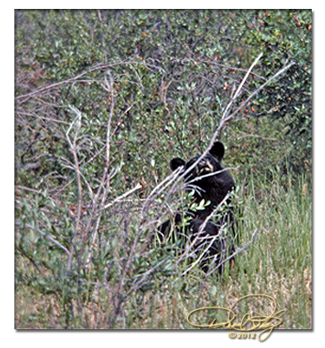
DRO-Bear eating berries outside Traverse City
A black bear near Traverse City eating summer berries
photo c. Dave Richey Outdoors ©2012
Are you a giver or a taker? It's a simple question that goes far beyond a one-word yes or no answer.

The bottom line here, in the event that this question may come as a big surprise to some of my faithful readers, is very simple. Do you take more from your fishing or hunting trips and your living area, than you put back?

The purchase of a fishing or a hunting license grants us nothing more than an opportunity to legally fish or hunt. It is a privilege but not a guaranteed right. It promises opportunities, not limit catch or a heavy game bag.


Anglers and hunters pay their way; What do others do; They take


In days of old, when knights were bold, the landowner owned the fish and game. They also owned the river water that flowed through their property, and Heaven help those pesky peasants who poached one of the king's red stags, a brown trout or Atlantic salmon.

The human population was far less 300 or more years ago than now, and peasants were kept in their places and ruled with an iron fist. People caught poaching were severely punished, and any fish or game they may have taken was confiscated.

Things are much different now. We have flowing springs, but bottled-water plants are tapping into the underground aquifers. They are taking water but putting nothing back. There are developers ready to quickly fill wetlands, and they operate on the premise that it's easier to say "I'm sorry" and ask for forgiveness later, if caught, than to ask for and be granted permission first.

These are trying times, and everyone wants and needs some outdoor recreation. We need to smell the roses, but what will happen when the roses stop growing?

What will happen when former trout streams become a mere trickle before drying up because a bottling plant has shipped our water out of state for corporate profit, and the trout have disappeared because bottlers have drained and sold our water? What about the ducks that once inhabited the wetlands or the bullfrogs that croaked all night

How many people are speaking out to state governors? Are you standing up to face big business, and asking the hard questions: Is sale of our water right?

What happens to Great Lakes water when Arizona, Nevada, New Mexico and Texas want our water? What will be done then? Hopefully, compacts already in place limit such water withdrawals but those who do not care are greedily trying to circumvent those laws.


What about urban sprawl in our area and car-choked streets


Who among us is speaking out about urban sprawl in the Traverse City area? Or near Charlevoix? Or in the Petoskey-Harbor Springs area? Cadillac is another area primed for a push from those who wish to move north to what they perceive as paradise in northern Michigan.

How many people are willing to take a few minutes from their busy lives to ask why? Why is state government allowing this to happen? Why are cities like Detroit becoming an empty maze of cluttered and unsafe streets, boarded up crack houses, and why have 1.2 million people fled Detroit over the past 20 years? Why is the same thing happening in Flint and other cities around this state?

When will we get rid of all the crooks in government? Books have been written about Kwame Kilpatrick, who followed the lead of former Detroit mayor Coleman Young. The city was just something to be looted for personal game. They caught Kilpatrick, tossed him in the clink, but whatever they do to crooked politicians isn't enough.

One needs to look no farther than some politicians. Consider Kwame Kilpatrick and his sordid text messages and political hi-jinks. He stacked some time in the can, but not nearly long enough for someone who profited while the city he was paid to protect teetered on the edge of death and total collapse, a city where crime runs rampant.

I ask: What will become of our open fields, marshlands, hardwoods and conifers that now provide cover for game and non-game animals and birds here in northern Michigan? Has anyone paid attention to the downsizing of Michigan's deer herd? The marked decrease in snowshoe hares and some game birds?

How about those rivers where salmon and trout were once plentiful? Those rivers don't support the same number of salmonids as they once did, and  they may never regain their great popularity as world-class steelhead waters.

What about our Department of Natural Resources, a state agency nearly as financially bankrupt as the entire state? When people lose their jobs in downstate factories, they often move north. Acre by acre, day after day, our land is being gobbled up, paved over and otherwise desecrated.

The answers are not nice but they are easy to answer. We're talking about an excessive loss of habitat. We're talking greedy businessmen. How, I wonder, can Exxon and other gas companies declare such huge profits for shareholders while the average person was breaking his back trying to stay afloat when gasoline was over $4 per gallon? We have Medicare programs that no one understands, and skyrocketing prescription drug prices. It's bureaucracy at its worst.


More people help increase the price of gas in some cases


Granted, what has happened in the past several years to our deer herd is not easy to cope with. But take a hard look at some of the problems.

Urban sprawl is eating away at land necessary for deer to live. People move north, buy five or 10 acres of paradise, and disrupt deer travel routes. Homes are built where deer crossed roads. As more people move in, buy land, the terrain becomes even more fragmented. The deer soon disappear to another area that has yet to be exploited.

People see bears where they've never been seen bruins before. The animals need a place to live, but humans have taken over. We own 20 acres we bought 30 years ago, and admit that we may have contributed to the problem. However, we did it long before the big push to move north came about. Traverse City was a nice and quaint northern town on the water.

Now, some surrounding areas harbor sex monsters in some of our local schools. Six such people were named in today's issue of the Traverse City Record-Eagle <record-eagle.com> . That is hardly anything for people in this area to be proud of. Five men and one woman have been charged for sex charges against students.

Deer numbers in our area are down so we hunt elsewhere when we can. Does this solve the problem? Of course not, it just puts a bit more hunting pressure on an area that hasn't felt the full force of land development like what has taken place around Traverse City.

Look at Traverse City today. It has the same types of problems as southern cities have faced for years. Drugs, embezzlement, rape, robbery, murder. We've got that whole bag of nastiness up here now, and paradise has lost most of its glitter and luster, but it still looks nicer than downstate so people keep coming back for another sample of the northern good life.

Twenty or 30 years from now, when Traverse City has expanded southeast past Kingsley, southwest to Thompsonville, northwest to fill the entire Leelanau Peninsula, and northeast to meet Charlevoix that is expanding southward, we'll have the same problems that people fled when they moved north from the downstate big cities.

The difference is people who move north bring excess baggage with them, and now they want this area to be like their home area once was. Folks, it doesn't happen that way.

When will people look around, see the slow but certain destruction of this area, and wonder how and why we let it happen? Of course, the answer is easy: we are too busy raising a family, pinching pennies because half our pay is a view of the bay, and if we live long enough, we'll learn that if we aren't part of the solution, then we must be part of an ever-growing problem.


Stupid bumper stickers like this are not needed here


Just yesterday, I saw a bumper sticker that stated how upset some people can be. It stated: Drain The Bay and Double Our Pay.

Meanwhile, paradise has been turned into another drug store chain, gas station, bank or a cement-carpeted parking lot. And one must look hard to find a rose to smell, a deer to see, or that wonderful silence at night when the northern lights sparkled in the heavens. Sorry folks, but the aurora borealis is hard to see through the glare of city lights.

The problem is people have taken what we deemed as ours and given nothing back. How sad is that?

How greedy are we? Many people should be ashamed of themselves. They've paved over paradise and turned it into a gigantic parking lot.

It's time for people to give something more back besides lip service.

Tuesday, June 19, 2012

Antlers: Beautiful headgear

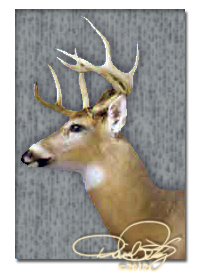
A buck with good mass is a sight to behold
photo Dave Richey ©2012
Granted, it’s only mid-June. A buck’s antlers are really starting to grow but we’ve got two months to go before we have any idea whether the buck will wear a small or wide rack
It's not that a basket-rack 8-point isn't pretty, because it most certainly is, but beauty is always in the eyes of the beholder. Some whitetail bucks simply have a great deal of class, and others do not. And now is the time to say it: what turns me on may not turn your crank.

Two things that make for a beautiful rack include overall mass and points. A buck with good mass is a sight to behold. Some people favor a typical rack, and they can be stunning with high points and a wide spread, but I really enjoy seeing a non-typical buck.

It’s a personal issue for most hunters, but for me, bucks that have antler bases that most bow hunters can't get their hand around are truly breathtaking. Such animals are old, and it’s the sheer massiveness of their antlers that makes us gasp in amazement.

Hunters all appreciate the majesty of a big rack of antlers.

Locating, and hunting nothing but one big buck, is one of bow hunting's greatest challenges. Finding the buck's home range is important, and then trying to pattern the animal can be a lengthy and time consuming effort, but when properly done and with some luck, the end result is a thing of wonder.

I will hunt any big buck I find. Some years are better for big bucks than others, but often I’ll locate at least one nice buck and sometimes I shoot him. A good buck avoided me two years ago, and the same happened again last fall when I fell off my back steps, but seeing a buck with that much mass and so many points, puts a fire in my belly.

Seeing the animal within bow range is the frosting on a bow hunter’s cake. Making a successful shot is nothing more than the icing on the cake.

I look for classy looking bucks. There is something about a symmetrical rack that is delightful to see, and there is something about those freaks of nature -- the non-typical -- that capture my attention as well. I also like really high racks as well.

Non-typical bucks have so much going on with their rack that it is difficult to make a really adequate assessment of size on short notice, and can lead to disappointment. I look for drop tines, kicker points, sticker points, out-of-balance racks with one side higher than the other. To me, deer with drop tines are really something special, especially if the drop point is long and/or thick.

One fairly common non-typical is one with double brow points on each side, and one look at such a buck gives the impression of Richard Nixon giving the peace sign with both hands. Double brows on one side are fairly common, and there are always a few bucks with double brow points on each side.  A fairly common non-typical may have a third main beam on one side but I’ve never seen one with two main beams on both sides.

A buddy saw a non-typical last year that was much higher on one side, had more points on that side, and he was an impressive looking animal even through his rack wouldn't have scored very high because the rack was so far out of balance.
There are a fair number of big, heavy, high and wide typical bucks that offer the viewer a huge thrill. These bucks have excellent mass, 10 or 12 points with very large G-2s and G-3s, a wide spread and there is little doubt among viewers that they are looking at a very special buck.
Most truly large-racked bucks are large bodied as well. The neck on some look as big around as a barrel. See one of these huge bucks, and the skin seems loose around the neck, and when the animal turns its head, the rolls of skin move with it.
Three-beamers have three main beams rather than two
photo Dave Richey ©2012

Good herd management give bucks more time to grow larger racks.

Time is the major reason why big bucks grow to such a large size. In reality, most hunters shoot the first buck with antlers they see. These 1 1/2-year-old bucks have tiny racks, and once they've been killed, there is never a chance for them to grow any larger.

Many hunters can feel free to disagree with me, but if most of us passed on these small bucks every year, and other hunters in the area did the same, within three years they would be seeing and shooting massive bucks.

Sportsmen who are content with shooting a small basket rack and continues  to shoot them, will never see a big-racked buck. Those who instead choose to shoot a doe are doing the right thing, but it's right only if everyone plays by the same rules. It is one reason why Quality Deer Management rules are effective; only large bucks qualify to be shot. That allows smaller bucks more time to grow high-quality racks.

Shooting a real trophy is a difficult thing to accomplish in this or any other state. One must either be very lucky or very good at hunting to pull off this trick more than once or twice during a lifetime of hunting.

And contrary to what the hosts of television hunting shows may say, a deer does not have horns. They have antlers, and they should know better.

Antlers begin growing in the spring before shedding the velvet and turning hard in the early autumn, Horns, such as those found on cattle and sheep, continue to grow through the life of the animal. There is no excuse for calling the headgear of whitetail deer by something can’t and don’t have. Deer have antlers, not horns.

Wednesday, January 25, 2012

My love of great outdoor writing

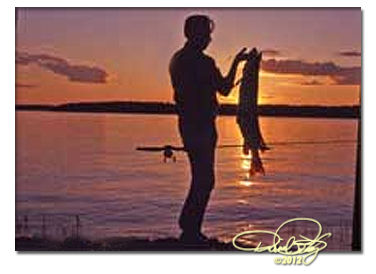
It doesn’t get any better than a big northern pike at sundown

outdoors-love

I've been in this outdoor writing business for 44 years, and over that period I've met most of the greatest outdoor writers of our time.
Men like ...
John Amber Erwin Bauer Havilah Babcock
Nash Buckingham Chuck Cadieux John Cartier
Gordie Charles Ben East Charlie Elliott
Corey Ford Ben Hur Lampman Nick Lyons
Gordon MacQuarrie John Madson Jack O'Conner
Edmund Ware Smith Norm Strung Robert Traver
Ted Trueblood Lamar Underwood Charley Waterman

and many others.

All had one thing in common: they loved the outdoors.

It wasn't so much they loved to kill fish or game, but they enjoyed being out there and matching wits with fish or game. Things were a good bit different in those bygone days. Outdoor writers wrote stories that people loved to read. The how-to or where-to stories weren't in vogue a half-century ago.

No knock on current outdoor writers but many of those in the 1950s were great

They called that earlier brand of writing "Me & Joe stories." If a reader read close he could spot some how-to and where-to stuff, but what gave these stories legs was the writers could pull the reader into the story and make them read it.

We felt as if we were hunting sheep with Jack O'Connor, catching big trout with Joe Brooks, shooting ducks or geese with Lynn Bogue Hunt or Van Campen Heilner. We hung on the words of Robert Ruark as he sat at the Old Man's knee and absorbed some of the wisdom that old-timers handed down to the young 'uns.

Corey Ford was another favorite back in the 1950s and 1960s, and his Tales of The Lower Forty were funny but also shared some fishing or hunting wisdom.

Ben East, who lived near Holly, Michigan, was a friend and I spent hours watching him work his red pencil magic over a manuscript, cutting and splicing, turning words of some wisdom into pearls of wisdom. I thoroughly enjoyed my many conversations with John Madson, and believed that few outdoor writers could match up.

He did a great deal of work for Winchester and the Olin Corporation, and he could make the ingredients of breakfast cereal read well. He was a master of turning phrases, of setting scenes, and of working his brand of literary magic on a story. When he finished, the piece was a gem.

Ben East and John Madson were two or the best wordsmiths

Madson was arguably the finest true outdoor writer of the mid-1900s, and we spent many hours together before his death. I have a healthy-sized stack of his letters, and a common letter from one buddy to another became a piece of art when Madson put his hand to it.

There seems to be something that has gone missing when an article just tells the reader how to catch fish or shoot deer, or even worse, where to do it. The old-time outdoor writers did all of that but they also told readers why they should do it.

They wrote from the heart. They invoked our five senses and said why they should be important to sportsmen, and they knew how to drag the reader into the story and leave them at the end wanting more. That's the sign of a truly good writer.

Outdoor magazines no longer have strong editors. I sold my first "Me and Joe" story to Outdoor Life magazine in 1970, and back then, editor Bill Rae was an editor. Editors below his lofty position could offer their opinion, but Rae was a one-man editorial staff. If he wanted a story, he got the story, and suffered no nonsense from junior editors.

I sold a number of stories to Bill Rae, and he happily bought them because I could give him what he wanted and what he knew his readers wanted to read. Now, it's different; there is such a thing as "editing by committee," which doesn't bode well for the writer because many editors don't know what they want. Many want two or three rewrites from a professional outdoor writer. Things have changed and not for the better.

I sell many fishing and hunting books, and some old outdoor magazines on my website Scoop's Books, and I figure if a book is a good read for me, it will probably appeal to many of my readers. I enjoy going back to some of the earlier writers, and although some of their copy was stilted at times, they knew how to grab the reader's attention.

My personal method writing outdoor copy is simple: inform and entertain

It's always been my intention to write from the heart: to drag readers into the story; to offer them something that is nearly impossible to find today in the how-to, where-to world of outdoor writing, and I'm not ashamed to admit to a mistake. I tweak my readers five senses, and they seem to enjoy it.

What comes through in my writing is a deep and abiding love of the outdoors and of fishing and hunting. I know our natural resources needs some restraints, and I know that being afield is part of why we go fishing or hunting.

We share the outdoors with other user groups, and those of us who love these outdoor pastimes, are perhaps the last of our breed. And just think: all of this rhetoric is about our respect for the fish and game we catch and kill, and a deep love for being outdoors.

And it has all come to pass because of another love. A love of reading is what makes the long wait between fishing and hunting trips bearable, and that is why so many people visit this site every day.

I may be the luckiest person of all because I have a deep urge to write what people want to read. And for that, I'm genuinely thankful for my many readers. Keep reading and I'll keep writing, and tell your friends, neighbors and relatives about my website.

I thank you, in advance, for that consideration.