Showing posts with label antlers. Show all posts

Tuesday, June 19, 2012

Antlers: Beautiful headgear

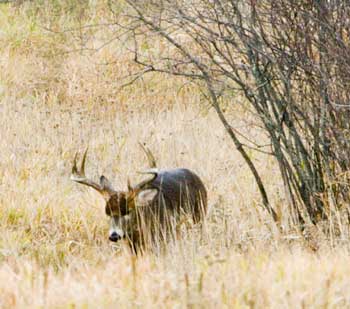
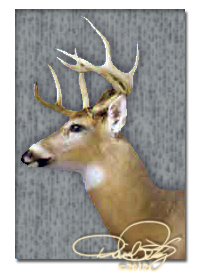
A buck with good mass is a sight to behold
photo Dave Richey ©2012
Granted, it’s only mid-June. A buck’s antlers are really starting to grow but we’ve got two months to go before we have any idea whether the buck will wear a small or wide rack
It's not that a basket-rack 8-point isn't pretty, because it most certainly is, but beauty is always in the eyes of the beholder. Some whitetail bucks simply have a great deal of class, and others do not. And now is the time to say it: what turns me on may not turn your crank.

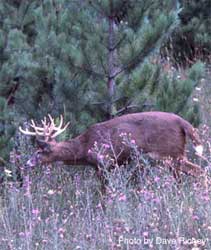
Two things that make for a beautiful rack include overall mass and points. A buck with good mass is a sight to behold. Some people favor a typical rack, and they can be stunning with high points and a wide spread, but I really enjoy seeing a non-typical buck.

It’s a personal issue for most hunters, but for me, bucks that have antler bases that most bow hunters can't get their hand around are truly breathtaking. Such animals are old, and it’s the sheer massiveness of their antlers that makes us gasp in amazement.

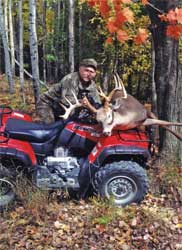
Hunters all appreciate the majesty of a big rack of antlers.

Locating, and hunting nothing but one big buck, is one of bow hunting's greatest challenges. Finding the buck's home range is important, and then trying to pattern the animal can be a lengthy and time consuming effort, but when properly done and with some luck, the end result is a thing of wonder.

I will hunt any big buck I find. Some years are better for big bucks than others, but often I’ll locate at least one nice buck and sometimes I shoot him. A good buck avoided me two years ago, and the same happened again last fall when I fell off my back steps, but seeing a buck with that much mass and so many points, puts a fire in my belly.

Seeing the animal within bow range is the frosting on a bow hunter’s cake. Making a successful shot is nothing more than the icing on the cake.

I look for classy looking bucks. There is something about a symmetrical rack that is delightful to see, and there is something about those freaks of nature -- the non-typical -- that capture my attention as well. I also like really high racks as well.

Non-typical bucks have so much going on with their rack that it is difficult to make a really adequate assessment of size on short notice, and can lead to disappointment. I look for drop tines, kicker points, sticker points, out-of-balance racks with one side higher than the other. To me, deer with drop tines are really something special, especially if the drop point is long and/or thick.

One fairly common non-typical is one with double brow points on each side, and one look at such a buck gives the impression of Richard Nixon giving the peace sign with both hands. Double brows on one side are fairly common, and there are always a few bucks with double brow points on each side.  A fairly common non-typical may have a third main beam on one side but I’ve never seen one with two main beams on both sides.

A buddy saw a non-typical last year that was much higher on one side, had more points on that side, and he was an impressive looking animal even through his rack wouldn't have scored very high because the rack was so far out of balance.
There are a fair number of big, heavy, high and wide typical bucks that offer the viewer a huge thrill. These bucks have excellent mass, 10 or 12 points with very large G-2s and G-3s, a wide spread and there is little doubt among viewers that they are looking at a very special buck.
Most truly large-racked bucks are large bodied as well. The neck on some look as big around as a barrel. See one of these huge bucks, and the skin seems loose around the neck, and when the animal turns its head, the rolls of skin move with it.
Three-beamers have three main beams rather than two
photo Dave Richey ©2012

Good herd management give bucks more time to grow larger racks.

Time is the major reason why big bucks grow to such a large size. In reality, most hunters shoot the first buck with antlers they see. These 1 1/2-year-old bucks have tiny racks, and once they've been killed, there is never a chance for them to grow any larger.

Many hunters can feel free to disagree with me, but if most of us passed on these small bucks every year, and other hunters in the area did the same, within three years they would be seeing and shooting massive bucks.

Sportsmen who are content with shooting a small basket rack and continues  to shoot them, will never see a big-racked buck. Those who instead choose to shoot a doe are doing the right thing, but it's right only if everyone plays by the same rules. It is one reason why Quality Deer Management rules are effective; only large bucks qualify to be shot. That allows smaller bucks more time to grow high-quality racks.

Shooting a real trophy is a difficult thing to accomplish in this or any other state. One must either be very lucky or very good at hunting to pull off this trick more than once or twice during a lifetime of hunting.

And contrary to what the hosts of television hunting shows may say, a deer does not have horns. They have antlers, and they should know better.

Antlers begin growing in the spring before shedding the velvet and turning hard in the early autumn, Horns, such as those found on cattle and sheep, continue to grow through the life of the animal. There is no excuse for calling the headgear of whitetail deer by something can’t and don’t have. Deer have antlers, not horns.

Monday, June 04, 2012

Big buck but no shot

big buck
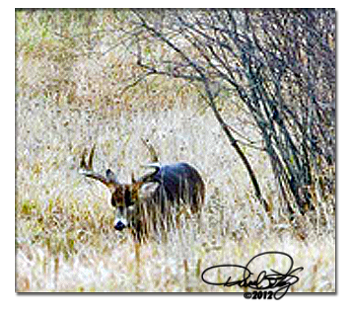
Big bucks require more patience than many hunters think
The big buck appeared like a ghost from a bad dream. One minute there was nothing nearby, and the next found me looking at a 150-class whitetail buck.

This was three years ago, and he was 75 yards away, moving in my general direction through the fringe of a swampy wooded area. He moved slowly and cautiously, the way big bucks do once they've been shot at.

This big boy was an old buck, and I saw him once the year before but such thoughts often leave something to the imagination. My guess was he was 5 1/2 years old, and had survived this long by being smarter than the average buck and the average bow hunter.


OK, so it’s almost summer; I still relive some of my big-buck dreams


He tested the wind constantly, stood for long minutes checking things out before committing to a move, and I knew where he was heading. A nearby corn field had been half picked, and the owner hoped to get all of the field harvested before the predicted weekend rain fell.

The buck nosed the ground, following the track made by an unseen deer for 10 yards before turning back on his course toward the corn. At this pace, it would reach the dinner table just after dark.

The question was whether he would reach me or pass out of range through marsh grass and scrub brush before shooting time ended. A doe came squirting out of the marsh grass, moving away from the buck. The rut was in full-drive; she was nervous; but he didn't pursue her.

His intentions seemed quite clear: reach the corn field right at dark, feed, terrorize the younger bucks and young does, and be back bedded down before daylight broke across the land.

He kept coming, and was soon 60 yards away.  I've shot many bucks over the years, but this one was too grand an animal to try such an unwarranted shot in fairly thick cover. I never shoot at a buck that I'm not 100 percent confident of killing.

My bow was in my hand, and this was the largest buck I'd seen lately, but he would either come close enough for a slam-dunk easy shot or he'd continue on about his business out of bow range.

He eventually reached the edge of thick cover, and would move through more open upland woods ... if he stayed his course. He would move out of the heavy cover and into the open, and then duck back in the cover, zigzagging ever closer to me.

He minced along like he had sore feet, and stopped every few steps. He was now 35 yards away, but still in heavy cover when his heavy white antlers could be seen. In fact, it was one glimpse of white antlers going up and down as he rubbed a tree that first caught my attention.


Patience, it’s been preached, is one key to autumn success


The wind was swinging a bit from north to northwest, and then he turned and seemed to move closer toward me. That turned out to be an illusion as he walked around a wind-toppled tree.

My watch showed there was  but 10 minutes of shooting time left, and he was now at 30 yards but still five yards inside thick cover. The suspense continued to build with each step he took, and the big question was whether he would start sliding toward the more open part of the funnel or stay back where it was thick.

I'd shot a number of bucks from this spot, and all of them had walked into the thin part of the cover. One spot offered a 20-yard open shot but he was still 25 yards from it.

The clock was ticking, and even though I've shot bucks at this distance over many years, each one is a new adventure. Honestly, the wait is an adrenaline-filled rush. He stepped forward, almost to the edge of the thin cover, and I'm glancing at my watch.

There was five minutes left, and two more steps would put him into the natural opening where I'd have an easy broadside shot. He put his head down, rocked on his feet, but didn't move forward.

My bow was up, and I was ready to draw, but still he stood, rooted in one spot. And he was still standing there, two steps from a clean shot, when shooting time ran out.

He was so close, and yet so far away, and he stood there for 10 more minutes before moving on toward the corn field. It was a wonderful hunt, filled with heart-pounding excitement right up until the end, and after he moved off, I headed home.

Knowing that buck is there was important. I never shot him, but I never heard that anyone did shoot him. I will hunt him again. He is too big to ignore but one wonders. Bucks in this area are like circuit-riding preachers from the Old West, and there is always the troubling thought of never seeing him again.


We never know when a big buck will appear but we must be ready


Time will tell. If I never see him again, I'll feel blessed to have seen him once on one snowy November day. And sometimes, as hunters, we must be content with these little teases.

Now, it's important to wait for the next one. And that, my friends, is one big reason why hunting big bucks is fun. We don't always connect, but to have these experiences tells us we're doing something right. Now I must reposition a tree stand a bit closer to the heavy cover in hopes the deer decides to move just a bit earlier.

One can always hope.

Friday, November 18, 2011

Big buck but no shot

Big bucks often catch a break 
by veering away from a hunter.


The big buck appeared like a ghost from a bad dream. One minute there was nothing nearby, and the next found me looking at a 140-class whitetail buck.

He was 75 yards away, moving in my general direction through the fringe of a swampy wooded area. He moved slowly and cautiously, the way big bucks do once they've been shot at.

This big boy was an old buck, and I saw him once the year before but such thoughts often leave something to the imagination. My guess was that he was 5 1/2 years old, and had survived this long by being smarter than the average buck.

Instincts play a major role in keeping big bucks safe.


He tested the wind constantly, stood for long minutes checking things out before committing to a move, and I knew where he was heading. A nearby corn field had been half picked, and the owner hoped to get all of the field harvested before the predicted weekend rain fell.

The buck nosed the ground, following the track made by an unseen deer for 10 yards before turning back on his course toward the corn. At this pace, it would reach the dinner table just after dark.

The question was whether he would reach me or pass out of range through marsh grass and scrub brush before shooting time ended. A doe came squirting out of the marsh grass, moving away from the buck. The rut was in full-drive, but she was nervous but he didn't pursue her.
His intentions seemed quite clear: reach the corn field right at dark, feed, terrorize the younger bucks and young does, and be back bedded down before daylight broke across the land.

He kept coming, and was soon 60 yards away. I've shot many bucks over the years, but this one was too grand an animal to try such an unwarranted shot in fairly thick cover. I never shoot at a buck that I'm not 100 percent confident of killing.

My bow was in my hand, and this was the largest buck I'd seen lately, but he would either come close enough for a slam-dunk easy shot or he'd continue on about his business.

He eventually reached the edge of thick cover, and would move through more open upland woods ... if he stayed his course. He would move out of the heavy cover and into the open, and then duck back in the cover, zigzagging ever closer to me.

He minced along like he had sore feet, and stopped every few steps. He was now 35 yards away, but still in heavy cover when his heavy white antlers could be seen. In fact, it was one glimpse of white antlers going up and down as he rubbed a tree that first caught my attention.

The wind was swinging a bit from north to northwest, and then he turned and seemed to move closer toward me. That turned out to be an illusion as he walked around a wind-toppled tree.

Sometimes bucks offer shots but are too far away. I don't take them.


My watch showed there was but 10 minutes of shooting time left, and he was now at 30 yards but still five yards inside thick cover. The suspense continued to build with each step he took, and the big question was whether he would start sliding toward the more open part of the funnel or stay back where it was thick.

I'd shot a number of bucks from this spot before, and all of them had walked into the thin part of the cover. One spot offered a 20-yard open shot but he was still 25 yards from it.

The clock was ticking, and even though I've shot bucks at this distance over many years, each one is a new adventure. Honestly, the wait is an adrenalin-filled rush. He stepped forward, almost to the edge of the thin cover, and I'm glancing at my watch.

There was five minutes left, and two more steps would put him into the opening where I'd have an easy broadside shot. He put his head down, rocked on his feet, but didn't move forward.

My bow was up, and I was ready to draw, but still he stood, rooted in one spot. And he was still standing there, two steps from a clean shot, when shooting time ran out.

Legal shooting time had ended without me shooting.


He was so close, and yet so far away, and he stood there for 10 more minutes before moving on toward the corn field. It was a wonderful hunt, filled with heart-pounding excitement right up until the end, and after he moved off, I headed home.

Knowing that buck is there is important. I may or may not shoot him, but I will hunt him again. He is too big to ignore but one wonders. Bucks in this area are like circuit-riding preachers from the Old West, and there is always the troubling thought of never seeing him again.
Time will tell. If I never see him again, I'll feel blessed to have seen him once on a snowy November day.

Friday, March 04, 2011

Looking for shed antlers

The author found two shed antlers the other day. It’s a fun winter thing to do.

We've been picking up shed antlers lately, and most of them are being found near food sites. We've found shed antlers up until this past heavy snowfall. but as the snow starts to settle more with slightly warming temperatures, we’ll be going again soon.

Areas where tree limbs fall along the edge of our food plots are good places to look. Last fall and early winter the bucks would stick their heads in under overhanging branches or under limbs laying on the ground to get at the forage. Depending on how advanced the stage is of antler separation from the skull, any quick move or a brushing of a loose antler against a branch can knock it off.

Antlers often fall off, but it's somewhat like a kid with a loose baby tooth, the buck can tell how loose it is. Often they will intentionally hook a branch or hit it against a tree trunk, and off it comes.

Shed hunting is a fun way to spend a late-winter weekend.

It doesn't always happen but seldom will both antlers be found near each other. Often they are some distance apart, and in some cases, the two antlers may be a quarter- or half-mile from each other. It makes it difficult to tell if the two sheds came from the same animal unless you have some great trail camera photos.

Hunting sheds is great fun but if the weather is moderate like it was a week ago, and most of the snow is gone, wandering porcupines are quick to find antlers and begin gnawing on them for the calcium and other trace minerals they contain. Mice also nibble on antlers, and it's one reason why many hunters start looking for sheds during the so-called January thaw. In this case, a February or early March thaw with little snow is an excellent time to look.

The two hotspots to check are bedding areas and feeding areas. Some sheds can and will be found along trails that connect the two sites, but we find many sheds in those two primary locations. Field edges are another good bet as well as thick cedar swamps.

The trick is to walk slowly through these areas, and look for a light-colored object that looks out of place. Shed hunters very seldom will see the entire antler: often just one tine or even the base will be found sticking up out of the forest or grassy duff.

It if is light-colored, check it out. It may be a tiny patch of lingering snow or it could be a large antler shed. I've found many in the spring, but these midwinter thaws allow hunters to spot antlers much easier.

I've found a few sheds near old rubs on a tree, but not very often. Look  in heavy cover, look near old food plots, check out areas near the tops of cut or fallen trees, bedding areas and along heavily traveled trails. Don't rush the process, but take your time looking.

Shed hunting is somewhat similar to hunting morel mushrooms. Travel and look in just one direction, and you'll miss many sheds.

Don’t look for a whole antler. Instead, look for a piece sticking up out of the snow.

Instead, walk 20 feet, stop, look around, and then do a 180-degree turn, and look back and to both sides. Often a shed antler that cannot be seen from one direction, can be spotted when viewed from a different direction.

Shed antlers are indicative of the quality of animals found in your area. Often, the small sheds are quite easily found if your area produces predominantly small bucks. However, if an occasional big buck is seen frequenting croplands or woodland bait sites, that deer may live in the nearby area and may drop his antlers where they can be found.

Most bucks have shed their antlers already although there always are a few bucks around the state still wearing their headgear now. Shed hunting is fun, and if a hunter does it at the right time and in the right place, they may find a buck's antlers of an animal they didn't know existed.

Give it a try. It's much more fun that cleaning the basement or garage on weekends.

Posted via email from Dave Richey Outdoors

Thursday, March 03, 2011

Looking for shed antlers


The author found two shed antlers the other day. It’s a fun winter thing to do.


We've been picking up shed antlers lately, and most of them are being found near food sites. We've found shed antlers up until this past heavy snowfall. but as the snow starts to settle more with slightly warming temperatures, we’ll be going again soon.

Areas where tree limbs fall along the edge of our food plots are good places to look. Last fall and early winter the bucks would stick their heads in under overhanging branches pr under limbs laying on the ground to get at the forage. Depending on how advanced the stage is of antler separation from the skull, any quick move or a brushing of a loose antler against a branch can knock it off.

Antlers often fall off, but it's somewhat like a kid with a loose baby tooth, the buck can tell how loose it is. Often they will intentionally hook a branch or hit it against a tree trunk, and off it comes.

Shed hunting is a fun way to spend a late-winter weekend.


It doesn't always happen but seldom will both antlers be found near each other. Often they are some distance apart, and in some cases, the two antlers may be a quarter- or half-mile from each other. It makes it difficult to tell if the two sheds came from the same animal unless you have some great trail camera photos.

Hunting sheds is great fun but if the weather is moderate like it was a week ago, and most of the snow is gone, wandering porcupines are quick to find antlers and begin gnawing on them for the calcium and other trace minerals they contain. Mice also nibble on antlers, and it's one reason why many hunters start looking for sheds during the so-called January thaw. In this case, a February or early March thaw with little snow is an excellent time to look.

The two hotspots to check are bedding areas and feeding areas. Some sheds can and will be found along trails that connect the two sites, but we find many sheds in those two primary locations. Field edges are another good bet as well as thick cedar swamps.

The trick is to walk slowly through these areas, and look for a light-colored object that looks out of place. Shed hunters very seldom will see the entire antler: often just one tine or even the base will be found sticking up out of the forest or grassy duff.

It if is light-colored, check it out. It may be a tiny patch of lingering snow or it could be a large antler shed. I've found many in the spring, but these midwinter thaws allow hunters to spot antlers much easier.

I've found a few sheds near old rubs on a tree, but not very often. Look  in heavy cover, look near old food plots, check out areas near the tops of cut or fallen trees, bedding areas and along heavily traveled trails. Don't rush the process, but take your time looking.

Shed hunting is somewhat similar to hunting morel mushrooms. Travel and look in just one direction, and you'll miss many sheds.

Don’t look for a whole antler. Instead, look for a piece sticking up out of the snow.


Instead, walk 20 feet, stop, look around, and then do a 180-degree turn, and look back and to both sides. Often a shed antler that cannot be seen from one direction, can be spotted when viewed from a different direction.

Shed antlers are indicative of the quality of animals found in your area. Often, the small sheds are quite easily found if your area produces predominantly small bucks. However, if an occasional big buck is seen frequenting croplands or woodland bait sites, that deer may live in the nearby area and may drop his antlers where they can be found.

Most bucks have shed their antlers already although there always are a few bucks around the state still wearing their headgear now. Shed hunting is fun, and if a hunter does it at the right time and in the right place, they may find a buck's antlers of an animal they didn't know existed.

Give it a try. It's much more fun that cleaning the basement or garage on weekends.

Posted via email from Dave Richey Outdoors

Thursday, February 17, 2011

Antlers: Bones of beauty


12-point; wide & heavy. 3-beamer buck.


It's not that a basket-rack 8-point isn't pretty, because it most certainly is, but beauty is always in the eyes of the beholder. Some whitetail bucks simply have a great deal of class, and others do not.

Two things that make for a beautiful rack are overall mass and points. A buck with tremendous mass is a sight to behold. They are awe-inspiring portrayals of nature’s handiwork. Some people favor a typical rack, and they can be absolutely stunning with high points and a wide spread, but I really enjoy seeing nontypical bucks.

It’s a personal choice for most hunters, but for me, bucks that have antler bases that most bow hunters can't get their hand around are truly breathtaking. Such animals are old, up to about 7 ½ years old, and it’s the sheer massiveness of antlers on its head that makes us gasp in amazement.

Hunters all appreciate the majesty of a big rack of antlers.


Locating, and hunting nothing but one big buck, is one of bow hunting's greatest challenges. It’s not easy tp find a buck's home range, and then trying to pattern the animal can be a lengthy and time-consuming effort, but when properly done, the end result is a thing of wonder.

I will hunt any big buck I find. Some years are better for big bucks than others, but often I’ll locate at least one nice buck and sometimes I will shoot him while other times I will not. One avoided me two years ago, and the same happened again last fall when I fell off my back steps, but seeing a buck with that much mass and so many points, puts a fire in my belly. It’s much like football, for instance: it’s not whether you win or lose, but about how you play the game. This is a one-on-one hunt.

Seeing the animal within bow range is the first taste of the bow hunter’s cake. Making a successful shot is nothing more than the icing on the cake.

I look for classy looking bucks. There is something about a symmetrical rack that is delightful to see, and there is something about those freaks of nature -- the non-typicals -- that capture my attention as well. I also like really high racks as well.


A buck on the prowl looking for an estrus doe


The non-typicals have so much going on with their rack that it is difficult to make a really adequate assessment of size unless a person can study the antlers from all four sides for a length of time. I look for drop tines, kicker points, sticker points, out-of-balance racks with one side higher than the other. To me, deer with drop tines are really something to see, especially if the drop point is long and/or thick.

One fairly common non-typical is one with double brow points on each side, and one look at such a buck gives the impression of Richard Nixon giving the peace sign with both hands. Double brows on one side are fairly common, and there are always a few bucks with double brow points on each side. A fairly common non-typical may have a third main beam on one side but I’ve never seen one with two main beams on each side.

Three-beamers have three main beams rather than two.


One of my buddies saw a nontypical last year that was much higher on one side, had more points on that side, and he was an impressive looking animal even through his rack wouldn't have scored very high because the rack was too far out of balance. It would have too many deduction points to rank very high.

There are a fair number of big, heavy, high and wide typical bucks that offer the viewer a huge thrill. These bucks have excellent mass, 10 or 12 points with very large G-2s and G-3s, a wide spread and there is little doubt among viewers that they are looking at a very special buck.


A photographer buddy -- Dennis Buchner of Grawn, Michigan -- shoots bird and deer photos. Last year he was cruising, and saw a massive 10-point stand up in marsh grass and run into the open woods. The rack on this buck was truly impressive, but there is even more to it than that.

Most truly large-racked bucks are large bodied as well. The neck on some of them looks as big around as a barrel. See one of these huge bucks, and the skin seems loose around the neck, and when the animal turns its head, the rolls of skin move with it.

Herd management give bucks more time to grow bigger racks.


A heavy buck left and a nice winter buck on right.


Time is the major reason why big bucks grow to such a large size. In reality, most hunters shoot the first buck with antlers they see. These 1 1/2-year-old bucks have tiny racks, and once they've been killed, there is never a chance for them to grow any larger.

Many hunters can feel free to disagree, but if most of them passed on these small bucks every year, and other hunters in the area did the same, within three years they would be wondering where all the massive bucks had come from.

Sportsmen who are content with shooting a small basket rack and continue shooting them, will never see a big-racked buck. Those who choose to shoot a doe are doing the right thing, but it's right only if everyone plays by the same rules on a level playing field. It’s one reason why Quality Deer Management rules are effective; only large bucks qualfy to be shot. That allows smaller bucks more time to grow a large quality rack.

Shooting a real trophy is a difficult thing to accomplish in this or any other state. One must either be very lucky or very good at hunting to pull off this trick more than once or twice in a lifetime.


And contrary to what the hosts of television hunting shows say, a deer does not have horns. They have antlers, and they should know better than to call antlers “horns” on television.


Antlers begin growing in the spring before shedding the velvet and turning hard bone in the early autumn. Horns, such as those found on cattle and sheep, continue to grow through the life of the animal. There is no excuse for calling the headgear of whitetail deer by something they can’t and don’t have. Deer have antlers, not horns. I hope that clear up any misunderstanding.
Saturday, December 04, 2010

The buck’s revenge


This buck later gored me in the head as I hung the mount.


My taxidermist had just delivered mounts of both whitetail bucks I shot a few years ago. One was a beautiful typical 8-point that was taken on Oct. 2 at 10 paces with an arrow through the heart and lungs.

The other buck was a 9-point taken late in the firearm season. He had two antler tines broken halfway off during a rutting fight, and one beam had the beginning of what would have made him a 10-point if it hadn't quit growing.

I was particularly proud of the 8-point. It is a lovely rack, and we determined it would look best if hung low (about head-high) on the wall. But, we reached that conclusion only after we tried hanging him high on the wall.

It was one of those times when I should have known better … but didn’t.


A wobbly short stepladder was used, and I had to reach up over my head and hang the mount on a sturdy nail pounded into a stud. After it was hung, we both decided the buck had to be hung lower to show off his rack to its best effect.

There was no cure for it but to scale the wobbly ladder again, stretch way up on my tippy-toes, lift the head off the nail. All good plans, but my balance is bad from my one-eye vision, and just as the mount came off the nail, I began losing my balance.

One hand held the mount by one antler, and as I wobbled around in an effort to keep from falling, the rack spun in my hand. This deer had it in for me for shooting him while he sparred with a 10-point buck.

The buck took some revenge on me while off-balance,


The rack pivoted around, and the G-2 on the opposite side swung and dug a small divot out of my scalp. I muttered, struggled for balance, and Kay was there to grab the mount before I fell and impaled myself on his tines.

I climbed down off the ladder, rubbing my head, and we proceeded to find another location where the deer could be hung lower, show off his spread and tine length to better advantage. He was hung up there, and we stepped back to admire him. Perfect!

The 9-pointer was mounted with his ears back and in an aggressive looking mood. He could go up higher on the wall, but first I was going out to the garage and get a taller ladder so I'd have better control over the mount.

Up I went like an arthritic old squirrel. Kay handed up the mount, and I messed around for five minutes before I could get the nail in the mounting hole. Then, Kay stood across the room offering instructions.

"Move the bottom of the mount to your left," she advised. "No, another two inches to the left. Uh, another inch. Nope, one more inch. That's it."

Me, ladders and mounted critters have always had an odd relationship.


I climbed down off the stepladder, and my head hurt a bit. I rubbed it, and my fingers came away bloody. The antler tine had scraped my scalp and broke the skin.

My head was rubbed a few times, and slowly the bleeding had stopped. The two shoulder mounts had been hung in place, jiggled around until they offered the best view, and we straightened up the furniture.

We stood back, studying both racks, and it was a done deal. Both animals remind me of when each one was taken. The 9-pointer had come out of some tag alders, and was walking across the field at 5 p.m., and his ears were laid back and his neck hairs were sticking up.

He was spoiling for a fight, and the two antler tines that were half broken off, may have felt like a toothache. One shot from Kay's .243 Thompson/Center rifle had anchored him on the spot.

That season had been a good one. It was just about a year to the day though when we started to hang both mounts.

A slip of my grip, and a moment of being off-balance, was enough for the 8-pointer to peel my scalp. That deer ultimately got his revenge.

Somehow the whole experience seems fitting and a bit funny. I thought perhaps you might enjoy hearing about how a buck knocked me around.

Posted via email from Dave Richey Outdoors

Wednesday, September 22, 2010

An itch that needs scratching


A few of my friends have bet me with a friendly verbal wager that they would shoot a buck that night. I'd prod them a bit, and ask just how certain they were that a good buck would fall to their well-placed arrow.

Those that were staunch in their belief said they could feel it in their bones. Now me, feeling something in my bones usually means a touch of arthritis is acting up or a low-pressure storm is coming.

They continued to plunge on saying the wind was right, they were planning to hunt such and such a ground blind or tree stand. They had this dream developing in their mind, and I wasn't about to try to sway their thoughts.

Too many thoughts about killing can ruin a hunt.

We still have about 10 days before the archery bow season opens on Oct. 1, and a lot can happen between then and now. For some, their level of anticipation keeps rising to the point where it’s possible they would be too geeked to shoot straight.

Off they would go on opening day, a big grin of anticipation on their face. Over many years of hunting whitetail bucks, more often than not, a hunter with a no-fail plan will be the first to fold his tent when the deer go elsewhere.

It's my nature to let them natter on and on, and if they ask for my opinion, I offer it for what it is worth. Some pay attention, and others just fritter away a morning or evening of hunting without ever being within 100 yards of a buck.

Deer operate on instincts, and getting too hyped up in advance can make a hunter careless.  In their rush to get settled into the stand, something falls out of their pocket and is left laying on the ground where every nearby deer will see or smell it. They may not pay enough attention to the wind or their drifting scent.

Their giddy mood often makes them a bit antsy. The beat goes on, running through their brain, and in breathless anticipation of the shot they know is coming, their toes are tapping the stand in time with the thoughts paying in their head.

A buck stands back in the brush, hears a faint sound, and eventually the animal locates the noise high in a cedar, pine or oak, and heads off to visit his girlfriend 300 yards in the other direction.

Or, our hero sits in the tree, looking a bit southwest with binoculars to his eyes, scanning the terrain for a buck. Every so often, sunlight will glint off the lens and sent a flash of light on its way. A deer that looks up just in time to see that flash of light will be suspicious and approach that area with extreme caution, if at all.

Solid planning mean knowing buck movement rather than guessing.

Sometimes the buck does show, and after hours of dreaming of a close and deadly shot, the bow hunter becomes all fumble-fingered, and creates too much movement as he prepares for a shot. Or, he turns slightly in the stand for a close shot, and something falls out of his pocket and goes clattering across the stand floor or platform.

It could be a wallet or anything. The bow limb could rub against the tree, and some bark or pine needles could go drifting to the ground. A sharp-eyed buck may spot the falling duff, possibly wondering why he'd never seen it happen in that spot before, and before we know it, the buck is two fields away and still running, scared plumb out of his wits.

These things happen. I've learned never to predict a buck at the end of my hunting day. First of all, I'd have to see one I wanted to shoot, and that never happens on a daily basis.

I do believe in being optimistic. Feeling confident is much different than almost bragging about a buck that may not come within two miles of the hunter.

Being optimistic is far better than being pessimistic.

Respect for the animals we hunt is important. It's far more important than bragging about an animal that as yet has not been shot. It may be time for some hunters to critically analyze the reasons why they hunt, and those who have true convictions, hunt for the sake of hunting.

Killing a buck proves very little other than the hunter was in the right place at the right time, and made a good shot. That is seldom enough to make their well-made plans come true.

Posted via email from Dave Richey Outdoors

An itch that needs scratching


A few of my friends have bet me with a friendly verbal wager that they would shoot a buck that night. I'd prod them a bit, and ask just how certain they were that a good buck would fall to their well-placed arrow.

Those that were staunch in their belief said they could feel it in their bones. Now me, feeling something in my bones usually means a touch of arthritis is acting up or a low-pressure storm is coming.

They continued to plunge on saying the wind was right, they were planning to hunt such and such a ground blind or tree stand. They had this dream developing in their mind, and I wasn't about to try to sway their thoughts.

Too many thoughts about killing can ruin a hunt.

We still have about 10 days before the archery bow season opens on Oct. 1, and a lot can happen between then and now. For some, their level of anticipation keeps rising to the point where it’s possible they would be too geeked to shoot straight.

Off they would go on opening day, a big grin of anticipation on their face. Over many years of hunting whitetail bucks, more often than not, a hunter with a no-fail plan will be the first to fold his tent when the deer go elsewhere.

It's my nature to let them natter on and on, and if they ask for my opinion, I offer it for what it is worth. Some pay attention, and others just fritter away a morning or evening of hunting without ever being within 100 yards of a buck.

Deer operate on instincts, and getting too hyped up in advance can make a hunter careless.  In their rush to get settled into the stand, something falls out of their pocket and is left laying on the ground where every nearby deer will see or smell it. They may not pay enough attention to the wind or their drifting scent.

Their giddy mood often makes them a bit antsy. The beat goes on, running through their brain, and in breathless anticipation of the shot they know is coming, their toes are tapping the stand in time with the thoughts paying in their head.

A buck stands back in the brush, hears a faint sound, and eventually the animal locates the noise high in a cedar, pine or oak, and heads off to visit his girlfriend 300 yards in the other direction.

Or, our hero sits in the tree, looking a bit southwest with binoculars to his eyes, scanning the terrain for a buck. Every so often, sunlight will glint off the lens and sent a flash of light on its way. A deer that looks up just in time to see that flash of light will be suspicious and approach that area with extreme caution, if at all.

Solid planning mean knowing buck movement rather than guessing.

Sometimes the buck does show, and after hours of dreaming of a close and deadly shot, the bow hunter becomes all fumble-fingered, and creates too much movement as he prepares for a shot. Or, he turns slightly in the stand for a close shot, and something falls out of his pocket and goes clattering across the stand floor or platform.

It could be a wallet or anything. The bow limb could rub against the tree, and some bark or pine needles could go drifting to the ground. A sharp-eyed buck may spot the falling duff, possibly wondering why he'd never seen it happen in that spot before, and before we know it, the buck is two fields away and still running, scared plumb out of his wits.

These things happen. I've learned never to predict a buck at the end of my hunting day. First of all, I'd have to see one I wanted to shoot, and that never happens on a daily basis.

I do believe in being optimistic. Feeling confident is much different than almost bragging about a buck that may not come within two miles of the hunter.

Being optimistic is far better than being pessimistic.

Respect for the animals we hunt is important. It's far more important than bragging about an animal that as yet has not been shot. It may be time for some hunters to critically analyze the reasons why they hunt, and those who have true convictions, hunt for the sake of hunting.

Killing a buck proves very little other than the hunter was in the right place at the right time, and made a good shot. That is seldom enough to make their well-made plans come true.

Posted via email from Dave Richey Outdoors