Showing posts with label excitement. Show all posts

Monday, June 04, 2012

Big buck but no shot

big buck
Big bucks require more patience than many hunters think
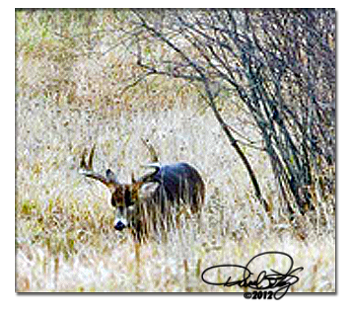
The big buck appeared like a ghost from a bad dream. One minute there was nothing nearby, and the next found me looking at a 150-class whitetail buck.

This was three years ago, and he was 75 yards away, moving in my general direction through the fringe of a swampy wooded area. He moved slowly and cautiously, the way big bucks do once they've been shot at.

This big boy was an old buck, and I saw him once the year before but such thoughts often leave something to the imagination. My guess was he was 5 1/2 years old, and had survived this long by being smarter than the average buck and the average bow hunter.


OK, so it’s almost summer; I still relive some of my big-buck dreams


He tested the wind constantly, stood for long minutes checking things out before committing to a move, and I knew where he was heading. A nearby corn field had been half picked, and the owner hoped to get all of the field harvested before the predicted weekend rain fell.

The buck nosed the ground, following the track made by an unseen deer for 10 yards before turning back on his course toward the corn. At this pace, it would reach the dinner table just after dark.

The question was whether he would reach me or pass out of range through marsh grass and scrub brush before shooting time ended. A doe came squirting out of the marsh grass, moving away from the buck. The rut was in full-drive; she was nervous; but he didn't pursue her.

His intentions seemed quite clear: reach the corn field right at dark, feed, terrorize the younger bucks and young does, and be back bedded down before daylight broke across the land.

He kept coming, and was soon 60 yards away.  I've shot many bucks over the years, but this one was too grand an animal to try such an unwarranted shot in fairly thick cover. I never shoot at a buck that I'm not 100 percent confident of killing.

My bow was in my hand, and this was the largest buck I'd seen lately, but he would either come close enough for a slam-dunk easy shot or he'd continue on about his business out of bow range.

He eventually reached the edge of thick cover, and would move through more open upland woods ... if he stayed his course. He would move out of the heavy cover and into the open, and then duck back in the cover, zigzagging ever closer to me.

He minced along like he had sore feet, and stopped every few steps. He was now 35 yards away, but still in heavy cover when his heavy white antlers could be seen. In fact, it was one glimpse of white antlers going up and down as he rubbed a tree that first caught my attention.


Patience, it’s been preached, is one key to autumn success


The wind was swinging a bit from north to northwest, and then he turned and seemed to move closer toward me. That turned out to be an illusion as he walked around a wind-toppled tree.

My watch showed there was  but 10 minutes of shooting time left, and he was now at 30 yards but still five yards inside thick cover. The suspense continued to build with each step he took, and the big question was whether he would start sliding toward the more open part of the funnel or stay back where it was thick.

I'd shot a number of bucks from this spot, and all of them had walked into the thin part of the cover. One spot offered a 20-yard open shot but he was still 25 yards from it.

The clock was ticking, and even though I've shot bucks at this distance over many years, each one is a new adventure. Honestly, the wait is an adrenaline-filled rush. He stepped forward, almost to the edge of the thin cover, and I'm glancing at my watch.

There was five minutes left, and two more steps would put him into the natural opening where I'd have an easy broadside shot. He put his head down, rocked on his feet, but didn't move forward.

My bow was up, and I was ready to draw, but still he stood, rooted in one spot. And he was still standing there, two steps from a clean shot, when shooting time ran out.

He was so close, and yet so far away, and he stood there for 10 more minutes before moving on toward the corn field. It was a wonderful hunt, filled with heart-pounding excitement right up until the end, and after he moved off, I headed home.

Knowing that buck is there was important. I never shot him, but I never heard that anyone did shoot him. I will hunt him again. He is too big to ignore but one wonders. Bucks in this area are like circuit-riding preachers from the Old West, and there is always the troubling thought of never seeing him again.


We never know when a big buck will appear but we must be ready


Time will tell. If I never see him again, I'll feel blessed to have seen him once on one snowy November day. And sometimes, as hunters, we must be content with these little teases.

Now, it's important to wait for the next one. And that, my friends, is one big reason why hunting big bucks is fun. We don't always connect, but to have these experiences tells us we're doing something right. Now I must reposition a tree stand a bit closer to the heavy cover in hopes the deer decides to move just a bit earlier.

One can always hope.

Tuesday, March 09, 2010

Testing river waters for steelhead

Steelhead fishing has been my addictive passion for more than 55 years. Give me four or five days of snow-melt temperatures, and a forecast of two or more days of rain, and there's only one thought that goes through my head at this time of year.

It's time to think strongly about hitting the river. One might ask where. Pick any stream, but those larger rivers with a dam and a constant stream flow, may be the best of all. Some good bets this week and over the weekend could be on rivers such as the AuSable, Betsie, Boardman, Manistee, Muskegon and St. Joseph. Many anglers concentrate their efforts in those river stretches just below the dam.

Why? Easy answer. Any steelhead that entered the rivers last fall or earlier this winter have been in the river for varying lengths of time. A run-off caused by melting snow and rain will move downstream, and fish that are holding out in the lake waiting for the water to warm. A temperature rise of only a few degrees will send fish migrating upstream before their spring spawn.

My strategy would be to fish close to the dam. That's where many of the fish will eventually be, and it can be a wise decision. Or start at the dam and begin fishing the holes and runs and an angler works downstream. There is still a good bit of snow in the woods, which can make gaining access to good spots more difficult. It's also a good reason to start fishing near the day because the  angler traffic has made it a bit easier to get around.

Learn to see spawning male steelhead.

Make no mistake about it. The river water is still cold, and fish can be lethargic and slow to move to bait, fliesm plugs or spinners. The trick is to cove every inch of holding water from as many possible position as wading conditions will allow. Anglers must be aware of the possibility of shelf ice extending out from shore, and use caution when wading. Any appreciable run-off can raise the water level, and each spring holes and runs change as sand or other timber debris moves downstream. I've seen holes change completely during a heavy spring run-off.

One key piece of fishing advice is to fish deep, and allow bait, flies or lures to bounce downstream with the current. Make several casts from one location, and then move downstream a few steps and go through the same routine again. Work the holding water thoroughly, and if you aren't getting hung up on bottom debris occasionally, you are not fishing properly. Your offering must be bouncing downstream along the bottom, and at the same speed as the current.

When it comes to bait, spawnbags are the eternal favorite of most anglers. However, keep this in mind: when the water is extremely cold (33-35 degrees) was worms or wigglers occasionally out-produce the tradition spawnbag. Two major fishing methods work for bait, and can be equally successful.

Many fishermen prefer rolling the bait along bottom. Cast across the river and allow the bait to sink to bottom. Splitshot is preferred, and use just enough weight to allow it to bounce downstream. Use too much weight about a foot above the baited hook, and the bait remains in one place. Keep adjusting the weight until you achieve the proper drift. Too little weight will mean a faster drift but the bait will up off bottom, and drifting over the fish's head. Spring steelhead rarely move up in the water column to take bait.

Bobber fishing or rolling spawnbags along bottom?

The second way to effectively fish bait is to estimate the depth of the water being fished, and attach a bobber (float) above the baited hook. Use just enough weight about 10-12 inches above the hook so it causes the bobber to stand upright in the water. Cast as outlined above, and watch the bobber as it drifts downstream. If you are unfamiliar with the river, keep adjusting the bottom. If the bobber lays on its side and doesn't move, slide the bobber down toward  the hook. It can take several adjustments to make the drift carry the bait along and just off bottom.

Years ago, many of us use small leadhead jigs and we'd bait them with a wax worm or wiggler. We used small jigs weighing  1/16 or even 1/32-ounce, and the brightly colored jigs, when combined with bait, seemed to make your offering more appealing to fish.The key to success, with or without a tiny jig, is to use just enough weight to make the bobber stand upright in the water. Watch the bobber at all times, and if it goes down just a little bit, it could have picked up a leaf or twig or a fish could be mouthing the bait. The best indication of a strike is the swift disappearance as the bobber is sucked under the surface. Lift the rod tip with a bit of force, and set the hook.

Late winter streams often feature very clear water. Long 10-12-foot rods work well, and my favorite is four-pound monofilament. If the river rises suddenly with heavy run-off, bait anglers should consider using six or even eight-pound line. Sometimes a fish will clean you (take all the line on your spool), and just keep going. Again, trial, error and experience can be the best teacher on how heavy line can be used. Bait fishing is finesse fishing, and more fish are hooked on light line than heavy line.

Catching fresh-run steelhead on a fly is fun!

Heavier line can be used when fishing with plugs or spinners. Most spring steelhead strikes when using hardware are sure and hard. There's no mistaking a strike, and some fish slam the lure so hard that it can produce a sore wrist. The key thing when pitching plugs, spinners or spoons, is to stay alert. Even though the strike can be a wrist wrenching affair, if you are daydreaming and don't set the hook promptly, the fish can get away.

Great lures for this type of fishing would include plugs like the FlatFish, Tadpolly or Hotshot. I favor the Mepps Aglia spinner for smaller waters if I'm going to use this type of gear, and a No. 2, 3 or 4 Mepps Aglia spinner (without the bucktail) is a favorite.

Back me into a corner, and demand to know my favorite steelhead fishing method, and I'd readily say fly fishing. There's something magical about catch a mint-silver hen or a red-cheeked buck steelie on a fly. Sight fishing works well for those anglers who have enough brains to stay out of the water until the spot a fish. The best action takes place during the spawning period, and when fly fishing to bedded fish, re,e,ber that it's most important to fish for only the male fish. Often a soon-to-spawn steelhead may have three, four or five males line up behind her, and the pecking order places the biggest and most aggressive male closest to the hen.

Fly-fishing for steelhead is the best fun of all.

Watch the fish long enough to spot the silvery hen rolling up on her side. The male moves in close, and together the release a cloud of eggs and milt. The males usually are darker than the female, and they move around more as they chase other smaller fish away. Pick a fish, and fish directly to it. I spent 10 years guiding steelhead fishermen from 1967 through 1976, and pioneered fly fishing on Michigan's tributary streams for browns, salmon and steelhead. Many of the methods my twin brother George and I devised are still in use today.

One steelhead caught on a fly is just about as much fun as a person can have while wearing waders. Watch the weather, and fish at every opportunity. This warm-up has come early, and I've seen years when the run has ended by April 1. The only way to avoid disappoint is to fish as often as possible. Follow some of these tips, and this may be the year you'll hit the run just right. Good luck!

Posted via email from Dave Richey Outdoors