Showing posts with label management. Show all posts

Tuesday, February 28, 2012

Is your deer a trophy? It should be, regardless of size.

Trophy bucks: Different strokes for different folks
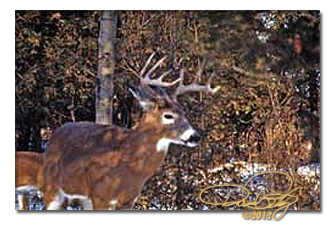
trophydeer

A trophy buck means different things to different people. It's like beauty: you may not know the true definition beauty is but you’ll certainly recognize it when you see it.

Every outdoor magazine worthy of the name will run cover photos of some truly huge bucks. Most of the television bucks seen would be considered a trophy buck to all but record-book hunters.

Big-buck photos or videos sell television shows. Sadly, for them, the average 8-point is not considered a trophy buck. They don’t know what they are missing but hunting solely for a trophy.

I can shoot whatever buck I want, and occasionally I’ll take a good one but hunting should always mean something much more to a hunter than shooting a buck with huge head gear.

Taking does and fawns can help manage a deer herd

I'll shoot the occasional big buck but also shoot small bucks as well as does and fawns. There are some bucks that do not fit the criteria of what I want. An 8-point with a basket rack of scraggly antlers is a cull or management buck, and these deer should be removed from a local deer herd. It is a small buck that tells me that it is not, nor will probably t as defining the minimum of ever be, a trophy buck by anyone's standards. Let kids or any first-time hunters take these deer, and hold out for a big one.

So what defines trophy status? Whatever you or I think may be far from what others consider a trophy buck.

A youngster on his or her first hunt  may consider a doe or fawn a trophy, and wisely so. For most hunters who can count on one hand the number of deer they have shot and have fingers left over, may consider a fork-horn with a six-inch spread to be a trophy. Perhaps it might even be a buck with long spikes.

On the other hand, many hunters seem to set a basic standard of 8 points. Whether is has heavy mass or is a 1 1/2-year-old with a tiny basket rack makes it a trophy buck to some people. Frankly, I believe any buck should be considered a trophy.

Setting goals is OK but for most people, once that goal is met, they ratchet their standards up another notch. Say they want an 18-inch 8-point with heavy tines, and get it, then they will probably want a 10-point with a  20-inch spread.

If they score on such an animal, where do they go next? Many then lust for a 200-point buck. If they don't get it, they are disappointed and upset, and therefore have lost track of what deer hunting is all about. The hunt is, and always should be, something more than a dead deer and a mass of antler bone.

Such people soon learn their hunt for bigger and supposedly better bucks will eventually end. It's hard to keep climbing that bigger and better ladder.

That ladder of success soon becomes impossible to reach

The challenge of the hunt is far more important than the size of the animal taken. Want a really tough challenge?

Start hunting the oldest doe on the property. She will run a bow hunter around in circles. Taking an old doe that knows she is being hunted is a challenge worth tackling.

Hunting is not about winning or losing but about how the hunt plays out. It's not about winners or losers. Hunting is so much more than just dead meat and big antlers.

Some sportsmen compare hunting to a game. This is not a game but it is a matter of life and death for the animal. How we look at hunting is a very important part of the overall experience.

If we are to kill an animal, we must show it all due respect and utilize that meat to nourish our bodies. We must hunt with a passion; respect that which we hunt and kill; and make any deer we kill a trophy, regardless of its size, antler spread or the number of points.

Respect the game your hunt and kill and utilize it properly

We are hunters, and to us, a trophy doesn't have to be a huge buck or a buck at all, but it must represent a personal challenge. We must be ever mindful of exactly what that animal is and what it truly means to us.

It is, and must always be, something more than antlers and meat. It must be a deep emotional moment for us, and when we learn to accept that fact, any deer taken becomes a trophy animal.

Posted via email from Dave Richey Outdoors

Wednesday, January 25, 2012

My love of great outdoor writing

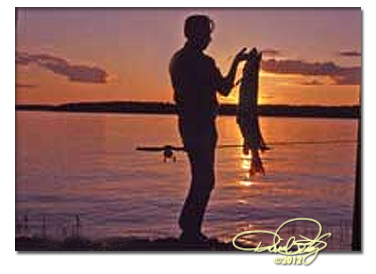
It doesn’t get any better than a big northern pike at sundown

outdoors-love

I've been in this outdoor writing business for 44 years, and over that period I've met most of the greatest outdoor writers of our time.
Men like ...
John Amber Erwin Bauer Havilah Babcock
Nash Buckingham Chuck Cadieux John Cartier
Gordie Charles Ben East Charlie Elliott
Corey Ford Ben Hur Lampman Nick Lyons
Gordon MacQuarrie John Madson Jack O'Conner
Edmund Ware Smith Norm Strung Robert Traver
Ted Trueblood Lamar Underwood Charley Waterman

and many others.

All had one thing in common: they loved the outdoors.

It wasn't so much they loved to kill fish or game, but they enjoyed being out there and matching wits with fish or game. Things were a good bit different in those bygone days. Outdoor writers wrote stories that people loved to read. The how-to or where-to stories weren't in vogue a half-century ago.

No knock on current outdoor writers but many of those in the 1950s were great

They called that earlier brand of writing "Me & Joe stories." If a reader read close he could spot some how-to and where-to stuff, but what gave these stories legs was the writers could pull the reader into the story and make them read it.

We felt as if we were hunting sheep with Jack O'Connor, catching big trout with Joe Brooks, shooting ducks or geese with Lynn Bogue Hunt or Van Campen Heilner. We hung on the words of Robert Ruark as he sat at the Old Man's knee and absorbed some of the wisdom that old-timers handed down to the young 'uns.

Corey Ford was another favorite back in the 1950s and 1960s, and his Tales of The Lower Forty were funny but also shared some fishing or hunting wisdom.

Ben East, who lived near Holly, Michigan, was a friend and I spent hours watching him work his red pencil magic over a manuscript, cutting and splicing, turning words of some wisdom into pearls of wisdom. I thoroughly enjoyed my many conversations with John Madson, and believed that few outdoor writers could match up.

He did a great deal of work for Winchester and the Olin Corporation, and he could make the ingredients of breakfast cereal read well. He was a master of turning phrases, of setting scenes, and of working his brand of literary magic on a story. When he finished, the piece was a gem.

Ben East and John Madson were two or the best wordsmiths

Madson was arguably the finest true outdoor writer of the mid-1900s, and we spent many hours together before his death. I have a healthy-sized stack of his letters, and a common letter from one buddy to another became a piece of art when Madson put his hand to it.

There seems to be something that has gone missing when an article just tells the reader how to catch fish or shoot deer, or even worse, where to do it. The old-time outdoor writers did all of that but they also told readers why they should do it.

They wrote from the heart. They invoked our five senses and said why they should be important to sportsmen, and they knew how to drag the reader into the story and leave them at the end wanting more. That's the sign of a truly good writer.

Outdoor magazines no longer have strong editors. I sold my first "Me and Joe" story to Outdoor Life magazine in 1970, and back then, editor Bill Rae was an editor. Editors below his lofty position could offer their opinion, but Rae was a one-man editorial staff. If he wanted a story, he got the story, and suffered no nonsense from junior editors.

I sold a number of stories to Bill Rae, and he happily bought them because I could give him what he wanted and what he knew his readers wanted to read. Now, it's different; there is such a thing as "editing by committee," which doesn't bode well for the writer because many editors don't know what they want. Many want two or three rewrites from a professional outdoor writer. Things have changed and not for the better.

I sell many fishing and hunting books, and some old outdoor magazines on my website Scoop's Books, and I figure if a book is a good read for me, it will probably appeal to many of my readers. I enjoy going back to some of the earlier writers, and although some of their copy was stilted at times, they knew how to grab the reader's attention.

My personal method writing outdoor copy is simple: inform and entertain

It's always been my intention to write from the heart: to drag readers into the story; to offer them something that is nearly impossible to find today in the how-to, where-to world of outdoor writing, and I'm not ashamed to admit to a mistake. I tweak my readers five senses, and they seem to enjoy it.

What comes through in my writing is a deep and abiding love of the outdoors and of fishing and hunting. I know our natural resources needs some restraints, and I know that being afield is part of why we go fishing or hunting.

We share the outdoors with other user groups, and those of us who love these outdoor pastimes, are perhaps the last of our breed. And just think: all of this rhetoric is about our respect for the fish and game we catch and kill, and a deep love for being outdoors.

And it has all come to pass because of another love. A love of reading is what makes the long wait between fishing and hunting trips bearable, and that is why so many people visit this site every day.

I may be the luckiest person of all because I have a deep urge to write what people want to read. And for that, I'm genuinely thankful for my many readers. Keep reading and I'll keep writing, and tell your friends, neighbors and relatives about my website.

I thank you, in advance, for that consideration.