Showing posts with label resources. Show all posts

Wednesday, January 25, 2012

My love of great outdoor writing

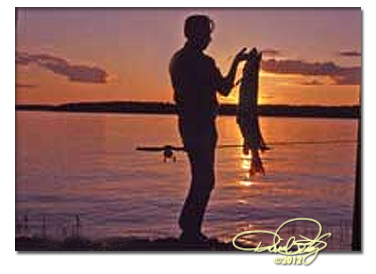
It doesn’t get any better than a big northern pike at sundown
outdoors-love

I've been in this outdoor writing business for 44 years, and over that period I've met most of the greatest outdoor writers of our time.
Men like ...
John Amber Erwin Bauer Havilah Babcock
Nash Buckingham Chuck Cadieux John Cartier
Gordie Charles Ben East Charlie Elliott
Corey Ford Ben Hur Lampman Nick Lyons
Gordon MacQuarrie John Madson Jack O'Conner
Edmund Ware Smith Norm Strung Robert Traver
Ted Trueblood Lamar Underwood Charley Waterman

and many others.

All had one thing in common: they loved the outdoors.

It wasn't so much they loved to kill fish or game, but they enjoyed being out there and matching wits with fish or game. Things were a good bit different in those bygone days. Outdoor writers wrote stories that people loved to read. The how-to or where-to stories weren't in vogue a half-century ago.

No knock on current outdoor writers but many of those in the 1950s were great

They called that earlier brand of writing "Me & Joe stories." If a reader read close he could spot some how-to and where-to stuff, but what gave these stories legs was the writers could pull the reader into the story and make them read it.

We felt as if we were hunting sheep with Jack O'Connor, catching big trout with Joe Brooks, shooting ducks or geese with Lynn Bogue Hunt or Van Campen Heilner. We hung on the words of Robert Ruark as he sat at the Old Man's knee and absorbed some of the wisdom that old-timers handed down to the young 'uns.

Corey Ford was another favorite back in the 1950s and 1960s, and his Tales of The Lower Forty were funny but also shared some fishing or hunting wisdom.

Ben East, who lived near Holly, Michigan, was a friend and I spent hours watching him work his red pencil magic over a manuscript, cutting and splicing, turning words of some wisdom into pearls of wisdom. I thoroughly enjoyed my many conversations with John Madson, and believed that few outdoor writers could match up.

He did a great deal of work for Winchester and the Olin Corporation, and he could make the ingredients of breakfast cereal read well. He was a master of turning phrases, of setting scenes, and of working his brand of literary magic on a story. When he finished, the piece was a gem.

Ben East and John Madson were two or the best wordsmiths

Madson was arguably the finest true outdoor writer of the mid-1900s, and we spent many hours together before his death. I have a healthy-sized stack of his letters, and a common letter from one buddy to another became a piece of art when Madson put his hand to it.

There seems to be something that has gone missing when an article just tells the reader how to catch fish or shoot deer, or even worse, where to do it. The old-time outdoor writers did all of that but they also told readers why they should do it.

They wrote from the heart. They invoked our five senses and said why they should be important to sportsmen, and they knew how to drag the reader into the story and leave them at the end wanting more. That's the sign of a truly good writer.

Outdoor magazines no longer have strong editors. I sold my first "Me and Joe" story to Outdoor Life magazine in 1970, and back then, editor Bill Rae was an editor. Editors below his lofty position could offer their opinion, but Rae was a one-man editorial staff. If he wanted a story, he got the story, and suffered no nonsense from junior editors.

I sold a number of stories to Bill Rae, and he happily bought them because I could give him what he wanted and what he knew his readers wanted to read. Now, it's different; there is such a thing as "editing by committee," which doesn't bode well for the writer because many editors don't know what they want. Many want two or three rewrites from a professional outdoor writer. Things have changed and not for the better.

I sell many fishing and hunting books, and some old outdoor magazines on my website Scoop's Books, and I figure if a book is a good read for me, it will probably appeal to many of my readers. I enjoy going back to some of the earlier writers, and although some of their copy was stilted at times, they knew how to grab the reader's attention.

My personal method writing outdoor copy is simple: inform and entertain

It's always been my intention to write from the heart: to drag readers into the story; to offer them something that is nearly impossible to find today in the how-to, where-to world of outdoor writing, and I'm not ashamed to admit to a mistake. I tweak my readers five senses, and they seem to enjoy it.

What comes through in my writing is a deep and abiding love of the outdoors and of fishing and hunting. I know our natural resources needs some restraints, and I know that being afield is part of why we go fishing or hunting.

We share the outdoors with other user groups, and those of us who love these outdoor pastimes, are perhaps the last of our breed. And just think: all of this rhetoric is about our respect for the fish and game we catch and kill, and a deep love for being outdoors.

And it has all come to pass because of another love. A love of reading is what makes the long wait between fishing and hunting trips bearable, and that is why so many people visit this site every day.

I may be the luckiest person of all because I have a deep urge to write what people want to read. And for that, I'm genuinely thankful for my many readers. Keep reading and I'll keep writing, and tell your friends, neighbors and relatives about my website.

I thank you, in advance, for that consideration.

Thursday, August 11, 2011

Can We Solve Natural Resources Problems


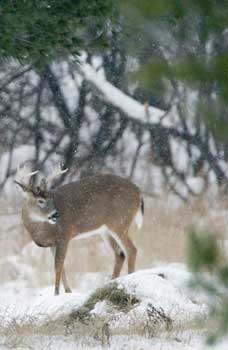
Wild turkeys and whitetail deer may have severe die-offs in bad winters.


Guess what? Fishing and hunting isn't the same as it was 10 years ago, and it won't be the same 10 years in the future as it is now.

Fishing and hunting have become fragmented. How so? There are many ways to look at our natural resource problems, such as:

Years ago, a bear hunter bought a license and went hunting. Now, we have sound, scientific wildlife management, and that means more bears are being killed each year under a quota system than were ever killed under the old rules when anyone could buy a tag and hunt bruins.

Bear numbers and habitat are getting out of line and bruins are moving.


And it's OK that we have more bears than ever before, and the animals are moving into new territories, and management means determining the social carrying capacity of bruins. How many bears will people tolerate near their homes before they start squawking?

We have elk hunts now with some rather new rules. The rules only affect those who draw an elk tag from now on. I've applied for an elk tag ever since they had their first hunt in 1965. I've never been drawn, but instead of drawing names from those who have applied and have missed being picked, the DNR is now enforcing the newer rules.

And frankly, I'm not the only one who has applied and been denied. It means that hunters who drew an elk tag years ago can still draw another one. Does this make sense? Is it sour grapes on my part? No, it just means that me and many others are dissatisfied with a system that makes no sense. No one should ever draw another elk tag if they've already drawn one but that's not how it works these days.

The DNR has had ample opportunities to allow Region II turkey hunters to obtain some private-land turkey tags that would guarantee them a first- or second-season hunt for those applicants who own property up here, but pressure from other groups is louder than the mumbles of regional landowners. So, private-land turkey tags can be obtained in the Upper Peninsula in those counties where birds are hunted, and throughout southern Lower Peninsula counties, but again Region II landowners get the short and dirty end of the turkey-permit stick.

It appears the DNR is caving in to special interest groups. In case you haven't noticed, the special interest groups are in the face of the DNR biologists to get what they want, not what is fair to the general public.

Do you remember when Michigan had their statewide trout season opener on the last Saturday in April? And then, in hopes of streamlining our fishing seasons, the DNR allowed Lower Peninsula muskie, pike and walleye fishing to open at the same time as the trout season. There are many sport shops in the Lower Peninsula, and this ruling 10-15 years ago, denied sportsmen two opening days -- trout and walleye, etc., and simply lumped them all together.

Making senses of our state fisheries regulation, and our open and closed areas.


There is nothing streamlined about our fishing or hunting regulations. Some conservation officers say they must read the annual fishing or hunting digests time and again before trying to enforce the law. The language is stilted and cumbersome, and an attorney would probably have trouble defining what some of the DNRE legalese language really means. Some rules can make violators out of perfectly honest people. Make anything too difficult, and many give up for fear of unwittingly breaking the law.

Guess which one season most people prefer, and in resounding fashion? It isn't trout, which are harder to catch. Those people who once opened the trout season, and then on May 15, opened the walleye season years ago, jumped for joy. They got more than two more weeks of walleye fishing, and the sporting goods stores lost a wonderful chance to make money on the second opener, which is now gone.

The DNR currently backed into a corner by angry deer hunters, have been taking it on the chin. The DNR's little dog-and-pony show went on the road to discuss issues with deer hunters several years ago, and they were confronted by many angry people who were tired of not seeing deer and even more tired of horrible deer management policies.

Trust me, in many parts of the state, the chances of seeing and killing a deer is as high as drawing one of the aforementioned elk tags. Southern Michigan counties still have lots of deer, but such is not the case in the Upper Peninsula and northern Lower Peninsula.

These hunters were and still are clamoring for change, and rightfully so. I've backed the DNR for more years than I can remember, but things are changing ... and frankly folks, it's not for the better. Deer are plumb hard to find in the U.P., and things aren't much better in the northern half of the Lower Peninsula. But guess where the deer are: on private land in the southern Lower Peninsula counties. The big numbers aren't Up North, no matter what anyone says.

This deal over deer and deer hunting is far from over. The DNR needs to begin mandatory deer registration, and do away with the two-license deal. If they want to make more money, make it mandatory that hunters register their first deer before they can buy a second license. Hunters no longer believe the estimated Oct. 1 deer numbers, and they certainly don't believe the  final totals that show deer kills higher than what anyone believes, especially those sportsmen who do not see a whitetail buck during the combined hunting seasons.

Deer  regulations can be another tangled maze to understand. Can’t it be simple?


Last year was the first time in history that I can remember when the DNR came out and admitted the deer kill was down dramatically. Is this a harbinger of bad things to come? I suspect it is.

Now, in an effort to raise more money and to potentially alienate more people, the DNRE will be selling some permits for some of the species that are difficult to draw -- like the bull elk tags. If you've got enough money, you too can bypass the lottery system, and bid lots of money. This further tips the scales away from the ordinary sportsman, and will become the most direct cause of higher license fees and perhaps even fewer hunters.

And, while we are at it, it means the rich get what they want while the average sportsman get little or nothing. Go over to Germany and try to hunt. It will cost an arm and a leg, and a lengthy training session before you'll take your firearm into the woods.

Baiting and feeding was eliminated in the entire Lower Peninsula. In the meantime, baiting continues in the Upper Peninsula. Many people began cheating in the Lower Peninsula where they continued to bait. Does it make sense to have legal baiting in one part of the state but not in the rest? Not to me it doesn't.

Ask the DNR about the compliance rate for not baiting. They maintain the compliance rate is high, but bait is still being sold at local gas stations, and someone is certainly buying and using it.

And all of this mess because of one CWD disease in a private enclosure. Everyone must pay the price for that solitary animal. Did people resent this, and is it sound scientific management? It makes one wonder. The DNR and Department of Agriculture should get their collective acts together.

Deep snow hamper deer and winter turkey movements. Die-off can be high.


Have deer and turkeys suffered in the northern Lower Peninsula. You bet. Folks, where I live had more than 180 inches of snow two winters ago and more than 125 inches so far this season. I've seen very few gobblers and more than 160 inches last year, and only a few hen turkeys were seen this past winter. If the DNR's weird sense of having turkey feeding sites weren't so laughable, I'd cry.

We had fewer turkeys this spring than in the past, and we can look to a lack of a winter feeding program. Turkeys are big birds and burn a lot of energy launching into flight from the ground, but to expect birds to burn up even more fat reserves during winter months by flying up to an elevated position for corn, is silly.

Am I in a bit of a nasty mood? Naw! It’s just that Michigan hunters once stood tall and proud of their DNR, our deer management policies, and the fact that we had more combined deer hunters and man-days of deer hunting than any other state in the nation. That was something we were proud of.

We don't have much to be proud of now except in areas where there is a Quality Deer Management program. Hunters in such areas are now seeing more bucks and larger animals in some of those counties than ever before.

Folks, it goes against the grain of Mother Nature to try to maintain a status quo, year after year. It's impossible to accomplish, and management of our deer herd is sorely lacking in its focus.

I never see a wildlife biologist in the field, and in the words of a fine wildlife biologist who retired some years ago, "the new wildlife biologists don't have any dirt on their boots."

One might wonder if they even own a pair of boots. They spend little, if any time, in the field. They manage by building computer models, and I for one, know that this philosophy really isn't working.

And sadly, the biologists seldom want to talk with landowners and hunters, especially in northern counties. They know they'll get an ear full, and most of the anger generated their way these days is justified.

Perhaps we need a shake-up in state government.


One doesn't have to look hard or into a crystal ball to see that state government and some legislators have wrecked the economy, our jobs and our livelihood, and politicians have left taxpayers holding the bag ... once again.

This is the adult version of the old snipe hunt trick we played on other kids when we were young. It was funny back then, but nobody is laughing now because many of us are left holding that empty bag. It's difficult to compare deer hunting 20 years ago with what we now have because there can't be a comparison. It just gets worse every year.

And excuse me for not being politically correct. The DNR is no longer correct and proper. The proper alphabet soup name is now DNRE. The "E" is for Environment, and where the DNR once rolled easily off our tongue, adding an "E" doesn't seem to have done much for this once-proud state agency.

The people who are most visible to the public -- our conservation officers -- are often seen in the field but the same cannot be said for many of the DNRE's wildlife biologists. What a sad situation, especially when it comes to some of the newer wildlife biologists.

Fortunately, we still have some good wildlife biologists. Not many but some really good people still remain, but when they retire, who will we have to carry on proper wildlife management of our natural resources?

It makes one wonder.

Monday, May 09, 2011

Helping others understand the outdoors

photos & montage by i65design


The author in a pensive mood about the future of outdoor writing.


There are many important things in life, but being a full-time outdoor writer is my profession and that makes me feel good doing what I most enjoy doing.

I'm long past the stage where seeing my name in print is needed to provide an ego stroke. There are other, far more important things in my life ... like helping others understand the outdoors.

This is my 45th year of writing about the great outdoors. I wrote my first magazine article in 1967 and sold it to Sports Afield. The next five stories also were sold to outdoor magazines with another going to Sports Afield.

Success came slowly, and required a great deal of hard work.


Then came two hard years of rejected slips, and as time went on, more and more stories were sold. I began with a goal of writing for each of the Big 3 magazines -- Field & Stream, Outdoor Life and Sports Afield -- and it took four years of hard work to make at least one sale to all three.

My next goal was to sell to as many magazines as possible. That led to sales to well over 300 different magazines before I quit counting, and there has been more than 7,300 published magazine articles since that first one many years ago.

My ultimate goal was to become one of the most widely published outdoor writers ever, and although I no longer strive to fulfill that goal, I am, without meaning to brag, at or very near the top of the heap in terms of magazine articles sold. I worked pretty much full-time for Outdoor Life magazines for more than six years, and one year had over 140 articles published in that magazine alone.

That was then, and I doubt if such sales are possible now. The roster of outdoor magazines has crumpled in some regards, but in the field around which I built my career, the number of outdoor magazines are tumbling. As gas prices soar and car sales level out, advertising revenues have fallen. Magazines that once flourished are sinking fast or have sunk below the sea of advertising losses.

Somewhere along the way, another of my many writing goals was to write books. To date, I've written 25 on fishing and hunting. Thousands of magazine covers and inside black-and-white and color photos have been published over the years.

I've had my own radio outdoor show, appeared on countless television programs with a wide ranging host of outdoor celebrities. I guided trout and salmon fishermen for 10 years, guided bear and deer hunters for four years, and led hunts for bear and caribou.

My travels have taken me all across North America and to within several hundred miles of the North Pole, and as far away as New Zealand. I've fished for, and hunted for, every species of animal, bird or fish that would ever turn my crank.

Gaining credentials and becoming known was an arduous and long path.


I've given thousands of lectures, been a platform speaker for many years, and had a 20-year emcee job at the Detroit Boat & Fishing Show. I've given private and public seminars, and all through my 45 years, I've done what I wanted to do and went where I wanted to go. Like Frank Sinatra once sang: I did it my way.

Out of all of this travel, and after so many outdoor experiences, has come this wealth of work. I count, among my many joys, being an Active and now a Life member of the Outdoor Writers Association of America (OWAA), as one of the greatest successes in my career.

OWAA became a part of my life in 1968, and I attended my first conference in 1969. I've attended every OWAA conference since 1976 in Snowmass, Colorado, and have chaired or served on perhaps 50 different OWAA committees.

I've been truly honored by having been awarded the Ham Brown Award, OWAA's highest member award, and the Excellence in Craft Award. They also named me a Legendary outdoor Communicator in 2005, and the National Fresh Water Fishing Hall of Fame inducted me into their prestigious Hall of Fame in 2006 as a Legendary Communicator.

Guess what? All of this is very important to me, but there is something even more important behind this massive 45-year body of work. It is a very simple personal philosophy: What Goes Around, Comes Around. If you give of yourself, you’ll gain satisfaction and success.

I've given freely of my time all these years to help other writers. I never viewed another writer as a competitor. Every chance I've had to help someone become a better outdoor writer, I've given freely of my time ... without any consideration of pay. OWAA has a Mentor Program, but I'd been mentoring writers for many years before the organization chose to allow some of us graybeards to share our knowledge with others.

Is this sharing of knowledge important? Certainly. It's just as important as having parents or guardians mentor youngsters about fishing and hunting. If we don't teach our children, why would they consider these outdoor pastimes in the near future? The answer is, they won't.

If I, and others, don't give of ourselves to help mentor and teach beginning outdoor writers and sportsmen, who will carry this torch of fishing and hunting freedom and our legacy into the foreseeable future?

I've given of my energy, talent and time to mentor outdoor writers and to mentor children. There no longer is a need for me to make a name for myself. I'm happily content to write my daily weblogs like this one about fishing and hunting, and am equally content to bask in whatever glory has come my way over these many years.

Awards are great but helping others has been my longstanding goal.


But all awards and honors aside, what makes me feel best is to write things people want to read, and to help mentor people who wish to become outdoor writers. Someday, in the future, once my race has been run, all I care for is to be remembered as being a good person, a good parent, a good husband, a good writer, and someone who always stepped forward to help readers understand more about the outdoors.

For me, that would be sufficient. And, I hasten to add this: Remember, that it's nice to be important, but it's more important to be nice.