Showing posts with label thick. Show all posts

Wednesday, February 29, 2012

Remembering follow-ups on wounded bears

Most times a hunter is tight to a bear without ever knowing it
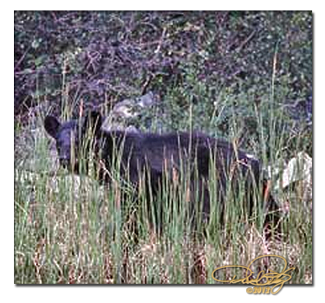
blakbearingrass

Some odd thoughts  rumble through  my mind without apparent thought or reason. Current weather of circumstances have little to do with when these thoughts come to mind.

I don’t know how it happens. I guess it’s just the way my brain is wired together. Frankly, I  delight in these off-the-wall thoughts because they usually put a gentle spin on an  uneventful day.

I was looking through an old pile of Outdoor Life magazines from the decade when I wrote stories for them  on a regular basis for. One article was about a grizzly bear attack that I'd covered for the magazine.

The biologist was a man who had most of his face chewed or ripped off by a grizzly bear, and lived to tell me the story. The magazine flew me to Salt Lake City where the interview took place.

The man got too close to the bear without knowing it. Bad mistake

He lost one eye, his nose and one ear, and the bear literally ripped his face off. He'd had over 1,000 stitches when I did the interview, and he had more plastic surgeries scheduled.

That got me to thinking about the number of black bears I've killed while mopping up a messy job of shooting by other people. Years ago, when bear hunting meant going into a sporting goods store and buying a license. There was no need for a lottery draw in those days. Few people hunted bruins back then.

One of those kills was a bruin that had been shot in the hip, breaking the leg bone. The hunter was frightened and asked if I'd help. I said I would if he agreed to stay behind so I didn't have to listen to his nervous jabbering.

He agreed, and I went after the bear with a 3-inch magnum 12 gauge shotgun stoked with five No. 4 buckshot. I saw the bear at 40 yards, and hit him. He went down at the shot, got up, came running toward me, and four more shots were taken with the last one at six feet. It finally killed the pain-crazed animal.

I'd read stories as a kid about African hunters shooting a leopard or lion, and then having to dig them out of thick cover and kill them at close range. This was pretty heady business for me, knowing full well I'd never go to Africa. I'd have to settle on killing wounded bears that other people had severely injured but were scared to finish the job.

Another bear led me on a two-day hunt that covered a small swamp bordered on one side by a tiny creek. I had lost any blood sign but had found where the bear had bedded down three times. Finally a drop of blood was found near the creek. I crossed the creek and followed a faint blood trail slowly up a steep hill.

The shotgun barrel preceded me, and bent blades of grass pointed out the path taken by the wounded bruin. I'd just topped the hill when I spotted the bear three feet away. It moved and I shot, and that mess was over.

Take a step, stop, listen and look around, listen again and be silent

Bears have provided me with some hair-raising thrills. People talk about brown bears, grizzlies and polar bears, but more people are attacked by black bears each year than many people believe. Black bears are most common, and I've had some close encounters when armed and unarmed, and it's a thrill most people would prefer to live without.

Only once did I go after a wounded bear with another person, and it was a friend whose skills were legendary. We got that bear, but every other time I've done it was alone. And that was the way I preferred it.

Frightened people talk, make noise, and generally get in other people's way when some serious work must be done. Wounded bears often are shot at very close range in thick cover, and I didn't want anyone nearby for fear they would create a greater hazard than already existed.

I'd move slowly if the going was tough, stopping often and looking around. Of the six wounded bears I've dispatched, none had injuries that would have been immediately fatal. All animals were moving, and often the dirty work was done within an hour of sundown. It meant moving fast and quiet, getting close enough to the animal for a deadly shot. Of those six, only the one noted above required more than one shot.

It isn't something I'd do now because my vision is so poor. Back then I could see well, and there is a major adrenalin rush when the wounded animal is first spotted. Then it means staying downwind and trying to get close to the bruin without spooking it.

Doing this nasty piece of  business was never fun but whenever I went after a bear it was because the hunter couldn't or wouldn't do it. It meant putting an animal out of its misery as quickly as possible. I never advertised my services, never went looking for this kind of work, but for many years I always seemed to be in the area where bears were being hunted and trouble always seemed to find me.

This type of adventure offers more than enough for most people

I did it because someone had to. Otherwise, a frightened hunter may walk away from the problem or wait until the next day and not be able to find the bear.

This string of memories came back to me like a recurring bad dream. This wasn't Africa, and it wasn't a wounded leopard or lion at the end of a blood trail, but they were wild black bears that would be lost or may live long enough to become a danger to someone else.

It offered some hair-raising adventures, and the adrenalin rush was rather addictive to this small-town sportsman. And trust me, these were adventures I'll never forget.

Posted via email from Dave Richey Outdoors

Sunday, January 02, 2011

Missing bow shots


Shoot the left buck while aiming for the off-side shoulder, and wait for this one to turn.  If shooting from the other side, the twig in snow could deflect an arrow.


It happens to everyone at one time or another. We miss an easy dog shot at a whitetail buck, and it runs off – alarmed and spooked – but unhurt. Many hunters can dredge up a dandy excuse for the miss.

Instead of trying to come up with a believable excuse for a missed shot, it makes more sense to go through the entire  sequence in your mind. Don’t let the fudge factor kick in, but analyze it from the viewpoint of learning from your mistakes.

If the scene is mentally replayed and you study the missed shot from all angles, you’ll probably find that something happened that could have been a contributing factor to missing the animal.

It happens to everyone. Learn from your mistakes.


Some hunters cut wide shooting lanes in all directions from their stands, and the coop or stand looks like the hub of a bicycle tire with spokes leading off in all directions.

Deer often are frightened by such cleared areas. Hunting in thick cover is much more difficult, and many of the stands in my hunting areas are in thick cover or very close to it. A few stands may be out in the open, but over many years I’ve learned that thick-cover locations can be very productive.

Hunting thick cover can lead to some missed shots. Often, in many tree stands, there will be only one decent shooting location. Often, that is all we need. But, know this: deer that move through thick areas can travel on any trail or make one of their own. Knowing where a shot can be taken is very important to success.

Always check for that one good natural shooting lane, and then start looking for other possibilities. Bigger bucks often are found in heavy cover, and learning how to pick a hole through the cover for a bow shot can be a lesson in frustration. Do it right, though, and don’t forget about leafy branches, twigs sticking out or that often unseen branch half the size of your little finger that can deflect a shot.

Study that area where a shot was missed, and do so from the ground and a tree, and there’s a good chance you’ll learn why you missed. Taking a shot in heavy cover means picking a hole where the arrow must pass.

If necessary, use binoculars from different anglers, to spot twigs.


My eyes are bad, and binoculars are a must for me to find these holes and any offending twigs or weeds in them. It also pays to examine such areas from different locations. Sunlight glinting off a twig may not be seen from one angle but will be visible from another. Look for them.

This means careful attention to detail. Don’t forget that it takes only a twig – a tiny twig – to deflect an arrow and cause it to fly harmlessly off course. Miss one of these shots, and it becomes increasingly important to study where the shot was taken and why it missed.

The most common reason for a miss is the arrow clipped an unseen twig or a branch that suddenly jumped out in front of the arrow. We know that one blade of grass or a tall weed, hit right, can deflect the arrow in mid-flight. These things  can and do happen. Learn to pick a hole where the arrow will pass through without nicking anything.

Know exactly where you can or cannot shoot & stick with the best spots.


Those little holes become increasingly difficult to see once the sun does down. The heavy cover is darker, and tiny twigs are virtually impossible to find. You must know exactly where they are located, and there’s no need to worry. If the hole is missed, the arrow will miss, and hunters will know what happened. Pinpointing the holes, and memorizing their location, is a big part of the game plan.

Blaming the wind, a piece of blowing dirt in the eye, shooting into the rising or setting sun, and a whole raft of other excuses are a waste of time. Learn to study the situation, replay the shot, and determine where the wheels fell off on that shot.

Studying missed shots can be a brutal piece of masochism as you beat yourself about the head and body, but knowing what went wrong makes it far easier to correct or avoid a similar problem in the future. Making a mistake is human nature, but brushing it away with some lame excuse simply enables the hunter to commit the same mistake over and over again.

And the cycle of missed shots will continue.

Posted via email from Dave Richey Outdoors

Sunday, December 26, 2010

Late-season deer hunting


Cold weather will make bucks move. Be alert to it.


K, Christmas is over and out of the way, and I managed to continue my longtime shopping record. Chalk up another year that I failed to make it into the first store to buy gifts.

Many may consider me Scrooge or a dummy, but I dislike shopping with a passion and my wife dislikes it as well but she does enjoy buying for the little grandkids and our great-grandsons.

Now me, I'm content to watch her trudge out the door. I can tell, because I'm a trained observer, that Kay doesn't care one bit about joining the Christmas shopping throng at the local stores. I wish her good luck before Christmas when she went shopping, and I'd often have her drop me off at a friend's house and I'd climb into a tree stand for a few hours.

It seemed the perfect situation: her shopping and me hunting.


There I was, out in the weather with muzzleloader or bow in hand, depending on the season, and she would stop and pick me up three or four hours later. It seemed to make perfect sense to me. She dislikes hunting in cold weather, and I can't say it's my favorite thing to do but there was little cold temps to worry about.

Each day I'd watch for deer. Some days a few would pop out, and I'd make the decision to shoot or don't shoot. The hunt wasn't about killing a deer so much as it was about hunting for deer.

As my butt snuggled deeper into the foam rump pad, I'd think warm thoughts while the end of my bow was tucked into the top of my left rubber boot. My release was on the string, and seeing and hoping to shoot a deer meant waiting for the proper time to draw and shoot.

Numerous button-bucks and doe fawns were seen, and several mature does, but bucks with significant bone between their ears were conspicuous by their absence. As a matter of fact, not one well-antlered buck dared show his rack at any of my hunting spots.

Two or three small bucks were seen during December in another hunting location but they were always too away from my preferred bow range of 15 yards. A buck at 25 yards if outside my vision, and therefore outside of my shooting range with a bow. And, I don’t shoot small bucks,

No big bucks were seen this fall, and I’ve shot enough small bucks.


Shooting a muzzleloader is a bit different. I have a good scope on my black powder rifle, and can easily shoot bucks at 150-175 yards. I love my center-fire rifles, but thoroughly enjoy shooting bucks (and does when I have the proper permits) with a front-end loader.

The slightly colder weather is a turn-on for me because I know whitetails must move in colder weather. I'm still hoping for two or three days of 10-degree weather. When it gets that cold, I know the whitetail bucks and does will be up and moving.

The burning question right now is will we see weather that cold before the season shuts down on the evening of New Years Day. It looks very doubtful that we will have such weather until well into January when the season has shut down.

I don’t think we’ll have any bone-chilling cold between now and New Years Day.


Who knows? If all the talk about global warming is true, than what we are not seeing is what we'll probably be getting in the years to come. With the warmer weather will be more east winds, more swirling winds, less cold temperatures, possibly less snow, and a quicker spring break-up. It doesn't sound like my kind of winter deer-hunting weather.

So, between now and then, there is no shopping left to do. What excuse can I use to have Kay drop me off at one of my favorite spots, and pick me up on the way home?

I'll need to come up with something to get me through these last few days.

Posted via email from Dave Richey Outdoors