Showing posts with label listen. Show all posts

Tuesday, August 28, 2012

Rainy Day Whitetails

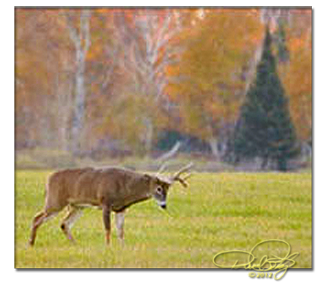
dro_big buck
A big buck posturing in a soft rain and far from any bow hunters
photo courtesy Dave Richey Outdoors©2012
There are times when a bow hunter can hear a whitetail coming for 100 yards. If the animal is upwind, and the leaves are as dry as corn flakes, the sound carries for a long distance.

Whitetails depend on their hearing for survival, and dry leaves advertise their presence. The opposite is true when it rains.

The leaves soak up the rainy weather, and a whitetail can ghost through the woods with barely a sound. This is an important reason for hunters to spend time in the woods when the rain is falling.

Fog, a light mist or a soft drizzle can cause bucks to move


I've written before that deer love to travel when a soft misty rain is falling. There is a soft pitter-patting sound under such conditions, but it doesn't seem to bother the deer. They seem to be able to separate that soft noise from a dangerous noise without a problem.

These soft rains seem to get deer moving earlier in the evening, and it appears that deer move with more confidence during a soft rain. They appear more comfortable moving between bedding and feeding areas, and they seem to eat and move without hesitation.

I've had people ask if I feel a soft rain will carry human scent downward. I believe, to a small degree, that it does. I also think that low-lying ground fog will hold human scent near the ground.

Soft rains and fog seem to go hand in hand during the autumn months, and I've seen some of my largest bucks under such conditions. The fog seems to offer big bucks a sense of security, and they seem to be on the move. This is most certainly true during the pre-rut, rut and post-rut, when buck and doe activity is high.

One thing about fog is it distorts the sense of sound. I don't know how many times I've listened to a buck grunting as he tends an estrus doe, and in the fog, my vision and hearing is limited. I've seen bucks appear and disappear in the rainy fog without ever seeing the doe, and there have been many times when the doe is visible but the tending buck cannot be seen.

Fog is the hardest to hunt in because it distorts hearing and vision


It's at times like this that a hunter must be alert. I remember one night several years ago just before the Nov. 15 firearm season opener, when I saw a half-dozen bucks appear and vanish into the fog. All were moving, all were grunting, and the antler and body size of each one indicated they were individual animals.

Judging distance in the fog can be difficult. I've talked with a number of people who know the far edge of their bait pile is 20 yards away, and if a doe or buck appears in heavy fog, they feel the animal is much farther away that it appears. They aim high to compensate for this imagined difference and shoot over the animal.

The best advice is to put out markers  if you are not using bait. A measured distance must be believed, even if the fog makes the animal appear much farther away than what it is.

I like rain on the roof, rain after my crops are planted, and rain (on occasion) when I'm hunting. I dislike a steady diet of it, and I compare that to eating steak every night. One soon grows tired of it.

I find it enjoyable to  hunt under these conditions


Hunting in the rain isn't too bad. It offers something a little different to a bow hunter, and that is fine by me. I enjoy a variety, a change of pace, in my hunting, and I can hunt in anything except a downpour or when the lightning is dancing in the sky.

Most of all, I like to hunt in those soft misty evening when the darkness comes early because of heavy rain clouds overhead, and when the whitetails seem to slip up on a guy. That is when a hunt really means something to me.

Thursday, August 18, 2011

Lessons learned from the deer

Whitetails can keep a hunter honest. They also can make you a better hunter.


This doesn’t mean that my valued readers are dishonest nor does it mean they are bad hunters. It simply means that deer have the ability to make hunters think.

They also can make hunters pretty humble when sportsmen think they know everything about deer hunting. Hunters who feel superior often get humble pie to eat.

Learn from deer. Study their actions, and become a good hunter.

One thing I’ve learned over many years is to watch hunters. It doesn’t take long to determine who are the great sportsmen, and who are braggarts. I’ve hunted in many camps over the last 50+ years, and the loudest and most aggressive hunters are usually the ones who make the dumbest mistakes.

An old saying goes like this: it’s better to keep your mouth shut and be thought a fool than to open it and remove all doubt. The best rule is to keep the mouth closed. listen and pay attention.

Picking people’s brains, and learning what they know, is fun and can provide valuable information. Savvy hunters never venture an opinion unless they know what they are talking about. That is especially true when talking about hunting whitetail deer.

Southern folk have some great sayings. They’ve been distilled from years of hard work and minding their manners. One saying that has a whole bunch of learning in it is “My momma didn’t raise no fools.”

Listen to older hunters, and cogitate on what they say.


Folks who gather around savvy hunters should keep that thought in mind. That means do less talking and much more listening.

Last year a man brought his son around for a hunt. The boy would come up to the house, make a dumb remark about deer hunting while several of us planned our evening hunts. We were tossing around ideas, and discussing where everyone would sit, and discussing the present wind condition.
The boy kept nattering on and on. He was taking up precious planning time by constantly interrupting.

A friend eventually spoke up rather bluntly and loudly, and said: “Boy, you better learn more about deer hunting before speaking your mind. You want to learn about hunting, sit down, shut up and listen. You’ll learn more than you will talking nonsense about a topic you know nothing about.”
The boy sat and listened for a minute, spoke up, and my friend looked hard at him, and the kid went running out the door. His daddy had money, and it’s almost certain that no one had every talked that way to the kid before.

I’ve been around whitetails all my life, and spent over 55 years hunting and studying the critters, but there are many others who know many things that I don’t know. I listen intently to them and learn.

One can read and learn, but actual hunting is the best teacher.


There are countless ways to learn things but in-the-field experience is the best when it comes to learning about whitetails. Hunting the animals, and studying them as you hunt and during the off-season, is the best way to accumulate knowledge. Reading about it, and absorbing that knowledge and putting it to good use, is another. What is most important is the hunter must learn to convert that knowledge into an action plan that works in the woods.

Experience will put a fine point on your acquired knowledge. Some of my early deer-hunting knowledge came from talking to old-time hunters and guides, and using some of that information on my hunts.

The more days spent afield will continue to add to a solid footing, and one day after learning a great deal about deer hunting, you’ll know you’ve come a long ways in your gathering of deer-hunting knowledge.

That will be the day when you can honestly look yourself in the morning mirror, and confess: “I don’t know as much about deer hunting as I thought I did.” And then you go out and learn some more.

Sunday, April 03, 2011

Practice turkey calling now … indoors


The author practices with a box call indoors.


It's one thing to choose a spot to ambush a gobbler when he walks by.  It's still something else to make a  longbeard come to you, one or two  tentative steps at a time; its head up and looking, the roar of a  return gobble, the sight of a snowball head moving slowly through the  woods toward the hen call.

Turkey hunting is fun. Calling a gobbler to the bow or shotgun is just  about as much fun as anyone can have while hunting. Is calling hard and must we be an expert caller to succeed?

Good questions. No, one doesn't have to be an expert and calling is not extremely hard. A diaphragm call is far more difficult to learn than an aluminum, glass or slate friction call. The wood box call is perfect because it is one of the easiest calls to master, and the easiest of all to is the push-button call that produces realistic sounds. So, what’s holding you back. Practice now, but not outside.

The most difficult turkey call of all to master is the wing-bone yelper. Anyone who can run a yelping sequence on a wing-bone or trumpet is a person who has my utmost admiration. It is extremely difficult to master this call, which is why few people use them in the northern states. Their use is slightly more common, but as a general rule, wingbone call are generally used by old-time turkey hunters.

There is one important thing to remember: turkeys, like humans, have different voices. They all sound slightly different.

I've listened to world champion callers, and once spent a week deer hunting with the late Dick Kirby of Quaker Boy Calls. He was prepping for the World Championship of turkey calling, and he could make truly realistic turkey sounds that were as clear and pure as the sound of a church bell on Sunday morning.
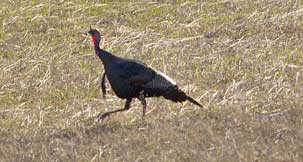
This longbeard was photographed coming to a turkey call.


"Championship calling is different than an in-the-field situation," Kirby told me years ago. "Hunters who can cluck, cutt, purr and yelp can call birds. Championship-type calling isn't required because no two turkeys sound alike. The key is more about the cadence and rhythm of a call than the quality of the sound. The biggest secret is knowing when to call, which call to make and not to call too much. A caller who calls too often will scare more birds than he attracts."

Using certain calls requires some skill but it’s not too hard to learn.


Box calls - Hold the call lightly in the palm of the hand. Many callers hold a box call horizontally, and draw the paddle across the top of the box. Some hunters, especially in southern states, hold the box vertically and hold the striker between index and middle fingers to strike the lip of the box. Both methods work well, and what it boils down to is using whichever method that feels the most comfortable.

A turkey show was on television recently, and the host was using a box call in a horizontal position, and would then hold the call in a vertical fashion. He didn't look very comfortable with either method. Use whichever feels most comfortable, and there's no need to switch back and forth from horizontal to vertical.

Make a cluck by popping the striker (handle) against the top of the box. It is a sharp one-note sound. To cutt, ake a series of sharp clucks in rapid fashion. Yelps are made by moving the handle across the lip of the box and cover the sound chamber to accomplish the two-note call. Purring is simple and works best early in the morning when birds are roosted; move the striker lightly and slowly across the lip of the box.

Diaphragm - Kirby could make astounding sounds with a diaphragm call but mine sound like a gobbler with a ruptured voice box. However, my diaphragm calls are effective. Remember, notes need not be competition perfect. Just understand the cadence of each call, and know when to make that particular call.

To cluck exhale air across the reed(s) and say "putt." Cutt by making three or four fast clucks quickly and sharply. They can be made loud or softly, and much depends on how far away the bird is and how he responds to the call. A soft cutt often excites birds when they are within 50 yards.

Master a purr, whine and yelp, and you can call gobblers.


A yelp begins high (and can be strung out) and falls off into a lower note. Yelps can be strung together quickly or done just once but jaw, mouth and tongue movement can affect volume and tone. Experiment until it sounds good. A purr is fairly difficult to do, but I find it easier than breaking off the high end of a yelp into the low tone. My yelps sound like a bird with tonsillitis but they come to it.

Aluminum, glass or slate calls are quite easy to use but require both hands. I favor these calls when a turkey is a good distance away, and as the bird comes closer, I switch to the diaphragm call so both hands are free to handle the shotgun.

All three materials require the use of a peg or striker. Strikers are made of glass, plastic or wood. To cluck, hold the striker like a ballpoint pen but turn the tip at an angle pointing toward your body and drag it toward you in a skipping motion. Press down harder to make a louder cluck. Cutting is done by making a series or fast and irregular clucks for five to seven seconds. Cutts can be soft or loud, and long or short in duration. Yelping is done by dragging the striker with some pressure in a circular motion or a straight line. The more pressure of striker against the call, the louder the sound. Purr by lightly dragging the striker across the call. This is one of my favorite calls early in the morning because it sounds like a contented bird.

A recording of these sounds make more sense for a beginner than me trying to put down what each sound is like. Hunters also can talk to an accomplished caller and learn these basic sounds.

Some gobblers are, by nature, downright call-shy, especially if some yoyo practices his calling outdoors. Gobblers often will call from the roost, and four or five Toms gobbling back and forth sends chills down my spine. As a general rule, don't call as often as a gobbler; let him wonder where the hen is and come looking for it. I often give one or two soft tree yelps after I hear the first crow calling at dawn. If there is no response, try again five minutes later. If a gobbler responds, sit still and say nothing. Wait for the gobbler to call again, and then softly cluck or purr for five seconds and shut up.

Hunters have up to four weeks to practice before their season opens.


A big limbwalker will probably boom back a return call but let him wait again. As he gobbles, birds in other areas may respond with a gobble so wait for a few minutes after silence is restored. Try another soft purr, and if it is full light, slap a turkey wing against a tree or your pant legs to imitate a bird flying down, and give one short and soft yelp to sound like a hen on the ground.

Muffle some calls like a hen moving around on the ground, and listen for the gobbler to fly down. Give him another yelp, and if he gobbles, let him come. If the bird stops 50 yards away, purr or softly cluck and scratch in the leaves with your fingers like a hen feeding. If the bird keeps coming, stay quiet and let him come. If the gobbler stops behind a tree within range, purr or cluck softly and shoot when he steps out and lifts his head.

If a gobbler hangs up, try a trick that has worked for me many times. Use two calls at once: yelp softly with a diaphragm and with a box or slate call to imitate two hens calling for Tommie. This trick has produced many gobblers for me and my friends. Or, try creeping backwards and turn and call softly to imitate a hen moving away.

Try to set up so the bird can come into a semi-open area to look for the hen. Gobblers will move through thick cover if necessary but they like to see what lays ahead and if it appears dangerous. Calling isn't particularly difficult but it requires some practice. Do it in the car, not out in the field. The first time you call outdoors is when you have a shotgun in hand.

The above are just some of the basics of calling a wild turkey within range, and it represents some of the tricks that work. Give 'em a try when the April-May turkey season is open, and work at learning something new every day. Studying turkey behavior and their calls- will pay off.

Sunday, March 13, 2011

Memorable turkey blunders

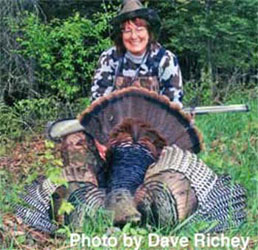
Cathy Beutler with a dandy gobbler she shot while hunting with me.

"Keep your powder dry" was the motto in the 1700 and 1800s when muzzleloading hunters and frontiersmen roamed parts of North America. Those who failed to follow that sage advice often went hungry or had their hair lifted and cut off below the roots.

My list of hunting mistakes with game, especially turkeys, is endless. Years ago, while hunting in a heavy rain with a muzzleloader, I forgot to cover the muzzle. I set my front-loader against a tree with the powder and shot charge in the barrel but the shotgun wasn't primed.

I set out my decoy, retreated to my chosen spot, and primed the muzzleloading shotgun. A large number of gobblers and hens came, and milled around in a tight circle near the decoy, and I couldn't shoot. They eventually left, and I called again.

Good thing a desperado wasn’t trying to take my money.

A lone gobbler a half-mile away answered, and I sweet talked him with a soft yelp and some hen jabber with a push-pull call. He came running up. I saw him first at 30 yards, and then he dropped into a little dip in the ground, and popped up again at 20 yards and stopped. The shotgun was up, and when I pulled the trigger, the primer went off with a pop. The powder did not.

I'd forgotten to put a balloon or anything else over the muzzle to keep the powder dry. The Pyrodex was a black semi-liquid. It was a lesson well learned and never forgotten.

I took a guy out one day, late in the season, and spotted a jake 150 yards away. This guy wanted to shoot a gobbler, and beard length didn't matter. It took 30 minutes to bring the jake within 80 yards, and the guy was aiming at the bird.

"He's too far away," I whispered. "Don't shoot yet. Let him get to within 35 yards." He said the bird was only 35 yards away, aimed and shot.

The young gobbler hauled tail feathers into the woods. The man maintained the bird was only 35 yards away until I asked him to give me a prominent landmark where the bird had been standing. He said the bird was right near that little bush that stood three feet high.

That bush was much farther away than he thought. He shouldn’t have shot.

He was urged to pace it off in approximately 36-inch steps as I walked beside him counting the paces. I got 80 steps and he got 77 steps, and then he realized the mistake he had made. It was the last gobbler we saw that day.

This didn't happen to me but to a friend. He knew, within 50 yards of where a gobbler had roosted the night before. He snuck in the next morning, and stopped well short of the roosting area to wait for the first gobbles of the morning. The sun came up and all was silent.

He gave a very soft tree yelp or two but nothing responded. He stuck with it, and finally with a great deal of impatience, he uncorked a loud yelp on his box call and something happened. A big gobbler bailed out of the tree he was sitting under, and it flew 75 yards, hit the ground a'runnin', and that was it. He had set up directly under the gobbler and missed his big chance.

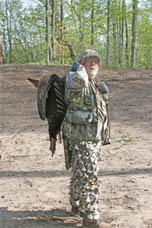
The author carries a nice longbeard out od the woods to his car.

Two friends, on their first gobbler hunt, went looking before dusk and spotted several dark birds on the ground. Just before dark they flew up into a tree. These guys knew about roosting birds and were happy.

They returned the next morning well before dawn, set up about 100 yards away, and waited for the day to wake up. Tweety birds tweeted, crows cawed, and they yelped on box calls. They could see several dark forms in the trees, and called again and again.

A big surprise was in store for those two turkey hunters.

Eventually the birds flew down, and went to where the hunters had seen them the previous night. No amount of calling seemed to work, so one of them slowly eased his binoculars from his backpack, and with infinite slowness, eased them up to his face and studied the birds.

The birds they had roosted the night before were not real turkeys. They were turkey vultures, and they were feeding on carrion on the ground. They admitted it, and took their share of ribbing.

There is only one sure thing when turkey hunting. Murphy's Law always applies, and simply stated: If anything can go wrong, it will. Keep Mr. Murphy in mind, try to outguess him, and sometimes the gobblers react as you plan and the hunt is a success.

Of course, when we mess up, it's still good for a laugh even when we don't feel much like laughing at our silly mistakes. Trust me on this: if you hunt wild turkeys long enough, you too will make a blunder or two.

Posted via email from Dave Richey Outdoors

Saturday, January 22, 2011

Check your ego at my door


These Lake Michigan anglers team up to land a 15-pound brown trout.


A boast sometimes rankles other people, especially when two or more anglers are on a trip together. Almost always, one of the people is big on himself and wants everyone else to know it.

Most people could care less what people have done. The trick is to be courteous and helpful, and if asked, answer the question as well as possible without bragging on yourself.

For instance, I know how many deer I've shot over nearly 60 years. It's really too many, and I seldom bring up the topic. I've been fortunate to have deer hunted in many states beside my native Michigan but choose not to constantly dwell on myself and my deeds.

On the other hand, I dislike being in a group that is being monopolized by an ego-freak who is determined to quote numbers, sizes, the width of a rack which invariably is larger than anyone else has taken. After a short time, the egotist discovers he no longer is preaching to the choir. Church is over, they’ve gone home.

Mentoring other writers …..


I mentor younger outdoor writers. All are making or have made many of the same mistakes I made when I started, but in my case, there was no one who offered to teach me any of the things I didn’t know. I struggled, made more mistakes, and trust me – when I tell people how to avoid making these mistakes, there is not a word of a brag to it. I tell them about my mistakes and how long it took me to correct many such errors. They learn fast or struggle for a long time.

A friend stopped by yesterday, and is looking forward to drawing a spring turkey tag. He wanted some calling advice, and I told him I am not a good turkey caller. I also told him that many, many hunters can call ten times better than me, but I can call turkeys. No brag involved when I downplay my miniscule calling skills, but others can associate with my lack of such because they have their own foibles. Some of these beginners are far better callers than me.

I showed him a couple of tricks I'd learned, told him how I do it, and repeated what he'd been told before. Don't call too much, don't call too loud, don't move and be patient.

A quick lesson …..


Years ago, I gave my twin brother a five-minute lesson on turkey calling. I took my gent out, and the bird I tried to call came in behind us, stood there drumming and spitting, and we couldn't get a shot. My brother was hunting a mile away, and we drove over just in time to watch him call in and kill a gobbler with just five minutes of instruction.

He got a well deserved pat on the back. My gent was disappointed for a bit, but he shot his gobbler later that afternoon.

The lesson in  all of this is that bragging long and hard on oneself is boring to others. If I'm asked, I'll answer a question and quickly turn the conversation back toward them.

Beginning anglers and hunters need to boast a bit over their successes, and that's OK … up to a point. But if you've shot 100 bucks with a bow, it means that you've hunted far more often than most people. It also means, if you dwell on that number without teaching those skills to others, those people often think you are lying, boring or a game hog.

None of which may be true. I'm a good deer hunter and a good steelhead fisherman, and have spent more than 55 years at both endeavors. Unless a person is blind or stupid, it stands to reason that they should have learned something along the way. Share that knowledge with others but spare the bragging.

A guide teaches a gentle lesson …..


Forty years ago I drove to New Brunswick to fish Atlantic salmon with a guide. I sought his advice on which salmon flies to buy, and he pointed them out. I sought his advice on which fly to start with, and he picked one out for me.

Two hours into fishing, my guide said softly: "Begging your pardon, sir, but I suspect you've washed that fly long enough.  I'd suggest changing to a brighter pattern."

He didn't have to dwell on the fact that I should have changed flies earlier. He offered a suggestion that I gladly accepted, and when I hooked a 10-pound salmon on a brightly colored fly, he didn't claim any credit. I'd been the one to choose the fly, and luckily, it produced a nice fish.

He could have bragged about his knowledge and skills, but instead, offered me a pat on the back for "choosing" the right fly. I had no clue what I was doing, and it was his suggestion that made that cast a success.

Even today, I enjoy giving credit to him for me catching my first Atlantic salmon. He poled the boat into position, told me where to cast, how long a cast to make, and all I did was manage to land the high-jumping fish once it hooked itself on the strike.

Stow the bragging, and if possible, share your know-how with another person without trying to make yourself look important. I labor in a business where there are more egotists than I ever believed possible, but I check my ego at the door when I leave home. It certainly works for me.

Posted via email from Dave Richey Outdoors

Friday, January 21, 2011

Hunting swamp ghosts


This beagle just retrieved a snowshoe hare for the hunter.


Hunting snowshoe hares is a hoot. What's not to like about it?

Well, we get to stand in thick cedars, Christmas tree plantations, juniper thickets or pines, and try to guess when and where the satchel-footed ghost hare will appear next.

All we need is some snow, We got another seven or eight inches of snow between yesterday afternoon and last night. We have more than enough snow for hunting the white hares. Sometimes, as has been true for several years, hares are conspicuous by their absense. They can be hard to find.

We can have snow fall off tree boughs and find its way down our neck, and when the snow gets deep, we get to wander around in this heavy cover and hope we don't fall down. Going down is easy, but climbing back to a vertical position can be difficult in deep powdery snow.

Hares are no longer plentiful in the northern Lower Peninsula.


There is the added bonus of listening to a some deep-throated beagles in full cry as they weave their way through heavy cover. Sometimes the hounds are sight trailing the swamp ghost, but most often the dogs are 100 yards or farther behind the hare.

Mind you, I've stalked snowshoe hared and run them with hounds, and there is one major requirement. I've even hunted them with a bow. All one needs a fresh hare track to follow.

Those tracks seem to be getting far less common in many areas. Twenty to 25 years ago, all we had to do was look for the thickest cover in northern counties and there would be tracks everywhere.

That's not so anymore. Some of my buddies have gone looking for hare tracks in all the right places, and if they find tracks, most of them are cottontails. It's a proven fact that cottontails are moving farther north every year.

We can blame the hare scarcity on new housing developments. We can blame it on clearing some land and planting bushes and shrubs around our house. There is predation by bobcats, coyotes, fox, hawks, and owls. People and our inroads into what once was ideal hare habitat must assume some blame, and the other cause is snowies are cyclic by nature.

Folks, if snowshoe hares are cyclic, then their cycle is close to hitting rock bottom, especially in the northern Lower Peninsula. There are still more hares in the U.P., but their numbers are slowly dropping as well.

Hares are cyclic, and heavily preyed upon by avian and land predators.


Yeah, I know,air and land predators take some of the the white animals but there is nothing sportsmen can do about that. The Fish & Wildlife Service has protected birds of prey for many years, and those who kill one of these birds and get caught, are severely punished.

So, what's a hare hunter to do? Well, they can easily find cottontail rabbits in most Lower Peninsula areas. Or ... they can do as some guys I know do.

They go hunting snowshoe hares. They scout for habitat that still holds some hares and go hunting. Unlike conventional wisdom dictates, they either go for the enjoyment of listening to hound music and leave the firearms home or they forget to load the shotgun.

They give the running hares a free pass. They give the dogs a good workout as the hare runs an egg-shaped oval before returning to the area where he was initially jumped. The hunters may let the white hare make two or three circles, catch up the hounds, and head for another location.

This way they have the thrill of listening to bawls, bellers, chattering, chops, howls, yelps and other words used to describe the voice of each individual hound.

Hunt the hares but limit the kill to keep hound interest high.


You see, hunting snowshoe hares is a good bit like hunting spring wild turkeys. The kill of a gobbler or a hare is anticlimactic. It's the sounds of the hunt, the dogs trailing the scent in full cry or the gobbler roaring back at the hen-talking hunter. Seeing the hare or a turkey is a major part of the hunt, and since hares are getting to the point of low numbers, taking the pooch out for a run may have to be enough fun.

Sure, the hound owner wants to kill the occasional hare to keep his dogs interest at a high level, but it doesn't have to happen on every hunt. If turkey hunters killed every turkey they saw, there soon wouldn't be any gobblers left to hunt or the birds would stop coming to the call.

It's much the same way with snowshoe hares. Maybe we'll just have to be content to listen to hound music. On many days, standing knee-deep in snow in a cedar swamp and drinking in the sounds of hounds on a hot track, has to be good enough.

Posted via email from Dave Richey Outdoors

Thursday, October 28, 2010

Study the does & shoot a rutting buck


The doe was acting a bit shaky last fall. She would stop, start, and move a bit, but from my elevated stand, my attention was riveted on the late-October whitetail doe.

Her actions were keeping me informed on where the buck was standing, out of sight. I couldn't see the antlered buck from my vantage point downwind of the doe and buck, but the antlerless deer was some agitated. The buck was nearby, of that there was little question, and her sides were heaving from being chased.

The buck had apparently bird-dogged the doe across the field and through the woods, but this was the chasing stage, one of my favorite times to hunt. She was close to estrus, but she wasn't quite ready for breeding. It primes the pump, so to speak.

Panting does have been chased a long distance.

The buck knew that, and there seems to be a direct correlation between the chasing phase and the beginning of the rut. Biologists feel a buck chasing the doe gets both animals  ready for the breeding period.

My bow was ready, and although I suspected a big buck was chasing this doe, I had yet to see the animal. The doe, by her actions, told me where the buck was, and whether he was standing still or moving.

She kept peering back into the heavy brush, and try as I may, the buck was impossible to see although there was no doubt in my mind that he wasn't there. The doe was twitchy; moving, stopping, switching her tail, and turning to face the brush before turning and facing her body away from the buck but looking back over her shoulder.

She was sending body language signals to the buck, and he was moving slightly. Her ears would twitch up, swivel toward some sound unheard by me, and then the buck would apparently stop. I was beginning to think these two deer would carry on like this for hours.

In reality, as the sun headed toward the western horizon, the doe moved slightly toward the buck, and then wheeled and ran off 20 yards before stopping to look back. She was getting this old boy fired up, and her message apparently was getting through to him.

Her head movements pinpointed the buck’s location, and it took 10 minutes of probing the alder brush before my binoculars picked out the white bone of an antler tine. The buck was standing stock still, not moving, and contently letting the doe lead the show.

I knew this wouldn't last forever, and sooner or later the buck would make his move. The doe would let me know when that was about to happen.

Her ears perked up again, her head changed positions, and I knew the buck had moved again. The binoculars scanned the area where the buck had stood, and sure enough, he was gone. I followed the direction of her head, and after five minutes of looking, found the buck again.

Watch the doe & she’ll lead you to the buck.

He was getting closer to the edge of cover, and by now, the sun had set. There was less than 30 minutes of shooting time left, and I knew he would soon take up the chase again. The big question was whether he would offer a shot or choose to circle the doe, and force her into running off with him in hot pursuit.

Ten minutes of shooting time remained when the action started. The doe whirled at the sound of his first tending grunt, and she cut a lick for the open field, running hard. The buck was patient, and he slowly moved toward the edge of cover on a wooded ridge, and watched her go. He knew he could track her down.

He had only to move 10 yards in my direction, and it would be possible for a shot. He moved half that distance, stopped, and my bow was up and ready. When he moved, he exploded from cover like a ruffed grouse taking wing, and was at an instant gallop.

He offered me no opportunity for a shot, even though I was ready, and as he began moving, it was easy to tell he was a high and wide 10-point with good mass. He crashed off through the brush, and there is no doubt that he caught and bred that doe that night.

The lesson behind this anecdote is to study does during the pre-rut and rut seasons. They can, by their head and body language, tell the hunter where the buck is and what he is doing.

Be patient & play the waiting game.

There are many times when this leads to a shot, and there are times when luck is riding along with the buck. However, study this body language as often as possible, and learn more about hunting bucks. The does can teach hunters this important lesson, and bow hunters who don't spook does but study their actions will often take a nice buck.

You can bet on it.

Posted via email from Dave Richey Outdoors