Showing posts with label fog. Show all posts

Tuesday, August 28, 2012

Rainy Day Whitetails

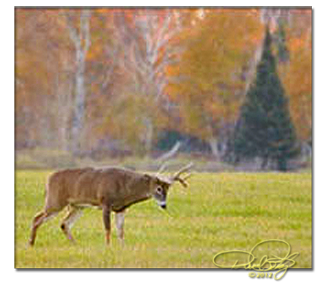
dro_big buck
A big buck posturing in a soft rain and far from any bow hunters
photo courtesy Dave Richey Outdoors©2012
There are times when a bow hunter can hear a whitetail coming for 100 yards. If the animal is upwind, and the leaves are as dry as corn flakes, the sound carries for a long distance.

Whitetails depend on their hearing for survival, and dry leaves advertise their presence. The opposite is true when it rains.

The leaves soak up the rainy weather, and a whitetail can ghost through the woods with barely a sound. This is an important reason for hunters to spend time in the woods when the rain is falling.

Fog, a light mist or a soft drizzle can cause bucks to move


I've written before that deer love to travel when a soft misty rain is falling. There is a soft pitter-patting sound under such conditions, but it doesn't seem to bother the deer. They seem to be able to separate that soft noise from a dangerous noise without a problem.

These soft rains seem to get deer moving earlier in the evening, and it appears that deer move with more confidence during a soft rain. They appear more comfortable moving between bedding and feeding areas, and they seem to eat and move without hesitation.

I've had people ask if I feel a soft rain will carry human scent downward. I believe, to a small degree, that it does. I also think that low-lying ground fog will hold human scent near the ground.

Soft rains and fog seem to go hand in hand during the autumn months, and I've seen some of my largest bucks under such conditions. The fog seems to offer big bucks a sense of security, and they seem to be on the move. This is most certainly true during the pre-rut, rut and post-rut, when buck and doe activity is high.

One thing about fog is it distorts the sense of sound. I don't know how many times I've listened to a buck grunting as he tends an estrus doe, and in the fog, my vision and hearing is limited. I've seen bucks appear and disappear in the rainy fog without ever seeing the doe, and there have been many times when the doe is visible but the tending buck cannot be seen.

Fog is the hardest to hunt in because it distorts hearing and vision


It's at times like this that a hunter must be alert. I remember one night several years ago just before the Nov. 15 firearm season opener, when I saw a half-dozen bucks appear and vanish into the fog. All were moving, all were grunting, and the antler and body size of each one indicated they were individual animals.

Judging distance in the fog can be difficult. I've talked with a number of people who know the far edge of their bait pile is 20 yards away, and if a doe or buck appears in heavy fog, they feel the animal is much farther away that it appears. They aim high to compensate for this imagined difference and shoot over the animal.

The best advice is to put out markers  if you are not using bait. A measured distance must be believed, even if the fog makes the animal appear much farther away than what it is.

I like rain on the roof, rain after my crops are planted, and rain (on occasion) when I'm hunting. I dislike a steady diet of it, and I compare that to eating steak every night. One soon grows tired of it.

I find it enjoyable to  hunt under these conditions


Hunting in the rain isn't too bad. It offers something a little different to a bow hunter, and that is fine by me. I enjoy a variety, a change of pace, in my hunting, and I can hunt in anything except a downpour or when the lightning is dancing in the sky.

Most of all, I like to hunt in those soft misty evening when the darkness comes early because of heavy rain clouds overhead, and when the whitetails seem to slip up on a guy. That is when a hunt really means something to me.

Monday, April 11, 2011

Turkeys in the fog

It was several years ago when I experienced what personally felt like a perfect turkey hunting day to me. I awoke with plenty of time to hike to my hunting spot, and stepped outside to see what the weather like.

I should have turned on the yard light first. Everything was a blur as thick tendrils of fog hovered like white gauze from ground level up to the tree-tops. It was impossible to see but I decided to leave early to walk to my hunting location. I’d need more time on this day to find my hotspot.

Turkeys often stay roosted until the fog clears off but these birds had been put to bed the night before. I knew where they were, and didn’t need any landmarks to find this spot. Just get on the north-south dirt road, and walk along the edge of it until i reached a narrow finger of woods that came down to the road. The almost one mile walk would take longer on this day, so I forsake a breakfast and hot coffee in favor of the early start.

A one-mile walk in the fog to reach the turkeys.


The fog was so thick it was literally impossible to see your hand in front of your face. My tiny penlight was shone on the road edge where weeds met the dirt, and I actually walked past the finger of woods in the dark and fog, and had to backtrack.

I eased off the road and into the trees, and knew I was within 200 yards of the roosted birds. There were three adult gobblers with long beards, two jakes and two hens ready for breeding. I had no clue what the day would provide but knew the birds would stay roosted even longer in the fog.

A narrow spot of farm land was separated by two woodlines. There seemed to be no need for a turkey decoy because the birds couldn’t see the ground. All I had to do was sit still near the clearing, wait with infinite patience for a roosted gobbler to call, and then try to sweet-talk him to within 35 yards while hoping all the birds didn’t approach at once.

A long hour passed, and there seemed to be a lightening of the fog but it was still impossible to see the trees on the other side of the clearing. The birds were roosted 100 yards deeper in the woods, and a small water puddle lay at the base of the roost trees.

Fog so thick I couldn’t see my hand in front of my face.


The second hour passed without hearing a bird. The fog seemed thick enough to cut, and it was lighter but the ground fog hung heavy over everything within sight. Eventually a lone crow flew over, cawed once, and a moment later a gobbler returned the greeting. Nothing happened for a few moments, and the bird gobbled again, and was joined by the others.

I sat there, knowing the birds probably wouldn’t fly down until it got a bit lighter so they could check for danger. I kept my silence, and so did they, and by nearly 9 a.m., the fog was thinning slightly but it still a long ways to go before I’d be able to see well enough to shoot.

Time seemed to drag by for another 30 minutes before the sound of flappint wings was heard. They hadn’t flown down but were getting restless on the roost. I coaxed out the faintest purr from my old Ben Lee box call, and the birds lit up. They double- and triple-gobbled, and the hens were making noise, and the tree-top-talking went on for another five minutes before they pitched down into the open spot in front of me.

The unseen gobblers called


All the gobblers, including the jakes, began ripping the air apart with their gobbles. Another faint yelp started another round of gobbling as the birds circled the clearing looking for the hen. On several occasions, the gobblers were right in front of me and their footsteps in the leaves could be heard, and they kept circling in a clockwise manner. The sounds still seemed a bit muffled by the fog but all the birds were within 25 yards of my shotgun, but the dense moisture-laden air was still too thick so see a thing.

Those birds circled around me, time after time, until about 10 a.m. when the fog began to clear. I called softly one more time, and the birds stopped moving. The biggest longbeard was 50 yards away, and I tried to appear to his male urges. One of the hens began calling to him, and I began a duel with the hen, and we verbally fought for 10 minutes before all the birds shut up and they moved off through the woods.

It had been a long morning of sitting with just a bit of calling, but the suspense of those birds circling in the fog right in front of me, has left an indelible imprint on my memory. I didn’t shoot that day, and it didn’t matter, because the symphony of turkey talk coming at me through the fog was enough to satisfy my hunting desire for one day.

Thursday, November 18, 2010

Forget the weather: get out & hunt


Some bucks are still trailing does as the rut winds down.


It's impossible for hockey players to play a game unless they are on the ice, and it's impossible for hunters to shoot a buck or doe if they are sitting indoors watching television.

So, that's settled, so what do we do when faced with inclement weather? You know: like some of what we've had so far this fall?

East winds, northeast and southeast winds, and rain. Some snow flurries today. Copious amount of rain two or three times. Strong blustery winds. Weather that even deer dislike.

Dress for it and get out in the weather. Hunt as often as possible.


If we were to set out every evening when inclement weather rears its ugly head, we may have been able to hunt only a few nights so far this season. The abundance of combined weather conditions has been noticeable to most hunters.

So, what can we do about it? The answer is to go hunting anyway. Some deer move even in bad weather although they may not move very much ir very far.

It only makes sense that if deer move for only 15 or 20 minutes, the closer one hunts to the bedding area should provide them with greater opportunity to be nearby when the animals do move.

Mild rain doesn't bother whitetails at all. They are out in it on a daily basis, and can't come inside out of the weather. If it is a soft rain, the deer often move well. They move less in a hard down-pouring rain.

Deer will move on an east wind, but most hunters have few locations set up where an east wind offers an advantage. A strong wind is much worse than a soft breeze.

There are good and bad hunting winds. All can be hunted.


Heavy winds put everything into motion. Trees, weeds, cattails and tall grasses move. Leaves (those that still remain on trees) shake violently on the trees, go blowing off the branches, and leaves are constantly in the wind at ground level and above. Deer detest such windy conditions because it removes their ability to see motion because everything within sight is moving.

Stands located closest to heavy cover offer hunters the best opportunity to see deer on these miserable days. The important thing is to get into a stand without being seen, smelled or heard.

Crow hunters say that these black birds can't count. I contend that deer can't count either, and that opens up one possibility to get into a stand even if the bedding area is downwind of the stand. A friend can drive you in by truck, park with the motor running while the hunter crawls into the stand, and then drive off.

Deer can’t count, and hunters working together can gain an edge.


A friend of mine and his wife leased land for many years, and each of them hunted a different parcel. My buddy would drive his wife 3/4 miles back off the road to her stand, walk with her to her ground blind while the four-wheeler idled nearby, and once she was in her blind, he would jump back on the machine and drive away.

She often saw deer while the sounds of the four-wheeler were still audible in the distance. The noise of the four-wheeler didn't bother the deer, and if anything, it gave them advance warning that people were coming. Two people get off, two walk to the blind, one walks back and drives away. Deer can't count, and this method works well.

The one thing to bear in mind is that deer are accustomed to seeing cars and trucks, tractors and other farm equipment in most areas. Deer will run from all motorized equipment heading in their direction, but they don't run far unless the hunters talk to each another. Human voices add another dimension to this equation.

Talking while dropping someone off at a blind or when picking them up should not be done. Deer also are accustomed to hearing people talk, but whether talking near a hunting stand is a good idea, I think it's best to drive up, drop off the hunter, and drive away without speaking.

One thing about weather: Any time there is a storm moving in, deer will usually move just ahead of the storm. If the weather forecasts a storm arriving about 4 o’clock, try to be in a good spot by 3 p.m. It can be a super time to be hunting.

Weather plays an important role in deer movements and travel. Rather than sitting indoors and not hunting, try to incorporate some other tactics into your hunting bag of tricks, and hunters may be pleasantly surprised at how well some of these will work.

Posted via email from Dave Richey Outdoors