Showing posts with label mist. Show all posts

Tuesday, August 28, 2012

Rainy Day Whitetails

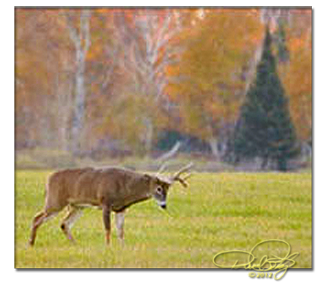
dro_big buck
A big buck posturing in a soft rain and far from any bow hunters
photo courtesy Dave Richey Outdoors©2012
There are times when a bow hunter can hear a whitetail coming for 100 yards. If the animal is upwind, and the leaves are as dry as corn flakes, the sound carries for a long distance.

Whitetails depend on their hearing for survival, and dry leaves advertise their presence. The opposite is true when it rains.

The leaves soak up the rainy weather, and a whitetail can ghost through the woods with barely a sound. This is an important reason for hunters to spend time in the woods when the rain is falling.

Fog, a light mist or a soft drizzle can cause bucks to move


I've written before that deer love to travel when a soft misty rain is falling. There is a soft pitter-patting sound under such conditions, but it doesn't seem to bother the deer. They seem to be able to separate that soft noise from a dangerous noise without a problem.

These soft rains seem to get deer moving earlier in the evening, and it appears that deer move with more confidence during a soft rain. They appear more comfortable moving between bedding and feeding areas, and they seem to eat and move without hesitation.

I've had people ask if I feel a soft rain will carry human scent downward. I believe, to a small degree, that it does. I also think that low-lying ground fog will hold human scent near the ground.

Soft rains and fog seem to go hand in hand during the autumn months, and I've seen some of my largest bucks under such conditions. The fog seems to offer big bucks a sense of security, and they seem to be on the move. This is most certainly true during the pre-rut, rut and post-rut, when buck and doe activity is high.

One thing about fog is it distorts the sense of sound. I don't know how many times I've listened to a buck grunting as he tends an estrus doe, and in the fog, my vision and hearing is limited. I've seen bucks appear and disappear in the rainy fog without ever seeing the doe, and there have been many times when the doe is visible but the tending buck cannot be seen.

Fog is the hardest to hunt in because it distorts hearing and vision


It's at times like this that a hunter must be alert. I remember one night several years ago just before the Nov. 15 firearm season opener, when I saw a half-dozen bucks appear and vanish into the fog. All were moving, all were grunting, and the antler and body size of each one indicated they were individual animals.

Judging distance in the fog can be difficult. I've talked with a number of people who know the far edge of their bait pile is 20 yards away, and if a doe or buck appears in heavy fog, they feel the animal is much farther away that it appears. They aim high to compensate for this imagined difference and shoot over the animal.

The best advice is to put out markers  if you are not using bait. A measured distance must be believed, even if the fog makes the animal appear much farther away than what it is.

I like rain on the roof, rain after my crops are planted, and rain (on occasion) when I'm hunting. I dislike a steady diet of it, and I compare that to eating steak every night. One soon grows tired of it.

I find it enjoyable to  hunt under these conditions


Hunting in the rain isn't too bad. It offers something a little different to a bow hunter, and that is fine by me. I enjoy a variety, a change of pace, in my hunting, and I can hunt in anything except a downpour or when the lightning is dancing in the sky.

Most of all, I like to hunt in those soft misty evening when the darkness comes early because of heavy rain clouds overhead, and when the whitetails seem to slip up on a guy. That is when a hunt really means something to me.

Monday, September 13, 2010

Weather & deer movements


Michigan's weather is often considered the most unreliable in the nation. One reason is we are affected by weather fronts crossing the Great Lakes.

Depending on time of year, it can be raining near the shoreline and snowing 30 miles inland. My area is known for its lake-effect snow.

The wind crosses Lake Michigan, and if the water is warmer than the air, it gets sucked up into the atmosphere. As it reaches shore, the rain begins to fall but farther inland, away from the lake, it is snow that starts to dump on us.

Weather on the Great Lakes affect weather inland.

Studying the wildlife can offer major clues to upcoming weather. I'm often noted for my whitetail deer studies and observations, and deer are somewhat predictable.

I've watched birds and deer for many years, and they are early warning indicators of approaching bad weather. If a major winter storm is due to roll through, the deer are up and moving two or three hours before the storm hammers through.

Birds at the feeder make a major aerial assault on sunflower seeds. I've filled the feeder in the morning, and the birds will nearly empty it before the storm arrives. They seem aware of impending weather changes, and will feed heavily before it hits.

Deer always seem a bit anxious before a major storm. They are moving toward heavy cover, but are heading for areas closest to the nearest food supply. Sheer determination makes them stock up on as much as they can eat, and I've seen deer lay up in heavy cover for two or three days when blizzard-like conditions move through.

Deer hate heavy wind and aren't crazy about thunderstorms which often are accompanied by some high winds. Heavy winds upset a deer's ability to hear well, and their vision is affected as limbs and trees sway, grasses blow sideways, and their world becomes one of constant motion and noise. They dislike not being able to hear, see or smell potential danger.

Deer will move in fairly heavy rain if need be, but such times often are accompanied by wind. A soft, gentle rain is one of my favorite times to hunt because the constant pitter-patter of rain drops falling off trees and to the ground is much better than a silent evening.

Calm & still mornings and evening seldom produce good deer movements.

I'll hunt on a very calm and still night but it's not my favorite nor do deer react well to a dead calm. They seem jittery, knowing that every step they take is something that can be heard by hunters.

On a still night the deer move in fits and starts, and almost always move most just before shooting time ends. That pattern changes a little during the peak of the rut, but deer seem to sit tight until dark.

I've had mixed results in a ice or sleet storm. The worst is when this type of weather comes with either dead-calm conditions or a hefty wind. Deer seem reluctant to move much under such conditions.

If I had a favorite time to hunt it would be during the peak of the rut, with a soft breeze of about five miles-per-hour, and a light mist. The deer seem to move quite well under such conditions.

I pay attention to high and low barometric pressures as well. If the cows are standing up and moving around, and birds are flittering through the air, the chances are excellent that deer will be seen.

However, if cows are laying down, there is a good chance the deer will be doing the same. The same weather conditions that cause cows to stand up or lay down also seem to apply to game fish as well. The fish seem to bite best when the cows stand up.

Barometric pressure is a key factor in deer travel.

Most of this is relative to barometric pressure. A rising barometer often gets fish and game moving, and a slowly falling barometer doesn't hurt much. However, a rapidly falling barometer forecasts an impending storm, and the deer will move fast and feed hard, and be buried away in heavy cover before the storm hits.

I wrote some time ago about people who keep a daily diary of weather conditions and how it affects deer and their movements. Keep a diary of what you see as it pertains to changing weather patterns, and a hunter can often learn to predict what deer will do.

Posted via email from Dave Richey Outdoors