Showing posts with label mistakes. Show all posts

Tuesday, April 10, 2012

Avoid these turkey hunting mistakes

Do everything right, and avoid Mr. Murphy, and you can shoot a bird

Hunt wild turkeys long enough and you're gonna make a blunder or two. That's bankable.
photo Dave Richey ©2012
"Keep your powder dry" was the motto in the 1700 and 1800s when muzzleloading hunters and frontiersmen roamed parts of North America. Those who failed to follow that sage advice often went hungry or had their hair lifted and cut off below the roots.

My list of hunting mistakes with game, especially turkeys, is endless. Years ago, while hunting in a heavy rain with a muzzleloader, I forgot to cover the muzzle. I set my front-loader against a tree with the powder and shot charge in the barrel but the shotgun wasn't primed.

I set out my decoy, retreated to my chosen spot, and primed the muzzleloading shotgun. A large number of gobblers and hens came, and milled around in a tight circle near the decoy, and I couldn't shoot for fear of killing more than one bird. They eventually left, and I called again.

Make certain to learn the exact location of a roosted longbeard

A lone gobbler a half-mile away answered, and I sweet talked him with a soft yelp and some hen jabber with a push-pull call. He came running up. I saw him first at 30 yards, and then he dropped into a little dip in the ground, and popped up again at 20 yards and stopped. The shotgun was up, and when I pulled the trigger, the primer went off with a pop. The powder did not.

I'd forgotten to put a balloon or anything else over the muzzle to keep my powder dry. The Pyrodex was a black semi-liquid. It was a lesson well learned and never forgotten.

I took a guy out one day, late in the season, and spotted a jake 150 yards away. This guy wanted to shoot a gobbler, and beard length didn't matter. It took 30 minutes to bring the jake within 80 yards, and the guy was aiming at the bird.

"He's too far away," I whispered. "Don't shoot yet. Let him get to within 35 yards." He said the bird was only 35 yards away, aimed and shot.
The young gobbler hauled tail feathers into the woods. The man maintained the bird was only 35 yards away until I asked him to give me a prominent landmark where the bird had been standing. He said the bird was right near that little bush that stood three feet high.

He was urged to pace it off in approximately 36-inch steps as I walked beside him counting the paces. I got 80 steps and he got 77 steps, and then he realized the mistake he had made. It was the last gobbler we saw that day.

Pay attention to distance and don't take long shots

This didn't happen to me but to a friend. He knew, within 50 yards of where a gobbler had roosted the night before. He snuck in the next morning, and stopped well short of the roosting area to wait for the first gobbles of the morning. The sun came up and all was silent.

He gave a very soft tree yelp or two but nothing responded. He stuck with it, and finally with a great deal of impatience, he uncorked a loud yelp on his box call and something happened. A big gobbler bailed out of the tree he was sitting under, and it flew 75 yards, hit the ground a'runnin', and that was it. He had set up directly under the gobbler and missed his big chance.

Two friends, on their first gobbler hunt, went looking before dusk and spotted several dark birds on the ground. Just before dark they flew up into a tree. These guys knew about roosting birds and were happy.

Be positive roosted birds are wild turkeys

They returned the next morning well before dawn, set up about 100 yards away, and waited for the day to wake up. Tweety birds tweeted, crows cawed, and they yelped on box calls. They could see several dark forms in the trees, and called again and again.

Eventually the birds flew down, and went to where the hunters had seen them the previous night. No amount of calling seemed to work, so one of them slowly eased his binoculars from his backpack, and with infinite patience, eased them up to his face and studied the birds.

The birds they had roosted the night before were not real turkeys. They were turkey vultures, and they were feeding on carrion on the ground. They admitted it, and took their share of ribbing.

There is only one sure thing when turkey hunting. Murphy's Law always applies, and simply stated: If anything can go wrong, it will. Keep Mr. Murphy in mind, try to outguess him, and sometimes the gobblers react as you plan and the hunt is a success.

Of course, when we mess up, it's still good for a laugh even when we don't feel much like laughing at our silly mistakes. Trust me on this: if you hunt wild turkeys long enough, you too will make a blunder or two.

Sunday, March 13, 2011

Memorable turkey blunders

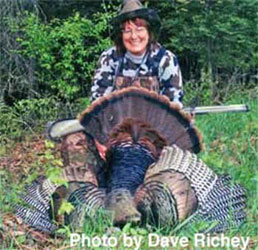
Cathy Beutler with a dandy gobbler she shot while hunting with me.

"Keep your powder dry" was the motto in the 1700 and 1800s when muzzleloading hunters and frontiersmen roamed parts of North America. Those who failed to follow that sage advice often went hungry or had their hair lifted and cut off below the roots.

My list of hunting mistakes with game, especially turkeys, is endless. Years ago, while hunting in a heavy rain with a muzzleloader, I forgot to cover the muzzle. I set my front-loader against a tree with the powder and shot charge in the barrel but the shotgun wasn't primed.

I set out my decoy, retreated to my chosen spot, and primed the muzzleloading shotgun. A large number of gobblers and hens came, and milled around in a tight circle near the decoy, and I couldn't shoot. They eventually left, and I called again.

Good thing a desperado wasn’t trying to take my money.

A lone gobbler a half-mile away answered, and I sweet talked him with a soft yelp and some hen jabber with a push-pull call. He came running up. I saw him first at 30 yards, and then he dropped into a little dip in the ground, and popped up again at 20 yards and stopped. The shotgun was up, and when I pulled the trigger, the primer went off with a pop. The powder did not.

I'd forgotten to put a balloon or anything else over the muzzle to keep the powder dry. The Pyrodex was a black semi-liquid. It was a lesson well learned and never forgotten.

I took a guy out one day, late in the season, and spotted a jake 150 yards away. This guy wanted to shoot a gobbler, and beard length didn't matter. It took 30 minutes to bring the jake within 80 yards, and the guy was aiming at the bird.

"He's too far away," I whispered. "Don't shoot yet. Let him get to within 35 yards." He said the bird was only 35 yards away, aimed and shot.

The young gobbler hauled tail feathers into the woods. The man maintained the bird was only 35 yards away until I asked him to give me a prominent landmark where the bird had been standing. He said the bird was right near that little bush that stood three feet high.

That bush was much farther away than he thought. He shouldn’t have shot.

He was urged to pace it off in approximately 36-inch steps as I walked beside him counting the paces. I got 80 steps and he got 77 steps, and then he realized the mistake he had made. It was the last gobbler we saw that day.

This didn't happen to me but to a friend. He knew, within 50 yards of where a gobbler had roosted the night before. He snuck in the next morning, and stopped well short of the roosting area to wait for the first gobbles of the morning. The sun came up and all was silent.

He gave a very soft tree yelp or two but nothing responded. He stuck with it, and finally with a great deal of impatience, he uncorked a loud yelp on his box call and something happened. A big gobbler bailed out of the tree he was sitting under, and it flew 75 yards, hit the ground a'runnin', and that was it. He had set up directly under the gobbler and missed his big chance.

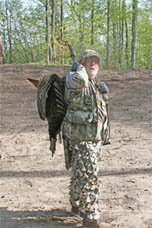
The author carries a nice longbeard out od the woods to his car.

Two friends, on their first gobbler hunt, went looking before dusk and spotted several dark birds on the ground. Just before dark they flew up into a tree. These guys knew about roosting birds and were happy.

They returned the next morning well before dawn, set up about 100 yards away, and waited for the day to wake up. Tweety birds tweeted, crows cawed, and they yelped on box calls. They could see several dark forms in the trees, and called again and again.

A big surprise was in store for those two turkey hunters.

Eventually the birds flew down, and went to where the hunters had seen them the previous night. No amount of calling seemed to work, so one of them slowly eased his binoculars from his backpack, and with infinite slowness, eased them up to his face and studied the birds.

The birds they had roosted the night before were not real turkeys. They were turkey vultures, and they were feeding on carrion on the ground. They admitted it, and took their share of ribbing.

There is only one sure thing when turkey hunting. Murphy's Law always applies, and simply stated: If anything can go wrong, it will. Keep Mr. Murphy in mind, try to outguess him, and sometimes the gobblers react as you plan and the hunt is a success.

Of course, when we mess up, it's still good for a laugh even when we don't feel much like laughing at our silly mistakes. Trust me on this: if you hunt wild turkeys long enough, you too will make a blunder or two.
Posted via email from Dave Richey Outdoors

Tuesday, December 07, 2010

Some funny bowhunting errors


The sight of a nice buck in December can lead to mistakes.


Over the years, I've seen people commit some of the dumbest errors while sitting in an elevated coop or a tree stand or while hunting from a ground blind. Most are funny but some could have been dangerous or fatal.

The reason I write about some of these is there are things that can be learned. Benefit now from the mistakes of others.

One time I had a new hunter sitting in a ground blind. There was a sliding Plexiglas window in that coop, and when I dropped him off, I suggested he keep the window closed until a deer got close, and then silently slide it open, draw, aim and shoot.

Somewhere from spoken word to memory, he got lost.


He did some of it right and failed on other parts. He saw a small 8-point walking toward him, and he waited until the deer stopped, quartering-away at 12 yards, and he drew back and shot.

Cr-a-c-k! He'd forgotten to slide the Plexiglas window open, and shattered it. The buck obviously disappeared, and probably never walked past that blind again.

Another time, another guy was sitting in a ground blind with a sliding wooden window. He saw a buck and doe coming, and when the doe walked past the window, the buck crossed the window, and he shot. His arrow struck the sliding portion of the wood window, glanced off it, missed the buck entirely but the ricochet nailed the doe in the heart. It was a great shot, but it was a killing hit on the wrong deer.

Then there was a time when another hunter drew down on a doe, studied the animal as it walked in front of him and stopped. He held his draw until she started to turn, and he aimed for the heart and lung area. He made a great hit, but again, on the wrong deer.

A doe fawn, standing out of sight, darted in next to its mother, and saved her mother's life. This mistake has often happened, and it is the result to tunnel vision on the target animal and not watching to see what other nearby deer are doing. The venison was really tender, I heard.

It was bitter cold that day and the hunter got too cold.


Once, during the December bow season, a bow hunter was sitting in a pine tree near an alder run. He'd shot several bucks over the years from that tree, and sat out in hopes of seeing another one. The air temperature was about 10 above, and a strong north wind was blowing.

He toughed it out until shooting time ended. He lowered his bow to the ground, shrugged his shoulders several times to restore circulation, and rubbed his hands together. He'd lost most of the feeling in his hands and feet, and tried to get warm and limbered up before starting down.

He took the first two steps, and then one of his feet slipped on a snow-covered ladder step. He had three contact points -- two hands and one foot -- but all were too cold to respond when his foot slipped. He knew he was going down, and pushed himself away from the tree and tumbled eight feet off tree limbs and into the snow. He wasn't hurt from the fall but was a bit disoriented for a moment until he figured out what had happened. Anytime a hunter can walk away from a tree stand fall is indeed fortunate.

Another time a hunter was in that same tree, and it was a cold day, and suddenly a nice buck appeared. He normally had a 60-pound draw weight, but had forgotten to crank it down a bit to compensate for cold, still muscles and bulky clothing.

A buck came walking slowly by. Our hero started his draw, and the arrow fell off the rest. He was shooting with fingers, and the extra effort to draw the weight when cold and over-dressed, caused him to roll the bow string. It flipped the arrow off the rest and it fell, tinkling, to the ground as the buck looked up at the first sound.

Loose nocks, too much clothes, heavy bow weight rolled arrows off.


The buck stared upward, and the hunter didn't move, and eventually it went back to its business of checking an old scrape. He nocked another arrow, tried drawing on the buck again, and again the arrow rolled off the rest and tumbled off branches to the ground.

The hunter, sat and stared at the curious buck, but finally common sense apparently set in and the deer raced off through the snow as the hunter looked down at the red nocks standing upright in the snow.

I've got one ground blind with a low. A sign tells people to watch their heads, but one person managed to smack his head going into the blind. And, to add insult to injury, banged his head when he left. He no longer likes to sit in that stand.

Deer hunting is mighty serious business for most of us, but some of these things are a bit too funny to ignore. And it's a wise hunter who can laugh and benefit from his mistakes.

Posted via email from Dave Richey Outdoors