Sunday, November 14, 2010

Firearm rut-hunting tips & Sidebar


It’s roughly 11 hours and a wake-up until the 2010 firearm deer season opens. Some rutting activity is still in progress, and hunters are urged to be alert. Some rain today will have softened up the leaves, but if it frosts tonight, it may be possible to hear deer walking in the woods.


Firearm openers are calendar dates but the rut runs when does are in estrus. One of the hardest things to do is to predict the actions of a rutting whitetail buck. They are very intense, somewhat erratic and flighty, and trying to predict what they will do is like flipping a coin.

Heads or tails? Forward or backward? Right or left? A buck can move in any of these directions but the bottom line is a buck is going to head for where the does are. That's it! That's what hunters must remember!

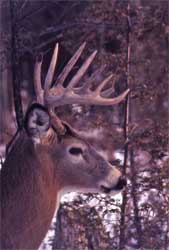
Bucks in rut are very unpredictable.


If that doe is in estrus, and she shows herself to the buck, hunters know the buck will head her way. The next question is: at what speed? Will he move fast, slow or in the stop-go-stop, herky-jerky manner of rutting bucks?

Shooting a rutting buck is a bit different than a buck at other times of the season. Young bucks are more predictable than an older animal, and it's not uncommon for a young buck to stand motionless and get himself shot.

Rutting bucks, even when still, always seem to be in motion. Their body is moving, the head is up and then down or sideways, and they often move when they first spot a doe. Hunters, especially when in a tree stand, may spot the doe before the buck and get ready for a shot.

Guessing a buck's actions opens a hunter up to making errors. I once watched a buck dogging a doe across a field to a hole in a fence. She jumped right through without stopping. I thought he'd do the same and made my release when his nose entered the hole.

The buck stopped instead of coming through and the arrow sliced harmlessly through the air and stuck in the ground. The buck then jumped through the hole, sniffed the arrow and took off after the doe. No big deal for him but a complete miss for me. So much for trying to second-guess a rutting buck.

Don’t be too eager to shoot. Hunters usually more time to aim than they think.


Some bucks act somewhat predictably and others do not. Study the buck, and it helps to be at full draw when the buck comes into sight or, if rifle hunting, watching it with binoculars. If the buck takes two or three steps and then stops, shoot the instant he stops if it offers a high percentage killing shot. Running the clip dry on a running buck is usually a waste of time.

Sometimes a buck will head into the brush on a doe's trail, and stop before committing himself to the move. Be ready if he hesitates, but this isn't something a hunter can count on a buck doing.

A buck tending an estrus doe will often grunt as he trails along behind. Once the grunt is within bow or rifle range, come to full draw and be ready to shoot once he steps out. Often, a buck will stop just inside a clearing or wide spot in the trail to look around, and that may offer an opportunity for a clear shot.

Hunters who hunt near food sources may find an estrus doe will stop to feed, and the buck may approach as she feeds. I've seen bucks stop near standing corn fields or food plots, but it's not something a hunter can always count on.


Try mouth grunting to stop a buck. It may works, and at other times it won’t.


The one thing that decades of deer hunting has taught me is to always be prepared. Rutting bucks can approach quietly or with noise. A hunter who sits with his bow or rifle hanging off a tree branch usually doesn't have enough time to pick it up, come to full draw, aim and shoot.

All too often a buck moves past a motionless hunter without stopping. Or, if he stops, it is just for an instant and then is off again.

One trick that works on occasion is to wait until the buck is in a perfect spot, and then grunt loud and guttural. A harsh grunt may stop a buck for an instant, but it fails as often as it works. Of course, the hunter can't grunt, raise the bow and shoot. He must be at  full draw when he grunts to stop the animal. A gutteral “eehhh” or “uuhhhh” eliminates the need to hold a grunt call.

The Boy Scouts of America have always had a motto: Be Prepared. It works for BSA members, and it certainly will pay off when bow or rifle hunting rutting bucks. Hunters who are not prepared, both mentally and physically, often miss their golden opportunity.

The only thing deer hunters can count on is the buck’s unpredictability.

Some firearm tips to remember tomorrow.


*Be afield and in your stand at least 45 minutes before sun-up.

*Plan on an all-day hunting, if necessary. Know when shooting times begin and end.

*Pack a lunch in soft cloth towels and bring along something to drink. (Not beer or booze).

*Deer are most likely to move at dawn, between 10 a.m.-2 p.m., and just before dark although if hunters are moving, the deer may move sporadically throughout the day.

*If hunting in the open rather than from a coop, be alert to wind direction and where deer move.

*Fast-paced shots seldom produce when shooting at a running deer moving through heavy cover. After two shots, the barrel heats up and shots begin to wander. It’s far better to watch the animal, and when it offers a standing broadside or quartering-away shot, that’s when to shoot.

*Positively identify your target as a deer. Scan the terrain behind the deer to learn if it is safe to shoot. Observe the 450-foot “safety zone” around houses, cattle, barns, etc.

*Remain as motionless as possible, and keep any sound to an absolute minimum.

*If hunting from an elevated stand, do not load a firearm until after is has been raised into the stand. Use extreme caution when walking into and out of a stand. Use a light in darkness.

*Wear Blaze Orange or Hunter Orange clothing.

Posted via email from Dave Richey Outdoors

Saturday, November 13, 2010

Not the right night to shoot


Bucks often bed down in open grassland where visibility is good.


The buck minced along a fence line in no hurry to enter the field before dark last night. It stopped every 10 feet, lifted its head to look around and sniff for danger before moving slowly toward the dinner table.

The day, still warm but overcast, threatened rain. The buck, more wary than it should have been, wasn't in a rush to leave the heavy cover. It poked along, feeding along the edge of a corn field, after leaving a thick swale where it and several other deer had been bedded down.

The buck, sporting six points in a small basket rack, was only 1 1/2 years old. It was plenty old enough to know enough to stay with other deer his age and not get mixed up with larger, older bucks. However, he had taken to hanging out with some big bucks.

Looking for a good buck, not a 1 1/2 year old.


My stand was 15 feet up a towering maple. The buck was still on the same path it had used during August, September and October, and apparently saw no reason to deviate from its chosen course.

Would it follow the same trail again? Yeah, it would because he always traveled the same morning and evening routes, and it would soon pass within easy bow range of my tree stand. My stand wasn't too far from my wife's covered pit blind.

The does and other yearlings had already passed by and continued on into an open field 200 yards away. The buck, moving slowly and daintily like his feet hurt, was taking all the time in the world. He was in no rush to go anywhere.

Many things would have to come together before a bow shot could be taken, and I knew I wouldn't shoot him. The buck seemed to be buddies with some trophy bucks. Now, some of those boys were shooters.

The problem with hunting big bucks is few shooting opportunities.


Would I be ready if one of the big bucks showed up? Daily practice and well over a half-century of studying big whitetail deer at close range had chased away any possible jitters. My mind and gear was ready.

The buck moved a few steps closer. He stopped to sniff where his sister, mother and cousins had paused, and the young buck looked around as its mother had done countless times before. He wasn't running with Mom now but was in the big leagues with the big guys.

My bow, sighted in to be dead-on at 20 yards from 15 feet up a tree, was waiting. An arrow was nocked, and it was ready to use when and if the right time arrived. I was ready for one of the big bucks, not Junior.

The six-pointer hopped over a single strand of barbed wire, and paused again to study the upcoming terrain. Other deer, 300 yards away, were heading out to feed as the sun began to sink in the western sky.

It would have been an easy shot on the little guy.


And then I saw them. Three big bucks were using an adjacent trail. They were only 40 yards away from me but the thick brush would deflect any arrow sent their way, and besides I don't shoot that far.

The young buck turned again, and slowly stepped a few feet closer to my tree. Its head came back, and its nostrils flared as it snuffled the air for danger. None was detected, and satisfied, the buck began to move again, now toward the big bucks.

My tree stand was directly downwind from the buck, and it couldn't smell me. Rubber boots and a downwind position and my Scent-Lok suit kept the buck from detecting my presence.

The buck bent forward, nibbled on a few sprigs of grass, and moved again. The buck was only 20 yards away and quartering toward me. It wasn't a shot I would take even if the buck had been huge. Patience would now become a factor as I waited for the animal to turn and head for the other deer. I could only hope a big buck was lagging behind.

I'd watched that small buck walk to that exact place many times before, and knew he would turn slightly and offer a quartering-away shot at 10 yards. I didn't move, and the buck followed the same pattern he had traveled for months.

The buck slowly turned, quartering away, and my bow came up. It felt like an old friend in my left hand, and as it came up the arrow was cautiously drawn back as my eyes tracked the buck.

An easy shot but again I passed on this buck.


The bow was held back at full draw, and my sight settled low behind the buck's near-side shoulder. One more ounce of pressure on the release would send the Maxima carbon arrow through the buck's chest.

He stopped momentarily to look around, and my finger softly caressed the release trigger without applying the pressure needed to send the arrow on its deadly flight. Slowly, as the buck began walking off again, I eased up on the bow and let the buck walk away, unaware and unharmed.

No other bucks came along that trail. For whatever reason, the bigger animals had taken a different route and were far out of range.

Patterning this animal was easy. His buddies were much more difficult.


I really didn't want to shoot, and patterning this six-pointer and his friends had been relatively easy. Trying to work a bit closer in the days and weeks to come was on my agendam and hopefully one of the bigger bucks would mosey my way..

This exercise was good practice. It provided me with superb outdoor recreational experience, numerous deer sightings, and the chance for a close shot at a nice young buck.

Who knows? Perhaps next time my finger will put that extra ounce of pressure on the release trigger. And then again, I will again choose not to shoot but wait for a larger animal.

It's always this unknown question: whether to shoot or not to shoot, and it's my deep respect for the deer I hunt, that allows me the wonderful opportunity to acknowledge the magical difference between hunting and killing.

For me, on this hunt, it just wasn't the right time or right deer to shoot.

Posted via email from Dave Richey Outdoors

Friday, November 12, 2010

Choose last-minute firearm stands


It’s not likely but some opening-day bucks may be out in the open.


The forecast for the Nov. 15 firearm deer opener leaves little room for speculation about the weather. As of this writing, it seems to be waffling a bit between rain and snow. If we're unlucky, we may get both.

I seem to find myself wondering whether the weather will clear off or be nasty. If it's going to be sloppy, I want to have a ground blind close to the best bedding cover. I normally don't worry about such things, but I've always played hunches, lived by my gut instinct and wits, and with the promise of inclement weather, I'd just as soon be somewhere that it is reasonably dry.

Two spots come to mind, and both are ideal for a pop-up blind. As distasteful as it is to erect last-minute stands, a  pop-up blind can have a person hunting within five minutes. I plan to put a pop-up blind deep in a pine plantation that is owned by a friend, and it will be positioned downwind of where two major deer trails come together. The deer have to work hard to feed all night because where a standing corn field stood last year, the corn has already been cut.

Up in the air or on the ground?

I plan to be in a tree stand if it is not raining or snowing or in the pop-up blind if it is. The neat thing about a pop-up tent like mine that is made by Eastman Outdoors is that it can be carried in, set up, and a hunter is on the ground and  inside where it is reasonably dry and slightly warmer.

Another spot is in hilly country with rolling ridges. I put up the stand last week, and I eased into the area today to check things out. The tent top was stove in a bit from the wind, but all I had to do is crawl in, push the top up and it popped back up in place. It sits down below a ridge, and two trails cross below the ridge, and it provides a good commanding view of the area. It's located about 150 yards from open croplands, and the deer move through there at dawn and for an hour after.

Choose spots wisely and play the wind.

Both spots, although 10 miles apart, hold good promise and my biggest problem will be to decide which place to hunt. And, like it always happens, my decision will be a last-minute one based on the weather and wind direction. Both locations are best on a west or northwest wind, and if we have snow we'll probably have a northwest wind. If we have rain or rain mixed with snow, the wind will most likely be out of the south, southeast or southwest. This won't affect me too much, but an east wind will be a kiss of death for both spots.

If the wind comes from a southerly direction, I'll be hunting the pines and 150 yards from my friend's house. South is a perfect wind for hunting the pines in my planned area. Whatever the weather brings on Monday, I'll be out there and that's a promise.

If the firearm season is like the bow season, we’ll all need luck.

You know why, other than it being a lengthy tradition? It's the only day of the year when you can hear the sun rise.

Posted via email from Dave Richey Outdoors

Thursday, November 11, 2010

Ambush locations that produce firearm bucks


Don’t be surprised by the possibility of some snow on Monday.


Finding a firearm opening-day hotspot can be easy if you follow some of these hard-earned instructions. Good places to hunt go begging because no one wants to move, so instead of hoping deer show up while you set on your butt, try this.

There's no secret about it. Firearm deer hunters often sit in a nice warm coop, and wait for the deer to pay them a visit. If the deer don't move, because no one is out moving around to cause the animals to move as they try to hide, both hunters and deer can take a snooze.

It's easy to find some of the key areas to hunt. Get in to such spots early in the morning, long before the other hunters come stumbling in at dawn. Move early, get in place, pay attention to the wind, and sit tight. Dress for the weather, and don't forget to wear as much hunter orange clothing as possible. Give some of these spots a try on Monday, the only day of  the year when you can hear the sunrise.

These several hunting locations can officer very good firearm hunting.

*Creek or river bottoms -- Such spot often have thick cover, and deer follow these ground depressions when moving from one spot to another, usually through heavy cover. Check the surrounding countryside, and locate some trails that lead into the bottom land. Find a spot downwind of where active deer trails meet that will offer a good view, and sit tight and don't wiggle around.
Hunt downwind of used trails.

*Funnels -- Funnels can be large or small. If one is too big to cover adequately with one man, bring your buddy along. A funnel that connects a bedding spot  with a feeding area or that connects two patches of thick cover is what you want. Sit downwind of the funnel in natural cover, and wait for other hunters to push deer out of one spot. They will use the funnel, and you'll be waiting there for them.

*Drainage ditches aren't as common in the north as in southern counties, but these ditches through farm fields act somewhat like a funnel. Deer will run the bottom of the ditches, which allow them to stay low and out of sight. Again, play the wind and be careful. The breeze may blow one direction above ground but often will be blowing a different way down in the ditch. Hunt near heavy cover areas or woodlots, and any nearby marsh will often hold deer. Find the key spot to sit, and stay down in the ditch to avoid being sky-lighted.

*Swamps -- These spots come in all shapes and sizes. Some are dry while others are wet. Some have a creek flowing through them, and some are connected by a funnel to other thick cover. Learn now where deer travel when the opening-day guns go bang, and figure out how to get back into the swamp well before daylight.

A good way is to wear waders or hip-boots to move into the swamp, and find a nice high and dry area. Deer don't mind getting wet but they prefer to lay up in a dry spot. A cattail marsh is another good bet, and bucks often hole up by stretching out on a muskrat house. Few people look for deer in such locations, and thereby overlook some except hunting areas.

Arrive well before sunrise, hunt all day, and stay alert.

*Dry lake beds -- These areas often grow up to tall grass, and a deer can sneak through the grass without ever being seen. Their fall coat is about the same color as the tall grass, and the best spot to set up an ambush is downwind of where they enter or leave the heavy cover. An elevated coop or tree stand nearby can be an asset because the height allows a hunter to look into the grass from a higher angle. It makes deer somewhat easier to see.

*Abandoned orchards -- Such areas are overgrown with brambles and briars, and the are tough locations for a human to get through. Deer have little trouble sneaking through it, and most of these places are right behind a house or barn. People tend to overlook such spots because they are too close to human settlement, but they can be a true hotspot. The problem is how to hunt them, and the best way is to watch it to see which way a buck goes. Learn his travel route before the firearm season opens, and set up downwind from it. It's the easiest way because getting inside it without spooking the deer is most difficult.

*Hilly country -- Any area with hills will have corresponding valleys. The steeper the hill-sides, the more rugged it will be and the more that big bucks will use such areas. Look for heavy hill-side cover, thick brush in the low spots, and if the country has some craggy outcroppings, bucks will often climb into such areas where they can check their back-trail and pick up scent. The best way to hunt such areas is to be above the deer, and often you'll hear them climbing into position to bed down.
The trick will be to find a hole to look through, and to spot and shoot the deer.

*Islands in lakes or streams -- Whitetail aren't afraid to swim if necessary, and if a lake or stream has an island, it is a good spot to find bucks on or after opening day. Make certain the island isn't privately owned, and if it is, get permission before hunting it. The island doesn't have to be any larger than a high and dry spot surrounded by water for a deer to bed down in thick cover. Islands often are overlooked by many hunters, and they can provide some great sport.

Find a good spot, and try not to be seen checking it out.

Spend some time over the next couple of days, and see if it’s possible to find a nice well-used traveled trail going through it. Get there early, be prepared to hunt all day, and stay alert. Your firearm of choice should be well suited to the habitat being hunted.

Find a few of these hotspots between now and Nov. 15, and chances are good you'll have the spot all to yourself. Well ... you and perhaps a few nice  deer.

Posted via email from Dave Richey Outdoors

Wednesday, November 10, 2010

Consider changing your firearm hunting plans


Be careful with this shot. The fawn is very close to the buck.


Firearm deer-season openers vary from one year to the next, but some things never change. Firearm hunters do things just before the season opener that can cost them a shot at a nice buck on the opener or during the 16-day season.

By Friday, the roads will start filling up with small trailers, truck campers, tent dwellers, and other people heading north to their favorite hunting area to set up deer camp. These camps are spread throughout most of the Upper Peninsula and northern Lower Peninsula.

Mistake No. 1 for most hunters is they are traveling in the wrong direction. Most sportsmen should turn aroundm and head south to the southern Lower Peninsula counties. That where most of the deer, and most of the larger bucks live.

Michigan’s southern counties are best for big bucks and lots of deer.


Mistake No. 2 of this deer-camp routine means sighting-in rifles. Where do these hunters go to make certain Ol' Betsy is still shooting straight? You've got it: they sight in their rifles where they plan to hunt. Duh! That’s not a smart move.

Deer are not capable of thought like a human being. They rely on finely honed instincts to stay alive. The woods have been relatively quiet with bow hunters closing out the early archery season, and only a few small-game hunters are around to make any noise.

All of a sudden, here comes an influx of sportsmen. They rattle and clatter around at their chosen campsite, and there are car doors slamming, loud talking, and people start to settle into their camp.

Deer sense changes in the fields, swamps and woods near deer camp.


They then walk through the woods through dry leaves or snow to determine where to sit on opening day. They lay down plenty of stinky boot leather, holler back and forth to each other, and leave the woods filled with human noise and scent.

Next, they set up a target 100 yards away, and blim-blam at it for several hours. They shoot fast, over-heat their rifle barrel, and never truly get a good reading of what their firearm is doing. They should know that any first shot they take at a deer on Monday will be the most accurate because it is being shot through a cold barrel. That is, if it is dead-on.

Shooting a clip filled with cartridges in rapid-fire fashion doesn't give the best results at sighting in a firearm or hitting a deer. As the barrel heats up, the bullets start hitting farther and farther apart. Hunters should always allow at least five minutes between shots when sighting in a rifle. Ten minutes is even better.

Be quiet, don’t slam car  doors, and realize that deer can hear, smell and see well.


There is loud conversation as the hunters compare notes, and advice is freely handed out. The steady sounds of shots being fired, and the loud talking, and people roaming aimlessly through the woods, isn't lost on the local deer population. It doesn't take much IQ to know that something new has been added to the mix, and anything new means possible danger.

It seems everyone now sits inside a portable tent or a small coop to hunt, and many people still use bait, even though it's illegal. Deer are always suspicious of bait that is suddenly found in the woods. It takes deer at least a week to become fully adjusted to a nearby bait site.

The problem of hunting from a fixed location is that no one is moving except before dawn, from 11 a.m. to 2 p.m., and then again after shooting time ends. Most hunters don't go out and work the swamps and other heavy cover because they don't want to push the deer to someone else. So if everyone sits, and the deer hold tight in their bedding cover or other thickets, there won't be many shots taken.

If the deer don't move, the hunters complain about a shortage of deer. They say the DNR has lied to them again. Sadly, most of the blame for very little deer movement can be laid at the feet of those hunters themselves. If everyone sits, and no one moves, the deer won't move until after dark.

Make just a few changes, and it can help hunters bag more deer.


Is there anything hunters can do? Not really, the damage has already been done for this year but sportsmen can sight in their rifles during the summer months at a gun club near home. They can make forays north during summer or early fall months, and make certain their blind is OK.

They can tone down the loud conversations, and realize that deer are not accustomed to continuous loud man-made noises. They can work together so that everyone walks around for an hour each day, and develop specific areas for hunters to walk through to move deer around.

I'd rather see four guys, who hunt together, sit until 9 a.m., and then one person should walk through a designated piece of cover for an hour before sitting down again. At 11 a.m. many people walk out to eat. At noon one of  the hunters could cover another parcel of thick cover, and most hunters come back out at 1 or 2 p.m. Another hunter could move at three, and a different one at 4 p.m., and that would put someone out walking around and moving deer most of the day. Everyone would see more deer and probably shoot more animals.

If every hunter stays in their blind all day no one will be moving animals. Hunters can work this or a variation of this movement pattern, and it is bound to help sportsmen see more animals.

Even more important, it isn't going to ruin anyone's hunt if just one person gets up and moves around for an hour. In fact, it could lead to better deer hunting for everyone. It's certainly worth a try.

Posted via email from Dave Richey Outdoors

Tuesday, November 09, 2010

How much is too much?


This Cuddiback photo of a buck was taken at 15 yards, an average bow shot.


The man had a very serious problem. He no longer could draw his bow without severe arm, back and shoulder pain.

He is the son-in-law of a friend, and being young and strong and very competitive, he and some of his buddies decided to settle a macho bet of who could draw the most poundage. Testosterone was flowing, and they soon began by pulling 70 pounds.

Hey, no problem, they all thought. The next step was to crank each bow to 75 pounds of draw weight, and measure it on a scale. Only two  sucked the bow back to full draw, and then they raised the draw weight to 80 pounds.

How much draw weight is needed to kill a deer with a bow?


This was possible for both of them, but the others had already dropped out of this childish contest. It took considerably more effort than they were willing or able to give. This contest was finally going somewhere. The two guys kicked the draw weight up to 85 pounds, and with a great deal of posturing, each one reached that plateau but it was obvious it was becoming very difficult for both men.

We've come this far, one said, let's take it to 90 pounds. There was a great deal of grunting and groaning as each bow came back to their individual anchor points at that draw weight. Both were red in the face, and agreed now to take the contest upwards again, but now only one pound at a time.

One man made it to full draw at 91 pounds. The other man did not. We then had a winner and a loser, and both titles belonged to the same person.

The winner-loser felt something go as a muscle ripped in his shoulder while he took it up that one last pound, and his shoulder hurt all winter and was still sore in the spring. By now, he had cranked his bow down to his usual draw weight of 68 pounds.

But he couldn't pull that much weight now. He was then forced to travel in reverse, and tried again at 65 pounds, and then 60 pounds, and finally settled in at 55 pounds. It still hurt to draw his bow at that poundage, but over the spring and summer he settled in at that draw weight for good.

It's been about 15 years since the two strong men competed to be the top dog at pulling the heaviest draw weight. He is content now because he doesn't have to crank down his bow for the December bow season, and he has found that 55 pounds is plenty heavy and fast enough to kill a buck while hunting in Michigan's swamps and woods.

There seems to be an obsession with more and more arrow speed. Years ago, most bows couldn't shoot 150 feet per second (fps). Many thought an arrow speed of 200 fps would be impossible to attain. Ten years ago archers and bowhunters felt an arrow speed of 300 fps would never be reached, but it has.

Do most bow hunters require increased poundage and arrow speed?


The reality of shooting a bow is that if an arrow travels at 180 fps, and hits a deer at a distance of 20 yards or less, the arrow will hit the animal before it can hear the bow string twang and jump the string or duck under the approaching arrow. So ... is there a need to shoot an arrow any faster?

Of course there is, under certain circumstances. Faster arrow speed means a flatter arrow trajectory. An increase in arrow speed of only 20 fps will allow a person, with the proper skills and considerable practice, to easily kill deer at 30 yards instead of 20. Hunters who travel west to hunt for antelope, elk or mule deer with a bow often need to shoot at longer distances, and that is where a faster arrow speed is required to flatten out the arrow flight.

There are still some men who are into heavy poundage on their bows, and who want to reach out and set new personal arrow-speed records. They modify their bows, add an overdraw, shorten their arrow length, and crank up the poundage. They use carbon inserts and carbon arrow, and shoot continuously.

How far up the poundage ladder is it necessary to climb?


Hunters broke the 300 fps barrier years ago, but as time goes on, I see fewer people maxing out the poundage of their bow. And, to be honest with you, I'm seeing far fewer people with shoulder injuries caused by taking their body to a point where it was never meant to go.

I now advise people to shoot what feels comfortable to them. A test of strength and determination isn't required to be a successful deer hunter.

Most deer hunters are content to keep the poundage down to a comfortable level, and where drawing a bow is fun ... and never a painful exercise from which they may never recover.

Posted via email from Dave Richey Outdoors

Monday, November 08, 2010

Buy books for Christmas gifts & shop early


Books like the ones shown here are just an example of some titles available.


I've always been a reader, and when the snow lies deep and heavy and the newspaper isn't delivered on time during the winter, if necessary, I'll read the cereal box while munching on my favorite breakfast flakes.  Besides fishing and hunting, reading is a favorite pastime.

I got stuck once in Galena, Alaska before a moose hunt when my flight couldn't cross the mountains. I'd meant to pick up a novel or two in Anchorage, and was barely able to make my connection. No time to shop for books, and the three days spent in a boarding house at the tune of $250 a day without something to read, nearly drove me nuts.

More people are reading now than in many years. They've given up on the idiotic drivel that passes for television programming, and have gone back to reading which entertains you in your mind through the use of the written word. Don't believe me: check seats on both sides of the aisles on commercial airline flights. Most passengers are reading something.

Shop early for great fishing-hunting books for Christmas gifts.


Which brings me to my shameless self-promotion of Scoop's Books, my website for used and out-of-print or rare books on fishing and hunting. There will be over 400 fishing and hunting titles listed before next weekend, and there are low-priced, mid-range and high-priced books for sale.

I've resisted charging readers to read my daily website, and haven't taken any advertising for the seven years my blog and website has been up, but it takes money to pay the freight. I do this by selling books about fishing and hunting to folks like you who want to learn more about these outdoor persuits, and learning is indeed possible when people read.

There are numerous books about muskie fishing and turkey hunting, two of my specialties, and there are some wonderful buys on trout books, decoy carving, and on many other topics. Many of these books are scarce and expensive, but all are fairly priced.

This listing of 400+ books and some old outdoor magazines comes just in time for Christmas shopping for the angler/hunter in your life. Checking out what is available is only a few keystrokes away.

When you open up my website <www.daverichey.com> you'll come to my Home Page. At the right side of my daily blog is a link to Scoop's Books. Click on my picture, and then click on the fishing and hunting alphabetical book link. The books are listed by last name first, and from A-Z.

Get a 10 percent discount by ordering before Dec. 15. Mention code.


Scroll down through the books or magazines, and the books are listed in alphabetical order according to the author's last name. Each book is accurately described with all necessary information including the book condition and price. People who order books from me must pay with a bank money order (preferable), but I do accept business or personal checks but shipping is delayed until the checks clear my bank.

I advise customers to insure their payment to me  and obtain a delivery confirmation that allows them to track their money, and when books are shipped, I also obtain delivery confirmation, and both parties are protected. Postage fees are $5 for the first book and $3 for each additional title when shipped by Priority Mail. Insurance is extra.

Shipping costs may seem high until you consider the books are insured for full value if paid for in advance, and there is the delivery confirmation which allows shipments to be tracked. Handling sales in this manner is firm proof that I ship what is ordered and paid for.

Here is an alternative to what some may consider high priced books. Pay by bank money order or personal check, and mention my discount code (12-15-10), and I will discount the book price by 10 percent. This does not include postage costs or insurance. The discount is good only through December 15.

Query with me at <dave@daverichey.com> before ordering.


This next step is very important: I advise potential book buyers to query me before ordering at <dave@daverichey.com> to determine if a specific book is still in stock. Often, two or more people order the same book at about the same time, and if it is a one-of-a-kind title, one buyer is satisfied and one is not. A quick email eliminates that problem for both of us, and I'll hold a book for seven days awaiting payment.

Do I handle good books? The answer is yes, but I remind readers that I also offer a free search service for specific titles if they are not in my inventory. Search services are free providing the buyer isn't having other booksellers try to find the same book. Such duplications of effort will make one bookseller happy while ticking off the other sellers.

I try to offer books in the best possible condition, and those conditions (in decreasing order from best to worse) are Mint, Very Fine, Fine, Very Good and Good. I rarely offer such hole-fillers as Fair or Reading Copy, but occasionally a Very Scarce book is offered in these lesser conditions because of their rarity.

I buy books as well, and welcome the chance to consider yours. I prefer buying Fine or better books, and readers can query by giving me the author's name, book title, date of publication, and mention any flaws. I specialize in muskie fishing and turkey hunting books, but cover everything from bass fishing to trout fishing, from antelope to turkey hunting, and almost everything else inbetween.

Keep checking Scoop's Books daily for new additions, and make note of deletions, and let me know if there is a specific fishing or hunting book you need. My books are accurately described and fairly priced.

Books, anyone? Here is your chance to fill Christmas stockings early. Oh, please read the page before the book listings. It is filled with information you should know before ordering. Thanks!

Posted via email from Dave Richey Outdoors