Sunday, November 07, 2010

Making a change


Checking for fresh sign and being lucky helps when choosing a deer stand.


I've hunted the same stand three nights in a row, which for me, is something I've avoided in the past. My belief is that if a stand is hunted too often, the deer pattern the hunter rather than the other way around.

It's always been my policy to hunt a stand one night, and not hunt it again for several days. Each time I hunt a stand, I approach it from a different angle. I'd go in one way, come out another, and several days later, reverse the entrance and exit routes.

But, this stand is one I've got an enormous amount of faith in, and for three days in a row, the wind has been dead perfect for its use. Each evening I've seen a few deer, but they are moving late and that can be attributable, in part, to the current moon phase.

It was very productive last year and I shot a very nice buck from it. There were a few other bucks seen there last year. Two of those bucks were wall-hangers, both 10-pointers, and both having a Pope & Young minimum score of 125 points or higher.

Neither of those bucks were taken last year by a hunter during bow, firearm or muzzleloader seasons. Both were seen briefly in late December, and each rack was distinctive enough to make the sheds recognizable. The area was scoured this spring for sheds, and although some were found, none belonged to either of those bucks.
of
Of course, one or both of the bucks could have been hit by a car, moved out of the area or otherwise changed their place of residence. But there was no need for either buck to move from the area.

That line of thinking makes me think they are somewhere nearby. I thought I caught a glimpse of one of them two weeks ago on a night with a heavy overcast and falling rain. I have no proof that it was one of the two "lost" bucks, but I feel certain that I'd seen one of them.

So, keeping that thought in mind means hoping they survived the winter, automobile traffic and other hunters. Both were patient bucks, hanging back, letting does go out in front, and they were always cautious about moving about before full darkness.

Both bucks seen last year moved late last year, and they always showed up with only two or three minutes of shooting time left. My problem is: if the wind is right tomorrow night, should I try that stand one more time? Is hunting it four night in a row a problem?

My mind logically tells me the answer to the first question is no, and the second question is yes. Will I follow my long-held beliefs about avoiding repeat visits to stands to avoid burning them out?

I wonder if the bucks are alive or long dead. I wonder if hunting pressure, although not heavy in this area, may have moved them two or three miles away. Should I run the possible risk of spooking them, or try a new spot tomorrow evening?

Decisions are a part of deer hunting, and we must live by our personal choices. I know it is foolhardy to hunt that stand four nights in a row, but I'm thinking I'll risk it if the wind remains stable and from the southwest again tomorrow.

All bets will be off if the wind swings from another direction. It will force me to move to a different stand, and then I'll wonder if either buck showed up at the stand I've used three nights in a row.

Win, lose or draw, my decision will be made tomorrow afternoon. Squawking about a missed opportunity is just meaningless noise. We pin our hopes on the proper stand for the proper wind direction, and we take our chances and live with our decisions.

I'll let you know if my decision was a wise one.

Posted via email from Dave Richey Outdoors

Saturday, November 06, 2010

Where are the bucks?


It’s not a big buck but seeing it today would have made me feel good.


The only sound I heard in my tree stand today was that of the northwest wind soughing through the branches. The temperature plummeted to a chilly 27 degrees, early this morning and even though the wind was a bit more than I'd prefer, it didn't stop some of the deer from moving.

A couple of does and fawns eased out of the tag alders 250 yards away, walked up a low hill, and stood there like sentries checking out the battlefield below. The deer fed up high, eased on down through the field, fed some more, crossed a woods road, and entered a low-lying tag alder run near my stand.

I sat quietly, dressed warmly in my Scent-Lok suit, and waited for the deer to arrive. It was my hope they would pick up a buck along the way, and bring him in close to me. The logic was sound on my part, but something got lost in the translation for the deer.

Uncooperative whitetail bucks. A day when few deer of either sex moved.


They got into the tag alders, jumped the creek, and headed east into another big field. Perhaps a trolling buck found one of the does to his liking but I suspect those antlerless deer old enough to be bred, had been.

There was no deer grunts near me. The bucks were apparently bedded down or up and moving elsewhere ... but not in my neighborhood.

The does and fawns didn't come my way. They didn't go to another hunter a quarter-mile away, and they apparently failed to rouse the interest of any nearby bucks ... if any existed.

It was one of those morning and evenings when nothing much moved until well after dark. Driving out the woods road revealed a buck here, one a mile farther down the trail, and a sprinkling of does and fawns. There didn't seem to be many deer moving, and no pattern to their movement.

The rut sometimes happens this way. The first round of does get bred early in the rut, and then several days may pass, and another spurt of rutting activity seems to kick in about Nov. 8-10. and it will be good again until the Nov. 15 firearm opener.

The mid-day hours are really my favorite rutting time to hunt, and I find far fewer hunters afield. It's easy to make your way to a tree stand or ground blind, and seldom will we bump into a deer, and then from 10 a.m. to 2 p.m., the chances of seeing bucks on the move seem to increase.

A few deer moved on the drive home but not many.


It doesn't always work out this way. Nothing about deer hunting is cast in stone. There are some days when rutting activity seems to slow down. Blame it on the weather, too much hunter traffic in the woods, nasty weather ... whatever. There are days when mid-day bucks are on the move, and days when they are not. Go figure.

Right now it's tough for me to hunt anytime except from 4 p.m. to the end of legal shooting time. Admittedly, it may not be the best time to hunt, but we get away when we can. We work with what we have, and next year things will be different.

I've hunted many years during the rut, and this one has been one of the strangest seasons I've seen. But deer hunting means going through days of little or no deer movement, and days when the deer are constantly on the move.

We just have to live with what we have, and try again the next day in hopes that things shift around. You see, for me, deer hunting is far more important than deer killing.

Still, it's nice to see deer up close and within bow range.

Posted via email from Dave Richey Outdoors

Friday, November 05, 2010

Hunt the rut’s mid-day hours


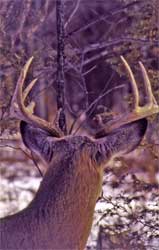
Not much of a bow shot here. Wait him out & hope for a better angle.


I've written about it lately, and yet many people are missing out on some of the best mid-day deer hunting action of all.

The mid-day hours during the rut can generate some very exciting action. And, the best thing about it is you'll have little competition.

The early daylight hours from 30 minutes before sunrise can be a good hunting time, as can be the 30 minutes after sundown, but those hours between  10 a.m. and 2 p.m. are often overlooked by hunters. Bucks often are on their feet and moving during this period, and other than some snow showers today, visibility is usually good at that time.

Hunt the mid-day hours during the rut.


Most people are not hunting during mid-day. Many are working, but those who aren't working are seldom sitting in a ground blind or tree stand to take advantage of this great time for deer movement..

I learned about this particular phenomenon many years ago while hunting ruffed grouse. I boosted the same buck out of the same covert at about the same time two days in a row.. I went back to hunt that area for the buck, and was fortunate enough to set up on him and to get a very good shot at 20 yards.

Hunters, even on state land, should try hunting the mid-day hours if possible. The hours between 10 a.m. and 2 p.m. are ideal. Few hunters are afield then, the swamps and woods are silent, and many of the bucks are up and moving around. We hunted tonight, and of the five people who hunted, two saw bucks and three didn't see a thing.

The odds are not dramatically different, but using the above example where two hunters saw a buck while three did notm that means hunters could have a 40 percent chance of seeing a deer, and those odds are greater that a hunter will see a buck. And sometimes, with those bucks that are mostly nocturnal, it can be an exceptional time to see a really good buck. Deer just aren't accustomed to seeing hunters in the woods at that time of day. Often, this is when a hunter will see a buck he’s never seen before because it has suddenly followed a doe into a new location.

I saw a young buck and let him pass, and one of the other hunters had a buck walk quickly past his ground blind at 10 feet. It was a husky 10-pointer, but it was by him before he had a chance to grab his bow, draw, aim and shoot.

Be alert, and ready to shoot. Rutting bucks seldom offer second chances.


Another hunter in another area miles away sat in a ground blind as well, and saw two 8-pointers. One had a rack with seven-inch G2s and a 22-inch spread. The other buck was a smaller animal, and the big guy chased the smaller buck around an open field for 15 minutes without offering a shot. He also saw a few does and fawns,400 yards away right at the end of shooting time.

Make no mistake about it. The same rules apply at this time of day as applies at dawn and dusk. Be ready for a shot at any time, and people who hang their bow from a nearby tree limb, often do not have time to grab it and shoot before the buck is gone. These bucks are sniffing the ground, and if they happen on a hot doe trail, they can be gone within a second or two/

It's difficult for hunters to get out at mid-day during the work week, but I've known some guys to hunt their one-hour lunch period and score on a buck. It's certainly worth a try, and it's can be a time period when some of the largest bucks are on the prowl.

Hunting the mid-day hours during the rut is one of deer hunting's best-kept secrets.

Posted via email from Dave Richey Outdoors

Thursday, November 04, 2010

Doing the right thing


Sometimes all we see is a glimpse of a big buck. It has to be enough.


Ever have a hunch? Or a premonition? Or a gut check? How about a lucky guess while bow hunting whitetail deer?

My hunch or whatever it was almost made me vibrate in my elevated stand. I was all a'jangle, and only one thought bounced around in my head.

Here it comes. I thought. Tonight is the night.

I could feel the buck behind me. I don’t know how but I knew he was there.


I sat as still as possible, was downwind of where the deer travel, and was in my tree well before 4 p.m. Everything was set up, and only a faint breeze blew.

The longer I sat, the stronger this feeling became. It was so strong that my neck hairs were lifting up. Jolt after jolt of adrenaline was coursing through my body, and even though I felt jumpy, there was no motion or noise. I learned many years ago how to control those feelings.

The minutes passed with all the speed of a moving glacier. Time dragged by on tired legs, and soon it was 5:45 and I had yet to see a deer. As the minutes passed with dragged-out slowness, the feeling seemed to intensify.

Shooting time ended where I was hunting near Cadillac at 5:59 p.m., and that gave whatever was coming just 13 minutes to get on the stick and come down the trail.

I heard a twig snap behind me in a tag alder run. Deer? Perhaps some large animal? A buck?

Possibilities seemed endless, and yet the feeling persisted. There was something behind me, but what?

It was one of those situation where I had to wait for the buck to move.


With two minutes to go I checked my watch again, noted the shortness of remaining shooting time, and still nothing moved. There seemed to be a hush, and had I been bear hunting it would have meant a bruin was up and moving nearby.

But this location isn't noted for bears. I've learned to believe in these feelings, hunches or whatever they are. Such thoughts have kept me alive when trouble was brewing in some bad areas over the years, and it has alerted me to approaching bears. My eyes kept flitting to the trail, and then the magic minutes and hours combined to force me to remove the arrow from my bow.

I stowed my bow, put the arrow in the quiver, and waited for my ride to pick me up. I didn't want to move from my stand until I was picked up, and was content to let the vehicle spook the deer rather than me.

Five minutes after legal shooting time ended, the vibes grew even stronger, and out walked a nice buck. His antlers were outside of his ears on both sides, and although the brow tines were short, the main beams were heavy and each points was nearly 10 inches long.

I didn’t move, and never did poaching this buck occur to me. I play by the rules.


This beautiful 8-point was the first buck I'd seen in several days, and what continues to amaze me, was that I could feel the animal's presense  nearby. My body, for whatever the reason, is attuned to such things, for which I've been very happpy.

The same feelings occur when bear hunting, and this buck had established his presence on me two hours earlier. It just took him until dark to make his move down the trail.

My binoculars focused on that magnificent rack, and I studied him with a calmness that even surprised me. You see, I knew I couldn't shoot and so I did the next best thing. I studied him.

His body was long and thick between the  backbone and belly, and his neck was rut-swollen, and he had tufts of hair missing here and there. He had fought some rutting wars, and was very alert.

He didn't move fast at all. One or two steps, stop, lift his head, and with the binoculars I could see his ears swiveling back and forth for any strange sound. I could hear that buck sniffing the breeze, and there I sat in my Scent-Lok suit being treated to one of the greatest shows on earth.

He eventually moved on down the trail and was out of sight when my ride showed up. I loaded my gear into the vehicle, jumped in, eased the door shut with an almost inaudible click, and away we went

I muttered: "What a buck!" He asked about what I;d seen, and listened to my story, and I'd been blessed tonight. No arrows were shot as rain threatened all night, but I saw the buck that would have made my day or that of any other bow hunter.

I could have cheated and shot that buck, but that is not me. I told the story to another hunter, and he said he would have shot in a heartbeat. Who would have known?

Only me, I said. I would have known that by taking a shot that I was no better than a common poacher, and whenever I would look at that buck, I would have known that I cheated and broken the rules.

Seeing that big buck was good enough for me. And tomorrow, when I look in the morning mirror, I'll know I did the right thing. That is the most important thing to me.

Posted via email from Dave Richey Outdoors

Wednesday, November 03, 2010

An exception to the rule


Pyramid pit blinds like this are warm & dry at all times.


Those who know me realize that sitting in a tree stand is my favorite deer hunting method. However, there are exceptions to every rule, and last night found me doing something different for a change.

It was a night for me to make an exception. There are two reasons to own hunting coops: one is for those people who dislike sitting exposed to inclement weather in a treestand. The other reason is they like to stay warm and not fight windy weather.

Inclement weather yesterday meant a dfairly steady on and off-again rain. Kay and I  hunted two widely separated locations, and it was a wet and windy day and evening although the rain stopped just before dark. Granted, I  could have worn rain gear and toughed it ouut, but I've been fighting the sniffles and didn't need to get wet and feel even worse for the rest of the rut.

Rain & sniffles can lead to a bad cold, which I don’t need now.


Was it a great hunting night? Of course. Any night when a person can hunt is a good night, but as the old joke goes, some nights are better than others.

No bucks came to me nor Kay, and there were no does sneaking in late through our area as they headed elsewhere. In fact, neither of us saw a deer of either sex

It seems on nights like that most deer stay close to their bedding area in thick cover, and wait for the rain to peter out. Wet ground makes for silent travel, and some bucks may go for a hike to see what is new and different on their home turf but many animals just wait it out. They seem to know that rain will take the crunchy noise out of dry leaves.

I don't hunt from a coop every night it rains but I do enjoy the stillness of a dry coop 20 feet in the air. It gives me greater visibility, and although there was nothing moving in our hunting area, it proved that sitting inside a warm and dry coop has some things going for it. I'd much rather be outside in the weather but Ma Richey didn't raise any fools.

I want to be hunting during the rut’s peak, not in bed with a cold.


A hunting buddy several miles away saw two nice bucks but none came any closer than 80 yards, and the high and wide eight-pointer he saw was hugging the tree line. He showed no inclination to cross an open field. The second and smaller buck, also an eight-pointer, was traveling with a doe. I suspect he better have some fun siib before a larger buck takes his girlfriend away, and leaves him with a hole or two in his hide.

The other hunter saw no does, even at the end of shooting time, and all was silent after the two bucks moved through. As he put away his equipment for the hike back to his truck, a crashing in the brush revealed a she-coon trying to move away from him.

Each of us had the same thoughts tonight. It's impossible to be a successful deer hunter while sitting in the house. That means we were out in the weather tonight, but all of us chose to sit in a dry coop.

We all all stayed dry and warm. That’s why I made an exception last night.


My friend and I may not be the smartest gents in the world, but we're savvy enough to come in out of the rain. Which is probably what our mothers hoped we would learn after they had harped at us for years about being smart enough to get in out of bad weather.

See, Ma, I did pay attention ... once in a while.

Posted via email from Dave Richey Outdoors

Tuesday, November 02, 2010

All puzzle pieces must mesh properly


Don’t shoot just yet! Wait for a quartering-away shot.


After hunting whitetail deer for more than 50 years, this time in the field has given me many thoughts about hunting these critters. Those experiences can be confidence builders.

Whenever I encounter a specific wind or weather situation, my mind slips back through the years to when a similar situation occurred. The next step is to analyze that experience, and if it worked once, we try it again.

Fortunately, we tend to remember those times when things work and forget those times when they didn't. Usually that allows us to make the proper decision based on important  previous experiences.

Wise decision are needed when choosing where to hunt.


I always have, and probably always will, play hunches. A person's gut instincts are normally correct, and over many years of studying deer and why they do the things they do, it gives me an insight on choosing the proper stands to hunt on a particular day.

Deer move around a good bit, and sometimes move more than many hunters believe. This is especially true now, during the rut. Deer also move from one food source to another. We all grow tired of eating corn, sugar beets or whatever.

There are few oaks on my land but there are many food sources. Over the years I've planted Imperial Whitetail Clover, countless other types of clover, alfalfa, brassica, purple-top turnips and many other truck crops. Some of these food sources are planted near ground blinds and tree stands.

Corn and soy beans are wonderful truck crops, and everything I plant is left for the deer, turkeys and other birds and animals. That means that I know when deer switch from one food source to another. Turnips often produce well once we've gone through one or two hard frosts, and they become more sugary.

Know all natural and planted food sources, and how deer travel to them.


Choosing which stand to sit in is a matter of knowing where the deer happen to be traveling, and which food source is present in that area. Obviously, wind direction plays one of the most important roles in choosing a hunting stand.

I haven't counted the number of stands on my land, but there is probably at leas would guess there is probably at least a dozen although some are seldom used anymore. Certain stands remain good year after year while other locations go flat, and I'm inclined to think that hunting pressure is the main reason why deer change their travel patterns.

Each year I look at my stands, whether they are tree stands, elevated coops,, pit blinds, tent blinds or whatever, and determine their relattionship to the closest food sources. I seldom place stands extremely close to food plots but prefer them to be near trails that lead from one food plot to another or from my land to a neighbor’s food plot.

Know why some deer stands suddenly go dead.


Study and learn why deer come to one area, and why that location suddently goes dead. In most cases, it is hunted too often and deer may spot the hunting moving to or from the stand. Once a deer patterns a hunter, they seldom return to that spot except long after dark

Food plots, bedding areas and travel trails are an important part of the whitetail equation. Each part of the puzzle must fall into place. If it doesn’t, whitetail wind up going somewhere else and your hunting spots dry up.

Posted via email from Dave Richey Outdoors

Monday, November 01, 2010

Fooling that buck


Take quartering-away shots at bucks like this.


Killing a nice buck with a bow is easy. Don't believe me, just ask any hunter who has done it several times.

It's a bit like your first kiss, first love, first child or the first of anything. Doing it the first time is most difficult, and each time after that it gets a bit easier.

Much of shooting a good buck is how the hunter sets everything up. Stand positioning in relationship to buck travel is part of it. Knowing when to draw on a buck is part of it, as is knowing your personal limitations. A big part of shooting a buck involves planning ahead.

Know where & when bucks travel to meet the does.


Deer move through certain areas, and follow special patterns. Bucks, in particular, are used to going wherever they want and doing what they please. Bucks often are bullies, the swaggering dude on the beach, and they are used to everyone giving way except a larger buck.

Bucks are accustomed to does and fawns, and lesser bucks, getting out of their way. If the does are found in certain areas, regardless of whether it is a pre-rut, rut or post-rut situation, the bucks won't be far away and somewhere en route to the girls is the best spot to be.

If hunters can control their scent, have safe and noiseless stands, and know when to draw, shooting one of these egotistical bucks can be very easy. But planning ahead is part of the key.

Learn long before the season opens where the bucks will go to meet up with the girls. Does are the main attraction after Oct. 20, and hunters who know those locations are a leg up on other hunters.

Bucks occasionally come together with does before they enter the feeding areas. The does and fawns then head out, and bucks often move back and forth through heavy cover 50 to 100 yards from the feeding areas, and then when they are so inclined, the bucks move out.

Studying any interaction between bucks and does now can pay off later as the rut phases change. Right now we're on the cusp of the full rut as the chasing phases slows down.

Bucks know where does are now, and you should too. That’s where bucks will be.


Bucks often follow their own routes out to the fields where the does are found, but sometimes they move off the trail as they follow along behind the does. Sometimes bucks will use the same trail used by does and fawns.

The secret is to find where they stage before moving out, and set up a stand downwind. Sometimes, in these key locations, it may be wise to have stands set for the primary wind direction and another for the secondary wind direction.

Choose your own poison but my preference is for a cedar or pine tree within 20 yards of the trail the bucks use to approach this staging area. Most hunters want to see the buck coming for a long distance, but it makes no sense to set up that way. If you can see a buck or doe coming for a long distance, those animals can see you as well.

My preference is for the deer to pass me on my left side (I'm right-handed), and approach from behind me. I'm tucked back into the shadows, regardless of the time of day, and since I know where the deer will come from, I am well camouflaged. I've wearing my Scent-Lok clothing, have sprayed my rubber boots with a scent eliminating spray, and know the wisdom of being still and quiet.

By having the deer come from behind me, and on my left side, I can often hear their approach, and can be at full draw before they get even with my position. I time my shot when they are quartering-away, and aim to hit the off-side shoulder blade with my two-blade broadhead.

Pass-through shots are OK but I want my broadhead inside & cutting the buck.


Don't holler at me about pass-through shots. I've seen too many pass-through hit miss all the vitals. I want my arrow to stay inside the deer, and with every running step the animal makes, it continues to cut. I seldom have a buck go past 70 yards with the arrow inside him.

Pre-planning is an important thing. If your plan is perfect, and you execute all facets of the hunt properly, the deer will offer an easy shot and arrowing the animal is a given.

Don't believe me, give it a try. Your set-up for a shot often is the one factor that controls the success or failure of your hunt.

Posted via email from Dave Richey Outdoors