Showing posts with label back. Show all posts

Monday, August 20, 2012

Savor the memories of those now gone

DRO - George Richey, fondly remembered
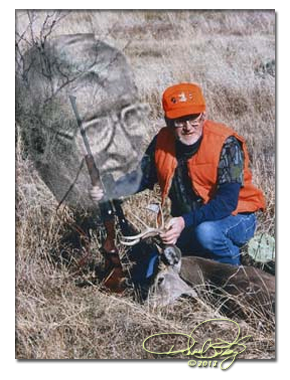
George Richey with a nice Texas whitetail and a ghostly image
photo courtesy Dave Richey Outdoors ©2012
A number of people who have been near and dear to me may have taken life for granted at one time or another. Most of them, in the final days of their life, realized their mistake.

In other situations, some of us don't take things for granted, but life can still step up and blind-side us.

None of us are infallible, and none of us are invincible, no matter how strongly we believe it. Life can begin and end on a moment's notice.


The death of a person can come suddenly; without notice


My life has been blessed in so many ways, and I took my vision for granted until I began losing it. Now, every day is a precious commodity to be wisely considered and lived with a fervent passion.

The problem is that none of us know how much time we have to live. My father, who died of old age, had prostate cancer for years. It didn't kill him but 94 years of life did.

Twin brother George lived life to its fullest. He did nearly everything in life he really wanted to, and learned one Saturday that he had incurable cancer and he died the following Wednesday.

He didn't go to his Maker kicking and screaming. Hours before he passed away, he told me: "I have no regrets. I've lived a good life, and now I'm ready to go."


Life is meant to be lived to its fullest; Death is permanent


A good friend of mine died two days later in Oregon. He had made it through perhaps ten years in a wheelchair, and died after having lived a full life before a stroke kept him from walking.

Brother George had seven different kinds of cancer, and his pain levels were mild compared to that of others. Why does this happen? Why do so many people die of this disease in agonizing misery while others have an occasional ache or twinge of pain?

My aunt, who died years ago at the age of 84, was a very religious woman. She never smoked or drank, but battled cancer for many years. She attended church two or three times a week, and still the disease finally wore her down.

My first wife died at the age of 40 from cancer. She didn't visit the doctor as often as she should have, but no one deserves such a painful and undignified death.

Three good friends died early. Two had families, but died of self-inflicted gun-shot wounds. Only one was physically ill, and he had inoperable cancer and chose his own time of death.


I talked with him three days before his death


All of these people, with the exception of the two suicides, had cancer. It wreaked havoc on their bodies, and in the end, the pain and the debilitating effects of chemotherapy and radiation probably hastened their demise.

My good childhood friend Fred Houghton died quietly. He loved to fish for walleyes and yellow perch on Saginaw Bay, was married the second time about four years before his death, and kept himself in great shape.

Physical conditioning doesn't bar the way to cancer. It can come calling, as it did with him, and now my old friend is gone. I remember many fishing days from when we both went to Clio High School, and we spent many days over many years hunting ducks and geese.

He lived a good life, retired fairly early, and had everything going his way except for a cancer he didn't know about until it required surgery. He was pronounced cancer-free, as he told me several months before his death, but the disease took him from us all too soon.

I attended a birthday party for a friend who just turned 90 years old. I've thought about him and another 90-year-old friend all day, remembering their contributions to my success as a photographer and writer. One man died 30 minutes after me and my wife visited him.

I remember while duck hunting on Wigwam Bay near Standish in the late 1950s, when brother George and I were hunting from a sneak boat. My childhood buddy was hunting in the cattails, got cold and tried to climb into our boat.

It didn't work, and the boat finally sank beneath the waves as he tried to clamber aboard. I was the only one without waders (who knows why) but I went down with the ship, and got soaking wet and cold during an early November storm.

My buddy always had a much different version of that story, and we argued long and hard about the merits of his or my version. But the boat went down, and in a good-natured way, I always told him it was his fault. He blamed me, and we both had a good laugh about me getting wet.

That story, now that he is gone, was part of the glue that held us together as friends for over 60 years. As is so true with all of us, one day we will all have run our race.

Fred's race sadly ended early, and I shall cherish his memory and that of my brother and father. He was a good man, a kind and considerate friend, and cancer took him much too early.


Ted Trueblood was an outdoor writer of note and a wise man


I will miss my dear friends, family and relatives, even a man named Ted Trueblood, who was one of my childhood heroes as a kid. I found myself in Boise, Idaho one day, and on impulse, looked in the phone book. There was Trueblood's name and number, and I called him.

He was affable, but told me he could only talk for a few minutes because he had cancer, and had to take pills for the pain. We talked for about 30 minutes, and he knew who I was. We chatted about outdoor writing until he had to sign off. A few days later I read where he had died suddenly. I think of him often, and wonder why some people must die of dreaded diseases.

All of these people, both relative and friends, are now gone, and those of us who remain behind, are stuck with good and sad memories. So I enjoy them as memories are meant to be cherished, with great fondness, and leave the sadness behind where it belongs.

Sunday, March 25, 2012

Savor the memories of friends now gone

George Richey unhooking a fly that he used to catch fish

George Richey unhooking trout; memories that last.
Life is guaranteed to no one. Life can begin and end at a moment's notice. Make time to savore the memories of friends while you can.
photos Dave Richey ©2012
A number of people who have been near and dear to me may have taken life for granted at one time or another. Most of them, in the final days of their life, realized their mistake.

In other situations, some of us don't take things for granted, but life can still step up and blind-side us.

None of us are infallible, and none of us are invincible, no matter how strongly we believe it. Life can begin and end on a moment's notice.

The death of a friend or relative can come suddenly,without notice

My life has been blessed in many ways, and I took my vision for granted until I began losing it. Now, every day is a precious commodity to be wisely considered and lived with a fervent passion.

The problem is that none of us know how much time we have to live. My father, who died of old age, had prostate cancer for years. It didn't kill him but 94 years of life did.

Twin brother George lived life to its fullest. He did nearly everything in life he really wanted to, and learned on a Saturday that he had incurable cancer and he died the following Wednesday.

He didn't go to his Maker kicking and screaming. Hours before he passed away, he told me: "I have no regrets. I've lived a good life, and now I'm ready to go."

Life is meant to be lived to its fullest, Death is permanent

A good friend of mine died two days later in Oregon. He had made it through perhaps ten years in a wheelchair, and died after having lived a full life before a stroke kept him from walking.

Brother George had seven different kinds of cancer, and his pain levels were mild compared to that of others. Why does this happen? Why do so many people die of this disease in agonizing misery while others have an occasional ache or twinge of pain?

My aunt, who died years ago at the age of 84, was a very religious woman. She never smoked or drank, but battled cancer for many years. She attended church two or three times a week, and still the disease finally wore her down.

My first wife died at the age of 40 from cancer. She didn't visit the doctor as often as she should have, but no one deserves such a painful and undignified death.

Three good friends died early. Two had families, but died of self-inflicted gun-shot wounds. Only one was physically ill, and he had inoperable cancer and chose his own time of death.

I talked with him three days before his death

All of these people, with the exception of the two suicides, had cancer. It wreaked havoc on their bodies, and in the end, the pain and the debilitating effects of chemotherapy and radiation probably hastened their demise.

My good friend, Fred Houghton a friend since childhood, died quietly. He loved to fish for walleyes and yellow perch on Saginaw Bay, was married the second time about four years before his death, and kept himself in great shape.

Physical conditioning doesn't bar the way to cancer. It can come calling, as it did with him, and now my old friend is gone. I remember many fishing days from when we both went to Clio High School, and we spent many days over many years hunting ducks and geese.

He lived a good life, retired fairly early, and had everything going his way except for a cancer he didn't know about until it required surgery.

He was pronounced cancer-free, as he told me several months before his death, but the disease took him from us all too soon.

I attended a birthday party for a friend who just turned 90 years old. I've thought about him and another 90-year-old friend all day,

remembering their contributions to my success as a photographer and writer.

I remember while duck hunting on Wigwam Bay near Standish in the late 1950s, when brother George and I were hunting from a sneak boat. My childhood buddy was hunting in the cattails, got cold and tried to climb into our boat.

It didn't work, and the boat finally sank beneath the waves as he tried to clamber aboard. I was the only one without waders (who knows why) but I went down with the ship, and got soaking wet and cold during an early November storm.

My buddy always had a much different version of that story, and we argued long and hard about the merits of his or my version. But the boat went down, and in a good-natured way, I always told him it was his fault. He blamed me, and we both had a good laugh about me getting wet.

That story, now that he is gone, was part of the glue that held us together as friends for over 60 years. As is so true with all of us, one day we will all have run our race.

Fred's race sadly ended early, and I shall cherish his memory and that of my brother and father. He was a good man, a kind and considerate friend, and cancer took him much too early.

I will miss my dear friends, family and relatives. They are gone, and the of us who remain, are stuck with memories. Enjoy them as memories are meant to be cherished, and leave the sadness behind where it belongs.

Tuesday, February 14, 2012

When an unexpected man-bear encounter occurs

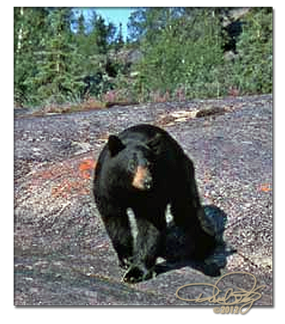
Getting this close to a bear is never a wise idea

bear
Bear hunting is a special brand of outdoor adventure where the hunted can become the hunter. It's where the tables can be rapidly turned on a sportsman, and where things can get very interesting very quickly.

It doesn't happen very often with black bears, but when one attacks, it's not good news. A grizzly will maul and bite a human, often inflicting horrific injuries, but the person often lives.

Black bear, even though they are the most common bruin of all, are perhaps the most dangerous. Their attack may continue until the victim is dead. It has happened many times across North America, and in many cases, the human doesn't survive such brutal maulings. In certain situation, the bruin makes a meal of its victim.

Someone in North America gets mauled by a black bear yearly. It's a matter of fact, and it has happened in Michigan several times over the years.

Anytime a bear is within 100 yards of you, there may be danger

I lay no claim to being a black bear expert, but have hunted bruins, photographed them, and have had them approach within three feet of me. Each experience is one to learn from, and to hope it never happens again. A human's best hope is he does everything right if a bear gets within three feet. One wrong move, and it can mean terrible trouble.

I've never been truly frightened of a black bear even when they've come within spitting distance on a dead run. Knowing some things about bears can help you cope with the animal when things turn sour, and an angry bear is only feet away. What you do may truly affect the outcome of the encounter.

This is not mean to frighten people, but the Michigan bear hunting seasons opens in September. However, during this mild winter, bruins can awaken in their den and now is about the time sow bears give birth to their cubs. Realize, first of all, black bears are unpredictable at any time, and a sow with little ones is something to steer clear of.

Whenever bears are baited or being run with hounds, and  humans may find themselves within close proximity of a bruin, and neither one knows it. Throw in the fact that the bear may be a sow with young cubs, and there is the potential for disaster.

Once while photographing a black bear in Canada's Northwest Territories I was downwind of a foraging bruin. It turned, looked in my direction just as I took a photo with a flash. It startled the animal, and it came walking slowly toward me. It was straight upwind of me.

I talked to the animal in a fairly soft voice. I kept my voice level, and it approached close enough that I could have touched it on the head, which I knew would probably be a major mistake. The animal continued to circle me, and as it moved around me, I turned with it and continued to face it and talk. The bear got downwind of me, caught my scent, and circled back the same path as before and slowly walked away.

Talk to a bear in a soft, level tone. Don't scream or shout. Whatever you do, don't get silly or hysterical. This isn't Disney World.

If a bear is seen, make some noise, don’t walk closer and it may leave

One important thing in bear encounters is to keep a clear head. Don't scream at the animal, and realize that a wild bear can sense anxiety and fear. The same is also true of a junkyard dog. Running from a bear is the worst thing to do. Watch the animal, and read the messages it gives you.
Know this: bears, and especially sows with cubs, will often make a false charge toward a person. They can walk, trot or run, but you'll hear teeth clacking, deep growling, and then the bear will stop at 10 to 20 feet and assess the situation.
It is defending its turf and its cubs, and a slow dignified retreat with soft talk while facing the animal can put an end to the whole business. However, it doesn't always end that way.

Know what to do, and do it, in a bear-man confrontation

The trick is to stand your ground until she stops. Step backwards slowly for a step or two, and talk to the bear. If it does nothing, take two or three more slow steps backwards. This allows the animal some space, and gives it a chance to save face. Its enemy is retreating to avoid what could be a deadly confrontation. Just don't make any quick moves, and pay some attention to your footing. If you fall down, it could trigger an attack that would be difficult to defend against.

Watch the bear. Keep a level head, and don't crowd the animal. If it comes, turn with it, but watch its head because the body will follow the head. Study its actions intensely. A bear that becomes increasingly agitated is now a deadly animal and the risk of an attack escalates.

A bear that approaches within 15 to 20 feet and stops, its ears laid back against its skull, and is clacking its teeth and growling, is a dangerous animal. A bear that does that, and then begins slamming its front feet against the ground, has become truly dangerous. Back up and try to defuse the situation with a slow retreat and a soft voice Don't step toward a bear that is stomping its front feet.

Do not run. Never run from a bear because it's like running from a mean dog: the chances are it will trigger a charge. A full-blown charge with foot stomping, growls, ears laid back, and clacking of teeth is something that will stir your guts into soup and give your mouth a coppery taste. This is no time to lose your head and do stupid things.

Continue to face the animal but try a slow-moving retreat. Chances are the bear doesn't want to force the issue, but this posturing can be a prelude to a mauling and death or a close call. In many cases, the human's movements or lack of them may act as a catalyst that triggers an attack.

Allow bears to save face; Give it a way out but don’t run

Saving face is no different with a bear than with a bar-room bully. Sometimes the issue can be resolved without incident; other times, it can only be resolved with force. A man alone, unarmed, is not capable of fighting a faster and stronger bear. A few instances have been noted of a bear-man fight, including one here in Michigan, and they are the stuff of wild tales ... except some of them are absolutely  true.

Few people will ever face a false charge, and even fewer will come to grips with a full-blown charge. Those who face the latter (and it's difficult to determine one from the other until the attack occurs) and live to tell the story are a rare breed in today's society.

I've faced three, and all were defused after several troubling minutes, but the best advice is to stand tall, make yourself look as big as possible, talk (don't scream) to the animal, and give the bear a chance to save face without injury to it or you.

Backing away or stepping aside when a bruin is very close can leave you with a wildly beating heart, a dry mouth and your life, providing you do everything right. The chance of a bear attack anywhere is rather remote, but it pays to have some knowledge of what to do well before such a need is standing only 10 feet away with its ears back.

Especially if the bear has a surly attitude and you are wondering how you ever got into such a situation. Just remember: keep your head, don't lose control, and you may have a hair-raising tale to tell.

Make a mistake at this crucial point, and even the best Hollywood make-up artist won't be able to make you recognizable to your best friends and family at the funeral.

Monday, November 01, 2010

Fooling that buck


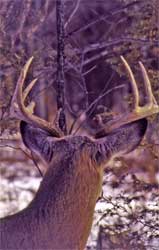
Take quartering-away shots at bucks like this.


Killing a nice buck with a bow is easy. Don't believe me, just ask any hunter who has done it several times.

It's a bit like your first kiss, first love, first child or the first of anything. Doing it the first time is most difficult, and each time after that it gets a bit easier.

Much of shooting a good buck is how the hunter sets everything up. Stand positioning in relationship to buck travel is part of it. Knowing when to draw on a buck is part of it, as is knowing your personal limitations. A big part of shooting a buck involves planning ahead.

Know where & when bucks travel to meet the does.


Deer move through certain areas, and follow special patterns. Bucks, in particular, are used to going wherever they want and doing what they please. Bucks often are bullies, the swaggering dude on the beach, and they are used to everyone giving way except a larger buck.

Bucks are accustomed to does and fawns, and lesser bucks, getting out of their way. If the does are found in certain areas, regardless of whether it is a pre-rut, rut or post-rut situation, the bucks won't be far away and somewhere en route to the girls is the best spot to be.

If hunters can control their scent, have safe and noiseless stands, and know when to draw, shooting one of these egotistical bucks can be very easy. But planning ahead is part of the key.

Learn long before the season opens where the bucks will go to meet up with the girls. Does are the main attraction after Oct. 20, and hunters who know those locations are a leg up on other hunters.

Bucks occasionally come together with does before they enter the feeding areas. The does and fawns then head out, and bucks often move back and forth through heavy cover 50 to 100 yards from the feeding areas, and then when they are so inclined, the bucks move out.

Studying any interaction between bucks and does now can pay off later as the rut phases change. Right now we're on the cusp of the full rut as the chasing phases slows down.

Bucks know where does are now, and you should too. That’s where bucks will be.


Bucks often follow their own routes out to the fields where the does are found, but sometimes they move off the trail as they follow along behind the does. Sometimes bucks will use the same trail used by does and fawns.

The secret is to find where they stage before moving out, and set up a stand downwind. Sometimes, in these key locations, it may be wise to have stands set for the primary wind direction and another for the secondary wind direction.

Choose your own poison but my preference is for a cedar or pine tree within 20 yards of the trail the bucks use to approach this staging area. Most hunters want to see the buck coming for a long distance, but it makes no sense to set up that way. If you can see a buck or doe coming for a long distance, those animals can see you as well.

My preference is for the deer to pass me on my left side (I'm right-handed), and approach from behind me. I'm tucked back into the shadows, regardless of the time of day, and since I know where the deer will come from, I am well camouflaged. I've wearing my Scent-Lok clothing, have sprayed my rubber boots with a scent eliminating spray, and know the wisdom of being still and quiet.

By having the deer come from behind me, and on my left side, I can often hear their approach, and can be at full draw before they get even with my position. I time my shot when they are quartering-away, and aim to hit the off-side shoulder blade with my two-blade broadhead.

Pass-through shots are OK but I want my broadhead inside & cutting the buck.


Don't holler at me about pass-through shots. I've seen too many pass-through hit miss all the vitals. I want my arrow to stay inside the deer, and with every running step the animal makes, it continues to cut. I seldom have a buck go past 70 yards with the arrow inside him.

Pre-planning is an important thing. If your plan is perfect, and you execute all facets of the hunt properly, the deer will offer an easy shot and arrowing the animal is a given.

Don't believe me, give it a try. Your set-up for a shot often is the one factor that controls the success or failure of your hunt.

Posted via email from Dave Richey Outdoors