Showing posts with label blind. Show all posts

Friday, July 13, 2012

Back roads of our memories

Backroad Memories 070812-DRO
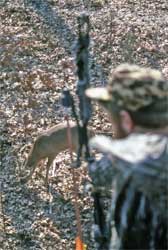
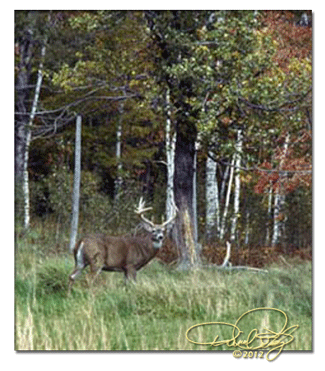
A buck like this must be hunted properly without spooking him
photo courtesy Dave Richey Outdoors ©2012

Fishermen love their  "fishing memories," and continue going back time after time to the same old spot. Sometimes it works on deer, and sometime it doesn't, but memories often remain long after the size of the rack and the venison has disappeared.

Hunters often have the same problem. We develop a feeling for certain ground blinds or tree stands, and often this can be good. In many cases, if a particular stand was once good, it may still be good.

For three years I shared the same tree stand with a good friend. It probably produced a dozen nice bucks for us, and then it seemed to go dead. They didn't hunt it daily, and it may only have been hunted once or twice per week.

My buddy took a few nice 8-pointers there, as did I, and we still talk fondly about hunting that tree. However, as I make my rounds to study deer behavior and travel routes, it has become obvious that deer had quit moving past that tree.

That tree was on an elevated knob 15 feet above a great deer trail.

I've got several memories of favorite tree stands, and those thoughts often are built around having taken a really good buck from it or having seen a wide-racked buck nearby. In some cases, a new stand may reveal a great travel corridor than has been overlooked.

One particular stand sticks out because I had seen a heavy beamed 10-pointer there, and I noted the time he passed by. I was there the next night but he wasn't, and several deer were passed up because I didn't want to shoot a lesser buck if the big one may be nearby.

I went back to that stand periodically, and saw that buck on three occasions but he was either screened by heavy brush or just too far away. And this brings up a point: bow hunters should know what their maximum range is for making an accurate shot.

Shooting at a buck too far away usually results in a miss but a deer that is spooked by an irresponsible shot may never return. Even worse, a bad hit may be made, and that may result in a long tracking job and even then, the animal may never be found. Sportsmen must know their limitations, and strive not to exceed them.

Know your limitations and always hunt within them. Never take long shots.

Years ago, one of my favorite tree stands was in a crooked tree. If a back didn't hurt when they climbed in, it would be hurting when they climbed down. That stand, many years ago,  was positioned between a bedding area and nearby crop fields, and it produced quite a few bucks. It is no longer being hunted.

Another of my favorite locations was a dead elm, and it was located 15 yards from a hole in a fence between my land and a neighbors, and was positioned for a broadside shot once the deer came through. Many people do not realize that given the chance, a deer often prefers going through a hole in the fence rather jumping the wire.

The last time I came down out from that fence-hole stand I felt the tree shudder. I kept going and made it to the ground. The next day I drove down a wooded trail past that tree, and it was on the ground.

Hunting memories, my phrase for going back to tree stands that once produced shots at good whitetail bucks, is something that hunters do. Some of it is nostalgia, and some is to determine if that area is as good as it once was.

These memories are good for hunters. It helps us remember a stand that once led to the arrowing a nice buck, or a memorable miss, or a stand that just makes us feel good.

I'm willing to bet that all of us have such memories. A little thought can make them reappear on demand, and part of hunting's thrill is traveling down the back roads of our memories.

Posted via email from Dave Richey Outdoors

Thursday, October 20, 2011

In the air or on the ground?

On the ground or in the air. Both work & it depends on you.


It's an eternal question that is always being contemplated by bow hunters. Which is best: hunting on the ground or up in an elevated coop or tree stand.

An elevated coop or a tree stand wins me over every time. I like the increased visibility that hunting from a tree provides, and I'm not bothered by height except in a high wind. After many years of experience, my preference is for a stand at about 15 feet. Going higher can increase the chance of a fatal fall.

Many hunters prefer hunting from a cedar or pine tree, and if I have a choice, it's one or the other for me. However, I often hunt from maple trees. There are a lot of maples on my property, and my first decision is where is the best stand location?

Personal preference plays a big role on how you bow hunt for deer.


If a cedar or pine offers the best spot to ambush a moving buck, that's where I will hunt. However, if the key area to ambush a whitetail is from a maple tree, you'll find me up one of them. Trees make little difference to me but location, as with real estate, is everything.

Some stands are permanent wood platforms and others are more confined. Some are ladder stands, and others are fixed-position stands that I reach by going up limbs or tree steps. It makes little difference to me: I go where the deer want to go.

It doesn't take much room to shoot a deer from a tree providing the stand is properly positioned and downwind of the deer travel route. The trees on my land are there to provide possible stand locations, and although it's not legal on state or federal land, I nail or use sturdy screws to hold my permanent tree stands in place.

I have a few places where a big stand isn't feasible, and some of them are no more than two halves of a sheet of marine plywood painted gray or dark brown. A narrow platform just big enough to sit down on is nailed to the tree, the two side panels are nailed or screwed into place and a narrow piece of plywood serves as a roof. These stands are narrow at the end where people enter the stand and slightly wider where they will sit or stand to shoot.

Deer seldom pay attention to them, and they are very productive if the hunter can sit still. They are not made for a claustrophobic person, however.


All of my stands, at home and elsewhere that I hunt, are strategically placed, and some designs are unlike any I've seen before. Some stand outside in the rain and snow, and we check them two or three times each year to determine if they are still reliable and safe.

Any stand that is no longer safe is torn down. I'm not a risk-taker, and if I won't hunt from a stand, no one else will hunt there. Such stands are quickly slated for demolition.

Take down any unsafe tree stand.


Hunting from a tree stand appeals to me. It's possible to see deer come from many different routes, and it allows hunters to study the animals as they approach the area. Some deer dash right in, others come cautiously and slow, and a few wise old does and big bucks often try to slip in on the downwind side to check for potential danger.

Some hunters dislike shooting down at an angle toward a deer. It is a part of hunting that must be practiced, and years ago, I would get with someone else and take turns on the ground. One would position a target at varying distances and angles, and the person in the tree would shoot a dozen arrows. He would climb down and we would change jobs. Frequent practice at shooting from a tree stand makes handling these shots as routine as ground-level shots.

Tell your friends, neighbors and relatives about my weblog. I plan to do this for a long time, and am willing to share my knowledge of what works and why it works for me. Do them a favor and give them my weblog address.

I'm a realist. Ground blind hunting can be very productive, especially in places where almost everyone hunts from a tree. I've preached the use of safety harnesses when hunting from an elevated position, but there are still people who feel wearing a "sissy" harness isn't for them. A doctor friend of my buddy learned a sad lesson this fall he fell and broke both legs, and was very luck it wasn't his back or neck.

Let's face it: some people are NOT meant to hunt from high places.


For such people, it's my personal recommendation to hunt from a ground blind. Believe me, I've been in and out of ground blinds and pit blinds all of my life, and have yet to see anyone get busted up by falling out of a ground blind.

Use the same logic when choosing a ground blind location. The proper spot is everything, and it must be downwind of where deer travel. It's possible to make a ground blind almost air-tight by installing slide-open windows. The glass can be covered with camo cloth or painted to eliminate the shine, and a motionless hunter is nearly impossible to see when sitting in a darkened hunting coop with the walls painted dark brown or black.

I favor ground blinds in windy weather or when it is cold, rainy or snowing. Properly positioned, a ground blind can blend in with root-wads of fallen trees, against a backdrop of standing corn or in an oak forest.

Everyone has their own likes or dislikes. Whether you hunt from a tree or from the ground, just remember to have the wind in your face, don't move until its time to shoot, and when you shoot, shoot once and shoot straight. And don't miss.

Sunday, February 06, 2011

Hunter from the hay


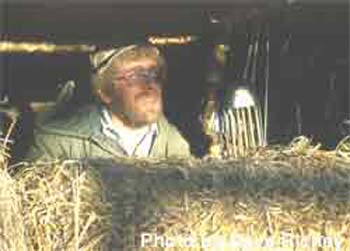
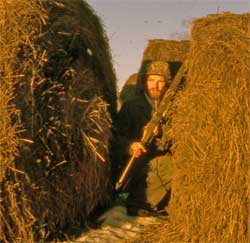
An uncovered haybale blind and covered one.

It’s time for a quick question and answer session. What is the warmest blind for winter deer hunting?

The deadliest and most unconventional but warmest blind in the deer hunting woods seems to have escaped the attention of many hunters. At first guess, many late November and December hunters feel a heated on-the-ground or elevated stand is best.

Not to my way of thinking. For my money, a hay-bale blind beats whatever else comes in second-place. It has many advantages, and one disadvantage. Hunters afflicted with hay fever shouldn't hunt from a hay-bale blind.

Haybale blinds are great for coyoe, deer and fox hunting.

These blinds are like dipping snuff. It can leave you rather sneezy, but you won’t be sold.

The solid points in favor of these blinds are many and all are valid. Here are solid reasons to use such a blind.

1. Hay-bale blinds can be constructed from big round bales or the smaller and more manageable rectangular bales.

2. A round bale blind is made by putting two round bales together at an angle to form a capital "V". Put a sheet of one-inch marine plywood over the top, and stack six or eight rectangular bales on top to provide a warm and dry roof over your head.

3. Hatbake blinds can be made without a top although there is a slightly greater chance of deer or predators catching your scent when hunting from an uncovered blind.
  • The trip here is to stay back in the shadows to remain hidden.
  • I always wear a face mask and brown Jersey gloves.
  • Avoid movement when hunting haybale blinds because often are close.
4. A rectangular blind requires quite a few rectangular bales.
  • Pile as many bales up on the left and right sides, and behind you, and put a chair inside to sit on.
  • Stack the bales at least two high in the front, and leave just enough room to crawl over and to shoot through.
  • Cover the top with plywood and more bales, and you are set.
    • The disadvantage of this blind is if one or two bales get bumped, the blind can fall like a house of cards.

Hunters stay back from shooting window.

Of the two, my favorite is made of two round bales. Five minutes with a tractor to move the two round bales together, laying a sheet of plywood on top and several rectangular bales on top and in front to form a shooting window, and the blind is completed.

Any hay blind placed early in the fall in a key location where deer regularly travel will pay off when November and December rolls around. The deer get used to it, and by the time the winter archery season rolls around, it will entice deer to your area.

Key spots for a hay-bale blind is near the edge of a cornfield, in an open field where two or more trails converge, or back in the woods where a good trail carries a great deal of deer traffic. Wooded hay-bale blinds are much more difficult to construct. Most people place them in open fields or close to heavy cover.

Put haybale blinds in key locations and don’t near them until hunting season.

5. This blind is warm. Unless the shooting window faces directly into the wind, this is the warmest blind possible. Wet hay builds a certain amount of heat, and hunters can stay warm in the most brutal weather.

Human odor isn't a problem with hay blinds. The heavier odor of hay serves to cover human odor inside the blind.

6. Of major importance to me, and to others who use such blinds, is they offer straight-out, horizontal shots at whitetails. There is none of the problems of shooting downward while sitting or standing in a cold tree stand or elevated coop, and deer often walk within six feet of a hay-bale blind. The shots can be easy to make unless the hunter suffers from buck fever.

The hay absorbs almost any noise. I've coughed, sneezed, and done other noisy things in a hay-bale blind without having nearby deer hear it. Of course, any movement visible through the narrow shooting window can be seen.

Deer often take three or four days, and sometimes as much as a week, to become accustomed to the blind. Even though it’s best to put hay-bale blinds in place early, it can be done anytime.

If I were a hunter with a new hay blind, I would not sit in it for a week. The one exception to that would be if a major winter storm was due to hit that morning or evening. Every deer in the area will be on the prowl before the storm hit, and I'd suggest being in the new stand early before a storm hits.

If snow falls before the deer move, so much the better. It will help cover any human scent, and it can produce the occasional big buck.

Hay-bale blinds are not difficult to make, and they provide everything a December bow hunter could want:
  • no scent
  • being as warm as toast
  • good visibility when properly placed
Winter deer hunting just doesn't get much better than that. An added bonus is that these blinds are great places to call coyotes and foxes.

Saturday, November 20, 2010

Try a late-season hay-bale blind


Two type of hay-bale blinds. Usually the hunter sets farther  back in each one.


The deadliest, most unconventional and warmest hunting blind in the deer woods has escaped many hunters. At first guess, many firearm hunters or December bow or muzzleloaders might feel a heated on-the-ground or elevated stand is best.

Not me. For my money, a hay-bale blind blind beats everything else. It has so many advantages, and only one disadvantage. Hunters afflicted with hay fever shouldn't hunt from this type of blind.

The solid points in favor of them are many and all are valid. Here are some great reasons to use such a blind in lake November and December.

A hay-bale blind is warm as toast as long as the wind doesn’t blow in.


*Hay-bale blinds can be constructed from big round bales or the smaller and more manageable rectangular bales.

*A round bale blind is made by putting two round bales together at an angle to form a capital "V." Put a sheet of one-inch plywood over the top, and stack six or eight rectangular bales on top to provide a warm roof over your head.

*A rectangular blind requires quite a few rectangular bales. Pile as many bales up on the left and right sides, and behind you, and put a chair inside to sit on. Stack the bales at least two high in the front, and leave just enough room to shoot. Cover the top with plywood and more bales, and you are set. The disadvantage of this blind is if one or two bales get bumped, the blind will fall like a house of cards.

*Of the two, my favorite is made from round bales. Five minutes with a tractor to move the two round bales together, laying a sheet of plywood on top and several rectangular bales on top and in front to form a shooting window will complete the blind.

*Any hay blind placed before October in a key location will pay off when late-November and December rolls around. The deer will soon get used to it, and by the time the winter archery season rolls around, it will entice deer to your area.

Place hay-bale blinds close to a food source such as a corn field near a trail.


*Key spots for a hay-bale set is near the edge of a cornfield, in an open field where two or more trails converge, or back in the woods where a good trail carries a great deal of deer traffic.

*This blind is warm. Unless the shooting window faces directly into the wind, this is the warmest blind there is. Wet hay builds a certain amount of heat, and hunters can stay warm in the most bitter weather.

*Human odor isn't a problem with hay blinds. The heavier odor of hay serves to cover any human scent inside the blind.

*It would be difficult to consider a hay-bale blind as a bait site although deer occasionally mat eat some of it while the hunter is inside but that's not something one can count on happening.

*Of major importance to me, and to others who use such blinds, is they offer straight-out, horizontal shots at whitetails. There is none of the problems of shooting downward while sitting or standing in a cold tree stand or elevated coop, and deer often walk within six feet of a hay-bale blind. The shots can be impossibly easy to make unless the hunter suffers from buck fever.

These blinds produce heat and absorb most small noises.


*The hay absorbs almost any noise. I've coughed, sneezed, and done other noisy things in a hay-bale blind without having nearby deer hear me. Of course, any movement visible through the narrow shooting window might be spotted.

*Is it too late to build a hay-bale blind? It depends on deer numbers in your area, the available food supply, and how quickly the blind can be constructed. Deer often take three or four days, and sometimes as much as a week, to become accustomed to the blind. But hay bales often are found around field, and often are covered with plastic.

If I were a hunter with a new hay bale blind, I would not sit in it for a week. The one exception to that would be if a major winter storm was due to hit that evening. Every deer in the area will be on the prowl before dark, and I'd suggest being in the new stand no later than 2 p.m.

If snow falls before the deer move, so much the better. It will help cover any human scent, and it can produce the occasional big buck.

Hay-bale blinds are not difficult to make, and they provide everything a late-season bow hunter could ask for: no scent, being as warm as toast, and being in a blind while the deer travel close to it

It doesn't get much better than that.

Posted via email from Dave Richey Outdoors

Monday, November 15, 2010

No deer seen on the firearm opener


A buck like the one on the right was my goal today.


Weather-wise, in the northern Lower Peninsula at least, it was a great firearm deer opener. A bit cool, a bit of morning sleet and snow, a fair number of rapid-fire shots that seldom produce, but for me it was nothing special.

I hunted all day, first in a tree stand and then in a one-man pop-up tent, and never saw a deer. People with crop damage permits put the big hurt on some does, and I only heard of one buck being taken from my circle of friends.

Many of us were looking for something a bit larger than a year-and-a-half-old buck. Most favor a buck with substantial bone on their head, and such bucks are in a minority in the counties I hunt -- Benzie, Grand Traverse, Kalkaska and Wexford. Our doe and buck numbers are low in this region, and it shows little chance of getting better.

The northwest corner of the Lower Peninsula has a shortage of deer.


I hunted hard with Old Faithful -- my pre-1964 Winchester Model 70 in .264 Winchester Magnum. It can, and has on countless occasions, delivered an air-mail 140-grain package to a nice buck. That didn’t happen today although 15 more days of firearm season, more bow hunting and a brief muzzleloader season is on tap for next month. There’s still lots of time for a shot.

There are a number of open fields, cut corn fields and the like in my area. My land is mostly heavily wooded, and most of the morning was spent watching a field between two woodlots, and this strategy has paid off in past years but not this time around. The afternoon was spent hunting a high hill overloooking a thick swale and bedding area.

The thick stuff is usually better for a good buck, but today wasn’t the day for any bucks or does me to see. The deer seemed to be on some state land west of us, and that’s where the heaviest pressure was and the most shooting. This flies in the face of the fact that private land has held more deer than public land for two or three decades. So … maybe it’s  the state-land hunter’s turn to see the most deer.

Is a return to limited baiting on tap for next year. It does draw more hunters.


It’s not my style to go looking for something to argue about, but we are entering our third year of a three-year moratorium on baiting, and many people I speak to are adamant in their desire to return to a limited brand of baiting for those who wish to do so. Hunters have switched around from setting for two hours, and then still-hunting in the past decades. Now, most people are setting in coops and elevated blinds, and they don’t move. With no bait and no moving hunters, there isn’t much to keep the deer up and moving about.

Now a one-man pop-up tent doesn’t offer much room, and the funniest thing that happened to me today was a big header. There I was, in my tiny pop-up stand, and I leaned a bit too far to the right to check out  a run-way 40 yards away. I could tell it when I shifted my weight that everything was going down, and the little tent began to lean, and over we went. I cradbled Old Faithful in my arms like a new-born child, and the landing was soft and easy.

I was laughing about it on the short fall to the ground, and the hardest thing about it was extricating my rifle and body from the twisted-up tent. No injuries, no harm to the rifle or tent, and it felt good to chuckle about my own mishap.

But now the hour is getting late, and I’m beginning to nod off at the keyboard, and that’s never a good thing. So, if you’ll excuse me now, it’s time for a bit of shut-eye.

Z-z-z-z-z-z.

Posted via email from Dave Richey Outdoors