Friday, July 13, 2012

Protect equipment and permissions: Ask First - Always

Lock up all tree stands & other hunting equipment to prevent theft
photo courtesy Dave Richey Outdoors ©2012

My ultimate goal is to be ready for bow season by Sept. 1, and August 15 is even better. That gives my area 30-45 days to settle down before I start hunting.

My fall food plots are planted, and there is a fairly lush green growth. We need a rain bad, and last week the plots got a nourishing drink. Even more rain would be good to keep it growing.

What we don’t need is any more 90-degree weather. It’s time some cooler weather and some more rain. Nice late-summer rains would be nice.

We need some nice steady rains but don’t need a gulley washer

Deer are moving through the food plots, and after tomorrow, there will be nothing left to do but bide our time. Some long-distance scouting can be done but I don’t plan to spend any time walking through my hunting areas.

We’ve got deer spotted, trees stands are up, our coops are almost all ready, and all I need to do is spend a few hours putting chicken wire around the bottom of the coops to prevent porcupines. skunks and other critters from chewing holes in the wood.

Two ground blinds are completely checked out and set in place. The fencing around the bottom has been put in place, and the coops are locked. Are locks necessary? To my way of thinking, I’m beginning to believe my father was right.

“Locks keep honest people honest,” he used to say. “If you don’t lock things up, and exercise certain precautions, some people who are given an opportunity to steal something, someone will take advantage of it.”

I’ve had people take advantage of me when they thought that leaving coops unlocked was an open invitation to hunt my land or steal tree stands. So, in the past I’ve had people climb into my coops to hunt when I can’t get away for one reason or another. I’d find the coop doors unlatched and blowing in the breeze, a larger shooting window cut more to their liking, and a chair stolen.

Another time I spent two days fixing up tree stands. I went to one stand, and some fool had stolen the bottom two sections of the ladder stand. The seat and foot rest was still attached to the tree with a good chain and a heavy-duty lock.

This was an out-and-out theft

Now I stand the sections together, duct tape the chain to the ladder, and lock it. The cost of two good padlocks for the ladder section and another lock and chain for the seat is certainly cheaper than replacing a complete tree stand.

I once had an excellent tree stand, and located in a great spot where two deer trails merged. The deer always came from behind me and on my left side to present a perfect broadside or quartering away shot. The person who would occasionally sneak into my tree stand always left his signature behind.

He was left-handed. He would try to reposition the stand so it was easier for a left-hander to shoot from. The stand was in a cedar tree, and I had pine boughs conveniently placed to break up my outline. Those boughs were tied with twine to suit my needs.

I went to this tree early one morning, and waded into the cedar swamp and hid. My presence kept the deer from moving that morning, and right about daylight I heard brush cracking as the poacher walked to the tree.

I let him set there, and both of us could hear deer giving the area a wide berth. I snuck up behind the stand, and pulled out the two lower ladder sections. The guy looked down at me, and yelled, “What do you think you’re doing?”

I said I knew what I was doing. I was making it difficult for him to get down

He was in my tree, I was on the ground with two ladder sections, and he’s whining about how he’s going to get down. So we had us a little heart-to-heart chat.

“You’ve been hunting my stand illegally for a week or more, and we’re going to settle this now. You either agree to quit sneaking in on my leased property, and stay away from this area, or I’ll call the cops right now. It’s a long ways to the ground, and too far to jump, so either agree to stay away or I’ll press charges and wait down here until the police arrive.”

“You’ll still be up the tree when the police come. Then we will have a chat with the landowner. What’s it going to be?”

He quickly agreed that he wouldn’t come back. OK, I said “Toss me your wallet, with your driver’s license and hunting license so  I can make a few notes in case I find you’ve been hunting my spot in the future.”

He whined and carried on but I convinced him the two ladder sections wouldn’t be replaced until he complied. I added that while he was at it, he could lower down his bow on my haul rope.

I asked him if he was the one who was hunting out of my blinds. He said he just hunted the tree stand, which was obviously difficult to deny. I took notes, learned that he lived nearby, and I then threatened to walk away and leave him there.

Make it hard on trespassers and poachers. They get no sympathy from me

He gave in, complied with all my wishes, and I asked if he was going to be aggressive when he came down. I didn’t want to fight him, but I wanted him to realize the errors of his ways.

“No, no more hassles,” he said.  “I’ll leave and won’t be back.”

So that episode ended peacefully, but I’d learned my lesson as well. Ladders and tree stands are now chained together, and to chained to the tree, and I never lost anything since. Land leased for hunting carries much the same laws as ownership, and I’ve had all of trespassers and thieves to last me a lifetime.

If they don’t respond to reason, I get on the phone and call the local conservation officer or the Sheriff’s Department, and let them do their job. They get no second chances with me.

Posted via email from Dave Richey Outdoors

Back roads of our memories

Backroad Memories 070812-DRO
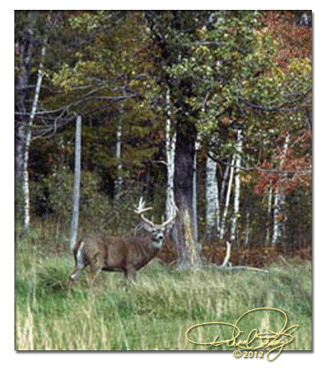
A buck like this must be hunted properly without spooking him
photo courtesy Dave Richey Outdoors ©2012

Fishermen love their  "fishing memories," and continue going back time after time to the same old spot. Sometimes it works on deer, and sometime it doesn't, but memories often remain long after the size of the rack and the venison has disappeared.

Hunters often have the same problem. We develop a feeling for certain ground blinds or tree stands, and often this can be good. In many cases, if a particular stand was once good, it may still be good.

For three years I shared the same tree stand with a good friend. It probably produced a dozen nice bucks for us, and then it seemed to go dead. They didn't hunt it daily, and it may only have been hunted once or twice per week.

My buddy took a few nice 8-pointers there, as did I, and we still talk fondly about hunting that tree. However, as I make my rounds to study deer behavior and travel routes, it has become obvious that deer had quit moving past that tree.

That tree was on an elevated knob 15 feet above a great deer trail.

I've got several memories of favorite tree stands, and those thoughts often are built around having taken a really good buck from it or having seen a wide-racked buck nearby. In some cases, a new stand may reveal a great travel corridor than has been overlooked.

One particular stand sticks out because I had seen a heavy beamed 10-pointer there, and I noted the time he passed by. I was there the next night but he wasn't, and several deer were passed up because I didn't want to shoot a lesser buck if the big one may be nearby.

I went back to that stand periodically, and saw that buck on three occasions but he was either screened by heavy brush or just too far away. And this brings up a point: bow hunters should know what their maximum range is for making an accurate shot.

Shooting at a buck too far away usually results in a miss but a deer that is spooked by an irresponsible shot may never return. Even worse, a bad hit may be made, and that may result in a long tracking job and even then, the animal may never be found. Sportsmen must know their limitations, and strive not to exceed them.

Know your limitations and always hunt within them. Never take long shots.

Years ago, one of my favorite tree stands was in a crooked tree. If a back didn't hurt when they climbed in, it would be hurting when they climbed down. That stand, many years ago,  was positioned between a bedding area and nearby crop fields, and it produced quite a few bucks. It is no longer being hunted.

Another of my favorite locations was a dead elm, and it was located 15 yards from a hole in a fence between my land and a neighbors, and was positioned for a broadside shot once the deer came through. Many people do not realize that given the chance, a deer often prefers going through a hole in the fence rather jumping the wire.

The last time I came down out from that fence-hole stand I felt the tree shudder. I kept going and made it to the ground. The next day I drove down a wooded trail past that tree, and it was on the ground.

Hunting memories, my phrase for going back to tree stands that once produced shots at good whitetail bucks, is something that hunters do. Some of it is nostalgia, and some is to determine if that area is as good as it once was.

These memories are good for hunters. It helps us remember a stand that once led to the arrowing a nice buck, or a memorable miss, or a stand that just makes us feel good.

I'm willing to bet that all of us have such memories. A little thought can make them reappear on demand, and part of hunting's thrill is traveling down the back roads of our memories.

Posted via email from Dave Richey Outdoors

Saturday, July 07, 2012

Avoid high temperatures, and fish at night

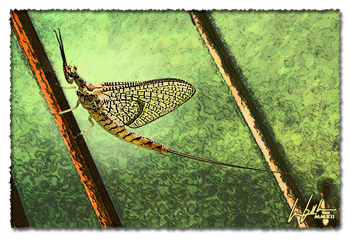
Moon glow Hex
Hexagenia limbata (giant Michigan mayfly) produce heavy trout feeding patterns
llustration (HexMoon Glow) courtesy Les Booth ©2012
It must be something in my genes. I’m apparently wired different than most people.

Michigan has four seasons -- spring, summer, fall and winter. It’s not that I dislike summer; it’s that I hate summer!

Now, hate is a pretty nasty word when used in any form.

Sadly, I can think of no better way to sum up my feelings. Granted, I could probably find something to do after sundown, like fish for big brown trout in the
AuSable or Manistee rivers. It can help take my mind off the constant heat.

I’ve done that for many years during other brutally hot summers. It was OK, but I actively dislike that sticky feeling when I perspire too much. And, there-in lies part of my problem. I don’t perspire like most people.

Sometimes hot days produce hot fishing at night


Very little perspiration comes off my head. Nor does my underarms dampen my shirt.  It comes out in other places too delicate for a family oriented blog to discuss.

The higher the temperature, the higher my frustration level, and the more noxious insects try to bore holes in my body to suck my blood.

I’ve learned not to swat at flying insects, day or night. It moves the air, makes me even hotter than before and all the bugs whistle up their buddies to come and join the feast.

It’s at this time of year when many major fly hatches come off. The sun goes down, and insects that have spent the day maturing in stream-side foliage, decide to reproduce their kind in a mating dance over the river. It begins with a soft audible hum before becoming a full-blown hatch.

Mayflies land on nose, ears and hands, and balance delicately on the brim of my cap. I look out over the river. Clouds of insects hover over the river, and above the audible hum of thousands of insect wings, comes the sound of trout rising from narrow seams of flowing water.

There are the splashy slurps of small trout. Experienced anglers have learned to determine locations by their sound, and from that comes the knowledge of about how far away the fish is feeding, and then we extrapolate that into making a cast that positions our fly upstream from the fish. Big browns sip flies off the surface without much noise.

There is a science to locating big fish at night; You listen for them feeding


We then determine the length of time between when the trout rises to take a fly and the next time he rises to feed. We count the seconds “one-thousand-one, one-thousand-two, one-thousand-three” until he rises again.

We make our cast at the “one-thousand-two” count. This gives us a narrow window to make the cast; at the “one-thousand-two” count; and allowing that final second for the cast, and drift, of the fly over the feeding trout.

That’s the way it’s supposed to work. Often a rising trout will sip a natural insect off the surface, and by chance take one of the many that surround your fly. It doesn’t always work.

Often they ignore our offering, and anglers can switch fly patterns or sizes, and that may make a difference. Sometimes when a blanket hatch occurs, there are simply two many insects on the water. The trout can swim with their mouth open and fill their belly fast.

The odd thing about a hot night and a good hatch is we often forget about the oppressive heat. We false-cast once or twice to dry the fly, and keep trying for that one fish that continues to rise, but a blanket hatch soon puts the fish down. They’ve ate their fill, and retire to a quiet spot in the water to rest.

In the distance, a tree of heat lightning flickers across the sky, and one can easily determine its line of travel as it flickers again. Slowly, a calm settles over the water, and it’s possible to hear other night sounds.

Learn to listen for feeding fish, and to tell big fish from small ones


Owls hoot, night hawks boom, and frogs croak near shore. Suddenly, one becomes aware that the awesome heat of the day has lessened and we drift the river slowly casting dry flies or casting and stripping line fast to work a big streamer through deep holes and runs near shore. This latter method, if done on a nonstop basis, may produce a big fish but all of the effort will set you to sweating again.

One must chose their poison. I had a heat stroke once while changing a car tire, and since that time, I conveniently find something to do inside my air conditioned office.

So, if you are like me, I choose to stay in when we have three-digit temperatures occur during mid-day, and if I choose to fish at night, I wait until two hours after sun down before I head out. It may limit my catch at times, but it does allow me to fish in some semblance of comfort.

Friday, July 06, 2012

Troubled times and the written word

Dave Richey and his books
Dave Richey looks through book files for a certain book
photo courtesy Dave Richey Outdoors ©2012
Folks, no one needs to tell us that these are troubled times.

Many jobs are in peril. Job security is questionable or even doubtful. Many folks are out of work, and homes have been foreclosed on and lost.

Management in some areas don’t worry about the worker. Insurance rates are rising, as are prescription drugs, and many wonder how long they can hang on to their job.

Amid all these worries is the desire to fish and hunt more, and spend time outdoors. The cost of travel has skyrocketed with $3.75-per-gallon (or more) gas, and fuel prices don't show any sign of going down soon. Jobs are leaving this state daily, and billions of dollars go overseas while our workers wonder about their future.

Sportsmen want to fish and hunt more. We find it difficult to justify a trip north for a two- or three-day fishing or hunting trip because we'll easily spend $150 or more for gas, another  $100-175 for a motel for one night, add another $75-100 for food, and suddenly the
price of fishing and hunting becomes very expensive.

A wealth of knowledge is just waiting for you to discover it


What can anglers and hunters do to take the edge off their outdoor cravings. It's simple, and much like my need for a fishing or hunting fix when as a kid. If a round-the-world trip cost only $10, I couldn't get out of Clio, my hometown.

Each year I managed to squirrel away money to pay for subscriptions to Field & Stream, Outdoor Life and Sports Afield magazines. I devoured every word, and then as my meager job paid a bit more money or I took a second job, I joined the now-defunct Outdoor Life Book Club. Once a month would come a notice about an upcoming book, and if I thought I'd like it, the book would be ordered.

Mind you, being entertained in your mind through the magic of the written word and a wonderful photograph isn't quite the same as actually fishing or hunting, but it provided an escape for those of us who couldn't shake loose $200 or more for a weekend fishing or hunting trip.

Books can provide that mental escape we need to visit another world, to a place where fish bite and where big bucks are abundant. It can take us to places where big browns sip flies off the surface, where grouse and woodcock inhabit tag alder runs and dogwood thickets, to places where rooster pheasants cackle in mid-air, and a wedge of bluebills skim the tops of white-flecked waves under a pewter-grey sky.

It was an inexpensive way to escape the humdrum of an era 55 years ago when the economy was shaky. Car sales were poor, and I lived in Clio, a bedroom community north of Flint. Most people worked for General Motors in Flint, and many people were out of work.

Books carried me along on a voyage of discovery, to a place where vicariously, we fished alongside Ernie Schwiebert, listened to the tales of Robert Ruark's Old Man talking to the boy. Now, because of books, we can learn about Louis Spray and the meanderings of his life, to the Green Hills of Africa with Ernest Hemingway, to the wonderfully written books of the incomparable George Bird Evans and William H. Foster.

Some literary giants wrote fishing-hunting stories


We can read and inherit the love of hunting from the late Jack O'Connor, whose books are steadily increasing in value. O'Connor has almost as many fans now as he did 50 years ago, and his skill at writing hunting stories was legendary. He was the real thing, and not a young wanna-be outdoor writer trying to sell his wares today.

Book catalogs that deal with fishing and hunting titles are wondrous things and I get a few every month.  Name the genre, and there are books out there to fit the wallet of every sportsman. Muskie fishing and turkey hunting are my two passions, and I spend time looking for those books on these topics that I don't have or simply can't afford.

I maintain lists of books I need. Some books are author signed, and many are not. Some books I need are low-priced and common and a few are expensive. Books allow people who can't afford a fishing or hunting trip to pour themselves into a good book and come out the other side knowing they've experienced something grand and wonderful while learning something they didn't know before.

Most of you know I buy and sell fishing and hunting books. I still read, everything from a cereal box to a mystery to a nonfiction fishing or hunting book. Some people don't know what they want, and they contact me and we discuss it by email.

Books are the gift that keeps on giving. Christmas is a long way off but a good book can be read over and over again, and instead of a goofy power tie for work, take Dad’s mind off work worries with a book on a topic of interest to him. Buying gifts now removes the panic that sets in if you forget to shop.

Forget TV; Books energize the mind; eMail me for help.


Take a look at my books on Scoop's Books.  On the Landing Page, scroll down and click on Scoop's Books Catalog, and take a look around.

If you need a specific title that isn't listed, email and ask if I have it. If you are thinking of selling fishing or hunting books, contact me. I buy books all the time, and you may have what I'm looking for, especially if it is on turkey hunting.

If you need help with a certain book purchase, contact me for assistance. Reading a good book may not be quite as exciting as actually catching a fish or taking a big buck with a bow, but when travel to do these things become almost cost-prohibitive in these economic doldrums, reading about fishing and hunting beats whatever else comes in second-best.

Thursday, July 05, 2012

Bears in the berry patches

A black bear feeding on summer berries is still alert to danger.
photo courtesy Dave Richey Outdoors ©2012
Several days ago, while visiting an archery shop, I heard the first reference to picking berries. The word was some early raspberries were out, but we needed more rain.

So, we had two rain showers. I don't know whether we've had enough rain to do the berries much good, but I plan to get out and check it soon. I'm thinking red and black raspberries and blueberries next month. I love them on my breakfast cereal. The larger blackberries pop out this month and next,

I love all kinds of summer berries. I can get red and black raspberries near home but have to travel to some remote locations for the others. The travel doesn't bother me, but in these remote locations there are others critters that love wild berries.

They are called black bears. Several of the areas where I pick black raspberries and blue berries are areas frequented by bears.

Two things of major important occur in July and August. We reach the point when female bears come into estrus, and male bears are cruising in search of females. Most of the breeding is done by adult boars, but  since they like berries, it's not all that unlikely that a bruin could be feeding in a berry patch.

Be aware of bear habits and habitats


Most of the time bears will go out of their way to avoid humans. However, bear cubs are much like small children who are so into having fun, they could get close to human berry pickers. Should that happen, and should the sow bear be close to cubs, it could lead to some trouble.

The easiest way to solve this problem is to make enough noise by talking as you walk through the swamps, uplands and hardwoods. Bears, especially adult animals, are always alert to the sound of humans nearby.

Given any kind of chance, bears will retreat to a more quiet area when humans are not found. They often feed on berries, wild apples, cherries and other fruit during the night, but bears do move during daylight hours. So, it means taking a load of common sense into the woods with you. Make more noise once you get near the berry patch, and look around for bears.

Pay some attention to the photo above. The bear is sitting down behind some brush as it feeds in a berry patch. The image doesn't jump right out at you, but the animal is easy to see if you are looking for a black object.

If you happen onto a feeding bear, it makes sense to move to a different berry patch where there are no bruins openly feeding on the fruit.
Make a quiet retreat, but don't running off yelling at the top of your lungs. Once well away from the area, continue to make some noise. If you go back to the berry patch, approach it with human voice talks and progress slowly. A cautious but noisy approach will usually find the bear long gone.

Continue to use common sense where moving down rows of blueberries. Bears, by nature, are rather curious animals but there is no logic and no sense in remaining silent when heading for the nearest berry patch.

Perhaps you've never seen a bruin in that patch, but that doesn't mean a bear couldn't be in there feeding. They are rather silent feeders, and make little noise when walking if they are suspicious of humans nearby.

Common sense and awareness keep men and bears out of confrontation


I've taken quite a few photos of wild bear, and don't photograph tame bears, and you've got to work pretty hard to fool an adult bruin. One other tip is to figure out where the wind is blowing to, and get in the wind with it at your back as you enter a berry patch. Having the wind at your back means a bear will smell you before it sees or hears you, and will be long gone before you get close/

Understand that no one knows everything about bears, and what is written here is written by a man who has hunted bears often, and has had a few confrontations with sows and cubs. Remember this: bears are normally docile and will move away from humans if given the chance, but black bears are more unpredictable than most of the other bear species.

Being unpredictable means you should never trust them. I've written numerous stories about some of my experiences, but don't expect bruins to always act as they have with me. This is not mean to be a frightening story, nor is it meant to keep people from finding berry patches and picking berries.

It is meant to give people a heads-up about bears that breed and feed on berries during the summer. A word to the wise should be sufficient.

Wednesday, July 04, 2012

Superstitious: Who, me?

superstitious
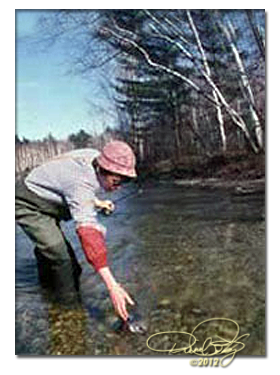
Me, superstitious? Black Beauty fly rod, reddish pink hat. So what?
Many sportsmen say they aren't superstitious, but look at all the sports figures that refuse to step on the first or third-base line. Other sports stars don’t shave on the day they pitch, refuse to talk with reporters and so on. Sports are filled with such people. I think most sportsmen have a quirk or two.

Ben Wallace always seemed to wear his hair tight for one basketball game for The Detroit Pistons, and big and wide for another game. Who knows why?

Others use a certain color of toothbrush on game day while some won't talk to a reporter if they will pitch that day. The world of major league sports is filled with such idiosyncrasies. Some folks would call them superstitions.

We all know not to walk under a ladder ... but why? Then there is the black cat theory, and "step on a crack, break you mother's back" song sung by young girls playing a sidewalk game back in the day.

Some of these things border on being compulsive, obsessive or superstitious while others border on doing something based on something that happened long in the past.

Years ago, when I fished Cheboygan County's Sturgeon River, there were no beliefs based on superstition. However, steelhead were in the river, and a distant rumble of thunder rolled across the sky, it didn't matter where I was. I was on the move

A sense of timing and urgency fuel the prepared


I'd make a mad dash for the car, and head for a singular spot. This certain hole didn't look like much to me or anyone else, and most people ignored and never fished it, but by chance or luck I learned that if steelhead were in the river, and in that hole just before the rain fell, I could catch it.

Why, I have no clue. But it paid off for me so many times, that it became a ritual. If I could smell rain in the air, I headed for the Rain Hole, and sometimes would get only one cast before the rain began to fall. That one cast would hook a steelhead nine out of 10 times.

For many years, my trademark was a reddish-pink Jones-style hat that I wore. It was with me on more adventures than I can remember, and whenever I was wearing it, we'd catch fish. I decided after Kay and I were married that it looked better on her than me, and she began wearing it and my luck continued to hold even though I would switch hats. As long as one of us wore the hat, the fish bit and the game moved.

Is this coincidence? Is it luck? Or is it a figment of my imagination? Who knows or cares, because I've never tried to root out the reasons why such things work or don't work. If wearing that hat led to better catches and more photos for a full-time free-lance outdoor writer, why not wear it. Why step on the third-base line if you don't have to?

Years ago I had some skin-tight Gortex rainwear. I began wearing it in Wyoming's Big Horn Mountains while hunting mountain lion. There was a great deal of walking in deep snow, and a lot of sweating, and I wanted something that would keep me warm and dry without wearing long underwear, jeans and other clothing. It worked perfectly, and my lion was shot with a bow at six paces as it bayed up on the ground.

Head games or real; Who can say


That rainwear was like a lucky rabbit's foot for several years until I took it to Canada's Northwest Territories' Little Martin Lake for a
Central-Canada Barren Ground caribou hunt. I wore it on that hunt, killed a caribou bull that, at the time, reigned No. 9 in the world. I wouldn't give the rainwear to the guide who asked for it but I gave him a hefty tip. He happily took the money, and then helped himself to the rainwear when I wasn't looking, and then I began shopping around for something else that would work. I never found anything similar to it.

Do I consider myself superstitious? Nope, but some good things happen when certain types of equipment are used. I own a pre-1964 Winchester Model 70 in .264 Winchester Magnum with a Swarovski scope on it. I used to hand-load my own ammo for the rifle, and it can shoot straighter than I can hold it. I've killed plenty of game out to over 400 yards with that rifle, and although my  hand-loads are now made to perfection by a friend, that rifle has been with me on many fine hunts.

During my 10 years of guiding fishermen, a Shakespeare Black Beauty fiberglass fly rod was the main tool of my trade. It was a sweet rod, tough as nails, and over 10,000 (that number is correct) big browns, salmon and steelhead were landed with that rod. Several years after I quit guiding, I took an old client fishing one autumn day, and hooked a big Chinook salmon.

I heard a soft ominous creak in the rod as I led the big fish to shore, and once the king was unhooked and released, I headed for the car. My buddy asked where I was going, and I told him I had just retired my favorite fly rod. That rod now hangs in a special place of honor at home, where it is rightfully recognized as one of the most big-fish-catchin'est fly rods in history.

It's a funny thing though. I don't catch as many fish now as I did when I used that old fly rod.  But, I won’t put the blame on retirement of the rod, or bad fortune, but on my poor vision. We all need a good excuse at times, and this is the best I can come up with on short notice.

Monday, July 02, 2012

The Ugly Sisters — Carp, Catfish & Gar

ugly sisters
R. J. Doyle (left) with a channel catfish & Lea Lawrence with carp
photos courtesy Dave Richey
“The ugly sisters” is a derogatory term often used to describe three of Michigan’s homelier rough fish, but it isn’t exactly an accurate description of the carp, catfish and long-nose gar. These fish are found in many state waters, and although they may be uglier than a junkyard dog, they offer great possibilities for summer anglers.

Of the three, only the catfish has a strong following, small as it may be. The catfish, especially channel cats, are fun to catch and provide tasty eating when served up with side dishes of French fries and cole slaw, and perhaps some baked beans as another side dish. The others offer less than tasty table fare during summer months, although the carp can be good, when smoked over hardwood coals.

Channel cats favor clean water, and many inland lakes and the Great Lakes offer an untapped potential for rod-bending excitement. I’ve had countless fun days catching those be-whiskered fish off Oscoda’s piers on Lake Huron, and in scattered inland lakes.

Channel cats can be caught by still-fishing or trolling


June and July are the best months for channel catfish, and the ones I’ve taken inhaled night crawlers rolled along the river bottom in the same manner that steelhead anglers use. The strike is light, but steady and the resulting fight will elevate an angler’s opinion of catfish. These catfish often hit lures trolled for walleyes.

Carp – now there’s a fish anglers can have fun with. They grow to huge sizes, are found in most shallow Great Lakes bays and inland lakes, and they bite readily if you fish with light tackle. They are sensitive to any resistance from a heavy sinker dragging along bottom, and the folks that consistently score use four- or six- pound mono, little or no weight and a small baited hook.

Every carp fisherman has his favorite bait, but mine include immature ovaries from tiny bluegills; night crawlers, or a dough ball made of oatmeal, molasses and one egg. Enough dough balls can be made from six ounces each of flour and molasses to last a fisherman all summer.

The bait must be fished right on bottom, and be sure the drag is loose until after the carp swims 20 or 30 feet with the bait.

Set the hook after this short run, and be prepared for a lengthy battle with plenty of splashing water. My brother once hooked a 25-pound carp on six-pound line, and he fought the fish for 75 minutes before it was landed.

Run the line through a one-eighth-ounce egg sinker, and tie in a small barrel swivel. Tie on a No, 8 or 10 bronze hook. Loosen the drag, cast the bait out and run a loop of line partway under a rubber-band on the rod handle.  Keep the reel bait open so the fish can take out line without resistance.

A big carp on light line can wear out a fisherman


Keep the line tight, and if a carp picks up the bait, the lightest tug on the line will pull the line out from under the rubber band. Let the fish take 20-30 feet of line, turn the spinning reel handle to allow the pick-up bait to close and the fish to swim off without tension on the line.

Set the hook by taking up slack line, but keep the drag fairly loose.

Some anglers wade the rocky shoals of Grand Traverse Bay with a fly rod, and cast small dark nymph patterns just ahead and to one side of cruising carp. If the fish takes the fly, be prepared for 40-60 minutes of chasing a big fish through shallow water before it can be landed on an 9-foot tapered leader with a four-pound tippet.

These fish aren’t hooked often but can  produce a good fight


Long-nose gar, or garpike as they are often called are present in many inland lakes. I used to catch them on small shiners while fishing for crappies and perch in small lakes, and I’ve taken a number while trolling cowbells and minnows for trout in inland lakes.

Casting and retrieving a 9-inch plastic worm also works at times. These fish are hard to hook, and anglers should be careful with the saw-tooth teeth when trying to unhook them. Long-nose pliers work best.

The carp, catfish and gar-pike are disgustingly sorry looking, but they are plentiful in state waters and can add spice to a weekend fishing trip.

Good looking they aren’t but good fishing they offer, and any angler that scraps with one of these ugly beauties can count on a memorable fight.