Showing posts with label directions. Show all posts

Wednesday, September 14, 2011

Different deer hunting strokes


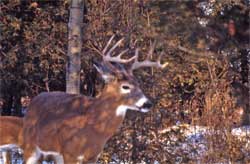
Big bucks like this don’t just happen. One must hunt to see them.


Millions of deer hunters are found across this great nation of ours, and we all seem to have different philosophies on hunting. We seldom agree on wildly varying topics.

Some hunters refuse to hunt east winds. Anything from the east is bad. For years, October featured south and southwest winds and then west and northwest, and by December we were hunting northwest, north and northeasterly winds.

My philosophy is that a deer hunter won't get much hunting in if they sit out every day with a bad wind. I hunt but switch from an open tree stand to an elevated and enclosed coop on such days. A few stands are set up primarily for an east wind, and they are in demand when the wind goes sour.

Many are the deer hunters who believe they should only hunt during the dark of the moon. Others only hunt the week before the full moon, and others never hunt during a full moon.

There are those who believe in hunting the Harvest Moon, the Hunters Moon, the Rutting Moon, and some who will only hunt just before the second full moon after the autumnal equinox. The nice thing about living in a free society is each of us can indulge our personal pleasures.

I personally don't care which day of the week it may be, which way the wind blows, what the moon phase happens to be, or anything else. I find it difficult to kill deer while sitting in the house rather than in a stand while hunting.

There are others who place great emphasis on hunting the rut. Little do they know that the 10 days before the full rut begins, deer go through the chasing stage or the pre-rut. It is a wonderful time to be hunting, regardless of the moon phase or wind direction.

Many feel the rut begins Oct. 20-25, and that is the beginning of the chasing stage, and it will last for about 10 days before the full rut begins. It's possible to find many people who would disagree on when the rut actually begins.

The peak of the rut in my area will occur on or about Nov. 3-4, and it is winding down before the Nov. 15 firearm season kicks off.

There are variations, depending on where you hunt. Weather conditions and people pressure can alter these dates a bit.

Some hunters are addicted to the Solunar Tables. These tables, first invented by John Alden Knight many years ago, are based on the sun and moon and their effect on tides and the earth. They contend there are normally two minor and two major periods each day when fish bite, and when wild game move about.

Some sportsmen hunt according to the Solunar Tables and kill deer, and I know other folks who hunt whenever they can, and they also have good hunting success while hunting outside of these major and minor periods.

I've hunted many years with great success. Good hunting habits bring wonderful hunting success, and simply being afield whenever possible is a good reason for being more successful.

I forget about all this other business, and go on doing what works best for me. That means that I hunt whenever possible, and try to hunt every day of the season.

Take the normal precautions with the wind, stay downwind of the deer, and it becomes fairly easy to build your own deer-hunting success, with or without using all of the old wives tales.

Saturday, May 07, 2011

Forget all the arguments & just go deer hunting.


Hunters will never see a buck tasting the air if they don't hunt.


Millions of deer hunters are found across this great nation, and we all seem to have different philosophies on hunting. We seldom agree on wildly varying topics.

Some hunters refuse to hunt various wind directions. Anything from the east is bad. For years, October featured south and southwest winds and then west and northwest, and by December we were hunting northwest, north and northeasterly winds.

My philosophy is that a deer hunter won't get much hunting in if they sit out every day with a bad wind. I hunt but switch from an open tree stand to an elevated and enclosed coop on such days. A few stands are set up primarily for an east wind, and they are in demand when the wind goes sour.

The best hunting option is to hunt as often as possible.


Many are the deer hunters who believe they should only hunt during the dark of the moon. Others only hunt the week before the full moon, and others never hunt during a full moon.

There are those who believe in hunting around the Harvest Moon, the Hunters Moon, the Rutting Moon, and some who will only hunt just before the second full moon after the autumnal equinox. The nice thing about living in a free society is each of us can indulge ourselves in such personal pleasures.

I personally don't care which day of the week it may be, which way the wind blows, what the moon phase happens to be, or anything else. I find it difficult to kill deer while sitting in the house rather than being out hunting.

There are others who place great emphasis on hunting the rut. Little do they know that the 10 days before the full rut begins, deer go through the chasing stage or the pre-rut. It is a wonderful time to be hunting, regardless of the moon phase or wind direction.

Many feel the rut begins Oct. 20-25, and that is the beginning of the chasing stage, and it will last for about 10 days before the full rut begins. It's possible to find many people who would disagree on when the rut actually begins.

The peak of the rut in my hunting area will occur on or about Nov. 3-4, and it is winding down before the Nov. 15 firearm season kicks off.

Weather patterns have a major influence on deer travel.


There are variations, depending on where you hunt. Weather conditions and people pressure can alter these dates a bit.

Some hunters are addicted to the Solunar Tables. These tables, first invented by John Alden Knight many years ago, are based on the sun and moon and their effect on tides and the earth. They contend there are normally two minor and two major periods each day when fish bite, and when wild game move about.

Some sportsmen hunt according to the Solunar Tables and kill deer, and I know other folks who hunt whenever they can, and they also have good hunting success while hunting outside of these major and minor periods.

Forget most of this and just go hunting and watch the wind.


I've hunted many years with great success. Good hunting habits bring wonderful hunting success, and simply being afield whenever possible is a good reason for being more successful.

I forget about all this other business, and go on doing what works best for me. That means that I hunt whenever possible, and try to hunt every day of the season.

Take the normal precautions with the wind, stay downwind of the deer, and it becomes fairly easy to build a reputation of being a successful deer hunter.

Tuesday, February 22, 2011

Write me a story

Dave Richey invites readers to submit a story for possible publication.


C'mon. Admit it. You've always had a hankering to write an outdoor story. One on fishing or hunting, and have it published.

Well, boys and girls, this is your golden opportunity. Here's the chance you've been waiting for. Let's get a bit of business out of the way first before I fill you in on what I need.

Right up front comes the bad news. I am not willing to pay anything for your masterpiece. No one pays me so I'm not going to pay you. However, I won't accept just any story. I want you to write me a query letter first, and send it to me, dave@daverichey.com. The query should be no more than 500 words, and it should tell me exactly what your story is about. If you have good, high quality color photos, tell me what you have.

Follow the explicit directions. I've mentored many great writers.


The story itself:

  • should run 750 words
  • I'll give you 50 words to work with
  • send it in a .doc format document
  • end it with a brief cover letter
    • NAME
    • ADDRESS
    • CITY, STATE, ZIP
    • PHONE NUMBER [ (area code) xxx-xxxx ]


Do not send a story until you've sent me the query letter, and I have returned your note with permission to send the story. Unsolicited stories will be rejected out of hand. People who write for magazines have all these hoops to jump through so I'm treating my space on my blog like they treat their magazine space.


I am soliciting your query letter on a topic of your choice, and hopefully with good photos. if your query letter is accepted, and I assign you the story, you have a month (30 days) deadline to write and send the story. I retain the right to accept or reject any story for any reason.


Stories must be
  • in good taste
  • feature no profanity
  • and not be filled with "fluff" words to build up the word count
  • stories of libelous nature will not be returned

I've edited four magazines during my career, and it's up to you to do it right the first time.


The story must be
  • typed,
  • double-spaced, and
  • written in 14-point bold (Geneva, Times or a similar font)

My vision is bad, and whatever you can do to help me read your manuscript is a point in your favor. It often pays off when trying to convince an editor to look at your story.


Some helpful hints for any beginning writer.

  • Write on a topic that you know very well. Only typed stories will be considered.
  • Write on things I write about. Search the archives of my site to gain a better idea of what I want. For example: stories on bear hunting, deer hunting, grouse hunting, turkey hunting, steelhead fishing, salmon fishing, catching bedded bluegills, bass fishing, etc. Treat fish and game with respect.
  • In your query letter, define exactly what the story will contain. A story needs a lead, a middle and an end. The lead is the first two paragraphs of the story. Use them wisely to capture my attention, and make me want to read the entire story rather than write a short rejection note.
  • If you don't know how to spell, use a dictionary or spell-check feature on your computer.
  • The two most overworked words are "the" and "that". Avoid them whenever possible.
  • Paragraphs should be no more than two or three sentences. Don't send me sentences that take up half a page. Plan your story with the lead, and then transition into the body of the story, and when you are done, stop writing. Most first-time writers fill a story with nonsense or b.s., and I've been at this business for 44 years. Write the truth in as few words as possible. Go back and read some stories I've written on your choice of topics and see how I handled it. Do not copy what I have written because to use something very similar to my copy is to copy me. Plagiarism is an ugly word among writers, and it tends to upset people. Be you, not me.
  • I retain the right to edit at will, and I will edit. I don't edit just to change things; I edit to make your story better. That's why they call people like me editors.


This is my challenge to you -- write a 750-word fishing-hunting story for me.


So pull yourself away from the television set, give it two or three days of thought,, and tell me a story that you think me and my many thousands of readers will want to read. I don't expect a Pulitzer piece for your first story, but I'd like to see a nice story on a fishing or hunting topic that pleases you, and I'd like to see you work hard on it.

Write it from beginning to end, set it aside for a day or two, go back through and read it again. One of the best editing tools is to read it aloud. Do this, and you'll stumble over a poorly written sentence. Figure out what needs to be done to avoid that bump in the road.

Your reward will find your story published on my website. It ain't much, but who knows, perhaps this is the kick in the pants you need to get started. One day you might find your name on a story in a big magazine that will reward you with a hefty check.

This is your chance. Let's see how many gutsy people we have out there.

Thursday, February 10, 2011

Two deer stands for each hunting spot?


East-wind stands must be properly placed for them to work.


It's certainly not an original idea. Many hunters, myself included, have long toyed with the notion of having two stands for each hunting spot. One for the prevailing wind direction and another that would work well for most other winds.

I've thought about it at great length, and have pretty much decided that the most problematic wind is from the northeast, east and southeast. Such winds can stall deer travel.

Would a stand for a prevailing westerly-northwesterly wind, and one for an easterly wind work? What are the pros and cons?

Is the two-stand idea adaptable for most deer hunting?


It probably would work if  the cover (meaning trees for tree stands) were available for those winds. The reason most of us never have put up stands for an east wind is that we never used to get as much of them as we have over the last 10 years.

I have a few places where I can go when an east wind blows. One is a pitblind at the base of a small hill, and an east wind blows right into the opening where bow shots are taken. Deer, as a general rule, do not approach from behind the pit blind, and it's very difficult for a deer to wind the hunter.

A couple of elevated coops are situated so an east wind isn't too bothersome, but many of my stands are placed strategically for the prevailing westerly wind direction.

However, going back to the plausibility of two stands for each hunting area. It could work, if the terrain features and available trees are present, but there is the additional cost of doing so.

Say we're hunting a big buck and we want to set up on him when the wind is out of the east, it can be done but it's not something one jumps into when we already have some stands out. If we could, that would mean building or buying many more stands.


The cost of buying or building more stands can become cost-prohibitive.


Most of our stands are permanent fixtures, especially elevated coops built into trees. If we were to do it at all locations, the woods would lose its good looks and begin looking like a scattering of urban tenements in the trees. That would spoil the aethetics of the hunting area.

What probably makes more sense than anything is to build four or five stands for use strictly on an east wind. That might mean two or three new stands along the western edge of our property where the likelihood of a deer catching the hunters scent would be minimal.

If two or three stands were positioned with the west fence line just a short distance away, the chance of a deer circling next to the fence and picking up human odor would be minimized.

The other alternative would be to build an air-tight coop with one shooting window strategically placed. If it was just large enough to shoot through, and could be opened without a sound, it would probably work.

Too many windows in a coop allow the hunter to be silhouetted against the light entering another window. And, the more windows there are, the more likely someone will try a shot at a circling buck or open the windows to look around. All this would do is distribute more human odor.


Fighting an east wind is becoming more prevalent. This could solve the problem.


Fighting the east wind is something bow hunters must put up with, and in some cases, we can do something about it. In other cases, the wind may beat us.We're putting our collective heads together this winter, and are trying to figure out how to beat the October east-wind problem. Will it be two blinds in one hunting spot or air-tight blinds with only one small shooting window?

Will it be one or two more pit blinds that back up to a hill? Will it be stands close to our line fence to keep deer from circling behind the hunters?

It may well be a combination of all of these things although having two blinds covering one hunting spot is not one of my favorite ideas. If one was an elevated coop and the other was a pitblind, it could work without cluttering up the skyline.

One thing is certain: whatever we do must be accomplished during the spring, or at the very latest, by June or early July. I like all changes to be made long in advance of the bow season.