Showing posts with label think. Show all posts

Monday, August 27, 2012

Thinking and being alert to deer is easy

DRO-big bucks
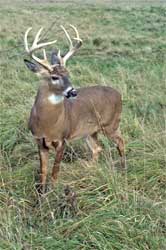
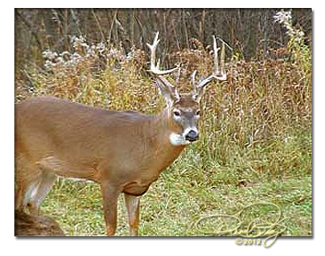
This buck has a larger rack than you think; Count the points
photo c.  Dave Richey Outdoors
My mind seemingly has tunnel vision. The only two things i seem focus intently on while bow hunting is studying deer, which really doesn’t make me all bad. I could care less about ball parks, Nascar races, or tournament golf.

Whitetails excite me; almost everything else is far less interesting, and certainly a lot less fun.

People question how I can only think about these two items most of the time. It must be easy because both passions have consumed my thoughts for more than 50 years.

Both thoughts are of equal importance, and without my intense study, there would be less hunting success. A number of years ago, I was asked a question at a bow-hunting seminar I was giving.

Another seminar attendee asked if the only thing I thought about was writing. I gave the man a straight answer.

It's a wise hunter who can act and think at the same time


"Writing is what I do," I said. "It's how I make a living, and to do my job properly, I'm always thinking about the next story. It has to be what I think about on a daily basis. I'd be dead in the water without the next story idea. The same thing applies when I bow hunt for whitetails."

My answer is based on these reasons. For me, hunting whitetails with a bow, and studying the animals at every opportunity, is what I do. To stop studying deer is to stop learning about whitetail deer. To stop learning means less opportunities and decreased success.

When I hunt, I become totally focused and immersed in my surroundings, and what the deer are doing. I never lose my concentration on deer, but I continue to focus and watch other deer. I can solve all kinds of deer hunting problems while sitting in my ground blind or in an elevated coop or tree stand.

Stay focused on your surroundings and remain alert


When working, my thoughts are always on deer hunting or trying to figure out why a particular deer did what it did the night before. Most people forget yesterday's hunt but not me.

Some people find it hard to think about two things at once or have trouble chewing gum and walking. That often happens when deer hunting: I'll be trying to solve a knotty little deer travel pattern problem, and a nice buck will walk out. My reflexes take over, and I can shoot that buck while shifting mental gears, and then I will shift back to solving other problems after shooting the deer or passing up a shot.
Solving any bow-hunting problem is always easier while bow hunting. Any hunting area always has some natural noises, but out there, the phone doesn't ring to distract me.

Years ago I learned that many of my award-winning articles and columns came to me while sleeping. One part of my brain kicked into gear, and I would wake up, slip out of bed, head for my office and write it while the idea was still fresh in my mind.

The same thing happens while bow hunting. A problem may bother me for weeks, and then one night while sound asleep, the answer wakes me up faster than a face slap with an ice-cold wash cloth. I suspect that being asleep allows the subconscious to kick in, provide the needed answer, and usually the answer is so simple I wonder why it didn't come to me much sooner.

Hunting and thinking is just as easy as walking and talking


I'm able to study deer, think about various deer patterning problems, and be ready and able to shift gears automatically, and shoot the buck. It's what I've trained my body and mind to do, and anyone else can do it providing they've learned the basic fundamentals of drawing and properly aiming a bow and making a smooth release. Do those things long enough, and do them properly, and it becomes simple.

This sort of thing often happens while I'm hunting. When my two main thoughts meld while aiming at a big buck, it is one of the most memorable events of my life.

Sunday, August 05, 2012

A chilling thought on a hot summer day

DRO_080512_a-chilling-thought
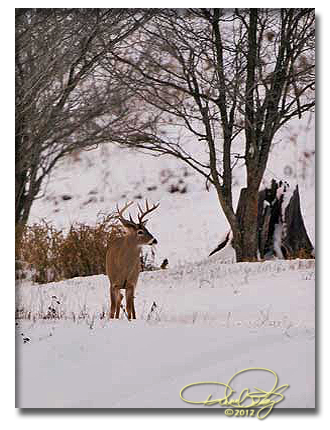
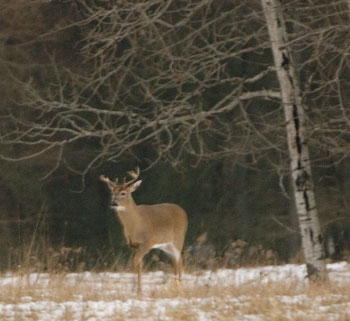
Not enough snow to prohibit deer travel … yet
photo courtesy Dave Richey Outdoors ©2012
We've all grown up with the adult advice that too much of
anything is never good for you. The primary examples used when I was a young man included such things as alcoholic beverages, tobacco and chasing wild women.

Most people realize that eating too much sweets, too many steaks or too much fried foods isn't good for a person. Too much Thanksgiving turkey bloats a person and makes us drowsy.

This "too-much" attitude can apply to many things about deer hunting as well. Too much east wind, too many trips to the same stand, too many does in the herd ... all of these things can be bad.


A chilling summer thought


Even though it is 80 degrees in early August, my thought processes are never far from deer. This leads me to wonder about snow. Can too much snow be a bad for hunters and for deer? The answer is a qualified "yes."

Let's take a look at the problem. Some parts of the state last winter were knee-deep in snow. What exactly are some of the problems associated with too much snow for hunters.
  • The obvious thing is that too much snow can have a limiting effect on how deer travel. The more snow, the less the animals move out to feed. The less feeding that takes place means that deer are not as visible, and that isn't good.
  • Another problem with too much snow is it becomes more difficult for hunters to get around, and the result is many sportsmen stop going out. They dread the idea of hiking a half-mile through deep snow, and running the risk of a heart attack.
  • We all know that snow makes things slippery, and it's very easy for a boot to slide off a tree stand step or the ladder of a ladder stand. Snow blows, can obscure moving deer, and many hunters do not care to be out in the really nasty weather.

Too much snow causes problems for deer as well; Such as


  • The deeper the snow, the less deer will move to feed. The deeper the snow, the more difficult it becomes for young deer to get around and to find food. Prolonged bouts of snowy weather and cold temperatures can lead to winter die-off or increased predation.
  • Deer spend most of their time in heavy cover, and snow can obscure the view of a deer moving through thick underbrush. Those deer that do move may pay an inordinate amount of attention to a hunting blind. They may still hang back in a thicket and not move until after dark.
  • It's difficult to tell a buck from a doe in swirling snow. They same thing applies to foggy weather. A friend of mine shot two bucks last year by accident. They looked like does, which is what he was hunting, and he glassed the deer with binoculars, and then switched to a scope. He studied their heads and could not see antlers, but when he walked up to both animals, each was a nice buck. Their antlers were made invisible by fog hanging four feet off the ground.


Swirling snow can lead to taking a bad shot


One could make the argument that he shouldn't have shot. However, long periods of studying both animals with binoculars and a high-powered scope failed to reveal antlers. He still wishes he hadn't shot.

So here we are, just barely into August, and each day brings us closer to the hunt and the inevitable snow that follows.

A friend of mine from the Traverse City area had 20 inches of snow one day last year, four inches the next and the next, four inches again and about six inches the next day. If anyone is counting that is 34 inches several day, and it continued to pile up.

Many don't seem to be aware of it, but two years ago we got 165 inches of snow that winter and about 120 inches last winter. Who knows what the weather will bring in several more month.

Granted, deer can head for the conifers where there is some thermal cover, but the combination of cold temperatures and increasingly deep snow, can place some young deer and mature breeding bucks in serious trouble early in the winter.

That, in a very bad winter, can become a death sentence for deer. And that is a chilling thought on a hot summer day.

Monday, August 15, 2011

Outsmarting deer can be easy when hunters think

This buck was photographed smelling a hankie.


My problem was the deer always trickled past my tree stand about 20 yards out of my effective bow range. I did as I always do, and kept thinking they would eventually swerve a bit closer but they never did.

Human scent is known to drive deer away, and after waiting for a miracle to happen, my idea seemed a bit far-fetched. It was to lay a human-soiled handkerchief in some bracken ferns about 18 inches off the ground 25 yards upwind of the trail the deer used.

There were no real solid feelings about whether my plan would work. It was about having the human scent drift downwind to the trail, and if the deer smelled it, they may drift downwind and approach my stand within range.

This solution came about because of my need to get deer closer to my stand.


The first evening a doe and two fawns came along, caught the human scent, and moved downwind away from it and closer to me. They eased past me at 18 yards, and I was thinking this really might work.

The next deer to encounter my scent-tainted handkerchief was a fork-horn. He stopped, looked upwind, and drifted downwind, and picked up the scent of the doe and fawns. and followed them out of sight. Again, he was close enough for an easy shot.

Just before dark a very nice 8-point came by on the same trail as the doe, two fawns and the fork-horns, and stopped where they had stopped. He too looked upwind, his tail switching back and forth, and sure enough, here he came along the same used by the other deer..

He moved slowly, turning every few feet to sniff the upwind scent, and stepped out in front of me and stopped. The buck stood quartering away, his ears and nose working overtime as he stared upwind for potential danger.

The bow came smoothly back, and as the buck stood motionless to study the upwind scent, my carbon arrow and a two-blade broadhead sliced in behind his front shoulder. The buck whirled, kicked his rear legs back, and ran off with the Game Tracker line trailing behind.

I watched the buck go down 60 yards away. I had a small job to do. I retrieved the small hankie, stuffed it in a plastic bag, and proceeded to pick up the Game Tracker line, field-dress my buck and then dragged him 50 yards to a two-track trail for easy pick-up.

It's not my intention to have people leave smelly hankies in the public woods because some, including myself would consider it littering. This hunt took place on private land several years ago when baiting was legal, and when finished, I cleaned up after myself.

These fell for the one trick I didn’t tell anyone about for a long time.


Another time I was hunting a buck only 50 yards from a major bedding area. The deer sldom came out to feed until dark, and the buck always came even later.

A small handful of corn was scattered over a wide area to the left of my pine tree stand. All too often the deer would still be milling around 30 minutes after shooting time ended. I needed a way for the deer to be gently spooked so I could climb down and leave without being seen.

It took two screw-eyes, an empty pop can painted with brown and black paint and allowed the paint to dry outside, got 30 yards of six-pound line off one of my reels, and added some pebbles. A ladder that extended up to 15 feet also was needed.

The area was eye-balled, and a tree 15 yards on the far side of the corn was chosen. I used the ladder to get 15 feet off the ground, screwed the screw-eye into a branch. One end of the monofilament line was tied to the tab opener. I poured several pebbles into the can, and lowered it to the ground and removed the ladder.

The next step meant picking up the slack line, walking over to my tree stand, climbing up and screwing in the other screw-eye. I threaded the line through that hole, and slowly raised the pop can into the air until it hung three feet below the branch.

The line was tied off securely to a tree branch near my left knee. That night, the does and fawns, and a scruffy looking little six-point buck came in five minutes before the end of shooting time, and milled around. They paid no attention to the line over their head and the well-camouflaged pop can.

Shooting time came and went, and the arrow was removed from my bow, the bow and bow quiver was silently lowered near the ground. I waited 15 more minutes, and the deer were still there, and a soft tug on the line make the pebbles rattle in the can.

Nothing happened so another tug, and this time every deer was looking in a different direction trying to locate the strange sound. They were a bit anxious, and about the time they settled down again, another soft tug  on the line made the pop can tinkle softly. The deer all ran off, but didn't appear overly spooked. None of them snorted, and one more tug sent the pop can clinking again and I could hear the deer moving off.

Some soft tugs on the line created just enough "soft" noise to chase the deer off.


I gave them five more minutes, climbed down, untied my bow and didn't see or hear a deer on the way out The pop-can trick worked whenever I tried it, and once a black bear came in at the end of shooting time. One tug on the line sent him crashing through the brush for 200 yards.

I've got a great spot to repeat the pop can trick this year. The deer always want to linger in this spot, but just remember some times these tricks will work two or three times, and once the deer learn the tinkling can represents no danger, they will forget about danger and continue to hang around.

Sometimes, all it takes is a bit of ingenuity to solve a deer-hunting problem. Nothing ventured, nothing gained.

Monday, February 21, 2011

Over-thinking the hunt

Think too hard about shooting this  buck and it might disappear.

I’m convinced of one thing. It’s my deeply-felt opinion that hunters can over-think a situation and spook deer from their hunting area.

Don’t agree? That’s OK by me. Each of us in this free country are entitled to think what we will, and at times like this, state our opinion. No one needs to agree although I’ve discussed the issue with many hunters, and they agree.

It’s my theory that deer can and will pick up on thought waves. Don’t believe it, then consider this. I was a twin, and my twin before his death could start a sentence on any topic, stop in the middle of a sentemce, and I could complete his thought. Over many years, I've known many sets of twins -- fraternal and identical -- that could do the same thing.

My twin brother and I were inseperable for 63 years before he died of cancer.

We could, within certain parameters, read each others’ minds. I often knew, as a kid, when my brother was getting his butt kicked in a childhood fight. I could perceive his location, and could run to the spot in time to land one on the ear or nose of the bully picking on him. Don’t ask me how it worked but over the 63 years brother George and I shared this world, it worked that way.

Now, after explaining the twin thing, I’ve studied whitetail deer for more than a half-century, I am more than just convinced that the mental attitude of a hunter can create success or render some hunting methods inconsistent or foil them completely.

You don’t need to believe what I am writing but ask that you keep an open mind about what follows. There are many things that we don’t know about the human mind.

Explain to me how an African native can track animals over rocky ground, and when they reach the end of the trail, they find the animal. Explain to me how I can sense a black bear coming to a bait site when I haven’t seen or heard anything that would make me believe that. Explain how when I say “Just one more cast before we leave”, often produces the fish of the day.

I believe that animals can sense potential danger from certain people. Some of my best friends are or were world renowned outdoor photographers. Some can approach quietly within photo range of big bears, wild sheep, goats and deer, and the animals will allow photos to be taken. If that same person is carrying a bow or firearm, the conditions change immediately.

Keep your mind free of any thoughts of hunting, killing, bow or firearm.

Over many years I’ve operated on the theory that predatory instincts carry a special danger signal to wild game. It’s why I never think about shooting a buck or doe. I keep my mind clear, concentrate on thoughts about work or play, or about anything other than killing an animal.

Years ago, when I was learning to deer hunt, I hit on this idea. I test it almost every year by letting a buck get close enough, and if it’s one I wouldn’t shoot anyway, I’ll start thinking about where to place the arrow so the animal, in my mind, died.

Often, within a few seconds, the deer has spooked and run off. Someties it runs out of sight or just out of bow range before stopping, but most of the time the animal puts distance between it and whatever may have scared it. I’m convinced it was my thoughts that chased it away.

Imagine yourself in a strange bar-restaurant, and you feel someone looking at you. A careful search of the room will usually expose the person staring at you. Does it feel hostile? Do you sense danger? It’s the same thing as a buck spooking from thoughts that may lead to its death.

Deer react to stimuli, and may react to your thoughts of shooting them.

Deer don’t think like humans but react to stimuli. How many times have you had the wind in your favor, haven’t moved or made a sound, only to have a buck approach a short distance and then run in the opposite direction? Could you have been thinking about shootinng that deer?

I’ve had some folks say I’m crazy, but in most cases I shoot more bucks than they do. I can’t explain this any better. However, it’s my conclusion after playing with these thoughts for about 40 years, that I’m on to something significant.

So, I think about the Detroit Red Wings or Tigers, wonder who will win the next game, or think about a calm day on a lake. I keep my mind clear of thoughts about killing a buck, never think about my bow or arrows, and often the deer will approach very close. Even as I draw, aim and shoot, I am thinking calm thoughts.

It’s something that works for me. It may your ace in the hole.

Posted via email from Dave Richey Outdoors

Wednesday, November 17, 2010

Firearms and common sense go together


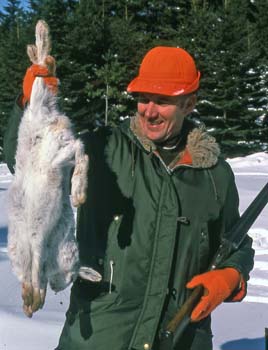
Chuck Lunn with two snowies taken on a hunt. He didn’t shoot me.


Outdoor writing has been my personal livelihood  for 44 years. One would think over that period of time that I’d seen everything in the outdoors.

Today’s newspaper carried a short blurb. A deer hunter did something foolish, and managed to shoot and kill himself. It makes me wonder what’s wrong with people.

I have probably written at least 100 stories, and perhaps more, about the many ways in which Michigan hunters have managed to kill or wound themselves or others over the years. You’d think after awhile people would quit taking idiotic chances. Quit thinking that hunting accidents only happen to other people, but I learned differently about 20 years ago.

Accidents can and do happen, but are usually the result of poor judgment.


Today’s account of yesterday’s fatality detailed how the unlucky hunter had climbed into his tree stand, and was in the process of pulling his loaded rifle into the tree. No one knows for sure  exactly what caused this tragedy, but the barrel was pointing up when it went off. The bullet from his rifle killed him, and the police are supposedly investigating the accident.

If anyone out there is hunting from a tree stand or any other elevated platform, for God’s sake, don’t load the firearm ahead of time. Even an unloaded rifle, muzzleloader or shotgun should be raised into the stand butt-first. Use a stout rope, tied a firm knot around the firearm, and don’t load the silly thing until you have it in the blind.

A loaded firearm can catch the trigger on a twig on the way up, and boom, it blows off half your face. Or the shot goes off, and hits you in various parts of your body. I used to investigate such stories for The Detroit News as part of my job, and some of the ways people injure or kill themselves would amaze most sportsmen who have more than a little bit of common sense.

Here are a few examples, including one that happened to me.


One guy stopped to fire up a smoke while hunting. He stopped walking, rested the muzzle of his shotgun on one foot while lighting up, and the shotgun went off, blew away his toes and part of his foot. Now there is another reason to stop smoking. Now the guy hobbles around.

Two guys hunting together paused to have lunch. They met, leaned their loaded deer rifles against a tree, and started going through their brown-bag lunch. One guy accidentally bumped a rifle, it fell to the frozen ground, went off, and the survivor had to break the bad news to the other man’s wife about how an accident killed his best friend.

Another nimrod was duck hunting from a boat. He and his friend built a framework of wood and chicken wire around around the boat. They cut cattails, wove them into the wire, and went hunting. They saw some ducks coming, one man stuck the muzzle of his 3-inch 12 gauge through the wire to shoot. The ducks swerved, he pulled back on the shotgun stock, but the front bead was caught on the wire. So he reaches through the wire with a couple of fingers, and pushed the barrel backwards while pulling the stock back with the safety off and his finger on the trigger. They now call him Stubby after shooting off two fingers.

I was shot in the hand and wrist by a snowshoe hare hunter in my party who had become lost, and was firing three-shot bursts from his 12 gauge, as I went back to get him. He was firing wildly in a panic, and just as I found him, he shot in my direction. Many pellets him me but didn’t penetrate my Hunter Orange shooting coat, but some pellets did go into one gloved hand.

Take no chances, think before shooting, identify your target, and use caution.


These accidents occur because some people don’t pay attention, use very poor judgment, have little or no common sense, and seem willing to take chances while hunting. There were no firearm fatalities last year, but we’ve already had our first in 2010. One death is one too many.

Engage brain before picking up and using any firearm. The life you save could be your own.

Posted via email from Dave Richey Outdoors

Monday, October 18, 2010

Cause & Effect


This is about a topic first learned in school. It may not have been devised with whitetail deer in mind, but it certainly does apply.

It states that for every action, there is an opposite or opposing reaction. We've all heard this before, and it applies in many and varied ways to deer hunting.

Take an ill-advised shot at a buck or doe and miss, and the action of shooting causes an opposing reaction. The deer runs off, alarmed but unharmed. It also snorts and alerts other deer in the area to hunter presence.

There’s no mistaking a bad reaction to an unwise human decision.


This action-reaction plays out on a daily basis in the deer woods. Set up in the wrong place, place yourself upwind of deer, and once they catch your scent, off they go without a bow-shot being taken.

The same action-reaction could be called cause-and-effect. Your ill-advised hunting actions cause you to take a shot and miss, and the deer runs off, allowing for its escape.

Many bow hunters fail to heed the good advice of credible hunters. They seem to think they are invisible because they are dressed in camo. Well-worn camo can be ruined by wearing clothing washed in detergent with whitening agents. The deer spook from whitened clothing that just doesn't look natural.

Thousands of hunters believe they are quiet and motionless. They should have a buddy sit 50 yards away with a video camera to tape all the movements that are made.

We've all seen television hunting shows where the cameraman tapes the host pointing and loudly whispering "it’s a buck" four or five times in a row. These are called "cutaways," and are usually taken long after or before the buck has walked into range and caught an arrow through the heart and lungs.

Be cautious about what you think is learned from a TV hunting show.


Hunters who try such nonsense merely are seen, heard or both by the deer, and the animals run off snorting. Cause and effect or action and reaction.

Television hunting shows are expensive to produce, and the competition for advertising dollars is fierce as people compete for money to do next year’s shows. If they make noise at the wrong time, and the buck vamooses, the chance of getting future ad dollars from that company go down the tube. Again, a classic case of action and reaction.

Bow hunters are well advised to consider cause and effect, action and reaction, every time they go hunting. For every possible action, there is a possible reaction, and they may be damaging to your body or harmful to your hunting efforts.

Hang stands early. Insure that everything is safe. Wear a safety harness. Learn how to sit still and don't make noise. There are countless things to think about, but consider every action far in advance and think about any possible reactions.

Give live deer the credit they deserve.


Deer live in the fields, swamps and woods every day. We live there a few hours a day or a week. Give deer a great amount of credit for being instinctive, savvy and alert to changes within their home range.

One way to consider your actions while deer hunting is to consider your bed. If the head of your bed faces west, and you prepare to retire for the night and find the head of the bed facing east, you will quickly notice it. Deer always notice changes in their world.

Consider every change made while hunting, and give serious consideration to the reactions. This is such a basic concept that any bow hunter should learn it early in their hunting career. Alas, too many don’t learn it until it’s too late.

Just remember: for ever action, there is an opposite reaction. Anything you do can and will backfire if you don't think the problem through long before committing to it.

Conquer this basic thought, engage the brain before the body, think things through, and it's very possible that your hunting success ratio with climb.

Posted via email from Dave Richey Outdoors

Friday, October 15, 2010

The right attitude for hunting


It's difficult to do many things that require skill unless one has the proper attitude and dedication. One thing I find about some hunters is they lack any drive or motivation, and this usually comes from not having an attitude.

There are good attitudes and bad 'tudes, and a bad one isn't conducive to being an effective deer hunter. Hunters with a bad 'tude are constantly griping about the weather, the lack of deer, too many does, too many hunters, and on and on.

Can't remember the name of the guy but years ago he held classes that praised the power of positive thinking. He believed that thinking in a positive way made a major difference, and I completely agree.

Putting a positive attitude on your deer hunt gives one confidence.

Think of deer hunting the same way. You climb into a tree stand or ground blind, feeling good about yourself and your ability to sit still and shoot straight. You know you can shoot that buck if it comes your way, and offers a high percentage shot.

This positive thinking attitude doesn't work every time. If it did, we would all soon tire of deer hunting, rolling a 300 game while bowling, or clobbering two home runs in the local softball game.

What this positive thinking does do is allows a hunter to do everything else right. A buck starts heading your way, and you spot it immediately. You sit still and don't wiggle around, and you've got the wind in your favor at all times.

This positive attitude allows hunters to scout more efficiently, pinpoint key buck areas, and to be in the right spot at the right time. This occurs because they believe in themselves.

Hunting means you must believe in yourself, your abilities and hunting skills. If you think negatively, chances are good you'll be daydreaming about the boss you intensely dislike, and a buck will sneak past and be out of range or back in thick cover before it is seen. You've blown perhaps the best chance of the season!

Daydream long enough, and a buck will slip in behind you, squire a doe, and she will lead him past your stand too fast for a shot. You won't shoot because your bow was not in your hand where it should have been, and you were ill prepared to take a shot.

Pay attention, stay alert & don’t daydream.

Turn this whole scenario around, and you head into the woods with hope in your heart, and a good feeling about hunting. There is a feeling that you sense more than feel, that today will be a day when a nice buck will offer a shot. You can sense that buck, and you sit tight with bow in hand, and when he shows up, you are fully capable and prepared to shoot it.

The power of positive thinking is something that many people rarely think about. They might be thinking about a beer after the hunt, and be thinking of that brew when they should be thinking about a buck that just slipped by without a shot being taken.

This is a mental concept that is very difficult to explain, and in all honesty, hunters must have a few bucks under their belt to make it work. They must know their way around the deer woods, and must learn to think like a deer. If I was a deer, where would I enter this area from and why? You study the terrain, figure it out, and sure enough, on many occasions the deer will travel the trails you've puzzled out.

Hunters with a positive attitude have their game face on whenever they enter a stand. They are out there to hunt, not just spend time outdoors, and they are constantly running the angles through their brain. They are, without knowing it, trying to will a buck to them.

That is a bit of a stretch, and although I'm not saying a person can will a deer to them, I believe the hunter with the right attitude will do more things right than hunters with an indifferent mind-set.

Make your own luck by working harder than the next guy.

Hunters often refer to those people who always shoot a nice buck as being "lucky." They are not lucky in the normal sense of the word; instead, by having the proper attitude, and the willingness to think things through and do everything right, they make their own luck.

I can't teach you or anyone else how to develop the proper deer-hunting attitude. You either have it or you don't, and those that do, know what I'm talking about.

Those that don't will never know unless they put this column aside and read it every day before they go hunting. Then, maybe with a tiny bit of common sense and the right attitude, a buck may walk within range of a hunter who is mentally and physically prepared to shoot it.

Posted via email from Dave Richey Outdoors

Saturday, September 11, 2010

Admitting some bow-hunting errors


The crunch time is approaching. I've done most of my preseason deer scouting, put up a couple of tree stands in key locations, built a pit blind, and am waiting to see just how much more rain we are going to get in the near future.

Invariably, no matter how hard I think about things, I'll forget one key element in my deer-hunting equation. Hell, I once drove 60 miles to one of my hunting spots and got my plastic lidded tub of Scent-Lok clothes out of the car, as well as my rubber boots, and reached in for my bow. It wasn't there, and then I remembered taking it into the house to dry it out after a rain the previous day.

It was dry when I got home that night. Instead of hunting, I spent the evening watching other spots and located a good buck that I shot a week or so later when all of my equipment was in my hands or on my back.

Make certain you have everything in your baackpack or pockets.

Forgetting things is easy, and it happens to everyone. Once, I was hunting a cedar tree where there was no time to put up a stand. My bow was laid on the ground with my haul rope attached to a belt loop. Normally, my backpack is worn into my stand and it always contains a spare release.

The path up to where I could watch the trail and shoot if necessary was a tight fit so I left my backpack 150 yards away near the field edge. I'd pick it up on the way out. Up I go, like an arthritic monkey, got positioned on a large and sturdy tree limb, leaned back against another sturdy tree limb, and hoisted my bow into the tree after attaching my full-body harness.

I settled back to wait, and I always leave my release on the string. Here comes a dandy 9-pointer, and I'm prepared to shoot when he hits a little dogleg in the trail. It will provide a quartering-away shot at 17 yards. The bow is slowly raised into position, and guess what?

A tiny twig hit the trigger, and the release fell to the ground. The buck heard the noise in the leaves, stopped, looked around and walked to the dogleg and stood in the most perfect place. I could have shot with my fingers, but it had been years since I had done so, and I couldn't remember whether to pull with three fingers under the nock or one over and two fingers under. Rather than risk a bad shot, I didn't shoot but never saw that buck again.

I've lost enough things while hunting to stock some small sporting goods stores. All have been lost because of dumb moves on my part. I'm like the pool hustler: I know how to sink the shot, and play position pool to set up for an easy shot on the next ball, but knowing how to do it and doing it are two mighty different things.

Think ahead, and plan for any eventuality.

The same applies to hunting gear. A buddy found a pair of binoculars I had left in a blind. I thought they came out in my backpack, but goofy me, I forgot them and tore my car and house apart looking for my optics. The next person that sat in that stand walked out after dark and said "here are those binoculars you lost. You left them on the seat in the coop."

I've lost expensive and highly prized knives, flashlights and what not. Stuff falls out of my pocket or backpack, and I can think of at least two releases that have been lost in the woods.

Even knowing my proclivity for losing things, I still run through a checklist, and try to keep everything I may need in my backpack.

Paying attention to what goes in and what is taken out of the backpack or one's pockets is an obvious first step to keeping track of gear. But, as is true with many people, we get thinking about something else, and forget a sorely needed item.

I took my quiver off my bow several years ago, took them inside to retouch the edge on my broadheads. I touched them up, added a light coating of oil to postpone the onset of rust, and set the quiver next to the door. I was starting out the door when the phone rang.

Don’t let other things distract you.

I grabbed the phone, hung up, turned on the security system, and out the door I went. Drove to the hunting spot, grabbed my bow, looked all over for my arrows, and realized this was another head-slapper night.

So there are my stories of some nitwit moves and stupid actions. It's my suspicion that others forget things on occasion, but I seldom hear from people willing to admit to their dumb tricks.

Now, having confessed some of my silly stunts, perhaps I'll remember everything this year. You think?

Posted via email from Dave Richey Outdoors

Wednesday, March 03, 2010

Solid planning eliminates costly mistakes

Anyone who tells me they never make a deer-hunting mistake has probably never went head-to-head with a big whitetail buck. Anyone who hunts often is bound to make an occasional mistake.

Making a mistake, and learning from it, are two different things. I try to sit down, dig deep into my memory bank, and recall past hunts. Do it often enough, and be honest with yourself, and everyone will find one or more occasions where they messed up and it cost them a good buck.

I got caught with a phone call just as I was heading out the door one afternoon two years ago, and I had to talk with the person. What should have been a five-minute chat turned into 15 minutes of conversation.

I parked near my spot, started walking 200 yards to my stand and bumped into a buck already on the move. Had my call lasted only five minutes I would have been in my stand and ready to shoot that deer.

Make one mistake and the big buck runs off.

Can that problem be fixed? Sure it can. Limit the call to five minutes, and hurry. The other obvious alternative is to not take the call, and return it after the hunt is over. That really makes the most sense.

A friend was hunting elsewhere, and was almost to where he would park when he had a flat tire. He didn't want to change the tire in the dark, so he jacked up the car, removed the flat, put on the spare, and headed for his stand.

A buck was standing directly in front of his tree stand, and each one spotted the other at the same time, and the buck ran off. An unseen doe blew and snorted for 30 minutes, and he never saw another deer that night. It's all about timing.

The solution is obvious. Change the tire in the dark. Deer hunting is about priorities, and hunting ranks high above changing tires or anything else that comes in second place.

Think and plan ahead before leaving home. Try to eliminate those costly mistakes.

Another mistake I made one time was spotting a buck back in the alders, and its rack was lost in the dark twisted branches. It was easy to pass on that buck because it didn't have a big body. Small body, small deer. Right?

Wrong. It's true that most big people have big bodies and big feet, but it's also true that small people have small bodies and big feet. The same thing applies to deer. Small bodied deer can have small feet and a big lusty rack.

I've seen several heavy-antlered deer that simply look small because their body is small. Chances are it's a 2 1/2-year-old buck, but I've seen a few deer of that age with very impressive antlers.

The buck I had dismissed as being small turned out to be a small-bodied animal with a great big rack. Apparently this deer used enough protein to build as big a body as it needed, and any excess of protein and trace minerals went into building a trophy rack.

It's not a giant buck but a nice one. No human errors were made this day.

It happens. Not often enough, but just often enough to fool a hunter when it stands back in the tag alders and the antlers are difficult to judge. I've replayed that missed chance dozens of times.

The thing is that mistakes happen to everyone. We have an error in judgment, a lapse in our thinking process, or we simply are caught daydreaming about something else, and the opportunity for a shot at a big buck comes and goes. Deer will seldom wait for you to get your hunting act together.

It's easy for me to preach to the choir. You know, pay attention, don't get distracted, be ready for a shot at all times. We've all heard the choir sing before, and still we make occasional mistakes.

We're human. That's all there is to it. We do make mistakes but should try to minimize their number.

The biggest thing to do, and also the hardest, is maintain full and complete attention to what is happening around you. Don't daydream, don't be messing with your bow, don't put the release in your pocket, and don't lose your primary train of thought. Keep your focus!

Be alert, and if you can't do that every minute of every hunt, remember that I've told some stories about miscues I've made. Stand tall, and tell your buddies how you messed up.

The whole world needs a good laugh these days.

Posted via email from Dave Richey Outdoors