Showing posts with label kill. Show all posts

Tuesday, February 28, 2012

The essence of a quick and honorable kill

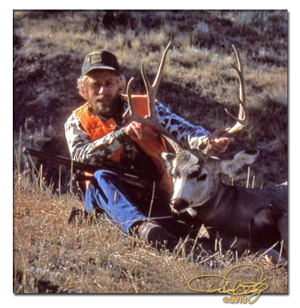
A long shot on a mule deer is possible with practice
muledeer

The truest form of respect to an animal sportsmen hunt is the ability to make a clean, killing shot, whether with a bow, muzzleloader, pistol, rifle or shotgun.

The thing that many anti-hunters are against are wounded animals. I have people contact me, and some say they are ill-prepared for the shot. A bad hit is the result of jittery nerves, buck fever and an inability to shoot straight when an opportunity presents itself.

People who regularly hunt make killing shots. Most of them hunt with a bow, even during firearm seasons, but others also hunt with a muzzleloader or center-fire rifle. When they aim at a deer, and pull the trigger, the animal goes down and dies instantly.

Learn how and practice aiming for an instant kill

There is no long, lingering chases to finish off the animal. There is no long hours spent blood-trailing a deer for miles. There are no cases of someone taking a hasty shot, and making a bad hit.

These hunters have one thing in common: they can shoot straight, and they don't miss. One man has shot eleven bucks, and he takes only one each year. Five were taken with a bow and none ran over 75 yards, and four died when the arrow sliced through both lungs.

The other two deer were taken with a flat-shooting rifle with a 140-grain pointed soft point. Both deer were hit low behind the front shoulder, and both deer died instantly where they stood.

Another man shot a big 10-point last fall after he had hunted the animal into December. The buck made a mistake, walked past the hunter, and one arrow killed the buck. It went just 50 yards and tipped over.

What do these men have that other sportsmen don't have? They have the patience to wait for a clear shot, and possess the ability to put an arrow or bullet in that proper location that causes instant death.

They practice shooting all year. The centerfire rifle usually doesn't come out of the gun safe until just a week before the Nov. 15 firearm deer opener for many people. They may shoot the rifle a dozen times in one day before the season opener, and they feel they are familiar with their bow or firearm. They know that when the rifle's cross-hairs center the heart-lung area that the deer is dead but doesn't know it just yet.

An old hunting question has been around for more years than I can remember, and it goes like this: People don't ask, can you? They ask, did you?

The ones that can, do; Those that can't, tell stories

Good hunters know that when they put the bow sight behind the front shoulder of a buck, that animal will go down. They shoot regularly, never exceed their shooting abilities by taking long bow shots, and they know how and when to draw and shoot. The deer they shoot are unaware of danger because these hunters play the wind every day and can sit still on stand.

These men and women are not casual hunters. They work hard to learn as much about deer as possible. They know how and where deer travel, and soon learn when the animals will come near their stand.

They never take hurried shots, and never take a low-percentage shot. They know that tomorrow may offer a better opportunity, and are willing to wait until all conditions are in their favor. They never make a mistake when shooting game, and they respect those animals they hunt.

I once shot a 6X5 elk in New Mexico at 350 yards. Elk are big critters, and when my Swarovski scope's crosshairs settled low behind the bull's front shoulder just as he finished bugling and he'd emptied his lung, the trigger was squeezed and the bull died instantly.

Another time I shot a very nice mule deer across a side canyon along the north rim of Arizona's Grand Canyon with a 7mm Magnum at 450 yards. One shot, and down he went. My guide said he'd never seen such a shot. There was nothing for me to say because I'm accustomed to long shots. But then, I practice shooting a lot.

Hunters must practice, and I don't pretend to specialize in long shotsm but I only shoot when I know from past experience that I can make that shot. Some of it is a result of  practice, and some of it is knowing that the shot can be made with confidence. Both of these shots, no brag, were instant kills.

Hunters who can do this on a regular basis have no need to brag about their prowess, never make the deer appear dumb or stupid, and they never show the animal any disrespect. Many have learned over time that hunting means more than just killing, and also know that the meat from these animals will grace their table all year 'round.

They know that hunting is something more, much more, than killing a small deer with tiny antlers. They are willing to pass up young bucks, knowing that two or three years on a buck will allow them to take a trophy buck of their dreams.

More so, they are hunters, 365 days per year, and that is why many are so deadly in the autumn woods. They have the patience, skill practice and common sense to do everything right. They don't have to think long and hard about it but just react to the situation.

Thinking too hard on anything can make it more difficult than it should be. And that, my friends, is a direct quote.

Posted via email from Dave Richey Outdoors

Monday, October 18, 2010

Cause & Effect


This is about a topic first learned in school. It may not have been devised with whitetail deer in mind, but it certainly does apply.

It states that for every action, there is an opposite or opposing reaction. We've all heard this before, and it applies in many and varied ways to deer hunting.

Take an ill-advised shot at a buck or doe and miss, and the action of shooting causes an opposing reaction. The deer runs off, alarmed but unharmed. It also snorts and alerts other deer in the area to hunter presence.

There’s no mistaking a bad reaction to an unwise human decision.


This action-reaction plays out on a daily basis in the deer woods. Set up in the wrong place, place yourself upwind of deer, and once they catch your scent, off they go without a bow-shot being taken.

The same action-reaction could be called cause-and-effect. Your ill-advised hunting actions cause you to take a shot and miss, and the deer runs off, allowing for its escape.

Many bow hunters fail to heed the good advice of credible hunters. They seem to think they are invisible because they are dressed in camo. Well-worn camo can be ruined by wearing clothing washed in detergent with whitening agents. The deer spook from whitened clothing that just doesn't look natural.

Thousands of hunters believe they are quiet and motionless. They should have a buddy sit 50 yards away with a video camera to tape all the movements that are made.

We've all seen television hunting shows where the cameraman tapes the host pointing and loudly whispering "it’s a buck" four or five times in a row. These are called "cutaways," and are usually taken long after or before the buck has walked into range and caught an arrow through the heart and lungs.

Be cautious about what you think is learned from a TV hunting show.


Hunters who try such nonsense merely are seen, heard or both by the deer, and the animals run off snorting. Cause and effect or action and reaction.

Television hunting shows are expensive to produce, and the competition for advertising dollars is fierce as people compete for money to do next year’s shows. If they make noise at the wrong time, and the buck vamooses, the chance of getting future ad dollars from that company go down the tube. Again, a classic case of action and reaction.

Bow hunters are well advised to consider cause and effect, action and reaction, every time they go hunting. For every possible action, there is a possible reaction, and they may be damaging to your body or harmful to your hunting efforts.

Hang stands early. Insure that everything is safe. Wear a safety harness. Learn how to sit still and don't make noise. There are countless things to think about, but consider every action far in advance and think about any possible reactions.

Give live deer the credit they deserve.


Deer live in the fields, swamps and woods every day. We live there a few hours a day or a week. Give deer a great amount of credit for being instinctive, savvy and alert to changes within their home range.

One way to consider your actions while deer hunting is to consider your bed. If the head of your bed faces west, and you prepare to retire for the night and find the head of the bed facing east, you will quickly notice it. Deer always notice changes in their world.

Consider every change made while hunting, and give serious consideration to the reactions. This is such a basic concept that any bow hunter should learn it early in their hunting career. Alas, too many don’t learn it until it’s too late.

Just remember: for ever action, there is an opposite reaction. Anything you do can and will backfire if you don't think the problem through long before committing to it.

Conquer this basic thought, engage the brain before the body, think things through, and it's very possible that your hunting success ratio with climb.

Posted via email from Dave Richey Outdoors

Wednesday, October 28, 2009

More To Hunting Than Killing

It's become something of a habit for me. Once the fall hunting season heads into its second month, there's a good chance that once a day I'll remember another hunt from the past where a big buck was taken or an opportunity was lost for one reason or another.

It's this ability to recall past hunts, successful or not, that allow us to wallow through nine months of not hunting deer with a bow. It's rather easy to look at one of the big bucks on my wall, relax, kick back, and dredge up a fond memory or two to help me through the day.

There was a big buck running around my hunting area several years ago, and he was as regular as a dish of prunes. The problem was he was back in thick cover, and would eventually leave it. Each time he stepped out, he was in a slightly different location than days before.

 Hunting a very good buck

All too often he was just a bit too far away for a clean shot, and shooting that 10-pointer wouldn't have been easy. My decision to wait until he exited the tag alders within 20 yards was an easy one to make because I couldn't and wouldn't take a bad shot.

Day after day I'd see him. Sometimes he was close but 10 feet back in the tags, and the next day he would be 65 yards away. I believe he bedded in those alders, and moved around a bit  each day. Deer don't always bed down in the same location, and this guy championed the art of bedding and exiting tags in a different spot from day to day.

This buck was a tempting rascal but I'd hunt other blinds to avoid becoming patterned at this nearby spot. I was always downwind of him, but it was always just before shooting time ended when he stepped out. I felt he occasionally would make his move a little earlier, and it was a matter of being there when he did. Hopefully, his move would let him step out, and take several steps that may put him within range.

Once I saw his high and wide rack, all glistening white, coming through the tag alders. If he stayed his course, he would come out only 18 yards away and in a perfect location for a good shot.

Looking for a shot

His head swiveled  back and forth as he tested the wind, studied the nearby terrain that day, and his ears were cocking forward and to each side in hopes of getting an early warning of possible danger. He was 4 1/2 years old, and had had many opportunities to practice his moves before coming out to feed.

He kept coming at a very slow pace. There was no hurry-up in this guy. Each move was a well managed lesson in tactical survival. He'd take a step, stop, stand motionless for a minute or two, and then take another cautious step or two.

The buck would hold his head high, lower it to change the angle of his gaze, and move again. He had all the patience of a stalking alley cat, and moved as if he was ready to bolt at any second. Bolting wasn't what I wanted him to do, but sometimes these things happen.

Suddenly he stopped, and gazed hard at something nearby. A big mature doe had walked out of the brush on the other side of my stand, and was standing there, watching the buck. Live decoys like this doe that had appeared out of nowhere can be a good thing. As long as she doesn't spook, he may come closer.

The buck was upwind of me and the doe, and she wasn't going to walk over and introduce herself, so the only course of action was for the buck to move toward her. He made a slow approach, and my arrow was nocked on the bow string, and my Gator Jaw release was attached.

She turned as if to leave, and the buck moved quickly to intercept her. The buck popped out of the tags like a jack-in-the-box, and after many sightings, there he was 20 yards away.

The moment of truth

I let him move slightly, and offer a quartering-away shot. My sight was nestled low behind his front shoulder, and as that leg moved forward for another step, I laid my finger on the release trigger.

The buck moved right at that instant, turning away, and such low percentage shots seldom produce. I waited for him to turn and offer a quartering-away shot, but the doe walked over to him and they walked away like two old lovers walking side-bt-side down the street. It had been a close call, but the buck had won another round.

There is a great deal of satisfaction in hunting one specific buck, and having everything eventually work out or fall apart because of a doe's action. I've hunted numerous bucks where great planning just didn't work, and that is why they call this hunting, not killing.

If we were to succeed every time we hunted, bow hunting would soon cease to hold any appeal. The challenge of hunting one buck to the exclusion of all others is what works for me, even if an entire season passes without a shot.

More To Hunting Than Killing ((Dave Richey, Michigan, Outdoors, alders, appeal, bow, buck, doe, kill, memories, past hunts, release))

Posted via email from Dave Richey Outdoors

More To Hunting Than Killing

It's become something of a habit for me. Once the fall hunting season heads into its second month, there's a good chance that once a day I'll remember another hunt from the past where a big buck was taken or an opportunity was lost for one reason or another.

It's this ability to recall past hunts, successful or not, that allow us to wallow through nine months of not hunting deer with a bow. It's rather easy to look at one of the big bucks on my wall, relax, kick back, and dredge up a fond memory or two to help me through the day.

There was a big buck running around my hunting area several years ago, and he was as regular as a dish of prunes. The problem was he was back in thick cover, and would eventually leave it. Each time he stepped out, he was in a slightly different location than days before.

 Hunting a very good buck

All too often he was just a bit too far away for a clean shot, and shooting that 10-pointer wouldn't have been easy. My decision to wait until he exited the tag alders within 20 yards was an easy one to make because I couldn't and wouldn't take a bad shot.

Day after day I'd see him. Sometimes he was close but 10 feet back in the tags, and the next day he would be 65 yards away. I believe he bedded in those alders, and moved around a bit  each day. Deer don't always bed down in the same location, and this guy championed the art of bedding and exiting tags in a different spot from day to day.

This buck was a tempting rascal but I'd hunt other blinds to avoid becoming patterned at this nearby spot. I was always downwind of him, but it was always just before shooting time ended when he stepped out. I felt he occasionally would make his move a little earlier, and it was a matter of being there when he did. Hopefully, his move would let him step out, and take several steps that may put him within range.

Once I saw his high and wide rack, all glistening white, coming through the tag alders. If he stayed his course, he would come out only 18 yards away and in a perfect location for a good shot.

Looking for a shot

His head swiveled  back and forth as he tested the wind, studied the nearby terrain that day, and his ears were cocking forward and to each side in hopes of getting an early warning of possible danger. He was 4 1/2 years old, and had had many opportunities to practice his moves before coming out to feed.

He kept coming at a very slow pace. There was no hurry-up in this guy. Each move was a well managed lesson in tactical survival. He'd take a step, stop, stand motionless for a minute or two, and then take another cautious step or two.

The buck would hold his head high, lower it to change the angle of his gaze, and move again. He had all the patience of a stalking alley cat, and moved as if he was ready to bolt at any second. Bolting wasn't what I wanted him to do, but sometimes these things happen.

Suddenly he stopped, and gazed hard at something nearby. A big mature doe had walked out of the brush on the other side of my stand, and was standing there, watching the buck. Live decoys like this doe that had appeared out of nowhere can be a good thing. As long as she doesn't spook, he may come closer.

The buck was upwind of me and the doe, and she wasn't going to walk over and introduce herself, so the only course of action was for the buck to move toward her. He made a slow approach, and my arrow was nocked on the bow string, and my Gator Jaw release was attached.

She turned as if to leave, and the buck moved quickly to intercept her. The buck popped out of the tags like a jack-in-the-box, and after many sightings, there he was 20 yards away.

The moment of truth

I let him move slightly, and offer a quartering-away shot. My sight was nestled low behind his front shoulder, and as that leg moved forward for another step, I laid my finger on the release trigger.

The buck moved right at that instant, turning away, and such low percentage shots seldom produce. I waited for him to turn and offer a quartering-away shot, but the doe walked over to him and they walked away like two old lovers walking side-bt-side down the street. It had been a close call, but the buck had won another round.

There is a great deal of satisfaction in hunting one specific buck, and having everything eventually work out or fall apart because of a doe's action. I've hunted numerous bucks where great planning just didn't work, and that is why they call this hunting, not killing.

If we were to succeed every time we hunted, bow hunting would soon cease to hold any appeal. The challenge of hunting one buck to the exclusion of all others is what works for me, even if an entire season passes without a shot.

((tag: Dave Richey, Michigan, Outdoors, alders, appeal, bow, buck, doe, kill, memories, past hunts, release))

Posted via email from Dave Richey Outdoors