Showing posts with label about. Show all posts

Monday, February 21, 2011

Over-thinking the hunt

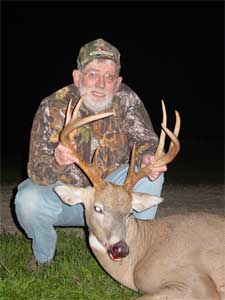
Think too hard about shooting this  buck and it might disappear.

I’m convinced of one thing. It’s my deeply-felt opinion that hunters can over-think a situation and spook deer from their hunting area.

Don’t agree? That’s OK by me. Each of us in this free country are entitled to think what we will, and at times like this, state our opinion. No one needs to agree although I’ve discussed the issue with many hunters, and they agree.

It’s my theory that deer can and will pick up on thought waves. Don’t believe it, then consider this. I was a twin, and my twin before his death could start a sentence on any topic, stop in the middle of a sentemce, and I could complete his thought. Over many years, I've known many sets of twins -- fraternal and identical -- that could do the same thing.

My twin brother and I were inseperable for 63 years before he died of cancer.

We could, within certain parameters, read each others’ minds. I often knew, as a kid, when my brother was getting his butt kicked in a childhood fight. I could perceive his location, and could run to the spot in time to land one on the ear or nose of the bully picking on him. Don’t ask me how it worked but over the 63 years brother George and I shared this world, it worked that way.

Now, after explaining the twin thing, I’ve studied whitetail deer for more than a half-century, I am more than just convinced that the mental attitude of a hunter can create success or render some hunting methods inconsistent or foil them completely.

You don’t need to believe what I am writing but ask that you keep an open mind about what follows. There are many things that we don’t know about the human mind.

Explain to me how an African native can track animals over rocky ground, and when they reach the end of the trail, they find the animal. Explain to me how I can sense a black bear coming to a bait site when I haven’t seen or heard anything that would make me believe that. Explain how when I say “Just one more cast before we leave”, often produces the fish of the day.

I believe that animals can sense potential danger from certain people. Some of my best friends are or were world renowned outdoor photographers. Some can approach quietly within photo range of big bears, wild sheep, goats and deer, and the animals will allow photos to be taken. If that same person is carrying a bow or firearm, the conditions change immediately.

Keep your mind free of any thoughts of hunting, killing, bow or firearm.

Over many years I’ve operated on the theory that predatory instincts carry a special danger signal to wild game. It’s why I never think about shooting a buck or doe. I keep my mind clear, concentrate on thoughts about work or play, or about anything other than killing an animal.

Years ago, when I was learning to deer hunt, I hit on this idea. I test it almost every year by letting a buck get close enough, and if it’s one I wouldn’t shoot anyway, I’ll start thinking about where to place the arrow so the animal, in my mind, died.

Often, within a few seconds, the deer has spooked and run off. Someties it runs out of sight or just out of bow range before stopping, but most of the time the animal puts distance between it and whatever may have scared it. I’m convinced it was my thoughts that chased it away.

Imagine yourself in a strange bar-restaurant, and you feel someone looking at you. A careful search of the room will usually expose the person staring at you. Does it feel hostile? Do you sense danger? It’s the same thing as a buck spooking from thoughts that may lead to its death.

Deer react to stimuli, and may react to your thoughts of shooting them.

Deer don’t think like humans but react to stimuli. How many times have you had the wind in your favor, haven’t moved or made a sound, only to have a buck approach a short distance and then run in the opposite direction? Could you have been thinking about shootinng that deer?

I’ve had some folks say I’m crazy, but in most cases I shoot more bucks than they do. I can’t explain this any better. However, it’s my conclusion after playing with these thoughts for about 40 years, that I’m on to something significant.

So, I think about the Detroit Red Wings or Tigers, wonder who will win the next game, or think about a calm day on a lake. I keep my mind clear of thoughts about killing a buck, never think about my bow or arrows, and often the deer will approach very close. Even as I draw, aim and shoot, I am thinking calm thoughts.

It’s something that works for me. It may your ace in the hole.

Posted via email from Dave Richey Outdoors

Wednesday, December 22, 2010

My Christmas wish for you


My daughter caught this big brown trout while fishing with me.


It's that time of year when folks make wishes. At the age of 71, it's been more than 60 years since I made a Christmas wish for some goodies I hoped Santa would dump under our tree.

Brother George and I both had bikes fairly early in our life. They were mostly rejects that other people were getting rid of when they bought their kids new ones. We clamored loud and long for a new bike, and Dad being a barber in a small town with too many barbers, told us if we'd work at it we could buy our own bike.


Such things seldom happen these days. The kids whine and their parents buy them what they want. We knew better than to whine, knowing it would do no good, and it might earn us a swat on the rump.

Don’t give kids everything they want. Make ‘em work for it.


Dad told us to grab out little red wagon, and go door-to-door and pick up old newspapers and magazines. We busted our backside knocking on doors right just after World War II, and once we collected the papers and old magazines, we'd bundle them up with baling twine and once a week Dad would take us to Flint to sell the paper for real money.

It wasn't much money, even in those days, but it we had a lot of newspapers and a bunch of slick papered magazines, we might make six or eight dollars each.

Week after week we worked hard, made money toward our bike while working at other jobs for spending money, and we finally bought a pair of new Schwinn bicycles with side-view mirrors, a horn, mud-flaps, fender feelers and go-fasters. Each bike was  top of the line, and back in the late 1940s, they cost over $100 each.

That taught us a valuable lesson. If you want something bad enough, work and earn the money to buy it. This story takes me slightly off the path of this blog, but it relates... trust me.

What I want now isn't something that money can buy. I can't work hard enough to make the things on my wish list come true. You see, what I want isn't what very many sportsmen are willing to give. I need people give their children time fishing and hunting,

My wish is that each of you daily readers must give of yourselves.


My goal for the last 30 years has been a matter of preaching to the choir, but in some cases, the choir isn't listening. I'm trying to help restore our beloved pastimes of fishing and hunting to the point where everyone cares about our natural resources and our children.

My Christmas wish would be for every one of the thousands of monthly hits which means at least one person has read my drivel, would take it upon himself (or herself) to teach a child about fishing and hunting. Children aren't learning these outdoor skills in school, and in some cases, some teachers are against hunting. They spend their time trying to influence our kids about their preconceived negative notions concerning hunting.

Children can learn from anyone, but parents who think they can start teaching their kids at the age of 16, are dreaming. Unless children get some positive reinforcement by the age of 10 years or age, or younger, chances are excellent they will never hunt and probably will not fish.

It's impossible to lay blame on all teachers because it's not fair and it's not true. Many teachers fish and hunt, and many work some positive thoughts into what they teach. However, I well remember a story I wrote after shooting a mountain lion in northern Wyoming with a bow.

This was a tragic wrong the teacher did to her young students.


This woman, who taught at a school in southern Michigan, made every one of her 40-some students write a personal letter to me. There were several themes, but every child wrote one of her prepared letters about why hunting was bad. I called the school, spoke with the principal, demanded an apology from the teacher or I wanted her fired.

My complaint was she wasn't being paid to push her anti-hunting beliefs off on students who were in the fourth grade. The principal agreed, and she reluctantly agreed to apologize in order to save her job. She told me she hated hunting, and I asked why she was sharing her personal hatred with the children instead of properly doing her job.

She had no answer. Sadly, there are many such teachers who are using some of their work time telling children that hunting is wrong. It's not wrong at all, and legal hunting is the best way to manage our abundant natural resources.

So ... my wish is for each of you who have children under 10 years of age to take them fishing or hunting. Spend time with them now in the outdoors, give of personal time to help educate them properly about fishing and hunting. Never make it difficult to learn, but it certainly pays to practice what you preach.

Folks, if all of you don't start doing your part soon, within 20 years you won't have to worry about it. The pastimes of fishing and hunting, as we know it today, will be nothing but a distant unpleasant memories of where we've been and why we've lost our way. It’s called apathy.

No one will do it for you. It's time for each of you to step up to the plate and take your swings. You'll know it was done right if the kids go out with youl but if the kids  are more content with their cell phone and computers, you'll know you didn't try hard enough.

Just don't blame others if this happens. I can lead you along this righteous path, but I can't make you or your children spend time fishing and hunting. That's your job.

Posted via email from Dave Richey Outdoors

My Christmas wish for you


My daughter caught this big brown trout while fishing with me.


It's that time of year when folks make wishes. At the age of 71, it's been more than 60 years since I made a Christmas wish for some goodies I hoped Santa would dump under our tree.

Brother George and I both had bikes fairly early in our life. They were mostly rejects that other people were getting rid of when they bought their kids new ones. We clamored loud and long for a new bike, and Dad being a barber in a small town with too many barbers, told us if we'd work at it we could buy our own bike.


Such things seldom happen these days. The kids whine and their parents buy them what they want. We knew better than to whine, knowing it would do no good, and it might earn us a swat on the rump.

Don’t give kids everything they want. Make ‘em work for it.


Dad told us to grab out little red wagon, and go door-to-door and pick up old newspapers and magazines. We busted our backside knocking on doors right just after World War II, and once we collected the papers and old magazines, we'd bundle them up with baling twine and once a week Dad would take us to Flint to sell the paper for real money.

It wasn't much money, even in those days, but it we had a lot of newspapers and a bunch of slick papered magazines, we might make six or eight dollars each.

Week after week we worked hard, made money toward our bike while working at other jobs for spending money, and we finally bought a pair of new Schwinn bicycles with side-view mirrors, a horn, mud-flaps, fender feelers and go-fasters. Each bike was  top of the line, and back in the late 1940s, they cost over $100 each.

That taught us a valuable lesson. If you want something bad enough, work and earn the money to buy it. This story takes me slightly off the path of this blog, but it relates... trust me.

What I want now isn't something that money can buy. I can't work hard enough to make the things on my wish list come true. You see, what I want isn't what very many sportsmen are willing to give. I need people give their children time fishing and hunting,

My wish is that each of you daily readers must give of yourselves.


My goal for the last 30 years has been a matter of preaching to the choir, but in some cases, the choir isn't listening. I'm trying to help restore our beloved pastimes of fishing and hunting to the point where everyone cares about our natural resources and our children.

My Christmas wish would be for every one of the thousands of monthly hits which means at least one person has read my drivel, would take it upon himself (or herself) to teach a child about fishing and hunting. Children aren't learning these outdoor skills in school, and in some cases, some teachers are against hunting. They spend their time trying to influence our kids about their preconceived negative notions concerning hunting.

Children can learn from anyone, but parents who think they can start teaching their kids at the age of 16, are dreaming. Unless children get some positive reinforcement by the age of 10 years or age, or younger, chances are excellent they will never hunt and probably will not fish.

It's impossible to lay blame on all teachers because it's not fair and it's not true. Many teachers fish and hunt, and many work some positive thoughts into what they teach. However, I well remember a story I wrote after shooting a mountain lion in northern Wyoming with a bow.

This was a tragic wrong the teacher did to her young students.


This woman, who taught at a school in southern Michigan, made every one of her 40-some students write a personal letter to me. There were several themes, but every child wrote one of her prepared letters about why hunting was bad. I called the school, spoke with the principal, demanded an apology from the teacher or I wanted her fired.

My complaint was she wasn't being paid to push her anti-hunting beliefs off on students who were in the fourth grade. The principal agreed, and she reluctantly agreed to apologize in order to save her job. She told me she hated hunting, and I asked why she was sharing her personal hatred with the children instead of properly doing her job.

She had no answer. Sadly, there are many such teachers who are using some of their work time telling children that hunting is wrong. It's not wrong at all, and legal hunting is the best way to manage our abundant natural resources.

So ... my wish is for each of you who have children under 10 years of age to take them fishing or hunting. Spend time with them now in the outdoors, give of personal time to help educate them properly about fishing and hunting. Never make it difficult to learn, but it certainly pays to practice what you preach.

Folks, if all of you don't start doing your part soon, within 20 years you won't have to worry about it. The pastimes of fishing and hunting, as we know it today, will be nothing but a distant unpleasant memories of where we've been and why we've lost our way. It’s called apathy.

No one will do it for you. It's time for each of you to step up to the plate and take your swings. You'll know it was done right if the kids go out with you but if the kids  are more content with their cell phone and computers, you'll know you didn't try hard enough.

Just don't blame others if this happens. I can lead you along this righteous path, but I can't make you or your children spend time fishing and hunting. That's your job.

Posted via email from Dave Richey Outdoors

Saturday, December 11, 2010

Coyotes, deer and winter: a deadly combination


Lyle Kelley of Drummond Island with a big coyote.


The time of the Hunger Moon is fast approaching. It's that period when January and February coyotes and other critters have cleaned up on the aged, dead and wounded deer in the woods.

Right now, the woods are fairly silent at night. We've started the muzzleloader season yesterday. There wasn't too much interest because of the snow, and I spent a good deal of time today outdoors shoveling my deck. We've had a big week for snow, and as of this writing, we've had 22 inches of snow this year, down from 82 inches last year.

Last year there was standing corn in my area where local farmers couldn't get it off before all the snow arrived. This year is different, and deer are having to work for their food.

Coyotes are plentiful across the state except where wolves are present.


I heard four shots this afternoon, and although a neighbor hunted, he didn't see a deerand neither did I. All of that will soon change when the winter woods will rumble with the sounds of coyotes on the move.

These predators are looking for food, and it matters little what is available. Coyotes have learned how to live close to man, and they are not bashful about announcing their presence. It's at times like this, with cold temperatures at night and snow growing deeper by the day, that the brush wolves start to make their presence known.

Twice this week I've seen coyote tracks near my mail box, and out in back where deep snow covers our food plot. The local coyote population has learned to hang close to whatever deer forage is available, and as the snow piles up, they will start pulling down deer.

A coyote has a couple of favorite foods. One is cats. If Tabby is left outdoors at night, and doesn't show up in the morning, it's quite likely the mouser ran afoul of one or more coyotes and won't ever be coming home again.

The same holds true for dogs. Leave a bowser out all night, and one of two things will happen. The dogs and other local dogs will form a pack and start running deer. Or ... they may bump heads with a pack of hunting coyotes, and they too will become fodder for their closely related canine family members.

There is no room in today's society for free-roaming cats and dogs at night or even during the day. Cats are luckier than dogs because they can climb trees unless they get ambushed by the coyotes. The best bet is to keep the pets inside at all times to avoid losing Fifi. Not much is left of a cat or dog that is caught outside by a hungry pack of coyotes.

Keep cats and dogs in a kennel or inside the house at night.


I know some hunters who won't run these animals unless there are two or more big dogs in the pack. Coyotes, especially in February when males and females are about to breed, will team up and kill a single hound dog and it's not a pretty sight.

Small dogs are a favorite coyote food. Fewer dogs are taken than cats, but fewer people let their small dogs run loose in the winter. By all that is right, no cat or dog should be left outside after dark. Cats are every bit the predator that a coyote is, but they tend to catch mice and ruffed grouse while coyotes prefer larger prey.

The coyote is a much maligned animal, and over many years when Michigan paid a bounty on coyotes and foxes, the only thing the bounty system proved was that it didn't work. I grew up in Clio, just north of Flint, and we hunted red foxes all winter.

No matter how many fox were taken by the Clio group, and our nearby rivals, the Frankenmuth fox hunters, there were as many or more foxes the next year. The bounty system was a worthless waste of time and taxpayer money.

But i digress. The upcoming hunger moon of December and January is when coyotes howl and  prowl, and forget about eating mice and other rodents. It's a time when they need food, and lots of it, and it's when coyotes begin picking off the elderly and weakened animals.

There is nothing to match the ferocity of a coyote other than a wolf. Fox were once the most popular canine predator in the state. As coyote numbers grew, the fox became fewer in number. In the Upper Peninsula, where wolves are the ultimate apex predator (other than man), coyote numbers are few and fox numbers even less. Wolves will catch and kill coyotes and foxes at every opportunity.

Listen closely at night, and one can hear coyotes tuning up for the hunt.


Coyotes often hunt in loose packs until the breeding season begins, and right now the coyote pups born this spring are hunting together with at least the mother as they learn how to drag something down and kill it.

It's easy to tell the approximate age of coyotes. Young ones yip-yip-yip, and try to howl. The adults can and often howl as the family members gather for the hunt. It's easy to tell when these animals are on a deer because the howls and yips are steadily moving.

Hunters take some coyotes, and two primary methods produce. The spot-and-stalk method and by calling. Calling is great fun but as more and more people try it, and then move too soon and spook the animal, that coyote gets a fast education. I've had mediocre success calling coyotes.

My favorite hunting method is to drive the roads through relatively open terrain, and spot a coyote. It may be crossing the road, mousing in a field or looking for a spot to bed down. Watch the animal until it circles around before laying down.

Make an upwind stalk, moving slowly and stopping often to keep the bedded coyote in sight, and move again when it lowers its head to nap for a few more minutes. A slow stalk can put the hunter within easy shooting range.

The coyote, much cussed and discussed, is difficult to hunt. Make one mistake, and it will just get smarter and smarter. If it's a challenge you seek, look no further than the coyote. They are plentiful everywhere in the state, including Detroit and its crowded suburbs, but nowhere are there any dumb 'yotes.

A hunter earns every coyote he takes, regardless of the method used.

Posted via email from Dave Richey Outdoors

Wednesday, November 24, 2010

It’s all in your head


The author shot this nice buck by practicing what he preaches.


There is an art to sitting still. It means much more than being  motionless; it means being still without making a sound.

This may sound easy but it is a very difficult thing to accomplish for more than 10 minutes. Everyone who bow hunts for deer will fidget, move around, or easing that tree stub that sticks you in the back.

Think about this: we watch a musical and our foot taps to the music. We think, and our fingers and head moves. The trick to sitting still still without noise.

To acquire such needed skills it’s important to practice.


Sitting still is an acquired talent. Not everyone can do it, and I can still set as motionless as a statue at the age of 71, but it’s nothing like I could do 20 years ago. Age brings with it knowledge for those willing to learn. It also brings more aches and pains that can affect our ability to remain still.

The knowledge of how to do it is what allows me to tune out the sore back, hips, legs and other aches and pains where many injuries occurred years ago. Knowledge is a key to becoming a successful deer hunter, and sitting still is just one part of it.

Many years ago my back was broken, and a  full-body cast was attached. Any movement took time to do, and the movements were like waving a flag.  It did make me learn to sit still because I couldn’t move my body easily. Accepting that was the first step to my success, and once I got out of it, I continued to practice sitting still.

Don’t think that my sitting-still philosophy means going out and breaking your back. That’s no fun. If you can follow this anecdote and understand why I couldn’t move, it may  help.

Anyone who has ever studied deer should have learned two things quickly. Stay downwind of the deer, and  learn how to sit still.

Sitting still is a matter of mind over matter.


Sitting still is not easy. Those who think they are being motionless and silent often are moving too much and making some noise. Camouflage clothing is not a cure-all for your hunting ills.  Deer spot movement regardless of whether you wear camo or blaze orange.

Don’t move? A person’s nose itches so they scratch it. A tree stub pokes them in the butt or legs, and they try to ease the discomfort. A leafy branch blocks their view so they move their head to see more clearly. A rustle in dry leaves sets their head in motion to see what created the sound. Boredom sets in, and people become twitchy.

Many hunters feel they are motionless, but in fact, all parts are in motion. Any movement will catch a deer’s attention, and if that happens, it will stand in cover until they identify what spooked them. If they determine it was caused by a human, that hunting spot will be blown for the immediate future.

How do you sit still while hunting? Sit in a tree or a ground blind. See how long it takes before a deer is spooked by hunter movement. Pay attention to what triggers fear in deer.

Many sportsmen seem to feel that only spooked deer will blow and snort. Many antsy deer simply disappear, and slowly leave the area. They are spooked but will not snort.

Study deer during summer months and learn to relax around them.

Watch deer, and see how often they stop to the terrain. I've watched many deer stand motionless for 30 minutes to an hour after detecting the presence of a hunter in a tree stand. They do not move a muscle, ear, eye tail or anything will move it they've  been alerted to possible danger.

A hunting buddy used to hunt a funnel leading out of a cedar swamp and into open woods. This swamp was a thick waterhole, and it was easy to tell where deer came from. Those that were wet up to their belly were coming through the swamp. Those deer could be heard coming for 15 minutes as the water sloshed around as they moved. Those deer attracted the attention of any nearby hunter.

Once he spotted a buck moving slowly, and then it stopped. It was 200 yards away but there was an open spot he could see through with binoculars, and he knew there was a hunter upwind of the deer. That animal stood  in cold November water for over an hour without moving. Dusk came and went, and the buck still stood in the water, as motionless as a statue.

This begs the obvious question: how do you sit still? Part of it comes through practice but much comes from a total state of mental relaxation. Put your mind at ease, forget about aches and pains, and that stub in the rump. Relax your brain and body.

Tune everything out of your mind. The more you think about an ache or pain, the more it bothers you. The same is true of bugs early in the bow season, and motionless hunters are seldom bothered by insects.

Mentally put all of your thought into something calming and pleasant. Put your mind in a relaxed state. Forget about missed phone calls or upcoming doctor appointments. Clear your mind of anything and everything, relax and simply do not think.

Purge your mind of extraneous thoughts, and picture yourself at peace. A spot where you feel a gentle sense of security, and where nothing bothers you.

Time seems to pass slowly, and almost as if from a haze, out steps a calm buck. The animal is upwind, sniffing and looking for danger. Sensing none, he steps forward two or three more paces, and stops to check his surroundings once again.

Relaxed, the deer turns around and watches his back trail. As the deer looks away, the hunter slowly and quietly comes to full draw, aims and kills that animal. It really can be that easy.

The hunter was totally relaxed. A laid-back and relaxed sportsman doesn't move and never makes a sound while on stand.

It takes practice but so do many other things. Sit in the woods during the summer, and practice the art of sitting motionless and silent. You’ll soon learn the secret to sitting still is all in your head.

Posted via email from Dave Richey Outdoors

Friday, October 22, 2010

Being still as a statue


There is an art to sitting still. It means much more than being  motionless; it means being still without making a sound.

This may sound easy but it is a very difficult thing to accomplish for more than 10 minutes. Everyone who bow hunts for deer will fidget at times, moving around, easing that tree stub that pokes you in the back, and swatting at pesky, whining mosquitoes.

Think about this: we watch a musical and our foot taps to the music. We think, and our fingers and head moves. The trick to sitting still this fall during deer seasons means learning how to remain motionless without noise.

To acquire such needed skills it’s important to start practice them.

Trust me, sitting still is an acquired and learned art. Not everyone can do it, and I can still set as motionless as a statue at the age of 71, but it’s nothing like I could do 20 years ago. Age brings with it knowledge for those willing to learn. It also brings more aches and pains that can affect our ability to remain still … if we let them.

The knowledge of how to do it is what allows me to tune out the sore back, hips, legs and other aches and pains in body parts that were injured years ago. Knowledge is the key to becoming a successful deer hunter, and sitting still is just one part of learning.

Many years ago my back was broken, and a  full-body cast was placed on me. Any body movement took time to accomplish, and the exaggeration movements were like waving a red flag at a bull.  It did make me learn to sit still because I couldn’t move my body easily. Accepting that part of this philosophy was the first step to my success, and once I got out of it, I continued to practice sitting still.

Don’t think that my sitting-still philosophy means going out and breaking your back. That’s no fun. If you can follow this anecdote and understand why I couldn’t move, it may  help.

Anyone who has ever studied deer should have learned at least two things very quickly. Stay downwind of the animals, and  learn how to sit still.

Sitting still is not easy. Those who think they are being motionless and silent are, in most cases, moving far too much and making some noise in the process. Camouflage clothing is not a cure-all for your hunting ills.  Deer spot movement regardless of whether you are wearing camo or blaze orange.

Learn how to relax mind and body.

Don’t move, eh? A person’s nose itches so they scratch it. A tree stub pokes them in the back, butt or legs, and they move to ease that discomfort. A leafy branch blocks their view so they move their head to see more clearly. A rustle in dry leaves sets their head in motion to see what created the sound. Boredom sets in, and bored people become twitchy. Their movements increase.

Many hunters think they are motionless, but in fact, all parts of their body is in motion. The slightest movement can catch the eye of a deer, and if that happens, the deer will stand in cover until they positively identify what they saw. If they determine it was caused by a human, that hunting spot may be blown for the rest of the hunting season.

How do you sit still while bow hunting? The best way to learn is to go where deer live and are plentiful, and sit in a tree or a ground blind. See how long it takes before a deer is spooked by hunter movement. Pay attention to what triggers fear in deer.

Many sportsmen seem to feel that only spooked deer snort. Lots of antsy deer simply disappear into heavy cover, and slowly leave the area silently. They are spooked but do not snort.

Study deer and see just how still one can be.

Watch deer, and see how often they stop and look around for possible danger. I've watched large numbers of deer over the years stand motionless for 30 minutes to an hour after detecting the presence of a hunter in a tree stand. Not a muscle, ear, eye tail or anything on that animal will move it they've  been alerted to a nearby human  presence.

One of my hunting friends used to hunt a funnel leading out of a cedar swamp and into open hardwoods. The swamp was full of water, and it was easy to tell where the deer were coming from. Those animals that were wet up to their belly were coming through the swamp. Those deer could be heard coming for 15 minutes as the water sloshed around as they moved. Those deer attracted the attention of any nearby hunter.

Once he spotted a buck moving slowly, and then it stopped. It was 200 yards away but there was an open spot he could see through with binoculars, and he knew there was a hunter upwind of the deer. That animal stood  in cold November water for over an hour without moving a muscle. Dusk came and went, and the buck still stood in the water, as motionless as an anchored statue.

This begs the obvious question: how do you sit still? Part of it comes through continual practice but much of it comes from a total state of mental relaxation. Put your mind at ease, forget about aches and pains, and that stiff little stub that continues to poke into your rump.

Relax your brain and your body will follow suit.

Tune everything out of your mind. The more you think about an ache or pain, the more it will bother you. Forget it! The same is true of mosquitoes early in the bow season; forget about them, and the less you move the less they will pester you.

Think good thoughts about good friends and loved ones. Remember past hunting friends who have traveled around their last turn in the trail. Leave business problems at the office, and dismiss them from your mind while hunting. The same goes for home or other business problems. If they could be solved, you’d have handled the problem earlier.

Mentally put all of your thought into something calming and pleasant. Put your mind in a relaxed state. Forget about missed phone calls or upcoming doctor appointments. Clear your mind of anything and everything, relax and simply do not think.

Purge your mind of all thoughts, and picture yourself somewhere lovely. A spot where you feel a gentle sense of peace and security, and where nothing can bother you.

One of my friends imagines himself on a calm pond where no wind is felt, no sound is heard, and he mentally lays his back against a boat seat, stares up at the drifting clouds overhead, and his breathing slows down. He keeps seeing that gentle pond in his mind's eye, and he sits quietly and without movement.

Time seems to pass slowly, and almost as if from a haze, out steps a calm buck. The animal is upwind, sniffing and looking for danger. Sensing none, he steps forward two or three more paces, and stops to check his surroundings once again.

Relaxed, the deer turns around and watches his back trail. As the deer looks away, the hunter slowly and quietly comes to full draw, aims and kills that animal. It really can be that simple.

It was easy because the hunter was totally relaxed. A laid-back sportsman, at peace with body and soul, doesn't move and never makes a sound while on stand.

It takes a great deal of practice but so do many other things in our lives. Sit in the woods during the summer months, and practice the art of sitting motionless and silent, but realize you do need practice.

Sitting still is all in your head.

And just remember: sitting still while not making a sound is all in your mind. Think it, practice it, and you’ll conquer the involuntary sense of being startled when a doe snorts  or when a buck starts slamming into a nearby small tree with his antlers.

Mind control is an amazing thing if you practice it. Use your mind, learn how to slowly ease your eyes toward an oncoming buck, and practice coming to full draw without making that herky-jerky movement that is bound to attract a deer’s attention.

Trust me, it works for me and for many people who have adopted these mind-over-matter things. It can be productive for anyone but it requires constant practice.

Just remember this: an object that doesn’t move, makes no noise and is positioned so he cannot be winded, poses no threat to a deer… at least not until it is too late for the animal to react.

Posted via email from Dave Richey Outdoors