I was out salmon fishing the other day, and while filling the inner soul with tasty food, someone finally ask a question I wanted to answer for nearly a quarter-century.One of the great mysteries of the past 25 years is the seemingly near extinction of Great Lakes smelt. They aren't extinct but one couldn't prove it by the successful spawning runs of past years. My first year at The Detroit News as their full-time staff outdoor writer came with a hire-in date of April 21, 1980. A night or two later I went smelt dipping at what was the greatest smelt hotspot of all time. Tons of smelt were taken at the peak of the runs.It was at Point Pelee, on the Ontario side of Lake Erie. Smelt back then assaulted tiny trickles of water flowing into the lake, and possibly millions of smelt would hit the beaches like an infantry battalion. Ontario residents could use seines to take smelt at that time, and two or three good men on a seine net would get so many fish with one swipe they couldn't lift it from the water. Nonresident visitors to the popular Ontario netting site were limited to the use of hand nets. That was fine because anyone with a dip net could take more smelt in two hours than could be eaten in a year. My first visit found me done netting after two dips. I had 50 pounds of smelt, and some of my new co-workers at the paper asked me to bring them some smelt for dinner. I did, and kept about 10 pounds for myself. A few days later I was dipping smelt at the old Singing Bridge on US-23 near AuGres. It was the usual rowdy crowd; people getting drunk, eating live smelt, falling into Lake Huron, and in general, making complete idiots of themselves. The hotspots were many throughout Michigan and Ontario.Again, two dips that night produced more smelt than I wanted but some neighbors were hungry for a mess. I divvied up my catch among three families, and all were happy for the fresh fish. Smelt seemed to hang around for four or five more years, and then it was as if someone had flipped a switch. Smelt disappeared from Point Pelee, from the Detroit and St. Clair rivers near Detroit, and some key locations like the old Singing Bridge (years ago it hummed when a car crossed over it) and the AuSable River mouth showed signs of decline. Next came Lake Michigan. The big runs off the Platte River, Otter Creek and the Frankfort piers and much farther south, tapered off, and two years later people who once dipped at Saugatuck and South Haven complained of few or no smelt. I heard of a few good dipping nights on Lake Superior near the Keweenaw Peninsula, and some tiny streams that enter Lake Michigan near Manistique provide fair dipping. But, when compared to the great spring nights of 25 years ago, smelt numbers have plummeted. I still hear tales there are lots of smelt in the Great Lakes, but if so, very few are spawning in tributary streams. Where have all the huge smelt schools gone? Are they spawning in the big lake?Lots of questions but mighty few answers. It's a good question, and no one has an answer. Many blame it on alewives that eat tiny smelt. If that is so, what caused the crash of alewives in Lake Huron some years ago? That lake is nearly barren of forage fish before alewives invaded the Great Lakes decades ago. I'm just an outdoor writer who tries to keep up with things. Many smelt disappeared before zebra mussels appeared, but many more have disappeared since their arrival. Are the lakes too clean to hold smelt? Is there too little forage for baby smelt to feed on? Are smelt in a state of slow depletion. Can the ever-unpopular cormorant take the blame? Many dippers have taken smelt over the years, but in the early 1980s when smelt numbers were high, they were high everywhere. When they crashed, even where netting wasn't popular, they seem to have vanished. Smelt dipping (or as some hardcore drunks called it –– smelt drinking) when a run of fish moved in, the cry went up: "The smelt are running!"Seldom is that cry heard these days. No one seems to have a handle on the topic, but many suspect changes in water quality, the accidental introduction of foreign exotic species such as round goby, etc., and others feel smelt numbers are a cyclic up-and-down thing. Smelt are cyclic but this lack of fish is of great concern.Smelt numbers seem to be down somewhat in inland lakes where they were introduced about 100 years ago. Winter smelt fishing can be great fun on Green Lake near Interlochen, Crystal Lake at Beulah, Higgins Lake near Roscommon and other scattered inland lakes, but even on the inland lakes, the numbers seem down and the fish much smaller. One thing is certain: few areas attract huge smelt numbers anymore. A few diehard dippers still go out, and measure their catch as successful if they take enough fish for one meal.If this is a cyclic phenomenon, I hope it gets it out of its system soon, and allow smelt numbers to rebound. And then, perhaps if enough old goats like me are still around, we may once again thrill to the dippers' rallying cry: "The smelt are running!" One can always hope.

Tuesday, September 14, 2010


Monday, September 13, 2010
Weather & deer movements
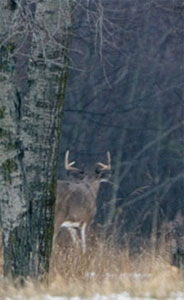
Michigan's weather is often considered the most unreliable in the nation. One reason is we are affected by weather fronts crossing the Great Lakes.
Depending on time of year, it can be raining near the shoreline and snowing 30 miles inland. My area is known for its lake-effect snow.
The wind crosses Lake Michigan, and if the water is warmer than the air, it gets sucked up into the atmosphere. As it reaches shore, the rain begins to fall but farther inland, away from the lake, it is snow that starts to dump on us.
Weather on the Great Lakes affect weather inland.
Studying the wildlife can offer major clues to upcoming weather. I'm often noted for my whitetail deer studies and observations, and deer are somewhat predictable.
I've watched birds and deer for many years, and they are early warning indicators of approaching bad weather. If a major winter storm is due to roll through, the deer are up and moving two or three hours before the storm hammers through.
Birds at the feeder make a major aerial assault on sunflower seeds. I've filled the feeder in the morning, and the birds will nearly empty it before the storm arrives. They seem aware of impending weather changes, and will feed heavily before it hits.
Deer always seem a bit anxious before a major storm. They are moving toward heavy cover, but are heading for areas closest to the nearest food supply. Sheer determination makes them stock up on as much as they can eat, and I've seen deer lay up in heavy cover for two or three days when blizzard-like conditions move through.
Deer hate heavy wind and aren't crazy about thunderstorms which often are accompanied by some high winds. Heavy winds upset a deer's ability to hear well, and their vision is affected as limbs and trees sway, grasses blow sideways, and their world becomes one of constant motion and noise. They dislike not being able to hear, see or smell potential danger.
Deer will move in fairly heavy rain if need be, but such times often are accompanied by wind. A soft, gentle rain is one of my favorite times to hunt because the constant pitter-patter of rain drops falling off trees and to the ground is much better than a silent evening.
Calm & still mornings and evening seldom produce good deer movements.
I'll hunt on a very calm and still night but it's not my favorite nor do deer react well to a dead calm. They seem jittery, knowing that every step they take is something that can be heard by hunters.
On a still night the deer move in fits and starts, and almost always move most just before shooting time ends. That pattern changes a little during the peak of the rut, but deer seem to sit tight until dark.
I've had mixed results in a ice or sleet storm. The worst is when this type of weather comes with either dead-calm conditions or a hefty wind. Deer seem reluctant to move much under such conditions.
If I had a favorite time to hunt it would be during the peak of the rut, with a soft breeze of about five miles-per-hour, and a light mist. The deer seem to move quite well under such conditions.
I pay attention to high and low barometric pressures as well. If the cows are standing up and moving around, and birds are flittering through the air, the chances are excellent that deer will be seen.
However, if cows are laying down, there is a good chance the deer will be doing the same. The same weather conditions that cause cows to stand up or lay down also seem to apply to game fish as well. The fish seem to bite best when the cows stand up.
Barometric pressure is a key factor in deer travel.
Most of this is relative to barometric pressure. A rising barometer often gets fish and game moving, and a slowly falling barometer doesn't hurt much. However, a rapidly falling barometer forecasts an impending storm, and the deer will move fast and feed hard, and be buried away in heavy cover before the storm hits.
I wrote some time ago about people who keep a daily diary of weather conditions and how it affects deer and their movements. Keep a diary of what you see as it pertains to changing weather patterns, and a hunter can often learn to predict what deer will do.
Sunday, September 12, 2010
The solitary sportsman ((dave richey, Michigan, outdoors, fish & hunt alone, make personal decisions, it’s your choice))

Loners are perhaps the most successful fishermen and hunters of all. Their decisions are made by a committee of one, and their decisions aere almost always dead-on, which cannot be said for many sportsmen who fish or hunt with others.
Anglers and hunters are, by nature, gregarious. They can't help it that they are groupies of the highest order; where you find one, they will probably be accompanied by friends or kinfolk.
It's easy to make an argument for going it alone or with someone. I fished and hunted across North America for a dozen years before my wife and I got married. Caribou hunting trips to northern Quebec for a magazine article would almost always find me being the only English-speaking person in camp.
Loners tend to be more successful than two or more people.
One year I took another hunter with me. He wanted to shoot the biggest caribou we saw, and I let him. Do I begrudge him for shooting it? Of course not, but had I been alone, there would have been no decision to make. I would have taken that animal.
Trips to Florida for spawning largemouth bass were made alone. I stalked deer and elk on do-it-yourself trips, and spent weeks on end alone in the northern wilderness areas. My many black bear hunts would mean baiting and hunting by myself. I could offer many other examples if space permitted but it would be redundant to do so.
The bottom line is I was a loner for many years. Not so much by choice as by circumstance or necessity. There wasn't enough money for two people, and barely enough for me.
It wasn't that I didn't enjoy other people'; it's just that in many cases, and especially when fishing or hunting, I enjoyed my own company too much to share it with others. It didn't bother me to be alone. I was happy when the only person's opinions I had to consider were my own.
Oh, there's no doubt I was selfish. I didn't have to consult others when deciding what to do. I made up my mind to do something, and it was done. Consider it this way.
You and I are trout fishing a stream, and we both know the best fishing water is downstream.
I may, because I'm a nice guy, let you fish downstream. Am I happy about it? Well, sure, if I'm in a giving mood. However, nagging at the back of my brain was the thought that I'd rather be fishing downstream.
Anyone who knows me well understands what makes me tick. I'm a giver, a helper, a person who will go out of my way to help someone else. I enjoy doing so because it makes me feel good.
I can be as comfortable and happy alone as I can be with others.
However, there are many reasons for being a loner. Robert Ruark in his wonderful book "The Old Man & The Boy" wrote it very well in one story. He wrote that one boy is all boy; two boys is half a boy; and three boys is no boy at all.
It means that the more people around us when we hunt or fish the less successful either of us may have. It also means when faced with the decision of whether to fish or hunt here or there, we must decide who goes upstream or down, who hunts which woodlot, and it also is a determining factor on how efficient we are when forced to consider the feelings and thoughts of other people.
Rooster pheasants are among the spookiest of game birds. One man with a dog makes no noise unless he constantly screams at the pooch. If the dog is well trained, and responds to hand signals, the dog and hunter make little noise.
They can move close to pheasants before the bird knows they are being hunted. There are no human conversations, no slamming of car doors or the constant hollering that occurs on so many bird hunts. Dogs don't always hunt properly and people sometimes head for the wrong place so someone is always hollering and making noise to get their attention.
Solitary anglers choose which flies to use, and if they don't produce, no one is to blame but us. A deer hunter who scouts by himself, chooses which tree is best suited to waylay a nice buck, and he is a person who probably shoots a buck every year.
The loners think for themselves, and if mistakes are made, they are to blame.
I've found that solitary anglers and hunters are usually far more successful than those folks who cart their neighbors along. Two people make twice the noise, lay down twice as much scent, and often complicate each others efforts. And sadly, they often argue and squabble over unimportant things.
The solitary sportsman considers only his own thoughts, acts on personal decisions, and seldom is masochistic enough to kick his own backside when he does something wrong. We make our way through the outdoor world by making every decision that must be made, and we learn to enjoy our time afield with a deeper passion.
The loner is often a happy person. He or she is confident in their ability to do things right, and oddly enough, when success occurs, we know it came because of our knowledge and skill. Solitary sportsmen often make their own luck, and are all the happier for it.
Saturday, September 11, 2010
Admitting some bow-hunting errors

The crunch time is approaching. I've done most of my preseason deer scouting, put up a couple of tree stands in key locations, built a pit blind, and am waiting to see just how much more rain we are going to get in the near future.
Invariably, no matter how hard I think about things, I'll forget one key element in my deer-hunting equation. Hell, I once drove 60 miles to one of my hunting spots and got my plastic lidded tub of Scent-Lok clothes out of the car, as well as my rubber boots, and reached in for my bow. It wasn't there, and then I remembered taking it into the house to dry it out after a rain the previous day.
It was dry when I got home that night. Instead of hunting, I spent the evening watching other spots and located a good buck that I shot a week or so later when all of my equipment was in my hands or on my back.
Make certain you have everything in your baackpack or pockets.
Forgetting things is easy, and it happens to everyone. Once, I was hunting a cedar tree where there was no time to put up a stand. My bow was laid on the ground with my haul rope attached to a belt loop. Normally, my backpack is worn into my stand and it always contains a spare release.
The path up to where I could watch the trail and shoot if necessary was a tight fit so I left my backpack 150 yards away near the field edge. I'd pick it up on the way out. Up I go, like an arthritic monkey, got positioned on a large and sturdy tree limb, leaned back against another sturdy tree limb, and hoisted my bow into the tree after attaching my full-body harness.
I settled back to wait, and I always leave my release on the string. Here comes a dandy 9-pointer, and I'm prepared to shoot when he hits a little dogleg in the trail. It will provide a quartering-away shot at 17 yards. The bow is slowly raised into position, and guess what?
A tiny twig hit the trigger, and the release fell to the ground. The buck heard the noise in the leaves, stopped, looked around and walked to the dogleg and stood in the most perfect place. I could have shot with my fingers, but it had been years since I had done so, and I couldn't remember whether to pull with three fingers under the nock or one over and two fingers under. Rather than risk a bad shot, I didn't shoot but never saw that buck again.
I've lost enough things while hunting to stock some small sporting goods stores. All have been lost because of dumb moves on my part. I'm like the pool hustler: I know how to sink the shot, and play position pool to set up for an easy shot on the next ball, but knowing how to do it and doing it are two mighty different things.
Think ahead, and plan for any eventuality.
The same applies to hunting gear. A buddy found a pair of binoculars I had left in a blind. I thought they came out in my backpack, but goofy me, I forgot them and tore my car and house apart looking for my optics. The next person that sat in that stand walked out after dark and said "here are those binoculars you lost. You left them on the seat in the coop."
I've lost expensive and highly prized knives, flashlights and what not. Stuff falls out of my pocket or backpack, and I can think of at least two releases that have been lost in the woods.
Even knowing my proclivity for losing things, I still run through a checklist, and try to keep everything I may need in my backpack.
Paying attention to what goes in and what is taken out of the backpack or one's pockets is an obvious first step to keeping track of gear. But, as is true with many people, we get thinking about something else, and forget a sorely needed item.
I took my quiver off my bow several years ago, took them inside to retouch the edge on my broadheads. I touched them up, added a light coating of oil to postpone the onset of rust, and set the quiver next to the door. I was starting out the door when the phone rang.
Don’t let other things distract you.
I grabbed the phone, hung up, turned on the security system, and out the door I went. Drove to the hunting spot, grabbed my bow, looked all over for my arrows, and realized this was another head-slapper night.
So there are my stories of some nitwit moves and stupid actions. It's my suspicion that others forget things on occasion, but I seldom hear from people willing to admit to their dumb tricks.
Now, having confessed some of my silly stunts, perhaps I'll remember everything this year. You think?
Friday, September 10, 2010
A good dog makes the hunt

Fritz, my German Shorthair pointer, was casting back and forth across a stubble field over 30 years ago. Nothing fast or fancy, but his stubby bobbed tail was wiggling and that meant he was getting birdy.
The dog had a vacuum cleaner for a nose, and he always worked the wind and made certain he was between heavy cover and the bird. This old ringneck pheasant had cackled several times that morning, and we were a team: he was old enough to know what I wanted and how to deliver it.
The sun was just up on the eastern horizon when Fritz pinned one of the nearby roosters at the corner of an open field. The bird had run out of cover, and the dog was rock solid on point with the ringneck only 10 feet away.
Watching a good dog on point is one of life’s satisfying moments.
"Whoa, boy, easy now, whoa-a-a," I whispered, moving in front of the quivering dog. He was a bit off-balance on a slightly sloping side-hill, and the rooster was a bit downhill of the dog.
The gaudy rooster lifted into flight with a raucous cackle, and I swung on him at 30 yards, and with one shot the bird fell to the ground. Fritz made a perfect retrieve, looked up at me, and I waved for him to start hunting after a pat on the head.
That pointer and I teamed up on countless roosters back in those halcyon days when pheasants were quite common game birds in Michigan's southern counties. He would hunt with anyone, and some of the older neighbor kids would come to borrow him if I was unable to hunt because I was packaging books to be mailed or on a magazine deadline.
The joys of pointing dogs was something I learned many years ago. Name the breed, and I've hunted over them at one time or another. Some of the key moments of my upland bird hunting career has come while following the wanderings of a fine-hunting pointer, retriever or setter.
I've thrilled to the off-balance points, the birds that held off to one side of the dog that results in a rather lopsided point, and some of those times when the conditions are just right and the pointer did his thing from 20 to 30 yards away.
It never ceases to amaze me what a good bird dog can teach a hunter if that person only pays attention. I've watched dogs work a field, hesitate for a moment, and continue to comb the field for scent. Suddenly, after long minutes without finding a bird, the dog slams into a point as stiff and rigid as a stone statue in the local park.
A good hunting dog can teach hunters more about their sport if they pay attention.
There's just something about a pointer that makes me smile. Miss a bird, and some of the better pointers look back as if to say "how could you miss such an easy shot." Other dogs seem to take the frequent or occasional miss in stride. It's those dogs that look at you after a miss that always make me wonder what is going through their head.
Once Fritz was gone, I decided not to buy another hunting dog. I was constantly on the road in those days, chasing stories for the outdoor magazines. I knew that to own another dog would mean the animal would be subjected to languishing in its kennel most of the year.
That's wouldn't be fair to a good dog. It was easier to hunt with other people who did own a good pointer, which gave me ample opportunities to watch lots of good (and bad) dog work.
I hunted once with the honorable Charlie Elliott, a common name among readers of Outdoor Life magazine. Charlie was in his 70s back then, and the two pointers combed through the pea fields and in nearby low cover for quail, and it didn't take us long to find a covey.
Hunting Georgia quail with Charlie Elliott.
"Go get 'em," Charlie said, and I had just stuffed two 12-gauge shotgun shells into my new Winchester 101. I walked in front of the lead dog as the other pointer backed him, and both were as motionless as if cast in marble. A covey of quail went up, and I knew enough not to try flock shooting.
I spotted one quail scooting off to the left, swung on it, shot and the bird fell. Next the shotgun caught up with a late-flushing bird heading off to starboard, and I swung through the bird and dropped him at 35 yards.
"Nice shooting," Elliott said. Little did he know that those two shots were the first out of my new shotgun. The compliment was graciously delivered, and accepted. Elliott then proceeded to give me a sound lesson in shooting quail birds.
There have been grouse, pheasant, quail and woodcock hunts, and often the dogs of choice were pointers. Some are as flashy as a new movie star, and others are old and dependable as well-trained dogs should be.
It's not the game birds taken that make the hunt for me. It's the joys received by watching good pointers work the cover like a well-oiled machine.
They have a job to do, and of late, they handle their assignment far better than I handle mine. What these pointers don't know is that over 59 years of bird hunting with dogs, it's watching fine dog work that pleases me most.
Shooting a game bird during the open season is really anticlimatic to a wonderful hunt.
Thursday, September 09, 2010
My love affair with smallies

Whenever a smallmouth bass smashes my lure, it renews an old belief that this game fish is a back-alley scrapper.
Here is a barroom brawler, and if this fish was human, you wouldn't want to meet it alone in a dark alley if it's in a bad mood.
I've seen my share of brutes on the beach, in bars, and swaggering down the street. They seem to exude a massive level of testosterone, and that's the feeling I get whenever I do battle with a smallmouth bass.
Smallies love to fight and never give up easily.
An angler enters the fishing arena with this game fish knowing one thing: the smallie will try to ring your bell.
They expect you to pack a lunch because they plan on giving you a hardnosed scrap that lets an angler know that here is a fish willing to mix it up, and if you're not careful, he'll eat your lunch as well.
A day on Green Lake several years ago was a good example. A lure was fished along the edge of the steep dropoof where the Little Betsie River flows out of Duck Lake and into the north end of Green Lake. Bass and trout often gather off this dropoff in the spring.
This five-pound smallmouth bass had about as much class as a modern-day wrestlersor a serial killer. He swam into the picture, hammered the lure, and bolted into the air once he felt the hook. His tail kissed the water, and then it bounced into the air and tail-walked across the surface. Class, sheer class.
Rough and tumble fighting is their trademark.
He dove, swam under the boat, and jumped on the other side, and if fish had very many brains, he could have been accused of trying to foul my line in the motor. He was steered clear, and we drifted into deep water and still the fish raged on.
Steady rod pressure eventually took its toll, and the fish, sapped of strength, came reluctantly to the boat with blood-red eyes staring at me. My thumb went into his mouth, my fingers curled under his chin, and I lifted the fish into the air for a closer look while the lure was wiggled loose.
I admired the fish, and received a baleful stare in return, and it was eased back into the water. This bass gave me a tail-salute, and splashed water in my face before boring toward bottom and away from the boat.
There are many things to like about smallmouth bass. I used to spend after-dark hours casting River Runts and other wiggling plugs near dropoffs, over submerged slabdocks, and smallies seemed to love feeding after the sun went down. It was great fun hooking them in the darkness, and not knowing exactly what you were hooked up with until it began crashing up and out of the water.
Michigan has a lengty season and many hotspots.
It didn't take long to realize that smallmouth bass feed avidly during the day. Find the right spot, and fish it properly with the right lure, and smallies seemed eager to please.
They are a noble fish, and willing to stand toe-to-toe with a daylight angler, and the joy of this is being able to see every jump they make in an effort to get away.
It's been my great good fortune to fish for and catch smallmouth bass all around the country. Some of the Shield lakes in Ontario, besides producing muskies, also produce some great smallies and most are of good size.
I've fished the upper Mississippi River 75 miles north of Minnesota's Twin Cities, and have found those river fish as eager to please as those found in lakes along the Gunflint Trail in northern Minnesota.
Many dandy smallmouth bass have been caught from Lake Erie and Lake St. Clair, and the Detroit River. Countless smallies have slammed my lures in the Grand River below Lansing, and in the Tittabawassee River below Midland. I've caught some in the Kalamazoo and St. Joseph rivers, and Grand Traverse Bay is always a good bet.
Lake Erie has a wonderful smallmouth fishery around the Bass Islands, and I've caught some great bass in the St. Lawrence River while muskie fishing. I've seen some smallies smack a 9-inch muskie lure. That is a fish with an appetite and an attitude to match.
Fish like that have juice flowing through their body that many other game fish seem to lack. It makes them fearless, and they are willing to take on all comers.
Tired of trolling for salmon, and long to fish with a rod and reel in your hands all the time, then grab one with six-pound line, and some jigs or diving lures, and give bronzebacks a try. You won't be disappointed.
Wednesday, September 08, 2010
Bears: It’s that time of year

Bear numbers have been creeping up in the northern Lower Peninsula for about a decade. In fact, bears are being occasionally seen in numerous places where they've never been found in previous years.
Don't believe me? Consider this: Two bears (perhaps the same bear twice) have been seen in Traverse City, and not far from Munson Hospital. It's a small bear, and probably last year's boar that Mom has kicked out as she prepared for the past summer breeding period.
If that's not convincing, a bear has been seen twice in Frankfort near the west end of town. Again, it's quite likely it is the same bear that has been seen on two different nights.
Bears move around, and most problems come from young animals.
The breeding period may be why many more bears are being seen in the past two month. A new Bear Crossing sign was erected on M-115 just northwest of Cadillac a few years ago. The reason is to caution motorists to slow down in that area. Folks, the Highway Department doesn't erect those signs as a make-work project. Bears cross there and some have been killed by cars or trucks. Often, it's young bears that get killed.
The area on the west side of the highway is a major swamp that extends more than 20 miles north and south, and although I haven't heard of a bruin being killed by a vehicle there lately, it is a favorite crossing location for these animals.
Another location just a few miles west of M-115 at Cadillac on M-55 usually sees three or four bears killed by cars and trucks each year. The area has always been a favorite bear crossing site.
Deer Crossing signs are common in both peninsulas, but when Bear Crossing signs are put in place, it's done for a reason. An increasing number of black bears live nearby, and move through these areas.
The Mitchell Lake Swamp at Cadillac normally holds at least 20 bruins, and some years it may hold as many as 30 animals. An increase in bruin numbers in certain locations is caused by Mom kicking the kids out before she breeds again.
The cubs are nearly fully grown, and often will weight 80 to 100 pounds. Most of these transient animals are young boars that are trying to stay out of the reach of older and larger male bears. This causes them to wander into new and unfamiliar territory, and a young boar running from a big boar can cross highways and be killed.
Big boars will kill every young male bear they encounter, which is why they move.
Or ... the animals can become a nuisance to homeowners when they find outside garbage cans tipped over and smashed. Bears frequently come up on porches at night to get into a bird feeder, and beekeepers find young bruins at fault with the destruction of bee hives. There has been some bear damage to bee hives in Leelanau County and in Benzie County near Thompsonville and Nessen City.
These bears are looking for a home, and frequently come into close contact with humans. There is a poorly-defined line between acceptance and a lack of acceptance among humans when it comes to black bears.
The bear seasons in both peninsulas will begin soon, and this also can lead to more bruins wandering around as they are unknowingly pushed by humans and dogs.
This acceptable level of these animals can change quickly if they begin destroying property. The farther south bears go, the lower their social acceptance level becomes. Draw a line from Grand Rapids through Midland to Bay City, and south of that line the willingness of the public to share habitat with bears is not very high at all.
A bear wandering around Clarkston about 15 years made the news, and city people were peeking out their windows before walking from their front door to the car. That bruin, a young male, was chased and seen by many people, and finally captured in the Thumb area about 50-75 miles away. The hue and cry of city dwellers forced the DNR to relocate the animal for its own safety.
The Thumb area is seeing more and more bears as time goes on. There are areas of thick wooded cover and swamps, and such areas quickly become home to a wayward bruin seeking more solitude from other larger bears. How long those animals will survive in the Thumb region is anyone's guess.
More bruins are being seen when they’’ve never been before.
My though is the animals will hang around as long as they aren't disturbed and don't become a nuisance, and part of that means that humans must keep their garbage indoors, move pet food dishes inside, and if the bears start raiding bird feelers, they will have to be brough indoors at night.
And therein is another problem with bears. They need room, and so do humans. Do we need as much as we have? It's a debatable question, but bear habitat is slowly shrinking while the population of bruins is growing.
The DNR is doing a great job of managing black bears, but bears have been seen near Bay City, Flint, Grand Rapids, Lansing, Midland, and as far south as the Michigan-Indiana and Michigan-Ohio borders.
Some great bear habitat is found south of that Flint to Grand Rapids line, and the food sources are much greater than those in northern counties where snow keeps the animals denned up from December through April.
Can we look for a greater southern movement of young black bears in coming years?
I think so. I also see more of the animals getting killed on highway. I see more damage being done to croplands by hungry bruins, and great damage being done to bee hives.
Can we expect our southern residents to welcome black bears with open arms? Not hardly.
One or two bears spread over a 20-mile area wouldn't hurt anything, but if the animals found a cozy little swamp near great food supplies near Lansing, Jackson or Kalamazoo and start being seen on a regular basis, many people would rise up and scream for their removal.
So where will the DNR take the bears? Most locations with a notable bear population have enough. The Upper Peninsula doesn't need more animals.
We have moved into their habitat, taken their land, and then complain when they want to take some of it back. Ask those people who live near Denver how much fun it is to move into some of those secluded canyons only to find that mountain lions live there as well. Mountain lions are far more aggressive than the average bear, but no one wants bears hanging around their home and children.
Bears, like state prisons, are a victim of the NIMBY Factor -- which stands for Not In My Back Yard. So the state scientifically manages the state's bear numbers, but they can't stop the slow southward drift of the animals.
Me, I'm rooting for the bears but know the end is inevitable. The bruins may make very slow inroads into our southern swamps, but bear numbers will remain higher in the northern counties where most people will accept them.
It's just too bad that people in our southern counties really don't want the animals anywhere within 200 miles of them. It's sad because they don't understand how nice it is to know that bears live nearby although we seldom see them.
Seeing them is a thrill people should experience, at least once in their life. And if that bruin is near home, it may cause a few sleepless nights for those who leave their garbage cans and bird feeders outdoors.
But, simply stated, such causes often are the fault of the humans who are too lazy to remove a bear's temptation.
Subscribe to:
Posts (Atom)