Showing posts with label guides. Show all posts

Saturday, November 19, 2011

Dreams of big Quebec char


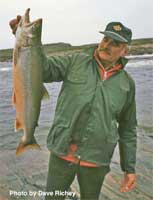
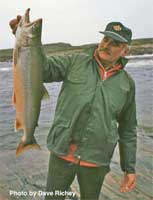
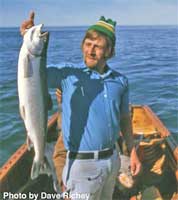
Doug Knight (left) and the author with a lightly colored & silvery char


The dream began sometime late last night. Many of my better dreams are remembered, and some are savored and occasionally one will haunt me for a day or two. This one was weird but true, as are most tales of fishing or hunting dreams from the far north.

My dreams often deal with fishing or hunting, and the odd thing is that many are dreams about things I’ve experienced sometime in the past. Last night’s dream was from 30 years ago and it's as vivid as it had just happened. It was my first trip where Arctic char were available, and it was a wonderful week spent catching the occasional Atlantic salmon, brook trout and char.

There was Ed Murphy from Sports Afield magazine, a man I'd sold many magazine articles to. He and the late Doug Knight, a freelance writer, and I were fishing at Bobby Snowball's camp at the mouth of Quebec's Tunulik River. Mind you, the Tunulik literally throws itself over a waterfall about 300 yards up-river from salt water, and the stream gradient from the falls to the salt is steep with haystacks of standing white water.

Getting to this area of Quebec’s Ungava Bay is a long plane ride.


I was accustomed to sight-fishing for visible fish, and Arctic char were our quarry. A few Atlantic salmon were mixed in with the char, and it took a heavy Dardevle to get down to the char holding at the edge of the fast water.

Bobby Snowball, an Inuit from Quebec's Ungava Bay region spoke fluent English as he met the plane. I'd made all the arrangements for the three of us on this trip, and he escorted me up the dock to the cabins where we would sleep. Children were throwing balls, and one of the balls bounced off a dead Inuit woman laying on the ground beside my tent.

"Uh, Bobby," I asked, trying not to be offensive but needing to know, "what's up with the dead woman?"

"Oh, that's my mother," he said. "She died three days ago and we're waiting for an airplane to come in and take her back to town. Hopefully, she will go out tomorrow."

The dead lady was a bit troubling but the feeling soon passed.

The fishing was nothing short of sensational. Large orange- or silvery-flanked fish held below the falls in the rushing white water, and by casting into the falling water and feeding six feet of slack line into the cast, the Dardevle was soon wobbling past their noses. Every tenth cast or so, a char would peel out of the group and savagely maul the lure.

These fish are uncommonly strong, and when swimming downstream, it took them 20 seconds to peel off line and make it to salt water. On the hook-up, I jumped from rock to rock (some as big as a single-story house), and to say I was leaping like a gazelle would be wrong. I felt more like a young hippo, and it had to have been a roller coaster ride for the fish.

Of all the char we caught only one jumped and it was at best a feeble attempt. However, the fight on 10-pound line was as tough a struggle as any angler could hope to experience. If a 12-pound char and a 15-pound Chinook salmon were tied tail to tail, the char would drag the salmon to its death. There is no quit in their fight, and once we reached salt water, the fish were still full of energy and every fight turned my wrist into a weary joint that became more weakened by the day.

The Inuit were a quiet but fun-loving group, and when we stopped for shore lunch, I soon learned to cook my own lunch of Arctic char. Bobby and his friends and neighbors would fare well at today's sushi bars. Their fish, wrapped in tin foil and tossed into the fire, weren't even warm in the middle when they began eating. We decided to cook our own fish, and the red flesh was delightful when cooked until done but not overcooked.

Fresh fish cooked on the rocky shoreline were tasty.


One fish would feed Knight, Murphy and me, and once we began cooking our own, we were soon hooked on the delicate flavor.

One sea-run brook trout was caught and I tangled with and landed two Atlantic salmon on spoons but they were returned. The Inuit told me they were legal to keep, but legal only for the Native People and not for visitors. For us, if one could be caught on a fly, it would have been a legal catch.

This particular trip was recalled in its entirety last night, and relayed here. The fishing was next-door to the best I've ever seen, and there is something haunting about watching herds of caribou migrate by within 50 yards while we battled fish with flanks the color of orange-pineapple ice cream.

And, best of all, the elderly dead lady vanished from outside my tent wall late the second day and I mentally wished her a safe journey, and I slept like a baby that night while dreaming of crimson-sided wilderness fish.

Saturday, January 29, 2011

Dreaming of Quebec's Arctic char


Doug Knight left and guide on Tunulik River & Knight with nice fish.


The dream began sometime late last night. Many of my better dreams are remembered, and some are savored and occasionally one will haunt me for a day or two. This one was weird but true, as are most tales of fishing or hunting dreams from the far north.

My dreams often deal with fishing or hunting, and the odd thing is that many are dreams about things I’ve experienced sometime in the past. Last night’s dream was from 30 years ago and it's as vivid as the photo above. It was my first trip where Arctic char were available, and it was a wonderful week spent catching the occasional Atlantic salmon, brook trout and char.

There was Ed Murphy from Sports Afield magazine, a man I'd sold many magazine articles to. He and the late Doug Knight, a freelance writer, and I were fishing at Bobby Snowball's camp at the mouth of Quebec's Tunulik River. Mind you, the Tunulik literally throws itself over a waterfall about 300 yards up-river from salt water, and the stream gradient from the falls to the salt is steep with haystacks of standing white water.

Getting to this area of Quebec’s Ungava Bay is a long plane ride.


I was accustomed to sight-fishing for visible fish, and Arctic char were our quarry. A few Atlantic salmon were mixed in with the char, and it took a heavy Dardevle to get down to the char holding at the edge of the fast water.

Bobby Snowball, an Inuit from Quebec's Ungava Bay region spoke fluent English as he met the plane. I'd made all the arrangements for the three of us on this trip, and he escorted me up the dock to the cabins where we would sleep. Children were throwing balls, and one of the balls bounced off a dead Inuit woman laying on the ground beside my tent.

"Uh, Bobby," I asked, trying not to be offensive but needing to know, "what's up with the dead woman?"

"Oh, that's my mother," he said. "She died three days ago and we're waiting for an airplane to come in and take her back to town. Hopefully, she will go out tomorrow."

The dead lady was a bit troubling but it soon passed.

The fishing was nothing short of sensational. Large orange-colored fish held below the falls in the rushing white water, and by casting into the falling water and feeding six feet of slack line into the cast, the Dardevle <www.eppingerdardevlelures.com> was soon wobbling past their noses. Every tenth cast or so, a char would peel out of the group and savagely maul the lure.

These fish are uncommonly strong, and when swimming downstream, it took them 20 seconds to peel off line and make it to salt water. On the hook-up, I jumped from rock to rock (some as big as a single-story house), and to say I was leaping like a gazelle would be wrong. I felt more like a young hippo, and it had to have been a roller coaster ride for the fish.

Of all the char we caught only one jumped and it was at best a feeble attempt. However, the fight on 10-pound line was as tough a struggle as any angler could hope to experience. If a 12-pound char and a 15-pound Chinook salmon were tied tail to tail, the char would drag the salmon to its death. There is no give-up in their fight, and once we reached salt water, the fish were still full of energy and every fight turned my wrist into a weary joint that became more weakened by the day.

The Inuit were a quiet but fun-loving group, and when we stopped for shore lunch, I soon learned to cook my own lunch of Arctic char. Bobby and his friends and neighbors would fare well at today's sushi bars. Their fish, wrapped in tin foil and tossed into the fire, weren't even warm in the middle when they began eating. We decided to cook our own fish, and the red flesh was delightful when cooked until done but not overcooked.

Fresh fish cooked on the rocky shoreline were tasty.


One fish would feed Knight, Murphy and me, and once we began cooking our own, we were soon hooked on the delicate taste.

One sea-run brook trout was caught and I tangled with and landed two Atlantic salmon on spoons but they were returned. The Inuit told me they were legal to keep, but legal only for the Native People and not for visitors. For us, if one could be caught on a fly, it would have been a legal catch.

This particular trip was recalled in its entirety last night, and relayed here. The fishing was next-door to the best I've ever seen, and there is something haunting about watching herds of caribou migrate by within 50 yards while we battled fish with flanks the color of orange-pineapple ice cream.

And, best of all, the elderly dead lady vanished from outside my tent wall late the second day and I mentally wished her a safe journey, and I slept like a baby that night while dreaming of crimson-sided wilderness fish.

Posted via email from Dave Richey Outdoors

Monday, November 02, 2009

TresAmigos: Fly-FishingGuides

Those anglers who began steelhead fishing in the last several years missed some of the finest river fishing ever seen back in the late 1960s and early 1970s. Good numbers of steelhead were being planted all around the state, and the Betsie and Platte rivers offered great sport that was certainly was as good as it could ever be.
There was some natural steelhead reproduction 40 years ago, and the DNR was planting fish as well. The number of anglers who knew how to catch steelhead were few, and the fish numbers were very high.
My guiding career began in 1967, and brother George joined me in guiding fly fishermen to salmon, steelhead and broad-shouldered brown trout. John McKenzie became the third member of Tres Amigos, and we cut a wide swath through runs of spring and fall-spawning salmonids.

Left-right: George Richey, John McKenzie and Dave Richey -- the Tres Amigos -- years later.
Snagging was rampant  in those days, but not for us. We fished with No. 4, 6 and 8 single-hook flies, and it may sound like bragging but it's not: we were good anglers and guides, and there was no need to snag fish. We fair-hooked fish on a regular basis. The sheer numbers of fish meant if we spooked fish in one spot, a short hike upstream or down would show us other willing fish. Spook one, and it was easy to find others in different locations.
The steelhead runs were huge in the late 1960s and early 1970s, and I can remember days on the Little Manistee River when we could hook 30 steelhead in a day. Not all fish were landed, but George and John tied the flies we used while I handled the guide bookings for all three of us.
We were a busy bunch, and were on the river every day. We knew where the salmon, steelhead or browns would be found from day to day, and we had little competition. We came and went, and sometimes Tres Amigos were all on the same stream, and at times we would be spread out across three different rivers. We'd compare notes at night, and decide who would fish where the next day.
John, 13 years younger than George and I, was a good-looking guy. I often paired him with husband-and-wife teams or father-and-daughters, and his great talent -- besides catching fish -- was being able to teach people how to fish. He was patient, and clients easily learned from him.
George and I were older, and by nature, seemed to attract the older anglers or the chief person who brought a crew up to fish with us. We treated everyone the same; we'd fish from sun-up to sun-down if clients wanted to spend that much time on the river, and we cleaned and froze fish at night and would be up early the next day.
Guiding fishermen was a way of life for Tres Amigos, and we were very good at what we did. We could spot fish, coax anglers into putting the fly in exactly the right spot so it would be scratching gravel when it passed the fish. They would hit, and we'd have a big fishy battle on our hands.

John McKenzie unlooks spring steelhead for client.

One thing captivated the three of us: putting people into big fish for the first time. The smiles that crossed their face when they fought a 15-pound steelhead for the first time; got hooked into a 30-pound chinook salmon; or was trying to land a big hook-jawed male brown trout weighing 12 to 18 pounds. It's been many years since those faces broke out into a smile, but we vividly remember most of them.
There wasn't anything we wouldn't do for each other. John was known to tie flies by hand on the river bank if we ran out. George was always there to coax anxious anglers into following a big fish downstream, and I was the guy that made it all work with the precision of a fine Swiss watch. All of us had a job to do, and we greeted each peach-colored dawn with a smile on our face and a jump in our step.
For 10 years we were Tres Amigos -- three friends -- who made a living in the best possible way -- being outdoors, on the river, and with a client holding tight to a big fish jumping in the river.
We often went without eating, found ourselves upside down in the river current trying to net a client's fish for them, and we looked out for each other. We also paid attention to our clients, catered to their every wish that was ethical and legal, and we coaxed more out of our client's skill levels than they knew they possessed.

George Richey nets a 25-pound chinook salmon in fast water.

We put people into fall-spawning rainbows that had tiny tails, fat waists, and a 23-inch fish would weigh 13 pounds. The browns, especially the big males, were a golden-bronze with big spots; the steelhead were mint-silver and high jumping; the chinook salmon were avid tackle busters, and some mighty battles would cover a half-mile of river. The coho salmon were seldom finicky about a fly: put it to them at their level, and they would hit.
It was a magical 10 years, and now brother George is gone. John McKenzie still avidly fishes, and he and I occasionally take trips down memory lane. We were there for the finest salmon and trout fishing this state has ever seen, and we pride ourselves on being the first river fly-fishing guides during those halcyon days.
And that, my friends, was pretty heady stuff years ago and it's something we'll never forget.