Showing posts with label Arctic. Show all posts

Saturday, November 19, 2011

Dreams of big Quebec char


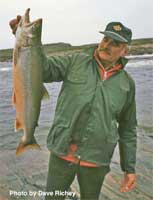
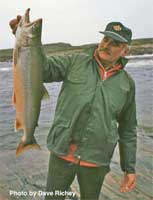
Doug Knight (left) and the author with a lightly colored & silvery char


The dream began sometime late last night. Many of my better dreams are remembered, and some are savored and occasionally one will haunt me for a day or two. This one was weird but true, as are most tales of fishing or hunting dreams from the far north.

My dreams often deal with fishing or hunting, and the odd thing is that many are dreams about things I’ve experienced sometime in the past. Last night’s dream was from 30 years ago and it's as vivid as it had just happened. It was my first trip where Arctic char were available, and it was a wonderful week spent catching the occasional Atlantic salmon, brook trout and char.

There was Ed Murphy from Sports Afield magazine, a man I'd sold many magazine articles to. He and the late Doug Knight, a freelance writer, and I were fishing at Bobby Snowball's camp at the mouth of Quebec's Tunulik River. Mind you, the Tunulik literally throws itself over a waterfall about 300 yards up-river from salt water, and the stream gradient from the falls to the salt is steep with haystacks of standing white water.

Getting to this area of Quebec’s Ungava Bay is a long plane ride.


I was accustomed to sight-fishing for visible fish, and Arctic char were our quarry. A few Atlantic salmon were mixed in with the char, and it took a heavy Dardevle to get down to the char holding at the edge of the fast water.

Bobby Snowball, an Inuit from Quebec's Ungava Bay region spoke fluent English as he met the plane. I'd made all the arrangements for the three of us on this trip, and he escorted me up the dock to the cabins where we would sleep. Children were throwing balls, and one of the balls bounced off a dead Inuit woman laying on the ground beside my tent.

"Uh, Bobby," I asked, trying not to be offensive but needing to know, "what's up with the dead woman?"

"Oh, that's my mother," he said. "She died three days ago and we're waiting for an airplane to come in and take her back to town. Hopefully, she will go out tomorrow."

The dead lady was a bit troubling but the feeling soon passed.

The fishing was nothing short of sensational. Large orange- or silvery-flanked fish held below the falls in the rushing white water, and by casting into the falling water and feeding six feet of slack line into the cast, the Dardevle was soon wobbling past their noses. Every tenth cast or so, a char would peel out of the group and savagely maul the lure.

These fish are uncommonly strong, and when swimming downstream, it took them 20 seconds to peel off line and make it to salt water. On the hook-up, I jumped from rock to rock (some as big as a single-story house), and to say I was leaping like a gazelle would be wrong. I felt more like a young hippo, and it had to have been a roller coaster ride for the fish.

Of all the char we caught only one jumped and it was at best a feeble attempt. However, the fight on 10-pound line was as tough a struggle as any angler could hope to experience. If a 12-pound char and a 15-pound Chinook salmon were tied tail to tail, the char would drag the salmon to its death. There is no quit in their fight, and once we reached salt water, the fish were still full of energy and every fight turned my wrist into a weary joint that became more weakened by the day.

The Inuit were a quiet but fun-loving group, and when we stopped for shore lunch, I soon learned to cook my own lunch of Arctic char. Bobby and his friends and neighbors would fare well at today's sushi bars. Their fish, wrapped in tin foil and tossed into the fire, weren't even warm in the middle when they began eating. We decided to cook our own fish, and the red flesh was delightful when cooked until done but not overcooked.

Fresh fish cooked on the rocky shoreline were tasty.


One fish would feed Knight, Murphy and me, and once we began cooking our own, we were soon hooked on the delicate flavor.

One sea-run brook trout was caught and I tangled with and landed two Atlantic salmon on spoons but they were returned. The Inuit told me they were legal to keep, but legal only for the Native People and not for visitors. For us, if one could be caught on a fly, it would have been a legal catch.

This particular trip was recalled in its entirety last night, and relayed here. The fishing was next-door to the best I've ever seen, and there is something haunting about watching herds of caribou migrate by within 50 yards while we battled fish with flanks the color of orange-pineapple ice cream.

And, best of all, the elderly dead lady vanished from outside my tent wall late the second day and I mentally wished her a safe journey, and I slept like a baby that night while dreaming of crimson-sided wilderness fish.

Sunday, March 13, 2011

Dressing right for winter bow hunts

Winter weather means bow hunters must be prepare for cold, wet weather.

Some years ago I hunted with an old friend, and he rattled on and on about the benefits of bow hunter being properly dress for the cold December bow season.

His basic philosophy was that "only stupid people who don't dress properly get too cold to hunt." I've seen the guy out on days when only he and I would hunt because we knew how to stay warm.

A December hunt last year was a bitter cold evening, and I was able to take it in stride because many years ago I learned how to dress for cold, nasty weather. Before we left to hunt, I checked out the old gent, and we were dressed almost alike. The only difference was he had a wool scarf. Mine had been forgotten and left home.

I would have traded a couple of arrows for my wool scarf that night.

It was damp that night with a temperature in the low teens with a strong northwest wind that seemed to bite through clothing and chill a person to the bone. I used to suffer with cold feet, clothing that let cold winds blow over my back and chest, but with age comes some common sense. Hunting every night means being able to handle whatever nature dishes out, and that means dressing properly for the existing conditions.

I started with long underwear, light wool and heavy wool socks, and a heavy wool shirt and my jeans. Many hunters like bib overalls, and they work fine for many hunters but I prefer a heavy, soft and quiet suit of wool or some of that new insulation that doesn't make noise.

It is similar to a snowmobile suit in some respects but it is very quiet where snowmobile suits crinkle and make noise. The hard shell finish on most snowmobile suits make them impossibly noisy for bow hunting. My suit is just getting broken in after many years of continuous use.

Heat loss occurs through your head, and I wear an old-fashioned insulated hat with fuzzy ear flappers that tie under my chin. Insulated boots keep my feet warm, and it doesn't bother me to put hand-warners in each pocket, toe warmers in my boots, and I'm about ready to hunt.

This bow hunter heads for a ground blind. He's dressed for cold weather.

On this evening I didn't have a scarf but my buddy did. A heavy wool scarf is wrapped once or twice around the neck to keep those chilly drafts from blowing on a warm neck or down the back. Pull your hat brim down low, and you don't need a mask if you can sit still. That wool scarf is one of the handiest items of clothing a hunter can wear when cold December winds blow. I've found that when the winter chill factor is reaching for zero, I can wrap my nose and face in one layer of my scarf, and it stays warm too. A warm head, hands and feet make it possible for a hunter to keep warm lonh enough to shoot a buck.

Warm gloves are a necessity. If they get cold, you're all done.

A good pair of wool gloves help keep my hands warm, and a pair of insulated or leather mittens top everything off. This outfit works well for me although some hunters like the wicking qualities of polypropylene underwear. I own two pair of o-l-d wood choppers mittens.

I seldom carry a little tiny heater but my buddy does. It runs off a small canister of bottled gas, and that heater can be a lifesaver. He uses it to warm his fingers before taking a shot, and if hunting from an elevated coop, it can take the chill off a cold and drafty wood shooting box.

This heater is small, compact and efficient. It doesn't bring the air temperature up very much, but it takes some of the winter bite out of an icy wind in his hunting coop.

"The deer can't hear if, apparently can't smell it although I am downwind of the deer," he said, "and it doesn't cast a bright red glow inside the coop that could attract the attention of an approaching buck."

I can certainly remember the many evenings spent in an open tree stand, waiting for a good buck to walk closer. It's easy to recall the numbed fingers and toes, and my questioning my personal sanity for being out on such nights.

Dressing warmly, using a small heater, and knowing how to stay warm is one of the luxuries of attaining a bit of age. We learn from our earlier mistakes, realize we no longer have to prove how tough we are, and we can relax and be comfortable.

I'm not saying I never get cold, but the number of bitter cold days I experience now are few and far between. Hunting is supposed to be fun, and hunters who make themselves sick because they are poorly dressed, have no one to blame but themselves.

My buddy, more curmudgeonly than me, quickly dismisses people who get cold.

My buddfriend, several years older than my 71 years, told me that "only ignorant people get cold during a winter hunt. If they learned how to dress, they might be a close match for me and you."

Dressing warmly is within the budget of anyone who can afford to be a bow hunter. Me, I prefer being cozy warm. My days of freezing ended many years ago, and I still wonder why I put up with icy fingers and toes for so long.

If I can change, so can you. Warm bow hunters are more efficient bow hunters, especially in the December bow season. Ma Richey didn't raise no dumb kids, but I paid my dues in the past and now I can set out in the coldest weather for two hours to hunt winter whittetails.

That's plenty enough time to shoot a nice buck.

Posted via email from Dave Richey Outdoors

Saturday, January 29, 2011

Dreaming of Quebec's Arctic char


Doug Knight left and guide on Tunulik River & Knight with nice fish.


The dream began sometime late last night. Many of my better dreams are remembered, and some are savored and occasionally one will haunt me for a day or two. This one was weird but true, as are most tales of fishing or hunting dreams from the far north.

My dreams often deal with fishing or hunting, and the odd thing is that many are dreams about things I’ve experienced sometime in the past. Last night’s dream was from 30 years ago and it's as vivid as the photo above. It was my first trip where Arctic char were available, and it was a wonderful week spent catching the occasional Atlantic salmon, brook trout and char.

There was Ed Murphy from Sports Afield magazine, a man I'd sold many magazine articles to. He and the late Doug Knight, a freelance writer, and I were fishing at Bobby Snowball's camp at the mouth of Quebec's Tunulik River. Mind you, the Tunulik literally throws itself over a waterfall about 300 yards up-river from salt water, and the stream gradient from the falls to the salt is steep with haystacks of standing white water.

Getting to this area of Quebec’s Ungava Bay is a long plane ride.


I was accustomed to sight-fishing for visible fish, and Arctic char were our quarry. A few Atlantic salmon were mixed in with the char, and it took a heavy Dardevle to get down to the char holding at the edge of the fast water.

Bobby Snowball, an Inuit from Quebec's Ungava Bay region spoke fluent English as he met the plane. I'd made all the arrangements for the three of us on this trip, and he escorted me up the dock to the cabins where we would sleep. Children were throwing balls, and one of the balls bounced off a dead Inuit woman laying on the ground beside my tent.

"Uh, Bobby," I asked, trying not to be offensive but needing to know, "what's up with the dead woman?"

"Oh, that's my mother," he said. "She died three days ago and we're waiting for an airplane to come in and take her back to town. Hopefully, she will go out tomorrow."

The dead lady was a bit troubling but it soon passed.

The fishing was nothing short of sensational. Large orange-colored fish held below the falls in the rushing white water, and by casting into the falling water and feeding six feet of slack line into the cast, the Dardevle <www.eppingerdardevlelures.com> was soon wobbling past their noses. Every tenth cast or so, a char would peel out of the group and savagely maul the lure.

These fish are uncommonly strong, and when swimming downstream, it took them 20 seconds to peel off line and make it to salt water. On the hook-up, I jumped from rock to rock (some as big as a single-story house), and to say I was leaping like a gazelle would be wrong. I felt more like a young hippo, and it had to have been a roller coaster ride for the fish.

Of all the char we caught only one jumped and it was at best a feeble attempt. However, the fight on 10-pound line was as tough a struggle as any angler could hope to experience. If a 12-pound char and a 15-pound Chinook salmon were tied tail to tail, the char would drag the salmon to its death. There is no give-up in their fight, and once we reached salt water, the fish were still full of energy and every fight turned my wrist into a weary joint that became more weakened by the day.

The Inuit were a quiet but fun-loving group, and when we stopped for shore lunch, I soon learned to cook my own lunch of Arctic char. Bobby and his friends and neighbors would fare well at today's sushi bars. Their fish, wrapped in tin foil and tossed into the fire, weren't even warm in the middle when they began eating. We decided to cook our own fish, and the red flesh was delightful when cooked until done but not overcooked.

Fresh fish cooked on the rocky shoreline were tasty.


One fish would feed Knight, Murphy and me, and once we began cooking our own, we were soon hooked on the delicate taste.

One sea-run brook trout was caught and I tangled with and landed two Atlantic salmon on spoons but they were returned. The Inuit told me they were legal to keep, but legal only for the Native People and not for visitors. For us, if one could be caught on a fly, it would have been a legal catch.

This particular trip was recalled in its entirety last night, and relayed here. The fishing was next-door to the best I've ever seen, and there is something haunting about watching herds of caribou migrate by within 50 yards while we battled fish with flanks the color of orange-pineapple ice cream.

And, best of all, the elderly dead lady vanished from outside my tent wall late the second day and I mentally wished her a safe journey, and I slept like a baby that night while dreaming of crimson-sided wilderness fish.

Posted via email from Dave Richey Outdoors