Showing posts with label rubs. Show all posts

Sunday, September 11, 2011

Check out the deer sign

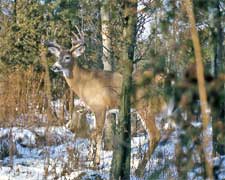
Reading deer sign properly allowed this hunter to score.

Reading deer sign is something that has always made sense to me. It gives me more knowledge of the animals, where they feed, where they travel, and in the end, it's this knowledge that makes hunters more successful while allowing them to accurately determine where best to set up their stands.

I'm so mindful of a big buck from several years ago. I'd seen him on three occasions but didn't know where he lived. It took me a week of reading October deer sign to pin down his whereabouts.

The area was in fairly heavy cover. I knew the buck had an exceptional 10-point spread, and reasoned he would be working over some big trees to strengthen his neck muscles before the rut began.

I'd moved slowly through the heavy cover without seeing much buck sign except for a few small rubs on some tag alders. I came out the other side of the tag alders, and entered a 25-yard by 25-yard stand of cedars and pines. That is when I worked out this whitetail puzzle.

One of those cedars was scarred by a pre-rutting buck. Lower limbs were broken off, and the trunk was scrubbed hard from a foot above ground to five feet off the ground. Mind you, I couldn't circle my arms around the tree trunk. This gigantic rub was truly huge.

Checking around let me find a faint trail that ran toward another cedar, and it too was rubbed by the same buck. Three trees within 25 yards formed a minor rub line, and the trail had exited the cover I had just walked through. This buck was leaving the tag alder to rub the cedar and pine trees, and most likely, the deer was moving out just before dark.

A nearby tree was perfect for a stand. There would be no clattering and banging required to erect a tree stand here. I'd attach a rope to my bow and my belt loop, lay the bow down flat, climbed 10 feet up the tree on limbs and stand on two thick parallel limbs that grew close together. Another limb came out at waist level, and I could stand on two limbs and lean back against the other one.

Two nights later as the sun was sinking into the western sky I caught the glint of sunlight shining off brownish-white antlers. The buck went to the first tree, thrashed it hard for several minutes, looked around, and went to the second tree and repeated the process. Fifteen minutes later it arrived at the tree just 15 yards upwind of me.

It took a minute for the buck to rake the tree to a pile of fuzzy bark curls at the base. He nosed his handiwork, lifted his head, moved around the tree to work on the opposite side. The deer was quartering-away at 15 yards, and it was an easy shot.


Properly reading the sign paid off handsomely.

It's not my policy to advise anyone to stand on cedar or pine boughs and lean against another one, and I don't suggest you follow my lead. However, I knew the limbs would support me for one evening of hunting. I was certain it would lead to a shot at the big buck on the first night, and it did.

That buck was a creature of habit, and such habits can put a deer in trouble. Once the buck stopped rubbing and visiting the nearby scrape, this idea wouldn't have worked. My adventure with that big buck was timed perfectly, and that is where knowing something about the rutting activity comes in handy. From the end of October through mid-November, that tree might not have paid off as the buck hazed does through open fields and thick cover.

Hunting one buck is an adventure, a matter of going after them one on one. It means knowing as much about the area as is possible, and being able to translate that knowledge into an action plan.

There are countless other ways of reading deer sign that will pay off in a big way, and we'll cover some other examples in the future. The important thing to realize is that studying deer sign is as much a part of deer hunting as carrying a bow into the woods.

Be alert to deer sign, read what it says, and you'll be on your way to becoming a much better deer hunter.

Posted via email from Dave Richey Outdoors

Friday, March 04, 2011

Winter thoughts on the whitetail rut

Look at the neck on this rutting buck. He’s a nice buck anywhere.

The buck was banging its antlers against a tree, and I listened to him working a scrape for 30 minutes late last October. The buck was within 20 yards of me but he was screened by thick brush and invisible.

I sat in my tree stand and listened. He was close enough to hear the urine hitting the scrape, and he was upwind and the pungent ammonia odor was strong. He worked that tree over, yanked at the overhead licking branch, and for all the noise and commotion he made, the buck was impossible to see.

I checked the spot the next day. He'd been working two scrapes, and one was eight inches deep and as big around as two large platters. The buck had pulled the old licking branch down, and I replaced it. It suited him because the scrape had tine marks and a hoof print in it, and the new licking branch looked pretty ragged. The second scrape was opened up, and the licking branch was chewed to a frazzle.

Find a new scrape, and check it tomorrow. Hunt nearby if it’s been reopened.

What was even more interesting was that the buck had opened up a third scrape. Huge clots of wet earth was piled at the north end of the scrape, and he had made it the night before. How do I know?

Buck scrapes have dirt and debris piled at one end or another, and if the dirt is piled at the end closest to thick cover, it generally means the deer is tending that scrape in the evening as he leaves the bedding area for a night of chasing cute little does.

This told me several things: One is the rut had not started but the chasing phase had set in. This chasing phase lasts several days before the full rut starts. As long as fresh activity is seen at the scrape, and it is being tended one or more times daily, the rut has not begun. Once the scrapes show no sign of activity, that means the rut is underway.

One thing few hunters realize is that the mid-day hours just before and during the rut can produce a fine buck. This buck may have other nearby scrapes that it had been working, but once a buck is shot and is taken out of the woods, another will take its place. Nature abhors a vacuum, and when a big brown trout or a big whitetail buck is removed, another moves in and takes over.

The mid-day hours are a great time to hunt during the rut.

Hunting from 10 a.m. to 2 p.m. works well during the chasing stage and the rut. If possible, be in your stand by 9 a.m., and sit patiently. The bucks will move during the mid-day hours.

I first learned of this phenomenon many years ago while hunting ruffed grouse. Two days in a row a buck was seen darting away from me in the same area. I checked the area, found his scrapes, and went back and set up a stand 30 yards downwind of it. The buck came by that first day at about noon, wind-checked the scrape from downwind, and offered me a 12-yard shot.

Hunting the pre-rut and the rut during mid-day hours can pay off. Sure, many can't take time off work to hunt those hours, but keep it in mind for weekends. Hunt near natural funnels between bedding and feeding areas, and once the rut kicks in, start hunting the heavier cover.

My only real problem with hunting the mid-day hours is a personal one. I'm good for three hours maximum in a tree before everything gets sore. I'll stick it out until about 2:30 p.m., grab a bite to eat, and then hunt from 4 p.m. until legal shooting time ends. It means spending long hours in a tree, but it can pay big dividends with a husky whitetail buck.

This method has worked for me, and can work for you regardless of where you hunt. Try it this fall and see if it doesn't produce action at a time when no one is hunting. It's rut hunting's biggest secret, and now only you, me and several hundred thousand other people will know.

Posted via email from Dave Richey Outdoors

Monday, February 07, 2011

Reading deer sign


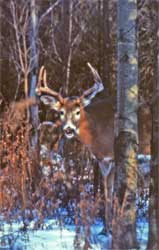
Reading deer sign can put a hunter close to a nice buck like this.


Reading deer sign is something that has always made sense to me. It gives me more knowledge of the animals, where they feed, where they travel, and in the end, it's this knowledge that makes hunters more successful while allowing them to accurately determine where best to set up their stands.

I'm so mindful of a big buck from several years ago. I'd seen him on three occasions but didn't know where he lived. It took me a week of reading October deer sign to pin down his whereabouts.

The area was in fairly heavy cover. I knew the buck had an exceptional 10-point spread, and reasoned he would be working over some big trees to strengthen his neck muscles before the rut began.

Check areas during mid-winter to find the latest buck sign on trees.


I'd moved slowly through the heavy cover without seeing much buck sign except for a few small rubs on some tag alders. I came out the other side of the tag alders, and entered a 25-yard by 25-yard stand of cedars and pines. That is when I worked out this whitetail puzzle.

One of those cedars was scarred by a pre-rutting buck. Lower limbs were broken off, and the trunk was scrubbed hard from a foot above ground to five feet off the ground. Mind you, I couldn't circle my arms around the tree trunk. This gigantic rub was truly huge.

Checking around let me find a faint trail that ran toward another cedar, and it too was rubbed by the same buck. Three trees within 25 yards formed a minor rub line, and the trail had exited the cover I had just walked through. This buck was leaving the tag alder to rub the cedar and pine trees, and most likely, the deer was moving out just before dark.

A nearby tree was perfect for a stand. There would be no clattering and banging required to erect a tree stand here. I'd attach a rope to my bow and my belt loop, lay the bow down flat, climbed 10 feet up the tree on limbs and stand on two thick parallel limbs that grew close together. Another limb came out at waist level, and I could stand on two limbs and lean back against the other one.

It wasn’t a long wait once I climbed into the tree.


Two nights later as the sun was sinking into the western sky I caught the glint of sunlight shining off brownish-white antlers. The buck went to the first tree, thrashed it hard for several minutes, looked around, and went to the second tree and repeated the process. Fifteen minutes later it arrived at the tree just 15 yards upwind of me.

It took a minute for the buck to rake the tree to a pile of fuzzy bark curlings at the base. He nosed his handiwork, lifted his head, moved around the tree to work on the opposite side. The deer was quartering-away at 15 yards, and it was an easy shot.

It's not my policy to advise anyone to stand on cedar or pine boughs and lean against another one, and I don't suggest you follow my lead. However, I knew the limbs would support me for one evening of hunting. I was certain it would lead to a shot at the big buck on the first night, and it did.

That buck was a creature of habit, and such habits can put a deer in trouble. Once the buck stopped rubbing and visiting the nearby scrape, this idea wouldn't have worked. My adventure with that big buck was timed perfectly, and that is where knowing something about the rutting activity comes in handy. From the end of October through mid-November, that tree might not have paid off as the buck hazed does through open fields and thick cover.

Hunting one buck is an adventure, a matter of going after them one on one. It means knowing as much about the area as is possible, and being able to translate that knowledge into an action plan.

There are countless other ways of reading deer sign that will pay off in a big way, and we will cover some other examples in the future. The important thing to realize is that studying deer sign is as much a part of deer hunting as carrying a bow into the woods.

Be alert to deer sign, read what it tells you, and you'll be on your way to becoming a much better deer hunter.