Showing posts with label nose. Show all posts

Tuesday, February 28, 2012

Tune in on the does, and they will lead you to a buck

Small but smart bucks give way to the bully
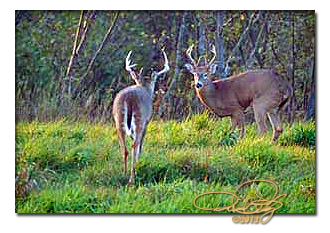
twobucks

The doe was acting a bit shaky last fall. She would stop, start, and move a bit, but from my elevated stand, my attention was riveted on the late-October whitetail doe.

Her actions were keeping me informed on where the buck was standing, out of sight. I couldn't see the antlered buck from my vantage point downwind of the doe and buck, but the antlerless deer was some kind of agitated. The buck was nearby, of that there was little question, and her sides were heaving from being chased.

The buck had apparently bird-dogged the doe across the field and through the woods, but this was the chasing stage, one of my favorite times to hunt. She was close to estrus, but she wasn't quite ready for breeding. But, chasing primes the pump, so to speak.

A panting does has been chased a long distance

The buck knew that, and there seems to be a direct correlation between the chasing phase and the beginning of the rut. Biologists feel a buck chasing the doe gets both animals  ready for the breeding period.

My bow was ready, and although I suspected a big buck was chasing this doe, I had yet to see the animal. The doe, by her actions, told me where the buck was, and whether he was standing still or moving.

She kept peering back into the heavy brush, and try as I may, the buck was impossible to see although there was no doubt in my mind that he was there. The doe was twitchy; moving, stopping, switching her tail, and turning to face the brush before turning and facing her body away from the buck but looking back over her shoulder.

She was sending body language signals to the buck, and he was moving slightly. Her ears would twitch up, swivel toward some sound unheard by me, and then the buck would apparently stop. I was beginning to think these two deer would carry on like this for hours.

In reality, as the sun headed toward the western horizon, the doe moved slightly toward the buck, and then wheeled and ran off 20 yards before stopping to look back. She was getting this old boy fired up, and her message apparently was getting through to him.

Her head movements pinpointed the buck’s location, and it took 10 minutes of probing the alder brush before my binoculars picked out the white bone of an antler tine. The buck was standing stock still, not moving, and contently letting the doe lead the show.

I knew this wouldn't last forever, and sooner or later the buck would make his move. The doe would let me know when that was about to happen.

Her ears perked up again, her head changed positions, and I knew the buck had moved again. The binoculars scanned the area where the buck had stood, and sure enough, he was gone. I followed the direction of her head, and after five minutes of looking, found the buck again.

Watch the doe and other bucks and she’ll lead you to the big boy

He was getting closer to the edge of cover, and by now, the sun had set. There was less than 30 minutes of shooting time left, and I knew he would soon take up the chase again. The big question was whether he would offer a shot or choose to circle the doe, and force her into running off with him in hot pursuit.

Ten minutes of shooting time remained when the action started. The doe whirled at the sound of his first tending grunt, and she cut a lick for the open field, running hard. The buck was patient, and he slowly moved toward the edge of cover on a wooded ridge, and watched her go. He knew he could track her down.

He had only to move 10 yards in my direction, and it would be possible for a shot. He moved half that distance, stopped, and my bow was up and ready. When he moved, he exploded from cover like a ruffed grouse taking wing, and was at an instant gallop.

He offered no opportunity for a shot, even though I was ready, and as he began moving, it was easy to tell he was a high and wide 10-point with good mass. He crashed off through the brush, and there is no doubt he caught and bred that doe that night.

The lesson behind this anecdote is to study does during the pre-rut and rut seasons. They can, by their head and body language, tell the hunter where the buck is and what he is doing.

Be patient and play the waiting game

There are many times when this leads to a shot, and there are times when luck is riding along with the buck. However, study this body language as often as possible, and learn more about hunting bucks. The does can teach hunters this very  important lesson, and bow hunters who don't spook does but study their actions will often take a nice buck.

You can bet on it.

Posted via email from Dave Richey Outdoors

Monday, December 13, 2010

Fighting frostbite is not fun


Halfway between my beak and sideburns is a patch of frostbite.


What is frostbite, and how it can affect people. This old grey-beard was out today for three hours trying to dig out from last night's storm. The air temperature was 6 above, and a strong swirling west wind had my facial hair frozen solid.

Was I aware of it? Duh! Of course, every time I wiped my nose, it grated ice against my cheeks. But I'm all too aware of the danger of frostbite from previous experiences, and it's something the general outdoor media really doesn't cover very often.

My first bout with frostbite came many years ago. At the time my twin brother and I lived in Clio, our old hometown, and every Friday night we would go to the Frankenmuth Conservation Club and shoot skeet and trap.

This particular evening was about 10 above zero with a 20 miles-per-hour breeze. We had a new guy shooting with us, and he was slow and very deliberate. I never could shoot well with gloves on, and held my shotgun in my left hand, waiting my turn. It was taking twice as long to shoot a round as normal, and by the time everyone had fired 25 shots, the fingers on my left hand felt oddly numb.

What’s wrong with my hand?


My shotgun was cased, and we walked to the clubhouse. George said: "What's wrong with your left hand?"

I looked down and the fingers were white and looked as if they had been dusted with powdered sugar. I couldn't bend them, and went into the bathroom to run some warm (not hot) water on them.

It took about five minutes for the fingers to start thawing, and that is when the pain kicked in. The pain was enough to bring tears to my eyes, and I softly dried them off, stuck my left hand under my right armpit and said we had to leave.

Some skin was lost off my fingers but I didn't lose any digits. Two or three years later, while running fox with hounds. I got my right hand wet, and one of my fingers developed frostbite.

Again, some skin peeling but no permanent loss providing you don't count very tender pinkies. If my fingers get cold, they hurt, and this is a lingering result of frostbite earlier in life.

Winter ice fishing is a great deal of fun but wet hands can lead to frostbite.


One might think me a bit foolish to have suffered two bouts of frostbitten fingers, and I'd agree. Even more troubling was getting caught out in a blizzard of 1978, burying my vehicle in a four-foot drift and having to walk over two miles home into a stout north wind wasn’t fun.

That trip involved walking into the teeth of a 40-knot wind without any protection for my beak. Now, my nose isn't small and dainty. It rides on the leading edge of my face like a miniature ski slope. The thing sticks out quite a bit, and is subject to a skin-peeling wind and cold temperatures.

By the time I made it home, the end of it was slightly frosted. A warm washcloth helped, but as it thawed out, it felt like a mad dog was trying to eat it off my face. Again, some skin peeled off, and it too is very sensitive to the cold.

In the early 1980s, I was riding on a snowmobile with another guy after ice fishing, and we had several miles to go to get back to my vehicle in sub-zero temperatures. I had a warm snowmobite suit, good boots and mittens, but no protection for my face as I clung to the back of a snowmobile going 50 mph down the frozen lake.

It seemed the coldest and longest snowmobile ride of my life.


My cheek seemed to burn, and I held one hand up to block the wind from hitting it directly, and that caused me to nearly fall off the bouncing sled. I tucked my head into the sled owner's back, held on with both hands, and we eventually arrived at the car.

One of my friends spotted my right cheek, ran for his camera, and began shooting pictures. I knew I was a popular guy but when several others showed up to shoot close-ups of my face, I asked the question.

"What's going on?"

"Your right cheek is frostbitten," one of them said. "Hold still and quit moving around, and we'll be done in a few minutes."

The minutes slowly passed, and finally I dug out my cameras amidst all of their howls for me to stand still, and I told one of the guys to shoot several photos. He did, and finally I could get inside out of the cold.

Four times in my life I've had some part of my body frostbitten, and suffered through the thawing-out process. It hurts, and now my hands and face are sensitive to the cold, but I take more precautions.

Anglers, hunters and anyone else who spends time outdoors, especially in brutally cold temperatures, run the risk of frostbite. It's not fun, and needn't happen if the sportsman is properly prepared.

Take this advice from a frostbite pro: cover all exposed skin to avoid problems.


The photo above shows me with frostbite on my cheek. This was a minor case, but another 15 minutes on that sled without facial protection may have disfigured my face. There isn't anything cute about my face, but I've decided that having part of it fall off once the skin and flesh dies, is not my idea of a good time.

Play it safe and cover up in the cold and when strong cold winds blow. It's incredible just how fast fresh can freeze under bad conditions, and the thawing out process is not a walk in the park.

Posted via email from Dave Richey Outdoors