Showing posts with label fur. Show all posts

Tuesday, October 11, 2011

Literary riches from other writers

Men like Ben East & Gordie Charles worked to build deer herds.


Studying the history and high points of a person's lengthy literary career can be an informing and a somewhat behind-the-scenes look into that person's life.

It has been my great good fortune to obtain a great and wonderful gift from my longtime friend, Gordie Charles, of Traverse City after his death. This gentle and kind man was a rare breed; he gave more than he took from his outdoor life, and I've tried to emulate him.

A few years ago he told his wife, Dorothy, that he wanted me to have his files and papers from over 55 years of outdoor writing in Michigan and South Dakota. Years ago, my late friend Ben East of Holly, Michigan, made the same gracious gift to me after his death. The late Mark Dilts, also an outdoor writer, gave me some things.

Many years ago, my  good friend Russ Bengel of Jackson, honored me with a library of fine books. He knew I loved good fishing and hunting books, and he left me his sizable library. None of these people owed me anything, but knew I loved the history of fishing and hunting in this state.

Russ Bengel was a giant when it came to improve duck habitat.


Each man left behind a treasure trove of Michigan history concerning fishing and hunting in this state. After having sifted through it, and gathered what seemed important from a writer's standpoint, it is my task to make a contribution of the remaining material to the Bentley Historical Library in Ann Arbor in their respective names.

Ben East kept voluminous files, notes and published book manuscripts and newspaper articles. Gordie Charles did much the same. All but three file drawers of East's material has been donated, and much of Gordie's files have been donated to the same research library.

Gordie's files covered the gamut of fishing and hunting, as well as resources management, in this state. Reading through his notes, and his newspaper columns, adds still another dimension to this multi-talented man.

He was well known for his head-slapping puns and corny jokes, but he also was a man deeply in love with the outdoors. In fact, he was so captivated by the beauty of nature that he vowed as a teenager to write a future column for the Traverse City Record-Eagle newspaper.

Ben East and Gordie Charles fought for resource protection.


That he not only did that, and did a wonderfully fine job of it for many years, he also syndicated a newspaper column to 50-some state weekly newspapers, wrote magazine articles and still had time to research and write six books.

How does one measure value? If going through these old files of men like Charles and East, there is nothing of a monetary value to be found. What is valuable, though it is not tangible, is a close-up look at the history both men helped record for the enjoyment and protection of Michigan's natural resources.

I found numerous things in Gordie's files that have been returned to the Charles family such as family photos that had been lost or misplaced. What isn't needed by the family, or by me at the moment, was donated to the Bentley Historical Library.

Some files, from a historical viewpoint, are rather important to me at this time. I have permission from both families to keep these files until my death at which time all of my files (and theirs) may be donated to the same research facility.

There they will join the files of Charles, East, Harold (Opie) Titus, of Traverse City, an editor for Field and Stream magazine; Jack VanCoevering, past outdoor writer for the Detroit Free Press; and Corey Ford, an U of M alumnus and well known outdoor writer and the author of many books.

These files now give me a look at what has gone before. It allows me to determine the thinking of the Department of Conservation, the forerunner of today's Department of Natural Resources & Environment, about topics that affect our resource management and the fish and game we  seek.

It allows me to learn about different fish plantings that were tried but failed, such as the grayling and kokanee salmon. They let me know what the collective thinking of sportsmen were in earlier generations, and let me compare them to what the current thoughts are. I even found the deed and abstract for Ben East's home and property, and promptly returned it to Ben's late wife, Helen, so she could sell the family home. That was an unexpected find.

My passion is historical papers from top conservationists.


It also enables me to determine the effectiveness of biologists from an earlier period against those of today. The differences, in most cases but with some rare exceptions, indicate that earlier fisheries and wildlife biologists were in much closer contact with sportsmen than they are now.

I sifted slowly through Gordie Charles' files for nearly a month with the blessings of his late wife, Dorothy and their children, and some files have gone on to Ann Arbor. Others will go after I've spent more time examining them.

Gordie Charles was, as all outdoor writers should be: a man with an inquisitive mind, a willingness to dig deep for a story, and to put our resources ahead of everything else, especially politics. The stacks of correspondence lauding his work far outweighed the few crank letters sent by people with some imaginary axe to grind.

I see Gordie as a man who was born at the right time to do what had to be done to help protect our resources. I, for one, appreciate his hard work and the unique genius of this man who spent his adult life writing so that others could enjoy and better understand the outdoors.

Going through old files, and studying such history, must make me an historian. Hopefully, it also will make me a better writer ... even after plying my trade for 45 years.

It's when we stop learning that we stop being effective outdoor communicators. I am still learning, thanks to these gifts from other outdoor writers who helped to pave the way of today's outdoor communicators.

Saturday, August 06, 2011

Bob: A Big Loser At Walleye Poaching


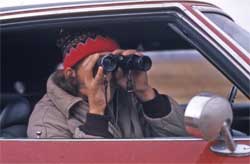
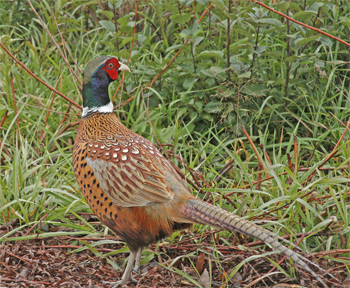
Poachers often glass from a car & often shoot pheasants & rabbits for sale.


Bob was sitting pretty. He was making about $1,500 per week, and was able to set his own hours. No time-clock punching for him.

He owned a boat, motor and trailer, and fished or hunted every day. He was a laid-off factory worker, and was entitled to some rather sizable work benefits.

However,  Bob’s life was a little bent. He and his wife were divorced, and she was collecting Aid To Dependent Children (ADC) benefits, welfare and all other benefits available to women whose former spouse no longer made child support payments to the Friend of the Court. He knew his life was a can of worms, but this was a big game he played: it was a case of him against them.

“Them” was any government agency. Bob was fighting a losing battle because of his life style. You see, Bob was a full-time poacher. A hard-core lawbreaker.

Bob poached fish, fur and small game, and sold his swag for tax-free dollars.


He was 28 at the time, father of two children, and poaching was his lifestyle. The tax-free booty was a direct result of selling fish for cash. Bob was a great fisherman, and he easily caught his limit daily. He often caught three or four limits each day.

The large sums of money he made during May and June were from the illegal sale of walleyes caught from the St. Clair River between Port Huron and Algonac. His fish were sold to individuals or restaurants—whoever would pay his price.

His dream life suddenly fell apart. One customer was a Department of Natural Resources special investigator for the Report All Poaching (RAP) unit. After 60 days of intense investigation, the officer had gathered enough evidence against Bob to arrest him and another full-time poacher. Both men pleaded guilty to selling fish and have since served their prison sentences and paid their debts to society.

A conservation officer present at the arrest felt Bob would be lucky if he didn’t lose his boat, motor, trailer and all fishing tackle that was confiscated at the time of his arrest. He agreed to talk with me providing his proper name was not used.

Each man paid court costs, fines and restitution costs, and  it came to many thousands of dollars. The jail time was an added problem, and Bob (not his real name) begged me not to reveal his identity. He agreed to discuss the reasons why his life became a big lie, a matter of cheating the state government, and stealing fish that belong to every state resident. Sadly, his wheels  fell off the track early in life.

“I admit I’ve done wrong and deserve punishment,” he said during the interview. “My major concern is for my ex-wife and children. They will suffer because of my actions, and the family will probably face investigation by the Internal Revenue Service (it did) and some other state agencies because we never paid taxes on my poaching income nor did we report it to the IRS or state welfare agencies.”

Bob’s personality problems began as a youngster. He was a below-average student in high school, and had very few friends. He also suffered from low self-esteem.

“I needed recognition as a teenager and was able to get it by poaching,” he said. “Other kids thought I was crazy to break the law on a daily basis (he also hunted rabbits and squirrels, and took more than his legal limit of game), but for him, it was fun killing animals or catching fish for profit.”

He’d been profit poaching for many years, and had only been caught once before.


He decided, in 1977, to poach full time. He led the easy life for five years. He slept late, collected ADC benefits every two weeks, and food stamps once a month. He was slicking the state government out of a lot of money. For him, life was good.

It was during fishing season that he poached every night. And when hunting season rolled around, he poached rabbits at night using a spotlight and a .22-caliber rifle.

“I sold 150 to 200 rabbits in Detroit over a year, and the going rate was $3 per bunny, in season or out. I sold 40-50 rabbits every time I went to Detroit. There was a great market for cottontails down there.”


He also sold raccoons in Detroit, saying “It wasn’t uncommon to sell 20-30 raccoons every time I went to the city, and they paid up to $4 for skinned carcasses. The pelts were later sold to local fur buyers, and that created another lucrative sideline.”

Coon hunting led to Bob’s first and only ticket before his big bust. He and another man were driving through a field and shining for raccoon eyes in the trees after dark. They were stopped by a CO, and the officer found a loaded .22 rifle on the back seat. The firearm was confiscated, and both men paid a minor fine.

Law enforcement offices cite the too-low  fines as a chief reason poaching continues. Bob agreed, stating: “The fines were so low, and the courts so lenient with first-time offenders, that it didn’t keep poachers like me from repeating these crimes.

Catching and selling St. Clair River walleyes was Bob’s biggest money maker.


“I sold up to 1,500 pounds of illegally taken walleye fillets each year.  The going rate at that time was $3-4 per pound. Walleyes were the money fish, and I could catch 25-30 fish every night during the April-May spawning season. My best night was 37 trophy walleyes, and each fish weighed from five to 10 pounds. It was a lucrative night.”

On a good night Bob could net about $225 of tax-free money from the walleyes he caught. Such nights just fueled his desire to catch and sell even more fish.

The spawning run of big walleyes usually lasts two to three weeks although the smaller males will hang around the spawning areas for another month. It’s likely that Bob made a large amount of money during that period. He made it by catching fish that belong to everyone in the state and selling them for his personal gain.

Bob says he isn’t bitter about being arrested but claims other poachers sold more fish and that the big money was in whitetail deer, which he said he did not poach.

“Poaching is big business,” he said. “Some poachers are making in excess of $50,000 each year while drawing unemployment benefits. Some poachers also are dangerous individuals.

“Some of these people wouldn’t think twice about wasting (killing) a conservation officer or anyone who becomes suspicious of their activities or how they make their money,” he said.

He noted that many poachers regularly carry handguns and are willing to use them. Several Michigan conservation officers have been killed while protecting the state’s fish and game laws since 1926.

Although Bob claims otherwise, it’s obvious he felt poaching was a high-stakes game. He knew he could get away with his crimes for a period of time but sooner or later the odds would tip in the favor of state law enforcement.

Cracking down on profit poachers is a high-stakes job for the DNR.


“I knew sooner or later I’d get busted, and I’m convinced someone in my family turned me in,” he said. “If it were just me it wouldn’t matter as much, but the DNR knows of my outlets and other local poachers in the business. It doesn’t look good for me.”

It’s unknown whether a family member tipped off the authorities about Bob’s poaching activities or not. Family members often turn in someone else from the family, and often some of their best tips come from a disgruntled ex-wife. Tips are kept anonymous, and in some cases, a reward is possible for valuable information.

After a great deal of soul-searching, Bob said he has decided that his career as a poacher is over. He quickly learned that this was a dead-end street for him.

“I’ll go to jail,” he whispered sadly. “They just have too much evidence on me, but when all of this is over and done with, my poaching career will be a thing of the past. I deeply regret the animals I’ve killed, and the fish I caught for the market. They’ll probably haunt me the rest of my life.”

Maybe so, but one conservation officer isn’t too sure about that.

“Bob will be back,” he said. “It’s hard not to be skeptical of such people and their comments. If he poaches again, we’ll catch him again, and the penalties will be much stiffer the next time around. Hardcore  poachers are tough to put out of business unless the public cares enough to turn them in.”

Bob was trapped by his own greed. He has paid dearly for his many years of profit poaching, and claims he no longer poaches. It would be nice to believe him but, sad to say, DNR statistics indicate he will probably return to the poaching life.

Thursday, December 16, 2010

Christmas book reviews


Jordan The Rodmaker by William H. Jordan. Published by The Whitefish Press, 4240 Minmor Drive, Cincinnati, OH 45217. Large format, 194 pages with index, b/w and color photos, and patent drawings, hardcover with dust jacket, and only 600 copies of this trade edition were published. Contact the published at www.whitefishpress.com for more information. $53.95 postpaid.

The story of famous bamboo rod maker Wesley D. Jordan is lovingly told by his son, William H. Jordan, in this biography that deals with his father’s career. In most cases, the story of Wes’ early life is one of a young boy and young man who loved to fish. Sadly, as was true of most people around the turn of the 20th Century, young Jordan loved to fish but money was scarce and he had to walk everywhere.

His make-shift gear was simple, but as he fished lakes and ponds around Lynn, Mass., the area was scenic where he caught his first trout at the age of five years. Wesley Jordan was born in 1894, and this serious love of fishing led him to learn the many nuances of building quality bamboo fly rods and some of the hardware found on such rods.

His first trout was caught on a bent pine, and from that day forward, he would learn how to solve fishing and other problems. He wasn’t much on schoolin’, and would rather spend time outdoors, but his was an inquisitive mind. He would determine and isolate a problem, and set about finding a way to eliminate it or improve an existing product.

The years from 1919-1926 found Wes Jordan working for the Cross Rod & Tackle Company, and he recalls: “The Cross years were a very fruitful and experimental time for me, as I was given the freedom to follow rodmaking ideas wherever my imagination might take me. This included triple-built rods a full inch in diameter, both four- and eight-strip rods, hollow built, and steel core models. Quality designing was very important to me throughout my rod making years.”

He preferred a rod with a smooth action that works down to within three or four inches of the grip. This was based on comments from those who purchased fly rods that he designed for Cross and South Bend. He felt that fly rods built in this manner are more comfortable to cast and offer better line control. Some of these early Cross rods were advertised in the April 1922 issue of Forest & Stream magazine.

The Cross Rod and Tackle Company, run for years under the guidance of W.F. Forsyth went up for sale in 1925. Jordan could have bought the business for $12,000 from the Forsyth heirs, but he couldn’t afford it. South Bend Bait Company bought the Cross business and equipment, and Wes Jordan moved to South Bend, Ind.

Jordan went on to invent and patented a screw locking reel seat and other things. His contributions to improving the quality and performance of South Bend-Cross rods was immeasurable. This book shows in fine detail the quality of these reel seats. As time went on at South Bend, Jordan also invented a bamboo bow that famed archer Howard Hill used in archery tournaments.

Eventually, Wes Jordan was employed by the C.F. Orvis Company from 1939-1971, but it appears that Jordan and Orvis owner Leigh Perkins really didn’t see eye to eye with Jordan on many things. Perkins wanted more rods built, and Jordan said it was impossible to do and maintain the quality anglers had come to expect from Orvis.

Wes Jordan died on Sept. 18, 1975 after a successful fishing trip to a small upstate Vermont lake. And thus ended the lengthy career of one of bamboo rodmaking’s most well-known and respected men.

Turkey Hunting by Bob Humphrey.  Published by The Lyons Press, Guilford, CT. Paperback, 129 pages, color photos.  For more information phone (800) 962-0973 or go to www.lyonspress.com . $19.95.

The author is no stranger to the sport of turkey hunting, and this book will fill some of the gaps a hunter may have in his turkey-hunting education. Chapter topics include; gobbler guns & ammo; gobbler gear; turkey calling; tactics & woodsmanship; scouting; implementation;  running & gunning; teaming up; tough toms; bow hunting and fall hunting; ethics and safety; and care and handling.

This book will be a welcome addition to the library of any turkey hunting. The information is solid, and the color photos are well focused. The tips in this book can help anyone become a better turkey hunter.


Steelhead & Salmon by W.H. “Chip” Gross. Published by The Lyons Press, , Guilford, CT. Paperback, 129 pages, color photos.  For more information phone (800) 962-0973 or go to www.lyonspress.com . $19.95.

Anyone who knows me understands that steelhead fishing is one of my great loves, and over many years, I’ve written three books on the topic. Having this background  for 50 years gives me the experience and knowledge on how to fish for salmon and steelhead in the Great Lakes and their tributaries.

Chip Gross is a friend, and a longtime angler. He also has great photographic and writing skills, and this marriage of two outdoor writing needs makse him a natural for this book. Not only does he know how to catch these great game fish, he has the skills to do it with passion and skill. A great book to add to your library.


Fur, Fortune & Empire by Eric Jay Dolin.  Published by W.W. Norton Company, 500 Fifth Avenue, New York, NY 10110. Cloth hardcover, dust jacket, 442 pages with index, b/w & color photos, drawings and mapsplus map endpapers. For more information go to rsalzman@wwnorton.com or phone (617) 487-8660. $29.95.

Subtitled The Epic History Of The Fur Trade In America, this book lives up to its advance publicity. The map endpapers show the  routes of trappers  as they headed out from St. Louis on the Mississippi, River, and headed southwest to Santa Fe, New Mexico; northwest to Canada’s Fort Mandan, Fort Union and Fort McKenzie; and west to Fort Vancouver, San Francisco and San Diego during the early 1800s.

This fine and comprehensive look at the fur industry points out how the trapping and the continuous search for fur helped expand what would eventually become the United States. Some of the author’s book deals with trapping in Canada, and Henry Hudson was credited with sailing up the Hudson River in a search for fur.

It was the exploration for fur that helped open up the western territories, and trappers moved up and down major rivers into large and small tributaries, climbed mountains and crossed the plains searching for bears, beaver, bison, otters and seals that could be shipped back to Europe to supply the wealthy with fine furs.

This book captures the romance of the trappers who pursued their trade with the native Indians, and who allowed an exploration into uncharted lands. Here they found the fur, and as the country expanded, some of the animals that were trapped or shot began to decline in number. But the fur trade was largely responsible for finding new routes to the Pacific Ocean, through Canada and throughout much of the American southwest.

It is a great book, filled with names and places of interest 300-400 years ago, and it details an era we’ll never see again. A good read.


Ice Fishing: The Ultimate Guide by Tim Allard. Published by The  Heliconia Press, 1576 Beachburg Road, Beechburg, Ontario K0J 1CO. Paperback, 214 pages, color photos. For more information contact the publisher at (888) 582-2001 or by email at www.helipress.com . $24.95.

Finally, ice fishing has come of age. No longer are we treated to books with well-padded chapters, too little information and more where-to than how-to.

This book will set the stage  for giving others a heads-up on what an ice fishing book contains. This book by Ontario native Tim Allard is a great book to learn from. The color photos are imaginative, tell their own story, and Allard’s text is filled with hard-earned knowledge that can help any ice fisherman catch more fish.

The author covers fishing for many species, including: bass, bluegills, crappies, eelpout, northern pike, perch, sunfish, walleyes, whitefish and all trout species.

Readers will get the latest information on which lures to fish, and when and how; close looks at specialized techniques and methods that produce; data on sonar units and how they can help locate and catch more fish. This book doesn’t list just a single lure for various species, but several different lures from many manufacturers. Learn how to look at a new body of water and determine where to go to catch the most fish. All the latest in electronics, rods, reels, lines and other gear.

If you enjoy hard-water fishing, look no further than this book. It is honestly the best ice-fishing book  I’ve ever seen.

Posted via email from Dave Richey Outdoors

Wednesday, December 01, 2010

It’s Time To Rack ‘Em Up


A big buck like this one quickly gets the attention of poachers.


It was something of an insult. I'm sure the reader didn't mean it the way it sounded, but it came across as a personal insult.

A reader told me that I have an oldfashioned sense of protecting our fish and game and other natural resources from poachers. He chided me for being so concerned about the welfare of our poached birds, fish, fur and game.

He said I should let the DNRE worry about it. They are trained to do the job, and if they can't catch the poachers, too bad. I wondered whether he had ever picked up the phone and dialed the RAP Hotline phone number (800-292-7800) to report a poaching incident in progress.

Get involved and don’t be apathetic about poaching.


I'm sorry but I don't feel the same way he does. Poachers are basically opportunistic people, and break the law whenever they think they can get away with it. That line of thinking is dead wrong.

Years ago I did a newspaper story about a joker who was proud of being arrested more times than anyone else in the state for fish and game law violations. He boasted that he'd been arrested on one or more charges more than 50 times. When I had those numbers checked, it was well over 60 violation. He’d forgotten some of them.

The guy is a bit younger than me, and I once figured up that he'd spent several years in the hoosegow. Man, everyone wants to be popular and known for something in their life, but being the state's most famous poacher? That’s hardly something to brad about.

One rule to keep in mind: It’s nice to be important but it’s more important to be nice. Poachers aren’t nice people.

Is poaching something to be proud of? I think not. One might think he has fish eggs for brains after having speared as many steelhead as he did during a long and largely unproductive poaching career.

A few weeks ago I wrote about anglers and hunters who really don’t care about the fish and game. It's becoming even more prevalent by the day. Apathy is alive and well in the sense that poachers are seldom apprehended even though their family and neighbors know they are potting deer out of season. No one wants to speak up.

Does this make a poacher feel proud? It apparently must, because for them, outwitting the conservation officer is a big game they love to play. If they get caught, they pay their fine, and go right back to breaking fish and game laws again but try to be more careful.

Apathy is running rampant as people shake their head and mutter: "Old Uncle Pete got himself another deer last night about midnight. Oh well, Pete’s a bit of an odd one! If he gets caught, he’ll be stacking time at the county jail."

It makes one wonder why they don't turn Uncle Pete in. Ten or more days in the pokey might wake him up, but even that is doubtful. For most poachers, it is a game of beating the local game warden at their own game. Trespass is a major problem throughout the state, and most poachers trespass on a regular basis to do their dirty deeds.

Teach students in school that poaching is wrong and let kids rat out the old man.


Some poachers are ingenious in their willingness to test the game warden's skills. They go out of their way to concoct ways to mislead the officer so they can operate with impunity elsewhere.

Sooner or later, their worst nightmare comes true. The conservation officer steps out from behind a tree, and catches them red-handed with a freshly killed deer that was taken out of season or after dark.

Those who catch and keep more than their limit of fish are just as guilty as deer poachers. So too for those who put out 10 tip-ups during the winter, and when caught, shrug their shoulders, pay their fine and do something else that breaks our fish and game laws.

People dither, complain a bit, and soon everything blows over and they go back to the meat market in the woods. Family members, who could call and ask to remain anonymous, sit on their hands and wonder why nothing ever gets done. The answer is they are afraid to take that first step by making a phone call to the authorities.

Sad but true, there seems to be little improvement in the number of people arrested for breaking our fish and wildlife laws. Conservation officers are spread too  thin, and in some counties, there is only one fish cop to cover too much ground. If he is patrolling the north end of the county, and things are happening at the south end, the chance of the violators being caught are very small.

Our sense of protecting our fish and game tells me that this is a matter of education. We must start with the school children, and teach them that what Uncle Pete does to make his weekly beer money is a crime against everyone else in the state.

Children must learn that shooting game out of season, setting a web (small gill net) across a spawning stream, jacklighting a deer at night, and all the other things that poachers do, is wrong.

In days of old, when knights were bold, poaching of the King's fish and deer in England, was a risky proposition that some poachers gladly accepted.

In some parts of Africa today, poachers are summarily dealt with. The law officers who try to protect the elephants and rhinos are both judge and jury, and the sentence is delivered immediately. A hail of bullets and a sudden death is what happens to many African poachers. Most don't have the guts to do that again.

Poachers are summarily dealt with in parts of Africa. Game wardens are judge, jury & executioner in some countries.


A snide and very impersonal remark? I don't think so. Poaching is big business, and educating long-time fish and game thieves is a battle we seldom win. Caught, they are fined and may possibly serve a short jail sentence, and then they return to poaching again.

Where is the justice in that? There isn't any.

Of course, in this country, using Africa's short and swift punishment would be considered cruel and unusual punishment. Poachers think little of our rights, but we must consider theirs when they are caught breaking the law. A flaw exists in this argument.

Shooting poachers may be too harsh, but locking them up for a longer period of time and handing out much stiffer fines and restitution fees might make a difference.

It's my thought that we must deal with this problem in a different way, and teaching our children that poaching is wrong, is just the first step. If the kids start ragging on the old man whenever he takes game out of season, perhaps knowing that the kids are watching would do the trick.

It's certainly a good place to start.

Anyone who wants to help stop poaching can follow these tips:


*Don’t try to be a hero. Never try to stop a poacher.

*Instead, note the make, model and color to the car or truck being used. A license plate letters and numbers are very important.

*Note the number of people in the the vehicle and the direction it is traveling. Give them the time of the poaching incident.

*If possible, write down physical descriptions of all poachers, including approximate height and weight, color of hair, approximate age, any distinguishing marks such as scars or tattoos, how the person is dressed, and who, if possible did the shooting.

*Making positive identification at night is very difficult, but if the individual is identifiable, give this information to a DNR officer. Get involved, and a tip can lead to an arrest. Most such anti-poaching lines allow callers to remain anonymous.

*Call the Michigan DNR Report All Poaching hotline phone number at (800) 292-7800 and offer them this information.

Posted via email from Dave Richey Outdoors