Saturday, June 25, 2011

Remove the confusion from our fishing regulations.


Fishing rules should be simple, easy and result in more fun and fewer headaches.


Is it just me? Am I the only angler in this state that feels the DNRE’s current Fishing Digest is too complicated, too redundant, too filled with quasi-legalistic jargon, and too boring to read?

The DNR’s Fisheries Division has asked  the public for input about their annual Fishing Digest. Should you desire to make comments on trout lakes and streams, go to: < DNR-InlandTrout@michigan.gov >.

Here’s my take on this situation. The DNRE has messed around for many years trying to get their fishing digest in order. Along the way, dating back into the 1980s, there have been some atrocious mistakes. In those years, the standard answer was the computer messed up. Folks, computers do mess up but it’s often the result of operator error.

Give the DNRE some thoughts on their complex fishing regulations.

We’ve suffered with the old computer adage: garbage in, garbage out, and in the past it has applied to the DNRE. Other times, when things went wrong, the people ultimately in charge blamed subordinates for not editing the copy properly. And then, back in 2000, the DNR decided to copy what neighboring Wisconsin did.

Their fancy new idea was a magazine-size format with maps and charts that told us what we could and could not do. We had to skip from one page to another and to a third page to determine what the trout fishing regulations were for a particular stream or lake.

If anything, this change that we’ve suffered with for years was a lesson in optimistic failure. All it did was make people throw up their hands and go elsewhere and do something other than fish for trout.

The rules often are poorly written, redundant, and frankly boring. Reading it could put an insomniac to sleep. Pity the person who is color blind. The maps of county lakes and streams had several different colors, and anyone who had a red-green vision problem, was in deep trouble.

Frankly, the rules were stupidly written and have been for as long as I can remember. Apparently the DNRE is so broke that those drawing up the rules can’t find a calendar with the proper dates. Need an example. Here are a few being quoted directly from the 2011 Michigan Fishing Guide.

Page 8 under Lake Sturgeon for Black Lake in Cheboygan County: 1st Sat. in February through the following Wednesday or until  the quota is reach(whichever comes first).

Can’t someone read a calendar and give a specific date?

Under the current regulations, some streams have different size restrictions on trout in one area and something else in another. There are numerous types of lakes and a similar number of stream types. Looking at a map that shows these types in different colors looks like a bad color photo of someone’s varicose veins. It’s hard to determine, in some cases, where one set of regulations start and another stops.

I’ve griped for years about the length of our Fishing Digest. Some steps have been made since 2009, and the 2011Michigan Fishing Guide has been reduced to 39 pages. That’s not of a reduction.

However, reading the regulations necessitates completely reading the entire thing … and understanding it. Some conservation officers I know frankly  admit they can’t understand some of the legalese. If they can’t, how does the DNRE expect us to understand it?

Is it really necessary to have so many different rules? Can’t the Fish Division  find someone who can write, or hire someone who can write and edit, and reduce this monstrosity to a manageable size. Cut the thing in half, and the following year, trim it down some more. The fishing regs in some state take up only one or two pages.

Some of the DNR’s regulations are not working and should be trimmed away. A first-year student in journalism school could edit countless lines from the Digest without changing the meaning of a single sentence.

Avoid all the complexity, and make it simple and easy to understand.

The sad fact is that government-speak has crept into the DNRE, and they write these fish laws as if people can’t understand common English. They can, but most people balk at trying to decipher the Lansing legalese.

Sadly, the DNRE and the state and its citizens, have fallen on hard times. Now they come, seeking our help in changing their fishing regulations, and it’s time for each of us to stand up and be counted. If you’ve got a gripe, voice your concerns. Be  nice about it, but tell them what problems you see with the laws as they are now written.

Make it clear that you want the legal mumbo-jumbo spelled out in simple terms, want the specific dates listed, and remove anything that isn’t needed. I’ve listed a few examples, and I’m certain you can find more.

Stand up and argue this point. Now is the time to speak out, and have some impact on how our fishing laws are written in the future. We need laws that are easier to understand, not more difficult and vague. Let’s have a complete re-do of the Fishing Digest in 2012. If necessary, hold public meetings far in advance, and ask our citizens. Most would be happy to help if they knew their time and effort was appreciated.

Title: Remove the confusion from our fishing regulations.

Tags: ((Dave, Richey, Michigan, outdoors, simplify, fishing, regulation, remove, redundancies, name, specific, dates, plain, English))

Posted via email from Dave Richey Outdoors

Friday, June 24, 2011

Bugs In The Air, Fish On The Prod.


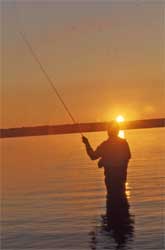
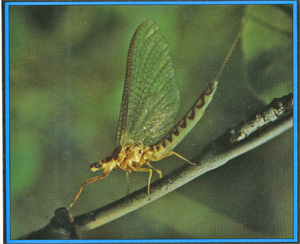
This angler tries casting flies at sundown. Hex flies attract big trout.

It's time for the big brown trout to turn on after sundown. It happens this way almost every year once the Hex hatches begins.

The night turns hot and close, and silent daggers of heat lightning dance across the blackened sky. Everything is silent except the murmur of the river current tugging at your legs or gliding with a soft hiss under the riverboat.

If you are placed just right, and are tossing just the right fly, sometimes from out of nowhere comes the rapier-like strike of one of the river’s biggest brown trout. There are people who fish only after dark, and although I do fish during the day, there's something about casting a big streamer, large floating bass bug or even a more colorful streamer to these big fish. Some folks also enjoy working a hole or run with a four-inch Rapala or Rebel and fairly stout monofilament.

How you fish depends on the area, your temperament and why fish at night.

It's time for the big brown trout to turn on after sundown. It happens this way almost every year once the Hex hatches begins.

The night turns hot and close, and silent daggers of heat lightning dance across the blackened sky. Everything is silent except the murmur of the river current tugging at your legs or gliding with a soft hiss under the riverboat.

If you are placed just right, and are tossing just the right fly, sometimes from out of nowhere comes the rapier-like strike of one of the river’s biggest brown trout. There are people who fish only after dark, and although I do fish during the day, there's something about casting a big streamer, large floating bass bug or even a more colorful streamer to these big fish. Some folks also enjoy working a hole or run with a four-inch Rapala or Rebel and fairly stout monofilament.

What you use depends on your temperament, where you fish, and why you fish the midnight hours.

One of the most exciting methods is to use big streamers. Large Muddler Minnows, Buzzsaw and other big flies are cast quartering across and downstream, and ripping it through the water. You'd think this type of hard-and-fast streamer fishing would spook wary browns. Often, it's just the opposite. It can really turn them on.

Fishing in the dark or light of the moon is a pleasing time.

I've talked with several people who have stood under a full moon or a partial moon, made their cast, and began stripping line hard. They tell of large wakes that follow the streamer, and on occasion, those big trout will hit and nearly wrench the rod from your hands.

Four of us floated the AuSable River one evening, and one of the anglers hit a big fish. The take sounded like someone had thrown a big dog in the river, and the fish ripped off line, rolled on top several times, headed upstream and back down, and there was no controlling the fish. It slipped the fly after nearly 10 minutes of nonstop action.

This is no place for dainty rods and light tippets. Anglers who practice this method (it also works during the day) know just how much work it is. The constant casting, and rapid stripping of line, becomes very tiring but some people can do it all night. Not me! I want to enjoy fishing, and not have to wear myself out to do it.

I used to fish the Sturgeon River years ago when it held some good brown trout, and I liked a big, white, hairy deer-hair mouse. It stuck out like a big sore thumb on a dark night, and even I could see it. I'd cast across and downstream, mend the line to obtain the longest drag-free drift as possible, twitch it once or twice, and then cast again.

The neat thing about this method was the strikes were visible, and very few fish under four pounds were hooked. The largest that I recall was caught by the late George Yontz, who owned the old Hillside Cabins just north of Wolverine many years ago. His fish, if my memory holds true after all these years, weighed 13 1/2 pounds.

The Sturgeon River browns, back then, were either silvery fish that ran upstream from Burt Lake or the great golden-brown fish with big hooked jaws and a kype as big around as the smallest joint on your little finger. Some kypes were an inch to nearly two inches long.

One other method was practiced on these big fish. Casting a medium-sized Rapala or Rebel quartering across and downstream, and let it dive and wiggle on a tight line. Once the current carried the lure across stream until it hung directly below the angler on a tight line, the rod tip would be jiggled two or three times to give the lure a bit more action.

Night fishing can produce unexpected strike. Be ready for action.


Some walleyes were in the river at times, and it was easy to determine which fish was hitting the lure. A walleye would tap-tap-tap the lure as it swung in the current, and hit softly once it finished its drift. A big brown trout would hammer the lure hard, and a strike could come at the end of the drift or as soon as the lure hit the water. A few fish reminded me of an outfielder standing, glove on hand, catching a fly ball.

The trick, regardless of which method we used, was to wade down two or three stretches of river during ithe day to learn what was or was not wadable or had too much current. Wading the river helped prevent tripping over submerged logs and otherdebris. Such things could make a night fishing adventure far more interesting than most anglers need.

Hot, muggy nights were usually the best. The mosquitoes would be on the prowl, and any exposed skin would provide a meal. Now an angler could hang a ThermoCell insect repellent on a nearby tree branch, and most of the mosquitoes would go elsewhere.

But hooking a six-pound or larger brown trout after dark is just about as much fun as a fisherman can have while wearing waders. There were a few very special nights where two or three big fish were landed, but most people considered hooking one big fish a rare treat.

Put them back, and try for the same fish again next year. Those big ones aren't very good to eat, and deserve to be caught more than once. Fooling the fish, and enjoying the battle, is what brings us back year after year.

Title: Bugs In The Air, Fish On The Prod.

Tags: ((Dave, Richey, Michigan, outdoors, river, fishing, after, dark, flies, lures, no, lights, big, browns))
the area, and why you fish after midnight.How you fish depends on temperament,

One of the most exciting methods is to use big streamers. Large Muddler Minnows, Buzzsaw and other hefty flies are cast quartering across and downstream, and literally ripped through the water. You'd think this type of hard-and-fast streamer fishing would spook a wary brown trout. Often, it's just the opposite. It often turns them on.

I've talked with several people who have stood under a full moon or a partial moon, made their cast, and began stripping line hard. They tell of large wakes that follow the streamer, and on occasion, those big trout will hit and nearly wrench the rod from your hands.

Four of us floated the AuSable River one evening, and one of the anglers hit a big fish. The take sounded like someone had thrown a big dog in the river, and the fish ripped off line, rolled on top several times, headed upstream and back down, and there was no controlling the fish. It slipped the fly after nearly 10 minutes of nonstop action.

This is no place for dainty rods and light tippets. Anglers who practice this method (it also works during the day) know just how much work it is. The constant casting, and rapid stripping of line, becomes very tiring but some people can do it all night. Not me!

I used to fish the Sturgeon River years ago when it held some good brown trout, and I liked a big, white, hairy deer-hair mouse. It stuck out like a big sore thumb on a dark night, and even I could see it. I'd cast across and downstream, mend the line to obtain the longest drag-free drift as possible, twitch it once or twice, and then cast again.

The neat thing about this method was the strikes were visible, and very few fish under four pounds were hooked. The largest that I recall was caught by the late George Yontz, who owned the old Hillside Cabins just north of Wolverine many years ago. His fish, if my memory holds true after all these years, weighed 13 1/2 pounds.

The Sturgeon River browns, back then, were either silvery fish that ran upstream from Burt Lake or the great golden-brown fish with big hooked jaws and a kype as big around as the smallest joint on your little finger. Some kypes were an inch to nearly two inches long.

One other method was practiced on these big fish. Casting a medium-sized Rapala or Rebel quartering across and downstream, and let it dive and wiggle on a tight line. Once the current carried the lure across stream until it hung directly below the angler on a tight line, the rod tip would be jiggled two or three times to give the lure a bit more action.

Some walleyes were in the river at times, and it was easy to determine which fish was hitting the lure. A walleye would tap-tap-tap the lure as it swung in the current, and hit softly once it finished its drift. A big brown trout would hammer the lure hard, and a strike could come at the end of the drift or as soon as the lure hit the water. A few fish reminded me of an outfielder standing, glove on hand, catching a fly ball.

The trick, regardless of which method we used, was to wade down two or three stretches of river during ithe day to learn what was or was not wadable or had too much current. Wading the river helped prevent tripping over submerged logs and otherdebris. Such things could make a night fishing adventure far more interesting than most anglers need.

Hot, muggy nights were usually the best. The mosquitoes would be on the prowl, and any exposed skin would provide a meal. Now an angler could hang a ThermoCell insect repellent on a nearby tree branch, and most of the mosquitoes would go elsewhere.

But hooking a six-pound or larger brown trout after dark is just about as much fun as a fisherman can have while wearing waders. There were a few very special nights where two or three big fish were landed, but most people considered hooking one big fish a rare treat.

Put them back, and try for the same fish again next year. Those big ones aren't very good to eat, and deserve to be caught more than once. Fooling the fish, and enjoying the battle, is what brings us back year after year.

Title: Bugs In The Air, Fish On The Prod.

Tags: ((Dave, Richey, Michigan, outdoors, river, fishing, after, dark, flies, lures, no, lights, big, browns))

Posted via email from Dave Richey Outdoors

Thursday, June 23, 2011

This Rifle is great for big browns.


Browns like this hook-jaw guy are fun. Angler casts on Rifle River.


It’s a fishing dream that sinks its claws in your soul, and on occasion it becomes tugs so powerfully that hardcore want to get away, find a great stream and hopefully go forthto do battle with one of these hook-jawed cannibals.

There any number of streams that produce the occasional big brown trout. Fishing during the Hex hatch can be a good bet, and other hatches can produce a good fish.

The difference between a good fish at 18 inches, and one of those with a bloated belly and a hooked bottom jaw that sticks up like a crooked little finger, can be a matter of faith. One such stream that produces good fish, and some big ones, is the Rifle River. This stream is home to some very big fish, but it takes luck or skill to catch one.

This river is good but there are others equally as good for browns.


Numerous small streams empty into the Rifle River between Rose City and M-55, and tiny waters like Houghton and Klacking creeks often harbor some huge browns as well. Anglers should be advised that land along these streams is private, and permission must be granted before crossing private land to fish.

Fly fishing can be productive, and anglers can match prevailing hatches during the day. At night, big bushy flies, such as the Buzz Saw, Sofa Pillow or hairy white deer hair bass bugs can elicit tremendous strikes.

Use a reasonably heavy (8-pound or heavier) leader, and splat the fly down on the surface near shore and allow the current to carry it along. They meaty sound of a big fly hitting the water often triggers savage line-jerking strikes.

This minnow-fishing technique works quite well.


Another technique is to hook a three-inch shiner with two No. 10 treble hooks. Insert the front hook under the minnow’s chin and the back hook just forward of the tail. Add one small splitshot if needed for casting weight or to take the bait down, and cast it quartering across and downstream. Allow it to sink and swing across the current on a tight line, and set the hook hard if a fish strikes.

Be methodical. Attempt to cover all portions of a hole or run, and sometimes the tail-out is a hotspot for feeding brown trout.

The witching hour for browns often occurs about 11 p.m. as the fish settle into a feeding schedule. A careful angler, wading quietly and slowly downstream without splashing the water, may hear feeding fish if they stop often to listen. Once located, fish very carefully to avoid spooking the trout.

Wade into casting position, and work the area thoroughly. Do not use lights, and take two or three casts before moving a step or two downstream. Big brown trout require an accurate and artful presentation, and success often hinges on a very quiet approach.

The Rifle River is much more than a spring sucker stream. It produces some truly huge brown trout, but anglers are advised to wade down through a fishing area in the daylight to prevent wading into a dangerous situation after dark.

Learn where the holes are, where to wade and where to get out of the water, and determine where soft-bottomed mucky areas are. It’s no fun getting stuck knee-deep water and be unable to safely wade out to safety.

Wait for darkness to fall, listen for moving fish, and fish hard.

This used to be one of my favorite  places to fish when I lived in Oscoda many years ago. I fished it again about five years ago, and hooked two fish one night and landed one of them. It was a beautifully spotted seven-pounder with a hooked jaw that stuck up like a crooked finger.

I fished it again one day after that during a heavy rain, and landed a nice 6-pound brown off Klacking Creek during a downpour. The fish was holding in a narrow seam of fast water near a log jam.  That day I was casting a Buzz Saw quartering across, and stripping it hard and fast just under the surface.

That fish almost tore the rod from my hand, and I managed to set the hook and manhandle it away from the log jam. We fought our battle in open water, and finally I eased the trophy brown trout up onto a marshy sandbar, unhooked and released that fish.

This river has always held good brown trout, and with a slow and quiet approach and an accurate cast, on occasion it’s possible catch a native brown trout  of chunky proportions with spotted skin that will make your heart skip a beat.

One thing about this soirt: the fishing isn’t easy, and  at times it appears too difficult to hook a good fish, but stick with it and one day you’ll be on the river when the fish feed like crazy. That will make all the fishless nights seem worthwhile.


Title: This Rifle is great for big browns.

Tags: ((Dave, Richey, Michigan, outdoors, big, brown, trout, Rifle, River, Buzz, Saw, Sofa, Pillow, minnow))

Posted via email from Dave Richey Outdoors

Honey, Just A Few More Lures?


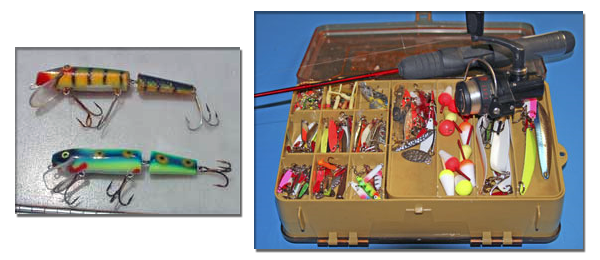
A pair of big muskie plugs plus a small tackle box of ice fishing lures.


There are more tackle boxes in my basement storeroom than any sane man needs. Every one is almost overflowing with fishing lures, so why should I need more?

It's a bit like fishing and hunting books. A man can never have too many good books, and I'm as guilty of buying more than I will probably ever need or read. Much the same is true with lures.

There are four huge tackle boxes filled just with muskie plugs, and a smaller one that holds some smaller muskie lures. I've got some 10-inch muskie plugs and great huge spinnerbaits in the big boxes. However, every year I see someone with a Bobbie or Eddie bait or a Suick or Brunner Runner in a hot new color.


I’m over-run with fishing lures and tackle boxes.


It doesn't mean that the other guy's oddly colored Suick hasn't worked for him. It could, and there I'd be without one painted in that strange color that every muskie fishermen needs to own. Sadly, seldom do they produce fish, but against all odds, they could produce if we just believe in them and cast them often enough.

There are two more beastly huge tackle boxes filled with nothing but salmon spoons and big salmon plugs. I own most colors of J-Plugs, Dardevles, Silver Streaks and other fishing spoons, but I keep bumping into newer sizes with different paint and  tape patterns that seem to beckon to me with eyes that look deep into mine and seem to whisper "Buy me and take me home!" It's the old siren song that we all know.

The eyes have it. I've been adding stick-on eyes to my lures for many years, and now more and more lures are being made with prominent and well-colored eyes. I think eyes make lures more appealing to fish but wonder if they really produce more often. One can only hope.

OK, how about Herring Dodgers? I have two smaller boxes filled with them. There are red ones, white and yellow ones, chrome plated, some home-painted a dull black color (don't laugh because they work ... sometimes), half silver-half bronze, chartreuse models, and some with dazzling tape and some without. There are small ones, large ones, those of normal size, and Hoochie Mamas. Got me some of them too.


Herring Dodgers and Hootchie Mamas. Gotta have ‘em.


If we're going after lake trout I tote 50-60 different sizes, shapes and colors of cowbells and perhaps half that many different colors of P-nuts. Another tackle box is filled with various trolling weights for inland trout lakes, and some stainless steel needles to sew shiners onto my hook.

One tackle box is loaded with more Dardevles in a variety of colors although my best pike fishing comes with two color combinations -- red with a white stripe and silver back or yellow with five red diamonds and a brass back. There are other pike spoons and plugs in the box, and although most of my largest pike come on the two colors noted above, there are another two dozen other patterns for when the pike get picky. And then there is a box of spinnerbaits in several sizes that work for muskies and pike.

Oh my, I nearly forgot. One box is filled with body baits like Rapalas, Rebels, FasTracs, Long A Bombers and other similar lures. They too are in an infinite variety of great colors, and some have never been in the water but boy, do they look pretty.

Still another box is filled with wood FlatFish and Tadpollys from my guiding days when I used the dropback method on the Manistee River below Tippy Dam or when trolling Manistee, Pentwater or Pere Marquette lakes for late-fall steelhead. The FlatFish come in two varieties: those with the tiny treble gang hooks or with two larger hooks. In that box are extra hook hangers for the small treble hooks that I prefer to use.


A hundred pounds of leadhead jigs in a dazzling display of colors.


I'm a big fan of vertical jigging on the Detroit, Kalamazoo, Saginaw and Tittabawassee rivers, and there are two heavy tackle boxes filled with jigs weighing from 1/8 to 1 ounce, depending on the depth of water and current speed at each location. Half of one box is filled with oodles of grub bodies and twister-tail bodies in a rainbow of colors.

And as nice as freshly painted jigs look in their trays, I often scrape the paint off and use just the bare lead and a lip-hooked minnow. It works!
One small box holds nothing but Mepps spinners, and another holds nothing but weight-forward spinners like Erie Dearies. Another small box is nothing special except it contains lures purchased when I was 15-17 years of age from the Wanigas Fly Shop near Saginaw, Michigan. The shop was owned by Art Neumann, a co-founder of Trout Unlimited, and it holds a bunch of small trout-size spoons that are rarely seen these days except in a lure collection.

Then there are some collectible Heddon lures that I normally leave home, and other scarce Creek Chub Pikie minnows, etc. And did I mention two small boxes of ice fishing lures?


C’mon, Honey, I just need a few more for this season.


So, do I really need several more lures? Probably not, but once one or two new lures wink at me and catch my eye, I go into a feeding frenzy until I have them. Many times, after such a cabin-fever purchase, I try the lure once and take an active dislike to its action, color or lack of fishing-catching abilities.

Someone once told me that fishing lures catch more anglers than fish, and I suspect that is quite true. However, gazing upon tray after tray of various colors and sizes of lures makes me feel good.

So, why not, honey? All I need is two or three more $20 muskie plugs. There are still a few Suick colors I don't have. You never know when one of these odd-ball color combinations will tempt a trophy muskie. And I’ll even put up storm windows when I can find the time.

Tuesday, June 21, 2011

The Passing Of An Angling Legend.


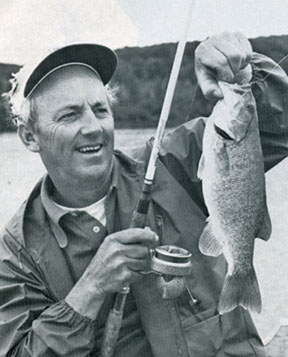
Stan Lievense shows off a nice smallmouth bass caught on a Jig-a-Do.

TRAVERSE CITY, Mich. -- It’s been said that the best efforts of Department of Natural Resources biologists often go unnoticed. Frequently, these people work out of the public eye, and their greatest skills are ignored by most sportsmen.

That’s one thing that cannot be said about Stan Lievense of Traverse City. This kind old gentleman of 92 years was a dear friend of mine for more than 45 year, and he went to sleep last Sunday afternoon and never woke up. Esophageal cancer and the results of an auto accident last year weakened him to the point where he couldn’t recover.

Stan, born in 1918, was a die-hard angler, lure inventor, and a longtime employee of the Michigan Department of Conservation and later, the Department of Natural Resources. He began work as a fisheries biologist in 1940, served in the U.S. Navy during World War II, and rejoined the DNR again after his military discharge.

One of Michigan’s most popular anglers and lure inventors died Sunday afternoon at 92.

Lievense was known as possibly the best fisherman within the DNR, but much of his work may have gone unnoticed except he had an uncanny ability for drawing media attention. One thing he was proud of was the way he handled the plantings of brook, brown, lake and rainbow trout in inland lakes around the state. He managed, through trial and error, to determine which “two-story” lakes were best qualified for supporting a warm-water fishery for bass, bluegills, perch and pike in the upper levels, and trout in the depths.

He and other anglers pioneered angling methods designed to coax deep-water trout into biting, and many of the lakes around northern Michigan benefitted from his trout plantings. A few of the lakes he worked on include Duck and Green lakes at Interlochen, Crystal Lake at Beulah, Higgins Lake near Roscommon, and countless others in both peninsulas.

Trout were not the only game fish he planted. He worked with hatcheries statewide, and made abundant use of their hatchery rearing policiies. At heart, he was the anglers’ best friend: he found areas through hard work and laying down boot leather, and decided what these other lakes needed, and in rolled the hatchery trucks.

Stan served the state DNR from several posting but the Traverse City area was his favorite location, and when he retired from the DNR in May, 1972, the salmon craze was underway. He soon took a position with the Michigan Travel Bureau in Lansing, but he didn’t spend much time in the office. He He became Michigan’s Fishing Ambassedeur. He began studying the waters from areas where he’d worked as a fisheries biolgist, and began leading outdoor writers to new hotspots that produced a wealth of free publicity.

We chased brown trout, lakers, bass, muskellunge, walleyes and other game fish in both Peninsulas. These trips were taken during all four seasons, and I’m reminded of a an ice fishing trip he organized for splake at Copper Harbor, as far north as you can go in this state. These game fish proved to be willing biters once me and another gent got into our shanty and watched the fish in the crystal clear water. We determined what anglers needed  to do, and once they did it right, many of them caught fish.

He planned media fishing trips, and all were exciting trips.

Lievense planned these trips to promote tourism, and he was amazingly successful.
And, as much as he liked to fish, one longtime habit defined this man. He loved to invent fishing lures, and one -- the Jig-a-Do -- was invented. Burke Lures of Traverse City bought manufacturing rights to the lure, and it became an instant hit. I’ve used it often on Grand Traverse Bay for smallmouth, and in works well in lakes and streams for bass.

Stan also invented the Stanley Streamer and several other lures, and to his dying day, he would keep trying to invent lures that worked as well as his first ones. After time, and large sales, Stan kept trying. His work with fish and fishing lures led to enshrinement in the National Fresh Water Fishing Hall of Fame in Hayward, Wisconsin.

Stan, beginning in the 1950s through the 1970s, was an outdoor writer. His articles appeared in Outdoor Life, Field & Stream and many others. Has was an animated platform speaker on fishing issues and methods, and wrote numerous state booklets that have been distributed to Michigan anglers.

His major commitment to fish history and angling techniques made him a favorite of outdoor writers. He  was always good for a story when everything else had fallen apart. and a quick phone call grabbed his attention. He would work with anyone, and if they paid attention to his directions, they would get one of the best stories of their career.

Color spectrum and water temperature fishing were two of his long suits.

His two specialties -- color spectrum fishing and water temperature fishing -- were bold new and innovative steps for most anglers. He and I worked together on the water temperature preferences, which he knew by heart, and his color spectrum theory has been proved many times over by every lure manufacturers that came to understand which lure colors produced best at certain depths.

Stan Lievense ran a long and wonderfully productive race, doing grand things in educating the public about how to catch more fish. He’s now fished around his last bend, and for those of us who knew and loved him well, we bid him a fond farewell. He was a one-of-a-kind person, and the likes of him are seldom found in this day and age. He will be missed.

And for the members of the Fisherman’s Luncheon, which occurs the first Monday of the month at the Traverse City Holiday Inn (except in July) at noon,we shall toast his memory. Good-bye, old friend, until we meet again up yonder, go with God.

Title: The Passing Of An Angling Legend.
Tags: ((Dave, Richey, Michigan, outdoors, Stan, Lievense, angler, biologist, lure, inventor, speaker, writer, old friend))

Posted via email from Dave Richey Outdoors

Monday, June 20, 2011

Cool deer thoughts on a hot day.


Two nice bucks that fell to well-placed arrows cooled me off today.


The mind is a wonderful thing. It enables us to remember things from years gone by, and it can carry us back to another day and another place when the climate was much nicer..

The temperature hit 85 degrees today in parts of Grand Traverse County, and the deer were not moving in the heat. There are a couple of nearby ponds for water, and no human pressure to move the animals around, and they feed when and if they want to eat.

For me, it's just too hot to be outdoors. This is the kind of weather where people have heat strokes, and for me, it's just much easier to stay indoors and relive a couple of autumn hunts in my mind. Frankly, once it passes 75 degrees, it’s too hot for me.

I chose to think cool thoughts about deer hunting on this hot day.


One was a trip that happened several years ago just before the firearm deer opener. The temperature was 26 degrees, and snow was falling. The barometer was falling, and the forecast was for several inches of snow.

I knew the deer would be moving as the front pushed through, and I climbed into one of my elevated coops. It offers a broad vista, and spotting deer moving through the swirling snow was fairly easy although at times it was difficult to spot antlers.

I'd been in the stand for 20 minutes, and as the snow continued to pile up, I spotted a deer back in the heavy cover. I could see occasional glimpses of white antlers through the snow, and felt I'd seen this buck before. It carried 10 points on a solid frame, and would score about 150 if he hadn't damaged an antler tine in a rutting fight.

The buck hung back, and watched does and fawns move past him. He stood very still, and oddly enough, the snow was starting to pile up on his back. He'd been in one place long enough for almost an inch of snow to lay on his back and head, and it didn't seem to bother him.

Watching deer approach meant patiently waiting motionless for the deer to arrive.


He slowly moved out of the cover, and all of the antlerless deer had filed past me at 18 yards. If he stayed his course, he would  be in front of me in a minute or two.

A snowy gust blew snow around his head, and the deer oddly looked gray and white. He moved slowly, looking ahead, but not looking up. He walked past, almost lost in the near-blizzard, and when the time was right I drew, aimed and turned loose an arrow. The buck, mortally wounded, ran off into the storm and disappeared.

Finding that buck was easy. He ran only 60 yards before going down, but it was far enough to take him out of sight in the blowing snow. Ground shrinkage took him from 150 to 135 points.

Another time, there was very little snow on the ground, but the temperature stood at 10 above zero. A soft wind was blowing into my face, and my nose and cheeks felt like they were on fire.

Sundown had come and gone, and 15 minutes of legal shooting time remained, when I heard the unmistakable sound of deer hooves crunching through frosted leaves. The deer was coming crosswind from my left, and it was moving along the back edge of an alder run.

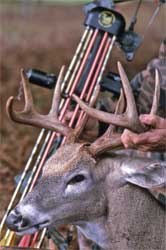
This buck walked by very close and offered a 10-yard shot.


I waited, and 10 minutes later, out steps a tall and handsome 8-point with a high but narrow rack. The tines were tall but the buck had little spread, but he was a fine looking animal. This guy knew where he was going, and he would have to pass my stand to get there.

On he came, a buck with a purpose, and I'm checking my watch. Three minutes of shooting time remained when he steps out in front of me, stops and turns so he is quartering toward me. It's not a shot that I will take, and figured I'd wait him out.

A minute later, a doe to my right stepped out, and that was the trigger. The buck turned, crossed broadside in front of me at 12 yards, and the shot was quick, easy and fatal.

Two cold-weather hunts in my mind cooled me off a little bit. I don't know how it will work for you, but I can set the cold-weather stage in my mind pretty easily, and bringing a past hunt back to life makes me feel better when the temperature reaches high double  digits.

Give it a try. It may work for you.

Title: Cool deer thoughts on a hot day.

Tags: ((Dave, Richey, Michigan, outdoors, remembering, fall, hunts, past, bucks, two, nice, deer, bow, hunting))

Posted via email from Dave Richey Outdoors

Sunday, June 19, 2011

Sneaky night fishermen catch bass.


Kay Richey shows off a nice smallmouth bass caught after the sun went down.


Fishing is often better after sundown during the summer. Some of the state’s best bass, trout and walleyes are hooked in the evening.

Largemouth and smallmouth bass, favorite targets of summer fishermen, might be hesitant to strike during daylight hours when many lakes are abuzz with jet skis, water skiers and power boaters.


But when the sun goes down, and the crowd leaves the water, the mood of a lake slows down and mellows out. Fish begin ascending from deeper water and feeding along the edge of weed beds, docks, lily pads, swimming rafts and other shoreline structure.


There is a big difference about night fishing. It’s quiet and peaceful on the water.

The best hours, according to many sundown fishermen, are from 10 p.m. to midnight. Bass begin to prowl lakes, and fishermen with small boats can scull slowly along and cast plugs toward the shoreline or parallel to the first deepwater edge of weed beds.


Although many anglers would disagree, the lure of choice for most after-dark fishermen is a top-water plug. A Jitterbug or Hula Popper cast into the shallows, allowed to rest motionless until all ripples subside, and then brought back to the boast with a stop-start gurgling motion will produce explosive surface strikes.


A top-water strike is a happening, something that can be seen, heard and felt. It’s the one thing that keeps bringing fishermen back to this sport.

Top-water fishermen should concentrate their efforts near docks jutting into lakes, around swimming rafts, along edges of swimming beachs and near lily pads or shallow coves chocked with weeds. Another great place to try is near a boat tied to the dock. Bass often hold under the boat, and often are feeding.


Experiment with surface, sub-surface and deep-diving lures and lure colors.

One technique that works even better (although the strike will be underwater, unseen and unheard) is to fish a sinking Rapala, sinking Rebel, River Runt or any other crankbait along the deepwater edge of weedbeds. Cast parallel to the weed edges and retrieve just fast to bring out the action.

Midnight bass fishing is a serene sport – until a bass hits. The lake is calm, the crowd is gone and the only competition a fisherman will find is one bass competing with another for the lure.


A friend of mind had the same attitude about lure color for afterdark fishing as Henry Ford had about his early car color.

“I don’t care what color it is as long as it’s black,” Ford is credited with saying.


The same thing holds true with lures. Think of it this way. A bass is looking upward through the water at a lure chuckling along on the surface. The night sky almost always has some light from homes, stars and other light sources.


A black lure against a lighter surface is easier for fish to see. Make it easier for fish to see. A black-and-white shore minnow pattern is a good choice, and we all know what happens to the color red in darkness. It appears to be black. I’ve also has some very good success with purple colored lures.


Silence and no light is the key to fishing near shore for bass.

The importance of being quiet cannot be over-stated. My early efforts toward bass fishing at night came along much before the use of electric motors. I often fished from a 12-foot aluminum pram, a flat-bottomed boat. A canoe worked as well, and was even quieter.


Who knows how many bass get spooked from the shallows when an angler kicks over his tackle box or drops a canoe paddle eonto the bottom of a fiberglass or wood canoe. Above all, learn how to fish without lights.


It appears more difficult that I think it is to cast a lure accurately after dark. I’ve seen grown men cast lures above their head, and to the left or right of the position rather than casting out in front when you need to place the lure.


At night, your ears take over for your loss of vision. Do it often enough, and you’ll find the right rhythm to each case. An inner sense tell you when to stop the cast, and it beigins to plunk down with a soft splash near shore.


Relax, fish slow but methodically, and never reveal your presence by making noise.

Practice casting alongside docks and anchored boats. The trick is to keep working your lures through as much fishable water as possible. What after-dark anglers must strive for is the unerring accuracy they are capable of during daylight hours. There is always some light on the water, but it should never be from a flashlight.


Any bright light shining directly on the area being fished will usually be fruitless. It scares off the fish.


The trick, if there really is one, is to become one with the darkness and silence. Quiet fishermen often can hear bass chasing minnows near the surface, and although these fishy sound are seldom loud, a strike from a big fish near  the boat can be very loud.


Prowl the lad like a silent predator. Give bass no advance warning of your presence, and glide smoothly over the water without sound. Do so, you can find great success on many lakes as you catch fish while everyone else is asleep.


Title: Sneaky night fishermen catch bass.


Tags: ((David, Richey, Michigan, outdoors, night, fishing, dark, lures, absolute, silence, boats, docks, swimming, rafts))

Posted via email from Dave Richey Outdoors