Sunday, July 25, 2010

Pinpoint a buck like the one on the right, and hunt him as often as possible. There is only one good thing about hot weather we've had recently. It helps the crops grow, providing we get some rain, and that in turn feeds the critters we hunt during t


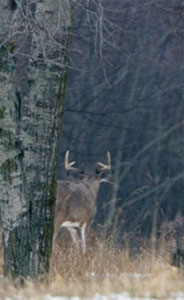
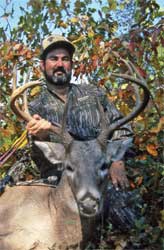
Pinpoint a buck like the one on the right, and hunt him as often as possible.

There is only one good thing about the hot weather we've had recently. It helps the crops grow, providing we get some rain, and that in turn feeds the critters we hunt during the fall and winter. Whenever the temperature reaches 80 degrees, it's too hot for me.

The heat puts me into a daydream world where for a time I dreamed of deer hunting. Mind you, in my dream, instead of hot weather, the temperature was a more moderate 60 degrees in early October. A northwest wind was kissing my nose, and I sat 15 feet up a cedar tree 10 yards downwind of where two heavily used deer trails merged.

It's a spot I've hunted on and off for many years, and one where I've taken several good bucks. It gets hunted only two or three times during the fall, but whenever I sit there, I see bucks drifting past at a slow pace.

Genuine hotspots are really hard to find so don’t over-hunt them.

It's one of those spots located midway between the bedding and feeding areas, and it is in heavy cover. There are only two secure ways in and out of it, and if it is hunted more often, the deer will pattern the hunter rather than the other way around.

As I doze, between innings where the Detroit Tigers should have won but lost, my dream has me kicked back in my ladder stand. The stand is rock solid, doesn't squeak or make any noise, and I watch young fawns and their mother amble past.

This spot is perfect for a northwest wind, and the two trails meet just 10 feet upwind, before the single trail kicks a bit to the left. This gives me an easy quartering-away shot.

The tree has been doctored up a bit. A few low-hanging cedar boughs were cut off a private-land tree far from this stand, and brought into the area for the sole purpose of adding a bit more cover to a perfect tree.

Look for those spots where  a deer could see motion and brush them in.

Long before I ever hunted it there was a noticeable gap between boughs that would skylight me. That gap was soon filled in with cedar boughs, and then two more boughs were placed four feet over my head and across in front of me. Two boughs were lashed in place, and it provided shade from above, and I could draw my bow without hitting them. It also put me more into the shadows, which is always good.

More boughs were added behind me, and they were tied in place with twine. The deer always came from behind and to my left. and two more boughs hung down to my immediate left. They were tied in place so I could see past them but the deer couldn't see me.

The stand was chained in place, and all chain and straps were wrapped in camo-colored duct tape. Two other boughs blocked off my right side, and there was only one place where I could shoot. It was all I needed.

It was slightly to my left and going away. The deer would walk past, never knowing I was there, and seeing the bucks when they were immediately to my left gave me 10 seconds to come to full draw, aim and release when the buck was in precisely the right spot.

Perfect stand placement with have deer walking past at a quartering-away angle.

The tree stand was camoed so well that over the years I've had several black bears walk in while hunting it. Every bear spotted from that stand was heard before it was seen, and the last one could be heard coming for 50 yards.

The woods were dry and enough alders and a few popple trees were around to litter the ground with leaves. During wet years, the deer and bear came out of a water-filled swamp, sloshing water with every step.

The last bear came in, stood behind my tree, moved slightly to the right of my tree, turned and walked between the tree and the ladder and out into the open. It stood quartering-away at 10 yards, and although I didn't have a bear tag that year, there is no law against drawing down on a bruin providing you don't shoot.

I didn't shoot, but drew twice on that bear without it being alerted to my presence. Deer have never crossed from my right to left side to reach the same location. They walk in a straight line, and two of the bucks I've taken from that tree were spined almost directly below me. They died instantly and no trailing was required.

The dream ended as the other team scored again, and a roar went up from the crowd. Detroit's bullpen didn't help that night. The Tigers lost a game they never could have won.

My dream was short and sweet, and it’s these little tidbits of deer hunting memories that will keep me going until the deer season opens Oct. 1, still a bit more than two months from now. I'll soon be counting down the days, and it can't come any too soon to suit me.
  

Posted via email from Dave Richey Outdoors

Saturday, July 24, 2010

Which is best? Sitting inside or out?


Today’s blog asks two questions, and to answer them would be to give the right answer to one person and perhaps the wrong answer to another. You may wonder why.

This person obviously chooses a tree stand but you don’t have to.

Is there a best way to bow hunt if we consider sitting outside in the fresh air or inside an enclosed coop? I don't think so.

There are many people who wouldn't be caught dead bow hunting from an enclosed coop, much less an elevated one. On the other hand, many hunters once they get a bit older, favor the coop because they don't have to worry so much about the wind. A coop is decidedly warmer once the north winds howl, and the snow and temperatures fall.

Are there advantages of one hunting style over the other? One could make a valid argument for spooking fewer deer from a coop, but it's still possible to scare off deer from inside an enclosed coop.

Basically, hunters who sit in a tree stand, out in the open, quite possibly may enjoy the hunt more simply because they must be downwind of the traveling deer and they must remain motionless. They can't get away with scratching their nose or ear, and any sudden wind shift can ruin their hunt. There always is the possibility of an arrow clipping a twig on the way to the ground, and it will miss or wound the deer.

Elevated coop hunters must keep the window closed until it's time to take a shot. Leave the window(s) open, and the odds of being winded by an alert deer increase dramatically.

Coop hunters must keep windows closed and cover until it’s time to shoot.

The coop hunter has other things to consider. Is there a covering over the window behind him? If there isn't, a bow hunter that moves will be quickly spotted by an approaching deer.

Wood and weather can be the cause of another problem for the coop hunter. The shooting window may warp a bit, and make it nearly impossible to open a sliding window. A hinged window is just as bad because the hinges can squeak if they aren't oiled.

Many hunters who hunt from an elevated coop are delivered to the ladder by someone on an ATV or a pickup truck. They jump out, scurry up the ladder, and once they are inside, their transportation pulls away and returns to pick them up at dark. The sound and motion of the vehicle can move deer away, but the animals usually are accustomed to vehicle noise and move away from it. Ten minutes after the vehicle pulls away, the deer come back.

That is usually not the case for the tree stand hunter. He doesn't want exhaust fumes on his clothing, and doesn't want any vehicles near his tree. He eases into the area, climbs into the stand, and sits back to await deer movements. He wants a quiet environment where he hunts.

The pros and cons of each one have been briefly discussed. The key now is to make up your mind. It can be difficult at times.

Me, I favor the enclosed coop more now than I did 10 or 15 years ago. The cold seems to bother me a bit more now that I'm 71 years of age, and frankly, a coop can offer more creature comforts.

Coops are warmer and offer more creature comforts.

Some coops have swivel chairs, and I like the idea of a nice back rest. Many trees, after an hour or so, seem to grow stubs that stick you in the back, butt or ribs. A coop, on the inside, is big enough where one can stand or sit and remain motionless.

I've spent many years hunting from a tree stand, and I still enjoy it until the cold starts to seep through my clothing. I like the unobstructed view available from many tree stands, and sitting still and arrowing a buck from a tree stand is a feat, regardless of one's hunting preferences.

Over the course of the deer hunting season I will hunt from an elevated coop, a tree stand and a ground-level coop. Each year I'll shoot a buck or doe a stand, and all types bring me joy.

Choosing which type of stand suits your needs is important.

So, the choice is where to bow-hunt and which type of stand location to use is every bit as personal as your favorite color for the family vehicle. All have assets, and it's possible to find something wrong with each one, but one thing is for certain:

Come Oct. 1, when the bow season opens, I'll be in one of the three types of stands. I'm not certain at this time which one it will be, but know this: a bad day of deer hunting is twice as nice as a good day at work.

Posted via email from Dave Richey Outdoors

Friday, July 23, 2010

Never hunt angry


If you trust nothing else, remember this: hunting success can always get worse. Success depends, in large part on wind, weather conditions, hunting pressure and hunter skills. It's easy to control hunting pressure in some areas, but other people often must hunt on federal or state land. Wherever we hunt, we cannot change the wind or weather conditions.

I had to conquer anger, wait for the wind to die, and in walks this nice 8-point.

So our hunts may have been planned for a week and the weather doesn't cooperate. We spit and sputter, gripe and complain, and then we go out and hunt, and act madder than a hornet.

That can be a very big mistake. And it’s one we all have made in the past.

Hunting angry doesn't help a thing. If anything, being mad about something we can't control just messes up our hunting judgment. It makes us make even more and often costlier mistakes.

We just goof up. We get upset, and that makes us feel worse, and we begin to fidget. We move around, make the occasional noise, and any deer that may have come to us might see a movement and be long gone.

Som why get mad? I've hunted deer for too long, and over more than five decades, have become somewhat philosophical about bad weather. Learn to take the good with the bad, and think happy thoughts rather than about how angry you are. That line of thinking only makes us madder, and that only increases our problems.

Don't sweat the small stuff. Instead of focusing on the things  we can't control, change your thoughts and think about those things that can be changed.

Change those things that can be fixed, and don’t sweat the small stuff.

Climb a tree, if need be, and set in an elevated coop and do whatever can be done to beat the wind. Or ... do what some hunters do and that is to go home and take a nap. There is always tomorrow for many hunters.

Taking the good with the bad doesn't always mean that a bad day can't turn productive. I've sat out, and had the wind ripping leaves off the trees, and about 30 minutes before shooting time ends, the wind gusts taper off and die away to nothing. It then becomes whisper quiet, so quiet you are soon wishing for a soft breeze.

If some light rain falls when the wind dies, there can be some very good deer movements. It seems as if the deer are happy to see the falling rain.

Deer caution often is more likely when they move after a strong wind and rain storm. Hunters must learn to keep their cool,
and to take the weather conditions as they come even though we seem to be have more bad weather in the early season than ever before. Is this part of the global warming trend. If so, deer and hunters will soon get used to it.

Last-minute weather changes have paid off for me more times than I can remember. Heading in to the house, and skipping the evening hunt, often means hunters quite possibly will miss the finest 30 minutes of the day as the wind and rain dies.

The weather often changes in that 30 minutes after sundown. Wait for it.

It's far better to consider the weather, whether good or bad, as part of the deer-hunting experience. Such last-minute weather changes don't happen often enough that we can plan around them, but they can pay off often enough that they should be one more trick in our deer-hunting repertoire.

It's an awesome feeling when we've rode out the bad weather, and than see the last-minute change that we had hoped for. We no longer are mad at the weather, and things start looking up. When the bad weather suddenly changes, and the good hunting weather moves in and the deer start to move, we feel blessed as we sit in a ground blind or tree stand.

Look up at the sky, nod and  say "thanks," and get ready for a nice buck to step out of heavy cover and be within easy bow range. Just remember this advice as long as you hunt deer: it never pays to hunt angry.

Posted via email from Dave Richey Outdoors

Thursday, July 22, 2010

Happy Birthday to me


It's difficult to believe I've been drifting through this outdoor life for so long. My life has truly been blessed with not much money but the opportunity to choose my life style, and live life (within reason) on my own terms.

This photo of George & a whitetail buck taken in Texas & a ghostly image of him.

There has been heartbreak, deaths (including my father, mother and twin brother plus both sets of grandparents), and the death of one son at childbirth, and through it all, an overwhelming love for fishing and hunting has helped rule my life. I've fought long and hard for our natural resources, and that hasn't always been an easy task although it has been, for the most part, a thankless one.

My writing career began 43 years ago with a sale to Sports Afield magazine on my first try, and my first six free-lance sales were easy. Then it became much more difficult because I'd used up my best story ideas.

It took time, but learning to recognize good stories, knowing how to edit my copy, and how to out-work other writers became my stock in trade. I worked solo from 1967 to 1976, and when my wife Kay and I married in 1977, my income doubled the first year because of her help.

We traveled six months a year (May through October), and wrote magazine copy and outdoor books the other six. The output of magazine copy was prodigious, and unparalleled by most outdoor writers. I once wrote nearly 400 full-length magazine articles and three full-length books each year for two years in a row. I could see potential magazine articles that other writers couldn't see, and capitalized on it.

For years, a near-photographic memory allowed me to remember what had been published each month in several different magazines over a five-year period. I knew when a certain type of article was needed by a magazine, and I'd propose the article a year in advance.

Many magazines considered me a "hole-filler," a person who could write a feature-length article, based on my experiences, on demand. If Joe Blow wrote a poor story, or didn't meet the deadline, they came to me and I filled their hole. Besides, such stories always paid more money.

More than 7,300 published articles ran in more than 300 different magazines.

Our travels crisscrossed North America. We'd be in Quebec one week, and on the Kentucky-Tennessee border the next week. Get home, shower and wash clothes, and then we'd be off on another adventure. I've been from Mexico to Baffin and Victoria islands in Canada's Northwest Territories, and from Hawaii east to North and South Carolina and northeast to Maine, New Hampshire, Vermont  and Pennsylvania.

We've suffered through miserable trips where the fishing or hunting didn't pay off, been lied to by guides, left up on an Idaho mountain by an idiot guide, had guides who were trustworthy and keen at their job, and guides who stole some of our gear.

One yoyo stole a whitetail buck I'd killed at gunpoint, and I've faced down black and grizzly bears at spitting distance. I fell off a fire escape while taking photos and broke my back, and have been attacked by a pack of wild dogs. I stupidly jumped into quicksand once, and have tripped and floated, upside down and backwards, through many river holes. I've been in countless storms in a small boat, and managed to make my way to shore without becoming a statistic although one trip down Quebec's George River in a storm left me with a broken rib and busted nose.

There have been some of the nicest people in the world who have worked with me, and a few who seemed certifiably crazy and didn't warrant a second chance. I've never been on a trip where I wasn't welcome to return sometime in the future, and second invites often are difficult to attain in this business.

I've filled camps and lodges for a year with some of my stories, and other stories just never seemed to click with readers. There is no predicting what readers will like or dislike, and this weblog is a good example. Some will find it interesting, some will consider me a braggart, and others might wish I'd written about a fishing hotspot they wanted to learn more about. Others chewed my tail for writing about what they consider their private hot spot.

A 43-year career spent doing what I wanted to do is  an idyllic way to spend my life.

We lost my twin brother George almost seven years ago, and my life hasn't been the same since. I think of him daily, recount our thousands of fishing and hunting days together, and wish they hadn't ended when they did. He had multiple forms of cancer, and when he died, I was happy for him because his battle is over. It's been tough on me since.

Now, I fish and hunt whenever I wish, and look to buy books on fishing and hunting from my readers. I enjoy short emails from readers, and answer as many as time permits, but an average of nearly 100 emails cross my desk daily. Many I won't answer because nothing about them apply to me or my website.

My father passed away almost four years ago, and his life was very difficult toward the end. Kay and I now look forward to future fishing and hunting trips together, going places where we've never been, and loving life, the outdoors and each other.

So, if you'll excuse me now, what remains of the Richey Clan, are going to  welcome this cantankerous old codger into his 71st year. So, with a hearty thank-you to those who have passed on birthday wishes, and to those who could care less, I bid you a fond adios for another day.

Stay well, and take care of each other.

Posted via email from Dave Richey Outdoors

Wednesday, July 21, 2010

The sounds of silence


It's quiet. There is no noise. The phone isn't ringing, no one is buzzing the door bell, and right now, it is a world without sound.

I sat there thinking about silence and what it means to me. It is a cedar swamp just before dark, as I count down the waning minutes to the end of legal shooting time while hoping a bruin will walk past me with that head-swinging gait before the day is done.

Outdoors, the sounds of silence precede most of the action.

A few days ago, as I sat trying to puzzle out where the big Platte Lake walleyes seem to have disappeared, and had a very strange but wonderful thought.

It's quiet. There is no noise. The phone isn't ringing, no one is buzzing the door bell, and right now, it is a world without sound.

I sat there thinking about silence and what it means to me. It is a cedar swamp just before dark, as I count down the waning minutes to the end of legal shooting time while hoping a bruin will walk past me with that head-swinging gait before the day is done.

It is a tree stand in October, and a hush has fallen over the land as dark clouds gather to the west, the first indication of a coming storm. It seems as if everything is holding its breath, and there I sit, reveling in the sounds of silence.

Silence is that hush we all hear and feel as we step in front of a pointer. We know the thunderous flushing roar of a ruffed grouse is imminent, but there is that split-second when all is still. It's a wonderful moment in time, and it's something to savor.

There is no better evidence of silence that when fishing brown trout during the Hex hatch. The fish has been timed by the soft hissing sips as the big trout lips a big mayfly off the surface. We know in five or 10 seconds the trout will rise again for another sip, and we hope in that momentary slice of silence, that the feeding brown trout will take our imitation rather than a natural drifting along beside it.

It happened last year, when I worked a gobbler, it came slow and cautiously to the call. He often gobbled or double-gobbled, but it's those long seconds or minutes when the bird moves but doesn't gobble, that put us on full alert. The silence is exquisitely wonderful.

Picture that gobbler coming to the call with an occasional double-gobble.

We often can see the bird coming, white head glowing in the woods 100 yards away, but an awesome silence has dropped a muffling blanket over the woods. The bird disappears from sight, and you know he is circling and on his way, and yet you can hear a pin drop.

And then, ever so softly but it seems so intense and loud after the silence, comes the "hhmmm-phfft" as the gobbler drums and spits nearby. You know the bird is close because this barely audible sound is often overlooked and unheard, and then more silence. The bird is moving, you are sitting still, and suddenly, there he is over your shotgun barrel. A slight adjustment, a soft click as the safety is clicked off, and then the blast of a 3-inch 12 gauge shotgun.

There may be silence again, but the ringing in your ears from the shotgun discharge has caused its own noise. Slowly the hearing returns to normal, and you kneel, in silence, over a gobbler that you just killed and examine the beautiful feathers, the full beard, and those spurs.

Silence is sitting on shore, early in the spring, and watching a buck and hen steelhead spawning on a shallow gravel bar. There is an intricate underwater ballet going on, and the hen and buck roll on their sides as she emits a golden stream of eggs and he a white jet of milt, and then the ballet ends. There isn't a sound made to draw one's attention to this underwater tableau, and there is little thought of hooking that male fish.

Watching salmon or steelhead spawn is really quite exciting.

This is a ritual as old as the many generations of steelhead before it, and only rarely is there an audible splash. It is like watching an old silent movie, and that makes watching this scene much more interesting. The same scene is played out many time during the fall as salmon spawn and that brings to mind the old saying: Pacific salmon die childless, and are born orphans.

Too many folks surround themselves with noise. Me, I much prefer silence to noise. I want to hear no man-made noise, and if as a buck eases through the woods and crinkles a fallen oak autumn leaf or steps on a brittle twig, I want to hear and experience every moment of it.

It's the silence of nature that captures my soul. The unexpended flush of a woodcock twittering up through a tag alder run is my kind of noise. If I can't or won't shoot, the silence fits me as perfectly as a hand in a warm glove. It is the one thing about fishing and hunting that I've come to seek, to nurture while it is there, and to remember when it is gone.

Posted via email from Dave Richey Outdoors

Tuesday, July 20, 2010

Deer hunt new deer areas this year


Deer hunters are creatures of habit. Many staunchly resist change.

Many of you will sit on the same stump, in the same ground blind or stand along the same runway, as they did 10, 15 or 20 years ago. It's difficult for many deer hunters to break their old habits, and some deer hunters never try. It becomes a tradition to again hunt where a buck was killed sometime in the far distant past.

Don’t wonder any more. Try something new.

They often wonder: If it was good 20 years ago, it should be a good spot now. Won't it?

Well, maybe yes but probably not. That tradition of returning to hunt, year after year, at the same spot has probably saved the life of more bucks than poor shooting or a lack of preseason scouting.

Sadly, clinging to a traditional spot, even when it no longer is hot, is a lesson in frustration. It also leads to fiery claims by skunked hunters that the Department of Natural Resources' reports of abundant whitetails are inflated.

That is no longer the case. For two years in a row, Michigan deer hunters have taken fewer deer than the previous year. The reason is there are fewer deer. In many areas antlerless deer tags are being cut.

Spend the next two months scouting new hunting areas.

For most hunters, the next two months of scouting activity may prove the errors of your previous ways. Perhaps change is the one thing that can help you hang a deer on the buckpole this year. The trick is to maximize your scouting efforts before the bow season opens Oct. 1.

Perhaps this season is the time to cast aside the traditional old haunts, and give more thought to trying a new area. Too many people never realize that food and habitat conditions can and do change, and if the landowner doesn't do something to make the land produce more food and offer more cover, the deer will move elsewhere to a sppot that provides what they want. It's as simple as that.

Deer are animals of farmland and woodland. Granted, some deer live in deep forest and many live on farms, and that's a fact of life in this state.

If you agree that a new hunting location should be tried, where should hunters start in their search for a new spot to change their luck?

Hunters can start with the DNR. They keep track of deer trends, and know which counties have the highest deer numbers and which ones produce the largest . The county extension agent often deals with farmers and other landowners, and they also can help.

Determine if you want to hunt the Upper or Lower Peninsula, but if you've read hunting reports elsewhere about deer hunting prospects, the U.P. is not the place to go. The area with the most deer is south of an east-west line from Bay City to Grand Rapids.

Spend more time scounting when you have time off. Make your own luck.

Start asking questions. Learn which counties produce big bucks and lots of deer, and learn why deer numbers are high in some areas. Determine the availability of state or federal lands nearby, but both state and federal land is quite sparse and overhunted in the southern Lower Peninsula.

Spend some time scouting two or three different areas during the next two months. Determine which ones offer the best combination of land, cover, deer foods, bedding cover and access. Walk around the land, and check for well-used deer trails leading from bedding to feeding areas and back.

Look for buck rubs ing September and deer scrapes in October. Check barbed wire fences for bits of hair that indicate deer passing through the area.

Talk with nearby landowners to determine their idea of hunting pressure. Often, in agricultural areas, the major hunting pressure is from the landowner and his or her family and close friends.

Consider the possibility of leasing hunting rights. Fees vary depending on length of the lease, property size, whether it is ideal or marginal deer habitat, and what it offers the hunter. Ideally, look for something close to 50-50 between swamps or wooded areas and farm fields.

No one owes today's sportsman anything in terms of hunting private property. Many farmers manage their land to produce big bucks, and crop lands are rotated and some timber is cut. Doing so helps maintain good hunting, but it's a never-ending learning process to keep up with where whitetails travel after crop rotation and timbering takes place.

I spend many hours every day at this time of year scouting my land, and others where I have permission to hunt. Deer habits change, food supplies change, and hunting pressure can make deer seek quieter areas. A hunter doesn't know these things unless they spend time in the field on a regular basis. Using binoculars and a spotting scope can be an asset.

Public lands feature too many hunters in narrowly confined areas, and the hunting pressure is too high. Food supplies are far better on private land than state or federal lands. Private property holds deer, and, in many areas, it supports more whitetails than public land. For this reason it's easy to understand why more people lease hunting land even though the price of leasing acreage is rising.

Whether a hunter leases private land, hunts on public land, or manages to wangle an invitation from a landowner, scouting is a never-ending problem. Hunters who don't scout old land or new land run a major risk of not being successful.

Knowing what lies over the next ridge and why deer travel one trail and not another is why some sportsmen bag whitetail bucks year after year, and why some hunters never tie their tag to the rack of a good buck.

Posted via email from Dave Richey Outdoors

Monday, July 19, 2010

Wishing for the right shot


There are times when I decide ahead of time to shoot a buck. There also are days when my mind is made up to just study the deer, see how they travel and enjoy sitting in a tree stand. On the occasional day, if the right deer shows up, I make an instantaneous decision to shoot or not shoot.

Harold Knight of Cadiz, Kentucky waited patiently for this buck to turn.

I was sitting out in a tall pine tree a year ago, and ambivalent about whether to shoot or not, and it depended on whether a good buck put in an appearance. Sometimes I will go days on end without seeing a good buck, and other times, the woods seem to be crawling with them.

A buck came across a small field, heading in my direction, and I knew from past experiences that if he stayed his course, he would pass under my stand and offer a quartering-away shot at close range.

Some Irish guy -- by the name of Doyle, Murphy or something like that -- has developed a bad reputation for messing things up. Little did I know that he would be riding my tree stand tonight with me. And when he makes up his mind to create trouble, all kinds of things can go bad.

Two does and a trio of fawns came out of nearby heavy cover, and headed my way. They appeared to be on a collision course with the 9-pointer. Sure enough, there was a gathering of the deer clan behind my tree as the five does and fawns and the single buck moved out in front of my tree to mill around.

Learn to pay attention to all deer, not just the buck, and wait for your shot.

I tried to pay the most attention to the buck and what he was doing, but  it became necessary to watch the does as well. Many of us have become so intent on shooting a buck that we forget the antlerless deer standing nearby, and a doe or fawn steps in front of the arrow intended for a buck.

The buck stood, upright and motionless, and quartering toward me from a 10 o'clock position. The wind was blowing from the buck past me, and the does and fawns seemed willing to mill around before moving on.

I shoot bucks that are broadside or quartering away, and have learned over many years to wait for one of these shots. If it doesn't present itself, you wait some more. More deer are lost because of sloppy shooting and shots taken at a low-percentage angle, and the result is a wounded deer. It's far better to wait for the shot you want.

The buck turned as it saw a small buck in the distance, and opened up the angle I wanted, but just as I began my draw, the buck turned back and presented a straight going-away shot. It's another shot I won't take.

One of the does walked past the buck, and he hooked at her, and she shied away. A doe fawn came up on the other side of the buck, and one hard look sent her scampering away.

The buck turned again, and quartered toward me from a different angle. He offered every possible low-percentage shot there was, but wouldn't turn and open up his chest cavity.

Pay attention to the following statement.

Bow hunters with very little experience should consider the wisdom of the following statement: Never take a shot the buck (or doe) offers; wait for the shot you want or don't shoot. It's simple advice but many people count on luck rather than skill to put the arrow in the right spot.

Patience is a virtue, and none are more noble than waiting for a killing shot to offer itself, and then being capable of putting the arrow where it must go. The patience required to sit like a bird-dog on point, and wait and wait for a deer to turn must be experienced.

Hunters need self control to wait out a buck. These deer stuck around within easy bow range for nearly an hour. Twice the buck offered a good shot but he held that position for only a second or two, and it's impossible for someone to stay at full draw for 60 minutes.

Each time he got to that magic spot, he would spin and swipe at a doe or fawn that had come too close. Finally he turned, and as I came to full draw, a doe walked up and whispered in his ear.

He stood, as still as a mannequin, and she stood next to him. I slowly eased the bow back down and watched. Soon, the buck and doe turned 90 degrees as if they were dance partners, and walked off side-by-side and directly away from me.

There would be no shot taken that night. The deer had again won the eternal struggle between hunter and hunted, and on this night, they didn't know anyone was nearby and waiting anxiously for a clean shot.

There will be other nights, and we'll see how that one plays out. Any hunt with a buck out in front of a bow hunter is a night to cherish ... even if we never get a shot.

Posted via email from Dave Richey Outdoors