Showing posts with label recoil. Show all posts

Monday, April 16, 2012

Ever taken a gobbler with a muzzleloading shotgun?

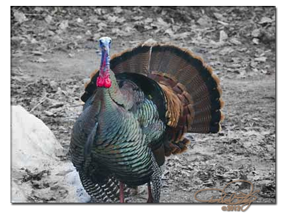
A nice beard on a very nice spring gobbler

Nice bearded tom turkey
Blackpowder and spring turkey hunting are like soup and sandwich; they go together - just keep the moisture out of the mix.
photo Dave Richey ©2012
Several years ago I killed a 24 1/2-pound long-beard gobbler while hunting in Iowa. My firearm of choice was a Knight muzzleloading shotgun with 150 grains of Pyrodex and two ounces of copper-plated No. 5 shot.

My first day of hunting with Tony Knight saw us spook a pair of roosted gobblers while opening a rusted and squeaky farm gate. Later, as we proceeded to look for unspooked birds, we stopped and began to call.

A nearby gobbler answered, walked right down the edge of an open field in broad daylight, gobbling his brains out, and one shot at 40 yards took care of him.

An easy shot with a muzzleloading shotgun

Mind you, 150 grains of Pyrodex and a two-ounce load of shot, produces a good bit of felt recoil. It wasn't excessive, but 100 grains of powder suits my moods much better.

The load isn't the issue here. I'm trying to decide in advance of April 30 whether to try with a muzzleloader this spring during my hunting period. It worked well for me three years ago, and it was great fun, and the Knight muzzleloading shotgun is very tightly choked, and it works like a dream when shooting at 40-50 yards.

Mind you, I don't like to shoot gobblers that far out unless I can boost the downrange velocity without scattering bird-shot all over the place. I have no qualms with shooting a 50-caliber front-loader with an extra-full choke  and two ounces of shot and three Pyrodex 50 grain at that range.

Five years ago, I sat down, and began calling an hour after daybreak, as rain and snow fell in a deluge. Fifteen hens and gobblers filed past me at 20 yards. The two big gobblers in the bunch had several hens between me and them.

Moisture in the barrel turned to sludge when mixed with snow

They disappeared from sight, and I waited another 30 minutes for those birds to move off, yelped once, and here comes a single gobbler running across an open field. He ran every step of the way until he was 30 yards out, and then he stopped, raised his head and began looking around.

I had a red-dot sight on my muzzleloading shotgun, and put the dot where his head and neck meet, and pulled the trigger. A sharp pop sounded, and the gobbler ran off like the hounds of hell were eating at his tail feathers.

The old adage of "Keep Your Powder Dry" came to mind, and I walked out to the car and drove 10 miles home. The muzzleloader was taken apart, the saboted shot cup and shot, and the black gooey stuff that used to be Pyrodex pellets, was pushed out the barrel. I had forgotten to put a latex thumb from a rubber glove over the muzzle to keep the rain out while i quickly set up my one-man tent blind.

What works is patterning a regular or muzzleloading shotgun

I really wanted to take another gobbler with the muzzleloading shotgun, but I have a Remington Model 870 pump 3-inch magnum 12 gauge shotgun that looks as it has been used to sink fence posts, but the shotgun is over 30 years old, and it shoots copper-plated No. 5 shot very well.

It comes with a sling, as does my muzzleloader, and it has produced gobblers from Alabama to Michigan. When the trigger is pulled, the bird dies. With it, my choice is to shoot birds at 30-35 yards. It has a full choke, but not the extra-full turkey choke found on many muzzleloading shotguns.

It is like an old friend. The stock fits well against my cheek, and nestles comfortably against my shoulder, and my good right eye lines up easily with the fiber optic sight.

The 12 gauge is a bit lighter than a muzzleloading shotgun to carry, and on a cross-country hike to find gobblers after the initial dawn action, that regular shotgun can be a big point in its favor. However, the muzzleloader has an extra-tight choke, and can easily kill birds at 50 yards if I choose to take a shot at that distance (which I've only done once). Make a decision which one to use and pattern it well.

Either firearm is fine by me, and in all honesty, shooting a gobbler isn't what tugs me gently into the turkey woods before dawn. It is the opportunity to attempt calling another bird within easy shotgun range. Sometimes it works and sometimes it doesn't, but for me, being there and having a gobbler circle me at dawn is what my hunt is all about.

Pulling the trigger and killing the gobbler is nothing more than a heavy layer of frosting on my turkey-hunting cake.

Sunday, January 29, 2012

Ever taken a gobbler with a muzzleloading shotgun?

Make certain the firearm is properly patterned for a gobbler

big-gobbler
Several years ago I killed a 24 1/2-pound long-beard gobbler while hunting in Iowa. My firearm of choice was a Knight muzzleloading shotgun with 150 grains of Pyrodex and two ounces of copper-plated No. 5 shot.

My first day of hunting with Tony Knight found us spooking a pair of roosted gobblers while opening a rusty and squeaky farm gate. Later, as we proceeded to look for unspooked birds, we stopped and began to call.

A nearby gobbler answered, walked right down the edge of an open field in broad daylight, gobbling his brains out, and one shot at 40 yards took care of him.

An easy shot with a muzzleloading shotgun

Mind you, 150 grains of Pyrodex and a two-ounce load of shot, produces a good bit of felt recoil. It wasn't excessive, but 100 grains of powder suits my moods much better.

The load isn't the issue here. I'm trying to decide in advance of April whether to try with a muzzleloader this spring during my hunting period. It worked well for me three years ago, and it was great fun, and the Knight muzzleloading shotgun is very tightly choked, and it works like a dream when shooting at 40-50 yards.

Mind you, I don't like to shoot gobblers that far out unless I can boost the downrange velocity without scattering birdshot all over the place. I have no qualms with shooting a 50-caliber frontloader with an extra-full choke  and two to 2 1/2 ounces of shot and three Pyrodex 50-grain for shooting at that range.

Five years ago, I sat down, and began calling an hour after daybreak, as rain and snow fell in a deluge. Fifteen hens and gobblers filed past me at 20 yards. The two big gobblers in the bunch had several hens between me and them.

Moisture in the barrel turned to sludge when mixed with snow

They disappeared from sight, and I waited another 30 minutes for those birds to move off, yelped once, and here comes a single gobbler running across an open field. He ran every step of the way until he was 30 yards out, and then he stopped, raised his head and began looking around.

I had a red-dot sight on my muzzleloading shotgun, and put the dot where his head and neck meet, and pulled the trigger. A sharp pop sounded, and the gobbler ran off like the hounds of hell were eating at his tail feathers.

The old adage of "Keep Your Powder Dry" came to mind, and I walked out to the car and drove 10 miles home. The muzzleloader was taken apart, the saboted shot cup and shot, and the black gooey stuff that used to be Pyrodex pellets, was pushed out the barrel. I had forgotten to put a latex thumb from a rubber glove over the muzzle to keep the rain out while i quickly set up my one-man tent blind.

What works is patterning a regular and muzzleloading shotgun

I really wanted to take another gobbler with the muzzleloading shotgun, but I have a Remington Model 870 pump 3-inch magnum 12 gauge shotgun that looks as it has been used to pound fence posts, but the shotgun is over 30 years old, and it shoots copper-plated No. 5 shot very well.

It comes with a sling, as does my muzzleloader, and it has produced gobblers from Alabama to Michigan. When the trigger is pulled, the bird dies. With it, my choice is to shoot birds at 30-35 yards. It has a full choke, but not the extra-full turkey choke found on many muzzleloading shotguns.

It is like an old friend. The stock fits well against my cheek, and nestles comfortably against my shoulder, and my good right eye lines up easily with the fiber optic sights.

The 12 gauge is a bit lighter than a muzzleloading shotgun to carry, and on a cross-country hike to find gobblers after the initial dawn action, that regular shotgun can be a big point in its favor. However, the muzzleloader has an extra-tight choke, and can easily kill birds at 50 yards if I choose to take a shot at that distance (which I've only done once). Make a decision which one to use and pattern it well.

Either firearm is fine by me, and in all honesty, shooting a gobbler isn't what tugs me gently into the turkey woods before dawn. It is the opportunity to attempt calling another bird within easy shotgun range. Sometimes it works and sometimes it doesn't, but for me, being there and having a gobbler circle me at dawn is what my hunt is all about.

Pulling the trigger and killing the gobbler is nothing more than a heavy layer of frosting on my turkey-hunting cake.
Wednesday, November 04, 2009

The Challenge Of Handgun Deer Hunting

The mood crept up on me like a thief in the night. All of a sudden, there it was. A new and different way to hunt deer, and admittedly, I'd fallen into the rut of just bow, muzzleloading or rifle hunting for deer. I needed a change of pace, a break for a year from these more traditional hunting methods.
Handgunning for whitetails isn't all that different except a hunter  must be, within reason, close enough to kill the animal with a bullet large enough to effectively do the job.
At the time I had three handguns that would do the job nicely. One was a Thompson/Center Contender with two different barrels that offered me a choice. One barrel was a .30-30 and the other was a .44 Magnum.

Making a choice between handguns

I also had a .44 Magnum Smith & Wesson revolver, and I was a pretty good shot with it. I thought about putting a scope on it, and decided I'd rather use iron sights and keep any shots within 50 yards.
The T/C Contender was a single-shot pistol. The hammer had to be manually cocked, and it's true I could have used a scope on it but doing so didn't make me feel quite right. I had time to practice shooting at 50 yards but chose not to put a scope on either handgun.
A .44 Magnum is a powerful handgun, and with a 240-grain hollow-point bullet, it would do the job. The recoil when shooting this revolver is substantial but I'd had it ported by Mag-na-Port of Mt. Clemens, Michigan, and that tamed it down considerably.
I could shoot a dozen rounds a day, and eventually got to where I could put five rounds into a two-inch circle with iron sights. It was plenty good enough if I had time to cock the hammer, aim and squeeze off a controlled shot.
The .30-30 was a different story. Shooting it was a far sight different than shooting the .44 Magnum revolver. The revolver had also been ported, which helped reduce felt recoil and eliminate some of the muzzle jump.

Getting used to heavy recoil

The .30-30 was another story. The recoil from this cartridge came back more into the palm of my hand rather than back and up, and 10 shots of practice each day was all I wanted to handle. In fact, it was more recoil than I was comfortable with.
I found myself much more accurate with the .30-30 at 50 yards although the felt recoil seemed much more punishing. It took several weeks to get used to it. A pair of thin leather gloves helped ease the felt recoil.
The practice continued through the summer, and the more I shot, the better I became. My eyes were good back in those days, and if I could spot a buck at 50 yards, I knew that killing the animal would be easy.
Shooting the T/C Contender for three months enabled me to condition myself to the felt recoil of the 30-30, which still seemed to be much more than with the .44 Magnum. The Nov. 15 firearm opener should be a snap if everything went as planned.
Opening day came that year with some snow on the ground and partly cloudy skies. My stand was well positioned 40 yards downwind of where three active deer trails came through a tag alder swale, spread out, and gradually came back together to neck down into a funnel between two heavy patches of thick cover.
It was a coin flip as to which handgun I'd use, and finally settled on the T/C Contender with the .30-30 barrel for the opening day. I had two extra cartridges in my pocket, but a single-shot handgun doesn't offer fast reloading. One shot means taking enough time to get the right shot and then nailing it.
I'd been setting on stand for two hours. It wasn't a cold day, and dozens of does had trickled past but I wanted a buck with the handgun. It didn't have to be a wall-hanger because the area I was hunting didn't produce many big deer.

Here comes my buck

Soon a young buck was seen easing through the cover. He came down one of the deer trails, and it gradually merged with the other two at 40 yards. The buck stopped where all three deer trails came together, turned broadside and looked back over his off-side shoulder at some other deer.
Satisfied, he turned and took one step. The sight picture looked perfect, and I took up the last ounce or two of trigger slackl with the sights behind his front shoulder and shot.
The shot seemed excessively loud that morning but my eyes continued to track the animal. I could see the red stain behind his front shoulder, and after 50 yards he crashed to the ground.
Later,  I shot another buck with the .44 magnum revolver, and also shot a wild boar with the T/C and the .30-30 barrel, and a javelina with a 9 mm pistol. I once shot a black bear with the .44 Magnum revolve. It's not that I don't enjoy hunting with a handgun, but now I basically just shoot paper holes to maintain some form of consistent practice.
Can handgun hunting be a challenge for you? Of course it can, and I know a number of people who hunt all the time with a handgun. Who knows, I may go back to it again one of these years. If Michigan hunters plan to hunt deer with a handgun this season, they had better start  practising.
But, for me, I'm still locked into hunting with a bow, centerfire rifle or muzzleloader during those respective seasons. And, although handguns are fully capable of killing game far beyond my 50-yard capabilities, long-range handgun shooting is not for me.
It may be your cup of tea, and if so, I know why you enjoy it. But after a lifetime of bow hunting, it still gives me a big kick to have game within 20 yards when a shot is taken. Up close and personal is what bow hunting has always meant to me.