Showing posts with label fishing and hunting. Show all posts

Sunday, August 29, 2010

I missed the boat on this one


A friend, who keeps track of things much better than I, emailed me recently with kind words of congratulations.

My mind hurriedly ran through all the obvious things: my retirement, 32 years of marriage, good kids, gobs of grandchildren, and two great-grandchildren.

I didn't hit the lottery so it wasn't that. I knew it wasn't because I never buy Lotto tickets.

C’mon, already. I’m not good with guessing games.

Eventually he offered his congratulations on having hit the 2,500th consecutive daily weblog. Twenty-five  hundred of anything is a bunch, but that many without  missing more than a few surprised even me.

I emailed him back, thanked him for bringing this to my attention, admitted I'm a bit clumsy when it comes to keeping track of such things. If there had been a quiz, and the prize was $1 million if i could answer what landmark event had happened, I'd have dropped the ball and driven home penniless.

So, taking a backward look at more than 2,500 daily blogs, what do we have? We've seen the numbers of readers go from 10 to 15 per day to 25,000 to 30,000 on a daily basis. We've seen reader numbers rise and fall with the seasons, with the highest readership from September through June, and watched them tail off a bit during July and August.

The number of "unique hits" has gone from a paltry 200 per month to a high of 850,000 per month. My monthly average readership now is unknown because the counter quit working. However, that number was more than many outdoor magazines I've written for over 43 years.

Many people have become friends because we share some of the same philosophies, enjoy the outdoors, and we share our successes and failures in the woods. We often like fishing and hunting books, and one person is a very thoughtful and kind man.

This blog business means trying to be timely on a daily basis, providing solid how-to and occasional where-to information, and writing blogs that anglers and hunters want to read. The next statement probably should be left alone, but that's not my way.

Writing blogs isn’t terribly difficult but requires more mental strain than physical.

Some blogs are perhaps more meaningful to me than to my readers. I've written quite a few stories about my twin brother and I, and the things we did together as adults and kids. He died Sept. 10, 2003, and I began my string of daily blogs in November that year.

The blogs have come from everywhere outdoors. I love to help people develop their five senses, and that has been featured here. I've written about all types of fishing from bass to trout, and all types of hunting from bears to muskox. I write from my heart, and if a story makes you feel like you are with me on the trip, I've accomplished my goal.

I've railed against urban sprawl, the loss of wildlife habitat, working on streams to control erosion, fishing the hex hatch, some great techniques for hunting rub-lines and scrapes for deer, and how I never look a game animal in the eye or think about killing that animal.

My list of blogs appears endless but it hasn't reached that point yet. I've covered the failings of the DNR in recent years in their mismanaged way of controlling antlerless deer, and why in some areas there are too few deer now, even by DNR admission.

One squawk of mine is that Region II turkey hunters get shafted every spring. We can't obtain private-land turkey tags although birds come and eat bugs in our clover fields, and yet when drawing time comes for spring hunts, drawing a 1st season turkey tag is difficult, if not impossible. Private-land tags are available in Regions I and III, but not up here in Region II.

We've documented the apparent slow demise of Lake Huron salmon, and what may be a slower year fof Lake Michigan salmon anglers. People, including me, are wondering where the coho salmon are. No one seems to know. but of recent years the seem to show up a bit later each year.

I’m a goal-oriented person so my next goal is 3,000 of these things. Read on.

I try to write informative articles on all types of fishing, and bow hunting for whitetails is a special love for Kay and I. But, we can't write about deer every day so we also cover hunting ruffed grouse, waterfowl, woodcock and ringneck pheasants. We touch on fox and coyote hunting, and love to write about fishing for bluegills, crappies, salmon, trout and walleyes.

It's my intention to make you feel what I feel on my fishing and hunting trips, and allow you to learn some of the things I know or learn. A life spent in the outdoors is a never-ending quest for adventure, knowledge and outdoor observations.

I'm old enough to know there is more to fishing and hunting than catching and killing. Sometimes just being there is enough. Now, if you'll excuse me, I'll end this and prepare for tomorrow's day off.

Thanks for celebrating this landmark occasion with me, and thanks to my friend for telling me about it. Happy trails.

Posted via email from Dave Richey Outdoors

Friday, August 27, 2010

Read & learn about fishing & hunting


There is a one-word statement that often is uttered following the name of a famous but deceased outdoor writer. It is: "Who?"

My outdoor education began when I was about 10 years old, and I began my personal subscriptions to Field & Stream, Outdoor Life and Sports Afield -- the so-called  "Big 3" outdoor magazines.

I read each magazine from cover to cover, and eagerly awaited the arrival of the next issue. Certain writers captured my fancy, forced me to probe my mind, test their hard-earned advice and knowledge, and they made me want to learn more about fishing and hunting.

Reading the old masters (noted below) can teach fishing & hunting.

There were many of them through the mid-1960s that helped me develop an even greater personal interest in outdoor writing. Some of those names have vanished with time as the author passes away.

Many were people whose outdoor writings captivated my imagination, and made me dream of far-flung fishing or hunting adventures. My early favorites, should anyone care, were men of great stature in the outdoor writing field at the time.

Men such as: Charlie Askins, Erwin "Joe" Bauer, Havilah Babcock, Peter Barrett, Fred Bear, Ray Bergman, Craig Boddington, Nash  Buckingham, John Cartier, Homer Circle, Eugene V. Connett, Jim Corbett, Byron Dalrymple, Henry P, Davis, Frank Dobie, Frank Dufresne, Ben East, Charlie Elliott, George Bird Evans, John Taintor Foote, Corey Ford, Arnold Gingrich, Roderick Haig-Brown, John Jobson, Bill Jordan, Elmer Keith, Tom Kelly, Dana Lamb, Arthur Macdougall, Gordon MacQuarrie, John Madson, Jack O'Connor, Robert Ruark, Archibald Rutledge, Jack Samson, Edmund Ware Smith, Robert Traver, Ted Trueblood, Joel Vance, Ray Voss, Jim Zumbo and countless others have helped, in many ways, to forge Dave Richey's writing career.

Many, in their later years, came to be personal friends. Some like Corey Ford and Robert Ruark passed away about the time that outdoor writing became my inspiration, but it had yet to become a hobby or full-time job.

I remember many discussions, in person and by mail, with Bauer, East, O'Connor Traver and many others. Some, like John Madson, were truly great writers, and I have dozens of handwritten and typed letters from Madson. His writing sparkled in a down-home manner, and he wrote with a great economy of words.

Those men above are & were among this nation’s best outdoor writers.

The late Ben East of Holly, Michigan, was perhaps the finest copy editor I every worked with. Some of these men were more outdoorsman than writers, but the late John O. Cartier, was as good in the field as at his computer or with a red editing pencil.

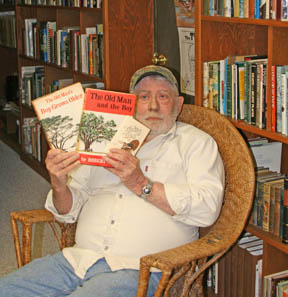
Ruark, although we never met, touched me deeoly with his whimsical "The Old Man & The Boy" book (see my Scoops Books for a copy), which should be required reading for anyone with an interest in fishing and hunting. It is warm, wonderful, filled with homespun philosophy, wisdom, and regardless of how great Ruark was, he died much too young as the result of far too much strong drink and a defeated liver.

The late Joe Bauer began writing while a game warden in Ohio, and he became best known for his superb outdoor photographs, his many books and his constant parade of feature articles in The Big 3. He was quiet almost to the point of shyness, and was hired to teach writers for Outdoor Life how  to shoot great photos. His humble "I don't know how I do it" was the truth, but after listening to him talk for two hours, me and many other people came away with a greater knowledge of taking prize-winning photographs.

Most of the really good writers were reticent about discussing their fame and glory of their work. Others barked and bleated if things didn't go their way, and still, they did some things that others really wanted to learn.

There are many tales of the late Elmer Keith. He was fairly short, wore a big cowboy hat, disliked Jack O'Connor intensely (the reverse was also true), but many are the tales of Keith's exploits. He once saved a woman's purse after a man snatched it from her hand. Keith is said to have pegged several shots with his six-shooter around the culprit, who wisely dropped the purse and fled. Keith tipped his hat, gave the woman her purse, and walked off.

Reading good writing can lead to far better angling & hunting success.

These men were people I looked up to, and meeting them (most of them), was a high point in my life. I also met Ted Williams, baseball's last .400 hitter years ago, and I showed no more hero worship for him than for the outdoor writers noted above. I simply admire their skills at their chosen jobs, and in truth, the angling or hunting writer were more real to me than someone like Williams.

The point of this discourse is that reading today's outdoor writers offers a peek into their lives. You can learn from the true outdoor writer, the one who spends time in the field, but learn very little from the indoor-outdoor writer, a person who writes about fishing and hunting but never does it.

Fishing and hunting, as we know it, will gradually lose some of its luster as this world keeps spinning. It will never entirely die out, but people will become more diversified, and parcel ever smaller amounts of time to these pastimes in the future. So, if you love fishing and hunting now like I do, read as much about it as possible now.

To read is to learn, and to learn means one will become more successful in the future. Today’s outdoor writers, and those of yesteryear, deserve some attention. People can become better anglers and hunters by reading and studying the combined works of 20th and 21st century sportsmen-writers.

And offer a word of occasional thanks to those who toil so you can better enjoy the outdoors. Many of my favorite writers are long gone, and one day, some of today's favorite writers will also be gone, this writer included.

Let them know you appreciate their efforts. Doing so after they have fished around their last bend or hunted their last grouse covert or deer woods, as is true with some of those greats who were mentioned above, is a belated attempt to reverse an earlier error of omission.

Posted via email from Dave Richey Outdoors

Tuesday, August 17, 2010

Need help with book collecting?


Fishing and hunting has become more sophisticated with each passing year. The people who participate often are well-schooled, have graduated from college and are accustomed to learning new things in their leisure time.

Many anglers and hunters strive to stay well informed. They want to read things they can learn from, and over many years, I've worked with many people to help them build an excellent outdoor-related library.

It's no brag, just fact: I have collected fishing and hunting books for over 50 years, and am in the midst of compiling a major bibliography of fishing and hunting books published in the English language. This research book is only half finished, and the bibliography features some 1,300 typewritten pages that list between 25,000 and 30,000 different titles and I’m far from done.

Building a solid book collection takes effort, time and money.

I know what books are out there, I know what is needed to go into a research library for an angler or hunter, and I'm accustomed to doing research. A teacher friend wanted an obscure book to show his class, but didn't have the book and couldn't find it. He knew the author's name and book title, and asked for help. I found the book within 15 minutes.

It's not always that easy, but I've spent years searching for some rather obscure books, and this is a service some people need. They need help determining which books to buy, learn how much the books will cost, and have someone do the search service work for them.

Other people need to have their present collection checked out, and determine its value for an estate sale, for insurance purposes, or to determine what the value is for a gift donation. I perform such appraisal work as well on a fee basis determined by what work a collector needs.

And work is the right word for doing appraisals. It is a long and time consuming task if the owner has a large number of books or some that are very rare or obscure.

Of the two, I most enjoy working with people who are just beginning to establish a book collection on their favorite fishing or hunting topic. I've worked with some to build their collection of muskie fishing titles, and helped others who collect deer or turkey hunting books, and some who specialize in Atlantic salmon, tarpon or trout fishing. One thing I don't do is stray out of my field of expertise, which is fishing and hunting titles.

Book collecting, done right, can be a major investment in the future.

Finding books for clients can be easy, very difficult, nearly impossible, or a thrilling challenge. The challenge topics are the most fun because it is like hunting for a diamond in a coal pile. It's dirty work but look how much fun it can be when you find one.

I just found 12 muskie books for a client. When we spoke, and I told him of my finds, and he sounded just like a child at Christmas. He was happy.

I use e-mail or a phone call, and discuss what the client wants or needs from a particular genre. I've helped some collectors locate some very scarce and rare African hunting books, but each collector is different in his or her wants.

But find a key book, and their joy is similar to taking a first-time trout fisherman out and putting him or her into a 10-pound steelhead. It's fun for me and for them.

There is, as is true with all types of work, some expenses involved. Doctors and attorneys have been good clients, and their busy fast-paced work life doesn't leave much time to look for books. They give me a list of titles, or ask me to prepare a list based on our conversations, and I go to work.

I'm helping a muskie-book collector finish up his collection now. Many of the books are reasonably common; some are hard to find; a few are most difficult to locate, and two or three are nearly impossible and high priced.

There is a general theme to my advice for budding book collectors. Try for the hardest and most expensive books first. They are very difficult to find now so get them while they still may be available on occasion, and fill in the collection of lesser valued books as time goes on and money permits.

Advice: Buy the most difficult and most expensive books first.

Many people I've dealt with provide me with a value guide that tells me how much they can spend over the period of a year, and I begin looking for key books within that range. In every genre, there are cornerstone books that are very important acquisitions. I always suggest a new collector decide which books they want first (with some advice from me), and we work toward that goal.

I've learned that although there are many people who are interested in deer hunting, there is a plethora of titles to choose from. I determine which authors and titles are most collectible. Not many are truly expensive.

Books -- good books -- appreciate at 10-12 percent yearly, and sometimes as much as 15 percent for a few. I would never suggest collecting fishing or hunting books as a means of making money, but only a fool would ignore the fact that good books increase in value while poor books do not.

My thought is to help a new collector pursue this hobby with an eye toward acquiring very difficult books whenever possible. I urge them to enjoy the books while they are alive, and when they pass on, the books will probably be sold. I can lend assistance in planning ahead to this unfortunate day when the beloved books will pass into someone else's hands for a tidy sum of money.

Planning ahead is what makes precision book collecting not only a hobby, but it can provide good reading while allowing the sportsman to acquire degree of angling and hunting knowledge and skills. However, in the end, good books that are properly taken care of can provide loved ones with a significant investment.

I buy fishing and hunting books, sell them, and will help outdoor-book collectors get started or help them improve their collection.

If you are interested, drop me a note at < dave@daverichey.com >. I'll be happy to help with large or small collections, with appraisals or to offer my assistance with estate sales.

Posted via email from Dave Richey Outdoors

Wednesday, August 04, 2010

Answering some reader questions


Writing a daily weblog is like writing a newspaper column every single day. There are lots of things to write about, but without some reader input, it's impossible to tell whether I'm touching all the fishing and hunting bases or not.

I'm been keeping a list of questions readers have sent in for just such an occasion as this. Lots of people write and say I'm doing a good job, which is my daily effort, but it also helps to know what really turns your crank. Here are several notes from readers that may be of interest.

Recommend my website to your family, friends, neighbors and relatives.

Mind you, most of my readers are completely unknown to me. In some cases I know them, and in most other cases I do not. I know where only a few of my readers live, so for the most part, I respond to first-names only in this blog.

*Ralph wrote, saying he enjoyed my blogs and features on deer hunting, and wanted to know if I'll be doing more deer stuff this fall.

The answer is yes. I've written three books on deer hunting and hundreds of magazine articles, and the how-to and why-to stories will continue to flow. There are many topics I haven't covered although I've been at writing blogs for seven years. Lots of good stuff is coming.

*Pete wrote to say he doesn't own a boat, and must fish from shore, and he whipped up on me a bit for not writing more about carp and catfish fishing.

I told him I realize many people don't own a boat, but advised him that I've written a number of blogs on catch catfish and the "golden bonefish" -- better known as carp pieces. Even though many anglers don't fish for these rough fish, I know it is important to some readers. Keep reading, and realize that you can scroll back to Day One to read my blogs if you wish to read that much stuff just to find a carp story.

I try to help people find new fishing and hunting locations.

*Mike sent compliments on my blogs and features on bow, firearm and muzzleloader hunting, and wants more. It would be easy to write daily about hunting whitetail deer, but in fairness to all, deer and deer hunting is covered heavily in season. There is much more solid information coming in the months to come. Read it daily to stay current.

*Buzz wrote about one of my earliest stories about me and another man catching 100 steelhead in a day. He didn't believe it, as much as called me a liar, and I've never heard from him again.

The story was 100 percent true. Of the 100 steelies we landed, only one was kept because it sucked the fly deep into its gills, and was bleeding heavily. It was a small male and I kept it. This action happened about 20 years ago, and as God is my witness, it was true. It was one of those days when everything fell together: no other fishermen on the river, a fresh run of mint-silver fish, and brutally cold temperatures. We'd roll a fly through the hole, and the fish were on it instantly and they kept coming, a dozen at a time, and it was a memorable day.

*Jim wrote and asked for more stories from the Upper Peninsula. He says he does it all but doesn't read much about some of my Upper Peninsula trips. I promised I'd try to do more in the future, but I'm a one-man band, and it's impossible to be everywhere.

*I've heard from numerous budding outdoor writers. One, named Charlie who lives in Wisconsin, wants to get into writing. He wanted to know whether to jump head-first into outdoor writing and photograph, or free-lance on a part-time basis.

I’ve mentored many budding outdoor writers.

He is a teacher, and has written one story that I've read. I made several suggestions, and asked him to cut it back to 750 to 800 words and I'd run it. I'll run a story by anyone if it deals with fishing or hunting in Michigan, or in Charlie's case, bear hunting, which also is done in this state, and I haven't seen his shortened version. I don't have time for much editing, and if a story is good and meets my needs, I'll run it. If it is bad, I won't run it. Budding outdoor writers: try me but email  first.

*Richard ordered a book I had for sale, but failed to email me first to determine if the book was still available. He was upset when he learned the book had been sold earlier that day.

As nicely as I could, I told him that one of the great features of the internet is it allows almost instant communication. Any reader who finds a book they want on my Scoop's Books, should contact me to determine if the book or item is still available. Books are sold on a first-come basis, and I've began taking orders for books that people are trying to find. If I find a nice copy, I let them know, but this requires both parties to be on the same page.

Touch base with me on occasion, if for no other reason than to say hello and ask how is fishing. Communicate with me. Writing is a lonely business, and readers who have questions or would like to see a story on a specific subject, can serve their own purpose by touching base. Go to < dave@daverichey.com > and I'll answer as quickly as possible.

Keep reading, and enjoy the outdoors responsibly. -- Dave

Posted via email from Dave Richey Outdoors

Friday, February 12, 2010

Toys Of A Lifetime

My baseball card collection disappeared when we were 18 years old. My mother decided that we (twin brother George and I) were quasi-adults now, and what did we need with 5,000 or more cards from the mid-1940s through the late1950s.

We lamented the lost cards then, and really miss them even more now, but what's past is gone forever. I moved on, and over many years, began picking up outdoorsy things that I liked. Fishing and hunting books topped my list (and still do), but there were other items available for an aging packrat like me to collect.

Much of my "stuff" was stored in cardboard boxes for safekeeping, and much of it has now been found again. Imagine going through cardboard boxes and finding my old Marble knife. The handle is wrapped in rawhide, and the blade is big enough to slay bison singlehandedly.

The toys of my lifetime have been reunited with me.

And right next to it was an old Marble compass from the late 1950s, It still works, and has been put away in a safe place. I was thinking I'd hit the jackpot until I laid my hands on a Winchester Model 61 .22 rimfire magnum pump rifle. After high school, I worked for two years at Water Wonderland Sporting Goods, at the junction of Dort Highway and North Saginaw Road, about three miles north of Mt. Morris.

It was legal in the late 1950s to hunt whitetails (very few of them were in our area) in southern Michigan with a .22 rimfire magnum. They also came in handy for shooting red foxes, and some of my old fox-hunting buddies like Max Donovan, G.V. Langley and others carried one on our winter fox hunts.

I saved my money, and bought the rifle. I was prepared to go out and run with the big dogs now. The rifle was purchased during the winter, and about three months before the firearm deer season would open, the Department of Conservation (forerunner of the Department of Natural Resources), outlawed the use of a .22 rimfire magnum for deer hunting. I hunted for woodchucks often with that rifle, and close shots like this could be deadly.

The come-and-gone Remington jack knife.

I've always had a thing about pocket knives, or as we called them back in our youth, jack knives. Brother George had given me a Remington two-blade pocket knife 45 years ago. I'd lost track of it, and then it was found, and soon after was lost again, and hasn't been seen since. The blades had been sharpened so many times, and the steel is so great, that I often used it to fillet bluegills. It was a treasure that had been lost, found and lost again.

I'd lost my baseball cards but still have that rifle. I potted a few fox, a coyote or two and an abundance of woodchucks with it over the years. I still shoot it on occasion, but looking at it now brings back memories of buying it to hunt deer only to have it made illegal for that purpose.

In another box was my shotshell reloader with all the powder and shot bars, crimping tools to seal up paper and plastic shells. I found a great, huge box of Winchester AA plastic cases. Some had been reloaded two or three times, and many had been fired only once.

Several years ago I was visiting with the late Fred Houghton, formerly of Clio where we grew up, and he mentioned he still had that rod and reel I'd loaned him 40 years before. The rod was an ultra-light Wanigas fiberglass rod made by famous Trout Unlimited co-founder Art Neumann, and a Cargem Mignon spinning reel came with it. This rod and reel had been a favorite, and thanks to Fred's honesty, I now have it back.

Deep in another box was a round metal tin of Mucilin that we used years ago when fly fishing. There also were a half-dozen No. 1 traps that I used 55 years ago when running two traplines. They brought back memories of days when prime muskrat pelts sold for $8. each, and we'd often catch five or six 'rats a day, and some years we made more money trapping than our father made in a week of cutting hair.

There was an old Jones-type hat that had traveled North America with me. It was half rotted, and I thought it had been thrown away, but there it was -- as ugly as ever -- and it brought back grand memories.

Then I found a small pocket knife with the likeness of the Royal Canadian Mounted Police on the handle. Next to it were two rusted knives I'd found sticking in logs where some hunter had probably field dressed his deer, drug the animal out of the woods and forgot the knife.

There were a couple of old wood duck decoys I'd found in the cattails while jump-shooting ducks in the 1950s. Their decoy anchor lines had rotted and broken, and they had drifted off during rough water. George and I found 50-100 old wood dekes many years ago, but these were all that remain.

One might think this was a collection of old junk, but not me. I looked at all those old items, and counted them as wonderful memories from a bygone era when hunters knew enough to keep their paper shotgun shells dry. If they didn't, they would swell up and it was nearly impossible to get them to fire or get the swollen shells out of the shotgun. We soon learned to keep our knives sharp for when they might be needed, and every boy of that generation carried a knife to school but no one ever used it improperly. Try that now, and a kid would be expelled and probably picked up by the police for carrying a dangerous weapon. Back in those days it wasn't a weapon, but a tool to be used, and it was a rite of passage to carry a knife.

Those were the days, my friends, we thought they'd never end. And they haven't because fishing and hunting is still great fun for me, and I still share a lifelong love affair with the outdoors.

Posted via email from Dave Richey Outdoors