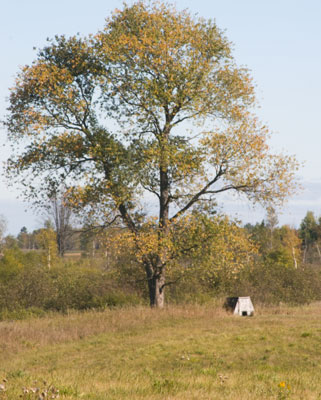
Bunches of deer or just one. A new hunting spot can certainly help.
Some things never change. Many deer hunters choose the same tree for a stand, walk the same trail into and out of a hunting area, and nothing ever changes.
Many will sit on the same stump, along the same runway, as they did 10, 15 or 20 years ago. It's difficult for many sportsmen to break their old habits, and some deer hunters never try. It becomes a tradition to again hunt where a buck was killed sometime in the far distant past.
They often wonder: If it was good 20 years ago, it should be a good spot now. Won't it?
Maybe yes and maybe no. That tradition of returning, year after year, to the same spot has probably saved the life of more bucks than poor shooting or a lack of preseason scouting.
Sadly, clinging to a traditional spot, even when it no longer is good, is a lesson in frustration. It also leads to fiery claims by skunked hunters that the Department of Natural Resources' reports of deer numbers for whitetails are grossly inflated.
Perhaps this season is the time to cast aside the traditional old haunts, and think about trying a new area. Too many people never realize that food and habitat conditions can and do change, and if the landowner doesn't do something to make the land produce more food and offer more cover, the deer will move on. It's as simple as that.
Deer are animals of farmland and woodland. Granted, some deer live in deep forest and many live on farms, and that's a fact of life in this state.
If you agree that a new hunting location should be tried, where should hunters start in their search for a new spot to test their luck or skill?
Hunters can start with the DNR. They keep track of deer trends, and know which counties have the highest deer numbers and which ones produce the largest deer. The county extension agent often deals with farmers and other landowners, and they also can help.
Determine if you want to hunt the Upper or Lower Peninsula, but if you've read hunting reports here or elsewhere about deer hunting prospects, the U.P. is not the place to go. The area with the most deer is south of an east-west line from Bay City to Muskegon.
Start asking questions. Learn which counties produce big bucks and lots of deer, and learn why deer numbers are high in such areas. Determine the availability of state or federal lands nearby, but both state and federal land is quite sparse and over-hunted in the southern Lower Peninsula.
Spend time scouting two or three different areas. Determine which ones offer the best combination of land, cover, deer foods, bedding cover and access. Walk around the land, and check for well-used deer trails leading from bedding to feeding areas and back.

Look for buck rubs and deer scrapes now. Check barbed wire fences for bits of hair that indicate deer passing through the area.
Talk with nearby landowners to determine their idea of hunting pressure. Often, in agricultural areas, the major hunting pressure is from the landowner and his or her family and close friends.
Consider the possibility of leasing hunting rights. Fees vary depending on length of the lease, property size, whether it is ideal or marginal deer habitat, and what it offers the hunter.
No one owes today's sportsman anything in terms of hunting private property. I manage my land to produce big bucks, and crop lands are rotated and some timber is cut. Doing so helps maintain good hunting, but it's a never-ending learning process to keep up with where whitetails travel after crop rotation and timbering takes place.
I spend many hours scouting for good spots. Deer habits change, food supplies change, and hunting pressure can make deer seek quieter areas. A hunter doesn't know these things unless they spend time in the field on a regular basis.
Public lands feature too many hunters in narrowly confined areas, and the hunting pressure is too high. Food supplies are far better on private land than state or federal lands. Private property holds deer, and, in many areas, it supports more whitetails than public land. For this reason it's easy to understand why more people lease hunting land even though the price of leasing acreage is rising.
Whether a hunter leases private land, hunts on public land, or manages to wangle an invitation from a landowner, scouting is a never-ending problem. Hunters who don't scout old land or new land run a major risk of not being successful.
Knowing what lies over the next ridge and why deer travel one trail and not another is why some sportsmen bag whitetail bucks year after year, and why some hunters never tie their tag to the rack of a good buck.