Friday, September 23, 2011

Little Things can Change a Hunt

The result of good planning and the plan working out.


Many hunters think of bow hunting as a huge-antlered buck standing motionless at 20 yard with nothing but a few low-growing weeds and air between them and the deer.

This so-called calendar pose is what many short-term bow hunters expect to see while hunting. They've been conditioned over many years to expect such a shot, no matter how unrealistic it may be.

The same hunters seldom think of spotting a nice buck, his head held low, as it ghosts through a cedar swamp or tag alder tangle. The truth is that while an occasional shot is taken at a broadside, head-in-the-air buck, the reality is much different than what our imagination tells us is true.

The little things about bow hunting should tell us that a buck seldom offers an easy, open shot. Often, the animal is partially screened by brush or is standing in thick cover. Deer often stop when their vitals are screened by thick brush.

I'm not naive enough to believe they deliberately do so.


One of the little things that hunters must learn, and practice faithfully, is an extraordinary amount of patience. Hunters who get strung out by a motionless buck that doesn't move are usually unprepared for a shot when the deer does move.

Patience is something all of us must believe in. It's always better to sit motionless, and if the buck doesn't move before shooting time ends, chalk it up to another night when the deer outsmarted the hunter. Such things happen far more often than most of us care to think about.

Sitting motionless and silent is far preferable than trying a Hail Mary shot that may make it through the brush to the buck's vitals, but for whatever reason, it rarely does. Taking a low-percentage shot only educates or wounds deer.

There have been countless times when I've spent 30 minutes to one hour waiting for a good buck to move that last 10 feet to offer an open shot. More often than not, they refuse to budge and shooting time ends with the animal still standing motionless in thick cover, still looking around.

Another little thing to remember is to stay in your stand until the buck moves off by himself. Start crawling down out of a tree, and you'll have ruined that stand for the rest of the year. Just hang tight, remain silent, and let him move when the mood strikes him. Wait for someone to come looking for you, and let them spook the deer rather than you doing so.

Building your patience level doesn't occur overnight. It takes time and a great deal of practice, and blowing some possible shot opportunities, before you acquire the necessary skills to wait out a slow-moving deer.

Don't do something stupid if the buck is slowly making his way to you. Perhaps you are in his travel route, and if you sit patiently, the buck may move to you. If you haven't been calling, and suddenly start calling to a nearby deer, the animal may turn away. It may or may not spook, but if the deer keeps coming to silence, don't introduce something new into the equation because it could backfire.

Be very cautious about dropping things. I've seen bucks and does stop 50 yards away because they saw something they don't like. I once watched a buck come a long ways only to stop just out of easy bow range.

Why the buck stopped was beyond me, but stop he did, and he kept looking on the ground along the edge of a tag alder run between us. I studied him through binoculars, and tried to see what he was looking at, and it remained a big mystery.

He left without coming the 20 yards necessary to provide me with a clean shot within my established shooting distance. He walked off and soon disappeared, and as shooting time ended, I eased from the stand and walked over to that spot.

It took a moment of looking around but I found what had spooked the deer. A hunter had moved through that area while hunting grouse and woodcock near the alders, and apparently had shot at a bird.

I found an empty 12 gauge shotshell, and it was laying somewhat in the open where the setting sun would glint off the brass. It wasn't much, but from where the buck had stood, there was still a tiny glint of sunlight there. The buck knew something was different, and turned and took another route out of the area.

It's some of these little things that can make or break a bow hunt. Always be aware of what is going on around you during a hunt because it can affect how deer react.

Wednesday, September 14, 2011

Getting close to good bucks

Seeing a nice buck up close and personal is great fun.

Everyone knows that whitetail deer hit the chow line in farm fields every evening an hour or so before dark, especially in the early season. It's one thing to set up along a field edge, and spend most of the evening watching deer at a distance.

It's another thing to spend most of the night hunting. Granted, setting at the edge of a field in an elevated coop, ground blind, pit blind or tree stand, is much different than effectively hunting deep in the woods.

There are times when small deer ooze out of the woods and pass close to field-edge stands, but it really isn't something a person can count on to happen on a daily basis. What they can count on is having better opportunities by sitting in a stand back in the woods, away from the edge.

Here's the scenario. Deer leave their bedding areas, and mill around, back and forth, while slowly making their way toward the feeding fields so they will arrive an hour or so before the end of shooting time. Plan your set-up properly, and there is a very good chance one of those deer will drift past your stand with plenty of shooting time left.

Deer, as they move toward the fields, become much more suspicious and spend more time checking the edges when they get within 50-75 yards of the field. I've often watched bucks and does stand back in heavy cover for long minutes at a time, and study the area for danger.

The hunter that sets up shop 100 to 150 yards from the field (closer if the bedding area is near the field) has a much better chance of dealing with deer that are still wandering freely and are not nervous.

These animals often are led by a mature doe, and if you want to shoot bucks, it is imperative that the does and fawns do not smell or spot you as they pass by. Picking a spot this far from the woods requires finding an area where two or more trails move from the bedding area and join up to funnel deer traffic out into the field via specific trails.

Preseason scouting can help pinpoint those trails, and further scouting can help refine your knowledge of which trails bear the most whitetail traffic. Stands obviously must be set up downwind of those trails, and a hunter should have two or three ways into the stand to prevent the deer from patterning them.

Sitting at a field edge may allow a bow hunter to see five or 50 deer, but seeing them at a distance and having them within easy bow range, are two entirely different things. I know lots of people who are prone to saying "I saw 15 deer tonight, and five were bucks."

They seldom say they saw those deer at a distance of 100 to 300 yards. Seeing deer is fun, but unless one is set up on the proper deer trail where a shot may be had, seeing deer doesn't mean squat.

My idea of seeing deer is having the animals inside 20 yards. I know I can't shoot 100 yards and hit a deer, but I know that any buck or doe within 20 yards, is in serious danger should I decide to shoot.

The reason I like whitetails close is I can't see well, and I also know what my shooting limitations are. So, I work at getting close and do my best not to be spotted or winded by moving animals.

It goes without saying that anyone sitting in an open tree stand must be constantly mindful of the wind and of being scent-free. I wear my old Scent-Lok underwear, a new Scent-Lok suit, knee-high clean rubber boots and know how to sit still, and how and when to take a shot.

Seeing a dandy buck at 200 yards is a major thrill, but think about what a kick it would be to have that same buck move within 20 yards of you. The adrenalin flows through your blood stream like it is being shot out of a fire hose, and when the moment of truth comes, will you be ready?

I can promise one thing. A hunter who sees that buck at 200 yards will never be ready for a shot when the animal stops, 18 yards away, tests the wind and scrutinizes the trees.

Looking and seeing lots of deer is fun, but frankly, such stands seldom pay off with decent shots. Those hunters who have given up looking at lots of deer, and are content to see one or two bucks at close range, are those that get my vote for being a savvy hunter.

Posted via email from Dave Richey Outdoors

Different deer hunting strokes


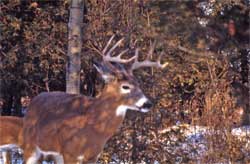
Big bucks like this don’t just happen. One must hunt to see them.


Millions of deer hunters are found across this great nation of ours, and we all seem to have different philosophies on hunting. We seldom agree on wildly varying topics.

Some hunters refuse to hunt east winds. Anything from the east is bad. For years, October featured south and southwest winds and then west and northwest, and by December we were hunting northwest, north and northeasterly winds.

My philosophy is that a deer hunter won't get much hunting in if they sit out every day with a bad wind. I hunt but switch from an open tree stand to an elevated and enclosed coop on such days. A few stands are set up primarily for an east wind, and they are in demand when the wind goes sour.

Many are the deer hunters who believe they should only hunt during the dark of the moon. Others only hunt the week before the full moon, and others never hunt during a full moon.

There are those who believe in hunting the Harvest Moon, the Hunters Moon, the Rutting Moon, and some who will only hunt just before the second full moon after the autumnal equinox. The nice thing about living in a free society is each of us can indulge our personal pleasures.

I personally don't care which day of the week it may be, which way the wind blows, what the moon phase happens to be, or anything else. I find it difficult to kill deer while sitting in the house rather than in a stand while hunting.

There are others who place great emphasis on hunting the rut. Little do they know that the 10 days before the full rut begins, deer go through the chasing stage or the pre-rut. It is a wonderful time to be hunting, regardless of the moon phase or wind direction.

Many feel the rut begins Oct. 20-25, and that is the beginning of the chasing stage, and it will last for about 10 days before the full rut begins. It's possible to find many people who would disagree on when the rut actually begins.

The peak of the rut in my area will occur on or about Nov. 3-4, and it is winding down before the Nov. 15 firearm season kicks off.

There are variations, depending on where you hunt. Weather conditions and people pressure can alter these dates a bit.

Some hunters are addicted to the Solunar Tables. These tables, first invented by John Alden Knight many years ago, are based on the sun and moon and their effect on tides and the earth. They contend there are normally two minor and two major periods each day when fish bite, and when wild game move about.

Some sportsmen hunt according to the Solunar Tables and kill deer, and I know other folks who hunt whenever they can, and they also have good hunting success while hunting outside of these major and minor periods.

I've hunted many years with great success. Good hunting habits bring wonderful hunting success, and simply being afield whenever possible is a good reason for being more successful.

I forget about all this other business, and go on doing what works best for me. That means that I hunt whenever possible, and try to hunt every day of the season.

Take the normal precautions with the wind, stay downwind of the deer, and it becomes fairly easy to build your own deer-hunting success, with or without using all of the old wives tales.

Monday, September 12, 2011

Look for bucks in hard to hunt spots

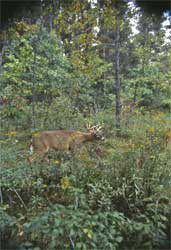
This big buck was photographed in a very small thicket.


The hunter who pays attention to deer movements will soon find some out-of-the-way spots where big bucks like to lay up. Some of those locations are easily hunted and some are not.

Some of these out-of-the-way spots are found while hunting other game species. Some of the little hidey-holes where bucks hole up are so small that one wonders if there is enough cover for a cottontail rabbit to hide.

Take it from me: it doesn't take much cover to hide a big whitetail buck. Keep that thought in mind.

Some of my friends hunt in widely scattered locations. Many also hunt upland game birds, cottontail rabbits and snowshoe hares, wild turkeys and other game. The observant ones find hard-to-hunt buck hideaways far more often than people who hunt only one place. Always take note where a big buck is seen & where he goes.

A friend pays attention to such things, and as he walked past an overgrown apple orchard after a hard rain, he spotted a big deer track going over the fence. He'd tried to get his pointer to work into it in search of birds, and the dog refused to go.

Being a patient gent, he walked his pooch around the orchard, and found the way the buck left that orchard. He also noticed that the tracks went past a big pine tree. Two days later he scaled that tree in the late afternoon after putting the dog in the truck kennel, and took his bow with him. Thirty minutes before the end of shooting time a buck that grossed 152 points jumped the fence and walked past his tree.

He's no stranger to seeing big bucks. This one passed the tree at 22 yards, and my friend shot him. It is still his largest buck, but it points out the reasons why hunters should be more attentive to deer sign.

Another guy was out chasing ruffed grouse, and walked past a sumac patch on top of a hill with a good view in all directions. The man stopped to re-tie his boot laces, and was 20 feet from the sumac patch, and out busted a big buck. He was laying up there because most people walked past the sumac without stopping, thinking the cover was much too sparse to hold a deer.

A friend tells the story of hunting ringneck pheasants near a river, many years ago. He was hunting along its edge. A rooster flushed wild at 30 yards ahead of the dog, and he swung and winged the bird.

It caught its balance in mid-air, cocked its wings and soared part-way across the river and landed on a tiny island of marsh grass and a few stunted trees. He checked the water depth, and it was only shin deep, and he crossed. His dog caught some scent, pointed, and as he approached the dog, a big buck jumped up and bolted across the river. He watched the buck splash across, crisscrossed the tiny island, and kicked up a pheasant and downed the bird.

He kept that oddball sighting in mind, and once the firearm deer season opened, he and a friend waded across to the island. One went to the upstream end while the other walked through, and sure enough, they jumped the buck and killed it with one shot.

Talk to some farmers, and they all have tales of bucks laying up in tall weeds along their line fences or next to a barn. They push deer out of swampy little tangles perhaps 20 feet across. These bucks hold in such tiny bits of cover because few people think to look there.

The thing is that bow hunters can dare to be different. They don't have to follow a stated doctrine that everyone throws at them. They can walk through an area so small that it takes less than 10 seconds to get through, and often they find the home of a big trophy buck that no one knows about.

Cattail marshes hold bucks, and I remember a nice buck that a friend shot as it came out of the cattails. He knew that buck was there, and when he shot it, the buck wheeled and dove back into the cattails and died there. Cover can’t be too thick for bucks.

Don't stick with the status quo this year when the bow season opens. Check things out. Know where the tiny patches of heavy cover are in your hunting area, look for those little nooks and crannies, and try to figure where a buck will come from or go to when leaving. That information is knowledge you can put to good use this fall.

Try it this year. It may produce a nice buck that you've probably overlooked for years.

Sunday, September 11, 2011

Check out the deer sign

Reading deer sign properly allowed this hunter to score.

Reading deer sign is something that has always made sense to me. It gives me more knowledge of the animals, where they feed, where they travel, and in the end, it's this knowledge that makes hunters more successful while allowing them to accurately determine where best to set up their stands.

I'm so mindful of a big buck from several years ago. I'd seen him on three occasions but didn't know where he lived. It took me a week of reading October deer sign to pin down his whereabouts.

The area was in fairly heavy cover. I knew the buck had an exceptional 10-point spread, and reasoned he would be working over some big trees to strengthen his neck muscles before the rut began.

I'd moved slowly through the heavy cover without seeing much buck sign except for a few small rubs on some tag alders. I came out the other side of the tag alders, and entered a 25-yard by 25-yard stand of cedars and pines. That is when I worked out this whitetail puzzle.

One of those cedars was scarred by a pre-rutting buck. Lower limbs were broken off, and the trunk was scrubbed hard from a foot above ground to five feet off the ground. Mind you, I couldn't circle my arms around the tree trunk. This gigantic rub was truly huge.

Checking around let me find a faint trail that ran toward another cedar, and it too was rubbed by the same buck. Three trees within 25 yards formed a minor rub line, and the trail had exited the cover I had just walked through. This buck was leaving the tag alder to rub the cedar and pine trees, and most likely, the deer was moving out just before dark.

A nearby tree was perfect for a stand. There would be no clattering and banging required to erect a tree stand here. I'd attach a rope to my bow and my belt loop, lay the bow down flat, climbed 10 feet up the tree on limbs and stand on two thick parallel limbs that grew close together. Another limb came out at waist level, and I could stand on two limbs and lean back against the other one.

Two nights later as the sun was sinking into the western sky I caught the glint of sunlight shining off brownish-white antlers. The buck went to the first tree, thrashed it hard for several minutes, looked around, and went to the second tree and repeated the process. Fifteen minutes later it arrived at the tree just 15 yards upwind of me.

It took a minute for the buck to rake the tree to a pile of fuzzy bark curls at the base. He nosed his handiwork, lifted his head, moved around the tree to work on the opposite side. The deer was quartering-away at 15 yards, and it was an easy shot.


Properly reading the sign paid off handsomely.

It's not my policy to advise anyone to stand on cedar or pine boughs and lean against another one, and I don't suggest you follow my lead. However, I knew the limbs would support me for one evening of hunting. I was certain it would lead to a shot at the big buck on the first night, and it did.

That buck was a creature of habit, and such habits can put a deer in trouble. Once the buck stopped rubbing and visiting the nearby scrape, this idea wouldn't have worked. My adventure with that big buck was timed perfectly, and that is where knowing something about the rutting activity comes in handy. From the end of October through mid-November, that tree might not have paid off as the buck hazed does through open fields and thick cover.

Hunting one buck is an adventure, a matter of going after them one on one. It means knowing as much about the area as is possible, and being able to translate that knowledge into an action plan.

There are countless other ways of reading deer sign that will pay off in a big way, and we'll cover some other examples in the future. The important thing to realize is that studying deer sign is as much a part of deer hunting as carrying a bow into the woods.

Be alert to deer sign, read what it says, and you'll be on your way to becoming a much better deer hunter.

Posted via email from Dave Richey Outdoors

Saturday, September 10, 2011

Some thoughts about brother George


I woke up this feeling a mite peckish. I wasn't hungry, the morning paper lacked any luster, and even the decaf coffee failed to generated any enthusiasm. I just felt out of sorts.

A return to the paper was a start. That was it. It wasn't the paper so much as it was the date.

It was eight years ago today when my twin brother George passed away. Besides losing a twin brother, I lost my best friend and my life had suddenly changed. Even after this long there is a terrible sense of loss.

We were inseparable since our 1939 birth. We grew up during World War II, and being little kids we had no concept of bombs but we used to stand outside our home in Clio and try to hear them explode. Thank God we never did.

We began fishing in lovely Clio Creek, which is a facetious statement, and caught a few bluegills, carp, suckers and sunfish, but we were at a tender age. We had our first jobs at age six, and have never been out of work. We collected newspapers in the late 1940s, sold them in Flint, and it took all summer to make enough to buy our own bicycles.

Dad was a barber, didn't make much money, but he provided us with the incentive to work toward buying our own bikes, and they were better than any that the other kids had. Ours were a top-of-the-line Schwinn, and they had a horn, fender-feelers and go-fasters.

We spent summers camping and fishing on the Sturgeon River in Cheboygan County. No one would let their kids fend for themselves as pre-teenagers now, but our parents trusted us and we had a wonderful time.

George and I both played baseball, but I quit early because I had eczema, which was aggravated by getting dirty. But I learned how to catch steelhead, and quickly taught him, and again we were inseparable on the water. We could catch more steelhead than almost anyone from the Sturgeon River in the mid-1950s. It was pretty heady stuff.

We prowled Luzerne Pond for brown trout, made forays for big browns to the upper Rifle River, and were soon fishing most of the major steelhead streams long before the salmon were planted. We pioneered guiding in Great Lakes tributaries, and were the first fly-fishing guides in the state.

We developed flies and fly fishing methods back in 1967 that are still in use today. Fishing two flies for steelhead came about in 1967, and there are people today who claim they invented the system but they are wrong.

We traveled together in the off-season, giving seminars on fly fishing for lake-run brown trout, chinook and coho salmon, and steelhead when most people thought it was in its infancy. Again, they were wrong because we'd been catching browns and steelhead on flies for many years.

George loved fishing more than hunting, but would willingly go hunting with me because he enjoyed my company. For me, George was more than a brother and a great friend, he was my soul mate. We were often together late in his life, and once we learned he had cancer (while at the Wood-n-Water Outdoor Weekend show), we spent his final four days and nights together.

We played "Remember When." I'd ask is he remembered catching his first steelhead, as well as when and where the event took place. He nailed that one. I asked if he remembered making that great long-range shot on a trophy desert whitetail in southwest Texas, and again, even though his body was failing, he remembered the event.

He remembered the night we fished for big browns after dark on the Sturgeon River, and both caught a pair of fish between seven and nine pounds each. He also remembered celebrating at the old Meadows Bar with a cold beer and a hot burger.

George was widely loved by all who knew him. He could ferret out fishing lures like a beagle with a cold nose, and he was an expert at tying flies, something he did commercially for many years. He invented several steelhead flies that are still in use today, and invented the Michigan Squid, Laser Squid, Crinkle Fly, Sparkle Fly and many others, and for years his squids and trolling flies were the best on the Great Lakes for salmon. They still are.

He was a well-known lure collector and historian. He wrote three books -- Made in Michigan Fishing Lures, Made In Michigan Fishing Lures II, and Dodgers & Squids For Larger Salmon & Trout. He co-authored the revised edition of The Royal Frontenac Hotel with Pete Sandman. He wrote countless lure collecting stories for Woods-n-Water News, edited the National Fishing Lure Collectors Club Gazette for many years, and wrote many other magazine articles.

People thought the world of George, and he reciprocated. He was always ready to help a new lure collector get started, and was known far and wide for his vast store of knowledge about lures made in this state and many others.

He was an icon, a person people respected and looked up to. His sense of humor was infectious, and it's easy to find people all over this state who have their favorite George Richey stories. I've shared a few of mine here, and there will be others in the future.

I loved my twin brother, love my memories of him, and today I had to write something about the man who meant so much to me. To pay a public tribute to his 64 years of life, and to show people how much I truly miss him. He's gone but far from being forgotten.

Thank you for reading this small tribute. It means a great deal to me, and doing so pulled that monkey off my back this morning. I feel better.

Friday, September 09, 2011

Change things THIS year


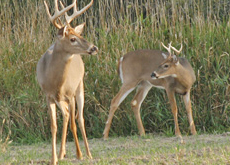
Bunches of deer or just one. A new hunting spot can certainly help.


Some things never change. Many deer hunters choose the same tree for a stand, walk the same trail into and out of a hunting area, and nothing ever changes.

Many will sit on the same stump, along the same runway, as they did 10, 15 or 20 years ago. It's difficult for many sportsmen to break their old habits, and some deer hunters never try. It becomes a tradition to again hunt where a buck was killed sometime in the far distant past.

They often wonder: If it was good 20 years ago, it should be a good spot now. Won't it?

Maybe yes and maybe no. That tradition of returning, year after year, to the same spot has probably saved the life of more bucks than poor shooting or a lack of preseason scouting.

Sadly, clinging to a traditional spot, even when it no longer is good, is a lesson in frustration. It also leads to fiery claims by skunked hunters that the Department of Natural Resources' reports of deer numbers for whitetails are grossly inflated.

Perhaps this season is the time to cast aside the traditional old haunts, and think about trying a new area. Too many people never realize that food and habitat conditions can and do change, and if the landowner doesn't do something to make the land produce more food and offer more cover, the deer will move on. It's as simple as that.

Deer are animals of farmland and woodland. Granted, some deer live in deep forest and many live on farms, and that's a fact of life in this state.
If you agree that a new hunting location should be tried, where should hunters start in their search for a new spot to test their luck or skill?

Hunters can start with the DNR. They keep track of deer trends, and know which counties have the highest deer numbers and which ones produce the largest deer. The county extension agent often deals with farmers and other landowners, and they also can help.

Determine if you want to hunt the Upper or Lower Peninsula, but if you've read hunting reports here or elsewhere about deer hunting prospects, the U.P. is not the place to go. The area with the most deer is south of an east-west line from Bay City to Muskegon.

Start asking questions. Learn which counties produce big bucks and lots of deer, and learn why deer numbers are high in such areas. Determine the availability of state or federal lands nearby, but both state and federal land is quite sparse and over-hunted in the southern Lower Peninsula.

Spend time scouting two or three different areas. Determine which ones offer the best combination of land, cover, deer foods, bedding cover and access. Walk around the land, and check for well-used deer trails leading from bedding to feeding areas and back.


Look for buck rubs and deer scrapes now. Check barbed wire fences for bits of hair that indicate deer passing through the area.


Talk with nearby landowners to determine their idea of hunting pressure. Often, in agricultural areas, the major hunting pressure is from the landowner and his or her family and close friends.

Consider the possibility of leasing hunting rights. Fees vary depending on length of the lease, property size, whether it is ideal or marginal deer habitat, and what it offers the hunter.

No one owes today's sportsman anything in terms of hunting private property. I manage my land to produce big bucks, and crop lands are rotated and some timber is cut. Doing so helps maintain good hunting, but it's a never-ending learning process to keep up with where whitetails travel after crop rotation and timbering takes place.

I spend many hours scouting for good spots. Deer habits change, food supplies change, and hunting pressure can make deer seek quieter areas. A hunter doesn't know these things unless they spend time in the field on a regular basis.

Public lands feature too many hunters in narrowly confined areas, and the hunting pressure is too high. Food supplies are far better on private land than state or federal lands. Private property holds deer, and, in many areas, it supports more whitetails than public land. For this reason it's easy to understand why more people lease hunting land even though the price of leasing acreage is rising.

Whether a hunter leases private land, hunts on public land, or manages to wangle an invitation from a landowner, scouting is a never-ending problem. Hunters who don't scout old land or new land run a major risk of not being successful.

Knowing what lies over the next ridge and why deer travel one trail and not another is why some sportsmen bag whitetail bucks year after year, and why some hunters never tie their tag to the rack of a good buck.