Showing posts with label orchards. Show all posts

Monday, September 12, 2011

Look for bucks in hard to hunt spots

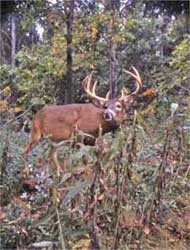
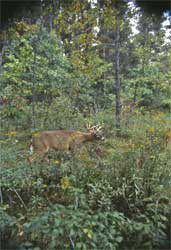
This big buck was photographed in a very small thicket.


The hunter who pays attention to deer movements will soon find some out-of-the-way spots where big bucks like to lay up. Some of those locations are easily hunted and some are not.

Some of these out-of-the-way spots are found while hunting other game species. Some of the little hidey-holes where bucks hole up are so small that one wonders if there is enough cover for a cottontail rabbit to hide.

Take it from me: it doesn't take much cover to hide a big whitetail buck. Keep that thought in mind.

Some of my friends hunt in widely scattered locations. Many also hunt upland game birds, cottontail rabbits and snowshoe hares, wild turkeys and other game. The observant ones find hard-to-hunt buck hideaways far more often than people who hunt only one place. Always take note where a big buck is seen & where he goes.

A friend pays attention to such things, and as he walked past an overgrown apple orchard after a hard rain, he spotted a big deer track going over the fence. He'd tried to get his pointer to work into it in search of birds, and the dog refused to go.

Being a patient gent, he walked his pooch around the orchard, and found the way the buck left that orchard. He also noticed that the tracks went past a big pine tree. Two days later he scaled that tree in the late afternoon after putting the dog in the truck kennel, and took his bow with him. Thirty minutes before the end of shooting time a buck that grossed 152 points jumped the fence and walked past his tree.

He's no stranger to seeing big bucks. This one passed the tree at 22 yards, and my friend shot him. It is still his largest buck, but it points out the reasons why hunters should be more attentive to deer sign.

Another guy was out chasing ruffed grouse, and walked past a sumac patch on top of a hill with a good view in all directions. The man stopped to re-tie his boot laces, and was 20 feet from the sumac patch, and out busted a big buck. He was laying up there because most people walked past the sumac without stopping, thinking the cover was much too sparse to hold a deer.

A friend tells the story of hunting ringneck pheasants near a river, many years ago. He was hunting along its edge. A rooster flushed wild at 30 yards ahead of the dog, and he swung and winged the bird.

It caught its balance in mid-air, cocked its wings and soared part-way across the river and landed on a tiny island of marsh grass and a few stunted trees. He checked the water depth, and it was only shin deep, and he crossed. His dog caught some scent, pointed, and as he approached the dog, a big buck jumped up and bolted across the river. He watched the buck splash across, crisscrossed the tiny island, and kicked up a pheasant and downed the bird.

He kept that oddball sighting in mind, and once the firearm deer season opened, he and a friend waded across to the island. One went to the upstream end while the other walked through, and sure enough, they jumped the buck and killed it with one shot.

Talk to some farmers, and they all have tales of bucks laying up in tall weeds along their line fences or next to a barn. They push deer out of swampy little tangles perhaps 20 feet across. These bucks hold in such tiny bits of cover because few people think to look there.

The thing is that bow hunters can dare to be different. They don't have to follow a stated doctrine that everyone throws at them. They can walk through an area so small that it takes less than 10 seconds to get through, and often they find the home of a big trophy buck that no one knows about.

Cattail marshes hold bucks, and I remember a nice buck that a friend shot as it came out of the cattails. He knew that buck was there, and when he shot it, the buck wheeled and dove back into the cattails and died there. Cover can’t be too thick for bucks.

Don't stick with the status quo this year when the bow season opens. Check things out. Know where the tiny patches of heavy cover are in your hunting area, look for those little nooks and crannies, and try to figure where a buck will come from or go to when leaving. That information is knowledge you can put to good use this fall.

Try it this year. It may produce a nice buck that you've probably overlooked for years.

Monday, January 31, 2011

Hard to hunt spots


Old orchards like this hold bucks 


The hunter who pays attention to deer movements will soon find some out-of-the-way spots where big bucks like to lay up. Some of those locations are easily hunted and some are not.

Some of these out-of-the-way spots are found while hunting other game species. Some of the little hidey-holes where bucks hole up are so small that one wonders if there is enough cover for a cottontail rabbit to hide. Take it from me: it doesn't take much cover to hide a big whitetail buck.

Some of my friends hunt in widely scattered locations. Many also hunt upland game birds, cottontail rabbits and snowshoe hares, wild turkeys and other game. The observant ones find hard-to-hunt buck hideaways far more often than people who hunt only on place.

Always take note where a big buck is seen and where he goes


A friend pays attention to such things, and as he walked past an overgrown apple orchard after a hard rain, he spotted a big deer track going over the fence. He'd tried to get his pointer to work into it in search of birds, and the dog refused to go.

Being a patient gent, he walked his pooch around the orchard, and found the way the buck left that orchard. He also noticed that the tracks went past a big pine tree. Two days later he scaled that tree in the late afternoon after putting the dog in the truck kennel, and took his bow with him. Thirty minutes before the end of shooting time a buck that grossed 152 points jumped the fence and walked past his tree.

He's no stranger to seeing big bucks. This one passed the tree at 22 yards, and my friend shot him. It is still his largest buck, but it points out the reasons why hunters should be more attentive to deer sign


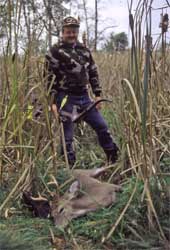
Larry Barrett with buck shot in cattails 


Another guy was out chasing ruffed grouse, and walked past a sumac patch on top of a hill with a good view in all directions. The man stopped to re-tie his boot laces, and was 20 feet from the sumac patch, and out busted a big buck. He was laying up there because most people walked past the sumac without stopping, thinking the cover was much too sparse to hold a deer.

A friend tells the story of hunting ringneck pheasants near a river, many years ago. He was hunting along its edge. A rooster flushed wild at 30 yards ahead of the dog, and he swung and winged the bird.

A winged pheasant led me to a big buck one day


It caught its balance in mid-air, cocked its wings and soared part-way across the river and landed on a tiny island of marsh grass and a few stunted trees. He checked the water depth, and it was only shin deep, and he crossed. His dog caught some scent, pointed, and as he approached the dog, a big buck jumped up and bolted across the river. He watched the buck splash across, crisscrossed the tiny island, and kicked up the pheasant and downed the bird.

He kept that oddball sighting in mind, and once the firearm deer season opened, he and a friend waded across to the island. One went to the upstream end while the other walked through, and sure enough, they jumped the buck and killed it with one shot.

Talk to some farmers, and they all have tales of bucks laying up in tall weeds along their line fences or next to a barn. They push deer out of swampy little tangles perhaps 20 feet across. These bucks hold in such tiny bits of cover because few people think to look there.

The thing is that bow hunters can dare to be different. They don't have to follow a stated doctrine everyone throws at them. They can walk through an area so small that it takes less than 10 seconds to get through, and often they find the home of a big trophy buck that no one knows about. Cattail marshes hold bucks, and I remember a nice buck that a friend shot as it came out of the cattails. He knew that buck was there, and when he shot it, the buck wheeled and dove back into the cattails and died there.

Look for thick cover, it can’t be too thick for bucks


Don't stick with the status quo next fall when the bow season opens. Check things out. Know where the tiny patches of heavy cover are in your hunting area, look for those little nooks and crannies, and try to figure where a buck will come from or go to when leaving. That information is knowledge you can put to good use this fall.

Try it this year. It may produce a nice buck that you've probably overlooked for years.

Thursday, November 11, 2010

Ambush locations that produce firearm bucks


Don’t be surprised by the possibility of some snow on Monday.


Finding a firearm opening-day hotspot can be easy if you follow some of these hard-earned instructions. Good places to hunt go begging because no one wants to move, so instead of hoping deer show up while you set on your butt, try this.

There's no secret about it. Firearm deer hunters often sit in a nice warm coop, and wait for the deer to pay them a visit. If the deer don't move, because no one is out moving around to cause the animals to move as they try to hide, both hunters and deer can take a snooze.

It's easy to find some of the key areas to hunt. Get in to such spots early in the morning, long before the other hunters come stumbling in at dawn. Move early, get in place, pay attention to the wind, and sit tight. Dress for the weather, and don't forget to wear as much hunter orange clothing as possible. Give some of these spots a try on Monday, the only day of  the year when you can hear the sunrise.

These several hunting locations can officer very good firearm hunting.

*Creek or river bottoms -- Such spot often have thick cover, and deer follow these ground depressions when moving from one spot to another, usually through heavy cover. Check the surrounding countryside, and locate some trails that lead into the bottom land. Find a spot downwind of where active deer trails meet that will offer a good view, and sit tight and don't wiggle around.
Hunt downwind of used trails.

*Funnels -- Funnels can be large or small. If one is too big to cover adequately with one man, bring your buddy along. A funnel that connects a bedding spot  with a feeding area or that connects two patches of thick cover is what you want. Sit downwind of the funnel in natural cover, and wait for other hunters to push deer out of one spot. They will use the funnel, and you'll be waiting there for them.

*Drainage ditches aren't as common in the north as in southern counties, but these ditches through farm fields act somewhat like a funnel. Deer will run the bottom of the ditches, which allow them to stay low and out of sight. Again, play the wind and be careful. The breeze may blow one direction above ground but often will be blowing a different way down in the ditch. Hunt near heavy cover areas or woodlots, and any nearby marsh will often hold deer. Find the key spot to sit, and stay down in the ditch to avoid being sky-lighted.

*Swamps -- These spots come in all shapes and sizes. Some are dry while others are wet. Some have a creek flowing through them, and some are connected by a funnel to other thick cover. Learn now where deer travel when the opening-day guns go bang, and figure out how to get back into the swamp well before daylight.

A good way is to wear waders or hip-boots to move into the swamp, and find a nice high and dry area. Deer don't mind getting wet but they prefer to lay up in a dry spot. A cattail marsh is another good bet, and bucks often hole up by stretching out on a muskrat house. Few people look for deer in such locations, and thereby overlook some except hunting areas.

Arrive well before sunrise, hunt all day, and stay alert.

*Dry lake beds -- These areas often grow up to tall grass, and a deer can sneak through the grass without ever being seen. Their fall coat is about the same color as the tall grass, and the best spot to set up an ambush is downwind of where they enter or leave the heavy cover. An elevated coop or tree stand nearby can be an asset because the height allows a hunter to look into the grass from a higher angle. It makes deer somewhat easier to see.

*Abandoned orchards -- Such areas are overgrown with brambles and briars, and the are tough locations for a human to get through. Deer have little trouble sneaking through it, and most of these places are right behind a house or barn. People tend to overlook such spots because they are too close to human settlement, but they can be a true hotspot. The problem is how to hunt them, and the best way is to watch it to see which way a buck goes. Learn his travel route before the firearm season opens, and set up downwind from it. It's the easiest way because getting inside it without spooking the deer is most difficult.

*Hilly country -- Any area with hills will have corresponding valleys. The steeper the hill-sides, the more rugged it will be and the more that big bucks will use such areas. Look for heavy hill-side cover, thick brush in the low spots, and if the country has some craggy outcroppings, bucks will often climb into such areas where they can check their back-trail and pick up scent. The best way to hunt such areas is to be above the deer, and often you'll hear them climbing into position to bed down.
The trick will be to find a hole to look through, and to spot and shoot the deer.

*Islands in lakes or streams -- Whitetail aren't afraid to swim if necessary, and if a lake or stream has an island, it is a good spot to find bucks on or after opening day. Make certain the island isn't privately owned, and if it is, get permission before hunting it. The island doesn't have to be any larger than a high and dry spot surrounded by water for a deer to bed down in thick cover. Islands often are overlooked by many hunters, and they can provide some great sport.

Find a good spot, and try not to be seen checking it out.

Spend some time over the next couple of days, and see if it’s possible to find a nice well-used traveled trail going through it. Get there early, be prepared to hunt all day, and stay alert. Your firearm of choice should be well suited to the habitat being hunted.

Find a few of these hotspots between now and Nov. 15, and chances are good you'll have the spot all to yourself. Well ... you and perhaps a few nice  deer.

Posted via email from Dave Richey Outdoors