Showing posts with label safe. Show all posts

Tuesday, January 10, 2012

No safe ice yet

fishinice

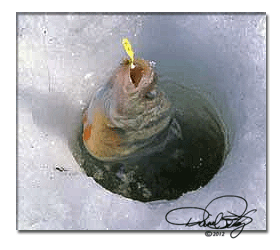
Seeing a fish in an ice hole is tempting, but wait for safe ice.


Ice gives ice fishermen two different options to consider. One is to ask questions of bait-shops and local anglers before venturing out onto any ice or they don’t ask. That’s the way it works most years, but certainly not this one.

Let’s face one very important fact. Anyone who has spent much time on the ice over many years has probably seen someone fall through. I’ve gone through three different times. That I sit here on the computer every night writing personal blogs means I survived each incident, but I haven’t forgotten them. It also is a gut-wrenching event, one that smart folks never forget.

Those who have gone through, and lived through the experience, often gaze toward the sky, and murmur a very special thanks.

Preparation for any eventuality on ice is just common sense.


It also means that a person should always be prepared for such an accident. Most people fret about falling out of a tree, so they buy a safety harness of high quality, learn how to use it, and if by chance they do fall, they survive. Ice anglers should always take precautions.

People believe such things only happens to other people. Anyone with some intelligence can see how such ice accidents can and do happen. For many it means a bitterly cold bath but they survive.

Michigan's weather is amazing. Last week's temperatures didn’t make any ice, and the this week anglers are being warned to stay off any half-frozen lakes and streams, if they can find any ice.

Read this and repeat it as if it were a mantra: There is no really safe in the Traverse City area now. Some small bog ponds may be froze but only a fool would venture out on them.

It's well known that ice doesn't freeze uniformly. Lakes that set down in a valley often freeze up first because cold weather settles, but those same lakes often are the first to get covered with water and slush during warmer weather, and then the ice becomes unsafe.

Large lakes are slow to freeze, especially those with deep water. Good examples of such waters are Crystal Lake near Beulah and Higgins Lake near Roscommon. Some of these lake may not go over (have safe ice) until next month, and then waters like Grand Traverse Bay at Traverse City may not freeze at all. If it does freeze early, it's often goes out in mid-February, and the thaw usually comes early. Be extremely cautious at all times. So far, as of yesterday, there is no ice.

As it stands right now, very few lakes in the northern counties have safe ice. Now, very few lakes have any ice following the warm spell and high winds.

What's a person to do? First thing is to check with local bait shops to determine ice safety. The other thing people can do is stay off the ice until they are certain it is safe.

Thin ice kills people every year. Avoid that temptation.


Me, I like at least four inches of hard blue ice under my Ice Man boots. Six inches is even better, and I'm most comfortable with 10 to 12 inches. Some anglers go out on Saginaw Bay, but as prone as that ice mass is to breaking away from shore on a stout west wind, it pays be very cautious.

A few smaller lakes near Traverse City are good for bluegills and sunfish, and Spider Lake can be great. Nearby Platte Lake has very poor ice conditions, and any ice is very unsafe. The same holds true for Long Lake, another popular spot.

I dearly love to fish through the ice. I also like to continue breathing, and you won’t find me out on a lake with a skim of ice. I know many people who put their lives at great risk, as well as others who might try to save them, but it’s senseless to do so this year.

Burt and Mullet lakes in Cheboygan County should be producing walleyes and some perch, but again, conditions are bad. In-flowing and out-flowing streams make safe ice problematic. Warming weather hastens a sudden ice melt, and ice can turn treacherous.

Be patient for safe ice, and if it doesn’t happen, wait for next winter.


Anglers would be smart to hold off for another week or two, and realize right now that there may not be much, if any, safe ice fishing this year. It all depends on whether we get freezing temperatures at night, and allow everything to stiffen up again. A second freezing (after a melt) often doesn't produce great ice so keep that in mind.

Risking one's life on inland lakes and rivers is not worth the effort. The best catch of game fish in the world isn't worth taking chances with your life. The safest and wisest thing to do is to watch and wait for good ice to form.

Local bait dealers know when the ice is safe and where the fish are biting. Keep track of conditions with a phone call or two, and don't take chances. Going through the ice is a harrowing experience, if you survive, and a tragedy if you don’t.

The worst case scenario -- death by drowning or exposure -- is the other possibility. Neither option appeals to me or other sane people.

Monday, January 03, 2011

Make must-do lists for next bow season


One squeak will spook this buck. Make sure all stands are properly secured.


It's an easy thing to do. Most of us, including me, know that certain lists must be made and kept up to date. If we don't write a thought down when we think of it, that item will be easily forgotten.

It’s happened to me many times before. I'll make a list, be driving to the woods, and suddenly think of something else that has to be done. Often it requires me to head back home to get something for one of my ground or tree stands.

Driving and writing notes isn't a good idea so I postpone writing down the thought until I get to where I can safely pull off and write a note. Sometimes all it takes is for a hunting buddy ri ask a question, or a problem needs to be solved, and the thought disappears from mind. Make a list of these to-do items, and keep marking them off when completed.

A detailed lists reduces the chance of forgetting a stand problem.


Planning ahead for hunting stand repairs means writing them down. Some stands need very little or no care, but others always require some preseason attention or work.

As I've noted over nearly eight years of writing bow-hunting blogs, some of our elevated stands are enclosed coops on stilts or somewhat open box blinds. The stress of changing seasons from hot to warm to cold and back to warm, plus rain and snow and high winds, can take its toll on wood stands.

We pay particular attention to wooden stands. We check to see if the wood is worn or rotted, if nails or screws are starting to pull lose, and whether the railing or steps are stable. An unstable railing or step, and a slip, can throw a person against the railing. It could break or tear loose, and lead to a bad fall.

We don't want oneus or anyone else hurt, and that is why we are so picky about checking out each stand before hunting starts. Right now, just after the bow season has ended, is the time to start making a list of must-do projects for next spring. We doing repair in the spring and deer have months to become reaccustomed to that stand.

Check all blinds and stands in the spring to avoid autumn problems.


We climb into the stand and check the chairs or stools. We check the floor carpet, and we grab hold of a wall or shooting window, and push and pull it. We are trying to locate any squeaks. A loose nail or screw can lead to a creaky board, and that can make enough noises as a hunter comes to full draw on a good buck next fall.

We like our stands as air-tight as possible, but it's difficult to do when windows must be opened to shoot. We check windows to see if they make noise when opened. We make sure that doors close tightly and latch firmly.

We double-check the wooden steps leading up to the elevated stand. We test every step to make certain it is safe, and if we have an extra heavy hunter, they usually will hunt from a brand-new stand that is as solid as Sears. This doesn't mean that some stands are not sound; a new stand hasn't been through one or two three-month hunting seasons with frequent weather changes. The chance of a problem is minimal with new stands.

We make certain that all windows are clean, and we usually kill off any hornets or wasps and remove the nests long before hunting season begins. For some reason, these insects love wooden coops on the ground or in the air, and one buzzing around when a buck approaches, can result in a hunter being seen swatting at the bug.

Our ground blinds get the same degree of inspection as elevated stands receive. It's difficult to fall out of a ground blind, but we make certain the footing is good leading to ground blinds. Years ago, we built a stand for a friend that uses a wheelchair. The doorway is shorter than our other stands, and I must remind other hunters to duck their head going into or out of that stand. I keep thinking about painting a sign on the inside and outside of the door that says "Duck Your Head!" Maybe that should go on my list.

Windows must be tested as well, and although some ground coops are built on the dirt, most have solid wood floors. We try to remove any loose-board squeaks. The doors must shut tight, and dark cloth curtains on the windows must be replaced almost every year. I’ve solved the problem of guests who want to look out back or side windows. I screw them shut to remove the tempation of trying to look out to spot an in-coming buck.

Make sure that all windows can be covered with a black cloth.


Think of it this way: If you are in a darkened coop, but a window is uncovered behind you, any movement made can and will be seen. Dark cloth prevents people from being skylighted and spotted by wary deer.

Checking out all of our ground and elevated stands is an ongoing thing. We test every blind long before the season opens, check them again when we start hunting, and ask people if they encounter any problem. The answer is almost always "no," but we don't believe in leaving anything to chance.

If anything, we err on the side of caution and urge friends to do the same. We always warn them to be careful, and provide any advice possible to make their hunt safe and successful.

Posted via email from Dave Richey Outdoors

Wednesday, December 29, 2010

Major concerns about ice safety


Walleyes like the one above, and other game fish, are fun to catch on lures.


There is reasonably safe ice on many lakes or ponds north of US-10. It's been fairly cold the past two weeks, but taking a chances on early and thin ice is a risk that no one should take.

Most of the big lakes such as Crystal, Glen, Houghton, Higgins and many others have not 'gone over,' (frozen over) in the past 10 days. However, any ice before Jan. 1 can be a little suspect and due caution is advised.

There isn't a game fish that swims anywhere in North-Country lakes worth risking one's life by venturing out onto one-inch-thick ice. I'm very squeamish about two or three inches of ice, but once a solid mantle of four-inch or thicker ice covers a lake, it's safe for me to walk on.

Ice fishing is great winter fun but requires more than a little common sense.


This is a bad year for many outdoor pastimes, and the fact the ice is has formed early means that many anglers feel a pent-up need to go ice fishing. It is this desire to fish frozen water that can lead to an angler taking an unnecessary chance.

Falling into ice-cold water is a tremendous shock to the human body. The water is so cold it rips air from your lungs. A person with a bad heart or high blood pressure could be in extreme danger of a heart attack or a stroke when they first plunge through. There always is the risk of drowning as well.

In the past I've written about the three times I've gone through, and they need not be repeated now. However, the initial shock of going through and into the cold water, isn't something I need to do again. People who survive one such escapade should consider themselves fortunate. To fall through twice is uncommon, but to go through three times as I have shows either blind stupidity or loads of bad luck.

I'm not dumb, and don't take chances, and in each case it was a freakish accident. I'm far more cautious now than ever before.

Common sense should be the common denominator for ice fishermen. They should seek advice on local lakes from bait dealers or other anglers, and avoid making a mistake because they are so driven to go fishing that they become willing to take a chance with their life.

The ice story I wrote for Outdoor Life magazine was a true tragedy.


Years ago, while working for Outdoor Life magazine, I was a frequent ghost-writer for people who had stories to tell but couldn't write it themselves. One such story interview was conducted the same day I got married, and it involved the only survivor among several people who went through rotten ice on Lake Erie.

This man broke through three times, and was pulled out by the other men, and then they fell through and he had no chance to return the favor. It was, at that time, the first time Outdoor Life had run an ordeal story where someone died.

He described his gut-wrenching fear, told how he watched his friends and two other people go down during a blizzard, and how he was lucky to make it to shore. His clothing was caked with ice, and he was so cold that it was a major challenge to fit the key in the lock to unlock the vehicle door.

The fear hung in his voice like a black curtain being lowered over the faces of the victims. He questioned how and why he survived, and it was a horrific experience. The fact is they were fishing off a warm-water discharge, a blizzard came up without warning, visibility was zero, and they wandered too close to the discharge. The ice was rotted, and could not bear the weight of a single person.

Does a person need to drown for others to grasp the significance of bad ice? Do people have to wrap themselves around telephone poles, trees or vehicles to exercise more caution when snowmobiling?

Play it safe on the ice and live to fish another day.


This winter fishing business is based on making individual choices or decisions. Others can preach about ice safety, but if the choir isn't listening, it is very difficult to keep some people from making serious mistakes and killing themselves.

My buddy -- Dennis Buchner of Grawn -- is the state's largest wholesale live bait dealer. He's been starving, as have bait shop owners across the state, but he advises me that all of the smaller lakes and most, if not all of the bigger lakes, are reasonably safe. That said, it still become a person's individual decision to venture out on the ice. Use your own judgment and go through, it's still your mistake.

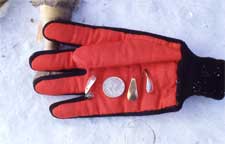
Weakened ice can be found on many lakes, and savvy anglers use a spud to test the ice ahead of them. Many carry a length of sturdy rope and some sharp-pointed objects like ice picks or screwdrivers to use to stab into the ice to pull yourself from the water. Wearing a life jacket may make you look like a sissy but I'd rather be alive and be called that than be a dead fisherman.

The ice conditions should be superb if we don't get rain or freezing rain over the next few days. Take advantage of the early-ice opportunity but use all due caution.

Engage brain before venturing out on early-ice. The fishing is usually the best it will be at this time of year, but catching a fish isn't worth risking a cold dunking or losing your life.

Posted via email from Dave Richey Outdoors

Tuesday, December 28, 2010

Safe tree stand hunting


The CDS system described below works and I feel safe in tree stands.


It’s time to share a bit of my past, present and future. I’m a tree stand hunter, and I’m really not afraid of falling from a tree stand but now I’m ready if it does happen.

Where my one greatest fear exists is falling and really hurting myself. I’ve broken my back twice in falls that were not associated with tree stands, but  what terrifies me is the thought of falling and becoming a paraplegic or a quadriplegic. I’m afraid to see my deer hunting come to an end because of a mistake.

A short history on my four falls from a tree stand.


I’’ve fallen four times from a tree, and all were all at least 10 years ago. While bow hunting in the December cold, i was coming down a ladder and cold hands and feet caused me to lose my balance. The snow was deep, and I jumped, landed, rolled in the snow and was not hurt.

The next time I took another hunter’s word about a tree stand. He said it and the steps nailed to a tree on private property were safe. I passed up a nice buck that evening, and at the end of shooting time, I began climbing down. One step broke beneath my feet, and I plunged through the second step, and pushed away from the tree. I fell 10 feet but wasn’t injured,

The third time I was climbing down from a ladder stand. I don’t know what happened, but I busted down through cedar branches and hit the ground hard, I was badly shaken but again, managed to escape serious injury. The last time was while climbing up into an elevated box blind, and who knows what happened. I don’t know, but me and the ladder came unglued.

Now, at the age of 71, I still love tree stand hunting for whitetails. However, I’ve come full circle when it comes to personal safety this year. The older we get, the more brittle our bones become and I don’t see how I could survive breaking my back again and become paralyzed for life. That thought brought on my fear of falling.

I spent a lot of time last winter studying safety harnesses, and this past winter I contacted the folks from Mountaineer Sports in Keyser, West Virginia.  Go to <www.mountaineer-sports.com>, and inquire about trademarked Rescue One ‘CDS.’ They also can be reached at (304) 298-4343.

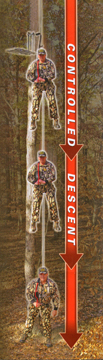
The instructions for the safety harness and other gear are lengthy but not terribly complicated, and a CD helps a hunter work through the various steps. This easy-to-use system allows safe, controlled descent to the ground from heights up to 30 feet. The super-strong light-weight harness is easy to put on, to adjust and to install on any tree.

Follow the detailed instructs rather than the abbreviated ones here.


The low-profile, OSHA approved dual lock, netal safety buckles and special shock absorbing system lessens shock if one does fall. In a fall, it keeps a hunter in an upright position, and it comes with an attached Reserve Suspension Relief Strap, lineman’s safety rope and a tree stand anchor strap.

The Rescue One ‘CDS’ (controlled descent system) personnel feel that tree stand accidents occur when climbing up to a stand, getting into or out of the stand, and while climbing down. And, as I can swear to, accidents do can and happen. It’s not so much whether an accident will happen but when, and that means that hunter should be fully protect from the ground to the stand and back down again ... every time.

Now is as good a time to discuss suspension trauma as any. Make no mistake: you can fall from a tree, and if left suspended without adequate means of regaining access to the stand or the ground within a few short minutes, blood will collect in your legs and feet, hampering circulation, and death can occur. Few harnesses manufacturers want to warn hunters of this danger. A rapid decline in blood pressure results, and in as little as five minutes, a person could lost consciousness or die.

This safety harness that I’ve worn all season has a Reserve Suspension Relief Strap  to allow the user to use a foot loop in which to stand to eliminate blood pooling in the legs. This strap is  used to allow the hunter to stand upright during a controlled descent to the ground. The Protector full-body harness system prevents you from hitting the ground during a fall.

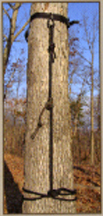
The harness may be worn over or under clothing. There are dual lock safety buckles on both leg straps, and across the chest and waist. It includes a Lineman’s Safety Rope with a prussic knot and two carabineers. This rope is placed around the tree, and is attached to a Lineman’s Loop to steady the hunter when climbing up or down the tree or when placing or taking down a stand.

Peace of mind is as simple as using this safety harness while in a tree.


A tree stand anchor strap and carabineer is used to attach the harness tether line loop to the tree. The tree stand ascent and descent safety line with prussic knot provides additional security while climbing into or our of the stand. Thirty feet of soft ½-inch double braided nylon rope has a 5,000-pound breaking strength with a prussic knot made of stiff 8mm prussic cord. Attach the  safety strap to the safety line when climbing up or down. In the event of a fall, the prussic knot grabs the ascent-descent safety line, and the  strap plays out of the harness and insures a safe and slow descent to safety or the ground. Always use a one hand and two feet, or two hands and one foot, means of contact with the tree or stand while climbing.

I used this safety harness and other equipment every time I climbed into any of my tree stands. Going up or coming down was always a concern before, but  it no longer bothers me. I feel safe and secure when I begin climbing up and down, and while sitting in the stand.

There no longer is that gnawing worry about a possible fall. I feel secure, and am secure, and that makes hunting from a tree much easier and safe. It is said that falling from a tree is not a matter of if you fall, but when.

This system keeps you in contact with the tree at all times, and if the manufacturer’s instructions are followed to the letter, you’ll have a safe hunting experience next year.

Posted via email from Dave Richey Outdoors