Showing posts with label ground. Show all posts

Wednesday, November 23, 2011

Dumb mistakes that deer hunters make

Richey with a nice buck taken with a Thompson-Center Contender.


Over the years, I've seen people do some of the dumbest things while sitting in an elevated coop or a tree stand or while hunting from a ground blind. Mfost are funny but some could have been deadly.

The reason I write about some of these is there are always lessons that can be learned. Benefit now from these mistakes of other hunters.

One time I had a new hunter sitting in a ground blind. It had a sliding Plexiglas window in that coop, and when I dropped him off, I suggested he keep the window closed until a deer got close enough for a shot, and then silently slide it open, draw, aim and shoot.

It pays to remember and pay attention to advice.


He did some of it right and failed on other parts. He saw a small 8-point walking toward him, and he waited until the deer stopped, quartering-away at 12 yards, and he drew back and shot.

C-r-a-c-k! He'd forgotten to slide the Plexiglas window open, and shattered it. The buck obviously disappeared, and probably never walked past that blind again.

Another time, another guy was sitting in a ground blind with a sliding wooden window. He saw a buck and doe coming, and when the doe walked past the window, he waited for the buck to pass, and he shot. His arrow struck the sliding portion of the wood window frame, glanced off it, missed the buck entirely but the ricochet nailed the doe in the heart. It was a great trick shot, and a killing hit on the wrong deer.

Then there was a time when another hunter drew down on a doe, studied the animal as it walked in front of him and stopped. He held his draw until she started to turn, and he aimed for the heart and lung area. He made a great hit, but again, on the wrong deer.

A doe fawn, standing out of sight, darted in next to its mother, and saved her life. This mistake has often happened to several hunter friends, and it is the result of tunnel vision on the target animal and not watching to see what other nearby deer were doing. The venison was really tender, I heard.

Once, during the December bow season, a bow hunter was sitting in a pine tree near an alder run. He'd shot several bucks over the years from that tree, and sat out in hopes of seeing another one. The air temperature was about 10 above, and a strong north wind was blowing.

Toughing out a cold day with low wind-chill figures isn't fun.


He toughed it out until shooting time ended. He lowered his bow to the ground, shrugged his shoulders several times to restore circulation, and rubbed his hands together. He'd lost most of the feeling in his hands and feet, and tried to get warm and limbered up before starting down.

He took the first two steps, and then one of his feet slipped on a snow-covered ladder step. He had three contact points -- two hands and one foot  -- but all were too cold to respond when his foot slipped. He knew he was going down, and pushed himself away from the tree and tumbled eight feet off tree limbs and into the snow. He wasn't hurt from the fall but was a bit disoriented for a moment until he figured out what had happened.
Anytime a hunter can walk away from a tree stand fall is indeed lucky.

Then there was the gent who felt nature calling. He looked around, didn't see anyone, so he gave the tree trunk a good shower below him. That had been one of my best tree stands, and after he told me about his aerial spray job, I enjoyed it so much I let him hunt the same stand the next day. He never saw a deer but I doubt if the object lesson resonated with him.

Another time a hunter was in that same tree, and it was a cold day, and suddenly a nice buck appeared. He normally had a 60-pound draw weight, but had forgotten to crank it down a bit to compensate for the cold, still muscles and bulky clothing.

A buck came walking slowly by. Our hero started his draw, and the arrow fell off the rest. He was shooting with fingers at the time, and the extra effort to draw the weight when cold and over-dressed, caused him to roll the bow string. It flipped the arrow off the rest and it fell, tinkling, to the ground as the buck looked up at the sound.

The buck stared upward, and the hunter didn't move, and eventually it went back to its business of checking an old scrape. He nocked another arrow, tried drawing on the buck again, and again the arrow rolled off the rest and tumbled off branches to the ground.

The tinkling arrows bouncing off tree limbs scared off this buck.


The hunter, sat and stared at the curious buck, but finally common sense apparently set in and the deer raced off through the snow as the hunter looked down at the red nocks standing upright in the snow.

I've had a ground blind with a low door-way. A sign tells people to watch their heads, but one person managed to smack his head going into the blind. And, to add insult to past injury, banged his head when he left. He no longer  sits in that stand.

Deer hunting is mighty serious business for most of us, but some of these things are a bit too funny to ignore. And it's a wise and good-natured hunter who can laugh and benefit from his mistakes.

And to prove that I'm not immune to doing dumb things, it was me that banged his head twice on the door-way. It still makes my head hurt to think about it.

Thursday, October 20, 2011

In the air or on the ground?

On the ground or in the air. Both work & it depends on you.


It's an eternal question that is always being contemplated by bow hunters. Which is best: hunting on the ground or up in an elevated coop or tree stand.

An elevated coop or a tree stand wins me over every time. I like the increased visibility that hunting from a tree provides, and I'm not bothered by height except in a high wind. After many years of experience, my preference is for a stand at about 15 feet. Going higher can increase the chance of a fatal fall.

Many hunters prefer hunting from a cedar or pine tree, and if I have a choice, it's one or the other for me. However, I often hunt from maple trees. There are a lot of maples on my property, and my first decision is where is the best stand location?

Personal preference plays a big role on how you bow hunt for deer.


If a cedar or pine offers the best spot to ambush a moving buck, that's where I will hunt. However, if the key area to ambush a whitetail is from a maple tree, you'll find me up one of them. Trees make little difference to me but location, as with real estate, is everything.

Some stands are permanent wood platforms and others are more confined. Some are ladder stands, and others are fixed-position stands that I reach by going up limbs or tree steps. It makes little difference to me: I go where the deer want to go.

It doesn't take much room to shoot a deer from a tree providing the stand is properly positioned and downwind of the deer travel route. The trees on my land are there to provide possible stand locations, and although it's not legal on state or federal land, I nail or use sturdy screws to hold my permanent tree stands in place.

I have a few places where a big stand isn't feasible, and some of them are no more than two halves of a sheet of marine plywood painted gray or dark brown. A narrow platform just big enough to sit down on is nailed to the tree, the two side panels are nailed or screwed into place and a narrow piece of plywood serves as a roof. These stands are narrow at the end where people enter the stand and slightly wider where they will sit or stand to shoot.

Deer seldom pay attention to them, and they are very productive if the hunter can sit still. They are not made for a claustrophobic person, however.


All of my stands, at home and elsewhere that I hunt, are strategically placed, and some designs are unlike any I've seen before. Some stand outside in the rain and snow, and we check them two or three times each year to determine if they are still reliable and safe.

Any stand that is no longer safe is torn down. I'm not a risk-taker, and if I won't hunt from a stand, no one else will hunt there. Such stands are quickly slated for demolition.

Take down any unsafe tree stand.


Hunting from a tree stand appeals to me. It's possible to see deer come from many different routes, and it allows hunters to study the animals as they approach the area. Some deer dash right in, others come cautiously and slow, and a few wise old does and big bucks often try to slip in on the downwind side to check for potential danger.

Some hunters dislike shooting down at an angle toward a deer. It is a part of hunting that must be practiced, and years ago, I would get with someone else and take turns on the ground. One would position a target at varying distances and angles, and the person in the tree would shoot a dozen arrows. He would climb down and we would change jobs. Frequent practice at shooting from a tree stand makes handling these shots as routine as ground-level shots.

Tell your friends, neighbors and relatives about my weblog. I plan to do this for a long time, and am willing to share my knowledge of what works and why it works for me. Do them a favor and give them my weblog address.

I'm a realist. Ground blind hunting can be very productive, especially in places where almost everyone hunts from a tree. I've preached the use of safety harnesses when hunting from an elevated position, but there are still people who feel wearing a "sissy" harness isn't for them. A doctor friend of my buddy learned a sad lesson this fall he fell and broke both legs, and was very luck it wasn't his back or neck.

Let's face it: some people are NOT meant to hunt from high places.


For such people, it's my personal recommendation to hunt from a ground blind. Believe me, I've been in and out of ground blinds and pit blinds all of my life, and have yet to see anyone get busted up by falling out of a ground blind.

Use the same logic when choosing a ground blind location. The proper spot is everything, and it must be downwind of where deer travel. It's possible to make a ground blind almost air-tight by installing slide-open windows. The glass can be covered with camo cloth or painted to eliminate the shine, and a motionless hunter is nearly impossible to see when sitting in a darkened hunting coop with the walls painted dark brown or black.

I favor ground blinds in windy weather or when it is cold, rainy or snowing. Properly positioned, a ground blind can blend in with root-wads of fallen trees, against a backdrop of standing corn or in an oak forest.

Everyone has their own likes or dislikes. Whether you hunt from a tree or from the ground, just remember to have the wind in your face, don't move until its time to shoot, and when you shoot, shoot once and shoot straight. And don't miss.

Saturday, August 27, 2011

Finish up preseason work and lock everything up

One way to save tree stands and ladders is to use climbers.


My ultimate goal is, and always has been, to be ready for bow season by September 1.

That means I have a full month for my hunting areas to settle down before I crawl into a tree stand or ground blind.

My fall food plots are planted, and there is a fairly lush green growth. We needed a rain bad, and last week the plots got a nourishing drink. Even more rain would be good to keep it growing.

What we don’t need is any more 90-degree weather. It’s time some cooloer weather and some more rain.
Deer are moving through the food plots, and after tomorrow, there will be nothing left to do but bide our time. Some long-distance scouting can be done but I don’t plan to spend any time walking through my hunting areas.

We’ve got deer spotted, tree stands are up, our coops are almost all ready, and all I need to do is spend a few hours putting chicken wire around the bottom of the coops to prevent porcupines and other critters from chewing holes in the wood.

Two ground blinds are complete set in place. The fencing around the bottom has be in place, and the coops are locked. Are locks necessary? To my way of thinking, I’m beginning to believe my father was right.

“Locks keep honest people honest,” he used to say. “If you don’t lock things up, and exercise certain precautions, given the opportunity to steal something, some people will take advantage of it.”

I’ve had people take advantage of me when they thought that leaving coops unlocked was fine. So, in the past I’ve had people climb into my coops to hunt when I can’t get away for one reason or another. I’d find the coop doors unlatched and blowing in the breeze, a larger shooting window cut to their liking, and a chair stolen.

Another time I spent two days fixing up tree stamds. I went to one stand, and some fool had stolen the bottom two sections of the ladder stand. The seat and foot rest was still attached to the tree with a good chain and a heavy-duty lock.

Now I stand the sections together, duct tape the chain to the ladder, and lock it. The cost of two good padlocks for the ladder section and another lock and chain for the seat is certainly cheaper than replacing a complete tree stand.

I once had an excellent tree stand, and the deer always came from behind me and on my left side to present a perfect broadside or quartering away shot. The person who would occasionally sneak into my tree stand always left his signature behind.

He was left-handed. He would try to reposition the stand so it was easier for a left-hander to shoot from. The stand was in a cedar tree, and I had fine boughs conveniently placed to break up my outline. Those boughs were tied with twine to suit me.

I went to this tree early one morning, and waded into the cedar swamp and hid. My presence kept the deer from moving that morning, and right about daylight I heard brush cracking as he walked to the tree.

I let him set there, and both of us could hear deer giving the area a wide berth. I snuck up behind the stand, and pulled out the two lower ladder sections. The guy looked down at me, and yelled “What do you think you are doing?”


I said I knew what I was doing. I was making it difficult for him to get down.


He was in my tree, I was on the ground with two ladder sections, and he’s whining about how he’s going to get down. So we had us a little heart-to-heart chat.

“You’ve been hunting my stand illegally for a week or more, and we’re going to settle this now. You either agree to quit sneaking in on my leased property , and stay away from this area, or I’ll call the cops right now. It’s a long ways to the ground, and too far to jump, so either agree to stay away or I’ll press charges.

“You’ll still be up the tree when the police come. Then we will have a chat with the landowner. What’s it going to be?”

He quickly agreed that he wouldn’t come back. OK, I said “Toss me your wallet, with driver’s license and hunting license so I can make a few notes in case I find you’ve been hunting my spot.”

He whined and carried on but I convinced him the two ladder sections wouldn’t be replaced until he complied. I added that while he was at it, he could lower down his bow on my haul rope.

I asked him if he was the one who was hunting out of my blinds. He said he just hunted the tree stand, which was obviously difficult to deny. I took notes, learned he lived nearby, and threatened to walk away.

He gave in, complied with all my wishes, and I asked if he was going to be aggressive when he came down. I didn’t want to fight him, but I wanted him to realize the errors of his ways.
“No, no more hassles,” he said “I’ll leave and won’t be back.”
So that episode ended peacefully, but I’d learned my lesson as well Ladders and tree stands were chained together, and to the tree, and I never lost anything again.

It’s a shame that everything needs to be locked up, but I have a great deal of equity in my food plots, coops and tree stands. All of the work and time is for my satisfaction, and having fools ruining my hunting isn’t something I feel like going through again.

Mr. Nice Guy doesn’t live and hunt here anymore.

Monday, January 03, 2011

Make must-do lists for next bow season


One squeak will spook this buck. Make sure all stands are properly secured.


It's an easy thing to do. Most of us, including me, know that certain lists must be made and kept up to date. If we don't write a thought down when we think of it, that item will be easily forgotten.

It’s happened to me many times before. I'll make a list, be driving to the woods, and suddenly think of something else that has to be done. Often it requires me to head back home to get something for one of my ground or tree stands.

Driving and writing notes isn't a good idea so I postpone writing down the thought until I get to where I can safely pull off and write a note. Sometimes all it takes is for a hunting buddy ri ask a question, or a problem needs to be solved, and the thought disappears from mind. Make a list of these to-do items, and keep marking them off when completed.

A detailed lists reduces the chance of forgetting a stand problem.


Planning ahead for hunting stand repairs means writing them down. Some stands need very little or no care, but others always require some preseason attention or work.

As I've noted over nearly eight years of writing bow-hunting blogs, some of our elevated stands are enclosed coops on stilts or somewhat open box blinds. The stress of changing seasons from hot to warm to cold and back to warm, plus rain and snow and high winds, can take its toll on wood stands.

We pay particular attention to wooden stands. We check to see if the wood is worn or rotted, if nails or screws are starting to pull lose, and whether the railing or steps are stable. An unstable railing or step, and a slip, can throw a person against the railing. It could break or tear loose, and lead to a bad fall.

We don't want oneus or anyone else hurt, and that is why we are so picky about checking out each stand before hunting starts. Right now, just after the bow season has ended, is the time to start making a list of must-do projects for next spring. We doing repair in the spring and deer have months to become reaccustomed to that stand.

Check all blinds and stands in the spring to avoid autumn problems.


We climb into the stand and check the chairs or stools. We check the floor carpet, and we grab hold of a wall or shooting window, and push and pull it. We are trying to locate any squeaks. A loose nail or screw can lead to a creaky board, and that can make enough noises as a hunter comes to full draw on a good buck next fall.

We like our stands as air-tight as possible, but it's difficult to do when windows must be opened to shoot. We check windows to see if they make noise when opened. We make sure that doors close tightly and latch firmly.

We double-check the wooden steps leading up to the elevated stand. We test every step to make certain it is safe, and if we have an extra heavy hunter, they usually will hunt from a brand-new stand that is as solid as Sears. This doesn't mean that some stands are not sound; a new stand hasn't been through one or two three-month hunting seasons with frequent weather changes. The chance of a problem is minimal with new stands.

We make certain that all windows are clean, and we usually kill off any hornets or wasps and remove the nests long before hunting season begins. For some reason, these insects love wooden coops on the ground or in the air, and one buzzing around when a buck approaches, can result in a hunter being seen swatting at the bug.

Our ground blinds get the same degree of inspection as elevated stands receive. It's difficult to fall out of a ground blind, but we make certain the footing is good leading to ground blinds. Years ago, we built a stand for a friend that uses a wheelchair. The doorway is shorter than our other stands, and I must remind other hunters to duck their head going into or out of that stand. I keep thinking about painting a sign on the inside and outside of the door that says "Duck Your Head!" Maybe that should go on my list.

Windows must be tested as well, and although some ground coops are built on the dirt, most have solid wood floors. We try to remove any loose-board squeaks. The doors must shut tight, and dark cloth curtains on the windows must be replaced almost every year. I’ve solved the problem of guests who want to look out back or side windows. I screw them shut to remove the tempation of trying to look out to spot an in-coming buck.

Make sure that all windows can be covered with a black cloth.


Think of it this way: If you are in a darkened coop, but a window is uncovered behind you, any movement made can and will be seen. Dark cloth prevents people from being skylighted and spotted by wary deer.

Checking out all of our ground and elevated stands is an ongoing thing. We test every blind long before the season opens, check them again when we start hunting, and ask people if they encounter any problem. The answer is almost always "no," but we don't believe in leaving anything to chance.

If anything, we err on the side of caution and urge friends to do the same. We always warn them to be careful, and provide any advice possible to make their hunt safe and successful.

Posted via email from Dave Richey Outdoors

Monday, November 22, 2010

Try something new


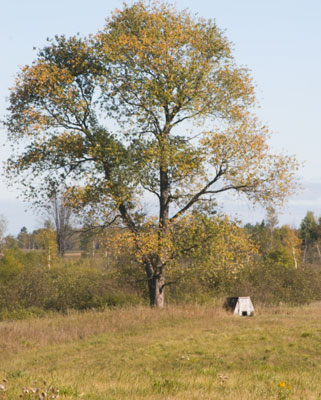
A pyramid pit blind like this one allows close, easy shots at ground level.


Why do people climb mountains? The answer is easy. Because they are there.

The same analogy applies to deer hunters. Why do people switch stands methodically. The answer is because they can and should.

A lady bow hunter I know loves to sit in just one stand. She will hunt in it every day of the season if possible. She loves her stand, its location and she knows where the deer will come from to pass by within her shooting range.

Don’t be afraid to try something new and different. Don’t get in a hunting rut.


What's more: she shoots good bucks from that stand. It works for her but this method of hunting is not for me.

I always want to know what lies ahead and around the next bend in the trail. Each day of deer hunting is a day of discovery for me, and that means moving around from one area to another.

It's not my nature to hunt the same stand two days in a row unless I feel a big buck will show. I watch deer on a daily basis, and know where the bigger bucks travel.

Some bucks get into lockstep with moving along the same trail but many big-antlered deer vary their travel routes and schedules. Young bucks can be patterned, and it's possible to predict with 95 percent accuracy what time the little buck will arrive. Nine times out of 10 they will show up within five minutes of when they are expected.

Now, me, looking at the same scenery day after day takes its toll on my patience. It's much more fun, to my way of thinking, to sit in a different stand every day. It helps me avoid getting into a rut.

Hunt a tree stand, ground blind, pop-up tent, elevated coop -- switch around.


My preference is to mix up my hunting activities. One day a treestand will be picked, and the next day it may be a ground blind a mile away. The following day may be an elevated coop, and the next day I may choose a pit blind. This allows me to study different deer, try to pinpoint a big buck and his travel area, and it keeps me from getting bored.

A bored hunter is not an effective one. Move around, try different locations, and it keeps you hunting different areas. Switching hunting spots on a regular basis keeps hunters from being patterned by deer.

Each spot will feature bucks approaching from a new and different angle, and like other sportsmen, it's like learning a new stretch of river. Sometimes the new spots will not pay off, but other times they do.

It's impossible to know how good a hunting area can be if we don't hunt it. A great deal of thought goes into choosing locations for ground or tree stands, and that means someone must sit there and study deer patterns and travel routes under various wind directions.

I want to know everything there is to know about a certain location. There have been times where I've put in a stand, hunted it for a day or two, and pulled it out because something about it just didn't feel right.

Take different  paths in and out of a spot. Have at least two routes to choose from.


Hunters, like many people, listen to gut feeling. They have hunches, and I'll look at it a few times, put a stand up, and know within 30 minutes of crawling into the stand that it isn't right. If it doesn't pass muster the first night, it won't be there the next night.

I don't believe in moving stands just because it goes cold for a week or so. If it has a proven record, it stays in place for a season. I've seen stands be cold for most of a season, and then pick up toward the end.

It's not long until the December bow season, but these tips are meant to give hunters food for thought between now and then. If you are limited to 10 acres, there may only one or possibly two good spots to hunt. If so, switch back and forth. Twenty acres offers two or three spots, and 50 acres offers even more possible stand location choices.

Just don't get locked into hunting one spot day after day. Sooner or later the deer will pattern you, and that is not good situation to find yourself in.

Posted via email from Dave Richey Outdoors