Sunday, July 18, 2010

Top prices for fishing-hunting books


Two weeks ago, while fishing for walleyes, several muskie books were dropped off at my guide's house for me. A man who enjoys reading my website was tired of dusting them off all the time, and four more muskie titles found their way into my burgeoning collection.

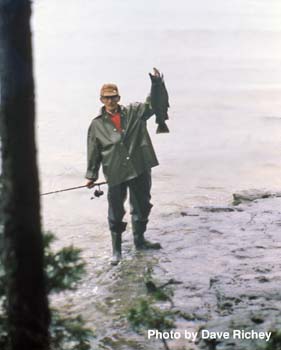
I buy books by the late Jack O’Connor (pictured above).

A week ago, a good friend stopped by, and dropped off a dozen hardcover outdoor books. "They belonged to my uncle," he said, "and I inherited them. They were taking up space, and I was doing some spring cleaning, and felt the fishing and hunting books should go to someone who wants and needs them and I thought of you."

I thanked him kindly, offered to pay for them, and he wouldn't accept any payment. He said his uncle enjoyed them immensely, and when he died, they came to my friend. He found a good home for them with me.

There is nothing mysterious about selling books. I know several book dealers who will buy every fishing and hunting book they can for a quarter each. In a few cases, that may be all they are worth.

Times are still tough, and I currently have between 500 and 600 outdoor books on my website that are for sale, and soon will list between 600 and 700 old outdoor magazines that were published between 1923 and 1960, and most of the magazines were published in the 1930s and 1940s. I'm still looking to buy fishing and hunting books.

Top rates are paid for fishing or hunting books I need.

I'm willing to pay more money for a book than any book dealer I know will give. I'm pretty picky about the books and their condition, but if they are in clean and decent shape, those I want I will pay good money.

Books are difficult for many people to judge, and they expect a person like me to offer a price. I want to see what I am buying, and will not buy books for 25 cents from you or anyone else. I don't cheat people.

I expect to pay a fair price, and this is where things become a hassle. What is fair to me, may not seem fair to you or someone else. Often, my offered price is greeted with "Pay Up!"

Most people want me to quote them a price, sight-unseen. I can't do that unless I risk a quarter like some dealers that I've known. But it's hard to tell what I'm buying unless I see it. I don't buy books with ripped pages, crayon marks, booze or water rings, pages ripped out, and I seldom buy an ex-library book.

I sold a man a decent copy of a muskie book some time ago. I'd seen far better copies, but told him that if I found a better copy of the title, I'd buy it back for what he paid me for it plus a bit more money because the new one I was selling was in much better condition. He found that arrangement most agreeable. Three months later he owned a better  copy, and as promised, bought the lesser book back.

Tough economic times now. Sell me your fishing & hunting books.

Many people feel that all fishing and hunting books are scarce and worth big money. That is far from being true. Only two of the books I was given by my friend had any value, and I offered to pay him. He was content just getting rid of them.

How much were the two books worth? Good question. One was worth about $15 on the retail market and the other was worth $10. The other 10 books were worth only a dollar or so each, and were very common.

Can you rely on a persons reputation? Of course, and my reputation for fair dealing is widely known. However, paying someone full retail price for a book doesn't make good business sense. As a rule I pay roughly 50 percent of the fair market value while many dealers pay 30-40 percent of the fair market value. If you have a $20 book I want, I will pay $10 for it. There must be some mark-up for a dealer or he will soon be out of the book business.

Books in excellent shape are far more valuable, if indeed they are truly scarce, than the same book with a tattered or torn dust jacket. There are some books I do not buy, and those are old and damp-stained or musty books, and I do not buy fishing and hunting books with covers falling off or childish (or adult) scribbling. Nor am I in the market for books with highlighted or underlined passages.

Clean and well-kept books are what I'm looking for. I'm interested in books on muskie fishing and turkey hunting, especially if it applies to Michigan turkey hunting. I also buy grouse and woodcock hunting titles, Atlantic salmon and some trout fishing books, some waterfowling titles, and old classic books on either sport. Decoy books are a favorite.

I'm honest, and I'm fair, and if I buy a book from you thinking it will sell for one price, and I sell it for much more, I've often cut another check for the seller. It certainly doesn't happen on every sale, but it happens juat often enough to make a few people happy.

Spring cleaning has come and gone, and perhaps you are tired of moving boxes pf books around in the attic, barn, basement, garage or storage shed and want to get rid of it. Get in touch with me at < dave@daverichey.com > and tell me the author's name, title, and year of publication. Try calling me at (231) 492-7038, and if I'm tied up and can't come to the phone, leave your name, phone number and the word "books." Please speak your name and phone number slowly and clearly.

Price the book if you wish or let me know where you are, and leave a phone number or your email address, and we'll discuss it. If you live fairly close to Traverse City, we could meet and it would give me a chance to personally look at the books. I'll buy one book, a dozen or a collection.

Give me a shot at your fishing or hunting books. Talking doesn't cost anyone any money, and it may lead to some money for you and some books for me. That should make both of us happy.

Posted via email from Dave Richey Outdoors

Saturday, July 17, 2010

Rain can produce good fishing


Many people who live around Traverse City know that when it rains hard, and the water level in the Little Betsie River rises, it washes worms into Green Lake.

The author (left above) plays a jumping brown trout,.

There have been times in the spring when the worms washed out of the banks of the swamp, and when they are swept under the little bridge on Diamond Park Road in Interlochen, there would be basketball-sized wads of worms drifting down to the waiting fish.

I'd wade down the tiny creek, reach down into the water for my bait, and hook the worm lightly through the nose. I'd cast it out on 4-pound line without weight, and as it washed over the steep dropoff into Green Lake's deep water, a brown trout would nail the worm.

I seemed to have had that secret spot to myself until more people moved into the Interlochen Arts Academy, and soon I'd have others fishing there beside we. We treated each other with respect, and if the browns were biting, we'd catch a bunch of fish.

I can write about that little spot now because browns are no longer being planted in Green Lake although some lake trout have been. I suspect it would still pay off with other game fish now, and a few years ago I caught a 5 1/2-pound smallmouth bass there along with several others of lesser size.

The West Branch of the Sturgeon River was somewhat similar in its downstream reaches, and it was a veritable gold mine for trout. I could catch brookies, browns and rainbows there during a soft rain. If it rained too hard, the shallow stream would be pelted hard and most of the trout headed back under the river banks to wait out the storm.

This hotspot was lost to homes & road improvement.

The upper part of the West Branch of the Sturgeon River, several miles south and west of Wolverine, was a hotspot for brookies. One would fish between their feet in the little jump-across creek. The small brook trout would hold among the root wads, and the water was gin clear and very cold. A rain upstream seemed to put the fish on the prod, and it produced some spectacular fishing.

That area is now all built up with homes and no trespassing signs, and although it may still hold a few brook trout, it's not worth the hassle of trying to stay in the creek and not trespass on someone's land.

There have been countless other days when a good rain put the trout on the feed. I remember one evening right at dark when I waded slowly down the upper Rifle River near Selkirk, and was fishing a four-inch Rapala on a tight line as the stream grew dark and closed in around me.

The Rapala was flipped up tight to the far bank and rain drops trickled down my back, and I closed my open-face spinning reel. I took two or three turns on the reel handle, and a brown trout of great length and girth inhaled the lure and the hooks were buried.

This was a fish around which legends are made and fishing dreams are made. It was well over 10-pounds, and even though I was using 8-pound line, it didn't seem strong enough. That fish rolled on the surface, and headed downstream.
Losing a big brown trout.
I'd been down through this stretch many times and knew where to wade. I stayed close to the fish, jacked him around whenever it seemed possible to gain some leverage, and we were still at it when we passed under a bridge in the darkness. Fortunately, I was able to steer him away from the bridge pilings.

We made it another 200 yards downstream, and by now the after-dark fight had covered nearly a half-mile of river, and the stream was barely lit by a quarter-moon. The wheels fell off this brown trout parade when he hung the line on a wood stob protruding just out of the water.

I eased out slowly. and had just reached the line on the wood, when the big fish made a thunderous splash near a shoreline brush pile. I knew he had woven my line around the drowned branches, and the line popped with a crack like a .22 rifle going off.

Me and rain have always been buddies on the trout streams. I knew that when the rain fell, worms and other critters would wash into the river, and it turns the stream into a smorgasbord of food for large fish. When it begins raining about dark, forget about watching sleep-robbers on television.

Grab a rod, some bait or lures, and head for the closest river. You might be surprised at what you might catch.

Posted via email from Dave Richey Outdoors

Friday, July 16, 2010

Remembering George ...


Thinking of George is always a pleasure. We shared so much as twins, and our mutual love of fishing and my thoughts of him, keeps his memory alive and fresh in my mind. Some favorite memories include:

*A day many years ago when we were fishing the Sturgeon River. I hooked a nice steelhead, and followed the fish downstream to the upstream lip of a deep hole. I tip-toed out as far as I could, and battled that fish to a standstill.

There I went, downstream in the heavy current, as George raced ahead to catch me.

Suddenly I could feel the sand washing out around my wader-clad feet, and knew I was going for a swim. I tried to back up but the current was too strong, and there I went, trying to swim with my rod hand. I hollered at George as I washed through the hole, telling him to grab me at the next shallow riffle.

He ran ahead while I foundered, and I hit the shallow gravel upside-down, and he grabbed my wader straps and hauled me upright. I was thoroughly soaked on a very cold day, and five minutes later I landed the fish and headed for the car for dry clothes and a warm towel. If any one cares, the steelhead weighed 5 1/2 pounds.

*Another time he was wading a soft place on the Platte River. I'd warned against it because of the soft marl bottom, but he got out and into the current, and then both feet got stuck. He was in waist-deep water, and if he fell over, he'd drown because the current would hold him under.

I dropped my rod, grabbed a long and limber tag alder limb, and waded out toward him. He wasn't panicking, but knew the consequences if he lost his footing. I was right on the edge of firm footing and soft, and still 10 feet from him. My branch was about nine feet long. I knew I could stretch out two more feet, and his arms would reach two feet without having to move his body, but I wanted him to get a firm grip.

One good turn deserves another as I pulled George from boot-sucking mud.

"All I can do is pull," I told him. "No sense in both of us being stuck in midstream. Grab hold tight, and I'll push slightly, and hopefully it will give you enough leverage so you can keep your balance while pulling one foot clear of the muck. Take off your wader belt and shoulder straps, because if you lose your balance I'll try to pull you out of your waders."

He got a death grip on the limb, as did I, and I pushed slightly to help him maintain his balance. He worked feverishly on the foot closest to me, and got it free and took a two-foot step. That foot went a foot down in the muck but landed on a submerged limb. He worked on freeing the other foot, and even though it took a half-hour, we got him up onto firm footing and to safety.

*One night we were fishing Manistee Lake at Manistee in August for big walleyes. Back then some big freighters would move up the lake, and throw a huge wake. I hooked a big walleye, and got it close to the boat, and this was bigger than any of the 12 and 13-pounders we had landed.

"He's huge," George said in an understatement. "I'll put the flashlight in my mouth, and try to net him." He did, and just as the net went under the fish, the wake from a passing freighter hit us. The lure hooks tangled in the net, and the fish lay delicately balanced across the net.

We missed a huge walleye of 15-16 pounds on Manistee Lake.

He did the only thing he could, and tried to keep the walleye balanced on the net frame. He got the net and fish over the gunwale before the walleye flipped once, tore the hooks free, bounced once off the gunwale, and I grabbed for the fish. It slid through my hands like a greased pig, and got away. We estimated his weight at 15-16 pounds.

*George loved fly fishing and tying flies, and I remember one of the last brown trout he caught was with the late  Frank Love of Frederic. They were fishing the upper Manistee River near the 612 bridge from Frank's riverboat, and George hooked the fish just after dark.

It jumped and splashed, and George was making the woods ring with his whoops and hollers. He fought that fish well, giving line when needed and taking line when he could, and several minutes later George landed a 22-inch brown.

He admired it briefly, leaned over the edge of the longboat, held the noble brown trout into the current until it pulled away and swam back to his home under a log jam.

That was George Richey. He loved life, loved trout fishing, detested crowds of people, and thought kindly of many people. He loved trout and trout fishing enough to release the larger fish, and many people should emulate his actions. He fished for fun, not for food, and that makes me miss him even more.

Posted via email from Dave Richey Outdoors

Thursday, July 15, 2010

Bow-shooting bucks is easy


It stops, rubs a tree with its antlers, then stands back to admire his handiwork, and then hits another lick on the bark, checks it out, and then continues toward you. He stops, and can't smell you or any nearby danger, but he is in no hurry.

The anxiety level builds after the third or fourth stop for the deer to putter around doing big-buck things, and then he moves forward again. He’s now 50 yards away, and will soon have a date with destiny. Your breath is labored and ragged, and you are feeling a bit light headed.

Preparing for a bow shot.

His antlers are big, possibly the largest whitetail buck you've ever seen in the wild. He stands, just out of bow range, and surveys the area. He doesn't smell or see any danger, but he didn't grow a rack with 10 good long points and a 20-inch inside spread by being stupid.

He stands, motionless for a few minutes, head up and looking around. He's not spooky, but is just being careful.

Satisfied, he moves to within 40 yards. The rack seems to grow even larger the closer he comes. The hunter is sucking air by now, and begging silently for a 20-yard broadside or quartering-away shot. The thought of shooting this big buck makes you dizzy with excitement, and your heart is racing and you feel weak.

A full load of adrenaline is streaming through your system, and the buck moves slowly to within 35 yards and then to 30, where he stands behind a thin screen of brush. Jolt after jolt of adrenaline has you as wired as scoffing down 10 cans of a high-energy drink.

Don’t try to rush things. Be patient.

He offers a brief 25-yard shot but your eyes riveted riveted on the rack, and you don't want to make a mistake. He's coming, just let him move into the 20-yard range and then wait for a good shot at this huge buck.

Finally, he steps within your ideal range, turns to offer a quartering-away shot at 20 yards. The buck stares off toward other deer 100 yards away in the field, and you raise your bow, stare at the antlers again, come to full draw, aim and turn loose what you feel is a well-aimed arrow.

There is a loud twhack, and the buck races off while the arrow and broadhead sail off into the brush. Excited, feeling you made a killing shot, you climb down and follow the Game Tracker string to the arrow. There isn't a drop of blood on the arrow. What happened?

Tunnel vision had set in and when the hunter aimed and shot, he aimed at the major focal point of interest on that buck -- the antlers. He forgot to force himself to pick a spot low behind the front shoulder. His continuous focus on the buck and his majestic rack was his undoing. He got caught up in the moment, and forgot what he was supposed to do.

Concentrate on where to shoot. Forget about the antlers.

Total concentration is paramount during the aiming process. Once I know a buck has antlers, and decide to shoot him, I never look at the headgear again. I focus hard on the heart-lung area, pick a spot, shoot and the deer dies.

A buddy went on a Tennessee wild boar hunting with me many years ago, and I warned him against staring at the length of the boar's tushes. These big curved teeth are fascinating and very sharp, and my friend looked at the teeth, aimed and hit the boar in the top of the head. It wasn't an immediate killing shot, and I hollered to "shoot for the heart-lung area." He quickly recovered, shot again and the boar died a quick death.

Tunnel vision doesn't just happen to police officers in a fire-fight with the bad guys. It happens to hunters all the time, and most often to sportsmen with very little hunting experience but high expectations.

It can ruin a hunt, but there is no need for that to happen. The trick is to determine whether it has antlers, and if it is what you want. Once that has been determined, forget about it, and intently focus on the vital area. Don’t even look at the antlers again. Forget about them. Pick a spot behind the front shoulder and concentrate on it.

Once you draw back an arrow, and aim, never look at the buck’s head again. Pick a tiny spot behind the front shoulder, concentrate on that spot, make a smooth release, and do not drop your bow hand until the arrow makes contact with the deer.

Big bucks come often to those television hunters, but for most people like you and me, it can be a once-in-a-lifetime opportunity. The timing is too important to waste by missing an easy shot. Deep concentration, and not tunnel vision, is the key to bow-hunting success.

Posted via email from Dave Richey Outdoors

Wednesday, July 14, 2010

Give our food plots a drink


Crops were impossible to grow for a few years, and dust storms covered roads, seeped into houses, and some people with respiratory problems did not survive those years.

Things aren't that bad right now. It's not even close but people who have put in food plots or are trying to establish them are having a tough way to to go to make things grow.

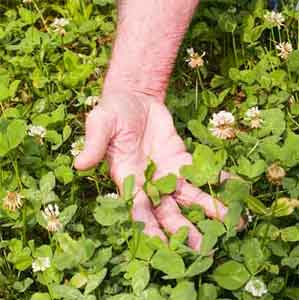
Clover, like shown above, is nutritional for deer.

Last year was a bad year for me with Purple-Top turnips," said a friend. "I planted after a  nice rain, but then the rains ended and the turnips weren't any good. They came up small and rather woody looking on the inside.

Anyone who plants a food plot is subject to all of the same problems as any farmer. Some years the weather turns against us.  Many people are getting ready to put in their fall crops, but the soil is hard, cracking, and lacks any moisture. A series of rains are needed, and we usually get some rain in August to jump-start our fall planting season."

One can only hope the weatherman cooperates. If not, some fields will be useless.

Two fields of mine will be ready to plant in early to late August, and we are hoping for a good rain between now and August 1, and some good rain storms after. That's what makes fall planting so tricky, and admittedly, this will be my third such planting. Two produced a lush crop and one could barely grow weeds.

Getting ready for fall food plots.

Many people like fall plantings or annual crops while others like some favorites when the soil conditions are conducive to growing a  crop of brassica such as Dwarf Essex Rape and Purple-Top turnips. Poor soil conditions can be built into good organic soil by planting buckwheat, oats and rye, and discing it into the ground for two or three years in a row.

"This is called 'green manure,'" an elderly farmer told me. "Two or three seasons of a green manure crop will usually build enough organic residue into your soil to produce a good high-protein crop such as alfalfa, clover or rape.

He did caution me to keep records of what is being planted every year. Keeping records of planting dates, crops planted, and what kind of a yield it produces is very important. He says a lack of records means that sportsmen have no way of knowing what they did right or did wrong.

He said the ideal plan is to provide for a year 'round food source for animals and birds. Proper planning means soil tests before anything is planted. Some soil is so poor that nothing but weeds will grow until the soil mineral content is built up.

Rain, and a good bit of it, is needed soon.

One should never consider a food plot as a replacement for baiting. One problem with food plots on large tracts of land is the land is heavily wooded in many cases, and it takes time to build a good soil content that is capable of growing high-protein crops. It just doesn't happen overnight.

Many  food plots that are planted to legumes (beans and peas) are literally destroyed by deer eating the crop as it begins to grow. A small food plot will be quickly annihilated by hungry deer.

One suggestion for sportsman is to mix other things that will grow in the fall and come back early in the spring. A mix of winter wheat offers good green food and cover in the fall, and it comes back up as soon as the snow melts. Rape and Purple-Top turnips, with some alfalfa and clover in other nearby fields, will produce good fall and early spring food for hungry deer.

If you see a man with a white beard standing outside about this time of year, and gazing skyward, it  probably means I'm either praying or scanning the skies for sign of rain clouds.

A bit of each may be needed late this summer and in the early fall. I know that my food plots are in bad need of a good drink, and the sooner it comes the better.

Posted via email from Dave Richey Outdoors

Tuesday, July 13, 2010

The question is: Quiver on or off the bow?


Life often is about making personal choices. None of us must follow other hunters like a flock of sheep, and do as they do.

This applies as well to bow hunting as anything else. Every bow hunter worthy of the name has his or her way of doing things, and often they turn out right. We all learn from the best teacher -- experience.

Bow quivers are a case in point that was brought home to me a couple of nights ago. We were watching a TV hunting show, and a woman was trying to draw and shoot at a buck with the bow quiver on. She was have trouble, and it begged the question.

Give thought to your bow shot in fog like this and eliminate the bow quiver.

Should hunters leave the quiver on the bow while sitting in a stand and shooting at a buck? Or, should they take the quiver off to minimize weight and to eliminate an unnecessary item that could easily tangle in tree limbs and mess up a shot?

I'll go first, and throw my hat in the ring and voice my heartfelt opinion. I climb into a tree stand, and after attaching my full-body safety harness to the tree and my body, I sit down, and use the haul rope to raise my bow from ground level. The bow quiver is then removed and placed elsewhere on the tree after one arrow is removed. I often hang the quiver on a nearby limb where it will help break up my silhouette.

Once the quiver in hung, I unscrew the broadhead and attach my Game Tracer string behind the FirstCut broadhead, and screw it into my Maxima carbon arrow shaft.

I attach the release to the string, stuff the lower limb of my C.P. Oneida Black Eagle bow into my left boot, and relax. I hunt and shoot sitting down, and my stands are positioned so bucks usually come from behind me and on my left side.

If the deer follows his normal pattern, he will approach from behind and on my left side. I'm right-handed, so when the buck comes within shooting range, and looks the other way, I start my draw and as I reach full draw, the lower limb clears the top of my boot and is clear of my leg, the stand or any tree branches.

My method eliminates unnecessary movement which can spook bucks.

This allows for a minimum of movement, is very quiet, and oh so effective once a hunter becomes used to it. This method of drawing a bow wouldn't be possible if my bow quiver was still attached.

The arrow shafts, vanes or even the quiver could get caught up in clothing, limbs or branches. But there is another reason why my quiver comes off my bow when I begin hunting.

It reduces the overall bow weight. Not much, mind you, but when hunting in a variety of locations, sooner or later a bow quiver is going to hang up on something. I remove all possibilities of that happening by removing it and hanging it some place where it is out of my way.

Whenever I watch a television show, or hunt with someone who always leaves his or her quiver on the bow, it makes me wonder how many lost opportunities have occurred because of that quiver.

A bow is a one-shot piece of archery equipment. It's not like hunting with a bolt, pump or semi-automatic firearm. Unless the wind is very strong and noisey, second shots at a buck are so rare as to almost be nonexistent.

A bow quiver on a bow, doesn't speed up getting off a second shot at a deer. It is somewhat awkward to reach to the quiver, pull out another arrow, reach across the bow to nock it, and prepare to shoot again. Chances are, any self-respecting buck with heavy headgear will be long gone if you miss the first shot.

There is notime for a second bow shot. Don’t worry about it; concentrate on the first one.

I often use my bow to help camouflage my upper body and head. I wear a face mask while hunting, and can still turn the bow inside my left boot so the handle and upper limb breaks up my silhouette. If a deer offers a shot, a simple and slow half-turn of the wrist will point the bow toward the animal as the hunter comes to full draw.

Such a movement may or may not be necessary, and that is a debatable point, but it would be impossible to do with a bow quiver attached. For me, that is a strong reason for removing the quiver.

The slight added weight of a bow quiver (even a three-arrow quiver like mine) can allow a hunter to unknowingly cant the bow to that side. Is it enough, under the pressure of a nearby buck, to throw the arrow off its intended course?

I don't know and don't care to test the theory. My preference is to shoot a bow unencumbered by a quiver. It's my thought that it just simplifies everything, reduces weight, eliminates canting, and besides ... it works for me.

Anyone willing to plead their case for keeping a bow quiver on while hunting is encouraged to contact me. You won't change your mind, I won't change mine, but I'd love to hear your philosophy.

Posted via email from Dave Richey Outdoors

Monday, July 12, 2010

Voices on a darkened river


I'd waded down through a deep, slow stretch during daylight hours because I'd seen a big brown raise to the surface like a lazy whale broaching the surface, drifted downstream and submerged. His approximate weight was at least 10 pounds, possibly a little bit more.

On another night, before a heavy fog, my late brother George caught a nice brown.

Home for this brute was an overgrown edge of brush on both sides  of the river. At its deepest point, the water was seven to eight feet, and a big stump was wedged on bottom in mid-stream. The current picked up some speed as it split and flowed heavily around the obstacle, and on my side, the water was four inches below the top of my waders.

The deep water grew slightly shallower but deepened in midstream as both current flows merged like the entrance ramp to an Interstate highway. The water then flattened out, and it was here I felt the brown would feed that night.

I wanted to cast a big bushy white mouse pattern, but the brushy banks and overhanging tree limbs made fly casting hazardous after the sun went down. If my fly hung up on the opposite side, there was little hope that I could wade across to untangle it, which I’d never do to avoid spooking the fish. I settled on a No. 9 Rapala in black-silver finish and 8-pound line with a spinning reel boasting a smooth drag.

One thing that years of after-dark fishing has taught me is to be prepared. When fishing for big fish, after sundown, it pays to use a large fly or lure, and line heavy enough to give the angler some semblance of equality. A light tippet is asking for a broken leader and a healthy measure of heartbreak.

The late July evening was dark, the moon that curious yellow it gets when atmospheric conditions are just right. The evening was warm and the river flowed with a hushed sound that could barely be heard. One step into the current told the real truth: here was water that could be dangerous to an unwary wader.

I stood silently just upstream of the submerged stump and waited for the sound of a big fish as it began feeding. The river was just a murmur, and I was content until with some unease, I felt eyes on me in the gathering darkness.

Suddenly, I could feel someone watching me in the dark.

The feeling was as subtle as an overturned 18-wheeler. Someone was watching me, and they were close. I could feel the intensity of eyes boring into my back. Now, I’m not scared of the dark but have learned to respect my instincts.

Whoever it was stood quietly nearby, watching me. My senses are fine tuned to such things, and it's something I've cultivated over many years. I had no clue whether this human presence was dangerous but after two minutes decided to push the issue.

"What's happening?" I asked in a conversational tone, my back turned to the stranger. "Fishing or going for a walk? Walking around here, if you don't know the river, could lead to an unplanned swim."

A chuckle was heard, and a voice from the darkness said: "I can sneak up on 99 percent of the people who fish after dark, and they never know I'm there. How did you know I was standing behind you?"

"I felt your presence," I said. "I felt you two or three minutes before I said anything. You fishing tonight?"

Still a conversational tone. Nothing confrontational. Just two anonymous anglers talking while waiting for a big brown trout to begin feeding.

"I'd planned to fish here," he said. "You beat me to it. I'll hit another spot down-river. What do you know about this spot? Fished it before?"

"Know it's got at least one big brown. Saw him earlier today. Guessed him at 10 pounds or so. How about you? What's your take on this spot? I figured this would be a key spot to stand and wait for him to start feeding."

"He weighs 10 pounds," mt sneaky visitor said. "I've hooked him twice in two years. Had him close earlier this summer but he got off. It's a big hook-jawed male with spots the size of dimes. He’s a native river fish, not a silvery brown from Burt Lake."

"It makes sense to wait him out for a bit," I said. "If he doesn't start feeding by midnight I'll work a Rapala through there. It's worked for me in this spot in the past."

"Good luck," the visitor said, and was gone without a sound. The man moved with all the stealth of a second-story cat burglar.

We shared a brief chat without me seeing him.

An hour passed, and feelings of wasting time washed over me as the mosquitoes found new spots to drill for food. A pesky skeeter was boring my ear when I heard the fish move. It wasn't a splash, but more like a heavy ripple a fish makes as he shoulders through the water before gulping down a hapless minnow.

I waited another five minutes before he moved again, and although I couldn't see him I knew where he was holding because my ears pinpointed him. I uncorked a 20-foot cast, and started the retrieve before the lure hit the water. That kept the line tight, prevented the hooks from catching the line, and began the lure working when it hit the water.

The lure swung in the current on a tight line, and I felt a solid strike, and I pounded the hooks home. The fish ran downstream with a heaviness that was easy to feel, and then back up, apparently not wanting to leave the pool. It jumped twice, took line three times, and slowly the battle began to turn in my favor.

The fish was in the heaviest current in this spot, and it took every bit of my concentration to focus on keeping him from heading farther downstream without breaking the line. I began steering the fish into a quiet back eddy near shore.

The Midnight Stranger was back, as silent as a hunting owl.

"Need a hand?" asked the stranger just as I felt his presence.

"Nope, this is between me and him. I've done what I set out to do, and that was to hook him. Landing him would be a bonus but I'd return him anyway."

"Want a look at him?" he asked. “Want me to light him up.”
A cloak of darkness surrounded me, the stranger and the river, and that's the way I wanted it.

"Saw him earlier today. Know what he looks like. Got a hooked jaw sticking up like a broken little finger. Big old male!

"That's him. He's a dandy. Go easy now. He likes to bore into that brush close to shore. Get ready, he's going to ..."

The fish took me into the brush about six feet away and weaved back and forth and then broke the line. I reeled in the slack line, and turned on stiff water-numbed legs to climb the bank.

I waded ashore to meet the midnight stranger. "Hey, c'mon up and shake hands. I'll buy you a beer down at the Meadows Bar."

"No thanks," he said. his voice growing distant. "I know who you are, and wanted to see if you can fish as well as you write. You measure up, and we'll meet again on the river and perhaps one day I'll introduce myself. Too bad about the fish, but that one is hard to land here. See you when the wind shifts."

“See you when the wind shifts!”

I've known only one man who used that phrase to say goodbye, and the voice didn't match that of the person who does use it.

I don't fish the Sturgeon River as often these days as I once did, and I've never ran into the Midnight Stranger again. I've had that feeling a time or two, and once I spoke: "C'mon down for a chat."

A soft chuckle would be heard, but we’ve never shook and howdied. It's been one of my life's big mysteries about his identity, and I've yet to solve it. I think about it at times like this, and feel that writing might bring an e-mailed response. Time will tell if he'll speak again after all these years.

Sharing a night on a dark river with an unseen stranger might be a bit spooky for some folks. It didn't bother me, but it would be fun to chat at least once with the guy. Until then, all I can do is write about the Midnight Stranger, and hope he responds with an e-mail. It would be fun to solve this longtime mystery.

Posted via email from Dave Richey Outdoors