Showing posts with label help. Show all posts

Thursday, March 24, 2011

Don’t kill yourself over a dead deer


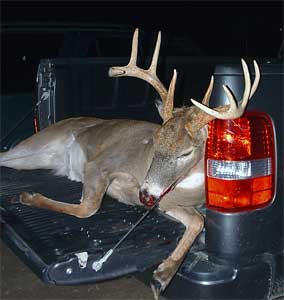
The trick is getting a big buck into a truck bed without killing yourself.


It happens every year. Joe Hunter sits in his stand, patiently waiting for a buck to come sneaking along.

He's hunting alone, and after a period of inactivity, he looks out and spots the buck of his dreams moving his way. He readies his bow or firearm, and when the time comes, he shoots and kills the buck.

His heart is racing like a horse coming out of the gate, and he walks to the animal, admires the buck and rack, and proceeds to field dress it.
About this time, the thought comes to him that he is alone. It's impossible to get his vehicle close to the deer, and he begins the arduous task of trying to drag the buck out alone, which is never a good idea.

Don't try to be macho, and drag a deer alone. Get some help!


Somewhere along the way, he feels a pain in his chest, and it increases in intensity, and over he goes with a heart attack. Some fortunate hunters survive the ordeal, and sadly, others do not.

Somewhere, every season there's an army of solitary hunters preparing to drag out a buck by one antler. Trust me, it doesn't work very well.
We always have a lengthy (36 to 48-inch) piece of one-inch wood dowel. With it is several feet of strong rope.

I'm not big nor am I strong but I've dragged out several deer by myself with this rig. It works best with snow on the ground, but the important thing is to get both front legs and the head off the ground.

Gut the buck and roll it onto its back. Tie antlers, head and front legs to dowel.


Roll the buck over onto his back, and place the wood dowel on the ground and under its neck near the base of the antlers. This will keep the buck's back and hind end on the ground. If you do it the other way around, and have its abdominal cavity on the ground, within 10 feet, it will be filled with dirt, grass, rocks and other debris.

Lash the buck's head and neck to the wood dowel, and tie it tight. Save plenty of rope to tie both front legs to the dowel and to the antlers. Center the buck's head and neck in the middle of the dowel, and if alone, lift the head, neck and front legs off the ground.

Don't wear yourself out. If you can only drag it 10 feet at a time, do so, and rest often. Don't get too winded and start sucking air. If it takes three hours to drag it out, do it slowly and don't over-exert yourself.

Too many people think it's macho to drag out a buck alone. Not only is it not a macho move, it is a stupid one. None of us are accustomed to dragging out deer single-handedly. Get help or go slow.

It becomes much easier if two people are hunting nearby, and the other offers to help drag. Lash the front legs, head and neck securely to the dowel, and put one person on one end of the dowel and one on the other end. Two people dragging causes less exertion but it involves weaving around brush piles, saplings or trees.

There are devices with wheels that allow the animal to be placed inside it, and then the cart and deer can be pulled or pushed through the brush. This doesn't work well in a tag alder thicket or cedar swamp.

It's much easier (some of the time) in many locations because we can often drive near to the fallen animal. We can usually get to within 100 yards of the deer, if a good shot has been made, and there are always two or three people around to help in getting the deer loaded.

This becomes very important if someone shoots a truly huge buck. Some animals will weigh 250 to 300 pounds, and it's almost impossible for one person to lift that much weight to place it in the back of a truck.

Don't die while deer hunting. A partner, 4-wheeler or truck eliminates exertion.


Another scenario that works, especially with several inches of snow on the ground, is to tie the deer to the back end of a four-wheeler. I try to get the head off the ground, and tie it in place, and than drive slowly to drag it out to a more convenient location.

Dragging deer out of the swamp or woods can be hard work. Older (and even some younger hunters) would be wise to seek help whenever possible. If alone, try my dowel trick and drag it a ways, stop and rest and allow your heart rate to slow down, and drag some more.

There isn't a buck in the world worth dying for. Take your time, and live long enough to enjoy seeing that handsome rack on the wall and medium-rare tenderloins on your dinner plate.

Sunday, March 13, 2011

Don't brag, don't lecture but help other sportsmen

One beginner, one experienced angler and a beautiful spring steelhead.

A boast sometimes rankles other people, especially when two or more anglers are fishing together. Almost always, one of them is big on himself and wants everyone else to know what a great angler he is.

Most people could care less what people have done. The trick is to be courteous and helpful, and if asked, answer the question as well as possible without bragging yourself up.

For instance, I know how many deer I've shot over 60 years. It's really too many, and I seldom bring up the topic. I've been fortunate to have deer hunted in many states beside my native Michigan but choose not to constantly dwell on myself and my deeds.

On the other hand, I dislike being in a group that is being monopolized by an ego-freak who is determined to quote numbers, sizes, the width of a rack which invariably is larger than anyone else has taken. After a short time, the egotist discovers he no longer is preaching to the choir. They've gone home while the was running his mouth.

Mentoring outdoor writers

I mentor younger outdoor writers. All are making or have made many of the same mistakes I made when starting out, but in my case, there was no one who offered to teach me any of the things I didn't know. I struggled, made more mistakes, and trust me. When I tell people how to avoid making similar mistakes, there is not a word of a brag to it. I tell them about my mistakes and how long it took me to correct many such errors. They learn fast or struggle for a time before quitting.

A friend stopped by yesterday, and he is looking forward to drawing a turkey tag this spring. He wanted some calling advice, and I told him I am not a good turkey caller. I also told him that many, many hunters can call ten times better than me, but I can call turkeys. No brag involved when I downplay my miniscule calling skills, but others can associate with my lack of such because they have their own foibles. Some of these beginners are far better callers than me.

I showed him a couple of tricks I've learned, told him how I do it, and repeated what he'd been told before. Don't call too much, don't call too loud, don't move and be patient.

A quick lesson ...

Years ago, I gave my twin brother a five-minute lesson on turkey calling. I took my gent out, and the bird I tried to call came in behind us, stood there drumming and spitting, and we couldn't get a shot. My brother was hunting a mile away, and we drove over just in time to watch him call in and kill a gobbler with just five minutes of instruction.

He got a well deserved pat on the back. My gent was disappointed for a bit, but he shot his gobbler that afternoon.

The lesson to all of this is that bragging long and hard on oneself is boring to others. If I'm asked, I'll answer a question and quickly turn the conversation back toward them.

Beginning anglers and hunters need to boast a bit over their successes, and that's OK...up to a point. But if you've shot 100 bucks with a bow, it means that you've hunted far more than most people. It also means, if you dwell on that number without teaching, those people often think you are lying, boring or a game hog.

None of which may be true. I'm a good deer hunter and a good steelhead fisherman, and have spent six decadess at both endeavors. Unless a person is blind or stupid, it stands to reason that they should have learned something along the way. Share that knowledge with others but spare the bragging.

A guide teaches a gentle lesson...

Forty years ago I drove to New Brunswick to fish Atlantic salmon with a fishing guide. I sought his advice on which salmon flies to buy, and he pointed them out. I sought his advice on which fly to start with, and he picked one out for me.

Two hours into fishing, my guide said softly: "Begging your pardon, sir, but I suspect you've washed that fly long enough. I'd suggest changing to a brighter pattern."

He didn't have to dwell on the fact that I should have changed flies earlier. He offered a suggestion that I gladly accepted, and when I hooked a 10-pound salmon on a brightly colored fly, he didn't claim any credit. I'd been the one to choose the fly, and luckily, it produced a fish.

He could have bragged about his knowledge and skills, but instead, offered me a pat on the back for "choosing" the right fly. I had no clue what I was doing, and it was his suggestion that made that cast a success.

Even today, I enjoy giving credit to him for me catching my first Atlantic salmon. He poled the boat into position, told me where to cast, how long a cast to make, and all I did was manage to land the high-jumping fish once it hooked itself on the strike.

Stow the bragging, and if possible, share your know-how with another person without trying to make yourself look important. I labor in a business where there are more egotists than I ever believed possible, but I check my ego at the door when I leave home. Doing so works wonderfully for me.

Posted via email from Dave Richey Outdoors

Sunday, December 05, 2010

Enjoy deer hunting and help others


The snow has finally arrived. We still have three weeks to hunt.


There are some fringe benefits that come from a day or weekend of deer hunting, but a hunter who is envious or jealous of another hunters success will never understand this concept.

Some sportsmen may wonder what those benefits may be. Here is a short selection of key things that can come from a hunt, and anyone who thinks about the topic for a few minutes will come up with others. Make up your own list.

*The opportunity to spend time outdoors. This means hunting in all types of weather condition, and while some seldom produce good results, we learn to appreciate those that do.

Be grateful for what we get, even in a bad season like this one.


*It's a father, mother, uncle or close friend who gives unselfishly of his/her time to help new hunters learn more about this sport. It's simple things like pointing out deer track, a rub on a tree or a ground scrape, that helps other hunters learn. We can’t just take it for granted that others, who are not hunters or from a hunting family, will know what we’re talking about.

*It's sighting in a rifle, and knowing how to do it with a minimum number of shots. It is taking the time to be certain your firearm is shooting accurately, and knowing that more deer are killed with a single, deliberate well-placed shot than by squeezing off several shots at a moving target that is more likely to wound than kill the animal.

*It means helping others and sharing in their joy and success. This may mean helping to blood trail a deer with another person during bow season or helping another hunter drag out an animal. It means doing your share to help around hunting camp including chores such as washing dishes, cutting and splitting firewood, bringing in fresh water, helping others to hang their deer from the buck pole, and countless other tasks. It means as much giving as it does receiving, and sometimes even more.

*It is the sight and smell of wood smoke curling from the chimney of deer camp. It is the distant glint of lantern light through the darkened trees as we make our way back to camp after a long day of hunting.

*It is that first breath-taking sight of a good buck, his antlers bone white, moving slowly and cautiously upwind of you. You track his progress, pick a hole through the cover that offers a small but open shot, and waiting patiently for the buck to walk into the opening and offer a clear shot at the heart and lungs. And don't forget to share some of your venison with others who were less fortunate during this year’s crazy seasons.

That first glint of sunlight off antlers tugs at our heart.


*It is the fragrance of cedar and pine needles, fresh backstrap tenderloins or venison liver and onions sizzing in the frying pan, old pine knots spitting and popping in the wood stove, and the pleasant warmth of a fire in deer camp after many hours out in the cold.

*It is the healthy exercise of walking, sitting, and still-hunting some more. It is seeing your breath on a frosty morning, seeing nothing clearly while hunting on a foggy day, picking up the sight of large and splayed tracks in the snow that could be a buck, and seeing a chickadee land on the brim of your cap while trail watching.

*It is the endless participation of hunters bragging up their favorite rifle cartridge, and the retort of another hunter claiming his round is more accurate and deadly, and never once laying this issue to rest. It's not so important to determine who is right or wrong, but that there is lively discussion pro and con on this or any other topic of deer-hunting interest.

*It's knowing that if you down a deer, that others will be there to help. It's also the knowledge that you'll do the same for your camp mates or even a perfect stranger. It's just one of the things that deer hunters do.

*Deer hunting is the knowledge that alcohol may be a deer-camp tradition, but it's never used until all firearms are unloaded and put safely away, and then used in moderation. Deer hunters must learn that alcohol, taken in moderation, doesn't give sportsmen the right to act loud and loutish during trips to town. Hunters should project an image of being caring and responsible individuals, not drunken louts with a loud, foul mouth.

All deer hunters will be judged by the actions of loud, rude sportsmen.


*Another benefit is the knowledge that members of our armed forces, by their presence in world-wide hell-holes are helping to guarantee our right to own and possess firearms and the privilege to use them while hunting in a safe and sane manner. Many of our countrymen and women have given their life, or have been critically wounded, to make our hunting possible.

*Last, but not least, use this hunting season to introduce someone new to the sport we love. Give freely of your time and knowledge, make women and youngsters feel welcome, and if helping them means giving up a day or two of your hunt, do it so hunting will continue to grow. Be selfish, and think only of yourself, and hunting as we know it will soon be on the ropes, and it will be you who helps destroy our tradition and our way of life.

Posted via email from Dave Richey Outdoors